The HiGuppy Journal
Can Guppies Live With Mollies? Tank Size, Water and Tips
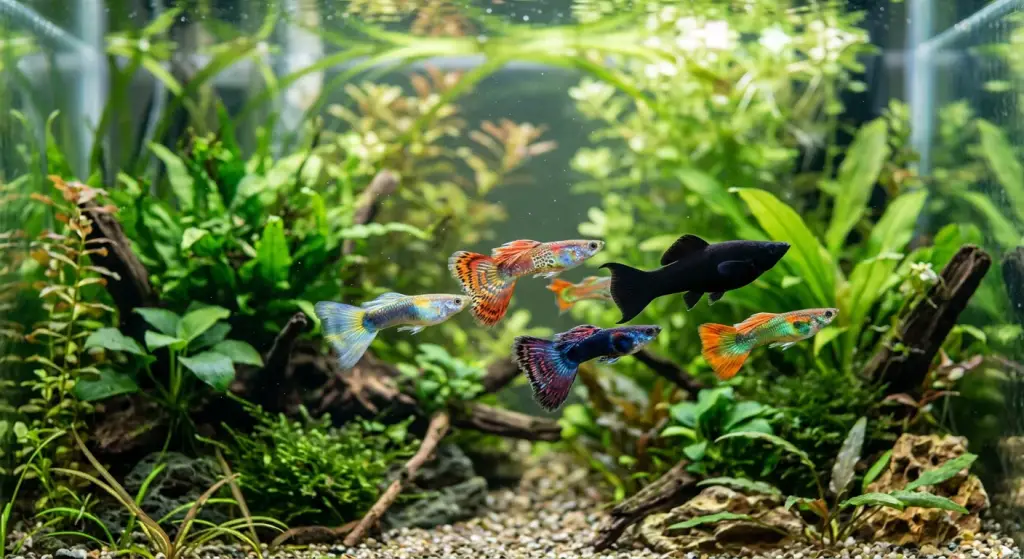
Can guppies live with mollies? Yes. Guppies and mollies are both livebearers from warm, slightly hard water, and in a properly sized tank they usually get along peacefully. The catch is that mollies grow larger, produce more waste and prefer harder, more alkaline water than many guppy keepers provide, so the setup matters more than the pairing itself. If you are new to the basics, start with our complete guppy care guide and then come back here for the molly-specific details.
This guide walks through water parameters, tank size, stocking ratios, feeding, breeding, the most common problems and a step-by-step introduction routine. Numbers are general hobby ranges rather than guarantees, so treat them as a starting point and let your own fish tell you if something needs to change.
Can guppies live with mollies? The short answer and the fine print
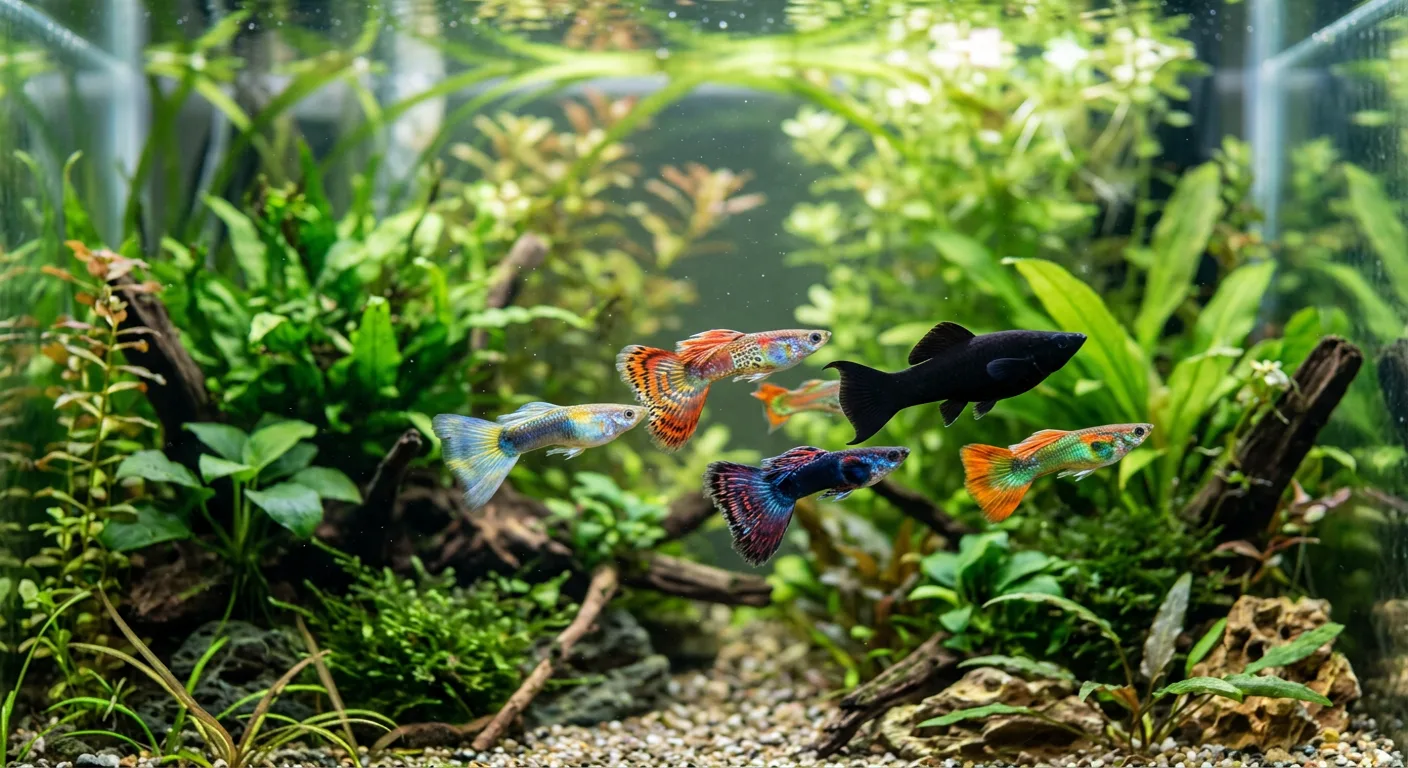
Both species belong to the same fish family, the Poeciliidae, a group of livebearers native to the Americas. They share a lot: they like warm water, they eat similar foods, they swim in the middle and upper levels, and neither is especially aggressive. That is why mollies appear on nearly every list of best tank mates for guppies.
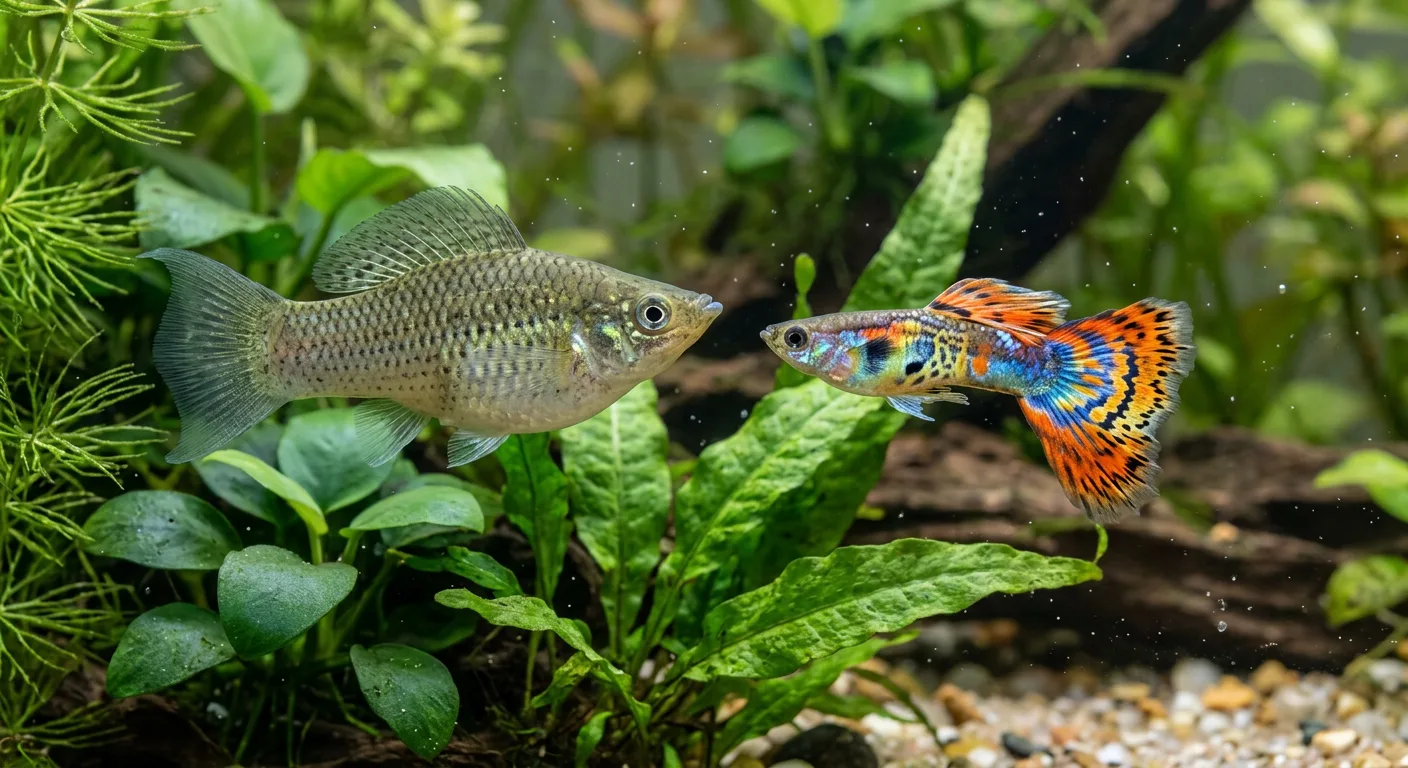
The fine print is about size and chemistry. A common molly can reach roughly 3 to 4.5 inches as an adult, and sailfin or lyretail types can grow longer, while a typical male guppy stays around 1.5 inches and females reach about 2 to 2.5 inches. Mollies also tend to do best in harder, higher-pH water, and some keepers add a little aquarium salt for them. Guppies are adaptable and usually cope with the same water if it is stable, but sudden changes hurt both.
When the answer is a confident yes
- The tank is at least 20 gallons, and ideally 29 to 30 gallons, for a mixed group.
- Your tap water is moderately hard with a pH around 7.2 to 8.0.
- You stock more females than males of each species.
- You have a strong filter, live plants and a regular water-change routine.
When the answer is “be careful”
- Your water is very soft and acidic, which suits neither fish well without adjustment.
- You want to keep a small 5 to 10 gallon tank. Mollies are generally too big and too active for it.
- You want long-finned show guppies and keep large, boisterous molly males, which can stress slow swimmers.
Water parameters guppies and mollies can share
The big question in any mixed livebearer tank is whether one set of numbers works for both species. For guppies and mollies the overlap is wide, which is good news. The table below shows typical comfortable ranges and a practical shared target. For a deeper breakdown of each value, see our guppy water parameters guide and the guppy temperature guide.
| Parameter | Guppies (typical) | Mollies (typical) | Good shared target |
|---|---|---|---|
| Temperature | 74 to 82 °F (23 to 28 °C) | 75 to 82 °F (24 to 28 °C) | 77 to 80 °F (25 to 27 °C) |
| pH | About 6.8 to 8.0 | About 7.2 to 8.5 | 7.4 to 7.8 |
| General hardness (GH) | Roughly 8 to 18 dGH | Roughly 10 to 25 dGH | 10 to 15 dGH |
| Carbonate hardness (KH) | Roughly 4 to 12 dKH | Roughly 8 to 15 dKH | 6 to 10 dKH |
| Ammonia and nitrite | 0 ppm | 0 ppm | 0 ppm |
| Nitrate | Under 20 ppm ideal | Under 20 ppm ideal | Under 20 ppm |
Test before you buy
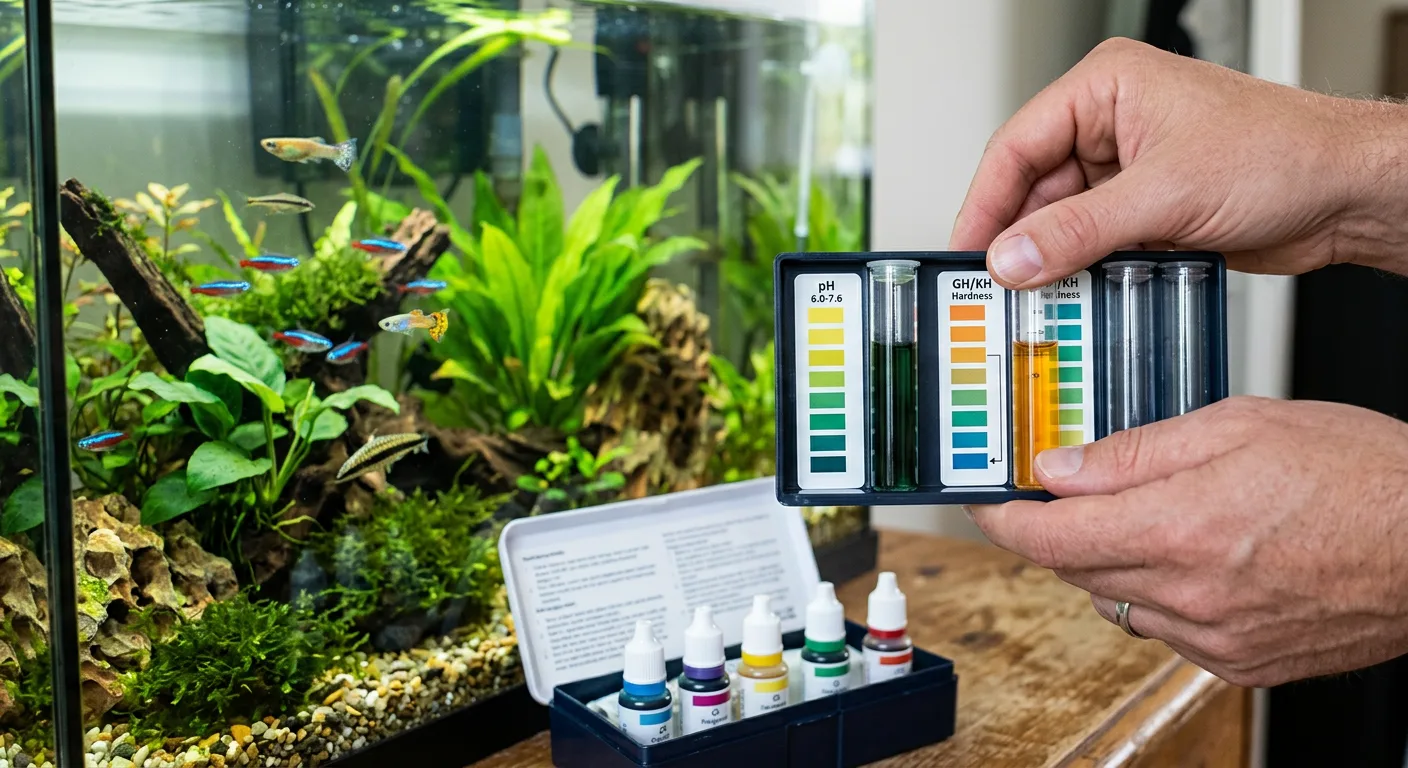
Use a liquid test kit rather than paper strips if you can. Strips are quick but less precise, and a mixed tank is worth measuring properly. Test pH, GH, KH, ammonia, nitrite and nitrate on your tap water and on the tank itself. If the tank is already cycled and healthy, you do not need to chase perfect numbers. Fish raised in your local water are often happier with a stable value than with a “textbook” one.
What about salt?
Some molly keepers add aquarium salt at a modest dose, often around one level tablespoon per 5 gallons or less, especially for brackish-leaning molly lines. Guppies can tolerate low levels, but salt is not required for either fish in hard freshwater and it does not evaporate, so it should be dosed only to the water you replace. Our page on aquarium salt for guppies explains when it helps and when it is unnecessary. If you keep live plants, remember that heavy salt can stress them.
Tank size and stocking: how many of each?
Mollies make stocking math harder than guppy-only tanks because each molly counts for noticeably more bioload. The old “one inch of fish per gallon” rule is a blunt tool, but it explains why a tank that comfortably holds 15 guppies can be crowded by four mollies. Our guide on how many guppies per gallon covers the guppy side of the math.
| Tank size | Suggested guppies | Suggested mollies | Notes |
|---|---|---|---|
| 10 gallons | 5 to 6 guppies | None | Too small for adult mollies |
| 20 gallons (long) | 6 to 8 | 2 to 3 | Minimum for a small mixed group; strong filtration needed |
| 29 to 30 gallons | 8 to 10 | 3 to 5 | Comfortable for most keepers |
| 40 gallons or more | 10 to 15 | 5 to 8 | Room for planted zones and a larger group |
Mind the ratio of males to females
Both species have males that chase females almost constantly. In a mixed tank the chasing multiplies, so keep at least two or three females per male in each species. Our page on the male to female guppy ratio explains the logic. A male-only guppy group is an equally valid option and avoids unplanned fry altogether, which we discuss below.
Start with a long tank, not a tall one
Mollies are active swimmers and like length. A long 20 or 29 gallon is better than a tall tank of the same volume because it gives more open swimming lanes and more surface area for gas exchange.
Step-by-step: how to introduce guppies and mollies
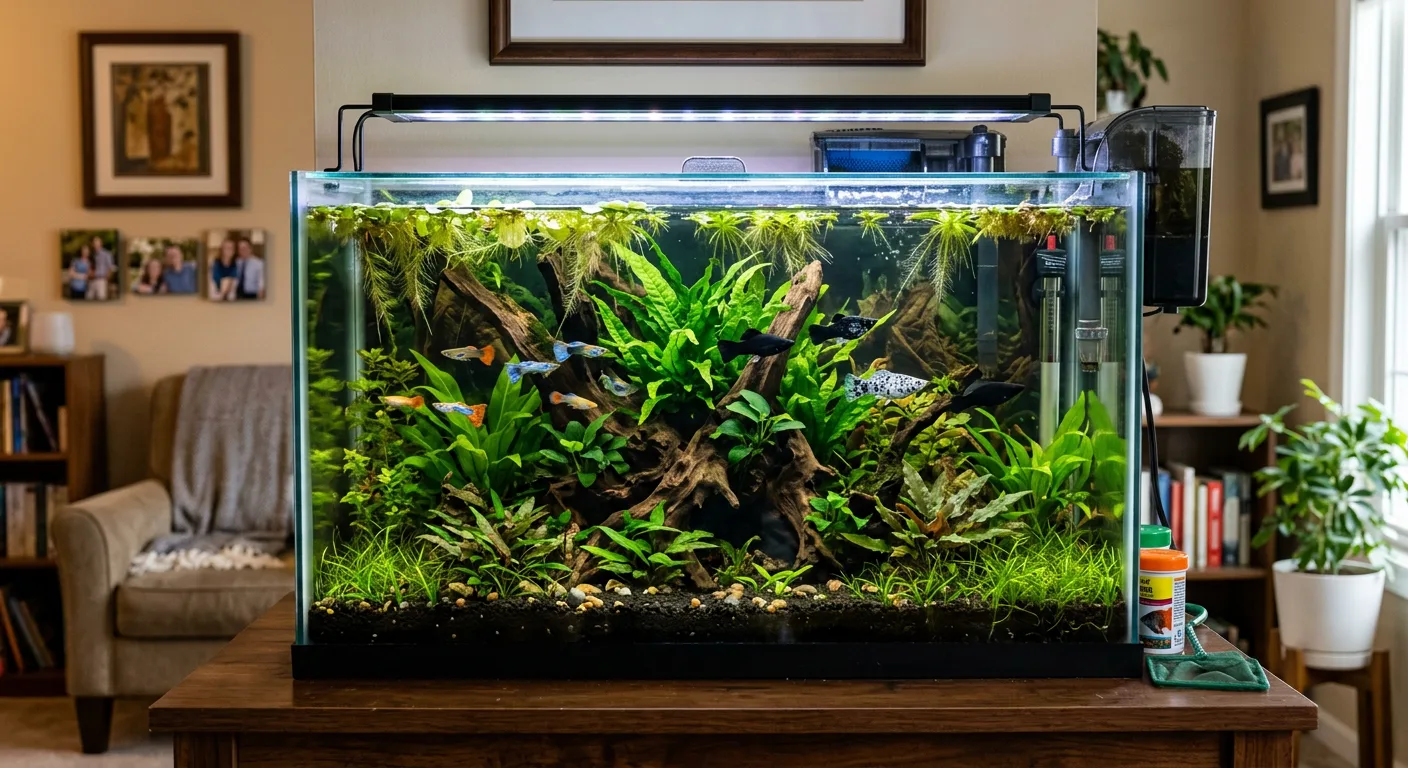
A calm introduction prevents most early problems. Follow these steps whether you are adding mollies to an existing guppy tank or starting both together.
- Cycle the tank first. Ammonia and nitrite should read 0 ppm before any fish go in. Our guppy tank cycling checklist shows how.
- Test and match the water. Check pH, GH and KH in the source tank and in your tank. If they differ widely, plan a longer drip acclimation.
- Quarantine new fish. Keep newcomers in a separate tank for two to four weeks. See our guide to quarantining new guppy fish; the same rules apply to mollies.
- Rearrange the decor. Moving plants and wood before adding new fish resets territories and reduces early bullying.
- Dim the lights and feed lightly. Add the fish in the evening after a small meal so they are calmer.
- Acclimate slowly. Float the bag for 15 minutes, then add small amounts of tank water every 5 to 10 minutes for 30 to 45 minutes. Our article on how to acclimate guppies has the full routine.
- Watch for the first week. Look for clamped fins, hiding, torn fins and constant chasing. A little chasing is normal; persistent targeting of one fish is not.
- Test water every two or three days for the first two weeks while the bacteria adapt to the heavier load.
Temperament: do mollies bully guppies?
Mollies are generally peaceful, but peaceful is relative. Male mollies can be pushy during breeding, and a large molly may shoulder small guppies away from food. They rarely nip fins the way tiger barbs do. Most conflict in guppy and molly tanks comes from overcrowding and too few females, not from the species themselves.
Signs everything is fine
- Both species feed together at the surface without one chasing the other away.
- Fins stay open and intact, with no ragged edges.
- Fish explore the whole tank instead of hiding in one corner.
- Males display to females of their own species rather than harassing everything.
Signs of trouble
- One guppy is repeatedly chased into a corner or hides behind the filter.
- Fins are clamped or nipped, as covered in our guide to guppy bullying signs.
- Guppies refuse to come out at feeding time.
- Mollies hover at the surface and gasp, which can point to low oxygen or poor water quality rather than aggression.
How to fix bullying
Add more plants and break up sight lines with driftwood or tall stems. Increase the number of females. Feed in two spots so slower fish can eat. If one individual stays aggressive, separate it for a few days; many fish settle once they lose their position and then return calmly.
Feeding guppies and mollies together
Both fish accept quality flakes, micro pellets and frozen or live foods, but their diets differ slightly. Mollies lean more toward plant matter and graze on algae, while guppies are more omnivorous and happily take small live foods. A balanced mixed-tank diet is simple.
A simple weekly feeding plan
| Day | Morning | Evening |
|---|---|---|
| Monday | High-quality flakes | Spirulina flakes or algae wafer |
| Tuesday | Micro pellets | Blanched zucchini slice |
| Wednesday | Flakes | Frozen daphnia or brine shrimp |
| Thursday | Spirulina flakes | Micro pellets |
| Friday | Flakes | Frozen bloodworms (small portion) |
| Saturday | Micro pellets | Blanched peas, shelled |
| Sunday | Light fast day | Light fast day or tiny portion |
Feed only what the fish finish in about one to two minutes, once or twice a day. Overfeeding is the most common reason mixed livebearer tanks develop cloudy water, so read our guide on overfeeding guppies. For ideas on foods, our posts on vegetables for guppies and flakes vs pellets are useful companions.
Make sure guppies get their share
Because mollies are bigger and faster, drop a pinch of food at one end of the tank and a second pinch at the other. Guppies will usually take the distant spot. Crush larger pellets slightly so smaller mouths can handle them.
Breeding: what happens when guppies and mollies share a tank?
Both species give birth to live young, so a mixed tank with males and females of each will produce fry. Guppies and mollies are different species and do not produce hybrid offspring with each other, a topic we cover in detail in can guppies breed with mollies. Males will still try to mate with the wrong species, which wastes energy and stresses females.
Expect fry to be eaten
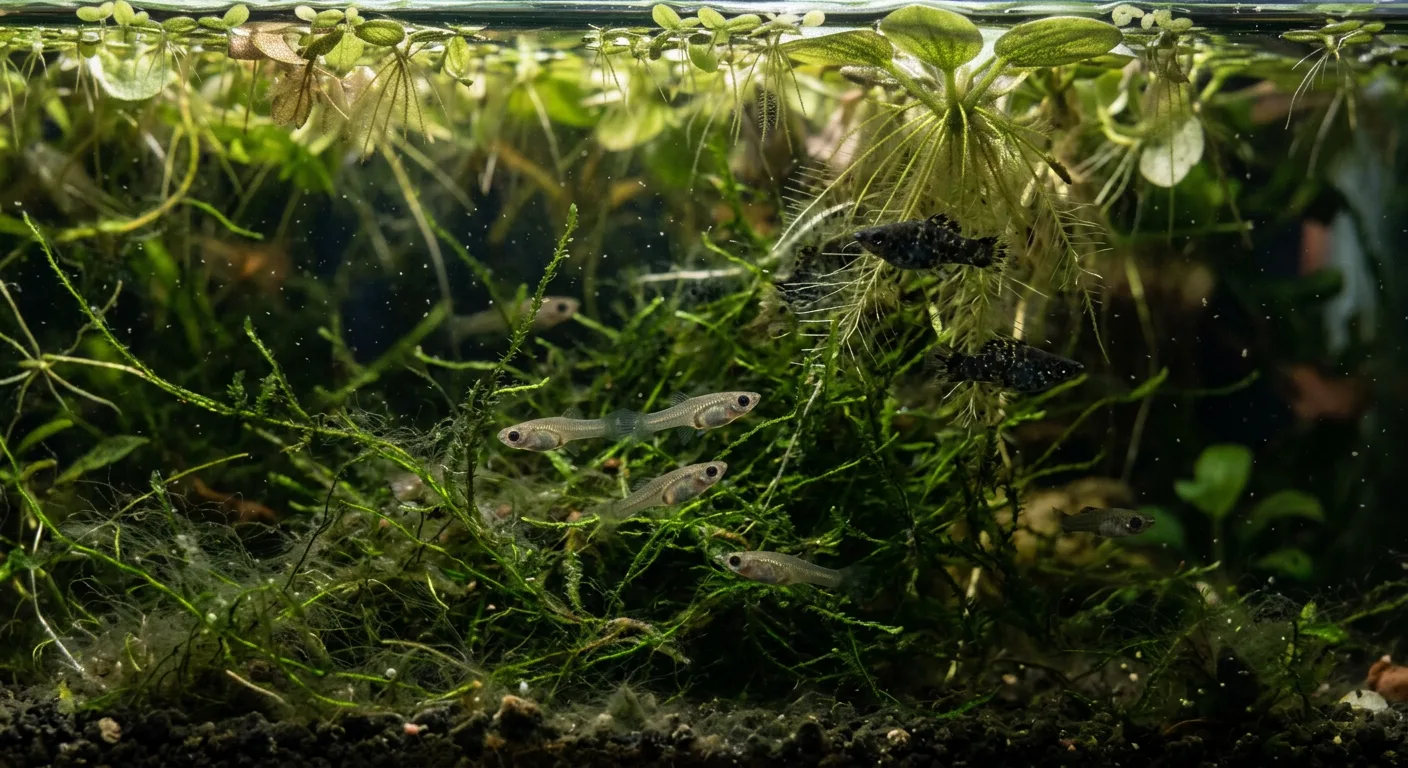
Adults of both species will eat newborn fry. Molly fry are larger than guppy fry at birth, so they have a better survival chance, but even they are vulnerable. Dense plants such as java moss and floating plants give fry cover, as shown below. If you want to raise the young, follow our guide to raising guppy fry and move pregnant females or fry into a separate grow-out tank.
If you do not want fry
The most reliable way to avoid fry is to keep only males of each species. Male-only groups are colorful and active, though they can squabble when crowded, so keep the group at a manageable size. If you prefer guppies, our male guppies collection shows the range of colors available, and our premium guppy pairs are a good fit if you do want a breeding group in a separate tank.
Common problems in a guppy and molly tank, and how to solve them
Most issues come from a handful of causes. The table below summarizes the usual suspects and quick fixes.
| Problem | Likely cause | What to do |
|---|---|---|
| Ragged or nipped fins | Too few females, crowding or an aggressive male | Add females, plants and hiding spots; separate the aggressor temporarily |
| Cloudy water | Overfeeding or immature filter | Cut feeding, add a water change, check filter media |
| Gasping at the surface | Low oxygen or ammonia or nitrite spike | Test water, add surface agitation, change water |
| Shimmying or flicking | Poor water or low hardness | Test GH and pH, correct gradually |
| White spots | Ich after stress or temperature swings | Quarantine and treat; see our ich guide |
| Algae blooms | Excess light or nutrients | Reduce light to 6 to 8 hours, add plants, manage nitrate |
Ammonia, nitrite and nitrate
Mollies produce more waste, so the nitrogen cycle is pushed harder. If you ever see sluggish fish, test immediately. Our guides to ammonia poisoning in guppies and nitrite poisoning in guppies give emergency steps.
Ich and other diseases
Mollies are a bit more prone to some stress diseases when shipped or kept in soft water. Quarantine before mixing and keep temperature steady. If you notice white spots, our guppy ich treatment guide applies to mollies as well.
Best tank setup for guppies and mollies
A good setup makes the difference between a calm community and a stressed one. Think about filtration, plants, substrate and decor.
Filtration and flow
Choose a filter rated for a tank somewhat larger than yours. A hang-on-back or canister filter works well, and a sponge filter is a great gentle option if you keep fry. Aim for flow that turns the tank volume over several times per hour but leaves quiet corners for guppies, whose long tails make strong currents tiring. Our guide to the best filter for guppies compares options.
Plants and decor
Live plants absorb nitrate, shelter fry and give both species grazing surfaces. Hardy options such as java fern, anubias, vallisneria and hornwort handle harder water and the occasional nibble from mollies, which tend to eat softer plants. See our list of the best live plants for guppies and the planted guppy tank setup guide.
Substrate and hardness
If your tap water is on the soft side, a small amount of crushed coral in a filter bag or a mineral substrate can raise GH and KH gently. Make changes slowly, ideally no more than a small adjustment over several days, because rapid shifts are more dangerous than a slightly imperfect value.
Lighting and temperature
Keep lights on for 6 to 8 hours to limit algae, and hold temperature steady around 77 to 80 °F with a reliable heater. Our post on whether guppies need a heater explains why stability matters.
Maintenance routine for a mixed livebearer tank
Consistent upkeep keeps a heavier-stocked tank healthy. Use this routine as a baseline and adjust to your test results.
- Weekly: change roughly 25 to 30 percent of the water, dechlorinate new water and match its temperature.
- Weekly: vacuum the substrate lightly and wipe algae from the glass.
- Every two weeks: rinse filter sponges in removed tank water, never under the tap.
- Monthly: test GH, KH and pH to see if hardness is drifting.
- Daily: observe behavior, count fish and check the heater.
Our guppy tank maintenance schedule gives a more detailed timetable.
Mollies versus other livebearers as guppy tank mates
If you are comparing options, mollies sit in the middle of the livebearer group in terms of size and demands. Platies are smaller and calmer, swordtails are larger and more energetic, and endlers are almost identical in needs to guppies.
| Tank mate | Adult size | Water preference | Compatibility with guppies |
|---|---|---|---|
| Molly | About 3 to 4.5 in (some larger) | Harder, higher pH | Good with a larger tank |
| Platy | About 2 to 3 in | Moderate hardness | Excellent; see platies and guppies |
| Swordtail | About 4 to 5 in | Moderate to hard | Good in 30 gallons or more |
| Endler | About 1 to 1.5 in | Similar to guppies | Excellent but interbreeds |
For deeper comparisons, read can guppies live with platies and can guppies live with swordtails. For a wider view, the common molly entry on Wikipedia gives background on the species.
Tips for beginners and experienced keepers
For beginners
- Buy fewer fish than the tank could hold; you can always add more later.
- Start with guppies, add mollies only after the tank has been stable for a month or two.
- Test the water weekly for the first two months.
- Choose mollies of similar temperament; avoid very large sailfin males in smaller tanks.
For experienced keepers
- Match harder-water mollies with hardy, line-bred guppies that you have already acclimated to your parameters.
- Consider a dedicated molly-and-guppy grow-out tank to raise fry from both species separately.
- Use floating plants to keep nitrate low and give shy fish cover.
- Track growth and fin condition in a simple log so you spot changes early.
Quick checklist before mixing guppies and mollies
- Tank is 20 gallons or larger, preferably long.
- Ammonia and nitrite are 0 ppm and the tank is fully cycled.
- pH is stable between roughly 7.2 and 8.0, with moderate hardness.
- Temperature is steady around 77 to 80 °F.
- Males and females are stocked at a ratio of one male to two or three females per species.
- Plants and hiding spots are in place.
- New fish have been quarantined and acclimated slowly.
- You have a plan for fry or a male-only group.
When you are ready to stock the guppy side of the tank, browse healthy, shipped-live fish in our male guppy range, and keep the guppy care pillar page handy as a reference as your tank grows.
FAQ
Can guppies and mollies live together in a 10 gallon tank?
It is not recommended. Adult mollies grow to around 3 to 4.5 inches and are active swimmers, so a 10 gallon tank becomes crowded quickly. A 20 gallon long is the practical minimum, and a 29 or 30 gallon gives much more room for both species.
Will mollies eat guppy fry?
Yes, adult mollies and guppies will both eat newborn fry if they can catch them. Dense plants such as java moss and floating plants help fry survive. For better results, move pregnant females or newborn fry to a separate grow-out tank.
Do guppies and mollies need the same water?
They overlap a lot, but mollies prefer harder, more alkaline water. A pH of about 7.4 to 7.8 with moderate hardness suits both species. Keep values stable rather than chasing a perfect number, because sudden swings cause more harm.
Do mollies need salt when kept with guppies?
Not necessarily. In hard freshwater, most mollies do well without salt, and guppies tolerate only low levels. If you add salt for molly health, use a modest dose and only dose the replacement water, since salt does not evaporate.
How many mollies can I keep with guppies?
In a 29 to 30 gallon tank, around three to five mollies with eight to ten guppies is a reasonable starting stock. Keep two or three females for every male of each species to reduce harassment.
Can guppies and mollies breed together?
No. They are different species and do not produce hybrid fry, although males may still pester the wrong species. Both species can breed within their own kind, so expect fry if you keep mixed-sex groups.
Are mollies aggressive toward guppies?
Mollies are generally peaceful, but males can be pushy and may crowd smaller guppies. Adequate tank size, more females than males, and plenty of plants usually keep behavior calm.
Behind the care guides
Care begins with steady systems
Our guppy guides focus on practical routines: keep water stable, observe fish closely and allow for natural variation.

Care systems
Steady water, thoughtful care
Gentle filtration and regular observation support healthy aquarium routines.

Natural variation
Every guppy is different
Color, size and fin shape vary with strain, age and each individual fish.
Editorial illustrations for context; they do not depict HiGuppy's exact facility or current fish stock.