The HiGuppy Journal
Can Guppies Live With Swordtails? Tank Size, Ratios and Tips
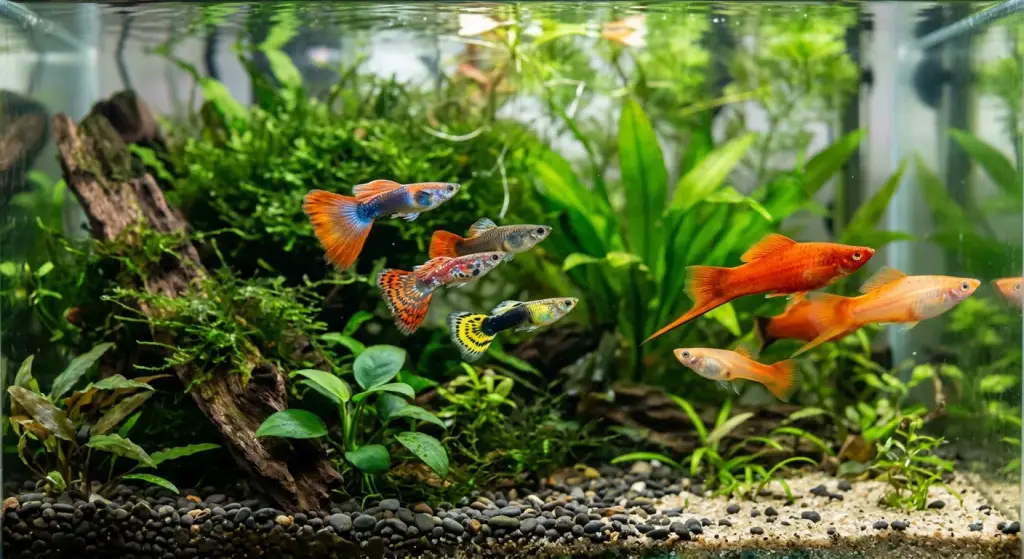
Can guppies live with swordtails? Yes. Guppies and swordtails are both peaceful, hardy livebearers from the same family that like similar water, so they usually share a tank well. The keys are a big enough tank (about 20 gallons or more), a sensible male-to-female ratio, plenty of plants for hiding, and a plan for the fry. Our complete guppy care guide covers the basics that apply here too.
That short answer hides a few details that decide whether the tank stays calm or turns stressful. Swordtails grow much larger than guppies, they are active swimmers, and the males can be pushy with each other. This guide walks through compatibility, tank size, setup, feeding, breeding, common problems and a final checklist, so you can decide whether the combination fits your tank. Treat numbers as general ranges and adjust them for your own fish.
Can guppies live with swordtails? The quick compatibility check
When people ask whether guppies can live with swordtails, they usually want to know three things: will they fight, will they eat each other, and will they breed. Most of the time the answer is no fighting between the two species, no eating of adults, and yes, both will breed if males and females are present. The reasons come down to shared biology and similar temperament.
Why they get along
- Same family. Both belong to the livebearer group (Poeciliidae), so their needs for water, food and space overlap a lot. You can read the general background on guppies on Wikipedia.
- Similar temperature range. Both do well in warm water, roughly 72 to 82°F (22 to 28°C). Many keepers aim for the middle, around 76 to 78°F.
- Similar water chemistry. Both tend to prefer neutral to slightly alkaline, moderately hard water rather than very soft, acidic water.
- Peaceful temperament. Neither species is aggressive toward other fish in general, although swordtail males can chase each other.
- Same food. Quality flakes, micro pellets and small frozen foods suit both.
Where the differences matter
The main difference is size and energy. A full-grown swordtail often reaches around 4 to 5 inches (10 to 12 cm) excluding the sword, while an adult guppy is usually around 1.5 to 2.5 inches (4 to 6 cm). Swordtails are fast and busy, which can stress shy or slow fancy-tailed guppies. Swordtail fry and guppy fry are also both small enough to be eaten by adult fish, which we cover in the breeding section.
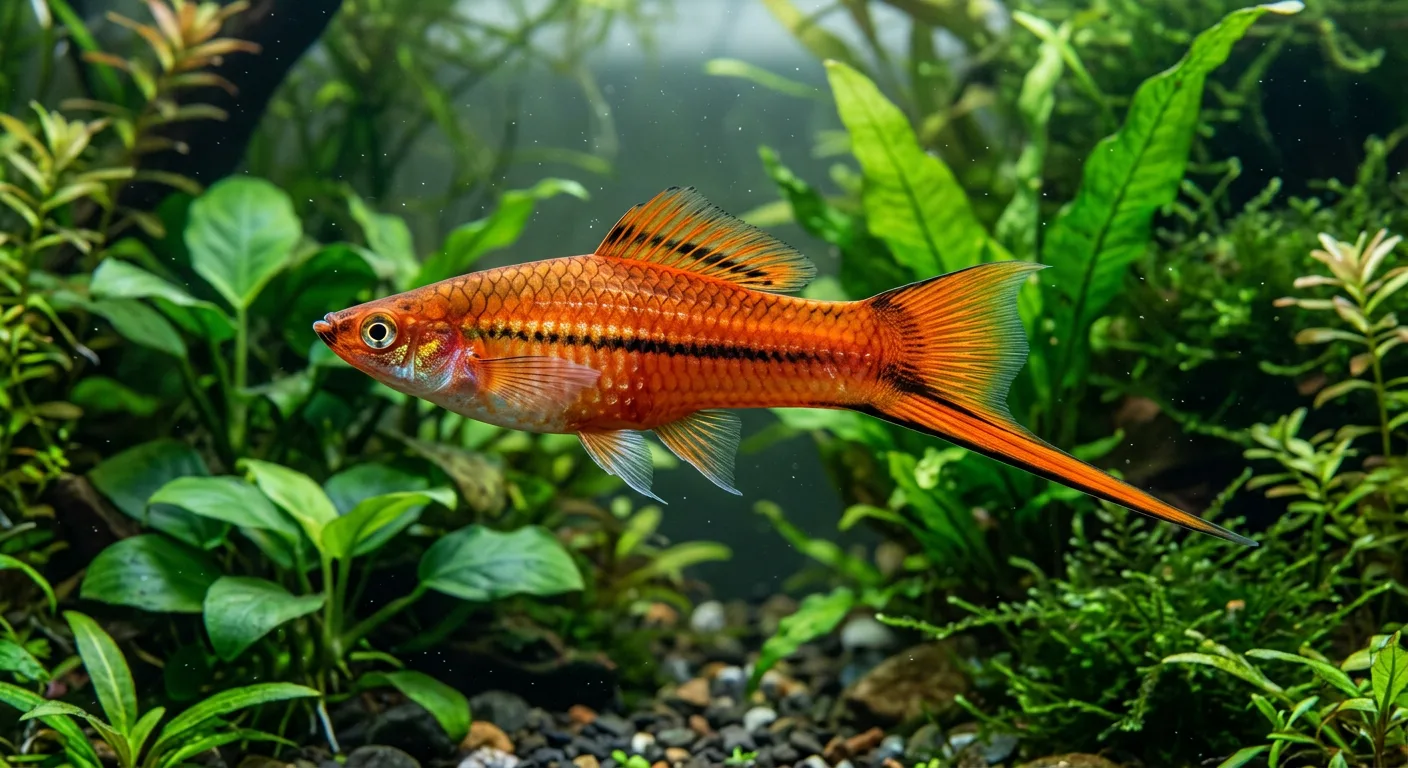
Guppies vs swordtails: a side-by-side comparison
Seeing the two species next to each other makes planning easier. The figures below are typical ranges, not guarantees, and individual fish vary.
| Trait | Guppy | Swordtail |
|---|---|---|
| Adult size | About 1.5 to 2.5 in (4 to 6 cm) | About 4 to 5 in (10 to 12 cm), sword extra |
| Temperature | About 72 to 82°F (22 to 28°C) | About 72 to 82°F (22 to 28°C) |
| Water type | Neutral to slightly alkaline, moderately hard | Neutral to slightly alkaline, moderately hard |
| Temperament | Peaceful, can be fin-nippy when crowded | Peaceful, males can squabble |
| Activity | Moderate swimmer | Fast, active swimmer |
| Typical lifespan | About 2 years, sometimes more | About 3 to 5 years |
| Minimum tank (group) | 10 gallons for a small group | 20 gallons or more for a small group |
If you want to learn how guppy size develops, see our guide on how big guppies get. The bigger swordtail size is the reason the shared tank needs to be larger than a guppy-only setup.
Tank size and layout for guppies and swordtails
Tank size is the single most important decision. A 10 gallon tank is fine for a handful of guppies, but swordtails need room to swim in long straight lines. As a practical guide, 20 gallons is a sensible minimum for a small mixed group, and 29 to 40 gallons gives much more comfortable stocking. Longer tanks are better than tall ones because swordtails like horizontal swimming space.
Recommended stocking by tank size
| Tank size | Example mixed group | Comment |
|---|---|---|
| 10 gallons | Guppies only | Too small for swordtails |
| 20 gallons (long) | 2 swordtails + 4 to 5 guppies | Minimum, needs frequent water changes |
| 29 gallons | 3 swordtails + 6 to 8 guppies | Comfortable for most keepers |
| 40 gallons | 4 to 5 swordtails + 8 to 10 guppies | Best for a breeding colony or more fish |
These are cautious examples. Livebearers breed quickly, so a tank that looks fine today can be overcrowded in a few months. For general stocking math, our article on how many guppies per gallon helps you plan the guppy side of the tank.
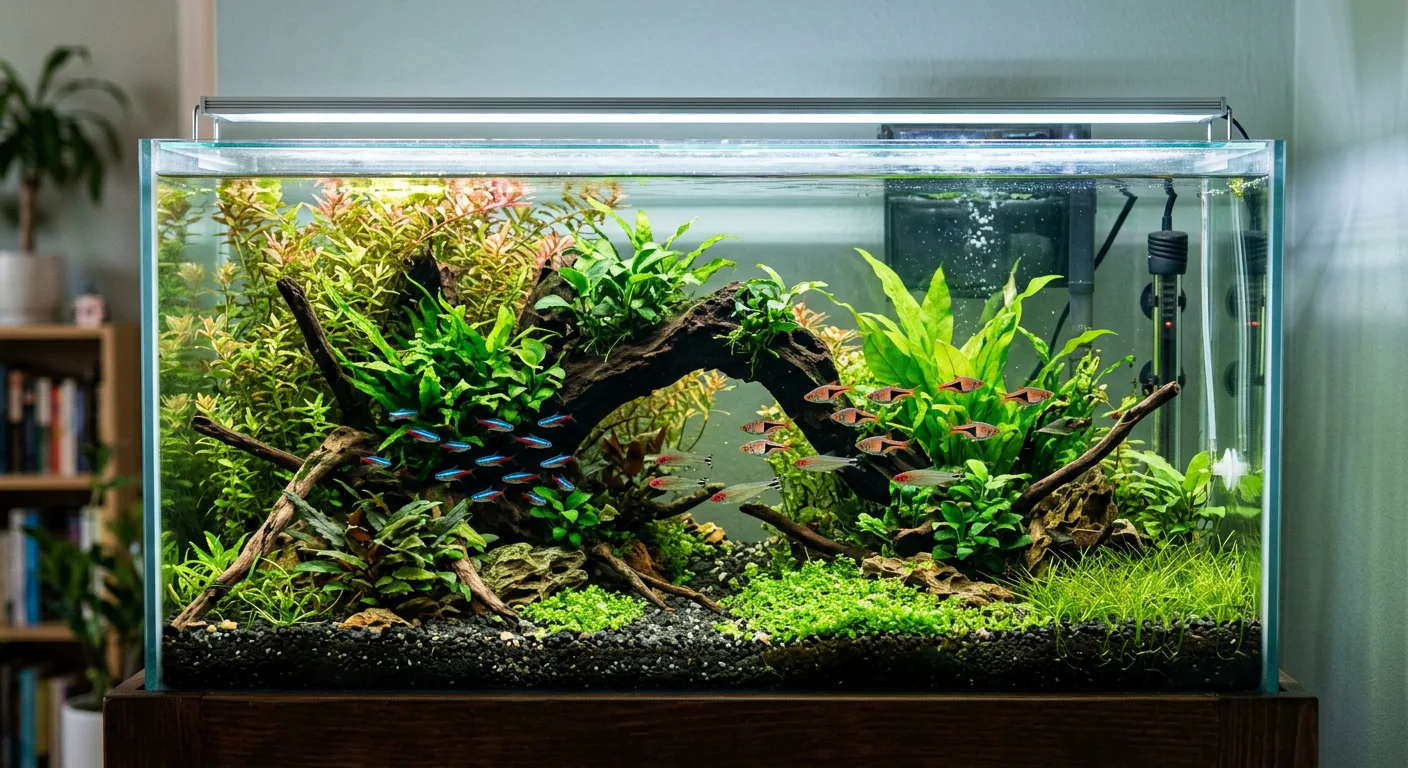
Step by step: setting up the shared tank
- Pick a long tank. A 20 gallon long or a 29 gallon is a better base than a tall tank of the same volume.
- Cycle the tank first. Run the filter for several weeks until ammonia and nitrite read zero. Our guppy tank cycling checklist shows how.
- Add a heater and thermometer. Set it around 76 to 78°F (24 to 26°C) and check it daily for the first week.
- Add a filter with gentle flow. Swordtails handle flow well, but long-finned guppies do not like strong currents. A sponge filter or a baffled filter works well.
- Plant heavily. Use stem plants, java moss, and floating plants to break lines of sight and give shelter.
- Add a lid. Swordtails are known jumpers, so a tight lid is strongly recommended.
- Introduce fish slowly. Add the fish in small groups, ideally after a short quarantine.
Plants, hiding places and lid
Dense planting solves many problems at once. It gives females a place to rest from male attention, it protects newborn fry, and it breaks up the territory of squabbling males. Floating plants such as water sprite or frogbit are especially useful because they also dim the light and make shy guppies feel safer. If you need ideas, see our list of the best live plants for guppies. Keep the lid on even if the fish seem calm, because a startled swordtail can leap through a small gap.
Water parameters both species can share
Because both fish come from similar environments, you can set one set of water parameters for the whole tank. The ranges below are widely used targets for livebearers. Stable water matters more than hitting a perfect number, so avoid sudden swings.
| Parameter | Suggested range |
|---|---|
| Temperature | 74 to 80°F (23 to 27°C) |
| pH | About 7.0 to 8.0 |
| General hardness (GH) | Moderate to hard, roughly 8 to 20 dGH |
| Ammonia and nitrite | 0 ppm |
| Nitrate | Under 20 to 40 ppm, lower is better |
For a deeper look at these numbers, read our guppy water parameters guide. Swordtails produce more waste than guppies because they are bigger and eat more, so plan on weekly partial water changes of roughly 20 to 30 percent, and test with a liquid kit instead of guessing.
Feeding guppies and swordtails together
Feeding is easy because both fish accept the same foods. The challenge is making sure the smaller, calmer guppies get their share when faster swordtails race to the surface.
What to feed
- Staple: a good quality flake or micro pellet formulated for tropical fish.
- Protein treats: frozen or live brine shrimp, daphnia, and bloodworms a few times a week in small amounts.
- Greens: swordtails in particular enjoy algae and blanched vegetables such as zucchini or spinach.
How much and how often
Feed small portions once or twice a day, only as much as the fish finish in about one to two minutes. Overfeeding fouls the water quickly, especially with larger fish. Our guide to how often to feed guppies gives a simple routine. A useful trick is to scatter food in two spots: drop some on one side to keep the swordtails busy, then add a pinch on the other side for the guppies.
Breeding: what happens when guppies and swordtails share a tank
Both species are livebearers and both will breed readily in a warm, well-fed tank. A female guppy can store sperm, so fry may appear weeks after a male is introduced. The practical question is how to handle the babies.
Do guppies and swordtails interbreed?
No. Despite being related, guppies and swordtails are different genera and do not produce hybrids in a home aquarium. Guppies will mate with guppies, and swordtails with swordtails. You may see males of one species display to females of the other, but that does not create mixed offspring. If you want to understand related crossing questions, our article on whether guppies can breed with Endlers explains what actually can hybridize.
Protecting the fry
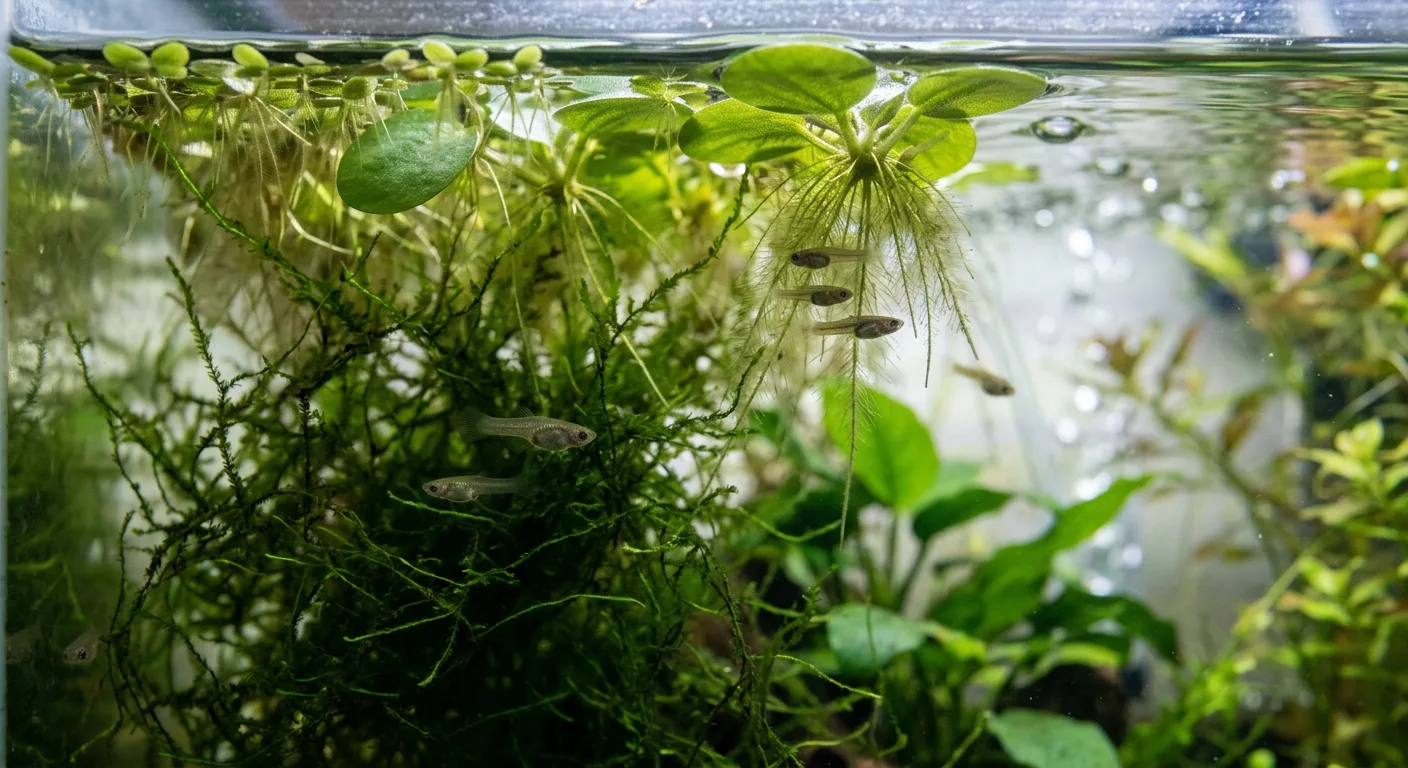
Adult fish of both species will eat newborn fry if they find them. A thickly planted tank leaves some survivors, but if you want most of a litter to live, use a different approach.
- Provide a dense mat of java moss, floating plants and fine-leaved stems.
- Move a pregnant female to a separate breeding box or small tank only when she is close to delivery, since stress can cause problems.
- Return her to the main tank after she gives birth.
- Raise the fry in their own tank with frequent small feedings.
Our guides on how to separate guppy fry and raising guppy fry walk through this in detail.
Managing the population
If you do nothing, a mixed livebearer tank can fill up in a few months. Common options include keeping only males, keeping a single sex of each species, or having a plan to rehome extra fish. A male-only guppy group avoids fry entirely, which is explained in our male-only guppy tank guide.
Best male-to-female ratio
Ratio matters because livebearer males constantly pursue females. Too many males per female leads to harassed, exhausted females, torn fins and even deaths.
| Species | Suggested ratio | Reason |
|---|---|---|
| Guppies | 2 to 3 females per male | Spreads out male attention |
| Swordtails | 2 to 3 females per male | Reduces male-to-male fights and chasing |
If you only want color without fry, keep all-male guppies and a single male swordtail or females only. Swordtail males can be territorial toward each other, so keeping more than one male in a small tank is not recommended unless there are many females and lots of hiding spots. See our article on the male to female guppy ratio for more detail.
Common problems and how to fix them
Most issues in a mixed guppy and swordtail tank fall into a small number of patterns. Knowing the signs helps you act early.
Fin nipping and chasing
Guppies, especially fancy-tailed males, can have their fins nipped when the tank is crowded or the swordtails are bored. Add plants, add more females, and make sure the tank is large enough. If you see ragged fins, check the water first, because poor water can cause similar damage. Our article on guppy fin rot shows how to tell the difference.
Stress from active swimmers
If guppies hide constantly, lose color or hover near the surface, they may be stressed. Look for the signs listed in our guide to signs of stress in guppies. Common fixes are more cover, lowering the number of swordtail males, and making sure the water is clean.
Dirty water from a heavy bioload
Swordtails eat and produce more waste. Test the water weekly. If ammonia or nitrite appears, do a larger water change right away and reduce feeding for a few days.
Jumping
Swordtails can leap out of an open tank, especially when startled or chased. A tight lid and a few floating plants nearby help a lot.
Disease spreading
New fish can bring illness. Quarantine new guppies and swordtails for a couple of weeks before adding them. See our guide on how to quarantine new guppies for a simple routine.
Other tank mates that work with both species
Once you have guppies and swordtails together, you may want a few extra species. Choose peaceful, similarly sized or smaller fish that like the same water. Good options often include corydoras catfish, platies and small peaceful tetras. Avoid large or aggressive fish, and avoid long-finned fish that nip such as some barbs. Our guide to the best tank mates for guppies lists more ideas, and our article on guppies living with platies covers another close livebearer relative.
Tips for beginners and experienced keepers
If you are new
- Start with a 29 gallon or larger tank so mistakes are forgiven more easily.
- Buy fewer fish than you think you need and add more later.
- Choose healthy, active fish with clear eyes and full fins. Buying from a reliable source helps; you can browse healthy male guppies or a ready-made breeder trio if you also want to breed guppies.
- Test your water before the fish arrive.
If you have kept livebearers before
- Consider keeping separate guppy and swordtail breeding tanks so you can keep strains pure and fry safe.
- Use a log to track births, deaths and water test results.
- Rotate culling or rehoming decisions regularly to avoid sudden overpopulation.
Quick checklist before you mix them
- Tank is 20 gallons or larger, preferably long.
- Tank is cycled, with ammonia and nitrite at zero.
- Heater set around 76 to 78°F and a tight lid fitted.
- Lots of plants and hiding spots, including floating plants.
- Two to three females for every male of each species.
- Plan for fry: breeding box, separate tank or rehoming.
- Weekly water changes and testing.
- New fish quarantined before introduction.
If you follow this list, the answer to whether guppies can live with swordtails will be a confident yes. For more help with the fundamentals, revisit our guppy care guide, or start with healthy fish from our premium guppy pairs.
FAQ
Can guppies live with swordtails in a 10 gallon tank?
It is not recommended. Swordtails grow much larger and need swimming room, so a 10 gallon tank gets crowded quickly. A 20 gallon long is a sensible minimum, and 29 gallons or more is better for a mixed group.
Will swordtails eat guppies?
Adult swordtails do not normally hunt adult guppies. They may eat newborn fry of either species, though. Plenty of plants and a separate fry tank improve survival.
Do guppies and swordtails breed with each other?
No. They are different species and do not produce hybrids in aquariums. Guppies breed with guppies and swordtails with swordtails, even if the males show interest across species.
Are swordtails aggressive toward guppies?
Swordtails are generally peaceful toward other species. Males can chase one another, and they can sometimes harass guppies in a small tank. Extra space, plants and a good female ratio usually solve this.
What temperature suits both guppies and swordtails?
A range of about 74 to 80°F (23 to 27°C) works well for both, and many keepers aim near 76 to 78°F. Keep the temperature steady rather than letting it swing.
How many swordtails can I keep with guppies?
In a 29 gallon tank, two to three swordtails with six to eight guppies is a cautious starting point. Add more only in larger tanks and watch the water tests closely.
Should I buy guppies and swordtails at the same time?
It helps, because they all settle in together and no group claims territory first. Quarantine the new fish and add them in the same session if you can.
Can I keep a single male swordtail with female guppies?
You can, but he may harass the females if there are too few of them. Keep several females and plenty of cover. A lone male can also be less stressed than two males competing.
Behind the care guides
Care begins with steady systems
Our guppy guides focus on practical routines: keep water stable, observe fish closely and allow for natural variation.
Care systems
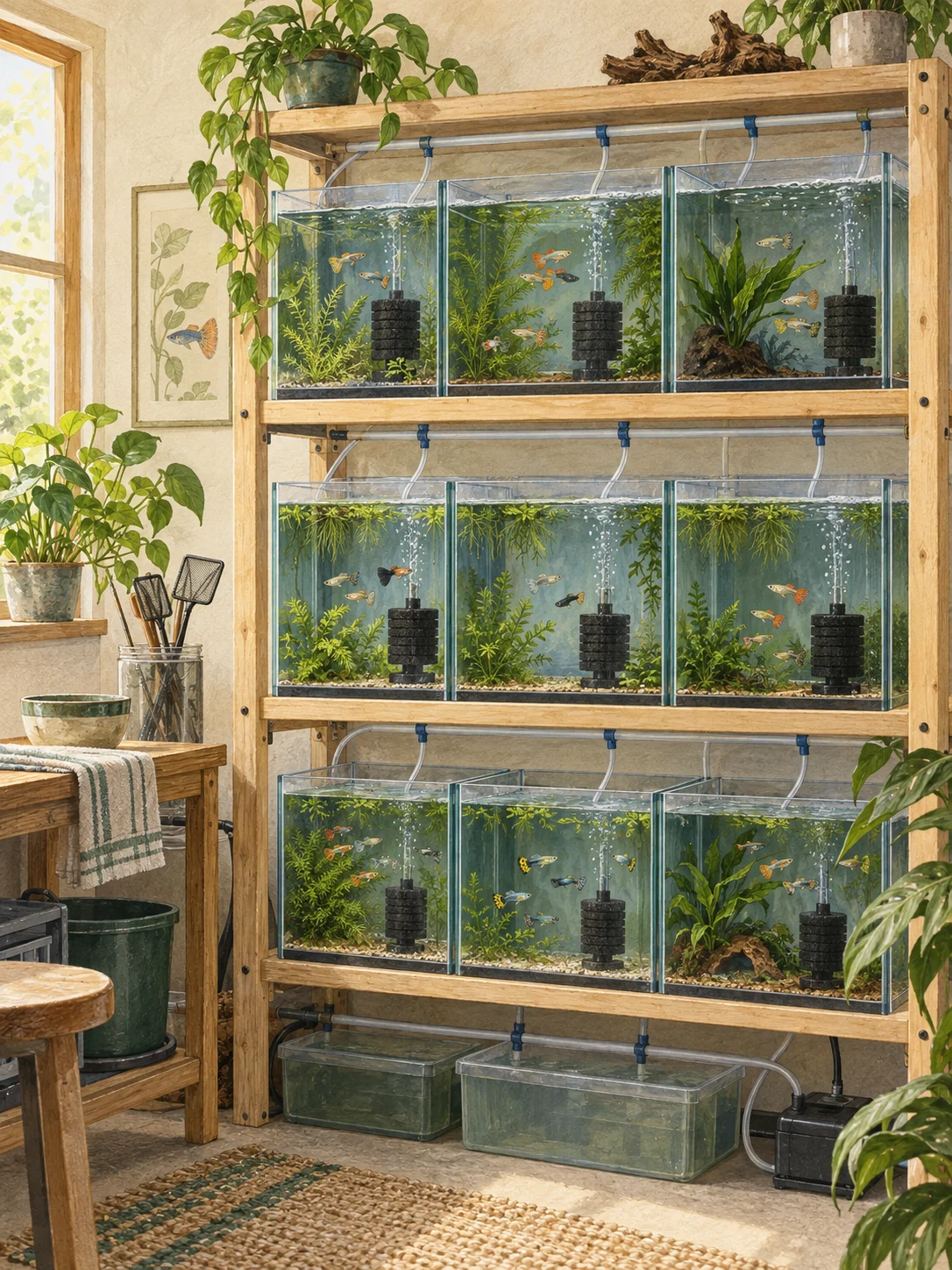
Steady water, thoughtful care
Gentle filtration and regular observation support healthy aquarium routines.
Natural variation
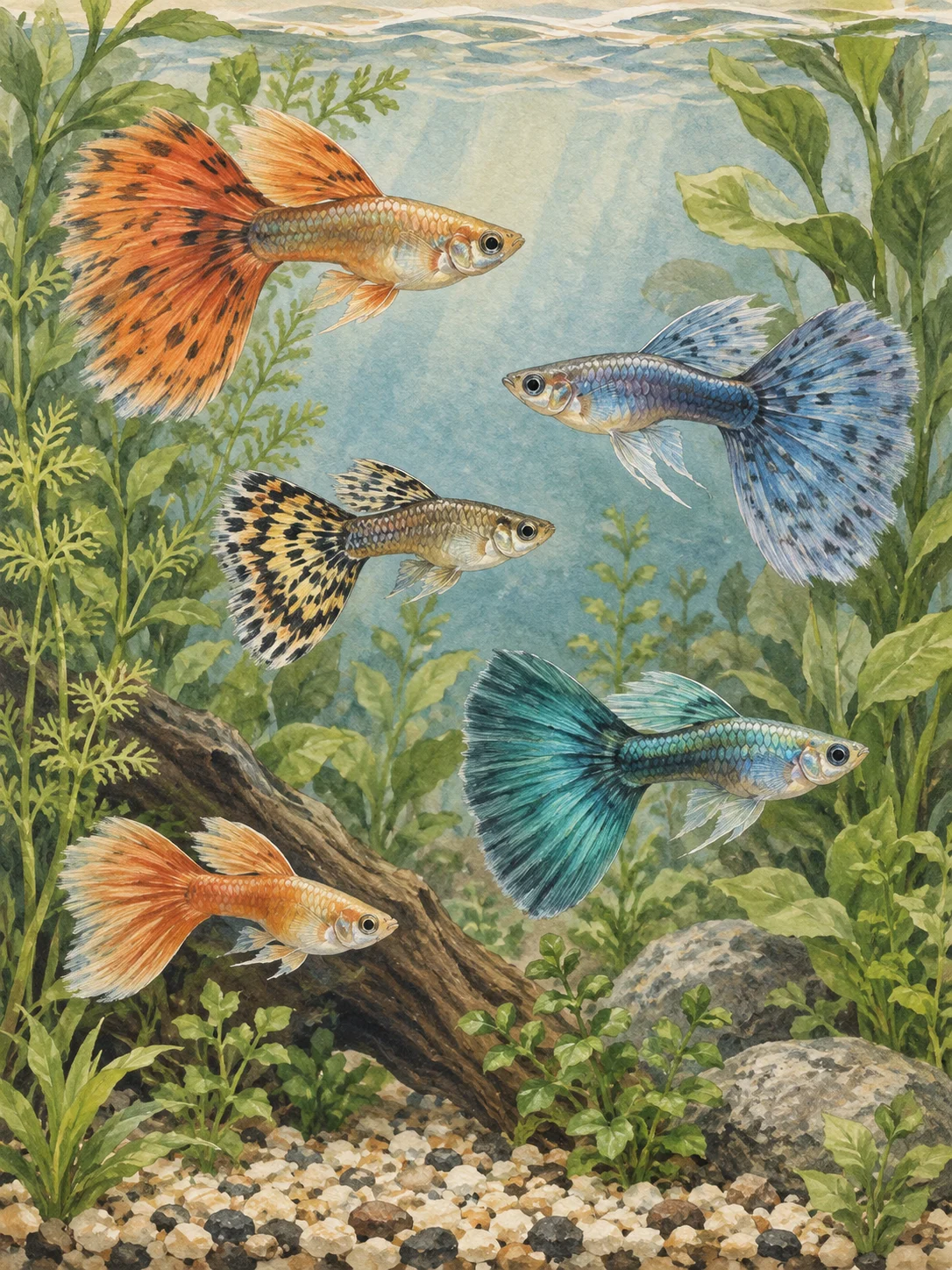
Every guppy is different
Color, size and fin shape vary with strain, age and each individual fish.
Editorial illustrations for context; they do not depict HiGuppy's exact facility or current fish stock.