The HiGuppy Journal
Live Food for Guppies: Benefits, Risks and Beginner Tips
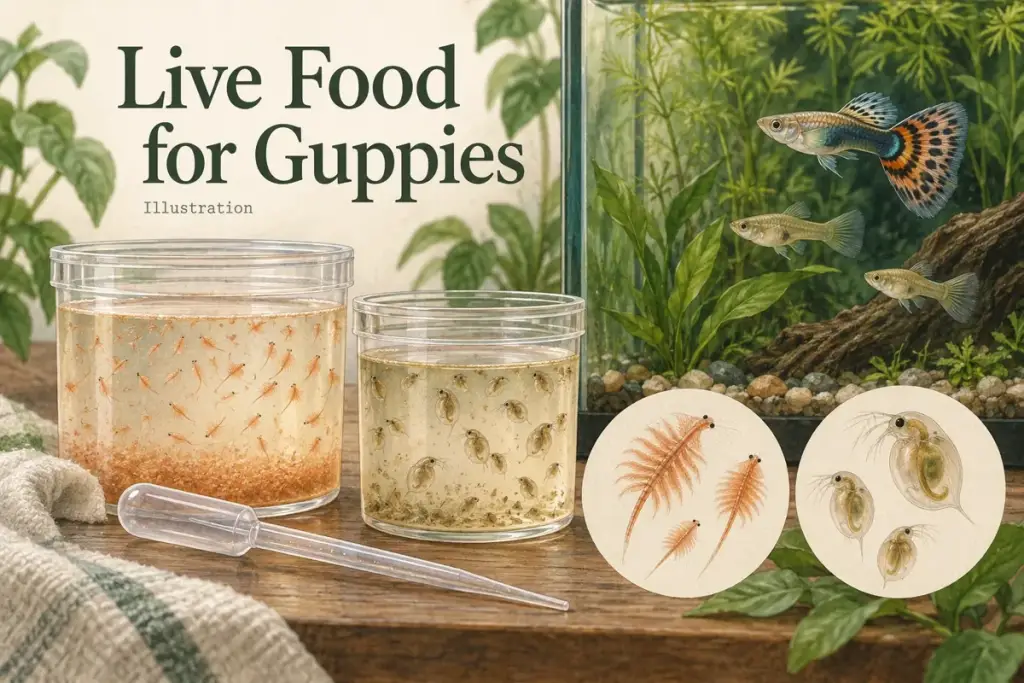
Live foods can add movement and variety to a guppy’s diet, but they are optional supplements, not a replacement for a complete staple food. Brine shrimp and daphnia are common choices; select food small enough for the fish, source it carefully, and feed only what the tank can handle. Frozen alternatives are convenient when culturing or hatching live food is not practical.
Aqueon’s livebearer care guide names brine shrimp and daphnia among protein foods for guppies. The best choice depends on fish size, your appetite for maintaining a culture or hatchery, and how you will keep uneaten food from becoming waste.
What “live food” means
Live food is prey offered alive, such as newly hatched brine shrimp or cultured small invertebrates. Frozen food is harvested and frozen; freeze-dried food is processed to remove moisture. These forms differ in handling and movement, and a guppy may respond differently to each. Aquarium Co-Op’s overview of live aquarium foods describes common options and culture considerations.
Movement can attract attention, which can be useful when a fish is hesitant to take a familiar food. It does not prove that the food is nutritionally complete, or that every fish benefits from it as a regular meal. Keep an appropriate prepared diet as the base and use live foods to add variety only when they suit the fish and setup.
Common live foods for guppies
Baby brine shrimp
Newly hatched brine shrimp are small live crustaceans often used as food for young fish. UF/IFAS describes brine shrimp nauplii as a widely used live feed in aquaculture and notes their use in feeding fish. Its brine shrimp aquaculture lesson provides background on how they hatch and why they are used. For guppies, make sure the particles fit the fish; do not assume every fry is the same size or can take the same prey.
Hatching your own requires a separate container, salt water suitable for the eggs, aeration, and a way to separate the young shrimp from shells and unhatched eggs. Follow the brine shrimp egg supplier’s current instructions rather than copying a recipe from another product or tank. If that routine is too much, a prepared fry food or an appropriate frozen food may be simpler.
Daphnia and other cultured foods
Daphnia are small freshwater crustaceans that hobbyists sometimes culture in a separate vessel. They can provide moving prey, but a culture needs its own care and can fluctuate. Other live foods discussed in the Aquarium Co-Op guide vary in size, culture needs, and suitability; “live” does not make all organisms appropriate for every guppy or every aquarium.
Choose the organism for the fish you actually keep. Adults may take larger prey than fry; tiny newborns may need much smaller particles. Observe whether every fish can feed, and avoid dropping a large quantity into the aquarium just because live prey can move around. For a separate age-based feeding routine, see our guppy fry feeding schedule.
Live, frozen, or dry food: which should you choose?
Live food is active and may prompt a strong feeding response, but it asks more of the keeper: sourcing, handling, and sometimes a culture or hatch setup. Frozen food can be easier to portion and store according to its label, while a complete flake or micro pellet is usually simpler as a daily base. These choices are not interchangeable in every situation; match particle size and composition to the fish and check whether each guppy is actually eating.
For a mixed-size tank, compare the smallest guppy’s mouth to the food, not just the adult fish. Baby brine shrimp or finely prepared food may suit young fish where larger prey does not. Our raising guppy fry guide covers the separate equipment and feeding considerations involved in growing fry.
Source and handle live foods thoughtfully
Use food intended for aquarium animals from a source you trust. Avoid collecting unknown organisms from ponds, ditches, or outdoor water and then adding them directly to a display tank. Live and frozen feeds can carry biological hazards: UF/IFAS discusses food as a possible pathogen route in recirculating aquaculture systems in its fish-health biosecurity guidance. That publication addresses aquaculture systems rather than household guppy tanks, so apply it as a reason for sensible sourcing and clean handling, not a prediction that a given food will make your fish sick.
Keep culture tools separate from aquarium tools, label containers, and follow the supplier’s storage directions. Do not pour culture water into the display by default; transfer only the food you intend to feed, using clean equipment. If fish have a sudden appetite or behavior change, check the aquarium and seek species-appropriate help rather than trying to solve a health problem by adding live food.
Feed a small amount and watch the tank
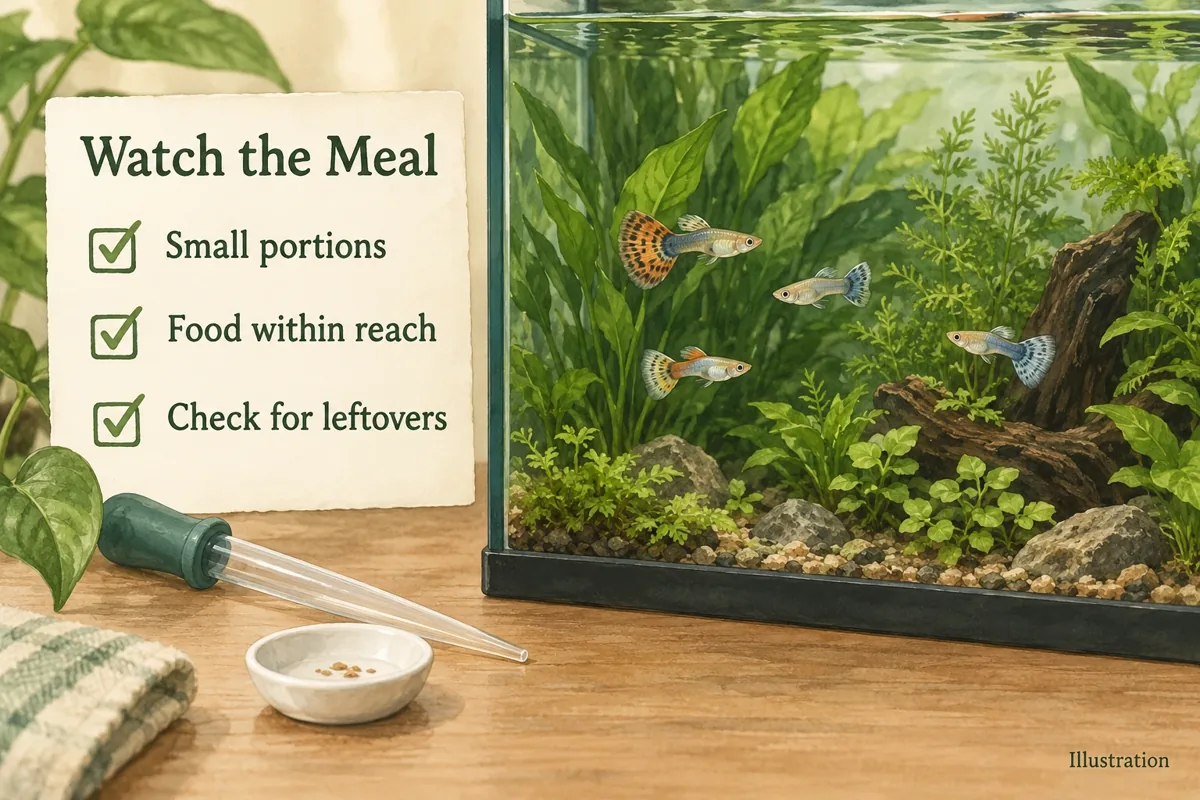
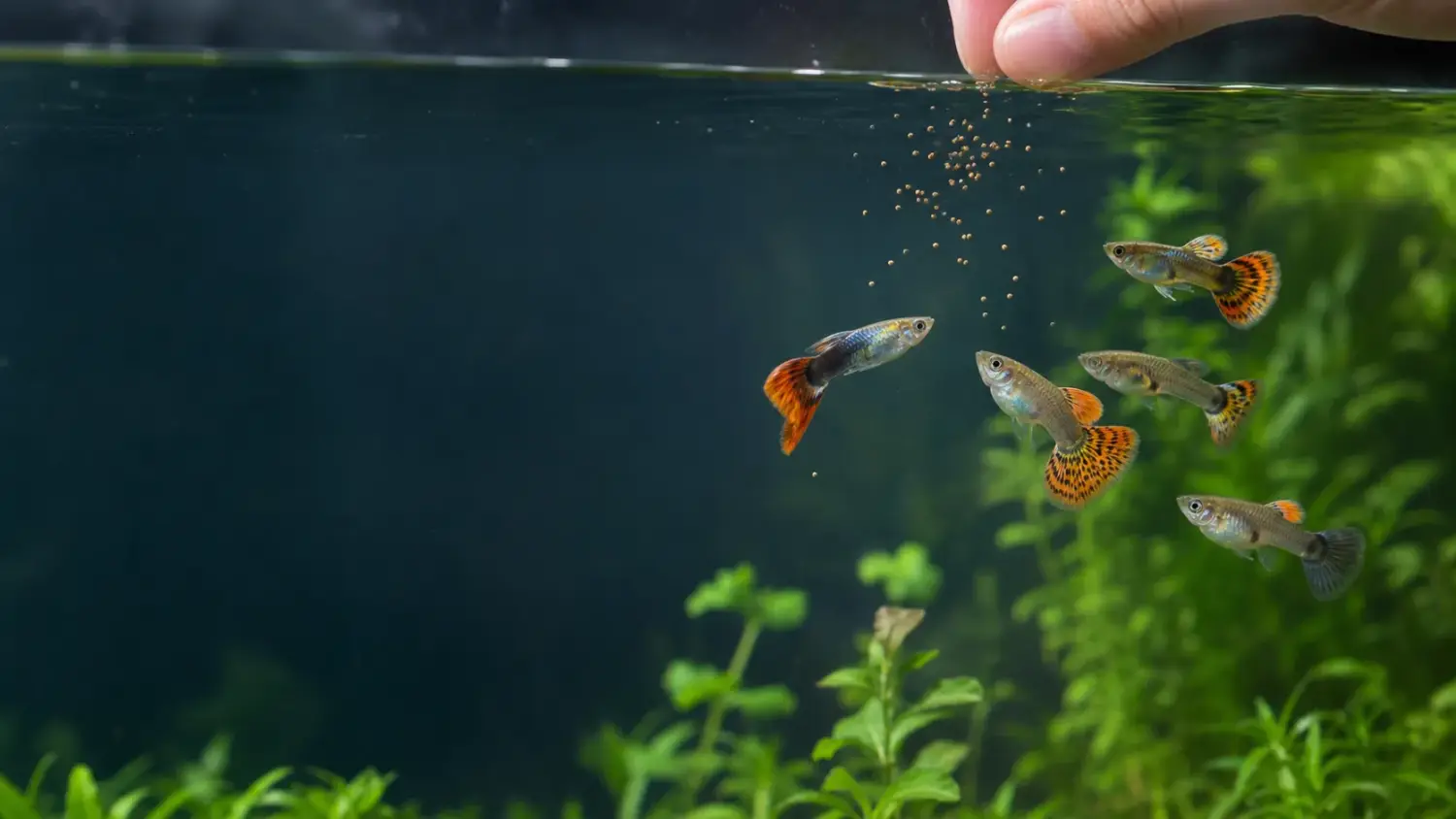
Offer a modest portion and observe whether the guppies eat it. Remove visible uneaten food and stop if the fish lose interest. A live organism that remains alive may not break down immediately, but it is still important to monitor where it goes, whether it reaches the fish, and whether the aquarium stays clean. Don’t make repeated large additions to compensate for uncertainty. Our overfeeding guide explains how extra food can become an avoidable water-quality load.
Keep a short note of the food offered and how the fish responded. If you are rotating foods, change one item at a time. A steady complete staple, appropriate portions, and stable maintenance are more useful than a complicated menu. Use the guppy feeding guide to plan the routine and the best-food comparison to review staple and supplemental options.
Quick checklist for choosing a live food
- Choose a known aquarium food species and a reputable source.
- Match the prey size to the smallest guppy that should eat it.
- Keep prepared complete food as the base of the diet.
- Use separate, clean tools for cultures and the display tank.
- Feed a small amount, observe the fish, and remove visible leftovers.
- Use a fry-specific routine when feeding newborns or juveniles.
Frequently Asked Questions
Can guppies eat live brine shrimp?
Many guppies can take appropriately sized brine shrimp. Match the prey to the fish and use it as a supplement to a complete staple, not the whole diet.
Is live food better than flakes or pellets?
Not automatically. Live food adds movement and variety, while a complete prepared food is easier to store and use consistently. The right choice depends on size, formulation, handling, and whether your fish eat it.
Can guppy fry eat live food?
Some live foods, including suitably small newly hatched brine shrimp, are used for young fish. Fry size varies; confirm that the food fits and follow a fry-specific feeding plan.
Can I collect live food from a pond?
It is safer to avoid putting unknown wild organisms or source water directly into a home aquarium. Choose known aquarium foods from a trusted source and use clean, separate tools.
What if my guppies ignore live food?
Remove anything uneaten and return to a familiar food. Check prey size, fish acclimation, and normal appetite; do not keep adding more to force a response.
Behind the care guides
Care begins with steady systems
Our guppy guides focus on practical routines: keep water stable, observe fish closely and allow for natural variation.
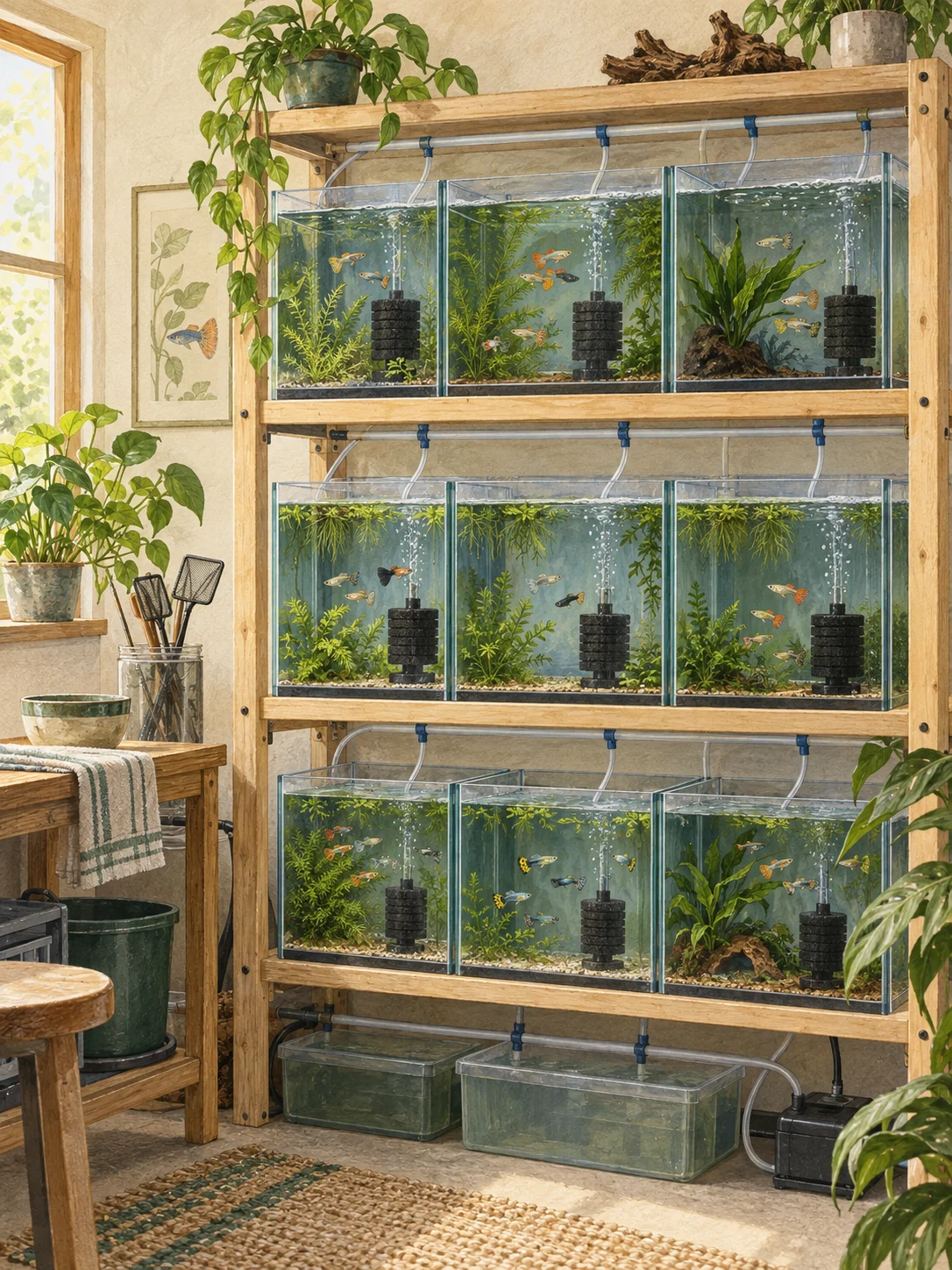
Care systems
Steady water, thoughtful care
Gentle filtration and regular observation support healthy aquarium routines.
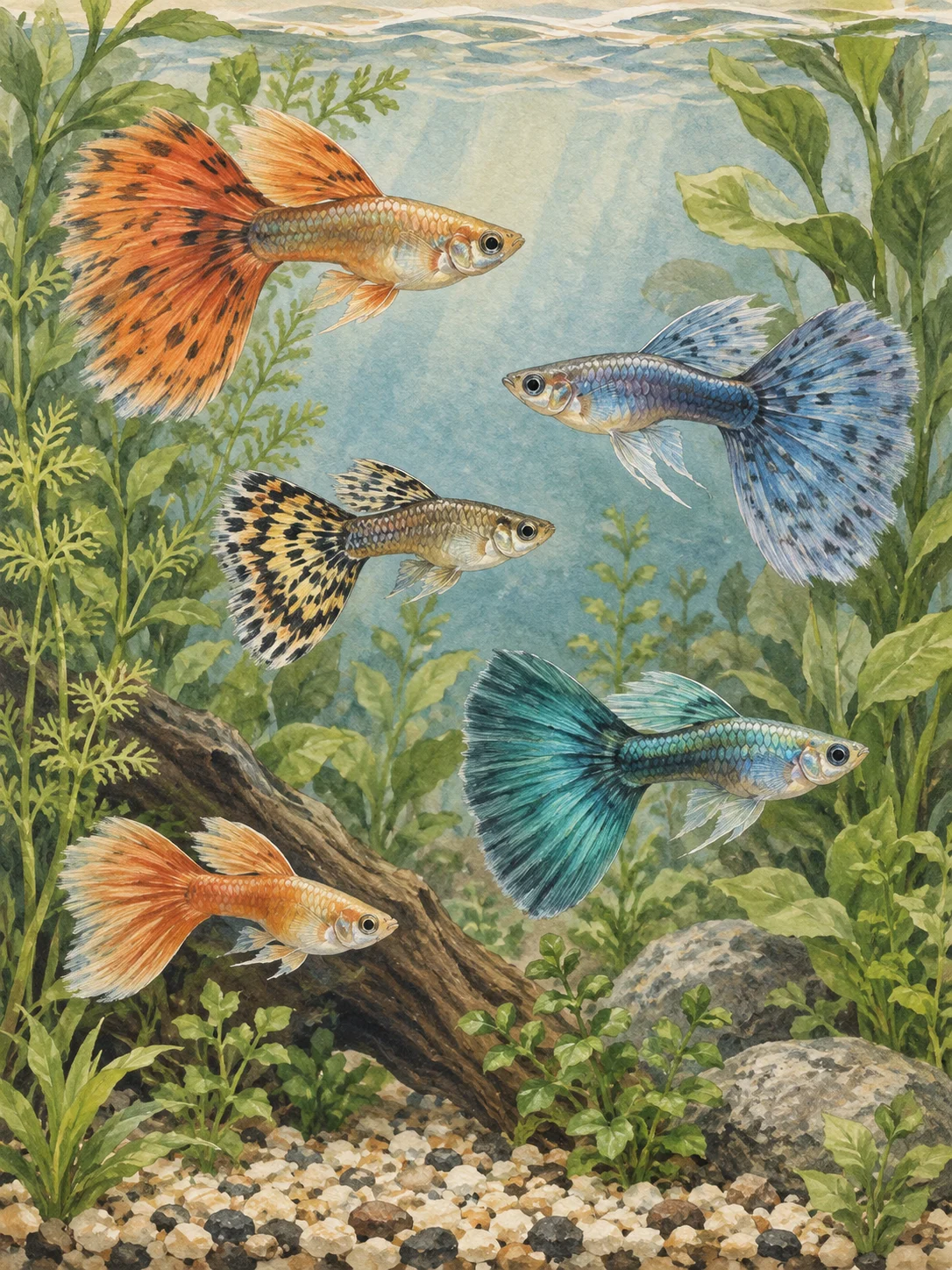
Natural variation
Every guppy is different
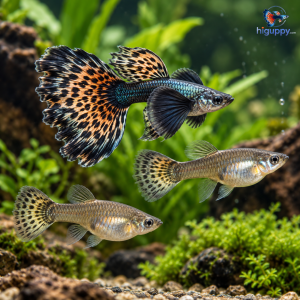
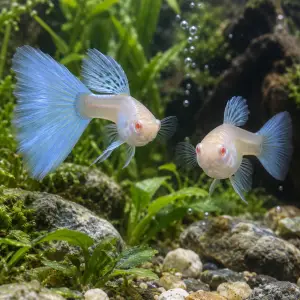
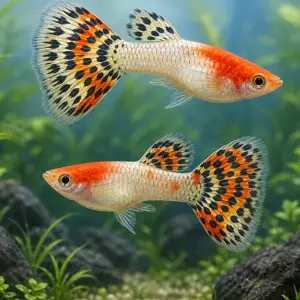
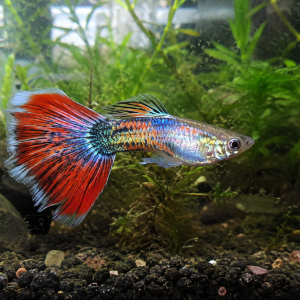
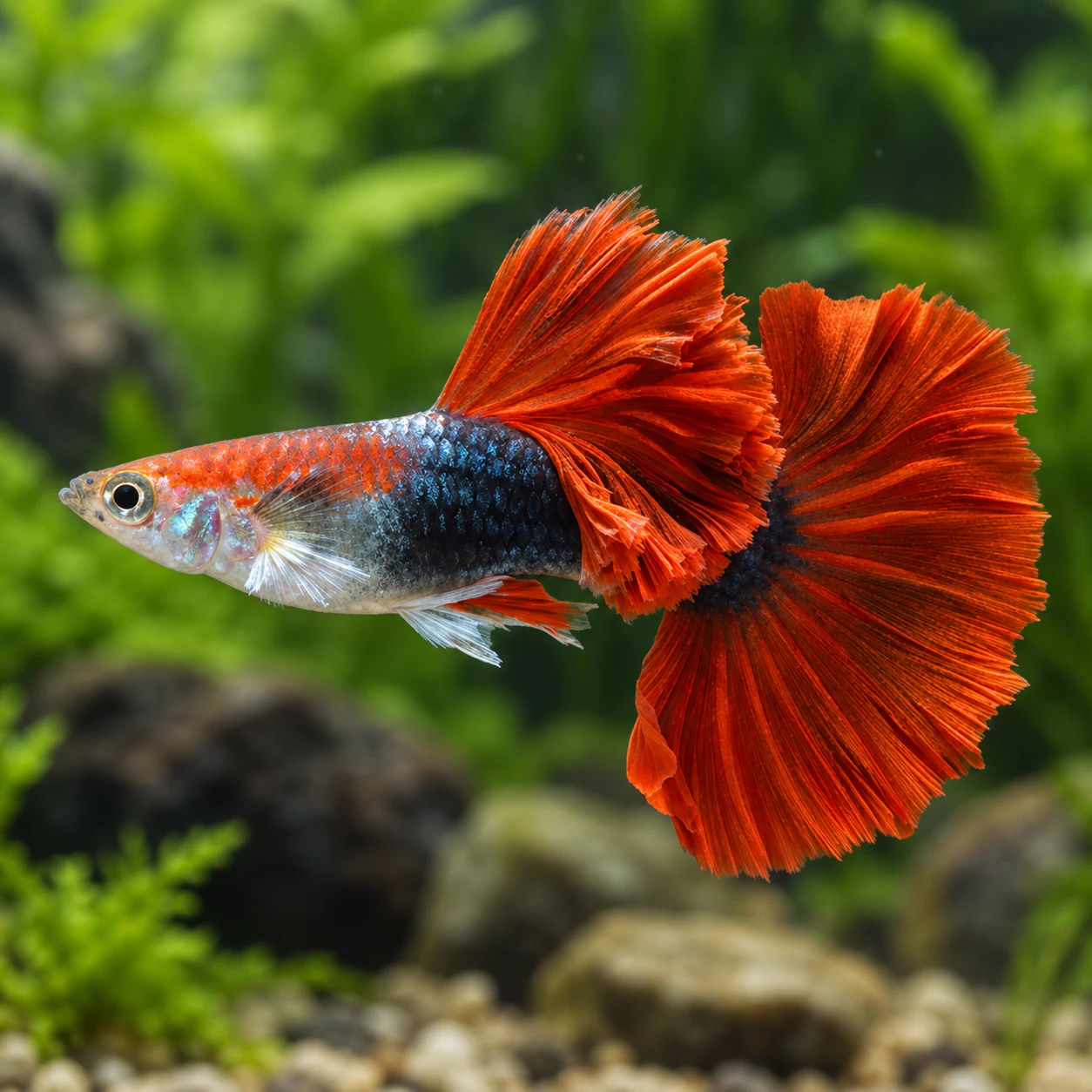
Color, size and fin shape vary with strain, age and each individual fish.
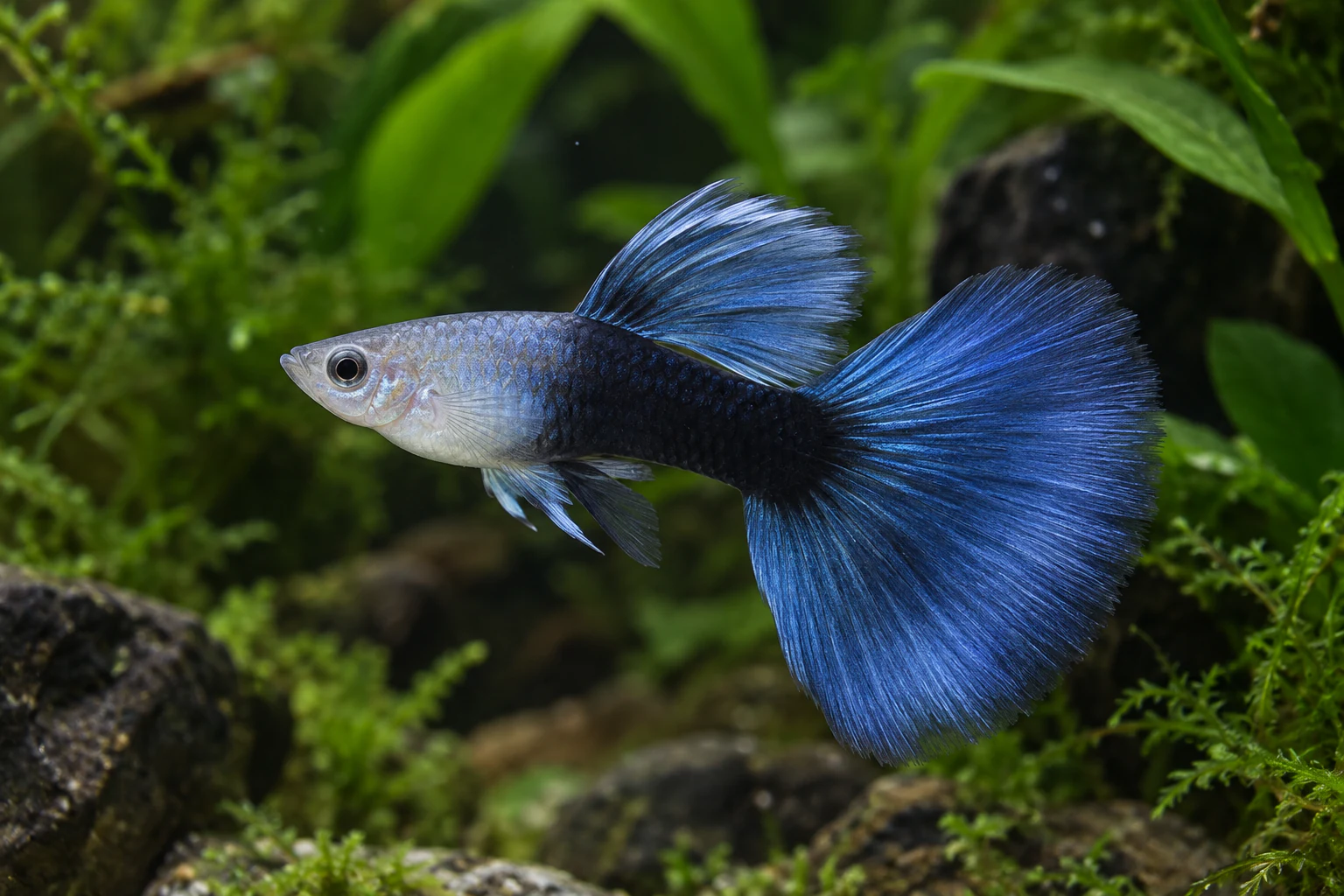
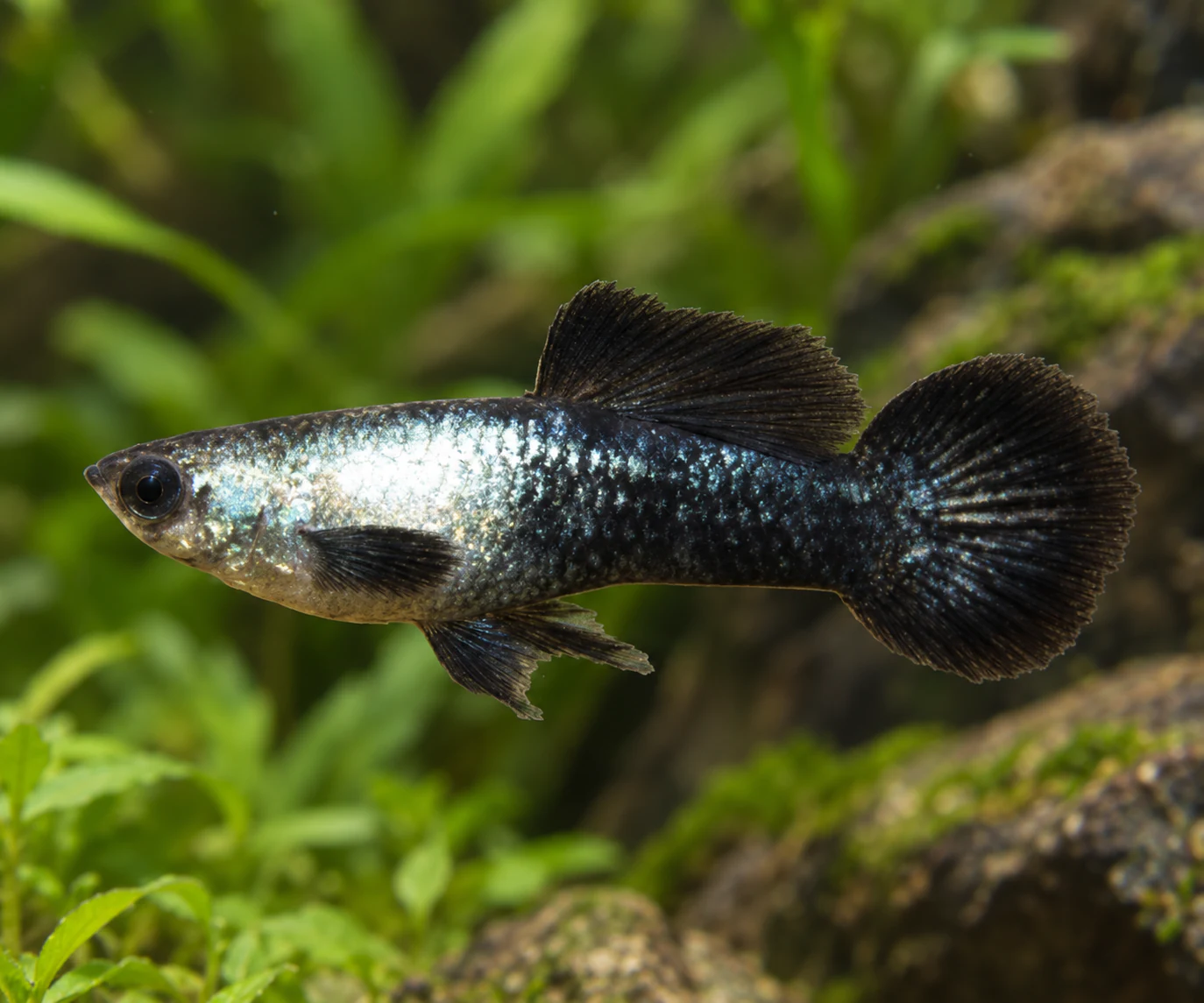
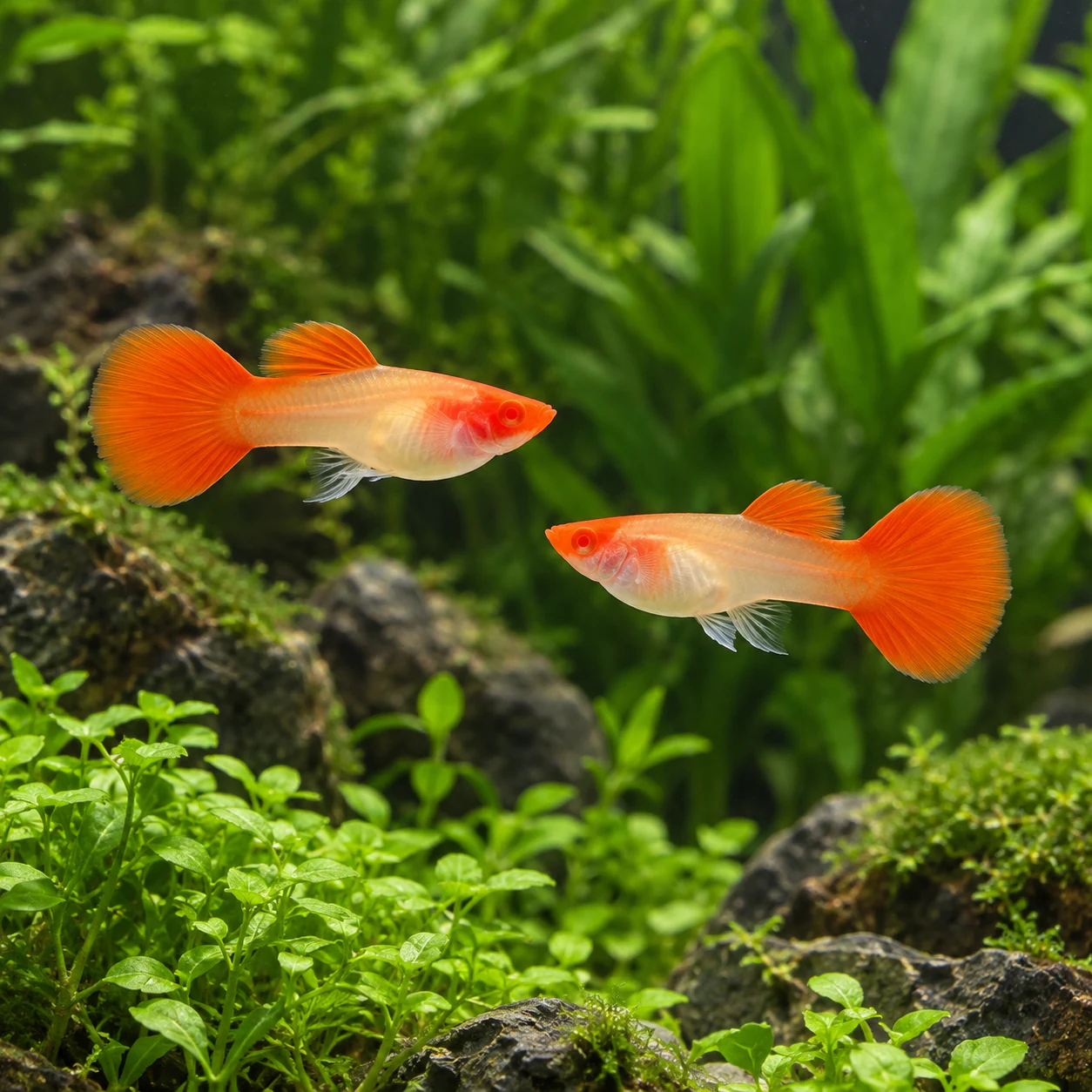
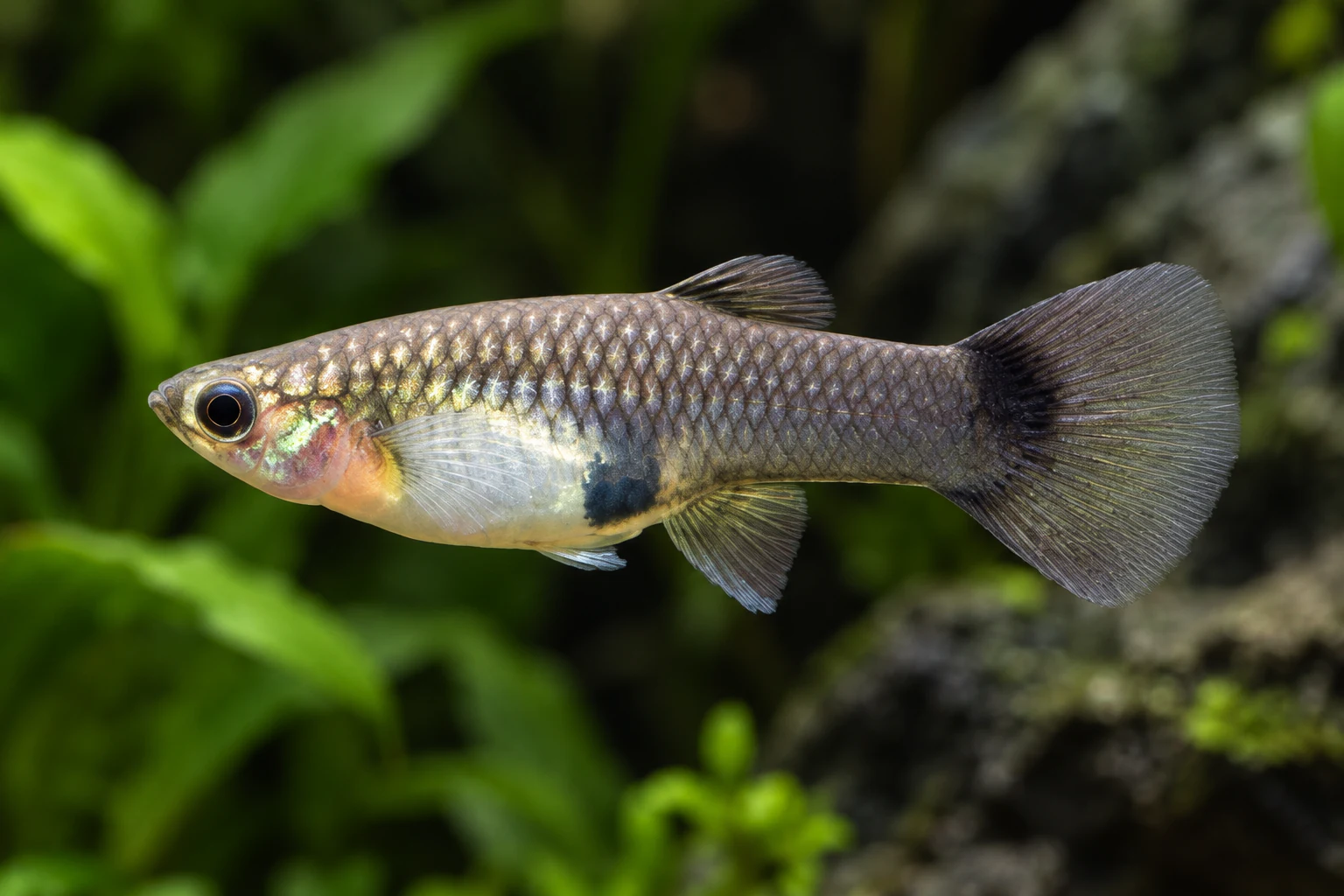
Editorial illustrations for context; they do not depict HiGuppy's exact facility or current fish stock.