The HiGuppy Journal
Nitrite Poisoning in Guppies: Signs, Emergency Fix and Prevention
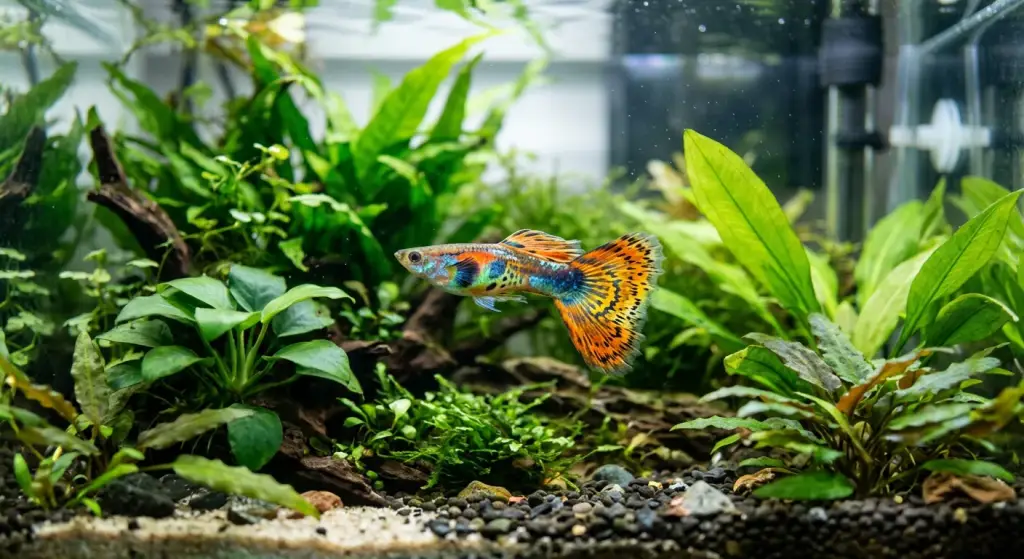
What is nitrite poisoning in guppies? Nitrite poisoning in guppies happens when nitrite (NO2), a toxic by-product of the nitrogen cycle, builds up in the tank and stops the blood from carrying oxygen properly. Fish gasp at the surface, hang near the filter outflow and may show brownish or pale gills. The fix is quick: test, do a large water change, reduce feeding and keep the filter running. Our complete guppy care guide covers the routine that prevents it.
Nitrite problems usually hit new tanks, tanks with a crashed filter, and tanks that were suddenly overstocked or overfed. The good news is that nitrite poisoning in guppies is very treatable when you catch it early, and almost completely preventable once you understand where nitrite comes from. This guide explains the cause, the symptoms, a step-by-step emergency plan, the long-term fix and the mistakes that keep the problem coming back. Treat every number below as a general range and adjust for your own fish, test kit and water.
What nitrite poisoning in guppies actually is
To handle nitrite poisoning in guppies well, you need a picture of what nitrite is and why it hurts. Nothing here is exotic: it is the middle step of a process that happens in every aquarium.
Where nitrite comes from
Fish waste, uneaten food and rotting plant matter release ammonia. Beneficial bacteria turn ammonia into nitrite, and a second group of bacteria turns nitrite into the much less harmful nitrate. This is the nitrogen cycle, described in general terms on Wikipedia’s nitrogen cycle page. In a healthy, established tank both bacteria groups keep up with the waste, so ammonia and nitrite read at or near zero.
Why nitrite is harmful to fish
Nitrite enters a fish through the gills and reacts with hemoglobin, turning it into a form that cannot carry oxygen well. This is often called brown blood disease. The fish can be sitting in well-aerated water and still struggle to get oxygen, which is why gasping is the classic sign. Because guppies are small, they can go downhill faster than larger fish.
Nitrite versus ammonia versus nitrate
| Compound | Source | Safe target for guppies | Main danger |
|---|---|---|---|
| Ammonia (NH3/NH4) | Waste, uneaten food | 0 ppm | Burns gills and skin |
| Nitrite (NO2) | Bacteria processing ammonia | 0 ppm | Blocks oxygen transport |
| Nitrate (NO3) | Bacteria processing nitrite | Under about 20-40 ppm | Stress and algae when high |
If you have also seen ammonia readings, read our guide to ammonia poisoning in guppies, because the two problems often travel together.
Common causes of nitrite spikes
A nitrite spike means the second bacteria group cannot keep up. Almost every case traces back to one of the causes below.
A tank that is not cycled yet
In a brand-new tank, ammonia bacteria establish first, so nitrite appears a little later and can stay high for days or weeks before the nitrite-eating bacteria catch up. Adding guppies before the cycle is finished is the single most common reason for nitrite poisoning in guppies. Our guppy tank cycling checklist walks through how to know a tank is ready.
Filter problems and cleaning mistakes
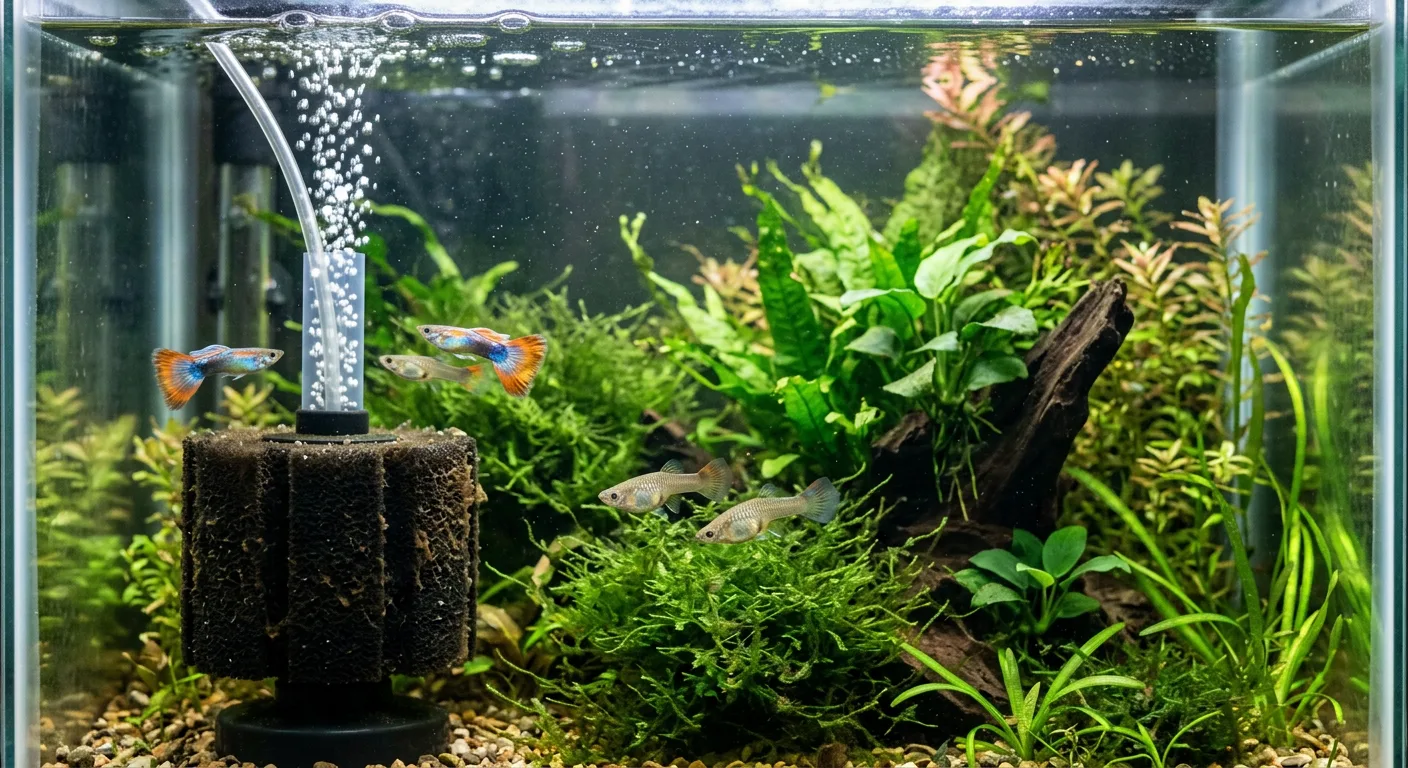
Most of your beneficial bacteria live in the filter media. Rinsing sponges or cartridges under hot tap water, replacing all media at once, or letting the filter switch off for many hours can wipe out bacteria and cause a mini-cycle. Chlorinated tap water used directly on media can do the same. If you want a bacteria-friendly option, a sponge filter is simple and forgiving, as covered in sponge filter for a guppy tank.
Overfeeding and overstocking
More fish and more food mean more ammonia, and more ammonia means more nitrite for the bacteria to handle. A tank that was fine with 6 guppies can spike after you add 10 more in one go. Feed only what the fish finish in about two minutes, a point explained in overfeeding guppies.
Medication, a dead fish or a power cut
Some antibiotics and other treatments can harm filter bacteria. A dead fish or a decaying snail hidden behind decor adds a sudden ammonia load. A long power outage stops filter flow, and the bacteria can suffocate. See guppy tank power outage for what to do.
Quick cause-and-effect table
| What happened | Why nitrite rose | First response |
|---|---|---|
| New tank, fish added early | Cycle not finished | Daily water changes, feed lightly |
| Filter media replaced or over-cleaned | Bacteria removed | Water changes, reseed with old media |
| Big batch of new fish | Waste outpaced bacteria | Water change, feed less, test daily |
| Medication course | Bacteria damaged | Test daily, change water as needed |
| Dead fish unnoticed | Ammonia surge then nitrite | Remove, change water, test |
Signs of nitrite poisoning in guppies
Symptoms are not always dramatic at first, so it helps to know the early warnings as well as the late ones. Always confirm with a test, because several other problems look similar.
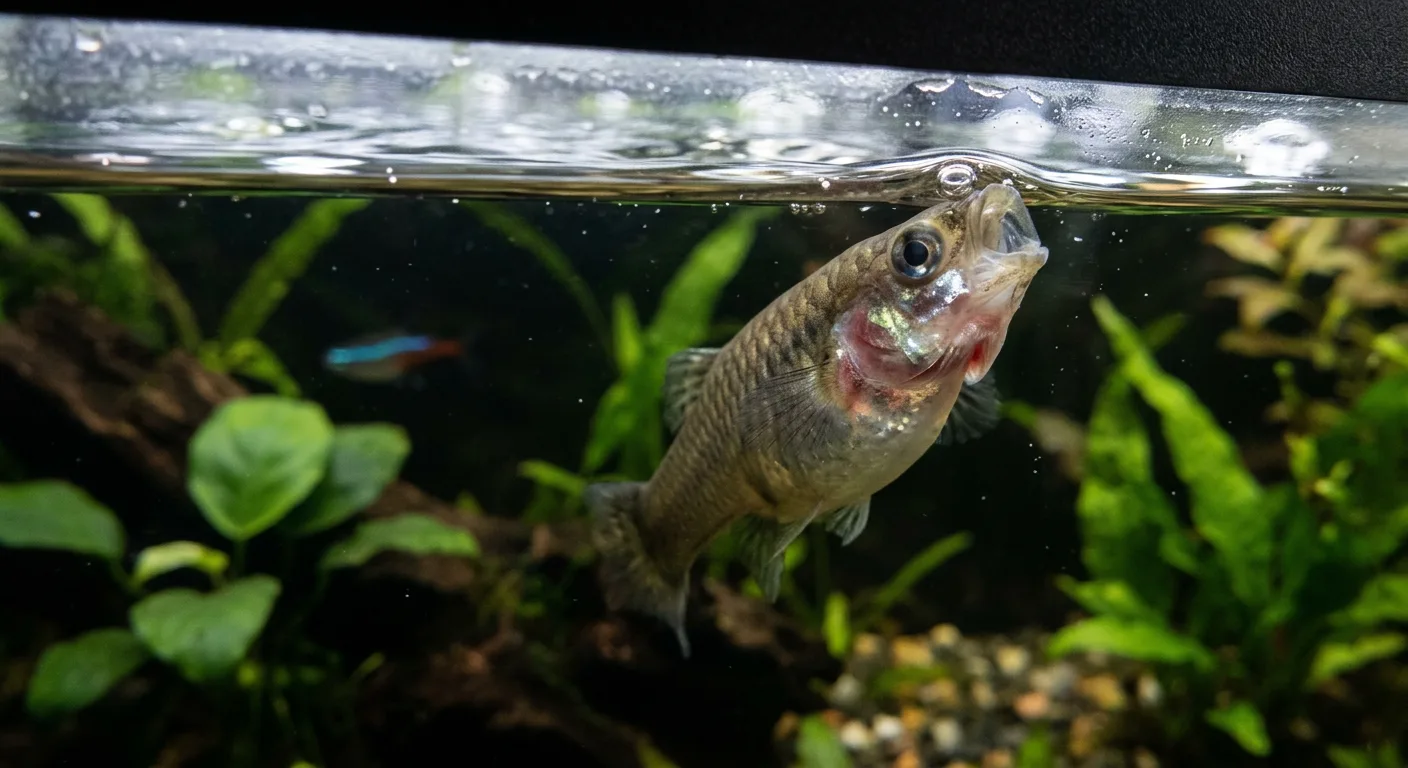
Early signs
- Guppies hover near the filter outflow or an air stone, where oxygen is highest.
- Faster breathing, with gill covers moving quickly.
- Reduced appetite and less interest in food.
- Clamped fins and less of the usual lively swimming.
Advanced signs
- Gasping at the surface even though the water is moving.
- Gills that look pale, brownish or darker than normal.
- Lethargy, resting on the bottom or hiding.
- Loss of color and, in severe cases, sudden deaths.
Look-alike problems
Gasping can also come from low oxygen, ammonia, gill flukes or high temperature. If your fish are gasping, compare with guppy gasping at the surface and guppy gill flukes. A nitrite test is the quickest way to separate nitrite poisoning in guppies from the rest.
How to test for nitrite properly
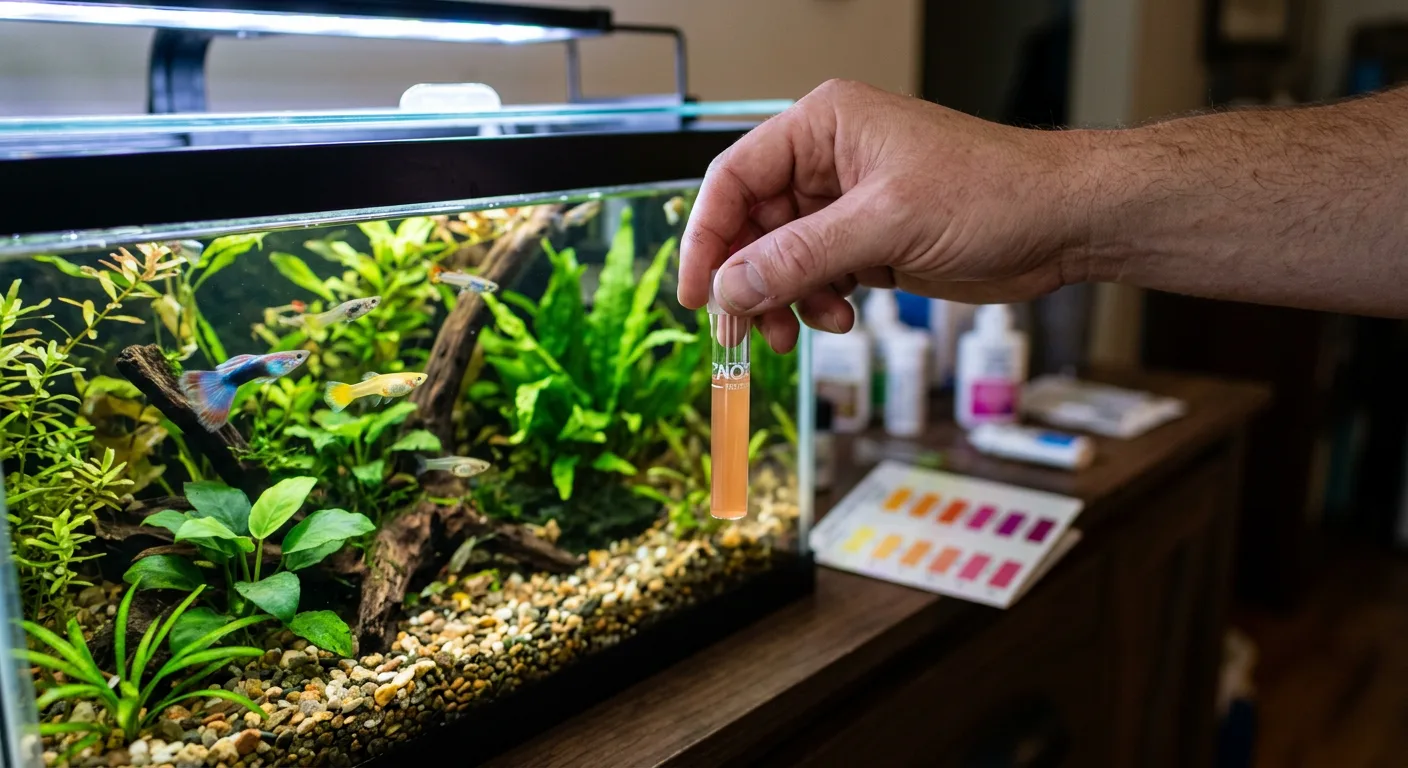
Do not guess. A reliable test takes about five minutes and tells you exactly how urgent the situation is.
Choosing a test kit
Liquid test kits are generally more accurate than test strips, which can be unreliable for ammonia and nitrite. Pick a kit that tests ammonia, nitrite and nitrate, and check the expiry date, because old reagents give false readings.
Step-by-step testing
- Take a sample from mid-tank, not right at the surface or the filter outlet.
- Rinse the test tube with tank water, then fill to the marked line.
- Add the reagent drops exactly as the instructions say and shake bottles first if directed.
- Wait the full time on the instructions before reading.
- Compare to the color card in good, neutral light.
- Write the result down with the date so you can see the trend.
How to read the result
| Nitrite reading | What it generally means | Action |
|---|---|---|
| 0 ppm | Cycle is working | Keep your routine |
| Up to about 0.25 ppm | Early warning, stress possible | Water change within a day, feed less |
| About 0.5 to 1 ppm | Harmful to guppies | Large water change now, retest in hours |
| Above about 1 ppm | Dangerous | Repeated water changes, strong aeration |
These bands are rules of thumb used by many hobbyists, not hard cutoffs. Any measurable nitrite is a reason to act, and hardness, pH and chloride levels can change how toxic a given reading is.
Emergency plan: what to do right now
If your test shows nitrite and the fish look stressed, work through these steps in order. Most tanks improve within a day or two.
Step-by-step rescue
- Test and confirm. Record ammonia, nitrite, nitrate, pH and temperature.
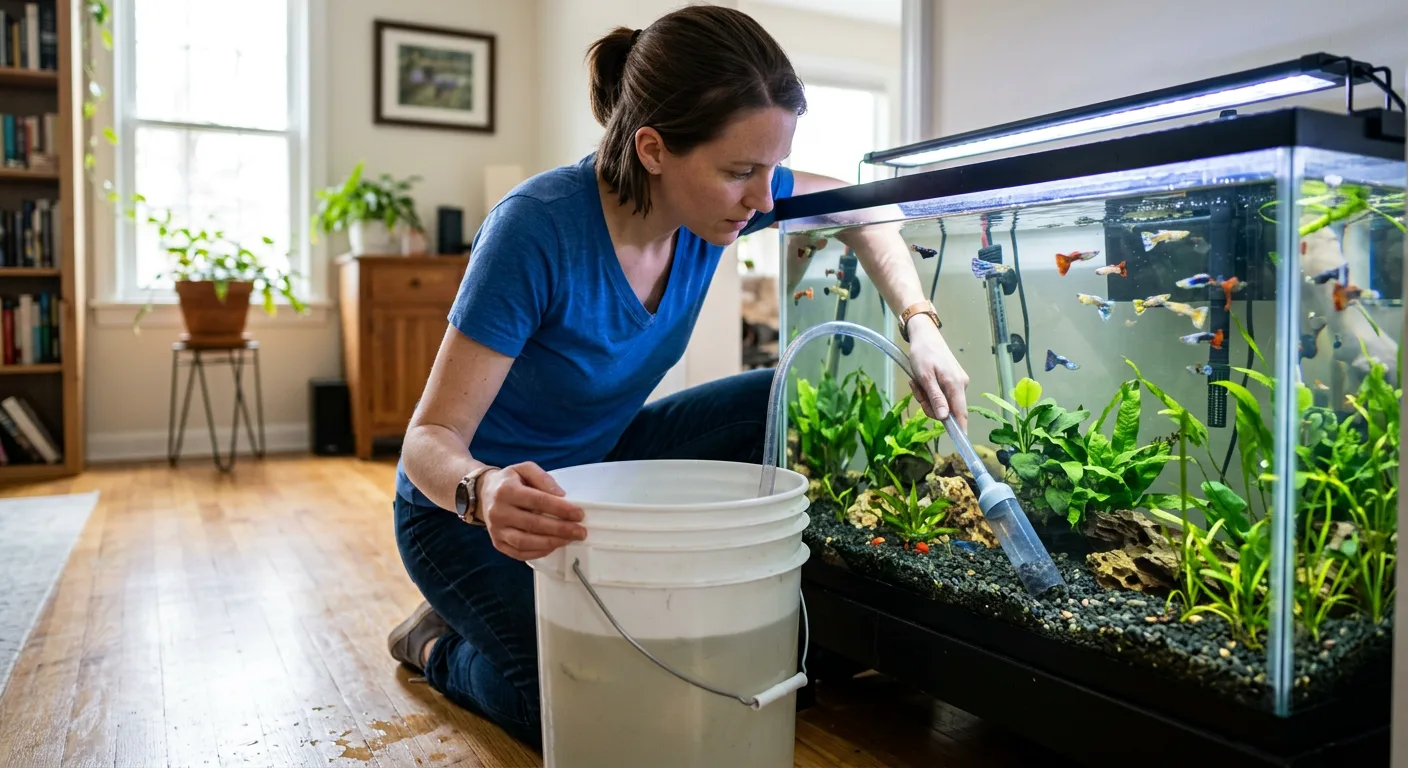
- Do a large water change. Change roughly 30 to 50 percent of the water. If nitrite is high, many hobbyists repeat this once or twice a day until readings drop. Match temperature and treat the new water with a dechlorinator.
- Stop or cut feeding. Skip feeding for a day or feed tiny amounts, since healthy guppies can go without food for a short time, as covered in how long guppies can go without food.
- Boost oxygen. Add an air stone or point the filter outflow so the surface ripples. Fish with damaged blood oxygen transport need all the dissolved oxygen they can get.
- Keep the filter running. Never turn it off. If you must clean it, swish media gently in a bucket of old tank water.
- Remove waste. Siphon visible debris and take out any dead fish or rotting plant leaves.
- Retest every 12 to 24 hours. Continue water changes until nitrite is back at 0 ppm.
Does aquarium salt help?
The chloride in salt competes with nitrite at the gills, so a modest amount can reduce how much nitrite fish absorb. Many hobbyists use a small, carefully measured dose in an emergency, but it is not a substitute for water changes and it is not right for every tank, especially one with sensitive plants or scaleless bottom-dwellers. Read aquarium salt for guppies before adding any.
What to avoid
- Do not do a 90 percent change with cold or untreated water; the temperature and chlorine shock can add stress.
- Do not add several new fish while nitrite is detectable.
- Do not replace the filter media or clean everything at once.
- Do not stack medications on top of the problem without a clear diagnosis.
Using bottled bacteria and water conditioners
Bottled beneficial bacteria can help restart a stalled cycle, though results vary by product and storage. Some conditioners temporarily bind ammonia or nitrite; they buy time but do not remove the underlying cause. Use them as a supplement to water changes, never as the only fix.
Fixing the root cause for good
Once nitrite is at zero, spend a few days making sure it stays there. The long-term answer is a stable, mature biological filter and sensible feeding.
Cycle the tank correctly
A properly cycled tank shows 0 ppm ammonia and 0 ppm nitrite while nitrate slowly rises. You can cycle with fish-in methods using daily testing and water changes, or fishless methods with a controlled ammonia source. Whichever you choose, patience is the key. Our beginner guppy tank setup guide shows how the pieces fit together.
Protect your filter bacteria
- Rinse media only in removed tank water, never straight from the tap.
- Replace only part of the media at a time.
- Keep the filter running 24/7 and have a plan for outages.
- Choose filtration with enough surface area for your stocking level; see best filter for guppies.
Stock and feed with the bacteria in mind
Add new fish in small groups so the bacteria can grow with the load. Stocking guides such as how many guppies per gallon help you avoid overload. Feed small portions once or twice a day and remove leftovers.
Weekly maintenance routine
| Task | How often | Why it matters |
|---|---|---|
| Partial water change (about 20-30%) | Weekly | Dilutes nitrate and keeps parameters steady |
| Test ammonia, nitrite, nitrate | Weekly, daily in a new tank or after changes | Catches problems early |
| Siphon debris | Weekly | Reduces ammonia sources |
| Rinse filter media in old tank water | Every few weeks as needed | Keeps flow up without killing bacteria |
| Check equipment and thermometer | Weekly | Spots failures before they cause a crash |
The full schedule is laid out in the guppy tank maintenance schedule.
Helping affected guppies recover
Fish exposed to nitrite need clean water, calm conditions and time. Gill damage can take days or weeks to heal, so keep conditions stable even after the test reads zero.
Recovery care
- Keep the temperature in the usual guppy range of about 74 to 82 F (23 to 28 C) and avoid swings.
- Offer small, high-quality meals once the fish are breathing normally and eating again.
- Keep lighting gentle and reduce disturbance.
- Watch for secondary infections such as fin rot, since stressed fish are more vulnerable. See guppy fin rot.
Should you use a hospital tank?
Moving fish rarely helps if the main tank is the problem, because the real fix is the water. A separate, clean, aerated tank can help weak fish that are being bullied or cannot compete for food. If you do use one, follow the steps in hospital tank for a sick guppy.
Real-world example
Imagine a 10-gallon tank set up on Monday with 8 guppies added on Tuesday. By Friday the fish hover under the filter outflow and breathe fast. A test shows 0 ammonia but about 1 ppm nitrite. The owner does a 40 percent water change, skips one feeding, adds an air stone and retests the next morning, repeating the change until nitrite reads zero a few days later. The fish recover because the owner acted on the test result rather than guessing, then kept testing every other day until the tank was stable.
Prevention checklist for new and established tanks
Use this checklist to keep nitrite at zero. It works for beginners and long-time keepers alike.
For beginners
- Cycle the tank before the fish arrive whenever possible.
- Buy a liquid test kit before you buy fish.
- Start with a few guppies, then add more after the readings stay at zero.
- Quarantine new arrivals; see quarantine new guppy fish.
For experienced keepers
- Seed new filters with media from an established tank.
- Test after any medication course, filter change or stocking change.
- Keep a spare sponge filter running in a cycled tank as a backup.
- Log water test results so you can spot trends before fish show symptoms.
One-page summary
- Test first: nitrite should always be 0 ppm.
- If it is above zero, change a large share of the water and cut feeding.
- Add oxygen and keep the filter running.
- Retest every 12 to 24 hours until readings are clean.
- Fix the cause: cycle, filter care, stocking and feeding.
- Keep a weekly routine and test regularly.
If you are planning new fish after fixing a nitrite problem, healthy stock helps a lot. Browse our male guppies or premium guppy pairs, and remember that a stable tank is the best welcome for any shipment. For the big picture, return to our guppy care pillar page.
FAQ
How long does nitrite poisoning in guppies take to kill?
It depends on the nitrite level, the guppy’s health and water chemistry. High levels can cause serious trouble within a day or two, while lower levels may stress fish for longer. Do not wait to see what happens; test and start water changes right away.
Can guppies recover from nitrite poisoning?
Yes, many do when nitrite is brought down quickly and conditions stay stable. Fish that are still eating and swimming normally have the best odds. Severely affected fish may not recover, especially if their gills were damaged for a long time.
How much nitrite is safe for guppies?
The goal is 0 ppm. Even small readings are a warning that the cycle is incomplete or has been disturbed. Some fish tolerate low levels for a while, but there is no benefit to leaving nitrite in the tank.
How often should I change water when nitrite is high?
Many hobbyists change roughly 30 to 50 percent of the water once or twice a day until nitrite reads 0 ppm. Always retest before and after, use a dechlorinator and match temperature so the changes do not add extra stress.
Will a water conditioner remove nitrite?
Some conditioners detoxify nitrite temporarily, but they do not remove the cause. Treat them as short-term support alongside water changes. The permanent fix is a mature filter with enough beneficial bacteria.
How long does a new tank have nitrite?
A new tank commonly shows nitrite for a few weeks as the bacteria establish, though the timing varies with temperature, ammonia source and filter media. Keep testing until both ammonia and nitrite read 0 ppm for several days while nitrate appears.
Can live plants help with nitrite?
Plants take up ammonia and some nitrate, which can reduce the load on the filter. They are a useful helper but not a replacement for cycling or water changes. Fast growers are a good choice, as listed in best live plants for guppies.
Is nitrite poisoning contagious to other fish?
No. It is a water-quality problem, not an infection, so every fish in the same water is affected. You fix it by treating the water, not by separating the fish.
Behind the care guides
Care begins with steady systems
Our guppy guides focus on practical routines: keep water stable, observe fish closely and allow for natural variation.

Care systems
Steady water, thoughtful care
Gentle filtration and regular observation support healthy aquarium routines.

Natural variation
Every guppy is different
Color, size and fin shape vary with strain, age and each individual fish.
Editorial illustrations for context; they do not depict HiGuppy's exact facility or current fish stock.