The HiGuppy Journal
Guppy Diseases Guide: Symptoms, Causes, Prevention & First Steps
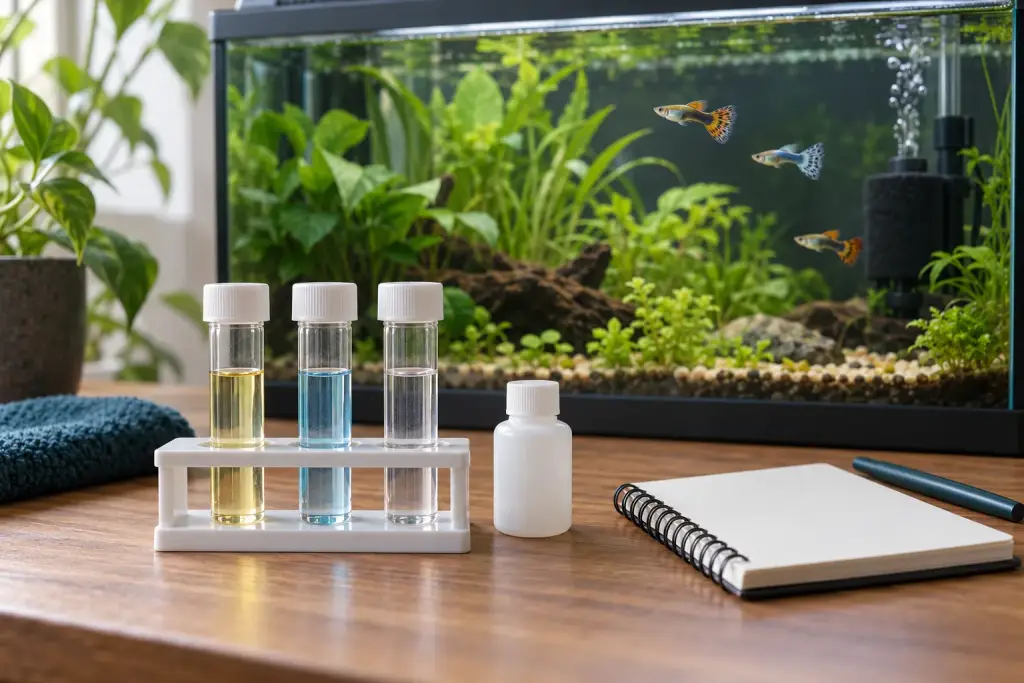
Guppy diseases often look alike during the first hours: clamped fins, hiding, appetite loss, fast breathing, faded color, white patches, swelling, or unusual swimming. Check water and equipment promptly, document the pattern, and seek qualified help for worsening or severe signs. Similar symptoms can arise from different causes, so appearance alone cannot establish a diagnosis or select a medication.
Emergency signs
- Gasping at the surface or very rapid gill movement
- Several fish becoming sick within hours
- Sudden deaths, severe ulcers, bleeding, or loss of balance
- Ammonia or nitrite above zero
Increase aeration, test the water immediately, remove dead fish, and contact an aquatic veterinarian or fish-health professional when losses are rapid or the diagnosis is uncertain.
Guppy symptoms and related guides
| What you see | Possible causes | Best next guide |
|---|---|---|
| Salt-like white dots | Ich, debris, other skin lesions | Guppy ich |
| Gold or rust-colored dust, flashing | Velvet or another external parasite | Guppy velvet disease |
| Frayed or receding fin edges | Fin damage, fin rot, aggression, poor water quality | Fin rot vs torn fins |
| Gray-white patch around mouth, back or gills | Columnaris or another bacterial lesion | Guppy columnaris |
| Swollen body and raised scales | Dropsy syndrome, organ failure, severe infection | Guppy dropsy |
| Floating, sinking or rolling | Buoyancy dysfunction, constipation, injury, systemic illness | Swim bladder disorder |
| Weight loss despite eating, abnormal feces | Internal parasites, chronic infection, poor nutrition | Internal parasites |
| Fast breathing, flashing, swollen gills | Gill flukes, ammonia, nitrite, low oxygen | Gill flukes |
What to do before treating a sick guppy
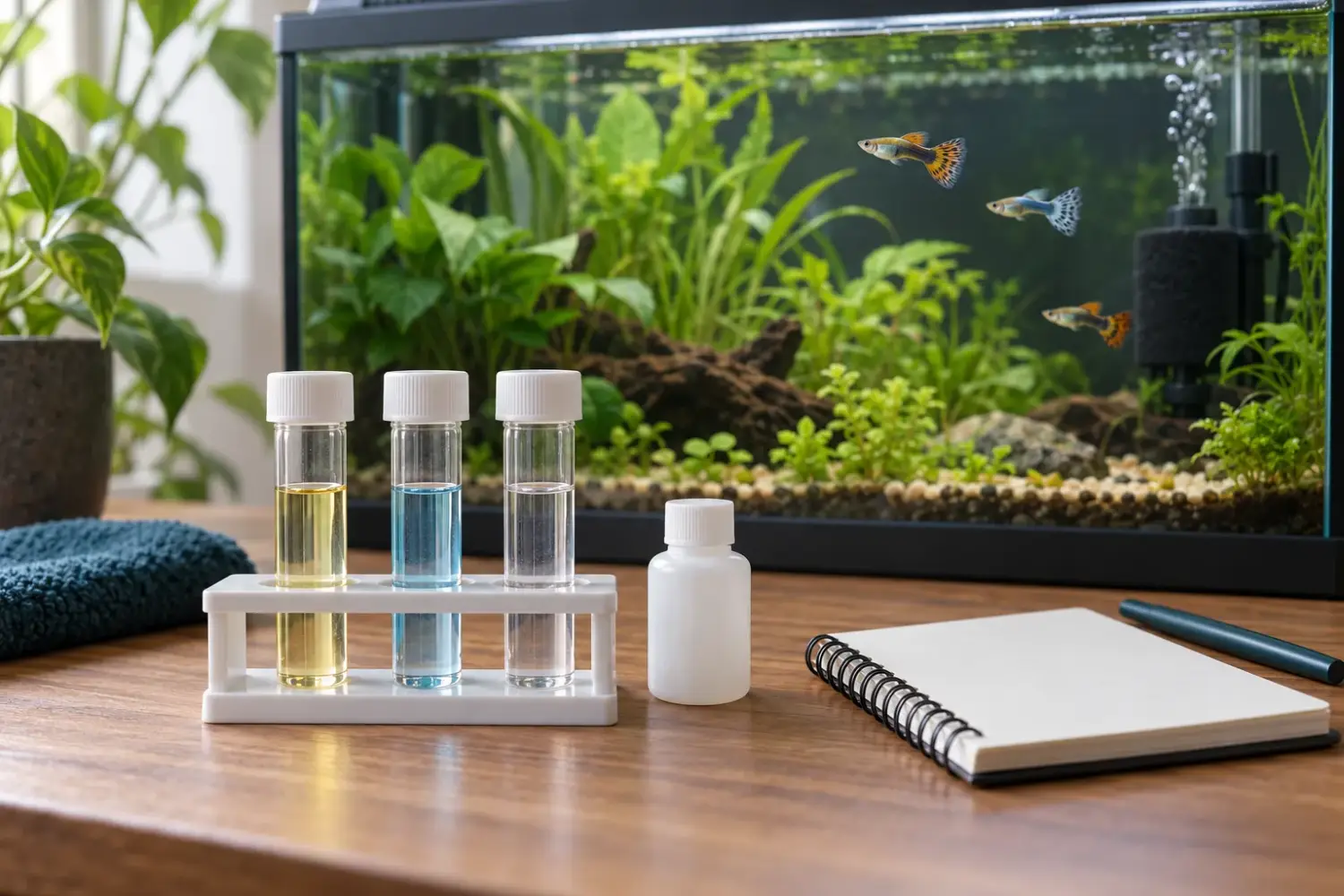
- Test ammonia, nitrite, nitrate, pH and temperature. Water-quality problems can mimic disease and make infections worse.
- Increase oxygenation. Add surface movement or an air stone, especially when fish are breathing rapidly.
- Observe every fish. Record whether one fish or several are affected. That pattern helps an investigation but does not establish the cause.
- Take photos and video. Record recent livestock additions, water changes, foods and medications.
- Prepare a hospital tank. Follow the sick guppy quarantine guide.
Infectious disease or water-quality problem?
Environmental history to record
- Many fish affected at the same time
- Symptoms start after a water change, filter failure or cleaning
- Ammonia or nitrite is detectable
- Fish improve after oxygenation and safe water correction
Exposure and symptom history to record
- Symptoms spread from one fish to others over days
- New fish, plants, water or shared equipment were introduced
- Visible spots, ulcers, raised scales or progressive wasting
- Symptoms persist despite stable water
Common guppy diseases and health problems
Ich or white spot disease
Ich is a highly contagious freshwater parasite. Classic signs include small white dots resembling grains of salt, flashing, excess mucus, reduced appetite and rapid breathing. Because only certain free-swimming stages are vulnerable, treatment generally must cover the parasite’s life cycle. Read the guppy ich guide.
Fin rot and damaged fins
Fin edges that progressively recede, darken, redden or develop a pale margin may indicate bacterial fin damage, while a clean split can come from chasing, decor or transport. Compare guppy fin rot vs torn fins.
Velvet disease
Velvet can create a fine gold, yellow or rust-colored coating that is easier to see under angled light. Fish may clamp their fins, scratch and breathe rapidly. Read the guppy velvet guide.
Columnaris
Columnaris is a bacterial disease sometimes mistaken for fungus. It may cause gray-white patches, mouth lesions, saddle-shaped areas, fin erosion or gill damage. See the columnaris guide.
Dropsy
Dropsy is a syndrome rather than one disease. Fluid retention can cause swelling and scales that stand outward like a pine cone. Review the guppy dropsy guide.
Swim bladder disorder
A guppy that floats, sinks, rolls or cannot stay level may have buoyancy dysfunction caused by feeding, injury, deformity or wider illness. Use the swim bladder troubleshooting guide.
Internal parasites and wasting
Progressive weight loss, a hollow belly, reduced growth or abnormal feces can have several causes. Learn how to assess internal parasites.
Gill flukes and breathing problems
Gill flukes can cause flashing, clamped fins, rapid breathing and excess mucus, but ammonia, nitrite and low oxygen can look similar. Read the gill flukes guide.
Medication safety
- Do not combine medications unless the labels or an aquatic veterinarian explicitly say the combination is safe.
- Calculate actual water volume, not only the aquarium’s advertised size.
- Keep aeration strong and follow the label regarding carbon and filtration.
- Some products are unsafe for shrimp, snails, plants or fry.
- Antibiotics do not treat parasites, viruses or poor water quality.
- Seek diagnostic help before treating valuable breeding stock or rapidly progressing disease.
How to prevent guppy disease outbreaks
- Quarantine new fish before adding them to the display aquarium.
- Use separate nets, siphons and tools for quarantine tanks.
- Keep ammonia and nitrite at zero and avoid sudden temperature or pH changes.
- Do not overcrowd or overfeed.
- Observe appetite, breathing, posture, fins and feces every day.
Frequently asked questions
What is the most common guppy disease?
Ich, fin damage and stress-related bacterial problems are commonly reported, but the likely cause depends on recent additions, water quality and exact symptoms.
Should I treat the whole tank or isolate one guppy?
Contagious parasites may already be throughout the aquarium, while an injury or non-contagious buoyancy problem may be managed in a hospital tank.
Can clean water cure a sick guppy?
Stable water may resolve ammonia, nitrite or maintenance stress. It will not reliably eliminate an established parasite or serious bacterial infection.
Educational note: This guide supports observation and first steps. It is not a substitute for examination by an aquatic veterinarian or diagnostic laboratory.
Behind the care guides
Care begins with steady systems
Our guppy guides focus on practical routines: keep water stable, observe fish closely and allow for natural variation.
Care systems
Steady water, thoughtful care
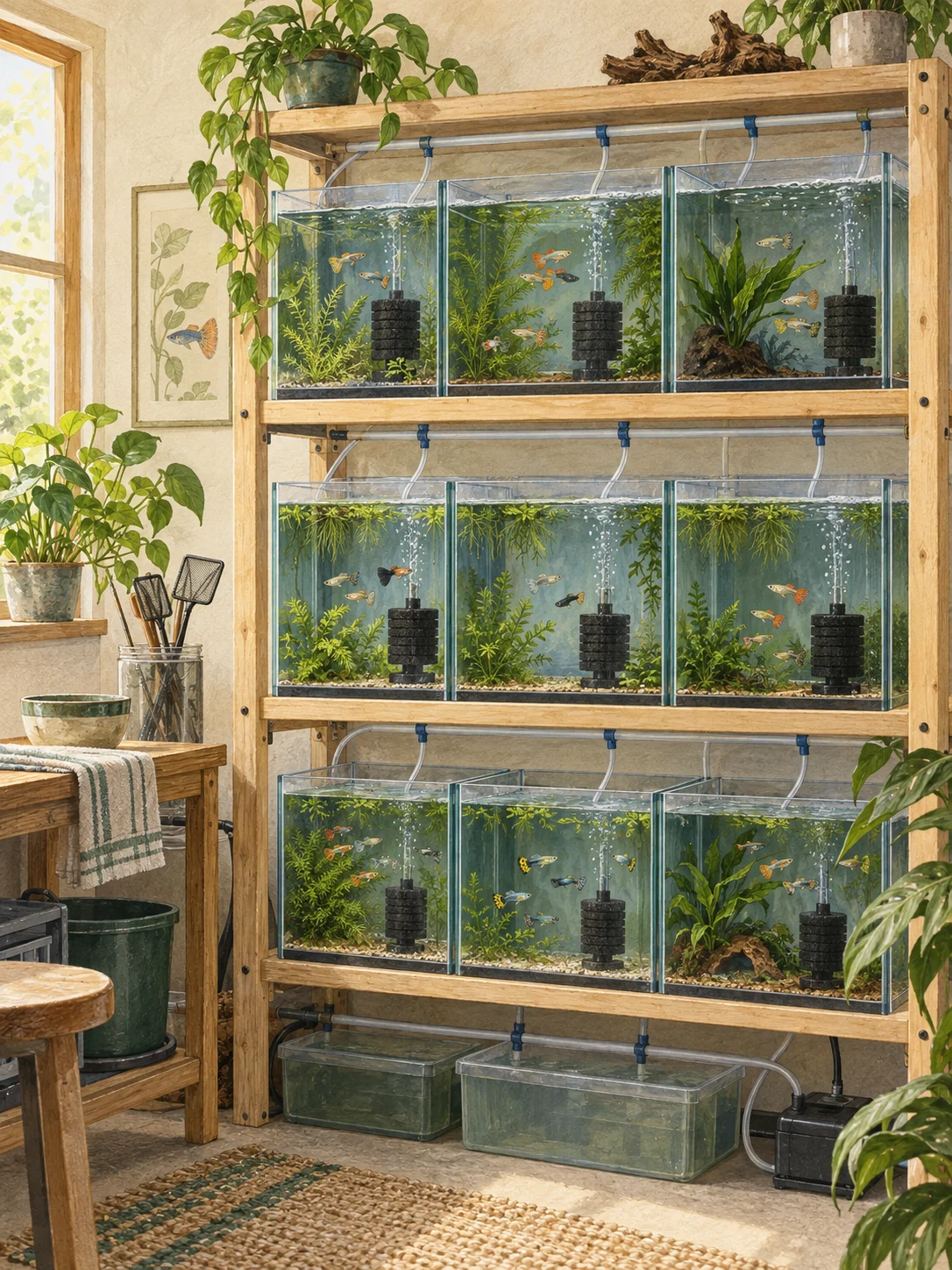
Gentle filtration and regular observation support healthy aquarium routines.
Natural variation
Every guppy is different
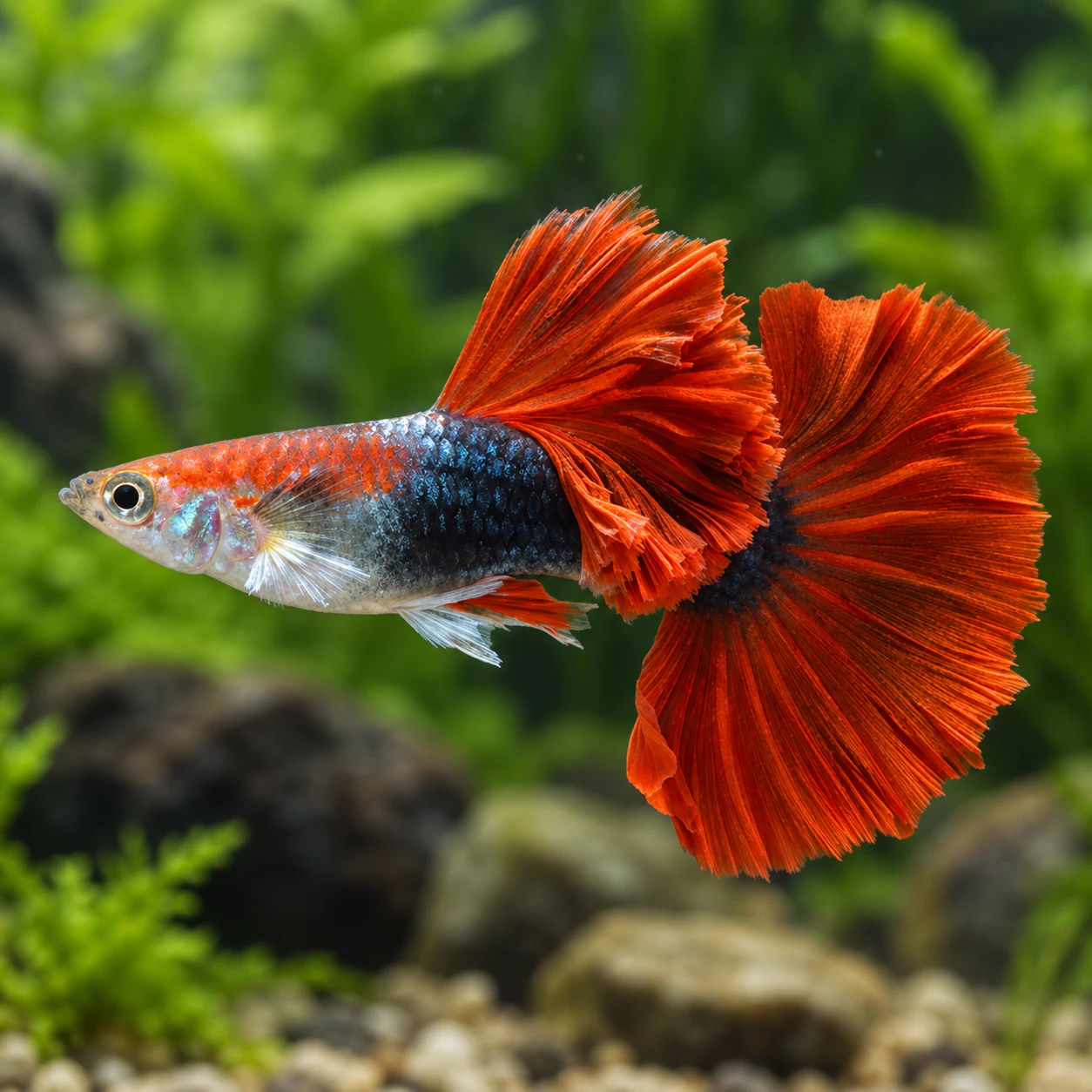
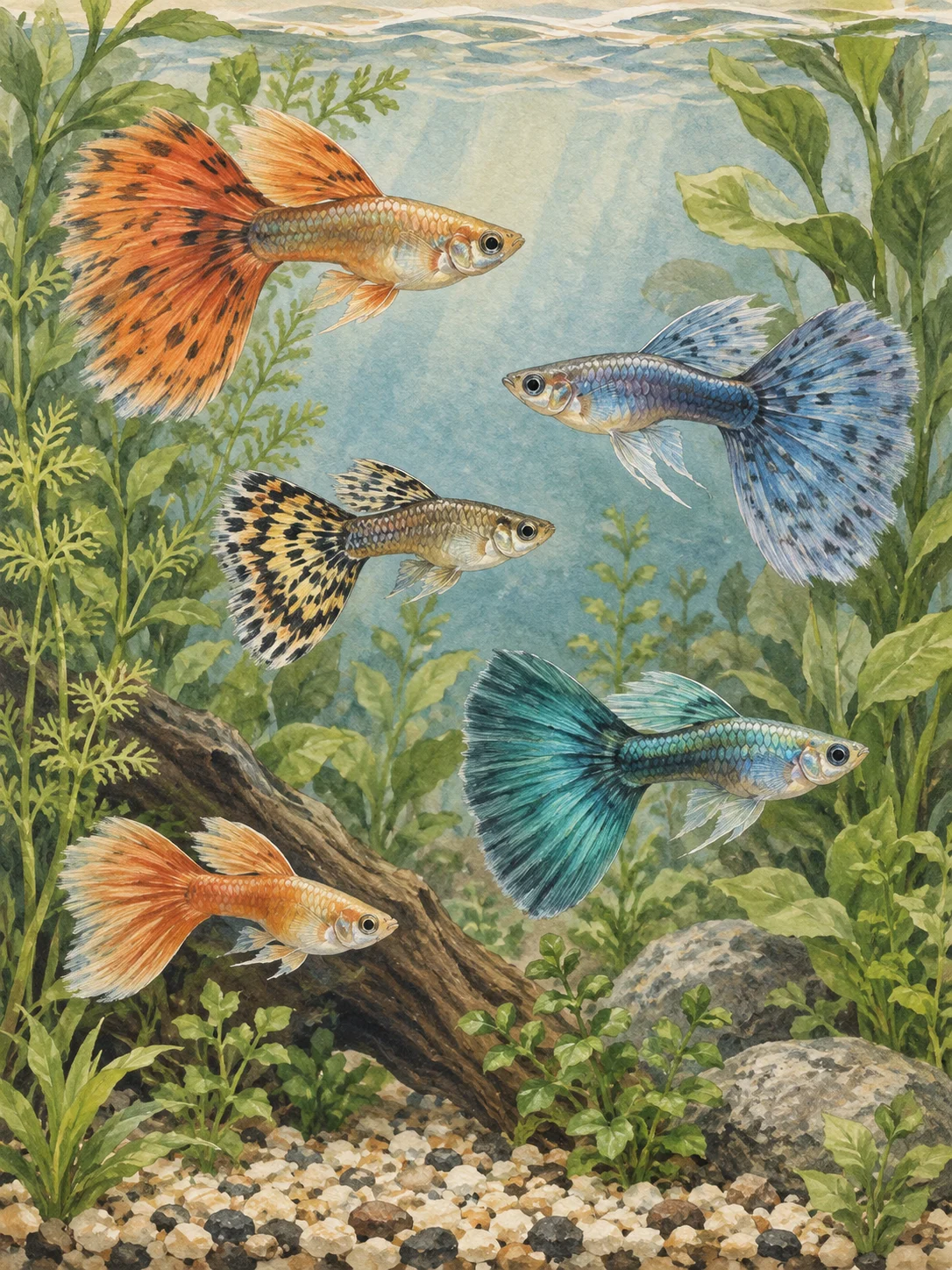
Color, size and fin shape vary with strain, age and each individual fish.
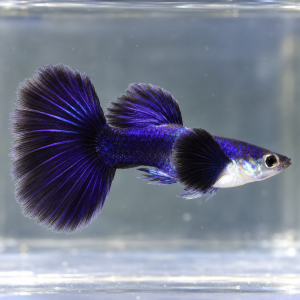
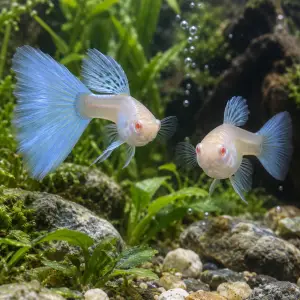
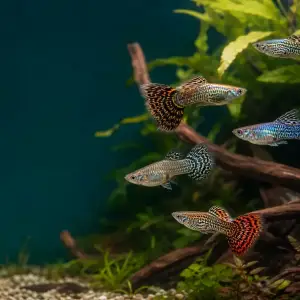
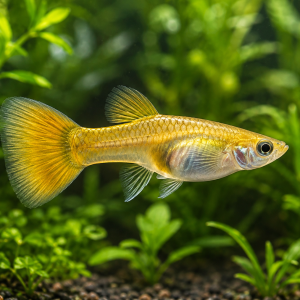
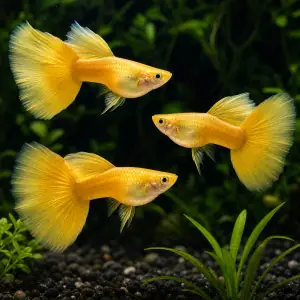
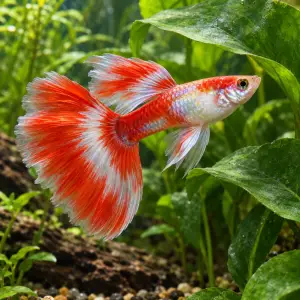
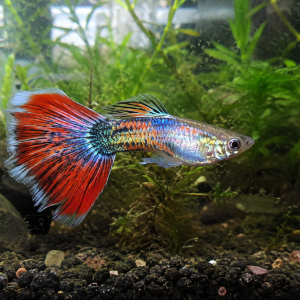
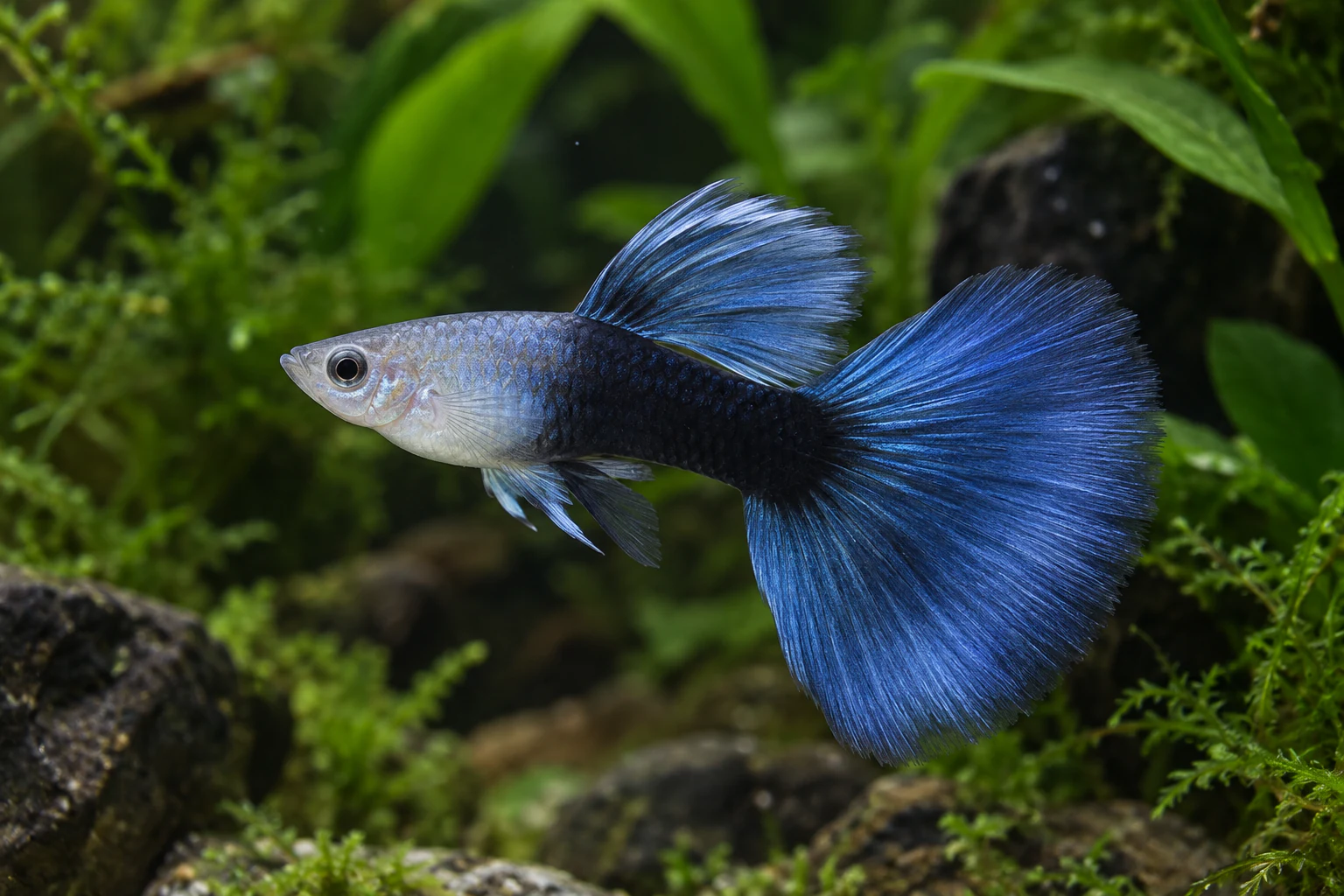
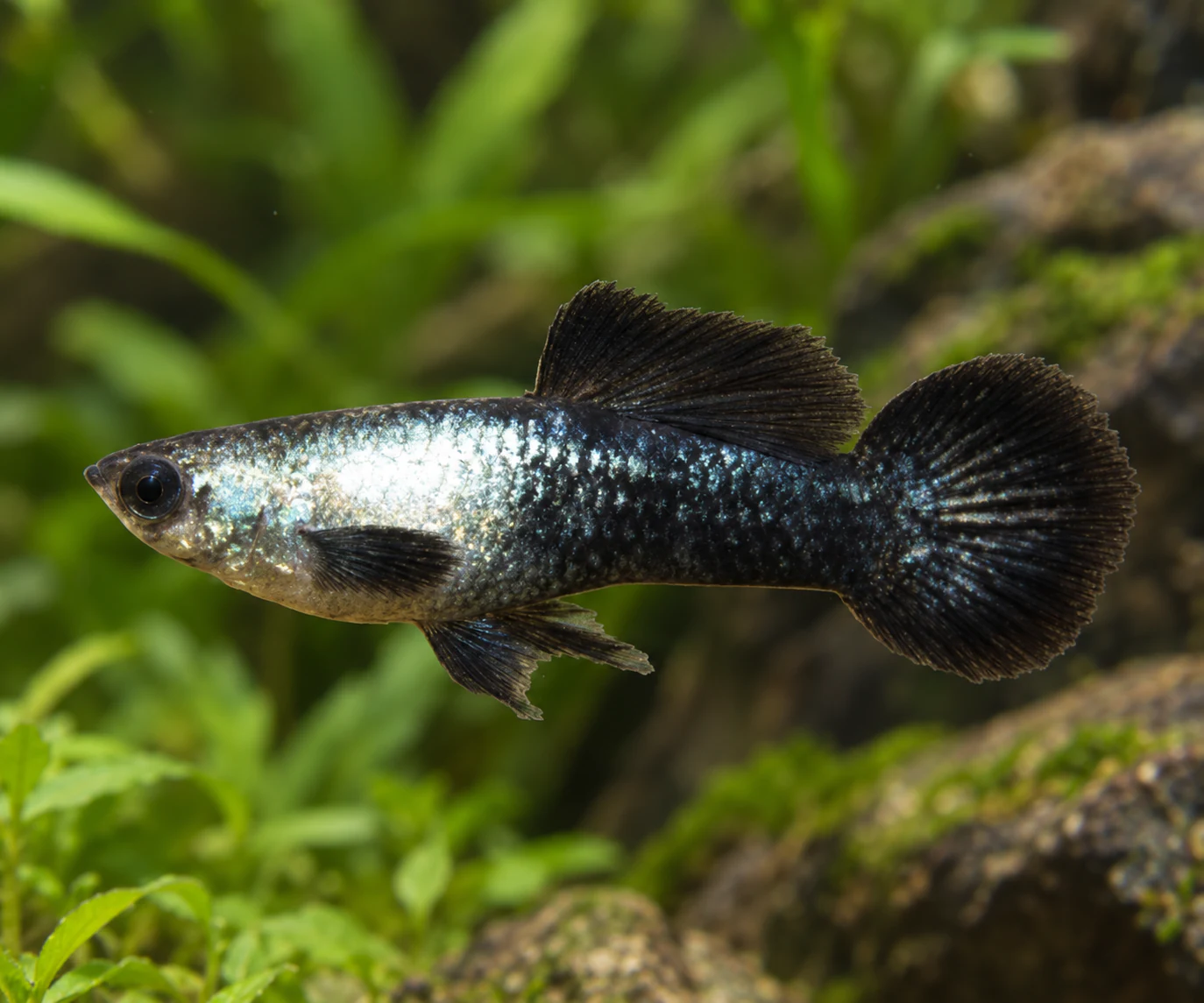
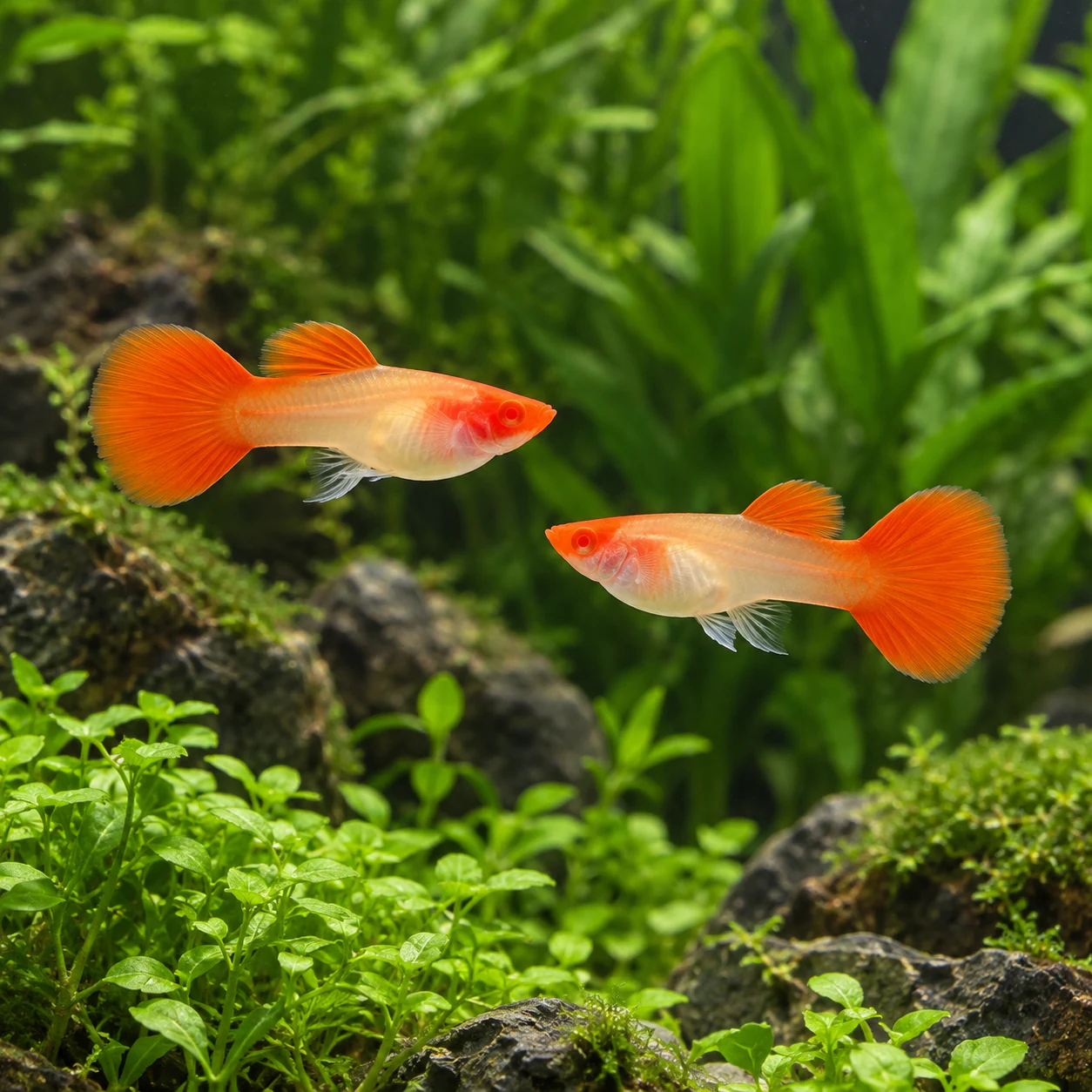
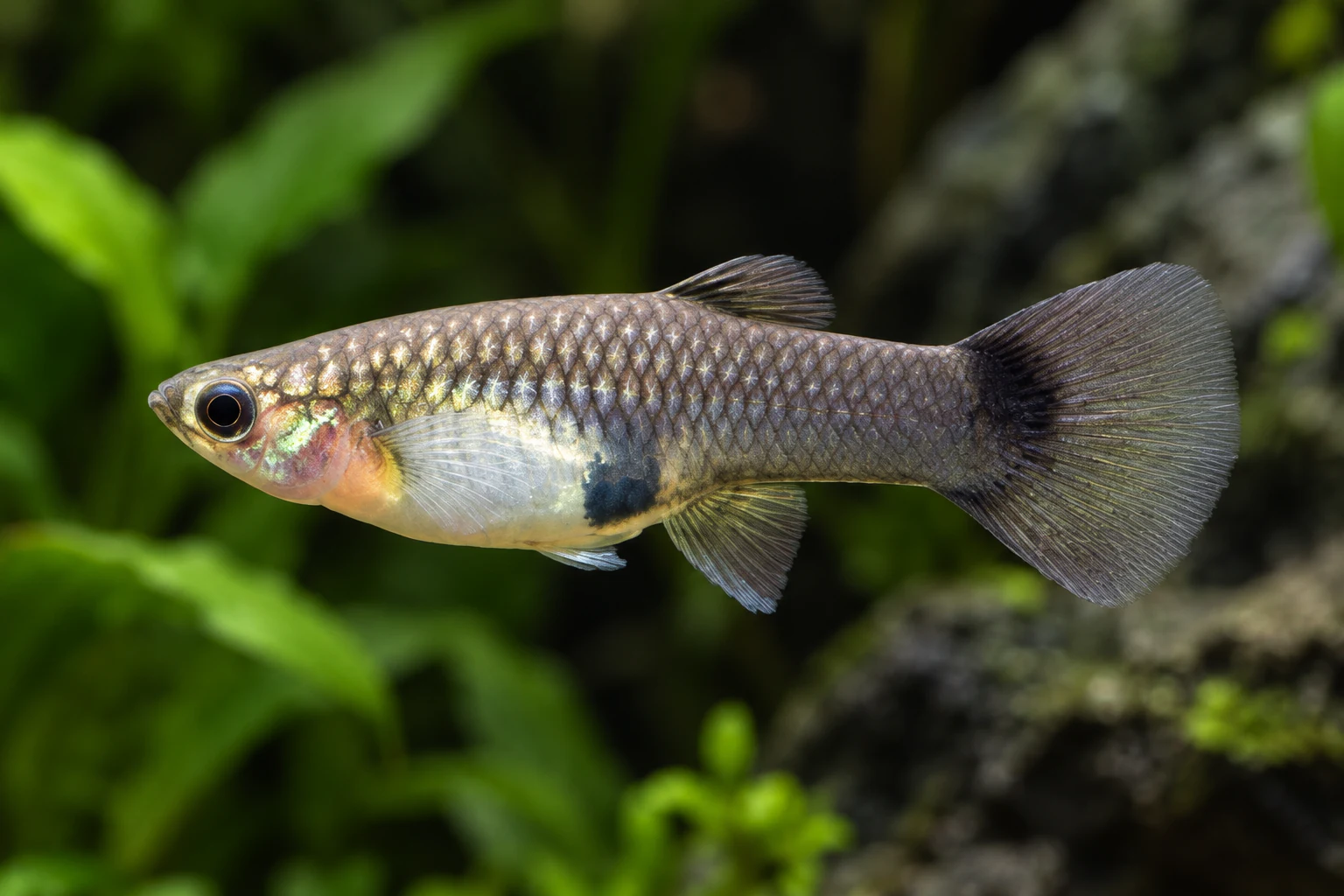
Editorial illustrations for context; they do not depict HiGuppy's exact facility or current fish stock.