The HiGuppy Journal
Can Guppies Eat Vegetables? Safe Veggies and How to Feed Them
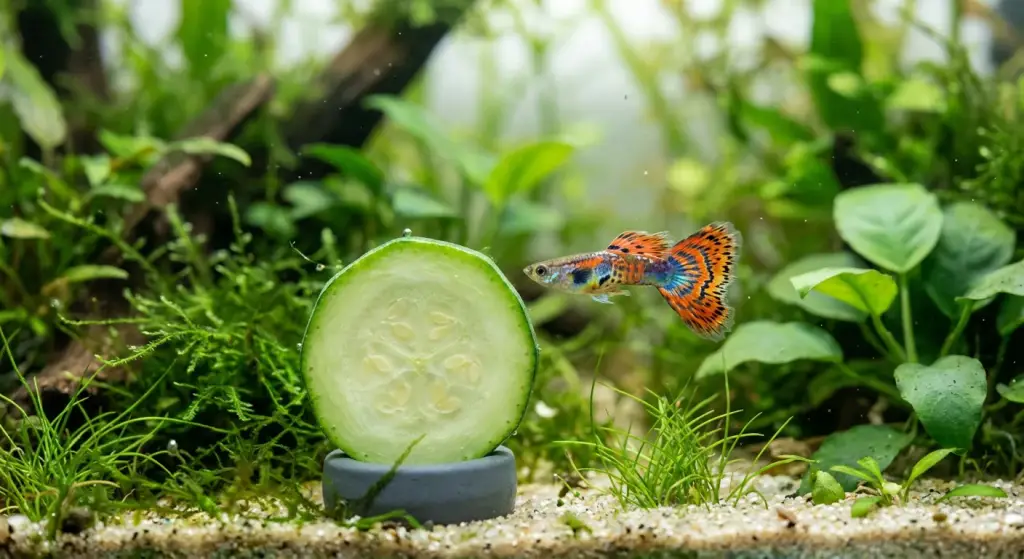
Can guppies eat vegetables? Yes. Guppies are omnivores, and soft, blanched vegetables such as shelled peas, zucchini and spinach make a healthy side dish to a quality flake or micro-pellet. Offer a small piece once or twice a week and remove leftovers. Our guppy care guide covers the rest of the feeding basics.
If you have wondered whether can guppies eat vegetables is a real question or just an old fish-keeping tip, this guide shows which vegetables work, how to prepare them, and how to avoid fouling your water.
Can guppies eat vegetables every day?
They can, but you do not need to. Prepared guppy food is designed to be the base of the diet, and vegetables work best as a supplement. A small piece once or twice a week adds variety and plant fiber, and many keepers find it helps fish that tend to look bloated after dry food. It is not a cure for illness, so if a fish stays swollen, read our post on a bloated guppy.
Guppies are small, with tiny mouths. They nibble soft pieces and cannot bite through raw, tough vegetables, so preparation matters more than the vegetable you choose.
Best vegetables for guppies
The table below lists common choices and how to prepare them. These are general keeper practices rather than strict rules.
| Vegetable | Preparation | Notes |
|---|---|---|
| Green peas | Boil briefly, remove the skin, mash | Soft and easy to swallow |
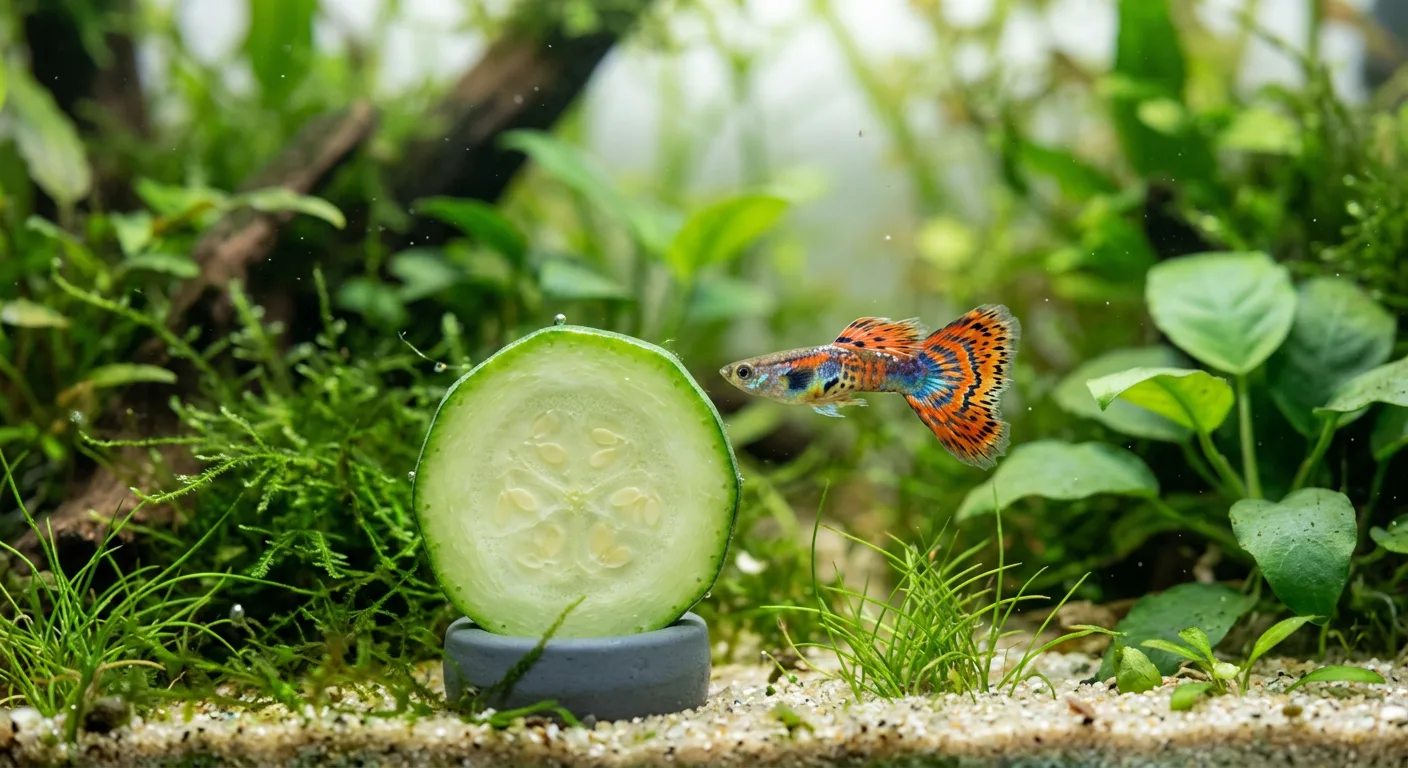
| Zucchini | Blanch a thin slice until soft | Weight it down or clip it |
| Spinach | Blanch a small piece | Tears easily into bite sizes |
| Cucumber | Peel, blanch, slice thin | Breaks down quickly in water |
| Lettuce (romaine) | Blanch a small leaf | Remove after a few hours |
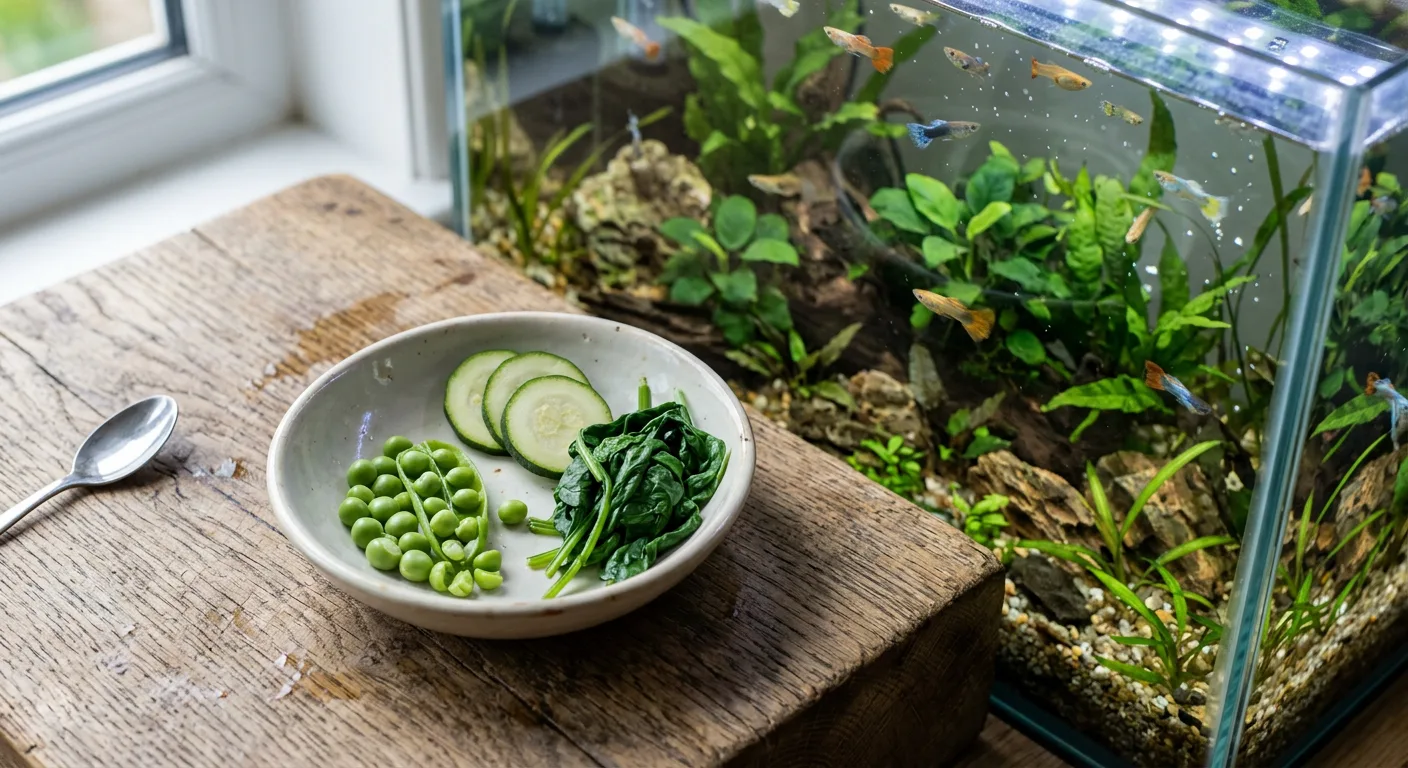
How to prepare vegetables for guppies
Blanch first
Drop the vegetable in boiling water for a minute or two, then cool it in cold water. This softens it so small fish can nibble it. Use plain vegetables only, with no salt, oil, butter or seasoning.
Cut it small
Cut or mash pieces to a size the fish can tackle. For peas, remove the outer skin and break the inside into crumbs. For adults and fry alike, smaller is safer.
Wash it
Rinse the vegetable well before cooking. Avoid anything that may be treated with chemicals you cannot wash off.
How much is enough?
Offer only what the fish finish in a few hours. A piece about the size of a fingernail is plenty for a small group. Anything left behind rots and raises ammonia, which is the main risk of feeding vegetables. Take out leftovers with tweezers or a net after about four to six hours. Many keepers go a bit shorter in warm water.
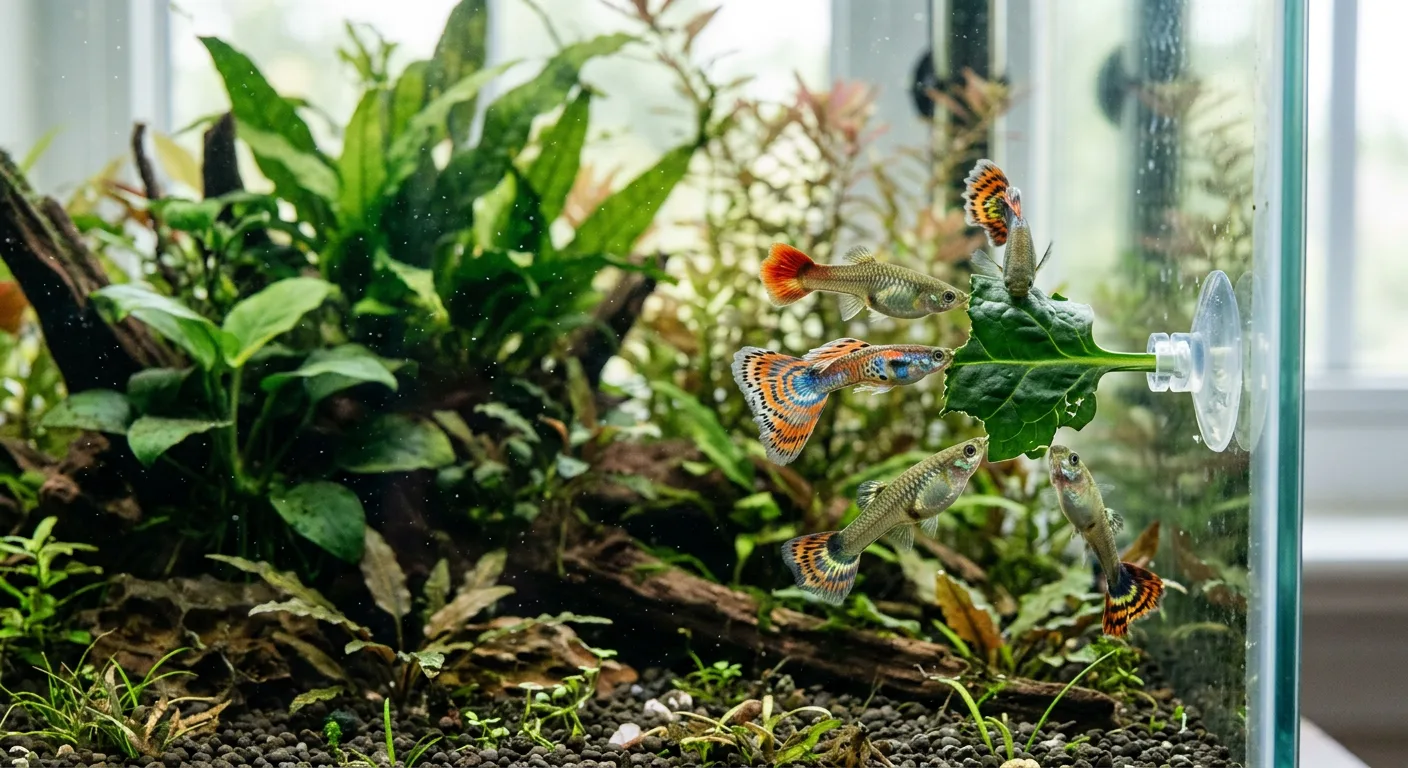
Vegetables do not replace regular meals. Our guide on how often to feed guppies sets the main schedule, and overfeeding guppies explains what happens when the tank gets too much food.
What guppies should not eat
- Seasoned, salted or cooked-with-oil vegetables.
- Large raw chunks that fish cannot bite.
- Tough stems and skins.
- Anything left in the tank overnight.
Vegetables also should not take the place of color-supporting protein foods. See best food for guppy color and growth for a balanced diet.
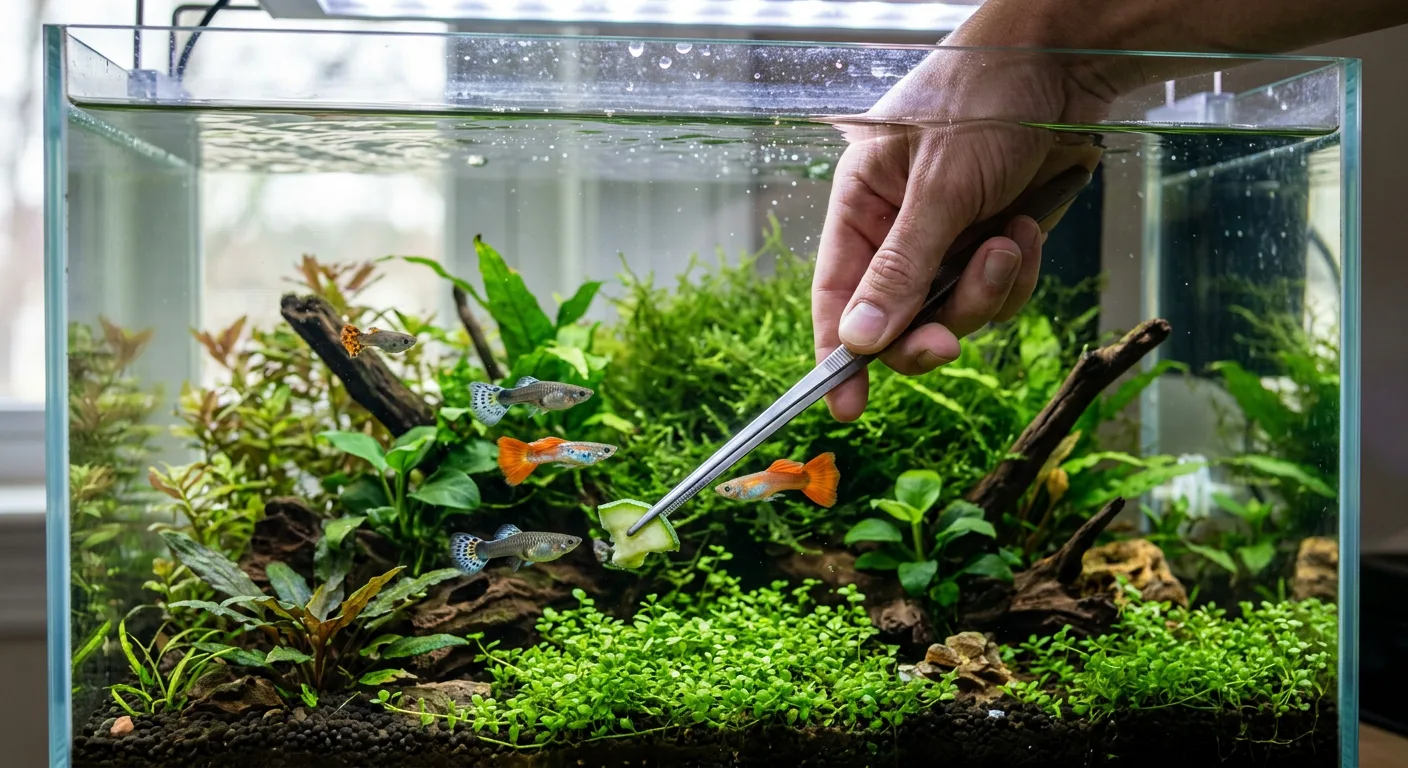
Why add vegetables to a guppy diet?
Variety is the main reason. A diet of one dry food is fine for many fish, but a soft plant snack gives them something different to graze on and encourages natural foraging behavior. Keepers also use vegetables as a gentle break between richer meals such as frozen or live foods. None of this is a medical claim: vegetables are a helpful extra, not a treatment, and a fish that stops eating needs a closer look at water quality and health first. Our post on why a guppy is not eating is a good place to start.
Step-by-step: your first vegetable feeding
- Pick one soft vegetable, such as a pea or a thin zucchini slice.
- Wash it, then blanch it for a minute or two and cool it down.
- Cut or mash it into pieces smaller than a guppy’s eye.
- Drop in a pinch after the fish have eaten a little of their normal food, or clip a slice to the glass.
- Watch for ten to fifteen minutes to see who is eating.
- Remove anything left after a few hours.
Start with a very small piece the first time. Some fish ignore new foods for a day or two before they try them, so patience helps. If nobody touches it, try a different vegetable next week.
Common mistakes with vegetables
Feeding too much at once
Large pieces look generous but mostly end up rotting on the substrate. Smaller is better, and you can always add a second pinch later.
Skipping the blanching step
Raw vegetables are tough and often sink or float untouched. Blanching takes two minutes and makes a big difference.
Forgetting to clean up
Leftover pieces can cloud the water and raise ammonia. Pair vegetable feeding with your usual water changes, and see our guppy tank maintenance schedule for a routine that keeps the tank clean.
Do wild and farmed guppies eat plants?
Guppies are described as omnivores that eat small invertebrates, algae and plant matter; the Wikipedia guppy page gives the general background. That is why soft plant foods suit them in a home tank, as long as you keep portions modest.
Feeding new and breeding fish
Healthy, well-fed fish show better color and activity. If you are raising young fish, you can crush a little soft pea into very small crumbs, but fry mainly need tiny prepared foods. Browse our live male guppies if you are starting a new tank, and revisit the complete guppy feeding and care guide for a weekly routine.
Quick summary: can guppies eat vegetables safely?
So, can guppies eat vegetables safely? Yes, when the vegetables are plain, soft and offered in tiny amounts. If you remember one rule, make it this: blanch, cut small, feed little, and remove leftovers. Whenever new keepers ask can guppies eat vegetables and still stay healthy, the answer is that a modest weekly portion fits well alongside a quality staple food. Also, can guppies eat vegetables if they are fry? Only as very fine crumbs, with most of the diet still coming from food made for baby fish. Keep every feeding small and you will rarely have a problem.
FAQ
Can guppies eat vegetables raw?
Raw vegetables are usually too hard for a guppy’s tiny mouth. Blanching softens them so the fish can nibble. Very thin raw pieces of soft leaves may be picked at, but blanched is safer and easier.
Can guppies eat peas?
Yes. Many keepers feed shelled, boiled peas with the skin removed. Mash them into small pieces and offer a tiny amount so nothing is left to spoil.
Can guppies eat cucumber?
Yes, in small amounts. Peel it, blanch a thin slice, and remove it after a few hours because cucumber breaks down quickly in water.
How often should I feed vegetables to guppies?
Once or twice a week is a common routine. Vegetables are a supplement, so keep a good flake or micro-pellet as the main food.
Can vegetables hurt my water quality?
They can if left in the tank. Uneaten pieces rot and add ammonia, so remove leftovers after a few hours and test your water if you see cloudiness.
Behind the care guides
Care begins with steady systems
Our guppy guides focus on practical routines: keep water stable, observe fish closely and allow for natural variation.

Care systems
Steady water, thoughtful care
Gentle filtration and regular observation support healthy aquarium routines.

Natural variation
Every guppy is different
Color, size and fin shape vary with strain, age and each individual fish.
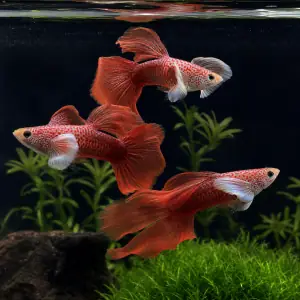
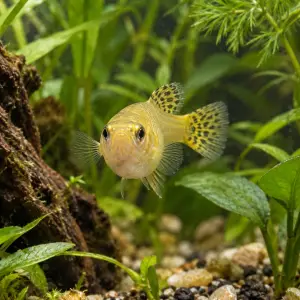
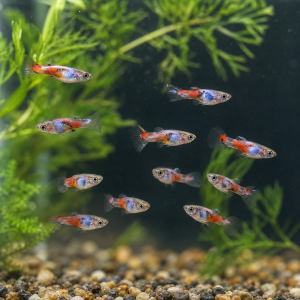
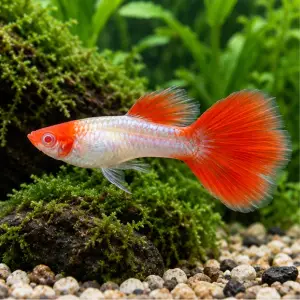
Editorial illustrations for context; they do not depict HiGuppy's exact facility or current fish stock.