The HiGuppy Journal
Why Are My Guppies Hiding? Causes, Fixes and When to Worry
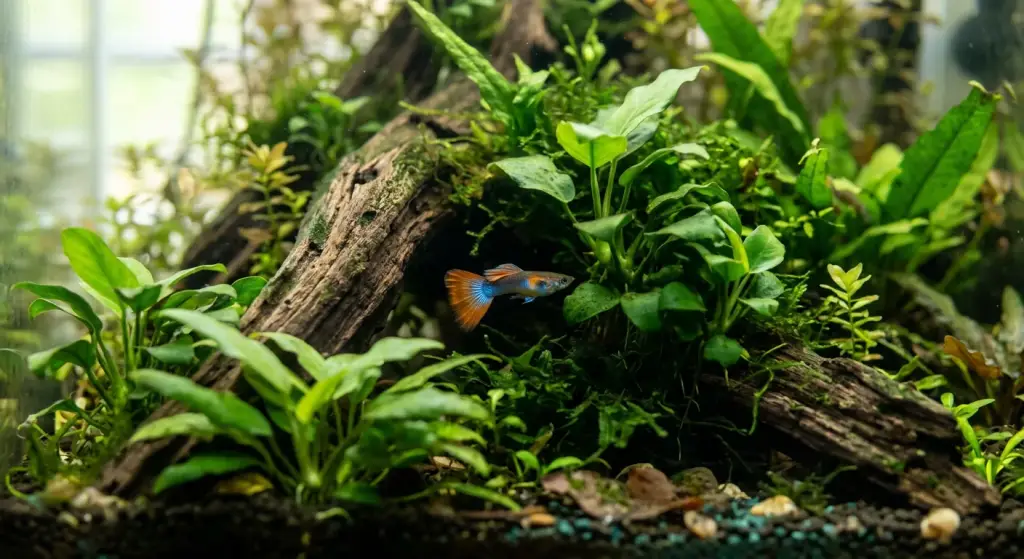
Why are my guppies hiding? Guppies hide because something makes them feel unsafe or unwell: new surroundings, poor water quality, a wrong temperature, aggressive tank mates, too few plants or a sudden change in light. A pregnant female may also hide shortly before giving birth. Check the water first, then the tank layout and tank mates. This article is part of our complete guppy care guide and walks you through every common cause, with step by step fixes.
Why are my guppies hiding? Start by remembering that hiding is a behavior, not a disease. Healthy, settled guppies are active, curious fish that cruise the middle of the tank and rush to the surface at feeding time. When yours suddenly retreat behind the filter, sit in a corner or stay inside the plants all day, they are telling you something. The goal is to work out whether the cause is temporary (a new tank, a recent move) or ongoing (ammonia, bullying, illness) and then fix it calmly.
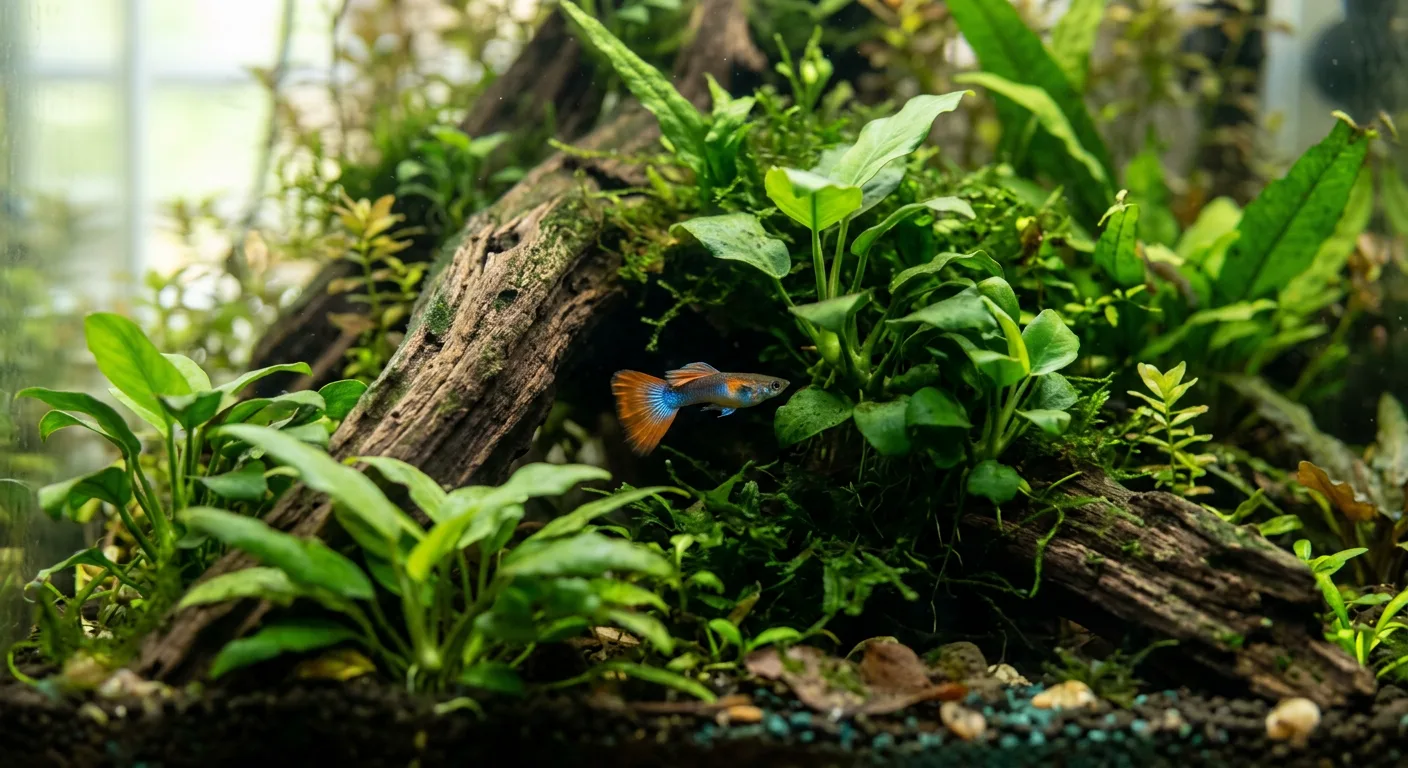
Why are my guppies hiding? The quick answer
When you ask 'why are my guppies hiding?', the answer usually falls into a handful of groups. The table below gives the likely cause, what it usually looks like and where to start. Use it as a first pass, then read the matching section for the full fix.
| Likely cause | What you usually see | First thing to do |
|---|---|---|
| New tank or new home | Hiding for the first days, normal eating returns slowly | Dim the light, add plants, leave fish alone |
| Poor water quality | Hiding plus gasping, clamped fins, cloudy water | Test ammonia, nitrite and nitrate; do a water change |
| Wrong temperature | Sitting low and still, or panting near the surface | Check a separate thermometer; correct slowly |
| Bullying or aggression | Torn fins, chasing, one fish hides while others roam | Watch for chasing; rebalance sexes and tank mates |
| Too few hiding places | Fish stay at the glass edges, nervous darting | Add plants, moss and decor |
| Pregnancy | Swollen female hides in plants, may refuse food | Provide dense cover; do not move her suddenly |
| Possible illness | Hiding with other changes, such as spots, rubbing or unusual swelling | Record signs, test water and seek qualified advice; do not diagnose by appearance alone |
Why are my guppies hiding: normal retreats versus warning signs
When you wonder 'why are my guppies hiding?', remember not every retreat is a problem. Guppies are small prey fish, and short breaks in the plants are natural. What matters is how long it lasts and whether other behavior changed.
Signs the hiding is probably normal
- The fish comes out to eat and to explore several times a day.
- Colors stay bright and fins are held open and relaxed.
- It happens mostly right after lights on or off, or after you move around the tank.
- Males are still displaying to females and females are still schooling loosely.
Signs the hiding is a warning
- The fish stays hidden for most of the day and ignores food.
- Fins are clamped tight against the body, or the tail droops.
- You see gasping at the surface, rubbing on decor, white spots, torn fins or a swollen belly.
- Several fish started hiding at once after a change you made.
If your 'why are my guppies hiding' check shows warning signs, compare with our guides to why a guppy is lethargic and clamped fins in guppies, because hiding often appears together with those symptoms.
Why are my guppies hiding? Cause 1: a new tank or a new home
The most common reason is simply change. A guppy that has just spent hours in a shipping bag and then entered an unfamiliar tank has every reason to be cautious. It is normal for new guppies to hide for the first one to three days, and some shy individuals take up to a week to relax.
How to help new guppies settle
- Float the bag for about 15 to 20 minutes to match temperature, then add small amounts of tank water over another 15 to 30 minutes. Our guide on how to acclimate guppies covers it step by step.
- Keep the tank light dim for the first day, or leave it on for only a few hours.
- Offer a small portion of high quality food once the fish are in, and remove uneaten food after a few minutes.
- Avoid tapping the glass, rearranging decor or adding more fish in the first week.
- Check the water parameters the next day to make sure the new tank is not spiking ammonia or nitrite.
Shipped guppies and travel stress
Live guppies shipped across long distances arrive tired. Keep the first feeding light and let them rest. If you are waiting on a delivery, see our guide on what to do when guppies arrive for the first hours.
Why are my guppies hiding? Cause 2: poor water quality
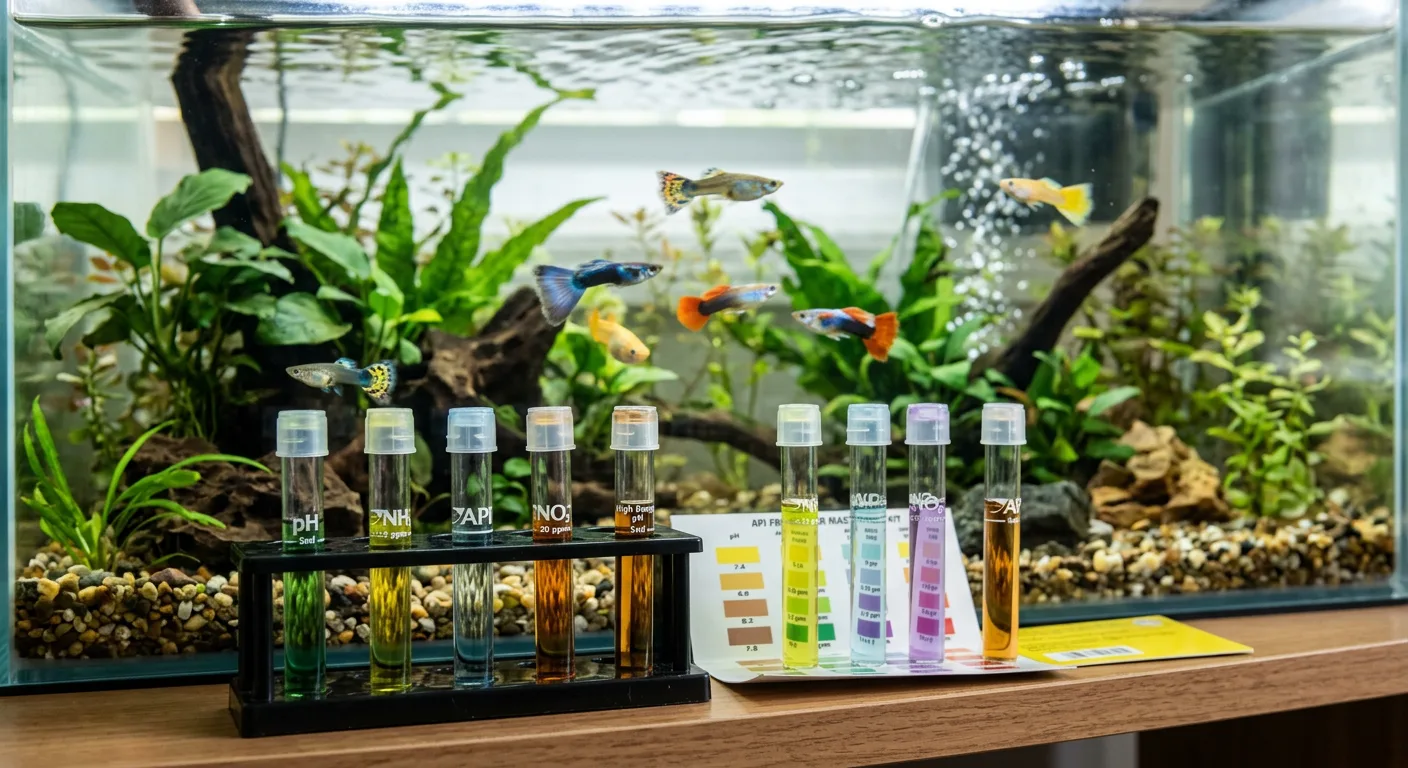
Bad water is the most dangerous cause, because it can kill fish quickly while the tank still looks clear. Ammonia and nitrite burn gills, and fish that cannot breathe comfortably often retreat and sit still.
Test before you guess
Use a liquid test kit rather than paper strips if you can. The usual targets for a healthy guppy tank are:
| Parameter | Target for guppies | Action if off |
|---|---|---|
| Ammonia | 0 ppm | Any reading is a problem; water change and cut feeding |
| Nitrite | 0 ppm | Any reading is a problem; water change, check filter |
| Nitrate | Under about 20 to 40 ppm | Water change, reduce stock or feeding |
| pH | About 6.8 to 7.8, stable | Avoid chasing numbers; fix swings slowly |
| Hardness (GH) | Moderately hard, about 8 to 12 dGH is common | Match your source water where possible |
| Temperature | 76 to 80 °F (24 to 27 °C) | Adjust heater slowly |
These are common hobby ranges, and guppies adapt to a fairly wide band when conditions are stable. Details are in our pages on the ideal pH for guppies, nitrite poisoning and nitrate in a guppy tank.
Emergency steps for ammonia or nitrite
- Use a reliable test kit to measure and record ammonia, nitrite, nitrate and temperature; hiding alone cannot identify a water problem.
- Confirm the filter is operating. Avoid rinsing biological filter media in untreated tap water.
- If readings are abnormal or fish are distressed, contact an aquatic veterinarian or qualified aquarium professional promptly. Use any water conditioner only as its label directs; do not repeat treatment based on hiding alone.
Chlorine, chloramine and tap water mistakes
Untreated tap water or a large change can affect fish. Use a water conditioner only according to its product label and stated method; products differ, so do not assume a universal whole-tank dose. Match replacement water closely to the aquarium temperature. See our article on whether guppies can live in tap water if you are unsure.
Why are my guppies hiding? Cause 3: wrong temperature or a sudden swing
Guppies are tropical. Cold water makes them sluggish and they tend to sit near the bottom or hide behind equipment. Very warm water lowers oxygen and may send them to the surface or into shaded corners.
What to check
- Read a separate thermometer placed on the far side of the tank from the heater. Heater dials are not always accurate.
- Look for a failed heater, a cold draft or a heater that has been bumped.
- In summer, check for direct sunlight or a hot room.
How to correct it safely
Change temperature slowly, about 1 to 2 °F per hour when warming, and cool gradually too. A guppy tank held steadily in the high 70s is a good aim. Our full guide to the ideal temperature for guppies explains heater sizing and what to do in power cuts.
Why are my guppies hiding? Cause 4: bullying, aggression and wrong tank mates
If one or two guppies hide while others roam freely, look for a bully. Male guppies chase females constantly, and an unbalanced ratio can exhaust the girls so badly that they hide all day.
Fix the sex ratio
A common rule is at least two or three females for every male. With too few females, each one is harassed nonstop. Read more in our guide to the male to female guppy ratio and why guppies chase each other.
Check the tank mates
Fin nippers, large cichlids and fast boisterous fish will frighten guppies. Peaceful community fish are better partners, but even then size and temperament matter. See can guppies live with mollies or guppies with rasboras for compatible options.
Spot the victim
Signs include ragged fins, missing scales, a fish that stays in one corner and a fish that never joins the group at feeding. Remove or rehome the aggressor if you can, or add plants and breaks in line of sight so fish can escape.
Why are my guppies hiding? Cause 5: not enough cover
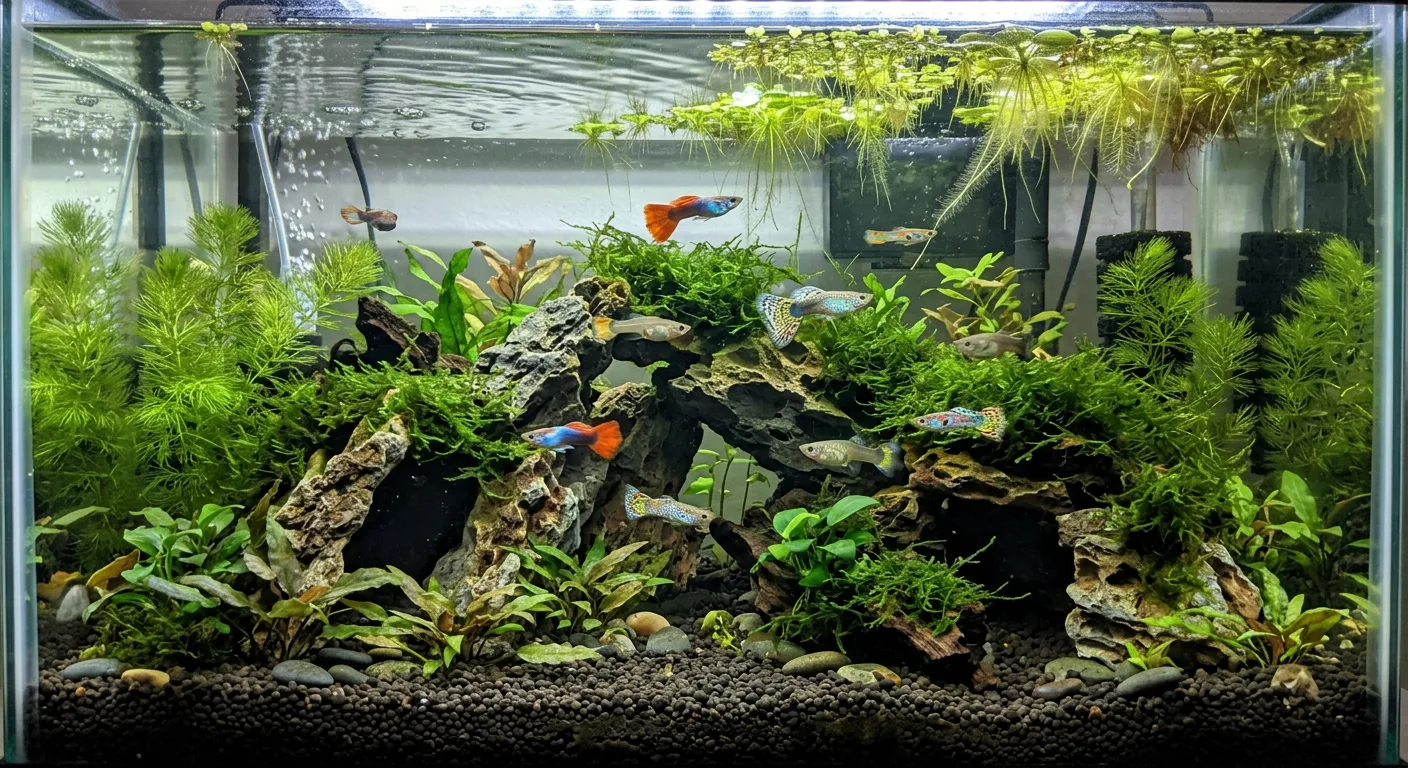
It sounds backwards, but a tank with plenty of hiding places usually has guppies that hide less. In a bare tank, fish feel exposed and stay nervous at the edges or behind the filter. Cover gives them confidence to roam.
Best hiding spots for guppies
- Java moss and hornwort: dense, easy and also good for fry.
- Floating plants: such as frogbit or salvinia, which soften light from above.
- Driftwood and rock caves: create shaded retreats and sight breaks.
- Tall stem plants: make lanes along the back and sides.
How much is enough?
A good target is to cover roughly a third to half of the visible space with plants or decor while leaving open swimming room in the middle. For stocking help see how many guppies in a 30 gallon tank.
Why are my guppies hiding? Cause 6: light, noise and room activity
Sudden bright light can send guppies running for cover, especially if the tank was dark all night. Heavy foot traffic, loud speakers, children tapping the glass and a tank in a busy hallway all add stress.
Simple changes that help
- Use a timer for 8 to 10 hours of light a day so the change is predictable.
- Raise lights gradually if your fixture allows, or switch on a room light first.
- Move the tank away from doors, speakers and busy corridors if possible.
- Back or side the tank with a background to reduce reflections that scare fish.
Guppies also react to their own reflection, to cats and to shadows passing over the top. Placement matters more than people expect.
Why are my guppies hiding? Cause 7: pregnancy and birth
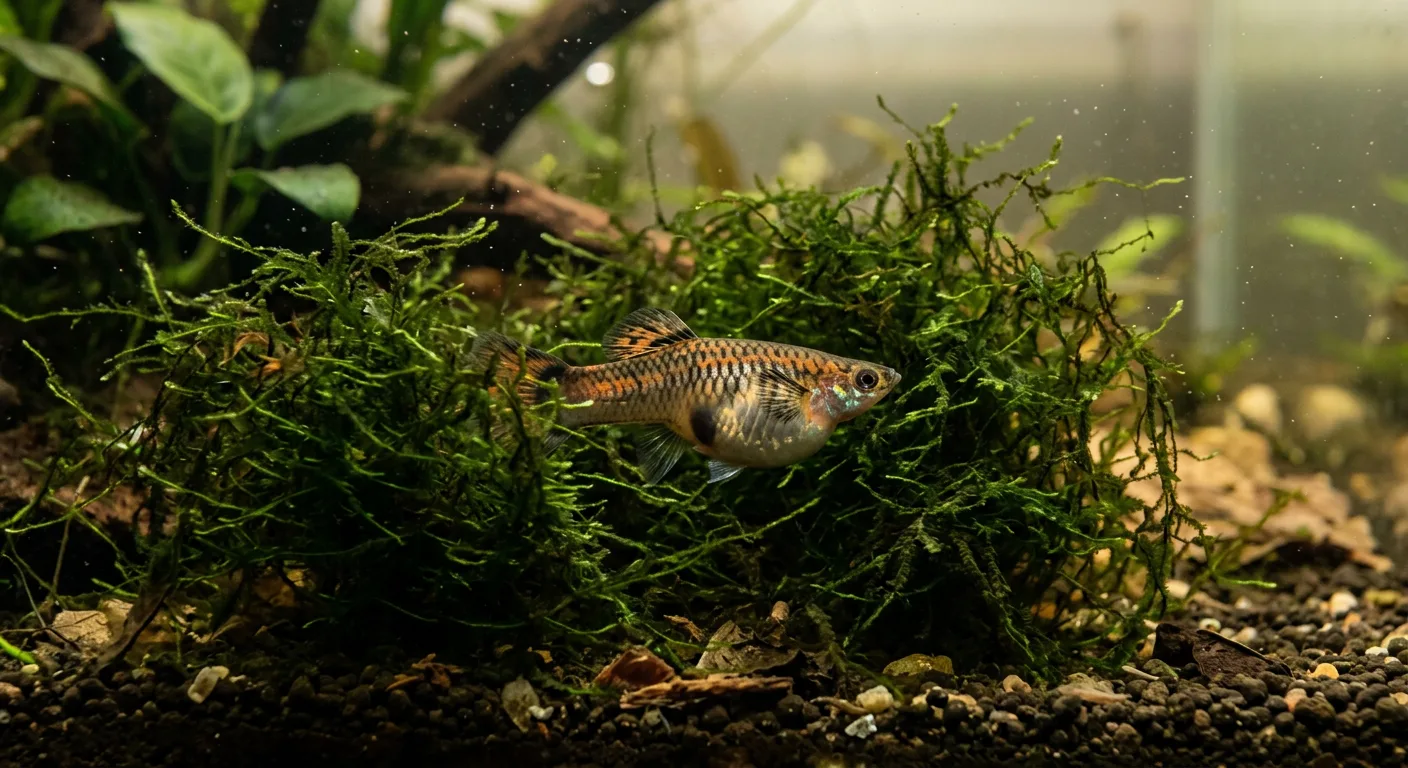
A female guppy that looks swollen and hides in plants may be close to giving birth. She often becomes shy, stays near the bottom or corners and may eat less. Gestation is usually around 21 to 30 days, and warmer water tends to shorten it.
Signs she is close
- A large, squared belly and a dark gravid spot.
- Restless pacing, hiding in dense plants and rapid gill movement.
- Refusing food in the last day or so.
Our guides on the signs a guppy is about to give birth and whether a guppy is pregnant or just fat explain how to tell.
What to do
Give her thick plants such as java moss so newborn fry can escape. Avoid chasing her with a net, since stress can cause problems. If you use a breeder box, keep her there only briefly, and consider whether you need one at all. Read our page on whether guppies need a breeder box.
Why are my guppies hiding? Cause 8: illness and parasites
Hiding can occur with illness, stress or environmental problems. If other signs appear or persist, record what you observe and test the water; seek aquatic veterinary advice rather than diagnosing from hiding alone.
| Symptom with hiding | Possible problem | Where to read more |
|---|---|---|
| White salt-like dots | Ich (white spot disease) | Guppy ich treatment |
| Gold dust coating | Velvet | Guppy velvet disease |
| Frayed fins, white edges | Fin rot | Guppy fin rot |
| Swollen belly, raised scales | Bloat or dropsy | Bloated guppy, guppy dropsy |
| Shaking in place | Stress, water or parasites | Why guppies shimmy |
Read our detailed pages on ich treatment, velvet, fin rot and shimmying.
Quarantine basics
Hiding alone does not diagnose illness or show that a fish should be moved. Ask an aquatic veterinarian whether separation is appropriate; avoid an uncycled or unstable container. For new arrivals, use a separate, stable setup and dedicated equipment for at least 30 days as a general baseline; longer may be needed for the species or health concerns. Quarantine reduces exposure risk but cannot guarantee that a fish is disease-free.
Why are my guppies hiding? A step-by-step diagnosis
When 'why are my guppies hiding' has no obvious answer, work through this order. It starts with the most dangerous and easiest to check causes.
- Look at the fish. Note fins, color, breathing, spots and belly shape.
- Test the water. Ammonia, nitrite, nitrate, pH and temperature.
- Review recent changes. New fish, new decor, new medication, water change, power cut or moved tank.
- Watch the group for 10 minutes. Look for chasing, nipping and one fish being singled out.
- Review the layout. Is there enough cover, and is light too intense?
- Act on one thing at a time. Fix the worst problem first and give it a day before changing more.
Why are my guppies hiding? Mistakes that make it worse
- Constant chasing with a net. Frightened fish hide deeper and get injured.
- Overfeeding to tempt them out. Leftovers foul the water and make the cause worse.
- Adding medication without a diagnosis. It can stress healthy fish and harm the filter bacteria.
- Huge water changes with different water. Large swings in temperature or hardness add stress.
- Moving decor every day. Fish need stable territory.
- Buying more fish to cheer them up. New arrivals add stress and possible disease.
Why are my guppies hiding? Tips for beginners and experienced keepers
For beginners
Cycle the tank before adding fish, buy a liquid test kit and keep a small notebook of water readings. Start with a modest number of guppies. Our tank setup checklist before buying guppies helps you prepare.
For experienced keepers
Keep new arrivals in a separate, stable setup with dedicated equipment for at least 30 days as a general baseline; longer observation may be appropriate for the species, source and health concerns. An interval cannot guarantee disease-free fish. Monitor behavior at feeding time and follow the same cautious guidance in our quarantine guide.
Choosing healthy stock
Healthy fish from a clean source adapt faster and hide less. Our guide on how to choose healthy guppy fish online lists what to look for.
Why are my guppies hiding? Quick checklist
- Give new guppies up to a week to settle.
- Test ammonia, nitrite, nitrate, pH and temperature.
- Keep the temperature steady in the high 70s °F.
- Provide plants and caves covering a third to half the space.
- Keep at least two or three females per male.
- Choose peaceful tank mates and watch for bullying.
- Keep lighting on a timer and reduce noise.
- Look for pregnancy signs in swollen females.
- Record signs, test water and ask an aquatic veterinarian about persistent or worsening concerns before treatment.
- Change one thing at a time.
Healthy, confident fish start with good stock. Browse our male guppies and premium guppy pairs, read more about species background on Wikipedia, and return to our guppy care hub for further guides.
Why are my guppies hiding? FAQ
Why are my guppies hiding when they are new? Is that normal?
Yes. Most new guppies hide for the first one to three days, and shy ones may take a week. Keep the light dim, add cover and avoid disturbing them. If they still hide and refuse food after several days, test the water.
Why are my guppies hiding at the bottom of the tank?
Bottom hiding often points to cold water, poor water quality, illness or stress. Check temperature and test ammonia and nitrite first. Fix the worst problem, then watch for other symptoms.
Why are my guppies hiding — why is only one of them hiding?
One hiding fish may be bullied, pregnant or unwell. Observe its breathing, appetite, fins and other changes, and test the water. If signs persist or worsen, seek aquatic veterinary advice; ask whether separation is appropriate and avoid an uncycled container.
Why are my guppies hiding behind the filter?
Fish go there to avoid aggression, bright light or flow. Check for chasing and add plants or decor elsewhere. If the current is strong, soften it with a baffle or sponge.
Why are my guppies hiding — do pregnant guppies hide?
Often, yes. Near birth a female may hide in dense plants, pace and stop eating. Provide thick cover such as java moss and avoid netting her.
Why are my guppies hiding for days — how long should I wait before worrying?
If hiding lasts more than a few days, or comes with gasping, clamped fins, spots or refusing food, act at once. Test the water and review recent changes.
Why are my guppies hiding — can too much light make them hide?
Yes. Sudden strong light can startle them. Use a timer, aim for 8 to 10 hours a day and add floating plants to soften the glare.
Why are my guppies hiding — will adding more guppies stop it?
Not usually. Extra fish can add stress and disease. Fix water, layout and ratio first, then add fish only after quarantine.
Behind the care guides
Care begins with steady systems
Our guppy guides focus on practical routines: keep water stable, observe fish closely and allow for natural variation.
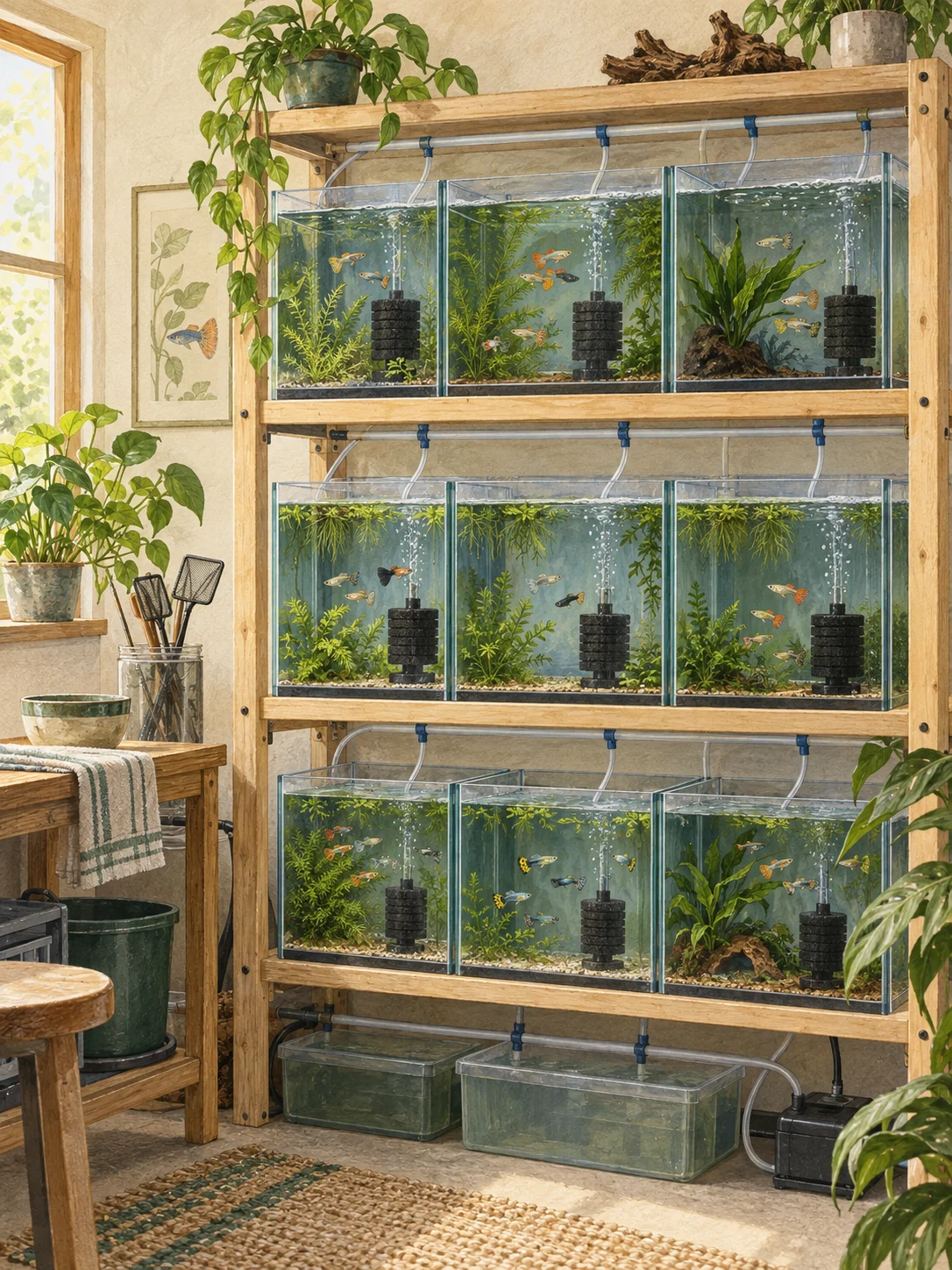
Care systems
Steady water, thoughtful care
Gentle filtration and regular observation support healthy aquarium routines.
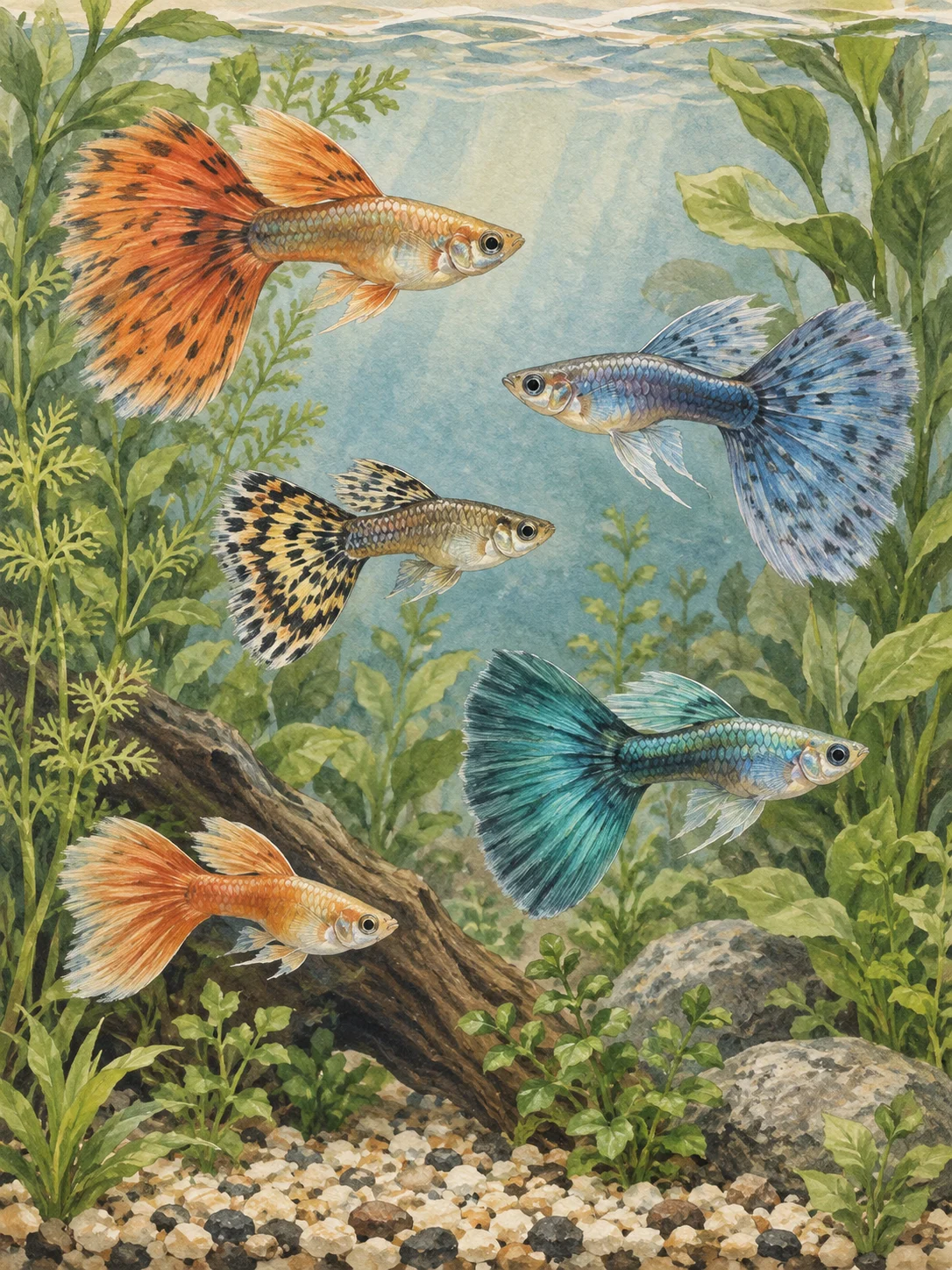
Natural variation
Every guppy is different
Color, size and fin shape vary with strain, age and each individual fish.
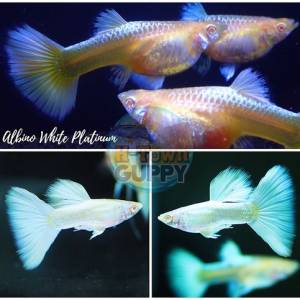
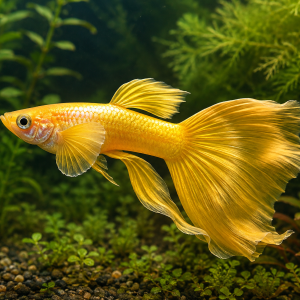
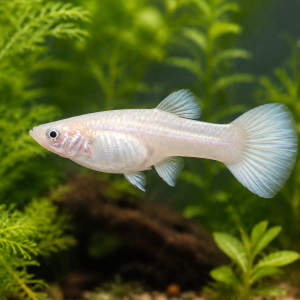
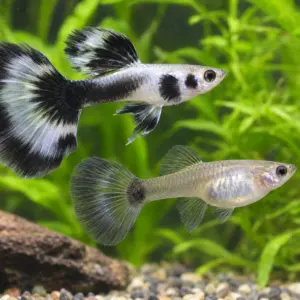
Editorial illustrations for context; they do not depict HiGuppy's exact facility or current fish stock.