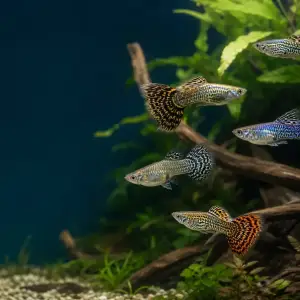
The HiGuppy Journal
Why Is My Guppy Shimmying? Causes and How to Fix It
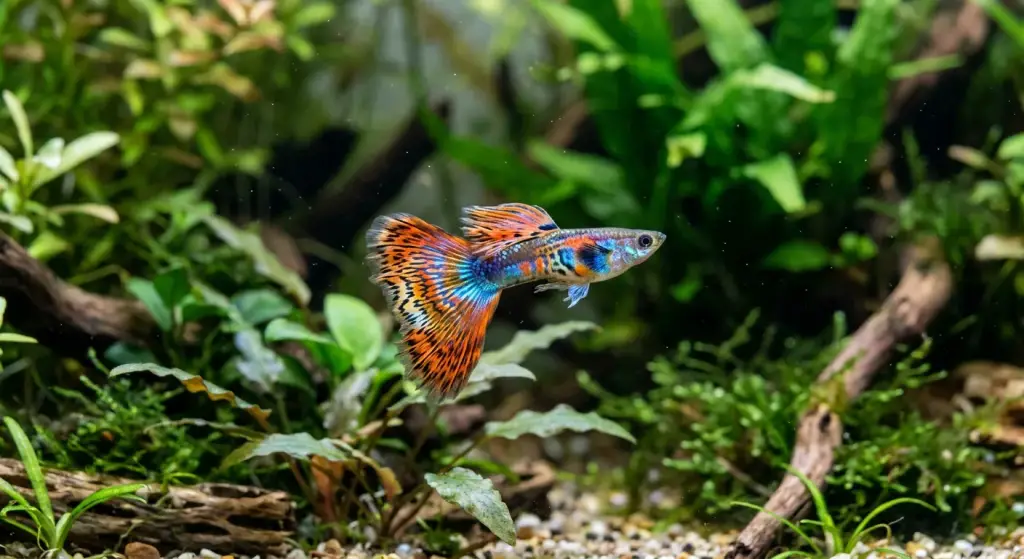
Why is my guppy shimmying? A guppy that shimmies, wiggling its body side to side while staying in one spot, is most often reacting to stress from poor water quality, a temperature that is too cold, or low oxygen. Less often it is normal courtship or a sign of illness. The quick fix is to test ammonia, nitrite and temperature today, then do a partial water change if anything is off. This guide sits alongside our complete guppy care guide and walks through every cause step by step.
Shimmying looks alarming because the fish seems to vibrate or rock without actually swimming anywhere. In a male chasing a female it is harmless. In a fish alone in the tank it is a warning flag. The ranges below are general hobby guidelines for common fancy guppies, not guarantees, so always read the whole picture: how many fish are affected, how they breathe, how they eat and what your test kit says.
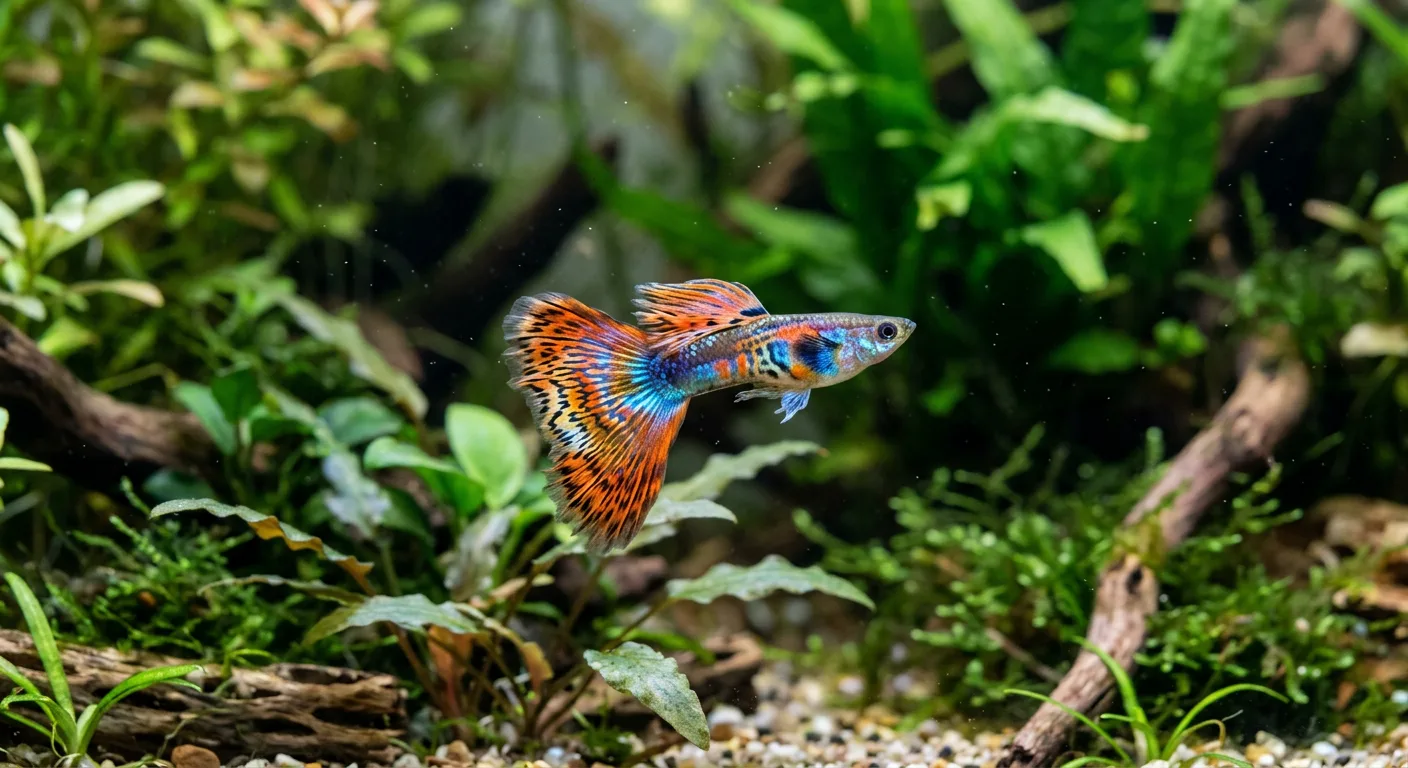
Why is my guppy shimmying? The quick answer
Shimmying is a symptom, not a disease. Think of it as the fish’s way of saying something in its environment or body is wrong. Before you treat anything, work through the causes in this order, from most to least common in home tanks:
- Water quality. Ammonia, nitrite or very high nitrate irritate the gills and skin.
- Temperature. Water that is too cold, or that swung quickly, makes guppies shake.
- Low oxygen or poor flow. Warm, stagnant, overstocked tanks.
- Stress from tank mates or a new tank. Bullying, noise, bright light shocks and recent moves.
- Courtship or normal behavior. Males dancing for females.
- Parasites or illness. Often shown together with other signs such as spots, flashing or clamped fins.
The first three account for most cases we see described by hobbyists, and all three can be checked in about ten minutes with a thermometer and a liquid test kit.
Shimmying versus normal swimming
A healthy guppy swims actively, explores the plants, picks at food and reacts quickly when you approach the glass. A shimmying guppy typically stays in place near the bottom, a corner or the surface and rocks its body from side to side, sometimes with the fins held close to the body. The movement is rhythmic and looks involuntary rather than playful.
Is it one fish or all of them?
This single question narrows things down quickly. If every fish is shaking, suspect something in the water: temperature, ammonia, nitrite, a chemical or a chlorine slip during a water change. If only one fish is affected, think bullying, illness, or that it is a male courting. Count the affected fish before you do anything else.
Cause 1: Poor water quality (ammonia, nitrite, nitrate)
Guppies are hardy, but they are not immune to toxic water. Ammonia and nitrite burn gills and skin, and fish often respond by shaking, gasping, hanging near the surface or darting. In a tank that is new, recently cleaned too aggressively, or overstocked, this is the first thing to rule out. Our guides to ammonia poisoning in guppies and nitrite poisoning in guppies go deeper on emergency care.
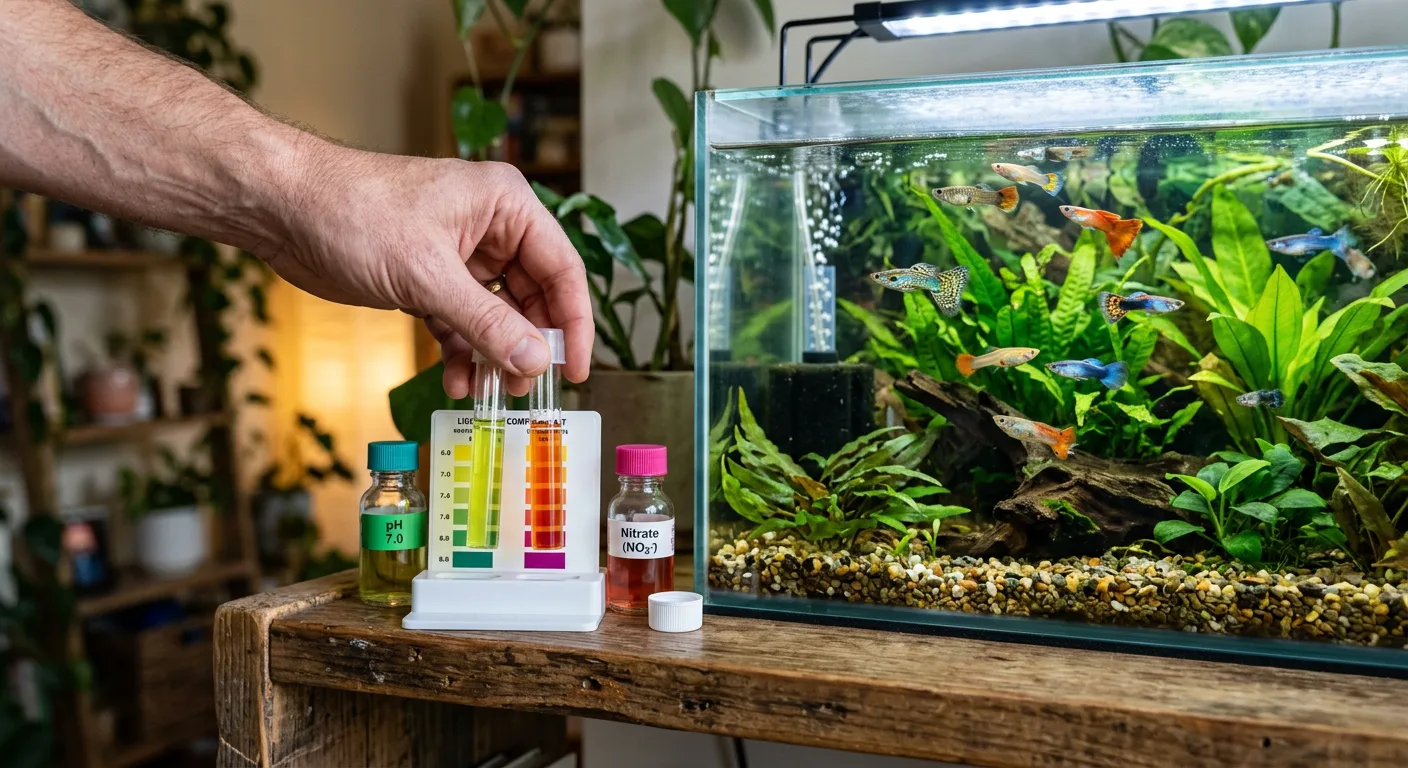
Safe water targets
Aim for the following in a stable guppy tank. Treat these as practical goals used widely in the hobby rather than strict laws.
| Parameter | Target for guppies | Act if |
|---|---|---|
| Ammonia | 0 ppm | Any reading above 0 |
| Nitrite | 0 ppm | Any reading above 0 |
| Nitrate | Under about 20 to 40 ppm | Above about 40 ppm |
| Temperature | About 74 to 82 °F (23 to 28 °C) | Below about 72 °F (22 °C) or a sudden swing |
| pH | About 6.8 to 7.8, steady | Rapid change, even within range |
| GH / KH | Moderately hard, stable | Very soft water with a crashing pH |
Step by step: how to test and respond
- Test first, change second. Use a liquid kit, because strips are less reliable. Test ammonia, nitrite, nitrate and pH. Write the numbers down.
- If ammonia or nitrite is above 0, change 30 to 50 percent of the water with temperature-matched, dechlorinated water. Repeat in 12 to 24 hours if the reading is still above 0.
- Add dechlorinator at the dose on the bottle, treating the volume of new water or the whole tank as the label instructs.
- Stop feeding for a day in a severe case. Guppies handle a short fast well, and less food means less ammonia.
- Add aeration. Extra surface movement helps fish tolerate stress while you fix the water.
- Re-test daily until readings are zero and stable for several days.
Why a cycled filter matters
Beneficial bacteria in the filter and substrate convert ammonia to nitrite and then nitrite to nitrate. A tank that is not cycled cannot do this, which is why shimmying and gasping are so common in the first weeks of a new setup. If you recently set up or cleaned the filter media under a tap, you may have wiped out part of this bacteria. Rinse media only in old tank water.
Chlorine and chloramine
If every guppy started shimmying shortly after a water change, suspect untreated tap water. Chlorine and chloramine damage gills quickly. Always use a dechlorinator that handles chloramine if your supplier uses it, and never skip it for a quick top-off.
Cause 2: Temperature that is too cold or unstable
Guppies are tropical fish. Below the low 70s °F, their metabolism slows and many show shivering or shimmying, clamped fins and a loss of appetite. A winter night with a window open, a heater that failed, or a fresh batch of cold water during a change are classic triggers. Our guppy temperature guide covers the ideal range in detail, and the question of whether you need one is answered in do guppies need a heater.
How to warm a cold tank safely
- Check the thermometer, ideally one placed away from the heater.
- If the water is cold, raise it slowly, about 1 to 2 °F (roughly 1 °C) per hour, rather than all at once.
- Replace or repair a faulty heater. Choose one rated for your tank volume.
- Keep the tank away from drafts, windows and air-conditioning vents.
- For long winters, a stable 76 to 78 °F (24 to 26 °C) is a comfortable target for most fancy guppies.
Rapid swings are as risky as a steady cool tank. A drop of several degrees within a few hours can trigger shaking and later make fish more prone to infection.
When it is too warm
Very warm water holds less oxygen and speeds up bacteria and parasites. If the tank is above about 84 °F (29 °C), shake-and-gasp behavior can appear. Move the tank out of direct sun, add airflow across the surface and use a fan to cool evaporation if needed.
Cause 3: Low oxygen and poor circulation
A guppy that shimmies near the surface while breathing quickly is often short of oxygen. This is common in heavily stocked tanks, tanks with a film on the surface, or filters that are clogged. See our guide on guppies gasping at the surface for the full checklist.
- Clean the filter sponge in old tank water to restore flow.
- Angle the filter output so the surface ripples gently.
- Add an air stone or sponge filter if the tank is crowded.
- Reduce the number of fish if the tank is overstocked.
- Skim away oily surface film with a paper towel.
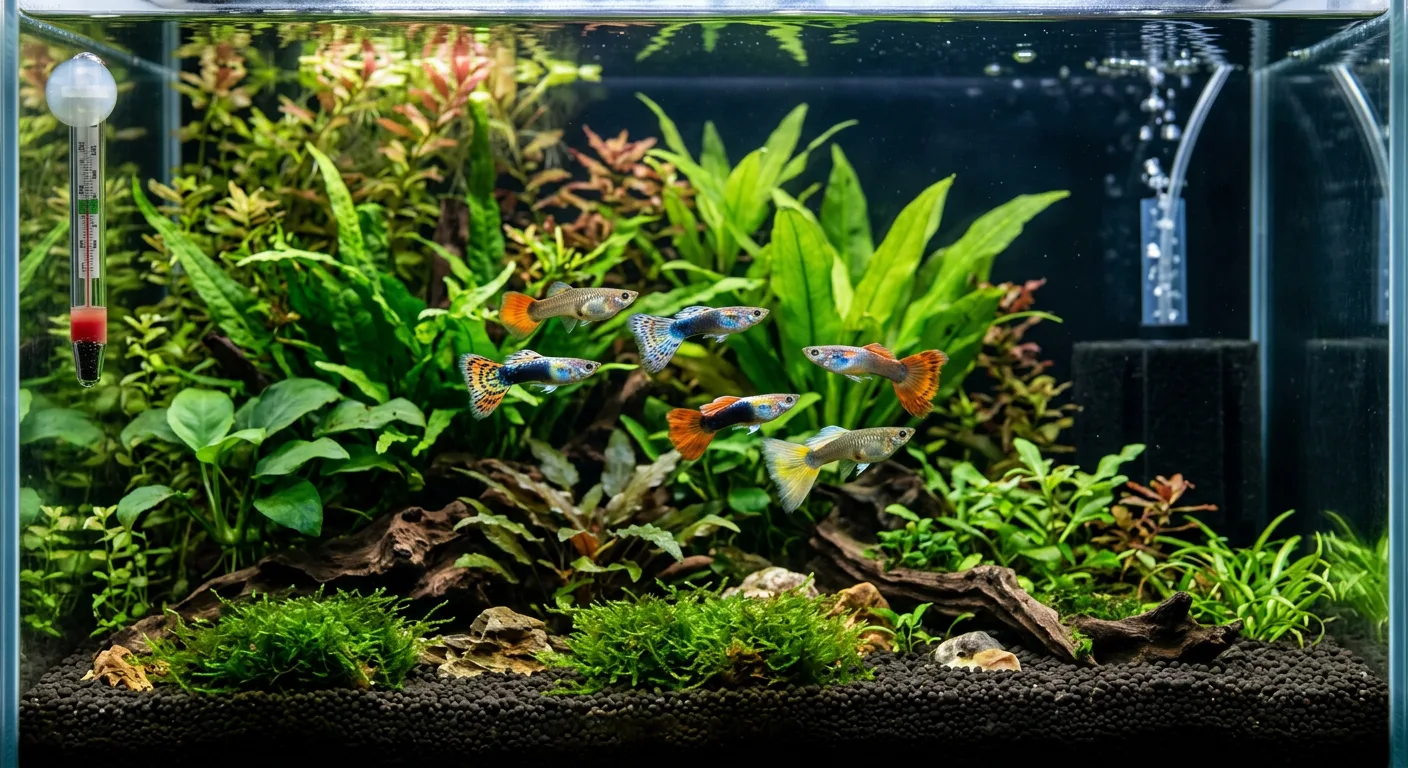
Cause 4: Stress, bullying and sudden changes
Guppies are peaceful, but they are easily stressed by constant harassment, aggressive tank mates, too many males chasing too few females, loud vibrations or abrupt lighting. A stressed guppy may shimmy, hide, lose color and stop eating.
Common stress triggers
- Fin nippers. Tiger barbs and some other fish pester guppies’ long tails.
- Too many males. A ratio of about 2 to 3 females per male spreads out the chasing.
- Bare tank. No plants or hiding spots means nowhere to retreat.
- Light shock. Switching on bright lights suddenly in a dark room.
- New arrivals. Fish shipped in a bag are tired and shaky for a day or two. Float and drip-acclimate them, then keep the lights low.
How to reduce stress, step by step
- Observe for 10 minutes and note who is chasing whom.
- Add live or silk plants, floating plants and hiding places.
- Rebalance the sex ratio, rehoming extra males if needed.
- Move aggressive tank mates out.
- Keep a regular light schedule of about 8 hours a day.
Healthy fish from a seller who packs well usually settle quickly. If you are shopping, browse our male guppies for color and tail variety, and plan your sex ratio before you buy.
Cause 5: Courtship dancing (normal shimmying)
Not every shimmy is a problem. Male guppies (see the guppy species overview) perform a display in which they curve the body, fan the tail and quiver in front of a female. This is part of normal mating behavior and often happens repeatedly through the day. A female may also quiver or shake briefly when she is receptive or annoyed by too much attention.
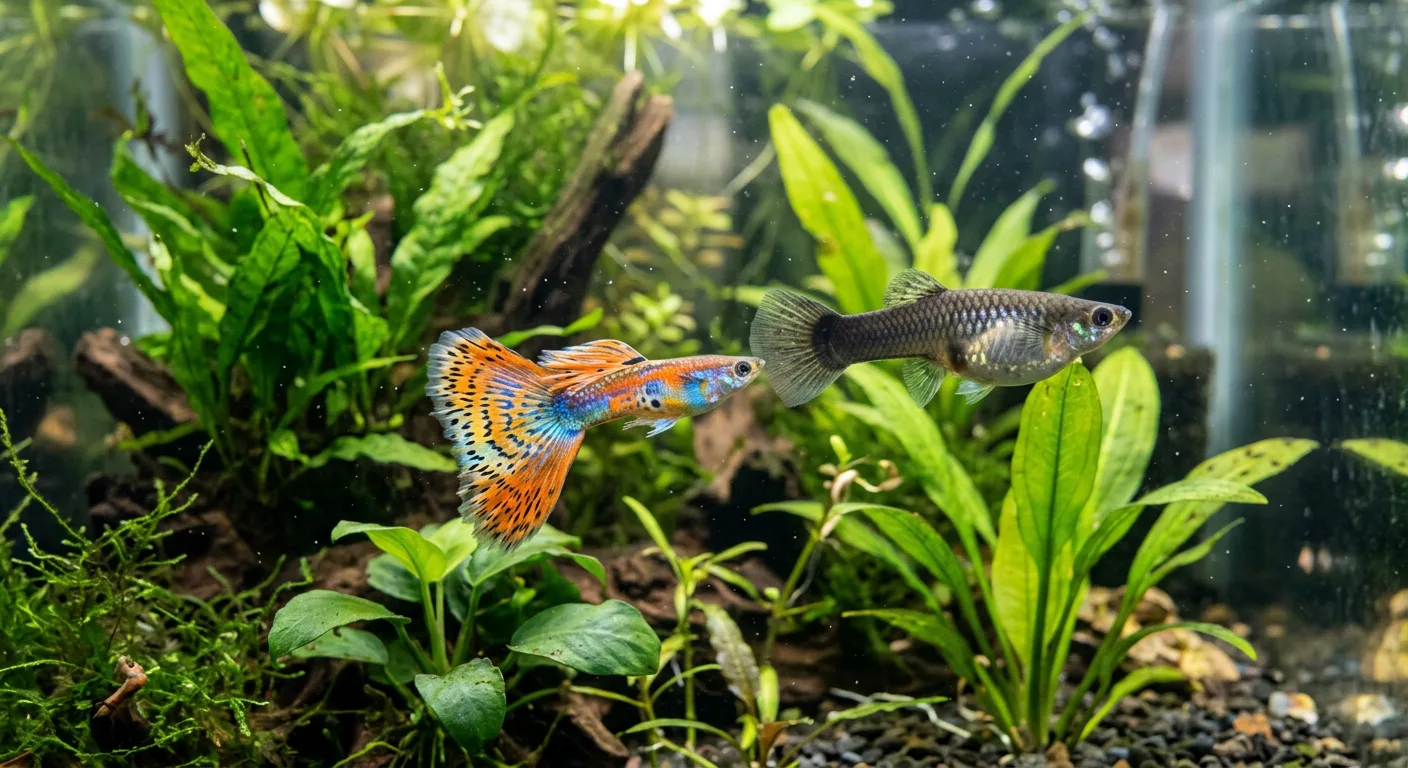
How to tell courtship from distress
| Sign | Courtship | Distress |
|---|---|---|
| Who shimmies | Usually a male near a female | Any fish, often alone or all fish |
| Fins | Spread and showy | Clamped and held tight |
| Appetite | Normal, may be distracted | Reduced or none |
| Color | Bright | Dull or pale |
| Duration | Short bursts | Long, repeated, in one place |
| Breathing | Normal | Fast or at the surface |
If the dance is nonstop and the female is hiding or being chased constantly, add more females and plants. Pregnant females also hide and rest more, which you can confirm with our tips in the guppy pregnant or fat guide.
Cause 6: Parasites and disease
Shimmying that comes with other symptoms points to illness. The most common are:
- Ich (white spot). Tiny white dots and rubbing against objects. See guppy ich treatment.
- Velvet. A fine gold or rust dust on the body, often with clamped fins and rapid breathing. See guppy velvet disease.
- Gill flukes or irritation. Fast gill movement and scratching.
- Bacterial infections. Often secondary to stress, with reddened or frayed fins.
Look closely with a flashlight in the evening. Spots, dust, red streaks or fuzzy patches mean the shimmy is likely part of an illness. Clamped tails and a hollow belly usually mean the fish has been unwell for a while, as discussed in guppy clamped fins.
What to do if you suspect disease
- Fix water quality and temperature first. Many mild cases improve once the environment is right.
- Move the sick fish to a quarantine or hospital tank if you can.
- Identify the symptom set: spots, dust, frayed fins, swelling.
- Use a treatment labeled for that disease and follow the label exactly.
- Avoid mixing several medications at once.
If several fish die or get worse quickly, a local aquatic vet or a reputable aquarium store can help with identification. We cannot diagnose from a description alone.
Diagnosis chart: match what you see to the likely cause
| What you see | Likely cause | First action |
|---|---|---|
| All fish shimmying after a water change | Chlorine, cold water, pH swing | Check temperature, use dechlorinator, small corrective change |
| Shimmy plus gasping at surface | Ammonia, nitrite or low oxygen | Test water, add aeration, water change |
| Shimmy plus clamped fins, cold room | Low temperature | Warm slowly, check heater |
| Male wiggling near a female | Courtship | No action, add plants |
| Shimmy plus white dots | Ich | Follow ich protocol |
| Shimmy plus gold dust | Velvet | Quarantine and treat for velvet |
| One new fish shaking after arrival | Shipping stress | Dim lights, keep calm water |
Prevention: how to keep your guppies from shimmying
A stable routine prevents most shimmying. Keep these habits and your guppies will rarely show it.
Weekly routine
- Change about 20 to 30 percent of the water weekly for a normal stocked tank.
- Test ammonia, nitrite and nitrate at least every couple of weeks, and any time a fish looks off.
- Rinse filter media gently in old tank water, never under the tap.
- Check the heater and thermometer.
- Feed small amounts once or twice a day. Overfeeding fouls the water, as covered in overfeeding guppies.
Setup choices that help
- Use a reliable heater and thermometer in any room that cools off at night.
- Keep the tank properly cycled before adding fish.
- Do not overstock. More fish means more waste and less oxygen.
- Provide plants for cover and for oxygen during the day.
- Quarantine new arrivals for a couple of weeks when you can.
For a deeper foundation, return to the guppy care guide. Good habits solve more fish problems than any medication.
Tips for beginners and experienced keepers
If you are new
Do not panic and do not change everything at once. Test the water, check the temperature and watch the fish. Many hobbyists make things worse by adding several chemicals in a row. A simple partial water change fixes a surprising number of problems.
If you have kept guppies for years
Remember that guppies bred for large tails and bright color can be more delicate than plain feeder guppies. If your line starts shimmying after a long stable period, look at gradual shifts: a failing heater, a slowly clogging filter, rising nitrate, or a change in the local tap water supply. Keep a short log of test results so you can see trends instead of guessing.
Quick checklist
- Count how many fish are shimmying.
- Test ammonia, nitrite, nitrate and pH.
- Check temperature and look for sudden swings.
- Confirm dechlorinator was used.
- Improve aeration and surface movement.
- Look for spots, dust or damaged fins.
- Check whether it is just a male courting.
- Reduce stress with plants and a sensible sex ratio.
- Do a 30 to 50 percent water change if toxins are present.
- Re-test daily until stable.
FAQ
Why is my guppy shimmying in one spot?
Staying in one place while wiggling usually means stress from water quality, cold temperature or low oxygen. Test ammonia, nitrite and temperature first. If it is a male near a female, it is likely courtship.
Is shimmying in guppies always a sign of sickness?
No. Males shimmy during courtship, and that is normal. Shaking that is constant, affects the whole tank or comes with clamped fins, spots or gasping is more likely a problem.
Can cold water make guppies shimmy?
Yes. Water in the low 70s °F or below, or a quick temperature drop, often causes shaking and clamped fins. Warm the tank slowly by 1 to 2 °F per hour and check the heater.
Why did my guppies shimmy after a water change?
The new water may have been colder, had a different pH, or lacked dechlorinator. Check temperature and pH, and match new water to the tank next time. A small corrective change with treated water can help.
How long does shimmying last?
If the cause is fixed, many fish settle within hours to a couple of days. If it keeps going after the water and temperature are right, look for parasites and consider quarantine and treatment.
Should I add aquarium salt when my guppy shimmies?
Salt is not a cure for every cause and can be misused. Fix water quality and temperature first. If you consider it, read our guide on aquarium salt for guppies before dosing.
Is my pregnant guppy shimmying because of labor?
Pregnant females sometimes shake or hide near birth, but the same signs can show stress. If she is heavily gravid with a dark gravid spot, give her plants and calm water and watch for fry.
Can a new guppy shimmy after shipping?
Yes. Shipped fish are often tired and shaky for a day or two. Acclimate slowly, keep the lights dim, offer small meals and keep the water stable.
Behind the care guides
Care begins with steady systems
Our guppy guides focus on practical routines: keep water stable, observe fish closely and allow for natural variation.

Care systems
Steady water, thoughtful care
Gentle filtration and regular observation support healthy aquarium routines.

Natural variation
Every guppy is different
Color, size and fin shape vary with strain, age and each individual fish.
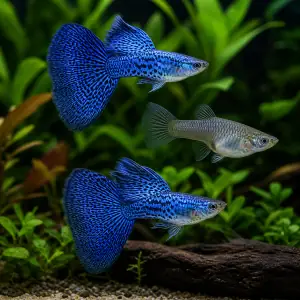
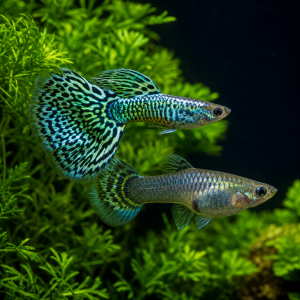
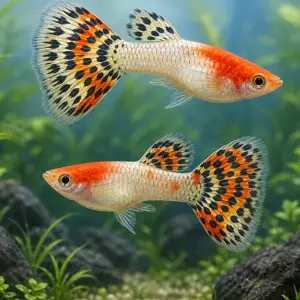
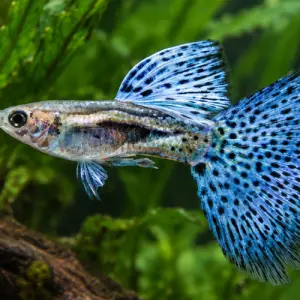
Editorial illustrations for context; they do not depict HiGuppy's exact facility or current fish stock.