The HiGuppy Journal
How Often to Change Water in a Guppy Tank (and How Much)
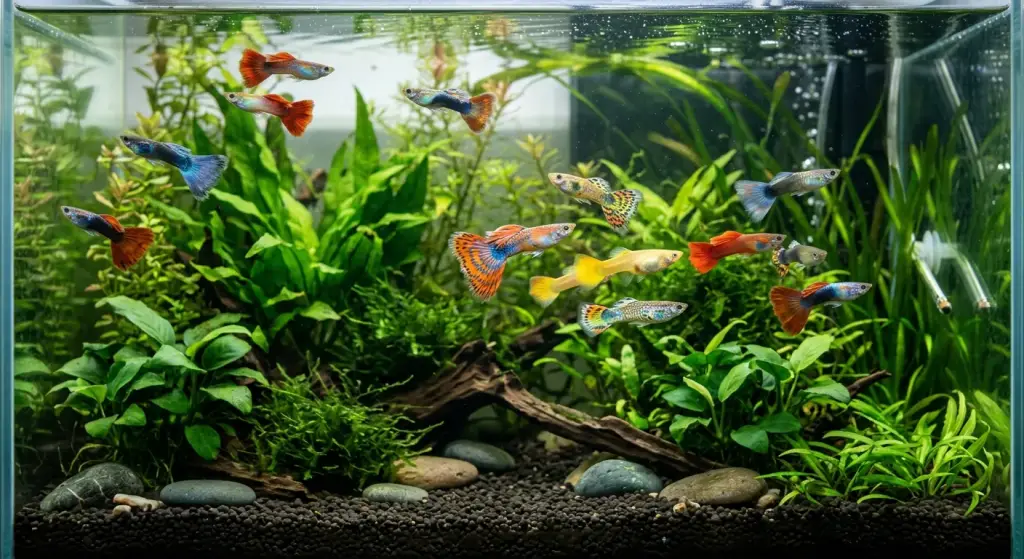
How often to change water in a guppy tank? For many established tanks, a weekly guppy tank water change of up to about 25 percent is a useful starting point. The right amount and frequency depend on stocking, feeding, filtration, plants, source water and test results. Test regularly and adjust the routine when readings trend out of range. This guide is part of our complete guppy care guide and offers a practical starting routine and shows how to adjust it safely.
A biological filter supports bacteria that convert ammonia to nitrite and then nitrate, but testing is still needed to monitor those compounds. A guppy tank water change can dilute some accumulated waste, including nitrate, while abrupt changes in temperature or water chemistry can also stress fish. The sections below show how to set a routine around test results and tank conditions.
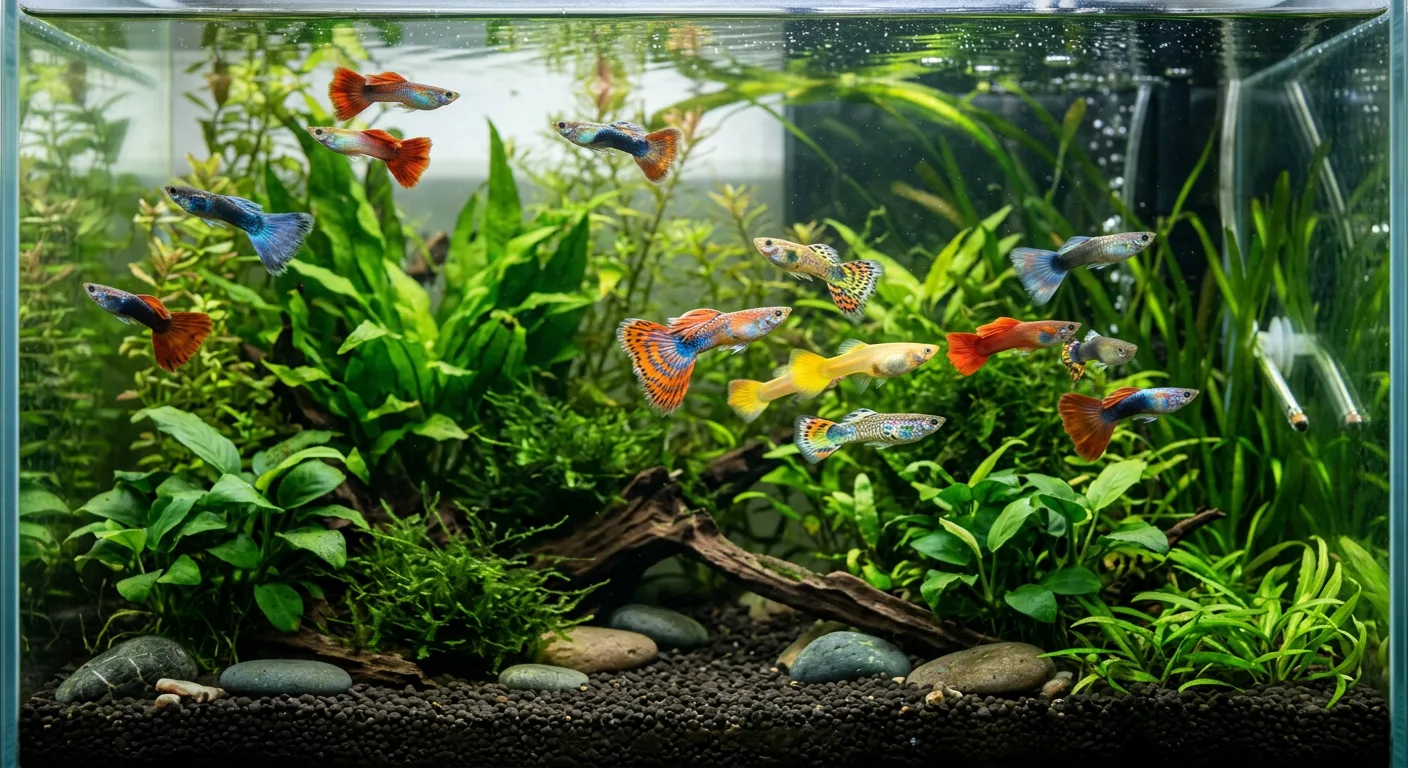
How often to change water in a guppy tank: the quick schedule
Use this guppy tank water change schedule as a starting point, then adjust using test results. These are common hobby guidelines rather than strict rules, because every tank differs in stocking, feeding, filtration and plants.
| Tank situation | Suggested change | How often |
|---|---|---|
| Typical established freshwater tank | Up to about 25 percent | Weekly starting point |
| Small tank or heavier stocking | Test and adjust the partial change | Test more often; frequency depends on readings |
| Large, lightly stocked, planted tank | Test and adjust the partial change | Keep checking weekly before changing the routine |
| Fry grow-out tank | Small partial changes as needed | Monitor water quality frequently and adjust to readings |
| Newly cycling tank with fish | A 25 to 50 percent change may help lower measurable ammonia if replacement water contains none | Test frequently, act on readings and retest |
| Sick fish or hospital tank | Follow a fish-experienced veterinarian or treatment instructions | No universal interval; check for medication directions |
If you want a full routine for your guppy tank water change, our guppy tank maintenance schedule places it alongside filter care and feeding.
Why a guppy tank water change matters
The nitrogen cycle in one minute
Fish waste and leftover food release ammonia. Nitrifying bacteria in a mature biological filter convert ammonia to nitrite and then nitrate. Keep ammonia and nitrite at zero; nitrate is less acutely toxic but can still be harmful at elevated levels. Partial water changes can remove nitrate, while source-water nitrate and species-specific guidance affect the target. If the cycle is unfamiliar, read our guppy tank cycling checklist first.
What else a guppy tank water change does
- Dilutes some waste products that can build up between changes; test water rather than relying on appearance alone.
- Whether a change adds minerals depends on the replacement water; compare source and tank chemistry when hardness or alkalinity matters.
- Nitrification can reduce alkalinity over time, and pH may fall when buffering is low; test instead of assuming a water change alone corrects it.
- Does not replace diagnosis or treatment when fish show signs of disease.
Factors that change how often your guppy tank water change is needed
Tank size
Small tanks have less water to dilute waste, so problems arrive faster and a guppy tank water change may be needed more often. A 5 gallon tank with a handful of guppies can reach unsafe nitrate far sooner than a 30 gallon tank with the same fish. Our guides on guppies in a 10 gallon tank and guppies per gallon help you avoid overstocking, which is the biggest driver of dirty water.
Stocking and breeding
Guppies breed readily, and a tank that starts with six fish can have thirty within a few months. More fish and fry means more waste. If your tank has become crowded, change more often and plan to separate or rehome fish.
Feeding
Overfeeding is the most common cause of fouled water. Offer only what the fish eat in about one to two minutes once or twice a day and remove leftovers. Details are in our guide on how often to feed guppies.
Filtration and plants
A mature biological filter processes ammonia and nitrite, while live plants can take up some nitrate. Plants and filtration do not replace regular testing or a guppy tank water change plan.
Temperature
Temperature affects fish and water quality, but it does not set a guppy tank water change schedule by itself. Keep guppies within an appropriate species range and use test results to guide maintenance.
How much water to change at once
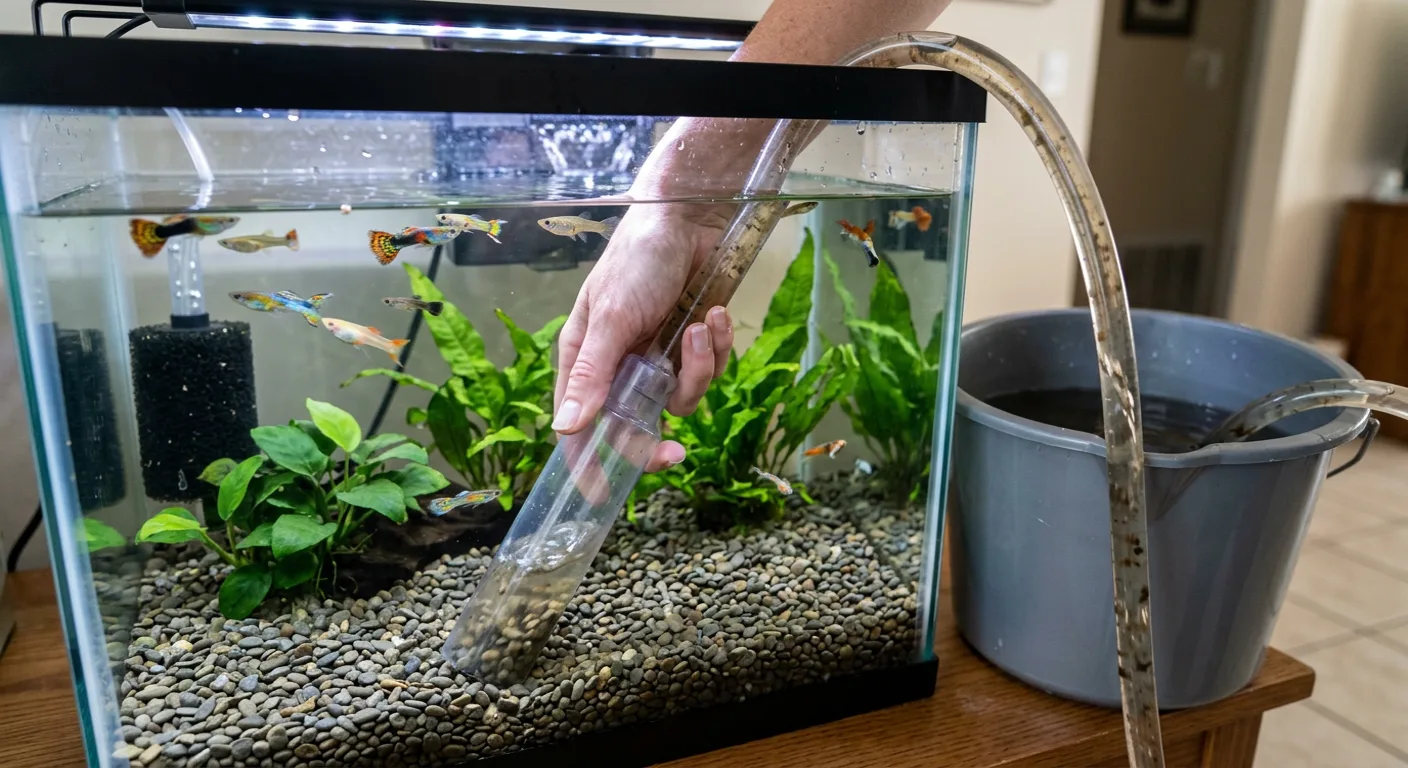
For a routine guppy tank water change, OATA recommends partial changes of up to about 25 percent each week as general freshwater guidance, with the amount and frequency adjusted for the species, tank and stocking. For a measured ammonia problem, UF/IFAS says a 25 to 50 percent change can help when the incoming water contains no ammonia. Prepare replacement water to suit the fish and follow test results; no percentage is a universal safety guarantee.
A simple way to calculate
Multiply your tank volume by the percentage. For a 20 gallon tank, 25 percent is 5 gallons. Remember that substrate and decor take up space, so the true water volume is a little less than the label. Use a marked bucket so you always remove and replace the same amount.
Can you change 100 percent of the water?
Routine complete water changes are usually unnecessary. Much of the biological filter lives on filter media and other surfaces, so preserve that media, but a full refill can still change temperature and water chemistry quickly. Use partial changes as your routine; a water-quality emergency may call for a larger partial change guided by measurements and suitable replacement water.
Step by step: how to do a guppy tank water change
Follow this guppy tank water change routine every time. It takes about 20 to 30 minutes for a medium tank.
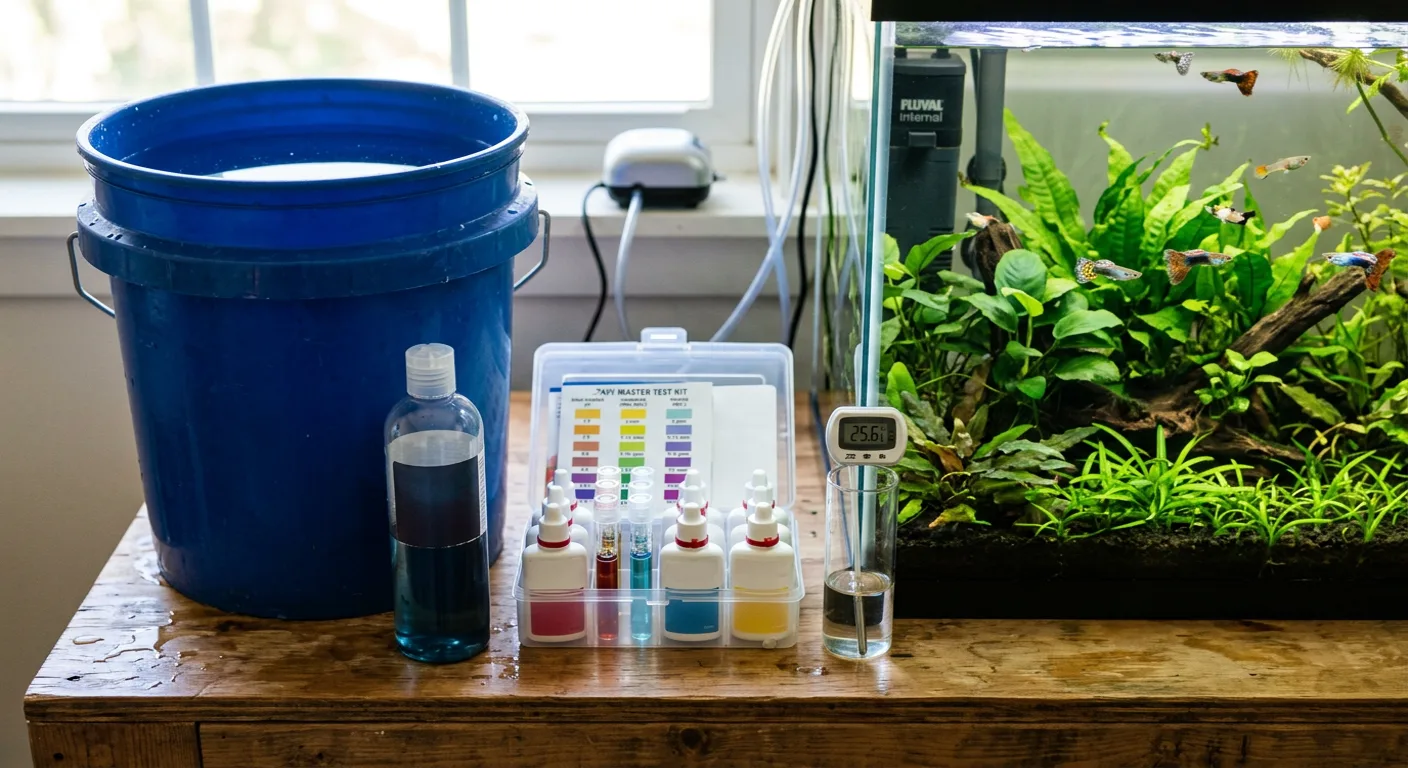
- Gather equipment: a clean bucket used only for the aquarium, a siphon with gravel vacuum, water conditioner, a thermometer and a test kit.
- Unplug the heater or lower the water carefully so the heater is never exposed while powered on. Hot glass can crack.
- Test the water first for ammonia, nitrite and nitrate so you know the baseline.
- Siphon out the water while vacuuming the top layer of gravel. Vacuum gently and avoid disturbing all of the substrate or plants at once, especially when fry are present.
- Prepare new water in the bucket. Treat replacement water according to the conditioner label and bring it close to the aquarium temperature before adding it.
- Pour slowly against a plate, your hand or a decoration so you do not blast the gravel or the fish.
- Restart the heater and filter and confirm that the filter is running and the water level is right.
- Observe the fish after the change. If they act abnormally, test water quality and check the replacement water.
For substrate cleaning during a guppy tank water change with fry, see our guide to using a gravel vacuum in a guppy tank with fry.
Water treatment, temperature and pH
Dechlorinating tap water
Tap-water disinfectants such as chlorine or chloramine can harm fish and filter bacteria. Use a conditioner labeled for the disinfectant in your water supply, and follow its directions for the volume being treated. Our page on whether guppies can live in tap water goes into more depth.
Matching temperature
For every guppy tank water change, prepare replacement water close to the tank temperature and avoid sudden changes. The appropriate temperature range depends on the fish; a large mismatch can be stressful. Check our guide to the ideal temperature for guppies.
Matching pH and hardness
Guppies tolerate a range, but they dislike sudden swings. If your tap water is stable, do not add pH chemicals; consistency matters more than a perfect number. See the ideal pH for guppies and GH versus KH.
Why not use water straight from a different source?
If the source water for a guppy tank water change switches from tap to well, bottled or reverse osmosis water, hardness and pH will shift. Mix gradually and test, or the fish may react badly even though the new water looks clean.
Use test results to set your guppy tank water change schedule
Use test results and source-water readings to set the schedule. For an established tank, record ammonia, nitrite and nitrate at least weekly — ideally just before each guppy tank water change — so you can see trends.
| Reading before the change | What it means | What to do |
|---|---|---|
| Ammonia detectable (above 0) | Check biofilter maturity, stocking, source water and waste | Act promptly; a 25 to 50 percent change may help if replacement water has no ammonia, then retest |
| Nitrite detectable (above 0) | Check biofilter maturity and possible disruption | Take prompt corrective action, monitor closely and retest |
| Nitrate rising or above species-specific guidance | Compare the aquarium reading with source water and reliable species-specific guidance | Adjust partial changes and review stocking, feeding and source water |
Our articles on nitrate in a guppy tank and ammonia poisoning in guppies explain these cases in detail.
Signs you need to change water sooner
In the fish
- Gasping at the surface or hanging near the filter outflow.
- Clamped fins, sluggishness or hiding more than usual.
- Faded color, rubbing on decor or red streaks on fins.
- Lost appetite or fish dying without clear cause.
In the tank
- Cloudy or yellow water, or a sour smell.
- A greasy film on the surface; see what causes surface film.
- Algae blooms and fast growing slime.
- A slowing filter or clogged sponge.
For cloudiness specifically, read cloudy guppy tank water. If fish look unwell, compare with our guide to signs of stress in guppies.
Special cases
Fry and juvenile tanks
Baby guppies are sensitive to waste but also easily harmed by big changes. A guppy tank water change for fry should be small, frequent and temperature-matched, with water dripped in slowly. Our guide on water changes for guppy fry gives more detail.
Pregnant females
Avoid dramatic changes in the last days before birth, as stress can interfere with delivery. Keep to your normal guppy tank water change routine and use gentle pouring.
Newly set up tanks
During cycling, test frequently and follow a fish-in cycling plan; a partial guppy tank water change may be needed to manage ammonia or nitrite. The biofilter is established only after ammonia and nitrite remain at zero under the tank’s normal load.
Going on vacation
Do a normal guppy tank water change just before you leave and do not overfeed. Consider our advice on how to feed guppies while on vacation. Skipping one week is fine for an established tank; a long gap needs a plan.
Tanks with lots of plants
Live plants can take up some nitrate, but plant growth alone does not determine a safe guppy tank water change interval. Keep testing and adjust changes to the measured water quality.
Common water change mistakes
- Forgetting conditioner or dosing the wrong volume.
- Cleaning the filter media in tap water at the same time as a guppy tank water change, which can kill beneficial bacteria. Rinse media in removed tank water instead; see how to clean guppy tank filter media.
- Large temperature gaps between new and old water.
- Deep gravel cleaning of the whole tank at once.
- Changing too much too rarely; a large guppy tank water change after a month of neglect shocks fish more than steady small ones.
- Using soap or household cleaners on buckets or equipment.
- Running the heater dry while the water level is low.
One more mistake is blaming a death on the change itself. If fish die after a change, the cause is usually temperature, chlorine or pH swing; our article on why guppies die after a water change walks through diagnosis.
Example routines for common setups
A 10 gallon guppy tank with eight fish
A weekly guppy tank water change of up to about 25 percent is a general starting point, not a stocking recommendation. Record ammonia, nitrite and nitrate before changes, include source-water nitrate, and adjust the routine to test trends and species-specific guidance. Vacuum the substrate gently without disturbing it all at once.
A 29 gallon planted breeding colony
Plants and a large water volume give a buffer, so a 25 to 30 percent change weekly is usually plenty. Because fry keep arriving, watch nitrate monthly as the population grows. Use a sponge filter or a guarded intake so babies are not sucked up, and pour new water slowly near the surface.
A small bowl-style or 5 gallon tank
Small volumes change quickly. Two partial changes of about 20 percent each week are safer than one big one, and the stocking should stay low. Read our guide on how many guppies fit in a 5 gallon tank before adding more fish.
Keeping a log
Log every guppy tank water change: the date, the amount changed, the nitrate reading and anything unusual about the fish. After a few weeks the log shows the real rhythm of your tank, and it helps you diagnose problems quickly if something goes wrong. Many keepers find that a note on their phone is enough.
Tips for beginners and experienced keepers
For beginners
- Pick one day each week for the guppy tank water change and make it routine, such as Sunday morning.
- Keep a dedicated bucket and a marked line for the amount.
- Buy a liquid test kit and write down nitrate each week for the first two months.
- Start with a modest stocking level so changes stay easy.
For experienced keepers
- Use a hose and a tap-mounted adapter or a pump to remove the heavy lifting.
- Stagger changes on breeding tanks so fry are never shocked.
- Experiment with larger plant mass or floating plants to extend intervals.
- Track nitrate trends instead of following a calendar blindly.
If you are building a new setup, our guides on the best tank setup for guppies and the best filter for guppies make maintenance much easier.
Quick checklist
- Use a weekly guppy tank water change of up to about 25 percent as a general freshwater starting point, then adjust to readings and tank conditions.
- Test nitrate before the change and adjust the schedule.
- Treat replacement water as directed and bring it close to the tank temperature.
- Vacuum a third of the gravel each time.
- Feed lightly and remove leftovers.
- Do not clean everything on the same day.
- Watch fish for ten minutes after finishing.
Healthy water begins with healthy fish. If you are ready to stock a clean tank, browse our male guppies or the premium guppy pairs, both shipped live from Vietnam. For background on the species, see the guppy article on Wikipedia, and return to our guppy care guide for the rest of the series. You can also learn what to do with new arrivals in the first week with new guppies.
References
- Ornamental Aquatic Trade Association (OATA): How to set up and look after a freshwater tank or aquarium — general weekly maintenance guidance and factors that change water-change frequency and volume.
- UF/IFAS: Ammonia in Aquatic Systems (FA031) — the nitrogen cycle, ammonia management, nitrate accumulation, and the importance of source-water testing.
- University of Illinois College of Veterinary Medicine: Care and Feeding of Your Pet Fish — routine water-chemistry monitoring and health signs that warrant checking water quality.
FAQ
How often should I change the water in my guppy tank?
A partial change of up to about 25 percent each week is a useful freshwater starting point. Smaller or more heavily stocked tanks may need closer monitoring and a different routine. Do not extend the interval for a planted tank unless regular tests show that water quality remains suitable.
Can I do a guppy tank water change every day?
Daily changes may be appropriate in some fry, hospital or water-quality situations, but there is no schedule that fits every tank. Use test results and treatment instructions, and prepare replacement water carefully.
Do I need to remove the guppies during a guppy tank water change?
No. Guppies stay in the tank. Siphon gently, avoid chasing them with the hose and pour in new water slowly. Removing fish adds stress and the risk of injury.
Can I use tap water for guppy water changes?
Often, if the tap water is suitable for the fish and is treated for the disinfectant used by your supplier. Follow the conditioner label, bring replacement water close to tank temperature, and compare source and tank chemistry when hardness or pH is a concern.
Is it bad to change too much water at once?
A larger partial change can be appropriate for a measured water-quality problem, but abrupt temperature or chemistry changes can stress fish. Prepare water carefully and use test results or treatment guidance to choose the amount.
How long can guppies go without a guppy tank water change?
There is no reliable number of days for every tank. Stocking, feeding, filtration, plants and source water all matter; test regularly and maintain a routine that keeps measured water within suitable limits.
Should I clean the filter on guppy tank water change day?
It is better to separate them. Rinse filter media in used tank water and avoid replacing all media at once so beneficial bacteria remain. Do the filter on a different day from a major gravel clean.
Behind the care guides
Care begins with steady systems
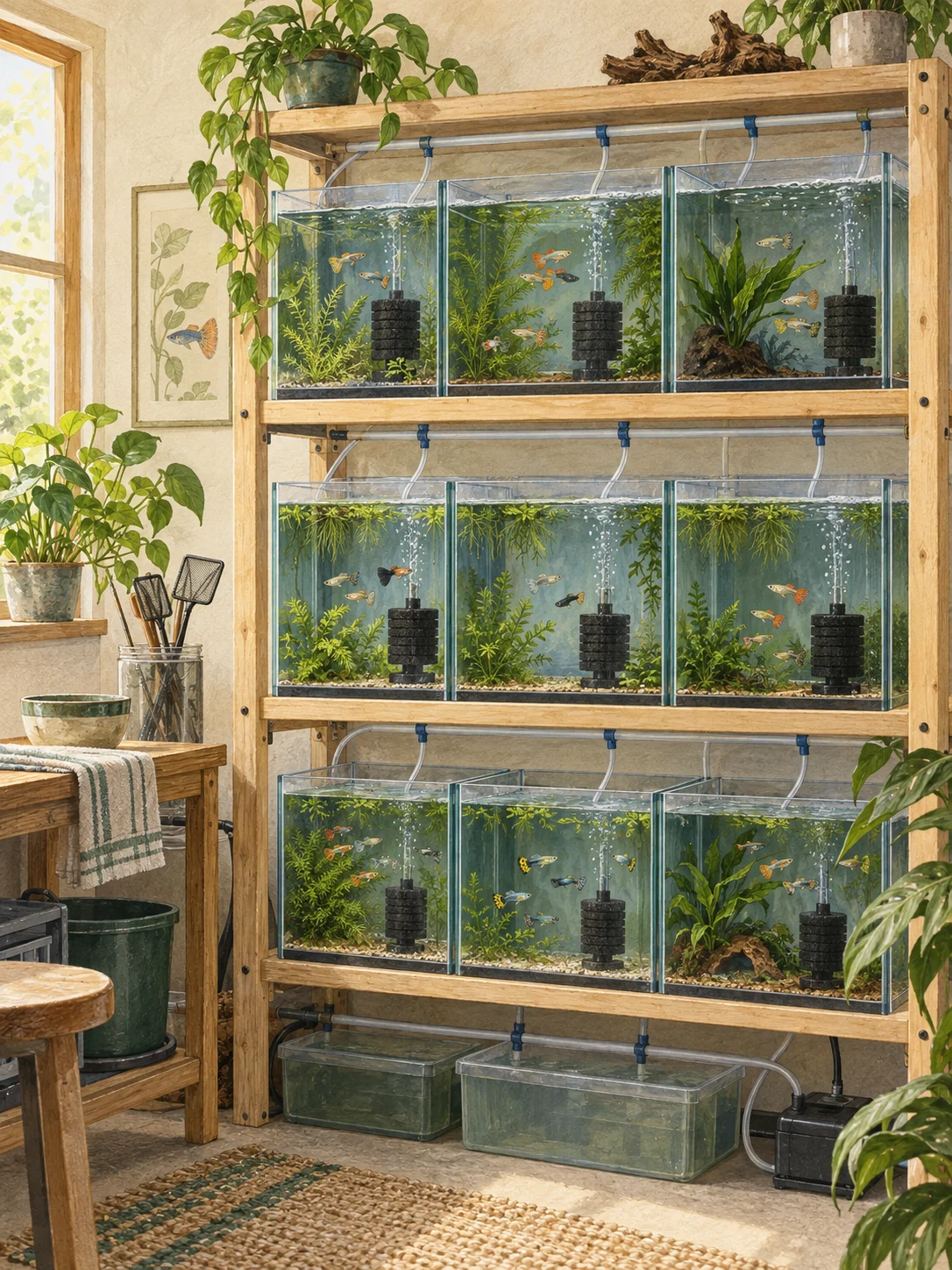
Our guppy guides focus on practical routines: keep water stable, observe fish closely and allow for natural variation.
Care systems
Steady water, thoughtful care
Gentle filtration and regular observation support healthy aquarium routines.
Natural variation
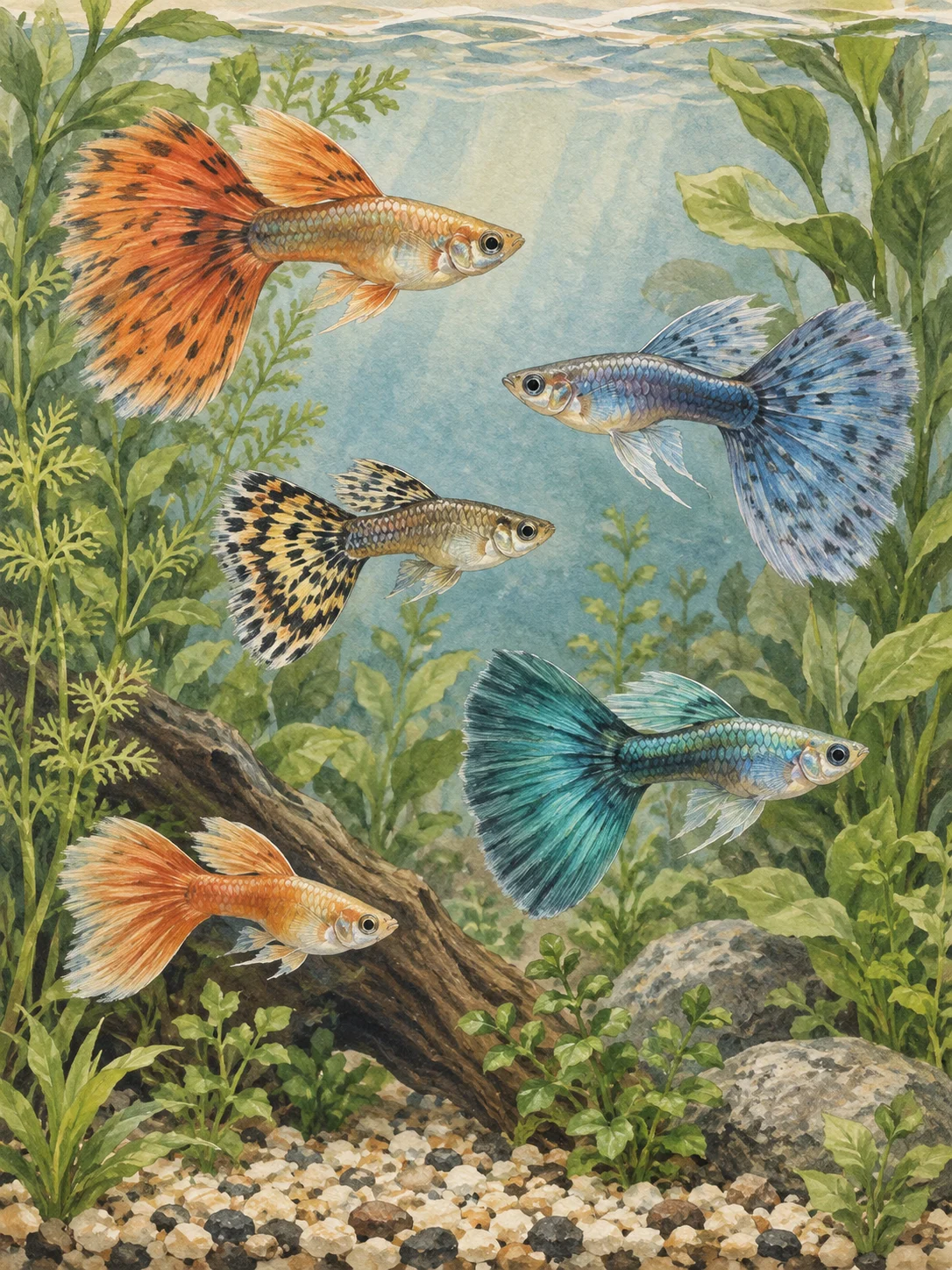
Every guppy is different
Color, size and fin shape vary with strain, age and each individual fish.
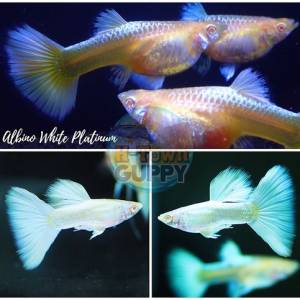
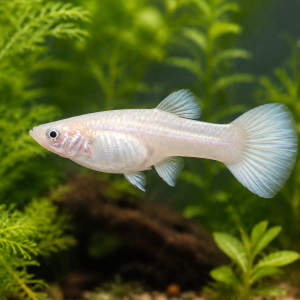
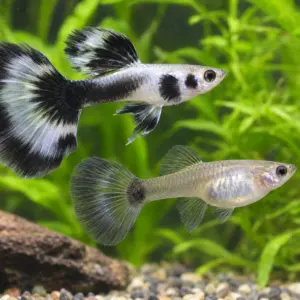
Editorial illustrations for context; they do not depict HiGuppy's exact facility or current fish stock.