The HiGuppy Journal
Water Changes for Guppy Fry: How to Keep Baby Guppies Safe
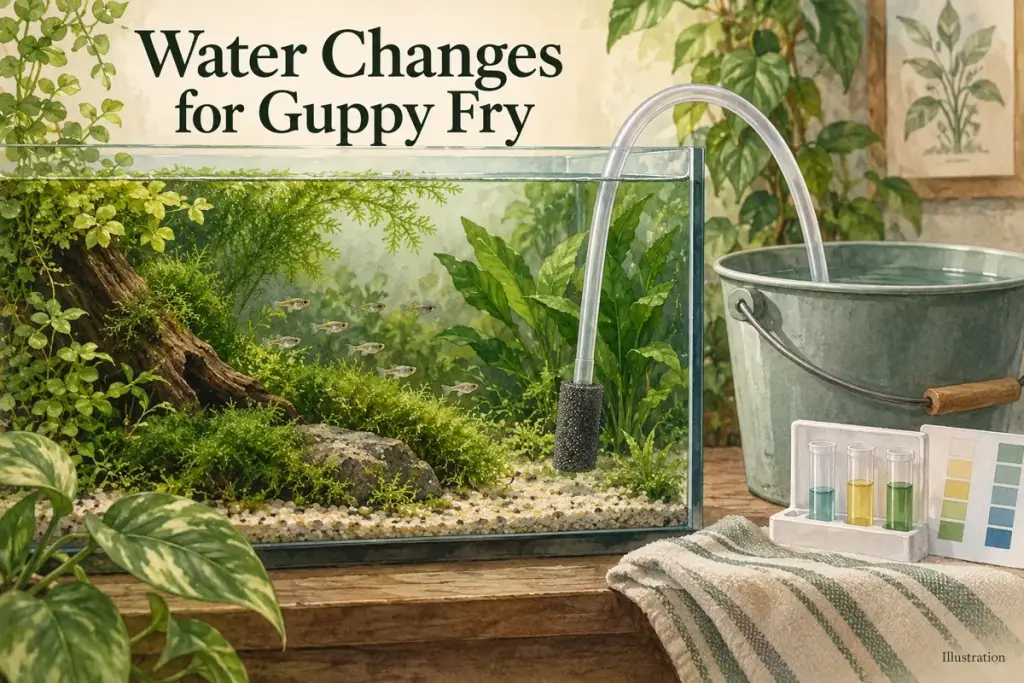
For safe guppy fry water changes, check water quality and remove waste without losing the babies. Prepare replacement water to match the aquarium’s temperature and treat chlorine or chloramine according to the water-conditioner label. Use a siphon flow you can control, watch what enters the bucket, refill gradually, and adjust timing and amount to test results rather than a fixed internet schedule.
Fry tanks are often small, fed frequently, and easy to disturb while cleaning. Plan the steps before starting: prepare water first, keep the siphon in view, and use readings to decide whether routine maintenance or a prompt correction is needed.
Why fry tanks need regular attention
Fry are small, and their tanks can receive frequent feeding. Uneaten food and fish waste break down and add to the aquarium’s nitrogen load. UF/IFAS guidance on ammonia explains that fish waste and decomposing feed can contribute to ammonia, and that testing is needed because you cannot reliably judge ammonia by looking at the water. It also describes water changes as one possible response in small systems when the source water is not adding ammonia.
A water change removes some dissolved waste, but it does not replace a working biological filter. UF/IFAS recirculating-system guidance describes the system’s source water, fish load, feeding rate, and biofilter capacity as connected parts of water quality. A fry tank that is new, overfed, or crowded can need more attention than a stable tank with lighter feeding. Check the filter intake and ensure it cannot trap or injure small fish; a sponge filter guide explains one common fry-friendly option.
There is no single percentage for every fry tank
Online advice often gives one percentage and interval as if every aquarium were the same. The right routine depends on tank size, stocking, filtration, feeding, source water, and test results. If ammonia or nitrite is detected, take it seriously and investigate the cause; the needed response depends on how high the reading is and whether replacement water is safe. Follow a reliable test kit’s instructions and consult an aquatic professional if readings or fish behavior remain concerning. For a broader preparation and maintenance walkthrough, see the full guppy water-change guide. If fry remain weak or behave unusually, review common reasons guppy fry may die while checking water, feeding, and temperature together.
Do not wait for cloudiness or visible distress before checking the water. Record test values with feeding and cleaning notes so a rising reading prompts a review of waste, stocking and filter function. Clear-looking water does not establish that a fry tank is safe.
Prepare replacement water before you siphon
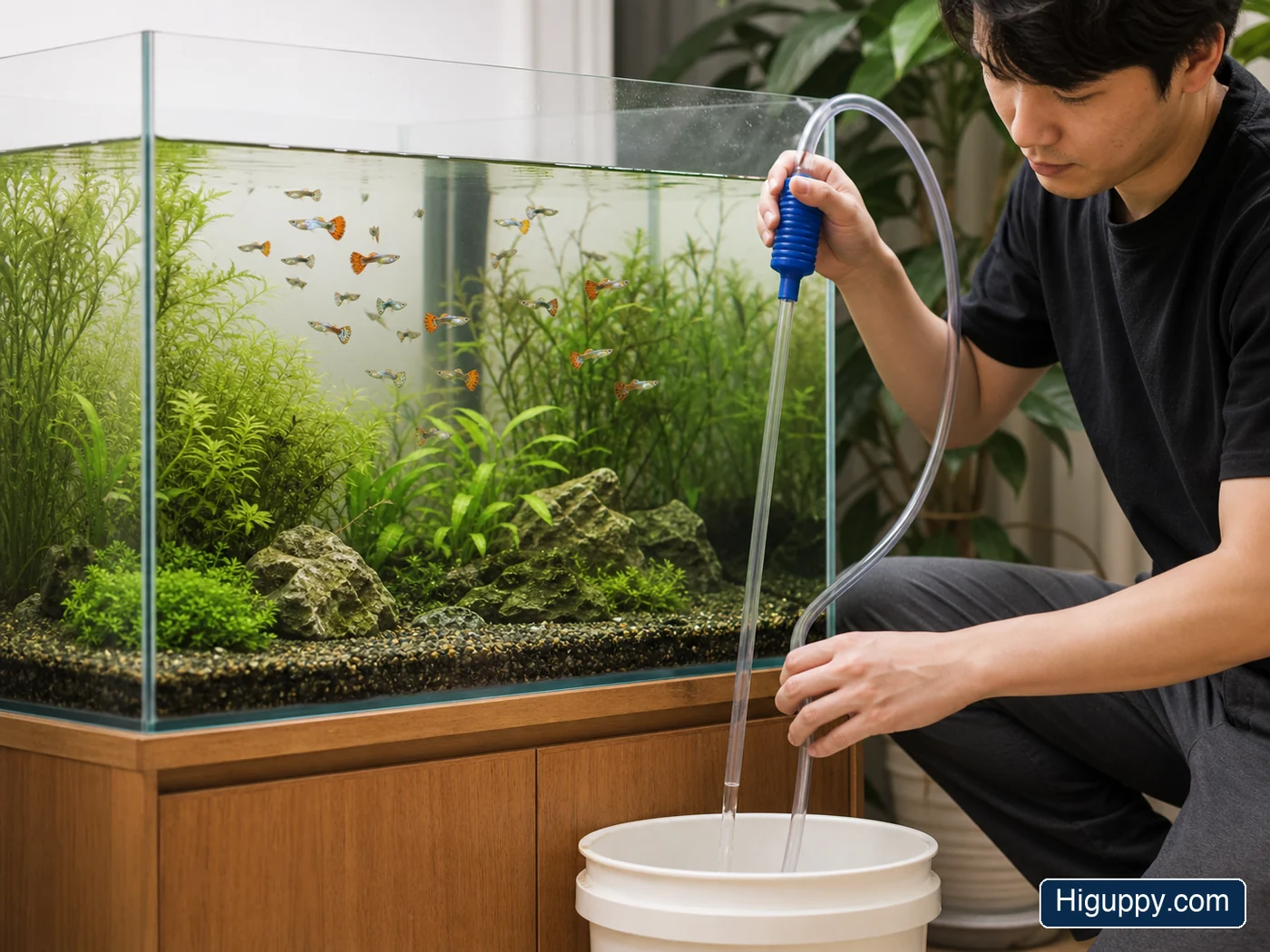
Before beginning, prepare enough replacement water in a clean container. Use water appropriate for the aquarium and follow the current conditioner label if the supply contains chlorine or chloramine. Compare temperature with the tank and make adjustments before adding the water. A tap-water sample may have its own measurable ammonia or other characteristics, so test the source when a reading in the aquarium does not make sense.
Keep buckets and hoses that contact aquarium water free of soaps, cleaners, and household chemicals. Mark or dedicate them for aquarium use. Before lowering the waterline, turn the heater off or unplug it and let it cool as the manufacturer instructs. Do not expose or run it below its minimum immersion level unless its instructions specifically allow that; restore the water level before restarting it. Do not pour untreated tap water directly into a fry tank and assume the aquarium filter will make it safe.
Siphon debris without removing fry
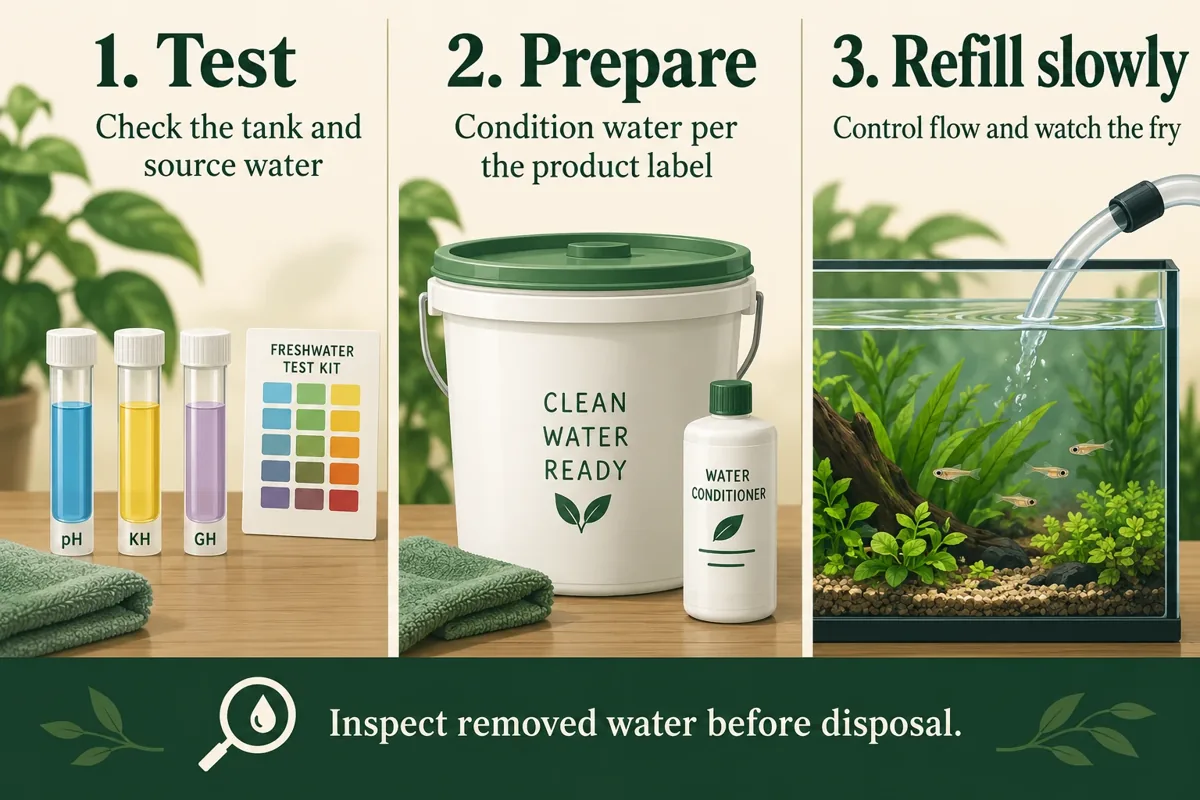
Use a narrow hose or siphon with a flow you can control. Keep the intake near visible waste rather than sweeping quickly across the whole bottom. Watch the opening and the receiving bucket continuously. If a fry enters the hose, stop the flow and check the bucket before discarding anything; use a light-colored container so tiny fish are easier to see.
You can use a clean mesh guard, a sponge prefilter, or your hand to reduce suction, provided the setup does not clog or make the flow unpredictable. Avoid stirring the substrate or plants aggressively. Move slowly around cover where fry may be resting, and do not remove every hiding place just to make siphoning easier. The goal is to take out uneaten food and debris while leaving the tank’s useful surfaces and stable filtration in place.
Refill slowly and check the tank afterward
Add replacement water gradually, aiming the flow at a plate, clean plastic surface, or tank wall so it does not blast fry or uproot cover. Check the temperature again as the level rises. Keep the filter operating if the water level and equipment instructions allow it; if you temporarily switch equipment off, restore it promptly when safe.
After the refill, make sure the filter is moving water and that fry can swim normally. If the tank had a water-quality problem, test again at the interval recommended for your test method and record what changed. A log helps connect a reading to feeding, stocking, maintenance, or a filter issue instead of repeating a change without knowing whether it helped. For the main test values and stable-range context, use the guppy water parameters guide alongside your test-kit instructions.
Keep feeding and maintenance in balance
Water changes are only one part of keeping a fry tank clean. Feed portions that the fry can consume, remove leftover food, and keep filter flow gentle enough for small swimmers while still circulating water. Follow a practical fry feeding schedule rather than increasing food automatically whenever the fish gather at the surface.
During routine cleaning, avoid scrubbing every filter surface at once or making several major changes without a reason. Biological filtration depends on the system’s established bacteria, so monitor ammonia and nitrite after changes to filter media, stocking, or feeding. If readings rise, treat the result as a signal to assess the full setup, including source water, waste, fish count, and filter function. The guppy water-change schedule guide provides broader maintenance context for adult tanks, while fry still need careful observation.
Guppy fry water-change checklist
- Test the aquarium and, when needed, the replacement water.
- Prepare conditioned water at a temperature suitable for the tank.
- Use a slow, visible siphon flow and inspect the waste bucket.
- Remove uneaten food and debris without tearing apart all cover.
- Refill against the glass or another surface to soften the flow.
- Confirm the filter is working and observe the fry afterward.
- Adjust the next change based on readings and tank response.
FAQ
How often should I change water in a guppy fry tank?
There is no schedule that fits every fry tank. Base it on water tests, feeding, stocking, filtration, and the source water. Keep a log so you can see whether the routine is maintaining stable conditions.
How much water should I change at a time?
Use the amount appropriate to the measured condition and the stability of the aquarium. Routine maintenance and an urgent water-quality problem are different situations; follow test results and safe replacement-water preparation rather than copying one percentage for all tanks.
Can a siphon suck up guppy fry?
Yes. Use a controllable flow, watch the intake, and inspect the removed water before discarding it. A suitable guard or sponge prefilter can help, but check that it does not clog or create unsafe suction.
Should replacement water be the same temperature?
It should be suitable for the aquarium and close enough to avoid a sudden shift. Prepare and compare the water before refilling, and add it gradually. Large temperature or chemistry differences should be corrected carefully rather than poured in at once.
Do water changes replace a biological filter?
No. A water change can dilute some material, but a working biofilter is important for processing ammonia and nitrite. Check both the filter and water tests when fry-tank readings become a concern.
Behind the care guides
Care begins with steady systems
Our guppy guides focus on practical routines: keep water stable, observe fish closely and allow for natural variation.

Care systems
Steady water, thoughtful care
Gentle filtration and regular observation support healthy aquarium routines.

Natural variation
Every guppy is different
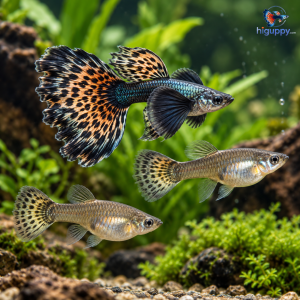
Color, size and fin shape vary with strain, age and each individual fish.
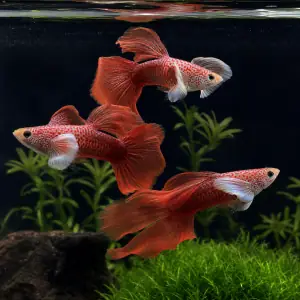
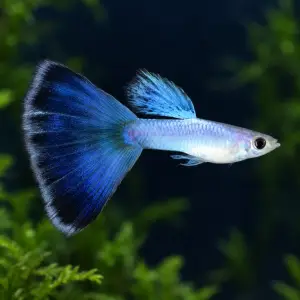
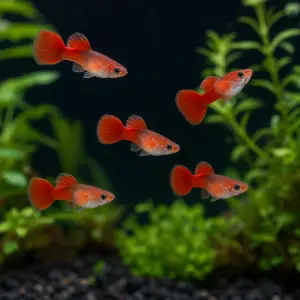
Editorial illustrations for context; they do not depict HiGuppy's exact facility or current fish stock.