The HiGuppy Journal
Why Are My Guppy Fry Dying? 6 Causes and Fixes
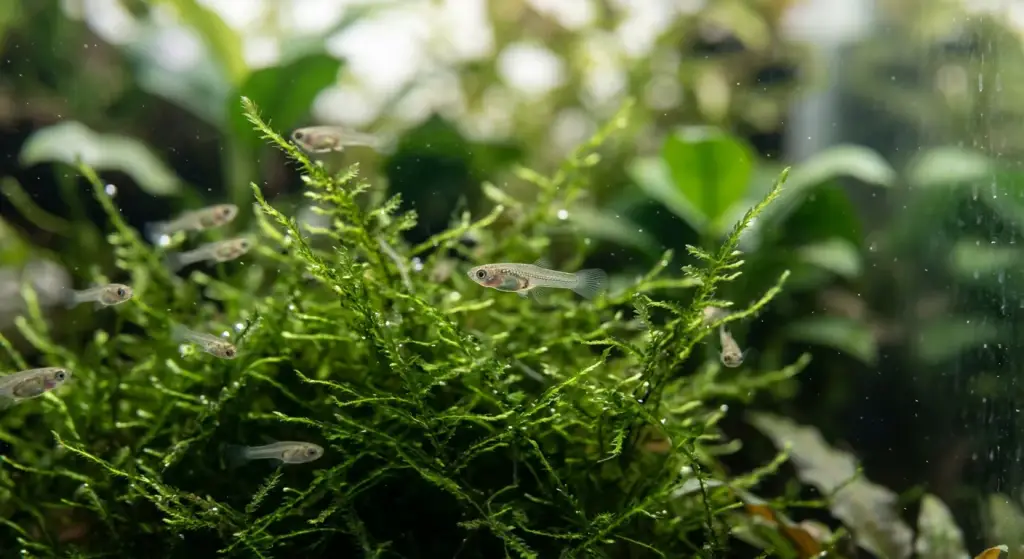
Why are my guppy fry dying? The most common causes are poor water quality, hungry or overfed fry, adult guppies eating them, sudden temperature or water changes, and weak or underdeveloped newborns. Check your water first, then feeding, then hiding spots. Our guppy care guide covers the basics.
If you keep asking why are my guppy fry dying, the answer is usually something you can fix. Fry are tiny and have little room for error, so small problems show up fast. This guide lists the main causes, how to spot each one, and what to change.
Quick answer: causes of guppy fry deaths
| Cause | What you may see | First fix |
|---|---|---|
| Poor water quality | Gasping, lethargy, fry sitting on the bottom | Test ammonia and nitrite, do small water changes |
| Not enough food | Thin bodies, fry vanishing slowly over days | Feed tiny amounts several times a day |
| Predation by adults | Fry disappear in the first hours or days | Separate fry or add dense plants |
| Temperature or water shock | Sudden deaths after a water change | Match temperature and change water slowly |
| Weak or premature fry | Deformed, tiny or unable to swim well | Little can be done; improve mother’s care |
| Disease | Spots, clamped fins, odd swimming | Keep the tank clean and quarantine sick fish |
1. Water quality problems
Water quality is the top answer when people ask why are my guppy fry dying. Ammonia and nitrite are toxic, and fry are more sensitive than adults. A new or uncycled tank, an overstocked tank, or uneaten food rotting on the bottom can all cause trouble. Use a liquid test kit and aim for zero ammonia and zero nitrite. Our guppy water parameters guide explains the numbers.
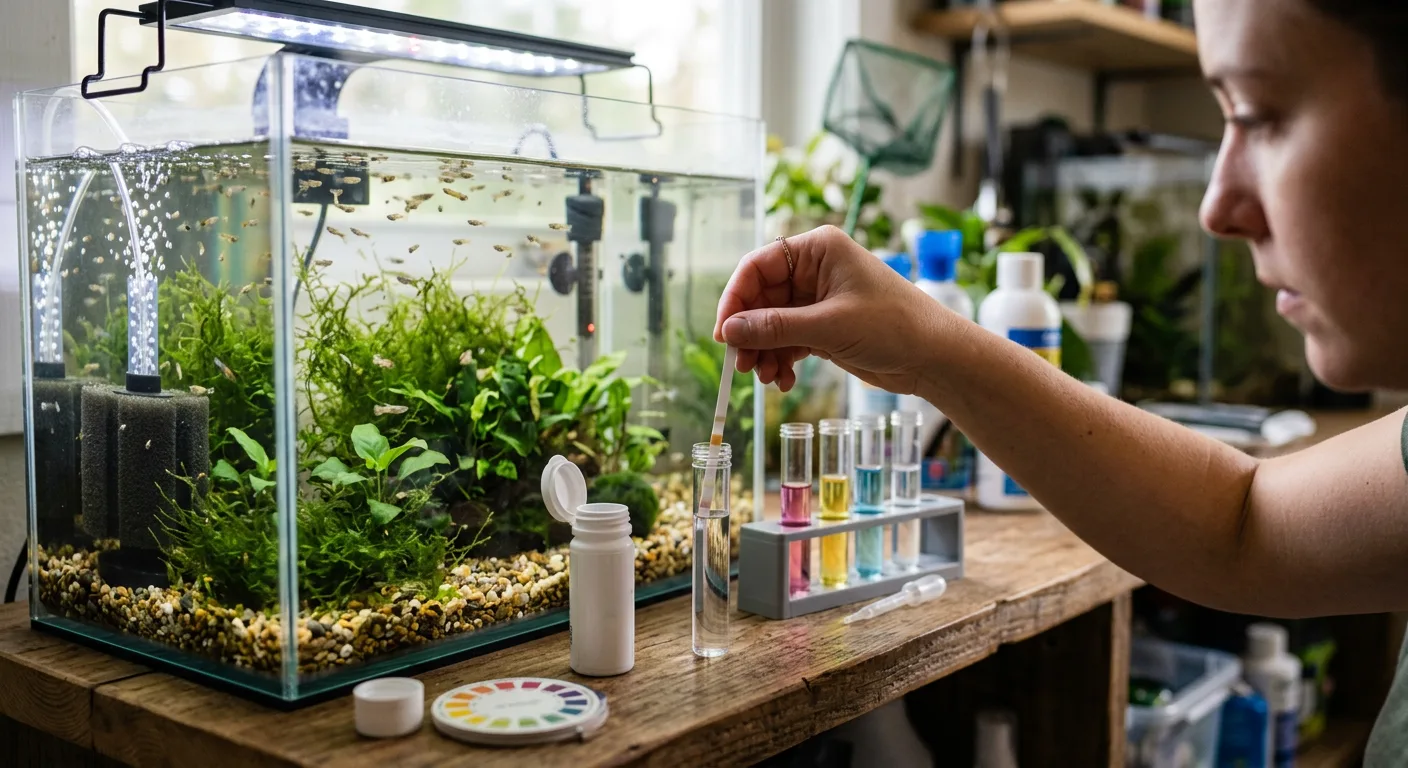
Small, frequent water changes work better than one big change. Use dechlorinated water at the same temperature as the tank. A gentle sponge filter is a safe choice because it will not suck fry in. See our sponge filter guide for details.
2. Feeding mistakes
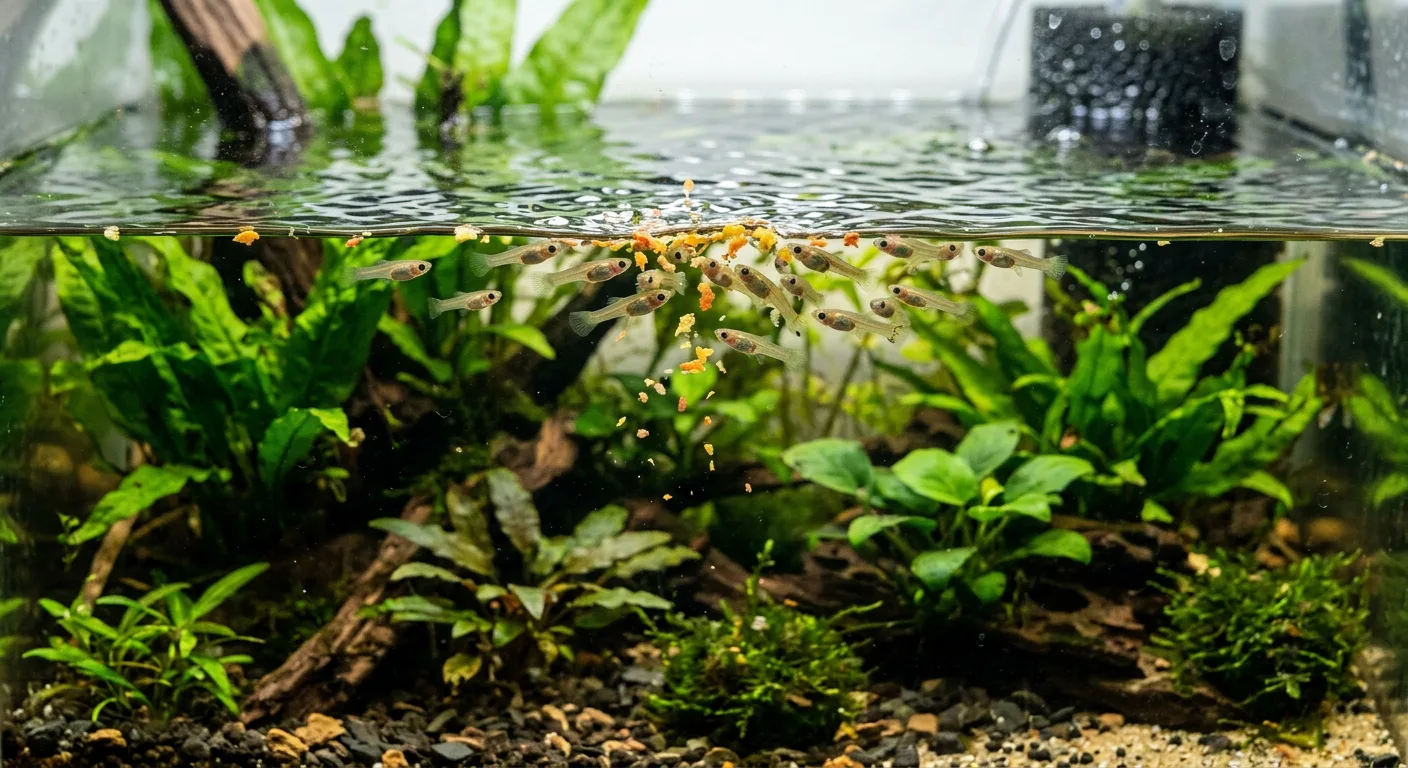
Newborn guppy fry carry a small yolk reserve, but they need food within the first day or so. Without it, they weaken. Too much food is also a problem, because leftovers foul the water.
- Offer finely crushed flake, powdered fry food or freshly hatched baby brine shrimp.
- Feed small amounts two to four times a day.
- Remove anything left after a few minutes.
For a full routine, read our guppy fry feeding schedule.
3. Adults eating the fry
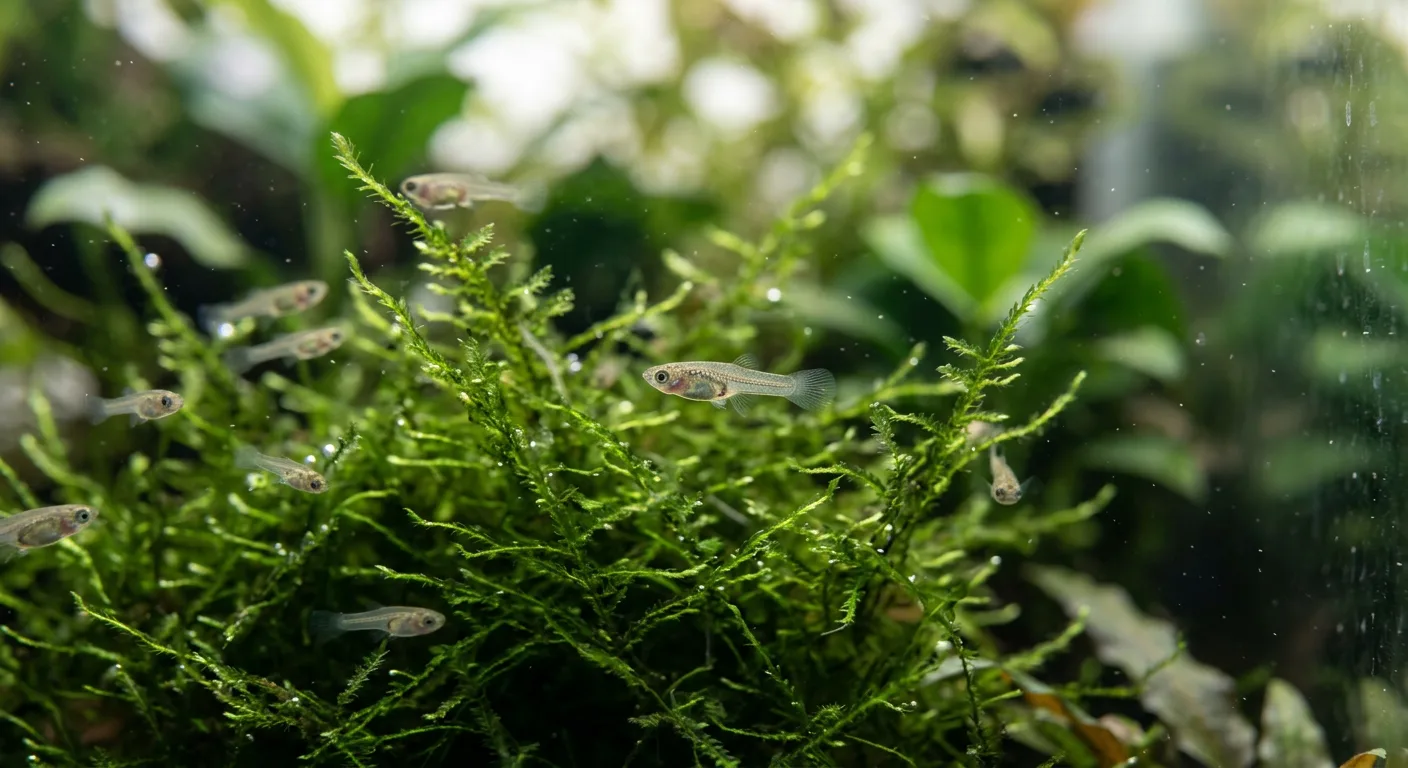
Guppies do not guard their young. Adults, including the mother, will often eat newborns. If fry vanish without any bodies, this is the likely reason. Live plants such as java moss give fry places to hide, and a separate fry tank is safer still. Read do guppies eat their babies for more.
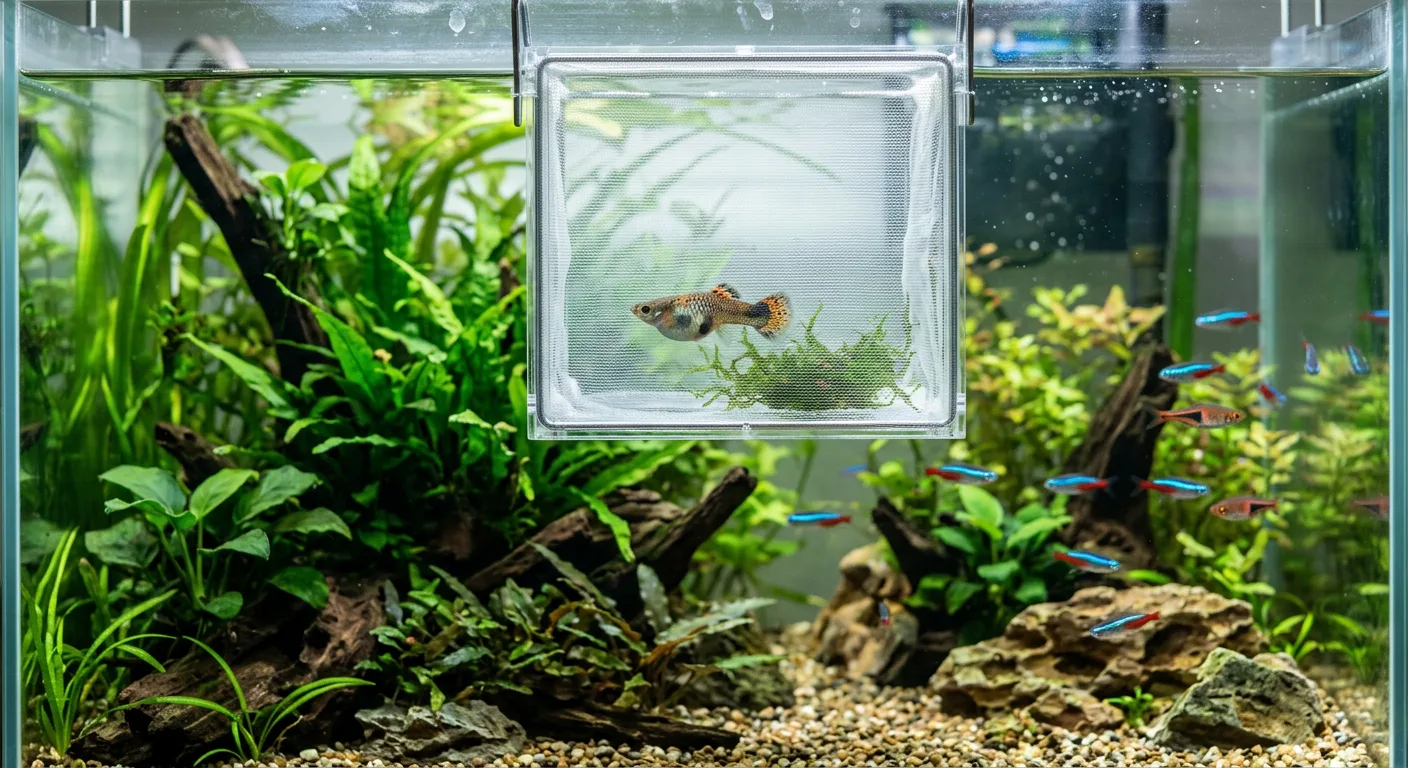
A breeder box can help for a short time, but a cramped box can stress the mother and gives little swimming room, so move fry to a tank soon.
4. Temperature and water shock
Fry react badly to sudden change. Moving them into water with a different temperature or pH, or doing a large water change, can kill them quickly. Move them slowly, using the same drip approach described in our guide on how to acclimate guppies. A stable temperature in the usual guppy range is better than swings. Our guppy temperature guide has details.
5. Weak fry and disease
Some fry are simply born weak. Signs can include very small size, a bent spine or trouble staying upright. A stressed or poorly fed mother, inbreeding or a rough pregnancy may play a part, though it is hard to know for sure in any single case. Healthy parents from a good source give stronger young. If you want strong breeding stock, browse our guppy breeder trios.
Disease is less common in fry in a clean tank, but it can spread from sick adults. Keep new fish apart before adding them to the main tank.
Tank setup that helps fry survive
A good fry tank is simple. Use a small tank or tub with a gentle sponge filter, a heater if your room is cool, and plenty of fine-leaved plants or spawning mops. Keep the lights on a regular schedule so fry can find food and rest. Avoid strong currents, sharp decorations and gravel with deep gaps where food can rot.
| Setup item | Why it helps | Tip |
|---|---|---|
| Sponge filter | Gentle flow, no fry pulled in | Cycle it before adding fry |
| Java moss or floating plants | Hiding places and tiny food particles | Add a thick clump |
| Bare or fine substrate | Easier to remove waste | Siphon gently each day |
| Lid or cover | Keeps temperature steadier | Leave a small air gap |
How to tell what is killing your fry
When you ask why are my guppy fry dying, look at the pattern. Fry that disappear with no bodies were most likely eaten. Fry that die slowly and look thin were probably underfed. Fry that die in a cluster right after a water change point to shock or a water problem. Deformed fry that die in the first days were likely weak from birth. Matching the pattern to the cause saves you from changing everything at once.
Keep a short note each day: how many fry you see, what you fed, and what the water tests show. After a week the notes usually make the cause clear. If you are also seeing sick adults, read our guide on why guppies die for adult-fish problems.
Common mistakes that keep fry dying
- Leaving fry in the main tank with adults and no cover.
- Feeding large pieces of food that fry cannot eat.
- Skipping water tests because the tank looks clear. Clear water can still hold ammonia.
- Changing too much water at once, or using untreated tap water.
- Overcrowding the fry tank as the brood grows. Move bigger fry out as they develop.
What to do today if your fry are dying
- Test ammonia, nitrite and nitrate.
- Do a small water change with matched temperature.
- Remove dead fry and uneaten food.
- Feed a tiny amount of fry food.
- Separate fry from adults or add dense plants.
Raising fry takes patience. Even in good tanks some fry are lost, so judge your setup by the survivors over time. According to Wikipedia’s guppy article, guppies are livebearers, which is why newborns arrive swimming and need food and cover right away. For the next stage, see our raising guppy fry guide and the full complete guppy care resource.
FAQ
Why are my guppy fry dying after birth?
Early deaths are often caused by being eaten, weakness at birth, or water shock. Give fry cover or a separate tank and keep water clean and stable.
How long can guppy fry go without food?
Newborns live off a small reserve at first, but they should be offered food within the first day. Do not leave them hungry for long.
Is it normal to lose some guppy fry?
Yes. Some loss is common even in good conditions, especially in the first days. A large number of deaths points to a fixable problem.
Should I separate fry from the mother?
Yes, it is the safest option. Remove the mother after birth, or move the fry to their own tank with plants for cover.
Can bad water kill guppy fry fast?
It can. Ammonia, nitrite and sudden changes affect small fry quickly, so test often and use small water changes.
Behind the care guides
Care begins with steady systems
Our guppy guides focus on practical routines: keep water stable, observe fish closely and allow for natural variation.

Care systems
Steady water, thoughtful care
Gentle filtration and regular observation support healthy aquarium routines.

Natural variation
Every guppy is different
Color, size and fin shape vary with strain, age and each individual fish.
Editorial illustrations for context; they do not depict HiGuppy's exact facility or current fish stock.