The HiGuppy Journal
How to Clean a Guppy Tank Filter Without Crashing the Cycle
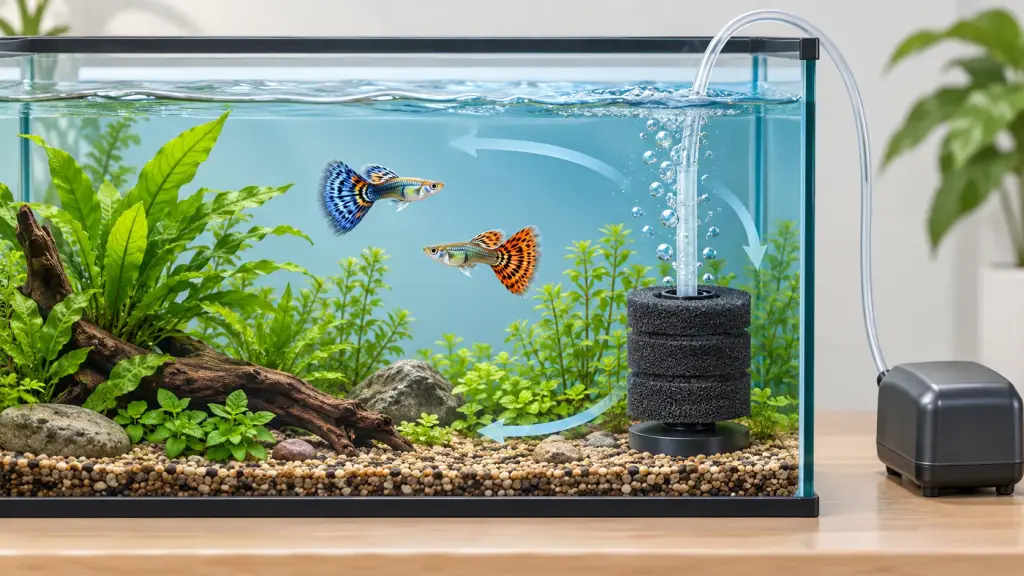
How do you clean a guppy tank filter safely? To clean a guppy tank filter without damaging the biological cycle, turn off the equipment safely, move reusable sponges and biomedia into a bucket of old aquarium water or prepared dechlorinated water, then remove trapped debris without sterilizing the media. Keep the media wet, reassemble the filter and verify its flow. Check ammonia and nitrite afterward, especially in a busy or newly established tank.
When you clean a guppy tank filter, the brown material inside is often a mixture of trapped waste and living microbial communities. Leaving every filter clogged is not healthy, but replacing all its established media at once can remove a substantial amount of the bacteria that process fish waste. For guppies, the goal is restoring reliable flow while preserving useful biological filtration. This article concentrates on the hands-on cleaning process for sponge, hang-on-back (HOB), internal and canister filters, rather than repeating HiGuppy’s separate filter-buying comparison or sponge filter setup guide.
What the 'cycle' means inside your guppy filter
Beneficial nitrifying microorganisms colonize the well-oxygenated surfaces of filter sponges, biological rings, gravel and other parts of an established aquarium. Their activity helps convert ammonia released from fish waste and decaying food to nitrite and then nitrate. The whole point of learning to clean a guppy tank filter is that cleaning media need not mean removing this microbial community. The important distinction is between rinsing off accumulated debris and disinfecting or discarding the colonized media.
OATA’s guppy and molly care sheet recommends testing aquarium water regularly, keeping ammonia and nitrite at zero, and rinsing used filter materials in discarded aquarium water rather than running them under untreated tap water containing chlorine or chloramine. A stable filter cannot guarantee immunity from all fish health problems, but losing its processing capacity can make the water unsafe.
| Part of the filter | Main purpose | What to do at cleaning time |
|---|---|---|
| Coarse sponge / pre-filter | Catches fish waste and provides a large microbial surface | Squeeze out debris in old tank water; reuse while structurally sound |
| Biological rings or porous media | Offers surfaces for nitrifying microbes and water flow | Swish gently in old tank water; keep wet and avoid scrubbing it sterile |
| Fine floss / polish pad | Traps fine particles and may clog relatively quickly | Rinse only if designed for reuse; replace exhausted disposable floss as necessary |
| Activated carbon or other chemical medium | Adsorbs selected dissolved substances for particular uses | Follow media type and manufacturer; replace exhausted disposable products rather than treating them as permanent bio media |
| Impeller, casing and hoses | Maintains mechanical flow and water movement | Remove obstruction with water and safe brushes, following equipment directions; keep electricity away from water |
Aquarium Co-Op’s filter-media reference explains which coarse pads and biological media are reusable and why fine polishing pads and certain chemical cartridges may have different lifespans.
When is it time to clean a guppy tank filter?
A scheduled check is useful, but how often you clean a guppy tank filter depends on stocking, food input, sponge porosity, filter capacity and how quickly the media loads with waste. Do not wait until a filter stops moving water or overflows. Conversely, a little brown tint on a healthy sponge is not by itself a reason to replace every pad.
- Flow is clearly reduced despite the pump and output being in their normal settings.
- A pre-filter sponge is visibly clogged with debris or the air-driven sponge makes fewer bubbles than usual.
- A HOB filter begins bypassing its normal media path or the housing shows unusual backing-up.
- A canister’s flow weakens, and hoses, intake and impeller also deserve inspection.
- Waterborne particles persist and the filter is visibly dirty, although substrate disturbance and feeding should be considered too.
- An outage or maintenance incident occurred, requiring an equipment inspection and subsequent water tests.
Aquarium Co-Op notes that some sponge filters need cleaning around monthly — useful context when deciding when to clean a guppy tank filter, while larger canisters may run longer depending on waste and capacity. Those are examples, not a fixed guarantee or a reason to ignore a sudden change in flow.
Before you clean a guppy tank filter: a safe checklist
- Have an aquarium-only bucket containing water removed from the tank during an appropriate partial change, or correctly dechlorinated and temperature-suitable replacement water.
- Prepare towels for spills, a clean aquarium-only brush and any manufacturer-recommended parts.
- Unplug or safely isolate aquarium equipment that may be exposed, including any heater that could be out of water during maintenance.
- Keep the fish inside their established aquarium whenever possible; avoid unnecessary catching or netting.
- Read the filter maker’s instructions for priming, impeller access, seals, valves and shutdown order.
- Keep spare intake guards in place for small fry or shrimp; never leave an exposed strong intake running around tiny fish.
- Confirm the tank’s current ammonia/nitrite and general condition if the filter has been malfunctioning.
Whatever you do, never clean a guppy tank filter’s media with dish soap, bleach, detergent, disinfectant or household cleaning spray. Do not put hands into water near electrical equipment that is damaged or unsafe. If an appliance has a fault, prioritize electrical safety and use the manufacturer’s or a qualified technician’s guidance.
How to clean a guppy tank filter sponge or intake sponge
When you clean a guppy tank filter sponge, the easiest approach is to remove the trapped waste without stripping all its surfaces. A sponge that looks brown can be doing a useful job. The goal is to restore reasonable water passage, not to make every pore look brand-new.
- 1. Stop the pump safely and, if practical, slide an aquarium-safe bag or container around the sponge while still submerged so debris does not spread everywhere.
- 2. Lift it gently into an aquarium-only bucket with previously removed tank water or appropriately dechlorinated water.
- 3. Squeeze the sponge a few times to release heavy detritus. Repeat as needed for flow, without deliberately sterilizing the foam.
- 4. Check the lift tube or intake for trapped debris, snails or obstruction. Handle fry and invertebrates gently.
- 5. Reassemble and restart the air supply, confirming steady bubbles and normal water movement.
- 6. Recheck the tank after the filter has been running, including flow, fish behavior and water tests if the system was heavily clogged.
When more than one mature sponge filter serves the tank, clean a guppy tank filter section at a time — one sponge per session — to avoid disturbing all their media together. For further details about fry-safe flow and positioning, see Sponge Filter for Guppy Tanks.
Aquarium Co-Op’s sponge-filter maintenance FAQ also recommends squeezing the foam in old aquarium water and checking for reduced bubbles when the sponge becomes loaded.
How to clean a guppy tank filter (HOB) without discarding its bacteria
When you clean a guppy tank filter of the hang-on-back type, you will usually find a removable sponge, a disposable polishing pad or cartridge, and sometimes biomedia. If water is bypassing the intended flow path, the solution is usually to remove the clog while retaining the reusable media that is still functional.
- Safely disconnect power and open the HOB filter according to its instructions.
- Remove and gently rinse reusable sponges in old tank or dechlorinated water; preserve them rather than replacing them simply because they are brown.
- Gently swish biological rings in the bucket to lift excess debris, without scrubbing away all colonized surfaces.
- Replace only disposable polishing floss or exhausted chemical media when appropriate, following its product directions.
- Rinse the housing and accessible impeller parts with clean water only as appropriate; do not immerse motors or plugs.
- Refit media in the correct order, prime the filter if required and restart, checking for leaks and normal return flow.
Many cartridge-style HOB systems combine mechanical and biological function in one replaceable cartridge. If the existing cartridge is also the principal mature bacterial surface, avoid replacing it all at once when a reusable sponge or established alternative can be retained safely. Follow the filter’s compatibility instructions, and monitor water after changing media.
Aquarium Co-Op’s guide to cleaning sponge, HOB and canister filters describes retaining established biomedia while removing accumulated debris.
How to clean a guppy tank filter (canister) without a leak or full reset
When you clean a guppy tank filter canister, expect a great deal of debris hidden out of sight. Their hoses, valves, baskets and seals add maintenance risks that are absent from a simple sponge filter. Cleaning should be planned rather than rushed; an incorrectly reseated gasket or connector can leak even when the media is perfectly rinsed.
| Step | What to inspect | Main precaution |
|---|---|---|
| Power and valves | Disconnect safely and isolate valves as directed | Do not open a pressurized or energized canister |
| Prefilter and intake | Check blocked strainer or sponge and tubing | Avoid releasing waste into the tank; protect small fish |
| Mechanical sponges | Remove debris in old tank/dechlorinated water | Reuse functional sponge rather than throwing away all media |
| Biological rings | Swish gently to remove loose waste | Keep wet and avoid soap or harsh sterilization |
| Impeller, seals and hoses | Check clogging, wear and gasket seating | Follow manufacturer directions and do not damage seals |
| Restart and leak test | Prime, restore flow and check connections | Observe for drips and make sure fish-safe flow returns |
Do not leave a canister filter full of dirty stagnant water for a long unspecified period after a shutdown and then assume everything inside remains healthy. Review the actual outage duration and equipment condition, and test the water after a problematic restart. If a hose or seal seems unsafe, stop and repair that issue before returning the canister to normal unattended operation.
When you clean a guppy tank filter, should you rinse media in tap water?
OATA advises against untreated tap water for established biological media because chlorine or chloramine may damage the useful bacterial population. The simplest rinse water when you clean a guppy tank filter is a bucket of water removed from the aquarium during an ordinary water change. Properly dechlorinated, appropriately tempered water can also be used as described by aquarium-filter specialists.
Some tap supplies have low disinfectant residuals, and different media can tolerate different rinsing practices. That does not make an unknown household tap supply a safe default for a small mature filter. Use the method that avoids sudden disinfectant or temperature exposure rather than assuming that all tap water is interchangeable.
Do not use extremely hot water, soaps, bleach, scented pads or household sponges with unknown chemicals to wash reusable filter media.
After you clean a guppy tank filter, when should you replace rather than reuse media?
Reusable foam, porous ceramic rings and some other media can remain functional for long periods when you clean a guppy tank filter appropriately. A brown color is not proof that these parts have expired. Replace an item when its structure has broken down, it cannot pass water after appropriate cleaning, or the product’s specific function requires replacement.
| Material | Typically reuse or replace? | Reason |
|---|---|---|
| Coarse sponge and intake sponge | Usually rinse and reuse while intact | Catches solids and carries biological filtration |
| Ceramic rings / biological media | Usually keep and gently swish | Offers established surfaces for microorganisms |
| Fine disposable floss | Replace when badly clogged or exhausted as designed | Small pores trap fine particles and may become difficult to restore |
| Activated carbon | Use/replace for a clear purpose per product instructions | Chemical adsorption eventually becomes exhausted |
| Cracked or crumbling parts | Replace the damaged part appropriately | A failed part may not be repairable or safe |
If a cartridge is the only mature media, replacing it outright may remove much of the established microbial surface. A staged upgrade or overlap with compatible reusable biomedia is generally more conservative than throwing away every established filter component at once.
Do not copy the regeneration procedure of one brand of chemical media onto another product. This guide does not recommend home bleach regeneration, and it does not substitute for each product’s instructions.
Avoid the 'deep-clean everything at once' mistake
You can clean a guppy tank filter during a water change, but fully replacing the substrate, washing decorations harshly, sterilizing the filter and adding many fish on the same day creates multiple avoidable stresses. The biological processing capacity is spread across surfaces and depends on stable oxygen and food supply for the bacteria.
Choose the maintenance actually needed: remove trapped filter debris, maintain normal water changes, preserve mature media and avoid unnecessary disruption. See Guppy Tank Maintenance Schedule for a broader daily/weekly routine and Guppy Tank Cycling Checklist for how the nitrogen-processing system becomes established.
When you clean a guppy tank filter in fry and breeding tanks
Newborn guppy fry can be drawn toward strong filter intakes or trapped in exposed parts during service. Before restarting after you clean a guppy tank filter, inspect sponge covers and guards. Choose gentle flow that still provides biological processing and surface movement; a nearly still tank is not inherently safer for fry.
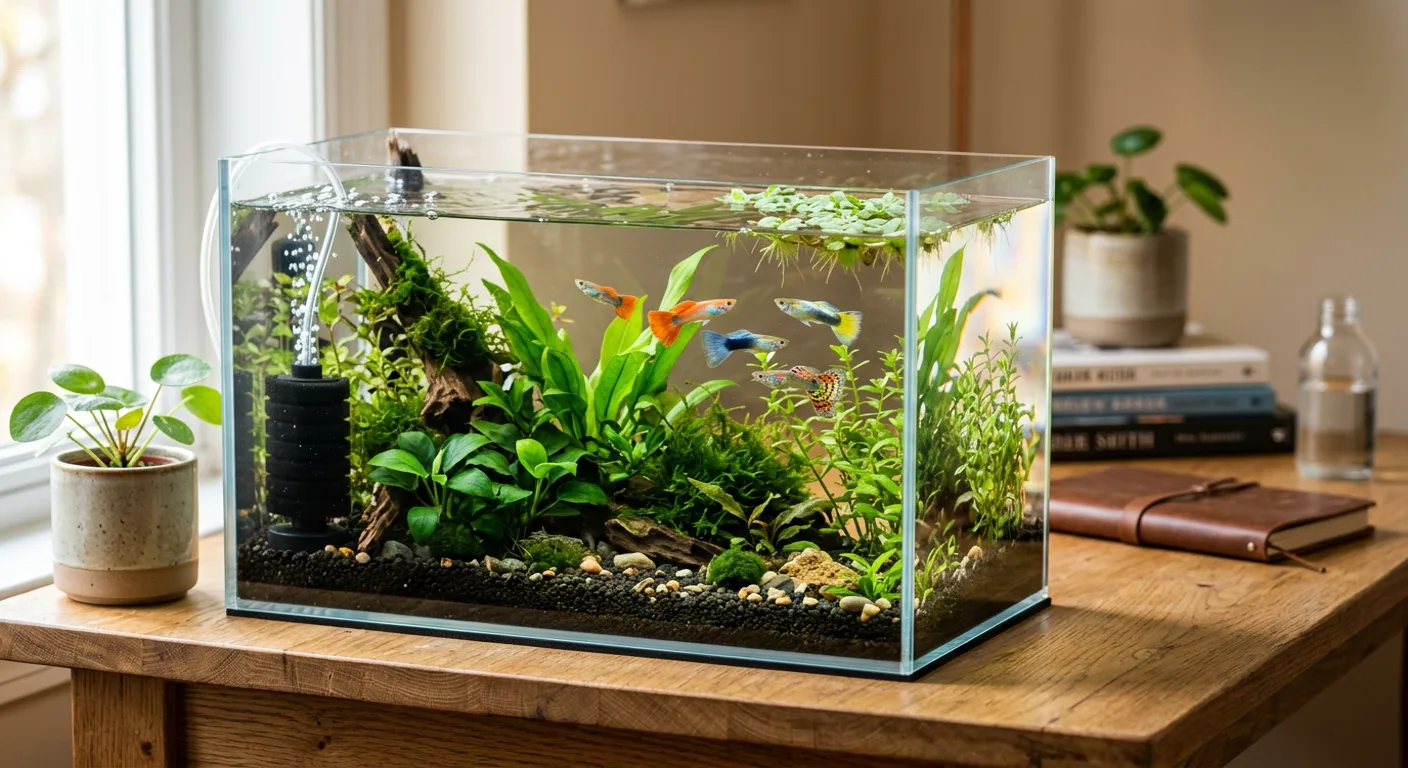
If you clean a guppy tank filter in a breeding or grow-out tank, dense stocking and frequent feeding may load a sponge faster than a lightly stocked display tank. Increase observation and maintenance appropriately instead of relying on a fixed calendar rule. Monitor fry behavior and water tests after reassembly, particularly if the filter was stopped for a prolonged period.
If the filter stops working after you clean a guppy tank filter
A filter that does not run after you clean a guppy tank filter is not automatically a failed bacterial cycle. First check electrical safety, the plug or air line, impeller or air pump, water level, priming requirements, and whether valves or hoses were reopened correctly. A HOB filter may need priming; a canister must be reassembled and sealed according to its manual. Do not force a jammed motor or run equipment dry to test it.
If flow remains absent, prioritize safe aeration and maintaining stable tank temperature while identifying the mechanical fault. Avoid large feeding until filtration is working and test ammonia/nitrite. Prolonged loss of movement or biofiltration in a crowded tank requires more careful monitoring than a brief routine filter service.
Check related guidance on guppy water parameters and why most guppy tanks need a filter.
After you clean a guppy tank filter: what to watch in the next 48 hours
There is no fixed time after you clean a guppy tank filter in which it is guaranteed safe. The more heavily you disturbed established media, the newer the tank and the greater its fish load, the more carefully you should observe the fish and test the water.
| When | What to check | If the result is concerning |
|---|---|---|
| Immediately after restart | Normal return flow, bubbles or movement, leaks and fish swimming | Stop unsafe equipment and correct the mechanical issue |
| Later that day | Fish breathing and behavior; water temperature; test ammonia/nitrite if filter was severely blocked | Check filtration and aeration promptly; use properly prepared water as warranted |
| Next day | Stable flow, filter noise and any new tank haze | Retest ammonia/nitrite and check whether media/hoses are clogging again |
| Next 1–2 days if needed | Ammonia/nitrite trends, stocking and feeding load | Seek qualified fish-health guidance for severe distress; avoid stacking new tank changes |
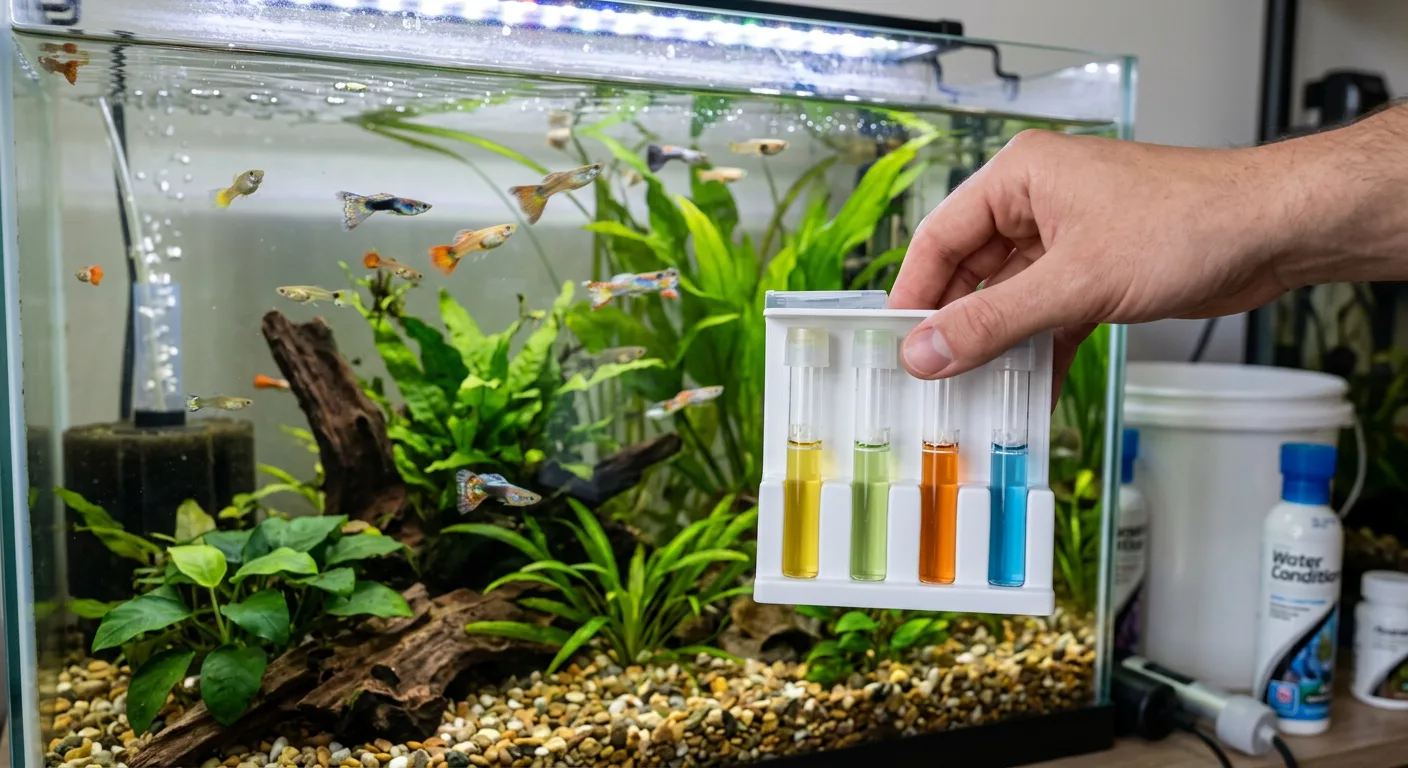
OATA recommends regular tests of ammonia and nitrite and explains that guppies can be affected even by low concentrations. A brief cloud of disturbed particles after squeezing a sponge is different from sustained high ammonia or nitrite: measure the actual water rather than relying on visual clarity.
A maintenance log that avoids unnecessary work
Keep a simple record of flow, the date you clean a guppy tank filter, what was done and water tests to learn how quickly your own filter becomes clogged. A small tank with breeding fish and frequent feeding needs a different routine from a lightly stocked planted display aquarium.
- Date and filter type: sponge, HOB, internal or canister.
- What was dirty: intake, coarse sponge, floss, biological basket or hoses.
- What you did: rinsed reusable sponge, gently swished biomedia, replaced disposable floss or inspected the impeller.
- Flow after restart: normal, slightly reduced or still problematic.
- Water and fish: ammonia/nitrite results when appropriate, plus behavior and breathing.
- Next check: set a reminder based on flow and waste load, not only a universal date.
A good log helps you distinguish recurring blockage from a new-tank cycling problem without disassembling a healthy filter unnecessarily — so you clean a guppy tank filter only when it needs it.
Frequently asked questions about how to clean a guppy tank filter
Can I clean a guppy tank filter with tap water?
For established biological media, old aquarium water or properly dechlorinated water is a safer default than untreated tap water. OATA cautions that chlorine or chloramine may harm the bacteria living in the filter.
Will cleaning my sponge filter kill beneficial bacteria?
A careful squeeze in old tank or dechlorinated water removes trapped waste while preserving much of the useful surface. Sterilizing, drying out or throwing away all established media is a greater risk to the biological cycle.
How often should I clean a guppy tank filter?
There is no one fixed schedule. Check flow, visible clogging, stocking and feeding. Some sponge filters need cleaning relatively often, while larger filters may go longer between services.
Should I replace the cartridge in my hang-on-back filter?
Replace media that is disposable and exhausted as designed, but do not discard the only mature biological media at once without a safe plan. Reusable coarse sponge or bio media can often be retained.
Can I clean a guppy tank filter canister without removing every bacterial colony?
Yes. Keep biological rings wet, swish away excess debris in old tank water, clean mechanical pads as appropriate, and follow manufacturer instructions for seals, hoses and priming.
Should I change the water and clean a guppy tank filter on the same day?
A planned partial water change supplies suitable water for rinsing media. Avoid simultaneously sterilizing the entire aquarium, replacing all mature media and making other dramatic changes.
What if guppies gasp after I clean a guppy tank filter?
Check that aeration and flow are restored, then test ammonia, nitrite and temperature. Gasping has several potential causes; severe or worsening distress needs prompt appropriate action and fish-health advice.
Sources and further reading
Fish welfare, filter bacteria and water quality: OATA — Guppies and Mollies Care Sheet. Cleaning methods and filter media: Aquarium Co-Op — How to Clean Aquarium Filters, Aquarium Co-Op — Filter Media, and Sponge Filter Cleaning FAQ. HiGuppy supporting guides: Sponge Filter Setup, Tank Cycling Checklist and Water Parameters. Always follow the directions of the actual filter manufacturer and appropriate electrical safety practices — that is everything you need to clean a guppy tank filter safely.
Behind the care guides
Care begins with steady systems
Our guppy guides focus on practical routines: keep water stable, observe fish closely and allow for natural variation.
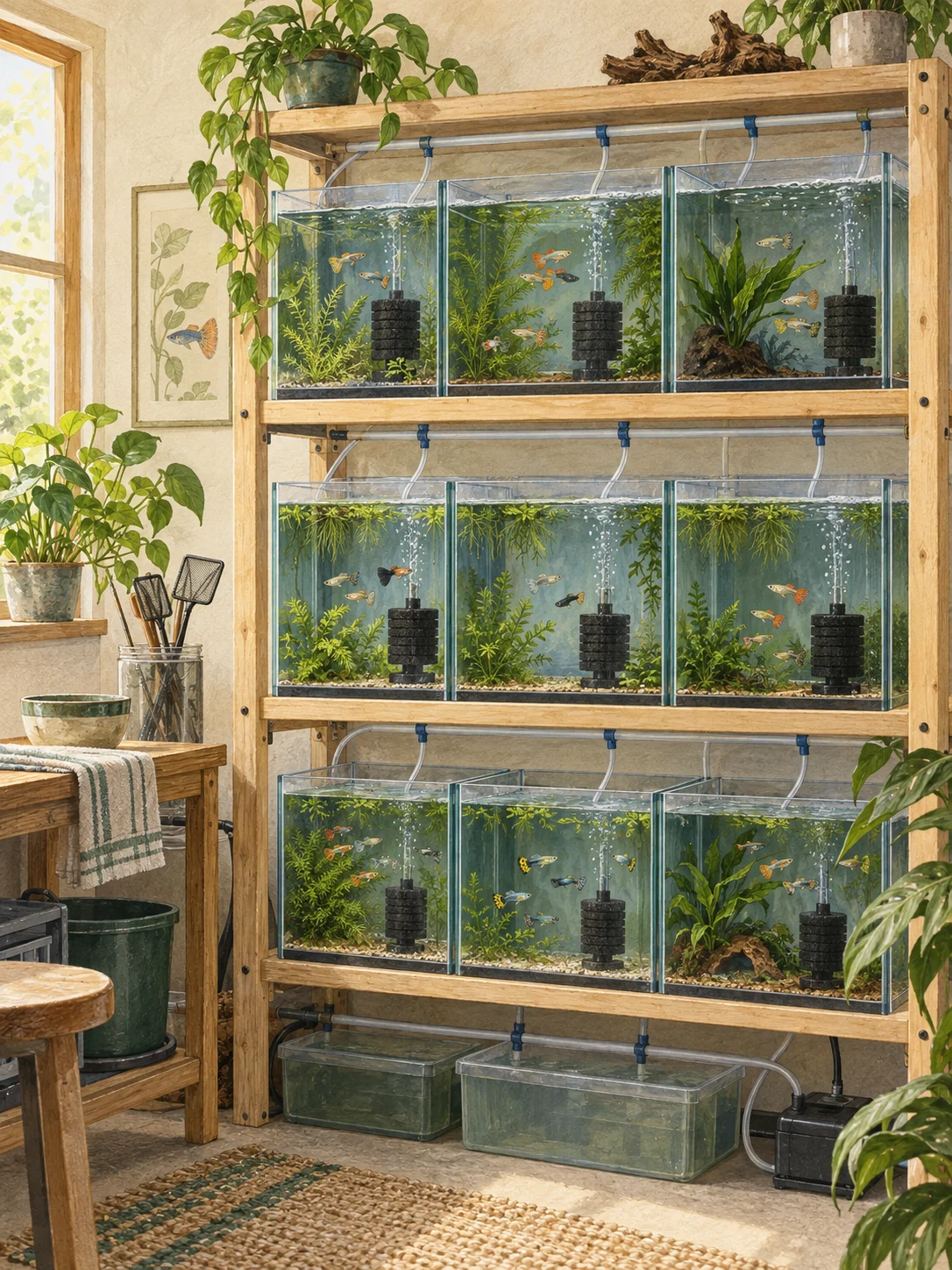
Care systems
Steady water, thoughtful care
Gentle filtration and regular observation support healthy aquarium routines.
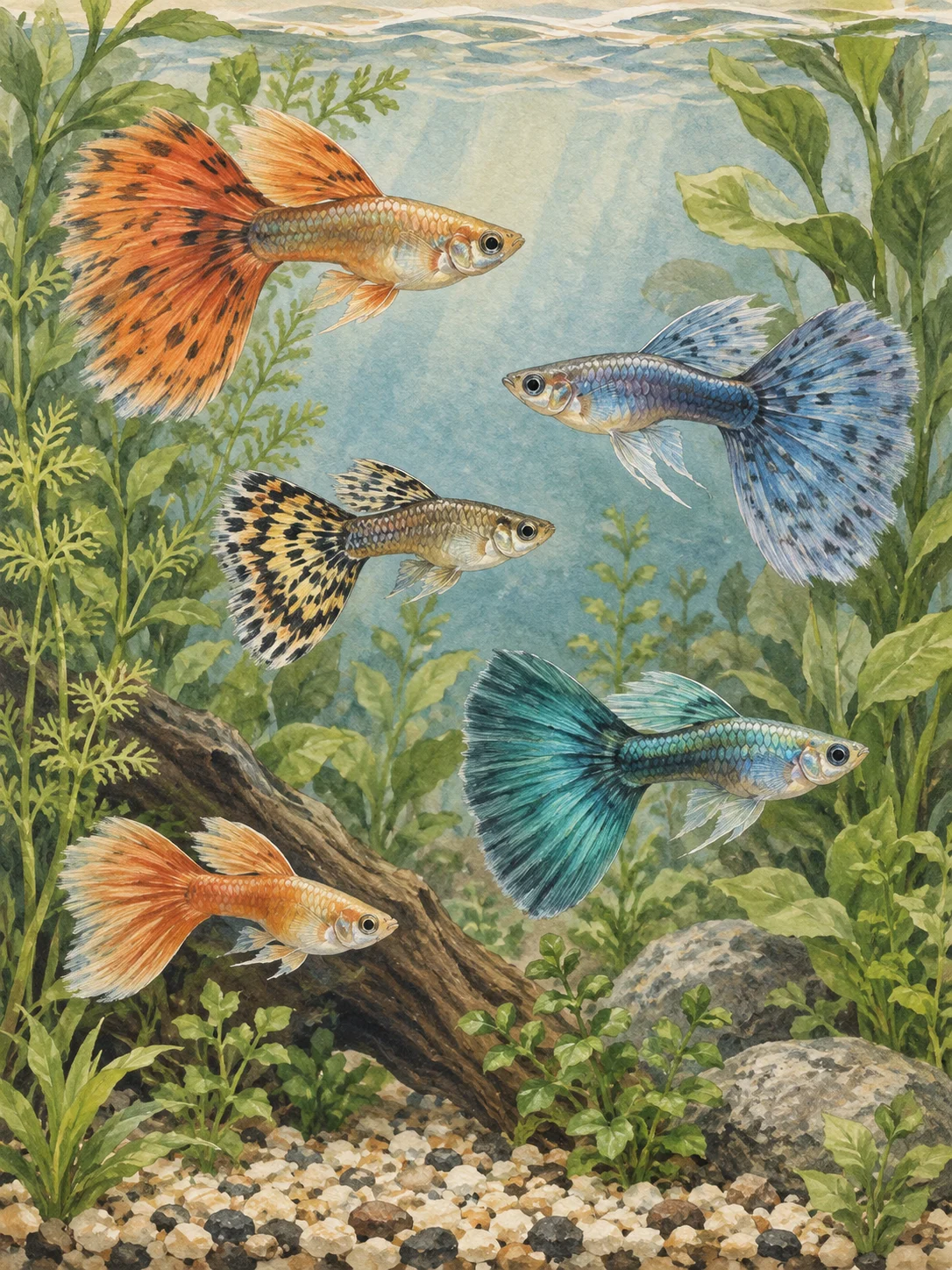
Natural variation
Every guppy is different
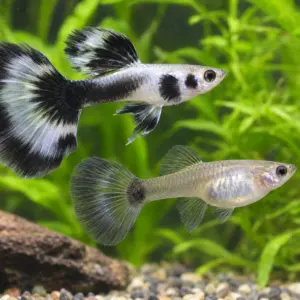
Color, size and fin shape vary with strain, age and each individual fish.
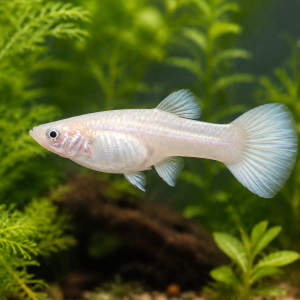
Editorial illustrations for context; they do not depict HiGuppy's exact facility or current fish stock.