Guppy Care Article
Sick Guppy Hospital Tank: How to Quarantine & Treat Safely
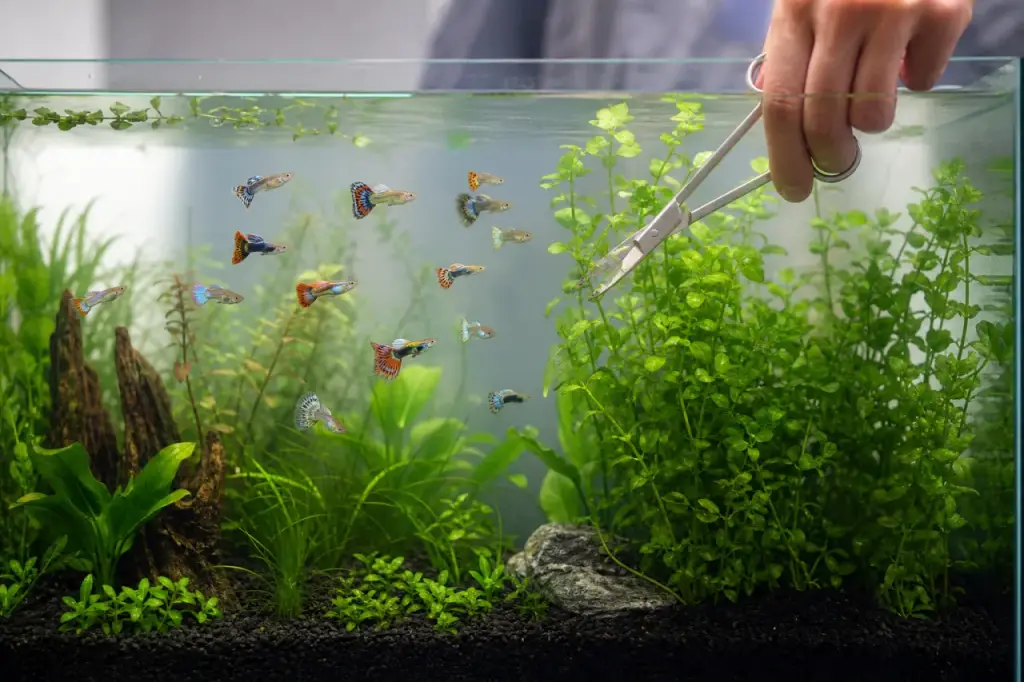
A sick guppy hospital tank is a separate, simple aquarium used to isolate an ill or injured fish for close observation and, when appropriate, targeted treatment. Its job is not to look decorative. The priority is stable water, reliable heat, strong oxygenation, gentle biological filtration and equipment that can be cleaned without contaminating the display tank.
Quick answer: what does a sick guppy hospital tank need?
- A separate aquarium or food-safe container with a secure cover
- Stable temperature and a reliable thermometer
- A mature sponge filter or other gentle biological filtration
- An air pump with strong surface movement
- A bare bottom for easy waste removal
- One simple inert hiding place
- A water test kit and dechlorinator
- Dedicated net, siphon and bucket
Prepare and test the tank before moving the sick fish whenever possible. An uncycled hospital container can create an ammonia emergency on top of the original illness.
Hospital tank vs quarantine tank for new guppies
These two setups can use similar equipment, but the intent is different.
| Setup | Main purpose | Best guide |
|---|---|---|
| New-fish quarantine | Observe apparently healthy new arrivals before mixing populations | How to Quarantine New Guppies After Shipping |
| Sick-fish hospital tank | Isolate an ill or injured guppy for close monitoring and targeted care | This guide |
This distinction helps prevent keyword and care confusion: healthy arrivals need preventative quarantine, while an actively sick fish may need a hospital setup designed around diagnosis and treatment.
When should you isolate a sick guppy?
A separate hospital tank is especially useful when you need to protect the fish from competition, measure its food intake, observe feces, or keep treatment away from sensitive display-tank animals.
- Visible ulcers, wounds, swelling or pineconing
- Persistent loss of balance or inability to compete for food
- Severe clamped fins, hiding or progressive weakness
- Suspected bacterial disease requiring targeted medication
- Need to monitor abnormal feces or wasting closely
- Need to protect shrimp, snails, plants or the main biofilter from a medication
- Bullying or fin damage that prevents recovery in the main tank
Isolation is not always the same as treating only one fish. Some contagious parasites may already be present throughout the display tank. Use the Guppy Diseases Guide to compare symptoms and decide whether the problem appears individual or system-wide.
How to set up a sick guppy hospital tank
1. Use conditioned, temperature-matched water
Fill the hospital tank with dechlorinated water and bring temperature close to the source aquarium before transfer. Matching conditions reduces additional stress while still allowing you to correct any known water-quality problem.
2. Use established biological filtration
A spare cycled sponge filter is ideal because it provides gentle flow and a large bacterial surface. Water from the display tank alone does not cycle a new filter; most nitrifying bacteria live on filter media and other surfaces rather than freely in the water.
If no mature filter is available, treat the tank as uncycled: test ammonia and nitrite frequently, feed conservatively and be prepared for appropriately conditioned water changes.
3. Prioritize oxygenation
Sick fish often have less reserve, and some diseases or medications can increase oxygen demand. Use an air-driven sponge filter or air stone with visible surface movement, but avoid a current so strong that a weak guppy must constantly fight it.
4. Keep the bottom bare
A bare bottom makes uneaten food, feces and debris easy to see and remove. That is useful when tracking appetite, abnormal feces or medication response.
5. Add simple shelter and a lid
One smooth, nonporous hiding place can reduce stress without making cleaning difficult. Use a secure cover because stressed guppies can jump.
How to move the sick guppy with less stress
- Prepare the hospital tank fully before catching the fish.
- Dim the lights in both tanks.
- Confirm temperature and pH are reasonably close.
- Use a clean container or soft net and minimize chasing.
- Avoid moving dirty store, shipping or treatment water between systems.
- Observe breathing, balance and posture closely for the first hour.
If the fish was just shipped and is not yet clearly ill, follow the Guppy Acclimation Guide first rather than treating routine arrival stress as disease.
Daily hospital-tank monitoring checklist
| Check | What to record | Why it matters |
|---|---|---|
| Water | Temperature, ammonia, nitrite and water changes | Separates disease progression from a tank-management problem |
| Behavior | Swimming, hiding, flashing and balance | Shows improvement or decline |
| Breathing | Normal, fast, surface gasping or asymmetric gill movement | Can indicate oxygen, gill or systemic problems |
| Food | Amount offered and actually eaten | Helps measure appetite accurately |
| Body | Spots, lesions, swelling, scales and fins | Tracks physical progression |
| Waste | Feces and uneaten food | Useful for internal-disease investigation and cleaning |
| Treatment | Product, dose, time, water volume and response | Prevents accidental redosing or conflicting medications |
Medication and filtration safety
A hospital tank makes targeted treatment easier, but it does not make medication risk-free. Follow the product label and avoid stacking treatments without a clear reason.
- Calculate actual water volume, especially in small tanks.
- Check the label for instructions about activated carbon, UV sterilizers and water changes.
- Keep biological filtration running unless the product specifically requires otherwise.
- Test ammonia and nitrite during treatment.
- Increase aeration when medication may reduce dissolved oxygen or the fish is breathing heavily.
- Do not mix antibiotics, dewormers or other medications unless compatibility is explicitly established.
- Record every dose and water change.
If symptoms are uncertain, start with diagnosis rather than medication. For example, ich, velvet, columnaris and gill flukes can overlap in behavior while requiring very different treatment logic.
Prevent cross-contamination between tanks
Quarantine and hospital tanks work only when water and equipment are kept separate. UF/IFAS fish-health guidance emphasizes quarantine, sanitation and disinfection as core biosecurity tools.
- Label hospital-tank nets, siphons, buckets and feeding tools.
- Do not move wet equipment back to the display aquarium without proper cleaning and disinfection.
- Wash hands between systems.
- Avoid splashing water from one tank to another.
- Remove dead fish promptly.
- Keep treatment water away from other aquariums.
How often should you change hospital-tank water?
There is no useful one-size-fits-all percentage. Base water changes on ammonia, nitrite, medication instructions, feeding, tank volume and the condition of the biofilter. In a stable cycled hospital tank, maintenance may be modest; in an uncycled small container, water quality can deteriorate rapidly.
Use the Guppy Water Change Guide and Water Parameters Guide as references, while following any treatment-specific label instructions.
When can a sick guppy return to the main tank?
Do not move the fish back simply because it looks better for one day. A safer return requires:
- The complete treatment plan, if any, is finished.
- Symptoms have resolved or are clearly stable.
- Appetite and normal swimming have returned.
- The fish can compete for food without assistance.
- Hospital and display water conditions are compatible.
- There is no unresolved concern that the fish could expose the display population.
If the diagnosis involved a contagious organism, the exposed display tank may need its own management plan before reintroduction.
What if the guppy is too weak to reach the surface or food?
A shallower water level, reduced current and easy access to food can help a severely weak fish conserve energy. This is supportive care rather than a cure. If the fish is rolling, sinking or floating abnormally, see the Guppy Swim Bladder Disorder guide.
How this fits HiGuppy’s fish-health process
Preventative quarantine before sale and a home hospital tank serve different stages of fish care. You can review HiGuppy’s Guppy Quarantine & Observation Process and the Guppy Health Support After Arrival for our current customer-facing health procedures.
Frequently asked questions
Can I use a plastic container as a sick guppy hospital tank?
A clean food-safe container can work temporarily if it safely supports stable heat, aeration, filtration and a secure cover. Small water volumes require especially careful ammonia and temperature monitoring.
Does main-tank water cycle the hospital tank?
No. Most beneficial nitrifying bacteria live on filter media and surfaces. Seeded filter media is far more useful than simply transferring old tank water.
Should a hospital tank have gravel?
Usually not. A bare bottom makes cleaning, dosing and observation easier.
Should I automatically medicate a sick guppy after isolation?
No. Isolation helps observation, but medication should still match a plausible diagnosis. Water-quality correction and supportive care may be the first priority.
Can one hospital tank be reused for different fish?
Yes, but it should be appropriately cleaned or disinfected between incompatible cases, and the biological filter strategy should account for whether treatment damaged or contaminated the media.
Sources and further reading
- Merck Veterinary Manual: Management of Aquarium Fish
- UF/IFAS: Fish Health Management Considerations — Quarantine and Biosecurity
Educational note: Severe disease, rapid losses or uncertain medication choices warrant guidance from an aquatic veterinarian or qualified fish-health professional.
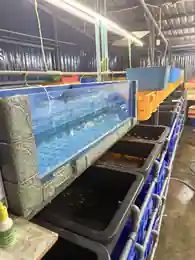
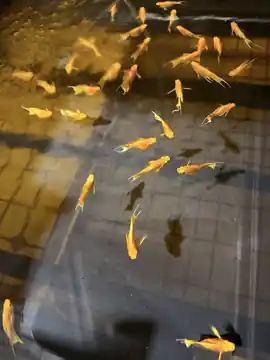
Real HiGuppy photographs
Inside the facility behind our guppy guides
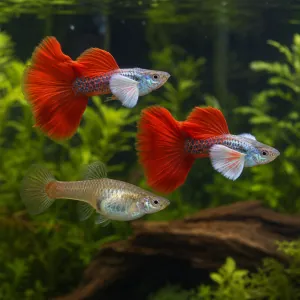
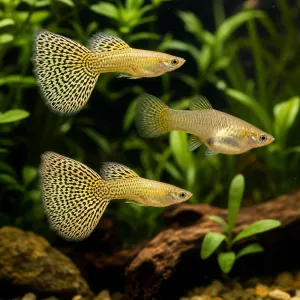
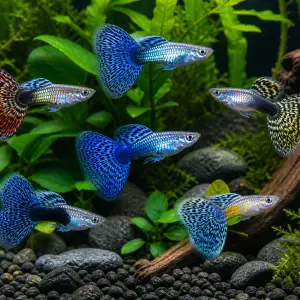
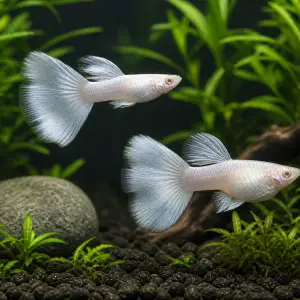
These photographs show real HiGuppy holding, breeding and observation work. They document our facility and fish stock; they are not presented as the exact individual fish or strain discussed on every page.