Guppy Care Article
Why Is My Guppy Glass Surfing? Causes & Stress Checks
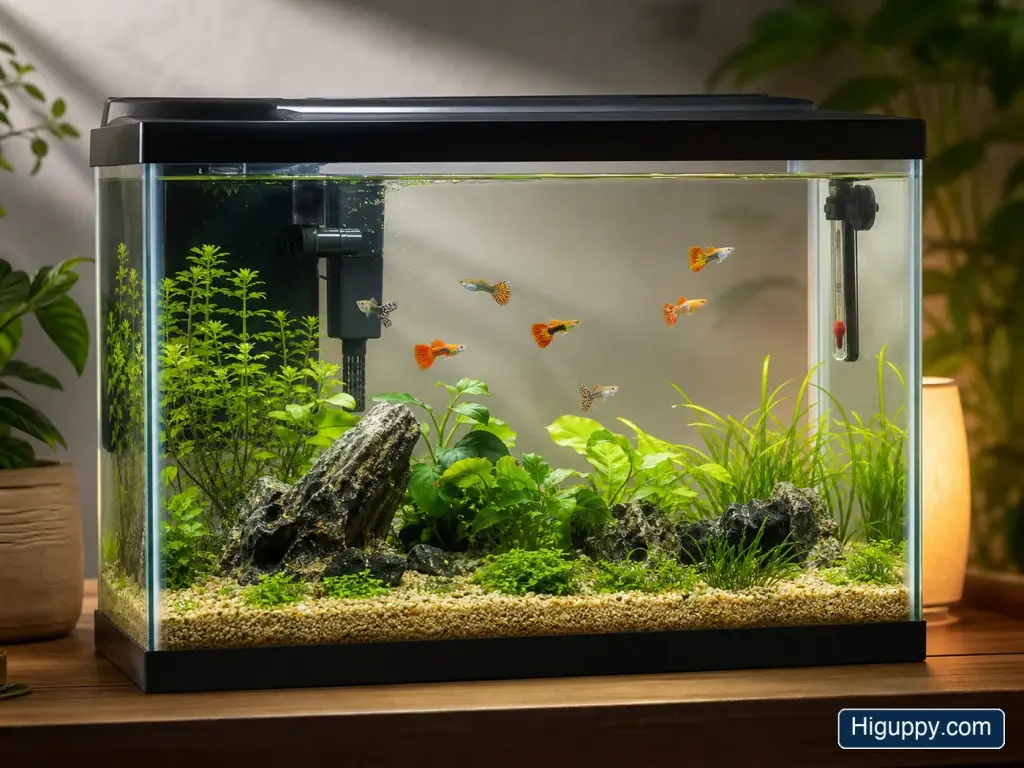
“Glass surfing” describes repeated swimming up, down, or back and forth along an aquarium wall. In guppies it can be temporary exploration after a move, a response to reflections or feeding activity, or a sign that something about the environment is stressful.
The behavior is most useful as a clue, not a diagnosis. A guppy that briefly patrols the glass but otherwise eats, breathes normally, and swims with open fins is very different from a fish that glass surfs frantically while gasping, clamping its fins, hiding, or losing appetite.
Quick answer
Guppies may glass surf because they are new to the tank, reacting to reflections, anticipating food, searching for other fish, avoiding bullying or strong current, or responding to poor water quality. If the behavior is persistent or frantic, test the water first and check breathing, temperature, filter flow, stocking, and other stress signs.
Is glass surfing always a problem?
No. Short periods can happen when a guppy explores a new environment, notices activity outside the tank, reacts to a reflection, or associates your presence with feeding. Concern rises when the pattern is prolonged, intense, sudden across several fish, or accompanied by other abnormal behavior.
| Pattern | How concerning is it? | What to check |
|---|---|---|
| Brief glass patrol, normal appetite and breathing | Often low concern | Adjustment, reflections, feeding anticipation |
| New fish repeatedly swims the perimeter | Monitor closely | Acclimation, water, hiding places, lighting |
| Several guppies suddenly glass surf | More concerning | Ammonia, nitrite, temperature, oxygen, recent changes |
| One fish frantically surfs while being chased | Likely social stress | Bullying, stocking, sex ratio, visual cover |
| Glass surfing plus gasping or clamped fins | Urgent check | Water quality, oxygen, gills, disease signs |
1. Test water quality first
If glass surfing begins suddenly, especially in more than one fish, test ammonia and nitrite and check pH and temperature. Clear water can still contain harmful nitrogen waste. Review anything that changed recently: a filter cleaning, power outage, large feeding, dead fish, new livestock, medication, or a major water change.
Start with the guppy water parameters guide. If ammonia is present or the filter cycle may have been disrupted, read Ammonia Poisoning in Guppies.
2. Check reflections and lighting
Aquarium glass can act like a mirror when room and tank lighting create strong contrast. Male guppies in particular may repeatedly approach a reflection as though another fish is present. Try reducing glare, adjusting room lighting, adding a background, or introducing plant cover and observe whether the behavior changes.
A stable day/night schedule also matters. Avoid leaving bright aquarium lights on continuously. If you are building a more natural layout, see best live plants for guppies.
3. Review social stress and stocking
A guppy may repeatedly run the tank perimeter when it is being chased or cannot settle into a social group. Watch the aquarium when you are not standing directly in front of it. Persistent pursuit, fin nipping, a fish being trapped in one corner, or one individual being excluded from food are more useful signs than the glass surfing itself.
Use visual breaks from plants or hardscape, but also review stocking and compatibility. The best tank mates for guppies guide can help when the behavior follows a community-tank change.
4. Check filter flow and oxygen
Observe where the fish glass surfs. If guppies avoid most of the aquarium and stay in one low-flow zone, current may be too strong. If they remain near the surface, breathe rapidly, or cluster where water returns from the filter, oxygen or gill stress may be involved.
Compare the behavior with why guppies gasp at the surface. For equipment basics, see do guppies need a filter? and do guppies need an air pump?.
5. Give new arrivals a calmer transition
Newly shipped guppies have experienced confinement, handling, movement, and a sudden change of environment. Keep the tank stable, avoid repeated netting or rearranging, use moderate lighting, and give the fish time to settle. Do not chase a new fish around the aquarium just because it is swimming along the glass.
Follow the Guppy Acclimation Guide for arrival handling and the HiGuppy quarantine and observation process for our approach to new-fish health.
6. Look for a broader stress or disease pattern
Glass surfing alone is nonspecific. It becomes more meaningful when paired with appetite loss, color loss, clamped fins, flashing, spots, swelling, abnormal feces, or respiratory distress. Do not choose medication from this behavior alone.
If the guppy also refuses food, use Why Is My Guppy Not Eating?. If color and posture are changing too, compare why guppies lose color and guppy clamped fins. For a full symptom index, use the Guppy Diseases Guide.
What to do when a guppy keeps glass surfing
- Test the water. Check ammonia, nitrite, pH, and temperature rather than judging by water clarity.
- Observe breathing and fin posture. Gasping or clamped fins raise the urgency.
- Watch the fish when you step away. This helps reveal chasing or feeding-related behavior.
- Reduce glare and reflections. Adjust lighting or add a background temporarily.
- Review flow. Make sure the fish has both good circulation and calmer swimming areas.
- Add appropriate cover. Plants can create visual breaks without eliminating open swimming space.
- Avoid making many changes at once. Change one plausible stressor, observe, and keep water stable.
FAQ
Why does my new guppy swim up and down the glass?
New guppies may explore tank boundaries, react to reflections, or show temporary adjustment behavior. Check water and breathing, then allow a calm settling period if the fish otherwise looks normal.
Can ammonia cause glass surfing?
Poor water quality can cause restless or abnormal behavior, but glass surfing does not identify ammonia by itself. Test ammonia and nitrite rather than diagnosing from behavior alone.
Can a reflection make a guppy glass surf?
Yes, reflections can trigger repeated approaches to the glass. Reduce glare or add a background and see whether the pattern decreases.
When should I worry about glass surfing?
Investigate promptly when it is persistent, frantic, affects several fish, or appears with gasping, clamped fins, appetite loss, lethargy, spots, swelling, or other abnormal signs.
For a stable long-term environment, continue with the Complete Guppy Care Guide and Guppy Tank Setup Guide.
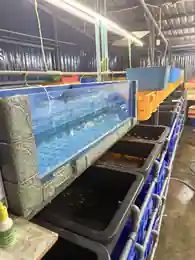
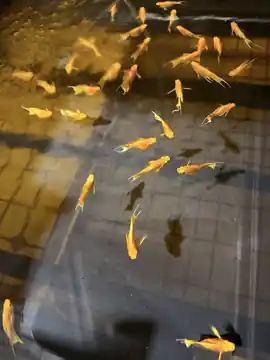
Real HiGuppy photographs
Inside the facility behind our guppy guides
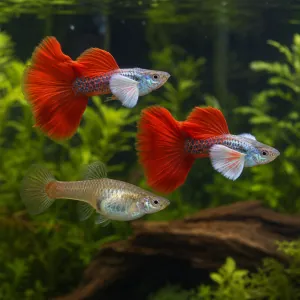
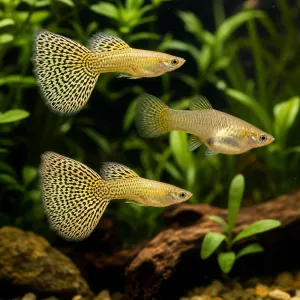
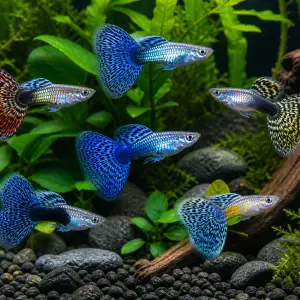
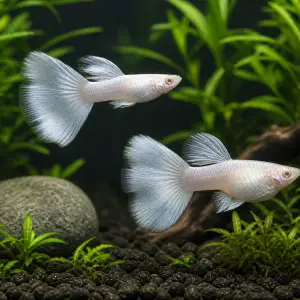
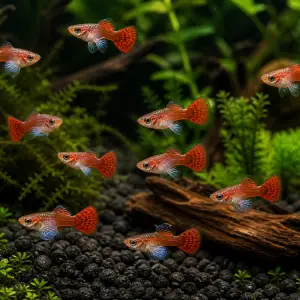
These photographs show real HiGuppy holding, breeding and observation work. They document our facility and fish stock; they are not presented as the exact individual fish or strain discussed on every page.