The HiGuppy Journal
Guppy Fry Grow-Out Tank Setup: Equipment & Steps
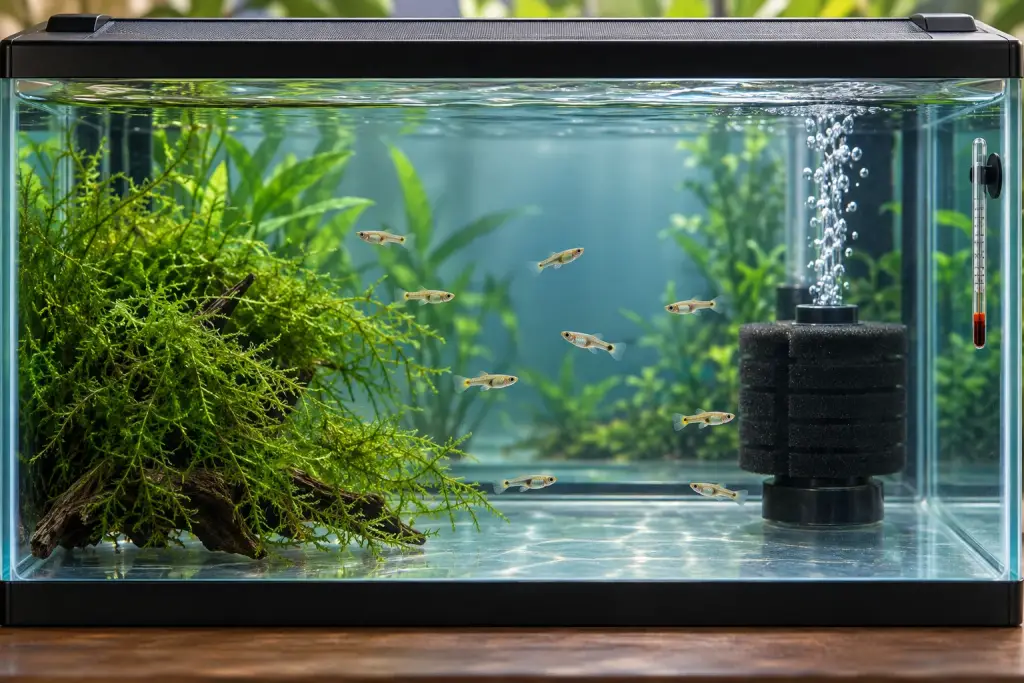
A guppy fry grow-out tank is a separate, fully cycled aquarium that gives baby guppies room to feed and develop without crowding adults. Start with an appropriately sized tank, a mature sponge filter, gentle flow, stable temperature and a simple cleaning routine. Move fry only when water conditions match, and expand space as the group grows; there is no reliable fixed fry-per-gallon rule.
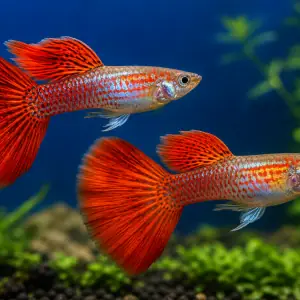
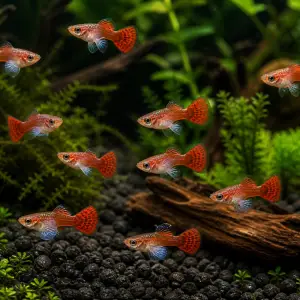
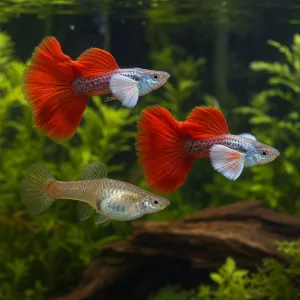
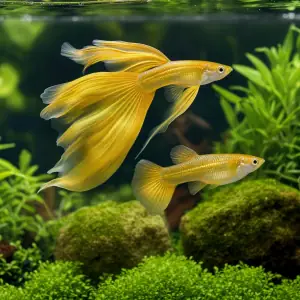
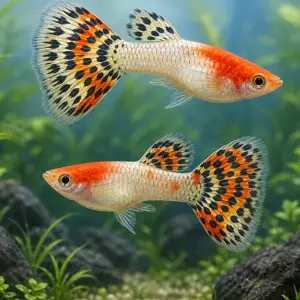
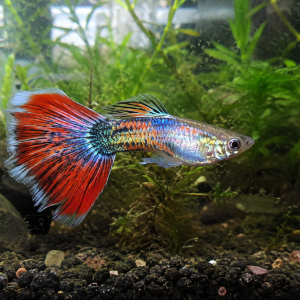
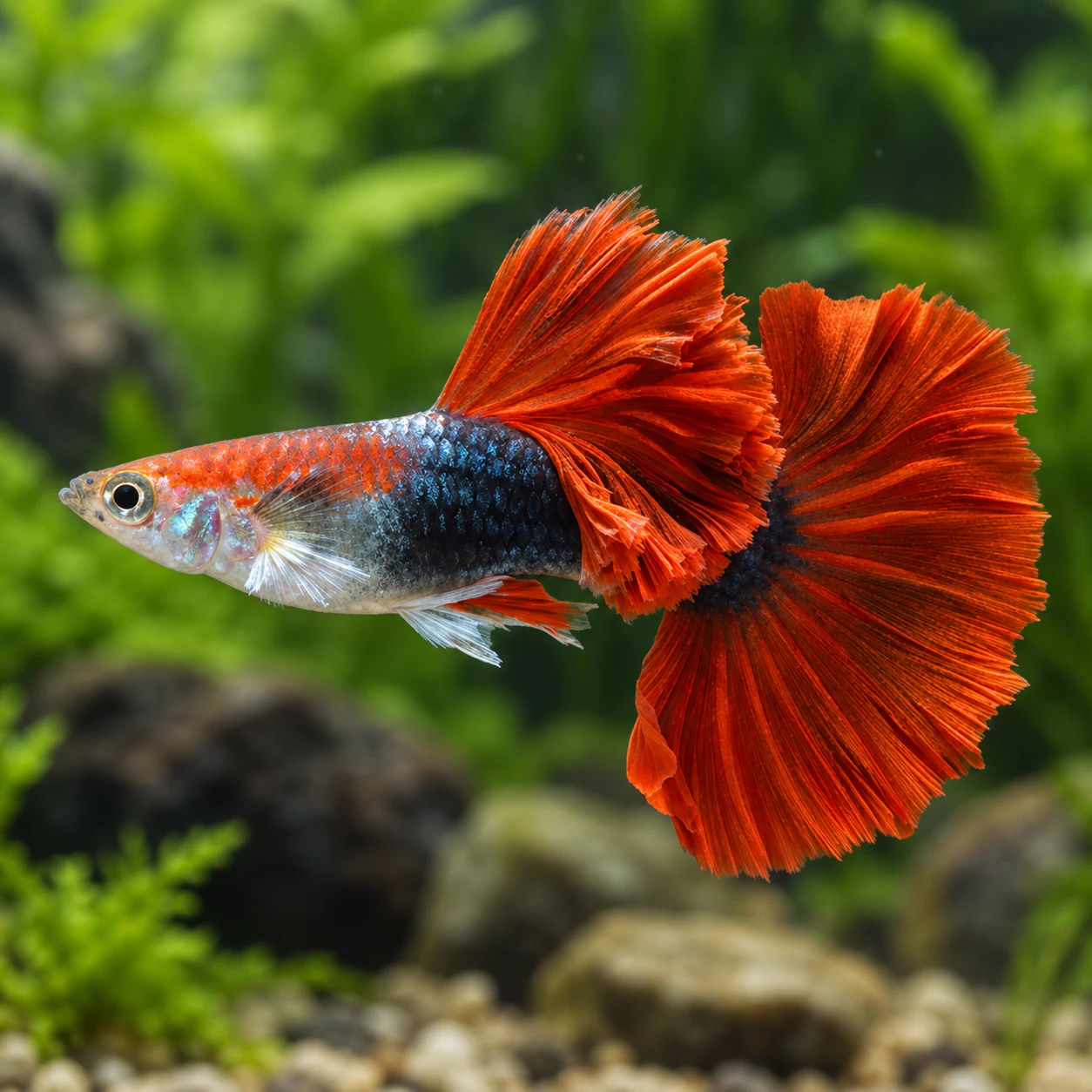
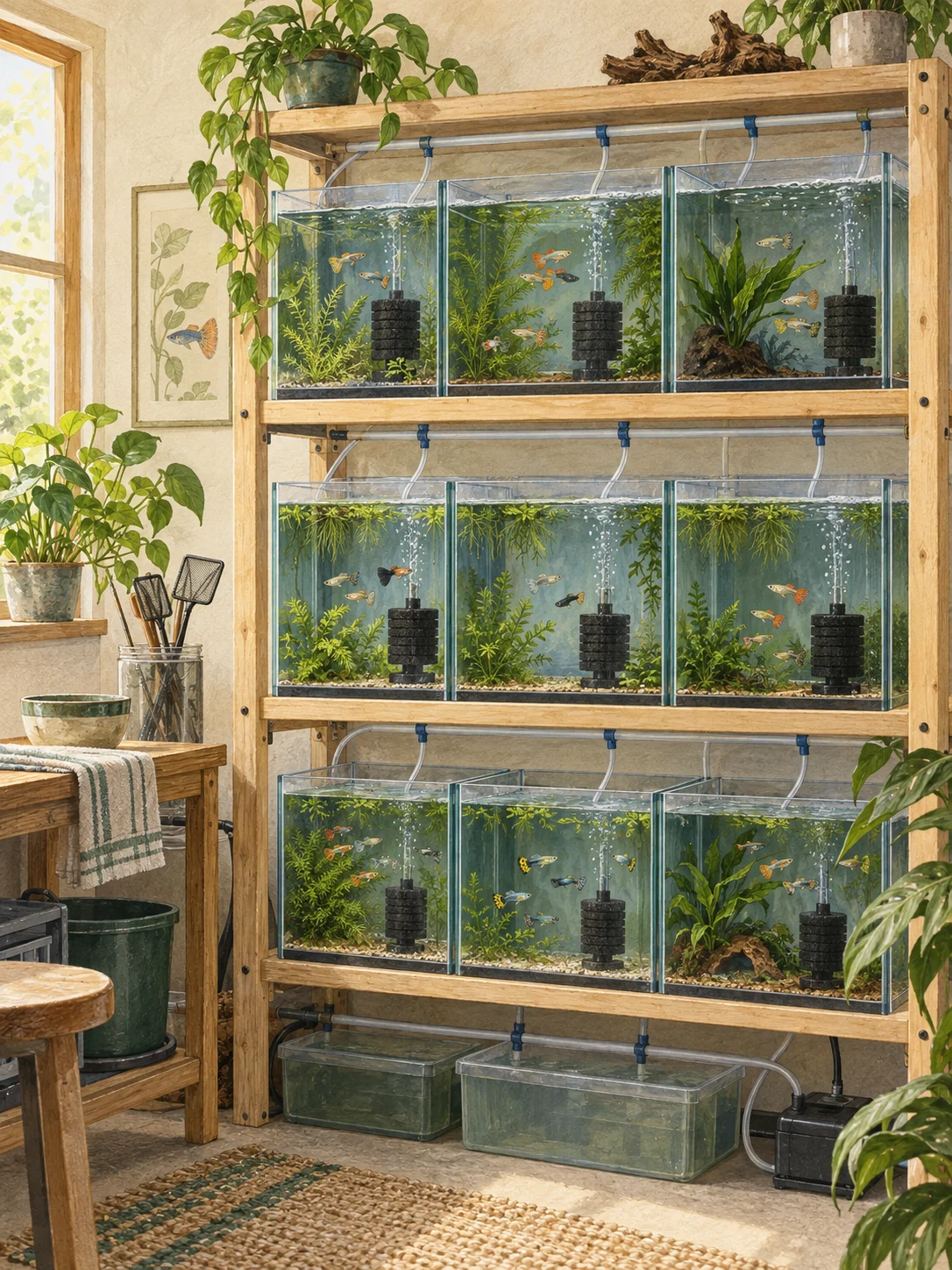
This is a hands-on setup guide for the tank itself: what to buy, where to put each item, how to transfer tiny fish, and what to check during the first week. For the wider subject of feeding and raising young guppies (Poecilia reticulata), see our raising guppy fry guide. The featured aquarium artwork is an AI-generated educational illustration, not live inventory or a documentary photograph.
When should guppy fry move to a grow-out tank?
A separate grow-out tank is useful when a community aquarium has adult fish that might eat small fry, when you want to monitor a breeding line, or when successive broods make the main tank crowded. It is not compulsory for every brood: a mature, well-planted aquarium can provide cover, and some keepers leave fry there when predation and stocking are manageable. A small floating breeder box is usually only a short-term holding space; it has limited circulation and growing room.
- Consider a separate tank: if adults chase or eat fry, food distribution is uneven, water tests deteriorate, or you need to track parentage.
- Do not rush the transfer: a newly filled container with an uncycled filter is more dangerous than an established aquarium with appropriate plant cover.
- Plan ahead: guppies can produce successive broods; a good grow-out tank must accommodate fish as they increase in size, not only on their first day.
If the immediate problem is fry being eaten, begin with our fry survival overview; this article explains how to build a separate rearing space once you decide you need one.
How big should a guppy fry grow-out tank be?
Use space and water quality as the deciding factors, not a slogan like “one fry per gallon.” Newly born fry are tiny, but they eat often, produce waste, and quickly need more swimming room. The stocking decision depends on tank footprint, filter capacity, frequency of feeding, growth, how many broods share the tank, and your measured ammonia, nitrite and nitrate. A 10 US gallon (38 L) established aquarium may serve as a small, temporary grow-out system for a limited group. A 20 US gallon long (76 L) tank gives more room to spread food and separate areas, and is a more flexible starting choice if you expect multiple broods.
| Tank option | Practical use | Limit to watch |
|---|---|---|
| 5 US gal (19 L) or less | Temporary observation/holding only when needed | Very limited margin for waste; not a default long-term grow-out tank |
| 10 US gal (38 L) | Small, temporary fry group with cycled filtration | Monitor rapid growth, feeding load and water readings; arrange expansion |
| 20 US gal long (76 L) | More flexible rearing space with a long swimming area | Not an unlimited-capacity tank; fry counts and size still matter |
| Larger or split grow-out tanks | Growing groups, repeated broods, or separate breeding lines | Use mature filtration in each section; avoid mixing unknown-age fish without a plan |
The table is planning guidance, not a fixed stocking recommendation. Fish welfare guidance from the Ornamental Aquatic Trade Association (OATA) emphasizes suitable volume, established biological filtration and monitoring water quality as fish are added. Choose a tank that can support the fry as juveniles, or have a larger tank ready.
Essential equipment: a small, workable shopping list
You do not need expensive gear for an efficient fry setup. You do need a biological filter that is already cycling waste, protected water movement, temperature monitoring and simple equipment for careful maintenance.
| Item | What to choose | Why it matters |
|---|---|---|
| Aquarium and secure lid | 10–20+ US gallons according to fish numbers and space plan | Stable volume, swimming room and prevention of jumping |
| Mature sponge filter | Sponge with established beneficial bacteria, paired with a suitable air pump | Gentle flow and no exposed motor intake for tiny fry |
| Airline, valve and pump | Reliable tubing; a check valve where required by the pump’s installation | Maintains safe, predictable circulation |
| Heater and thermometer | Heater if the room cannot keep a stable suitable temperature | Avoids abrupt temperature fluctuations |
| Plants or soft cover | Java moss, other safe plants or removable fine-leaved cover | Gives fry shelter while leaving room to observe them |
| Test kit and water conditioner | Ammonia, nitrite, nitrate, pH, GH, and treatment for chlorine/chloramine | Checks whether the tank is safe before and after stocking |
| Cleaning tools | Small siphon or airline tubing, bucket, and a clean transfer cup | Removes leftover food without catching fry |
| Optional bare bottom | No gravel, with removable plants/cover | Makes waste visible and siphoning easier |
For sponge positioning and air adjustments, see sponge filter setup for guppy tanks. For the trade-offs of no substrate, see bare-bottom guppy tank: pros and cons.
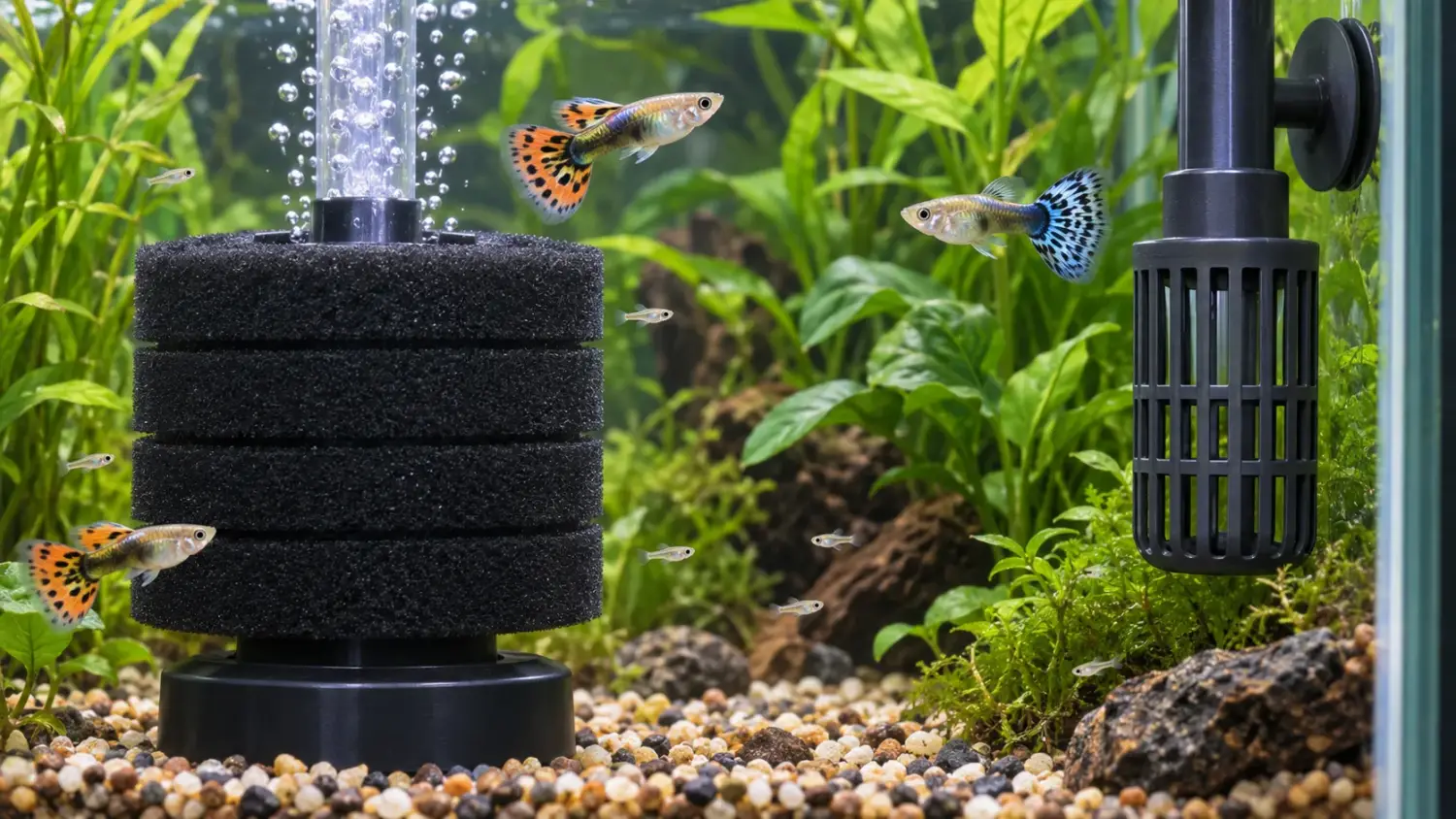
Step-by-step: set up the tank before moving any fry
- 1. Position the tank. Place it on a level, stable stand away from direct sun, strong drafts and sudden temperature changes. Keep accessible space for feeding and water-change equipment.
- 2. Add safe cover. Choose bare bottom for easy cleaning or a modest, easy-to-maintain substrate; include soft plants or Java moss, but leave room for swimming and inspection.
- 3. Install a sponge filter. Attach the air pump correctly, keep the airflow gentle and avoid exposed intakes. Bubbles alone do not prove the filter’s bacteria are established.
- 4. Establish biological filtration. Use a properly cycled filter or mature media transferred without drying out from a healthy aquarium. Test ammonia and nitrite; never assume adding old tank water alone instantly cycles a new tank.
- 5. Match stable water conditions. Keep the temperature close to the source tank and check pH and GH; use treated replacement water. Avoid sudden changes made simply to reach a number from the internet.
- 6. Do a dry run without fish. Verify temperature, filter operation, gentle flow and water-test results. Have a clean cup and a small siphon ready before the move.
Our guppy tank cycling checklist explains what “cycled” means and why a clear-looking tank can still be unsafe.
Water parameters for juvenile guppies
Grow-out fry are still guppies. A useful everyday temperature target is about 24–26°C (75–79°F); species-wide guidance from Poecilia reticulata on Seriously Fish reports 17–28°C, pH 7.0–8.5 and general hardness 8–30 dGH. A practical pH of about 7.2–8.0 and GH 8–15 dGH can work for many home setups, but what matters is that the water is suitable, measured and stable. Ammonia and nitrite should test 0 ppm before fry enter and during grow-out; watch nitrate trends and do appropriate partial changes as needed.
- Before transfer: compare source-tank and grow-out temperatures, test ammonia and nitrite, and look for stable filtration.
- After transfer: check the actual water readings during the first days as feeding increases, rather than trusting a preset calendar.
- For every water change: treat new tap water to remove chlorine/chloramine and match temperature as closely as practical.
A large change with mismatched temperature or chemistry can stress fry. The goal is consistency, not a rigid pH adjustment routine.
Simple tank layout: where each part goes
Keep a gentle flow zone near the sponge filter, an easy-to-reach open area for feeding, and a patch of plants or moss for cover. A bare bottom makes uneaten food easier to find; a planted or lightly substrate-covered tank provides a more natural look but can hide debris. Neither layout is automatically better when filtration, space and maintenance are adequate. Avoid strong pumps that push fry constantly around the tank.
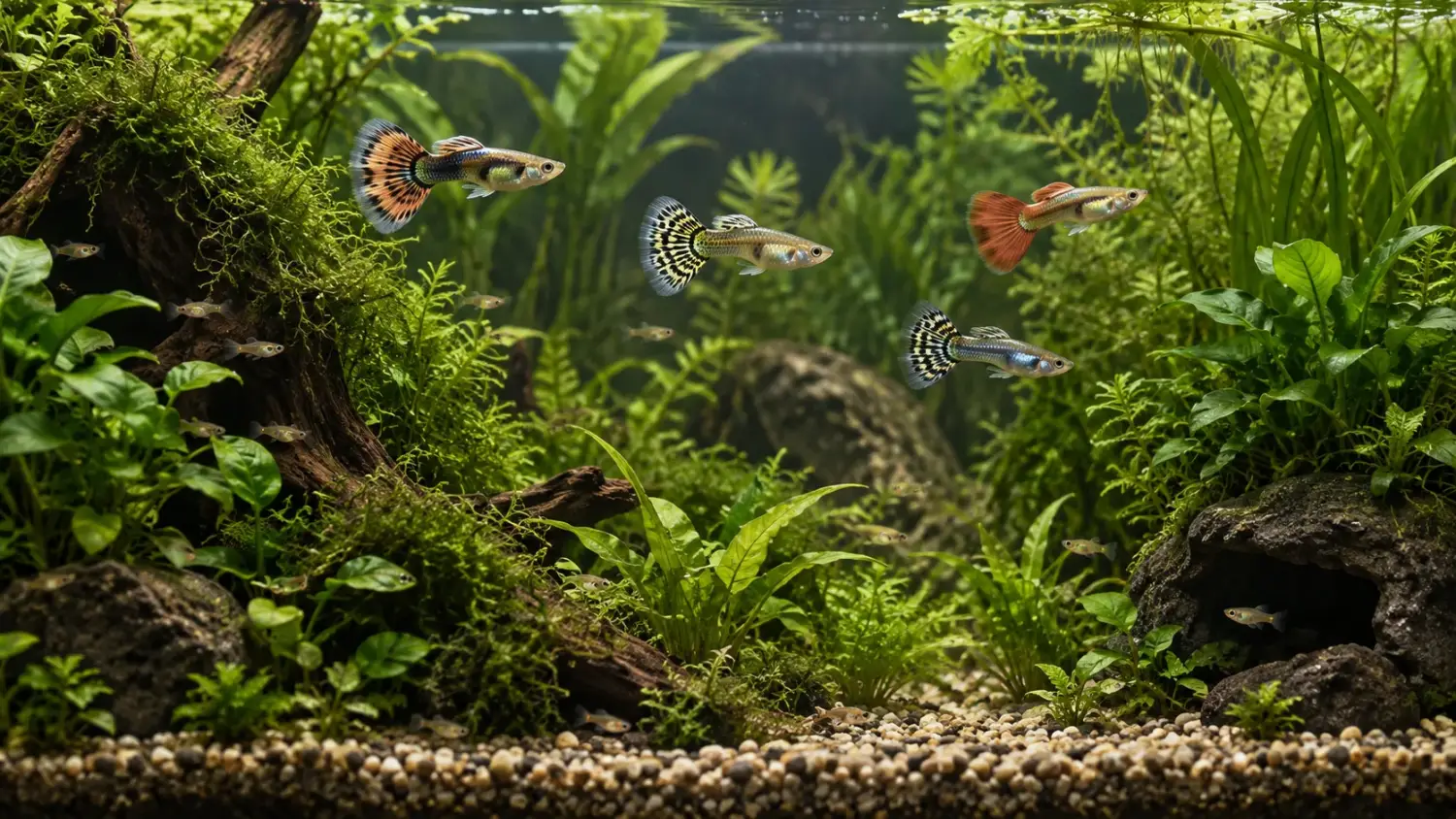
Watch the fish after setup. Fry resting naturally among plants are different from fry gasping persistently at the surface or struggling to hold position in the current. If several fish look distressed, check water quality, oxygenation and filter flow promptly.
How to move guppy fry without injuring them
- Prepare first: confirm stable water and have a clean specimen cup or fine fry-safe transfer tool ready; avoid household soap residues.
- Reduce stress: dim the light and move slowly. Avoid chasing the fish around the source tank with a large net.
- Keep water conditions close: if source and destination differ, make a controlled, gradual acclimation plan suited to the actual conditions; never dump fish into sharply different water.
- Transfer gently: use a small cup with tank water where practical, avoid compressing fry in a net, and introduce them to sheltered water near the plants.
- Watch the group: confirm normal swimming and access to food, and retest water after transferring, especially in a newly stocked filter.
Keep the grow-out tank for fry rather than routinely moving a pregnant female into it just before birth. Stressed adult females and opportunistic feeders can endanger tiny young. If fry are already thriving in a planted mature tank, you may choose not to move them immediately.
First-week checklist: what to watch
| When | Main check | Action if something is off |
|---|---|---|
| Before adding fry | Temperature, ammonia and nitrite at zero, mature filter, gentle flow | Correct the water or complete cycling before transferring |
| Day 1 | Breathing, swimming, plant cover, ability to eat appropriately sized food | Reduce disturbance; address harmful readings or strong flow |
| Days 2–3 | Waste and leftover feed, temperature, water tests | Remove leftovers carefully and adjust feeding; make a matched partial change if needed |
| Days 4–7 | Growth space, group sizes, nitrate trend, filter flow | Reassess stocking and cleaning schedule; plan expansion before crowding |
| Each following week | Feeding access, size differences, water trends | Transfer larger juveniles only when a safe receiving tank is ready |
There is no universal daily water-change percentage. Frequent small feedings can increase waste, so measure water and clean with a controlled siphon rather than guessing. Our water changes for guppy fry explains how to protect tiny fish while removing debris.
Feeding and growth without overloading the tank
Offer food fine enough for the smallest fry to swallow, such as an appropriate fry powder, crushed quality flake or newly hatched baby brine shrimp when available and safely prepared. Young fry may benefit from several tiny meals throughout the day, but the amount should be small enough that leftovers do not pollute the water. If larger fry monopolize feeding, distribute food to more than one area or separate size groups only when you can provide adequate additional tanks. Do not expect every fry to grow at the same pace: genetics, food access, temperature and water quality can all affect development.
For ages and meal options, see guppy fry feeding schedule and guppy growth stages. This page deliberately focuses on the aquarium setup rather than replacing those detailed feeding charts.
When to move juveniles out of the grow-out tank
Move juveniles based on actual size, health, and receiving-tank safety, not simply on “four weeks old.” Adults and tankmates can still eat fish small enough to fit in their mouths; a crowded juvenile tank can also be stressful. Make sure new fish can compete for food, that water parameters match, and that there is plenty of space. For breeding projects, watch sex development and separate groups when a verified breeding plan requires it.
Our guide when can guppy fry join adults? covers compatibility checks, while sexing guppy fry explains the visible signs that develop as juveniles mature.
Common grow-out setup mistakes
- Fresh filter, no cycle: an air pump moves water but cannot replace nitrifying bacteria.
- Too many fry for the space: a tank that is fine for newborns can become crowded after several weeks.
- Strong filter intake: small fry can be pinned to or drawn into unprotected openings.
- Uneaten feed: extra food does not guarantee faster growth and can create ammonia or nitrate problems.
- Large unmatched water changes: unstable temperature or chemistry can stress sensitive young fish.
- No plan for adulthood: keeping every fish indefinitely without extra space is not responsible breeding.
If fry are dying or gasping, check water tests and filter conditions immediately rather than assuming a particular infection. The common causes of guppy fry losses guide offers a broader troubleshooting pathway.
Ready-to-use grow-out tank checklist
- Tank has suitable room for the current fry and a realistic plan for growth.
- Biological filter is established; intake protected and flow gentle.
- Thermometer and appropriate heater are ready; source and destination temperatures are close.
- Ammonia and nitrite read 0 ppm; pH and GH are known, not guessed.
- Cover and open feeding space are both present.
- Dechlorinator, test kit, cup, siphon and bucket are ready.
- Feeding and water-change plan matches the actual group, not a fixed internet rule.
- Future tank or responsible homes are planned for juveniles as they grow.
Buying a new batch of fry? Review what to expect when buying guppy fry online and prepare a receiving tank first. Availability, strain and shipping arrangements should always be confirmed before ordering.
FAQ: guppy fry grow-out tanks
Do guppy fry need a separate grow-out tank?
Not always. A mature, well-planted tank can protect some fry, but a separate cycled grow-out tank gives more control over feeding, observation and group size, especially when adults might eat the young.
Is a 10-gallon tank enough for guppy fry?
A cycled 10 US gallon (38 L) tank may suit a small, temporary group, but it is not a fixed fry capacity. A 20-gallon-long aquarium offers more room as juveniles grow. Monitor water tests and stocking.
Can I raise guppy fry in a 5-gallon tank?
A very small tank can be useful briefly for observation, but it has less margin for feeding waste and rapid growth. It is not a good default for long-term grow-out; plan a larger mature aquarium.
Is a sponge filter necessary?
A mature sponge filter is a convenient option because it provides biological filtration with gentle flow and no exposed intake. Other filters can work when their intakes are protected and water movement is appropriate.
Is a bare-bottom grow-out tank better?
Bare bottom makes debris easier to spot and siphon, but plants and cover still matter. A planted or substrate tank can also work if it stays clean and fry have room. Choose what you can maintain reliably.
How often should I change the water in a fry tank?
Test the water and adjust changes to feeding load, stocking and nitrate trends. Use treated, temperature-matched water, a slow siphon and careful refilling. There is no universal daily percentage for every grow-out tank.
When can guppy fry go back with adult fish?
When they are healthy, large enough not to be swallowed by the particular adults or other tankmates, and able to eat safely in a properly stocked tank. Age alone is not a reliable guarantee.
Sources and further reading
The species-level temperature, pH and hardness ranges above follow Seriously Fish: Poecilia reticulata. The OATA care sheet for guppies and mollies covers cycling, filtration, water testing and introducing fish. For an independent fishkeeping discussion of nursery tank size and filtration, see Practical Fishkeeping: setting up a rearing tank. These are general guides; evaluate fry numbers and local water conditions in your own aquarium.
Behind the care guides
Care begins with steady systems
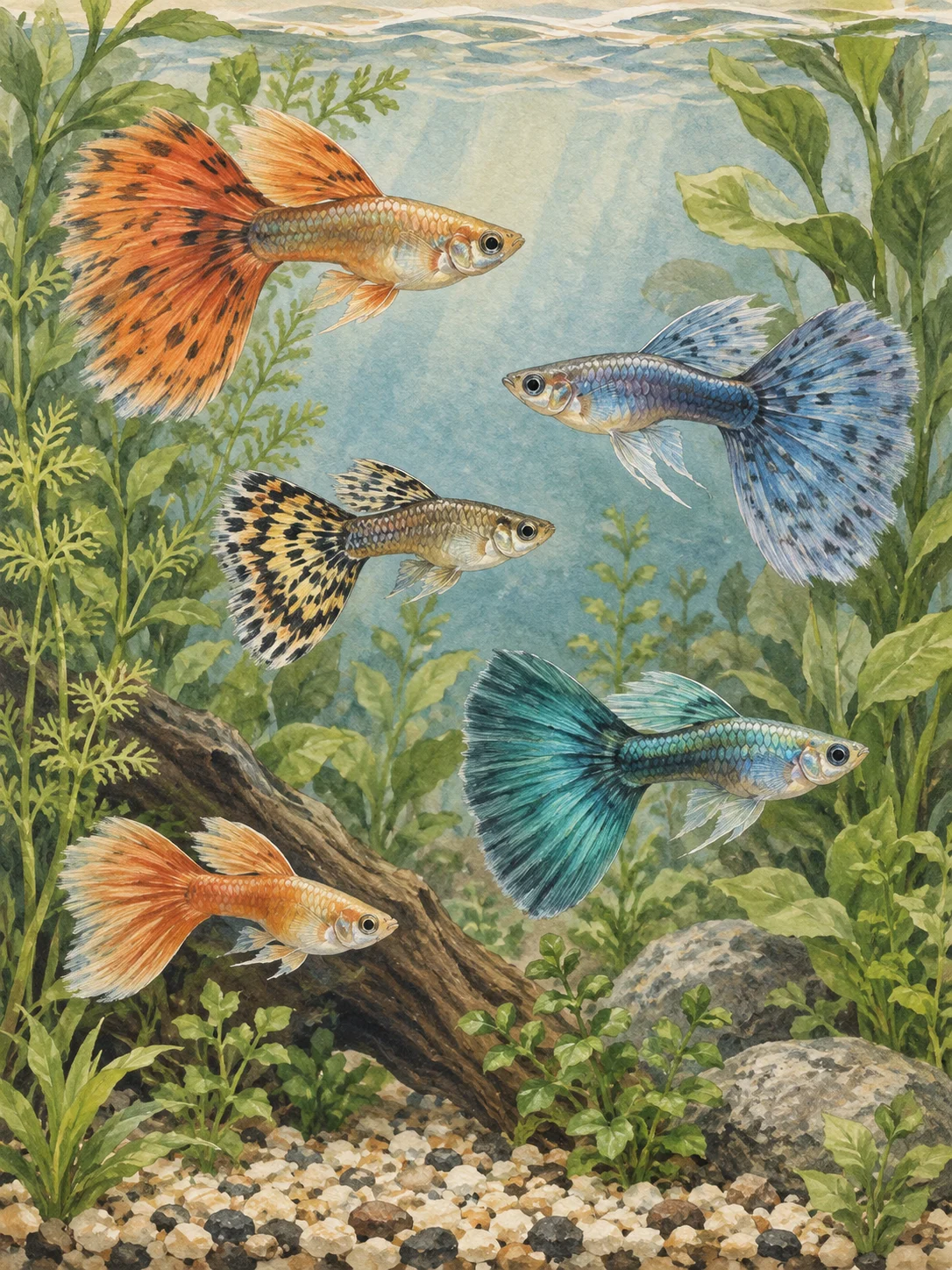
Our guppy guides focus on practical routines: keep water stable, observe fish closely and allow for natural variation.
Care systems
Steady water, thoughtful care
Gentle filtration and regular observation support healthy aquarium routines.
Natural variation
Every guppy is different
Color, size and fin shape vary with strain, age and each individual fish.
Editorial illustrations for context; they do not depict HiGuppy's exact facility or current fish stock.