The HiGuppy Journal
How to Document a Live Fish DOA Claim Correctly
To document a live fish DOA claim, photograph or video the affected fish inside its original unopened shipping bag, show a shipment identifier, record the inspection time, and contact the party responsible for that shipping leg. HiGuppy’s current international-leg policy requires evidence emailed within two hours of the professional transshipper’s physical inspection and verification—not two hours after the final buyer receives a separate domestic delivery.
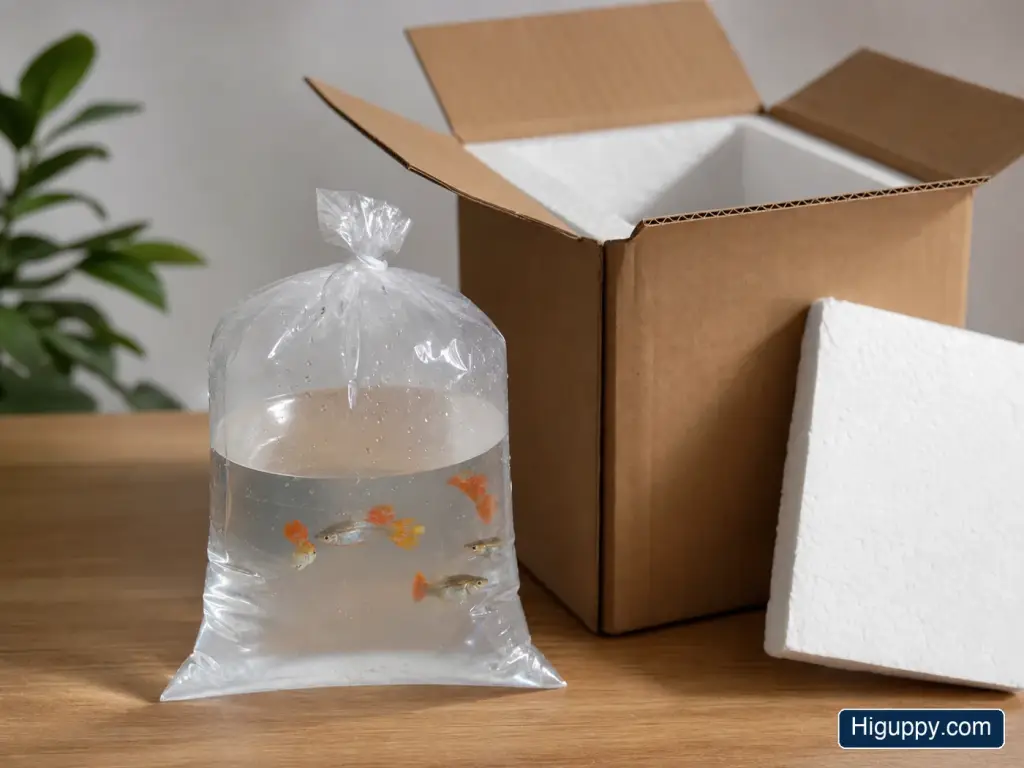
A fish delivery can involve more than one carrier and more than one responsible party. This guide explains the evidence you should capture, the difference between HiGuppy’s international handoff and the later domestic shipment, and how to send a clear claim without leaving healthy fish waiting in transport bags. The featured shipping-bag photo is an editorial example, not evidence from a customer claim. The current HiGuppy Live Arrival / DOA Policy and written terms for your specific order control eligibility. Sending evidence is not an approval or a guarantee of reimbursement.
First: which part of the shipment has a problem?
HiGuppy ships live guppies from Vietnam to a professional transshipper. The transshipper inspects and verifies that international shipment, then handles a separate domestic delivery to the final customer. The HiGuppy international DOA policy applies to Vietnam → professional transshipper. The transshipper → final buyer leg has its own live-arrival terms, which may have a different claim deadline and evidence rules. Do not assume a deadline at one stage automatically covers another.
| Where the problem is found | Whose terms to check | What starts the clock |
|---|---|---|
| International handoff: HiGuppy Vietnam → professional transshipper | HiGuppy international DOA policy | Current two-hour window begins when the professional transshipper physically inspects and verifies the shipment. |
| Later domestic shipment: professional transshipper → final buyer | The transshipper’s own live-arrival policy for that domestic service | Confirm directly with the transshipper; HiGuppy’s international two-hour window does not restart at your doorstep. |
| Fish arrives alive but later becomes ill | HiGuppy Health Support After Arrival or the responsible party for the domestic leg | Document symptoms and care promptly; this is not automatically an international-leg DOA claim. |
If your order uses a special route, a separate written agreement or another receiving service, check those order-specific terms before assuming these standard instructions apply. See the shipping policy for the current handoff explanation.
Do this immediately when the shipment is inspected
- Identify the stage. Confirm who physically received the package, which shipment is being inspected, and whether this is the international transshipper handoff or later domestic delivery.
- Check the affected bag before altering it. For a potential international DOA, keep the affected fish in the original unopened bag long enough to record the required sealed-bag evidence. Photograph the condition of the bag, fish, label and relevant packing.
- Record the inspection and verification time. Keep the date, local time and time zone, the transshipper name and inspection record. Do not substitute the date the buyer later received the domestic package.
- Collect the identifiers. Save the HiGuppy order number, international tracking and bag or shipment reference; these link the affected fish to the correct handoff.
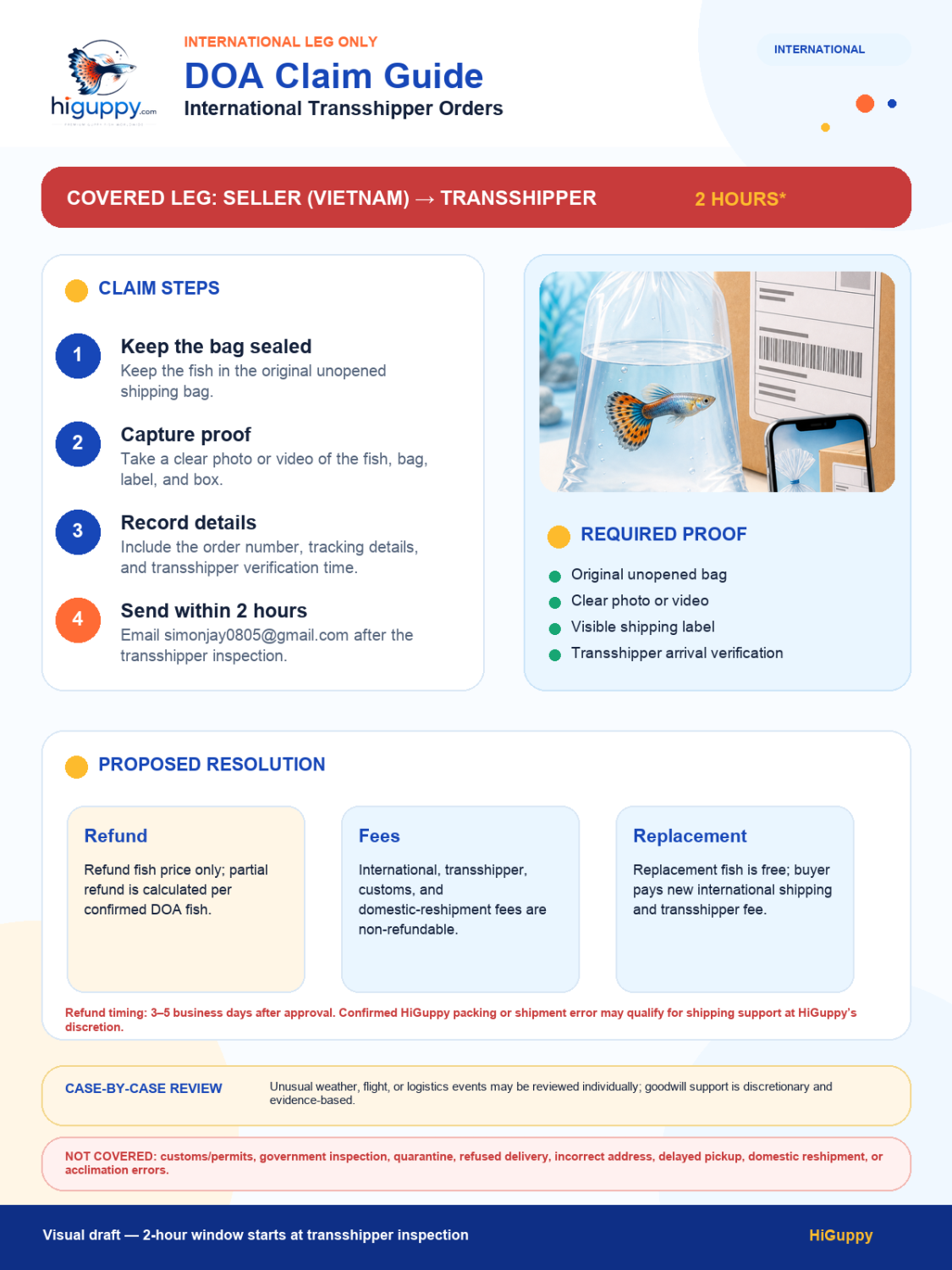
- Email the required evidence promptly. For a claim under HiGuppy’s current international policy, send to hello@higuppy.com within two hours of the transshipper’s physical inspection and verification. A composed draft or contact-form enquiry is not a sent claim.
- Preserve the evidence. Keep the affected fish, sealed bag and relevant packing as the policy requires until the review team confirms what can be discarded. Do not destroy or edit the original photos or video.
Animal-welfare distinction: the evidence-preservation instruction concerns the affected DOA bag. Do not leave surviving live fish sealed in shipping water while waiting for an email response. After the quick documentation needed for the relevant delivery leg, move live fish through the appropriate arrival and acclimation protocol promptly. For live arrivals, follow HiGuppy’s quarantine guidance and the relevant shipper’s instructions.
DOA photo and video evidence checklist
Photograph what the reviewer needs to verify, not just a close-up of one fish. The images should connect which fish, which shipping bag, which shipment, and which inspection time. A short, steady video can help show the condition and continuity of the original sealed bag. Avoid cropping away every label or relying on a blurry still.
| Evidence | What should be visible | Why to include it |
|---|---|---|
| Affected fish inside the original unopened bag | Clear fish and complete bag in one or more frames; unaltered seal | Shows the documented condition before the bag was changed |
| Bag and shipment identifier | Label, bag number or another identifier that matches the international shipment | Connects the evidence to the correct handoff |
| Package and shipping label | Full box/insulation and carrier label when relevant | Helps record damage, route and packaging condition |
| Transshipper inspection record | Date, time and time zone, verification note or receiving log | Establishes when the international policy window began |
| Order and tracking details | HiGuppy order number and international tracking | Allows support to match the order and documented fish |
| Original files | Unedited photos and video, with filenames/timestamps if available | Makes clarification and follow-up easier |
Photograph the label for support, but do not post your shipping label, home address or order details publicly. Send sensitive order evidence privately through the authorized support channel. If glare makes the fish difficult to see, take another angle without unsealing the bag. Capture useful evidence promptly rather than spending the entire two-hour window perfecting a photo.
What your email should include
HiGuppy’s DOA Claim Process specifies hello@higuppy.com for the international leg. Use a subject such as DOA Claim – Order #12345, replacing the example number with your real order. Include these details together so the reviewer can identify the shipment without unnecessary back-and-forth:
- Order: order number, buyer contact email and which fish/quantity are affected.
- International route: international tracking number and name of the professional transshipper.
- Timing: exact date, time and time zone of physical inspection and verification, supported by the transshipper’s record.
- Evidence: clear unopened-bag images, shipment label/identifier, and box or packing evidence when relevant.
- Request: ask the HiGuppy team to review the evidence against the current international DOA policy; do not assume approval in your wording.
Copyable claim email example
Subject: DOA Claim – Order #[YOUR ORDER NUMBER]
Hello HiGuppy Support,
I am reporting a potential DOA for the international shipment from HiGuppy Vietnam to [TRANSSHIPPER]. The shipment was physically inspected and verified on [DATE] at [TIME + TIME ZONE].
Order number: [ORDER]. International tracking: [TRACKING]. Affected fish and quantity: [DETAILS].
Attached are photos/video of the affected fish inside the original unopened shipping bag, the shipment identifier, relevant packaging, and the transshipper inspection record.
Please review eligibility under the applicable DOA policy and advise if you need any further evidence. Thank you.
This is a writing example, not a claim submission. Send the email with the actual attachments within the applicable deadline and keep a copy of what was sent. If your concern is with the domestic leg, use the transshipper’s own claim channel and requirements instead.
What happens after HiGuppy reviews a claim?
The team reviews whether the claim concerns the covered international leg, arrived within the stated time, identifies the fish and shipment, and includes sufficient evidence. Further clarification may be requested. An email or photo does not automatically approve a remedy.
Under the currently published international DOA terms, an approved fish-price refund applies to the confirmed affected fish, with partial losses handled per confirmed fish. The stated processing target is 3–5 business days after approval, not after the initial email. Alternatively, approved affected fish may be replaced without an additional fish-price charge, subject to availability and the next export schedule. The buyer pays the new international shipping and transshipper charges for a replacement. Standard fish-price refunds exclude the published international shipping, transshipper, customs, permits, inspection and domestic-reshipment fees. Read the full Return & Refund Policy and any specific written order terms before assuming a remedy.
A discretionary goodwill response, exceptional case or required consumer remedy can differ from the standard policy. Website instructions do not override any applicable mandatory consumer rights. For a question about your own order, keep the written quote, invoice and original communications.
Common mistakes that slow down a DOA review
- Using the wrong clock: treating final domestic delivery as the beginning of HiGuppy’s international transshipper inspection window.
- Opening or discarding the affected bag before evidence: it can prevent verification of its original condition.
- Only sending a fish close-up: without bag, label or shipment record, support may not be able to match the loss.
- Leaving the email in Drafts: merely preparing an email or uploading a file to your own drive does not submit the claim.
- Waiting for “perfect” media: missing the current two-hour window while repeatedly filming makes the claim harder to assess.
- Keeping surviving fish in bags while waiting: live animals require prompt suitable care, separate from evidence preservation for a DOA bag.
- Claiming automatic shipping-fee refunds: approved DOA remedies and third-party charges have separate terms.
- Mixing DOA and post-arrival health issues: follow the appropriate care/support route and document actual water readings and symptoms for living fish.
Prepare for an arrival issue before you place an order
If possible, arrange with the transshipper who will physically inspect the international shipment and how they will record the date and time. Keep the order number, export tracking, current claim-policy URL and correct support address available before the shipment moves. For domestic delivery, obtain the transshipper’s own live-arrival policy and contact channel in advance, including its photo rules. A clear receiving plan is usually more helpful than trying to reconstruct the timeline after something goes wrong.
For route and delivery planning, read HiGuppy Shipping Policy. For how transport bags work and why conditions inside them matter, see How Long Can Guppies Stay in a Shipping Bag?. For a fish that arrives alive but shows stress or illness later, see Health Support After Arrival.
DOA claim FAQ
When does HiGuppy’s two-hour DOA claim deadline begin?
For its current international-leg policy, the two-hour window begins when the professional transshipper physically inspects and verifies the HiGuppy shipment. It does not restart at the final buyer’s later domestic delivery.
What photographs do I need for a live fish DOA claim?
Capture the affected fish in its original unopened shipping bag, the whole bag and seal, and a shipping or bag identifier. Include relevant box/packing photos plus the order, international tracking and transshipper inspection record.
Can I open the DOA bag before taking pictures?
For HiGuppy’s international DOA evidence, document the affected fish in the original unopened bag before opening, discarding or altering it. Preserve the affected bag until the review team confirms what evidence is still needed.
Does HiGuppy’s DOA policy cover the final domestic delivery?
The standard HiGuppy policy covers Vietnam to the professional transshipper. The later transshipper-to-buyer domestic leg uses the transshipper’s own live-arrival terms. Check which shipment and contract apply.
Where do I send the international DOA claim?
Email hello@higuppy.com with the subject “DOA Claim – Order #” plus your order number, shipment and inspection details, and original photos or video. Sending an email draft is not submitting a claim.
Is a DOA claim automatically refunded?
No. HiGuppy reviews eligibility, timing and evidence first. Approved international-leg remedies follow the published policy, including fish-price refunds or replacement conditions. Standard shipping and third-party fees have separate exclusions.
What if a fish arrives alive but later looks unwell?
Do not leave live fish inside shipping bags while waiting for support. Follow appropriate acclimation and quarantine care, observe water parameters and contact the relevant health-support or transshipper channel. A later health issue is not automatically an international-leg DOA claim.
Sources and policy notes
This article was checked against HiGuppy’s published International Live Arrival / DOA Policy, DOA Claim Process, Shipping Policy, and Return & Refund Policy on November 2, 2026. For general aquarium-fish arrival and transport-bag considerations, see Aquarium Co-Op’s acclimation guidance. Policies can change. Always confirm the current terms and your order-specific written agreement; this blog post does not expand claim coverage.
Behind the care guides
Care begins with steady systems
Our guppy guides focus on practical routines: keep water stable, observe fish closely and allow for natural variation.

Care systems
Steady water, thoughtful care
Gentle filtration and regular observation support healthy aquarium routines.

Natural variation
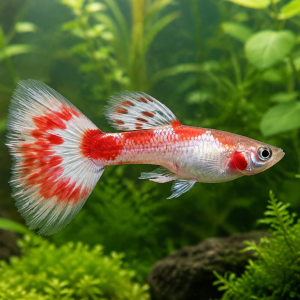
Every guppy is different
Color, size and fin shape vary with strain, age and each individual fish.
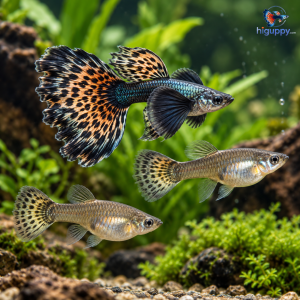
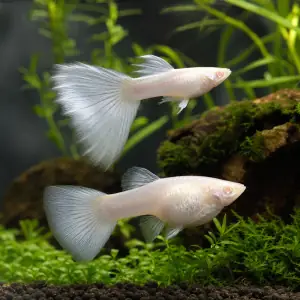
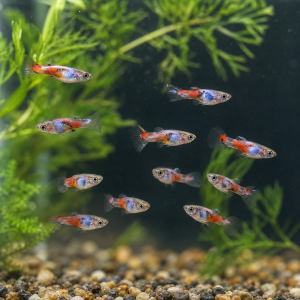
Editorial illustrations for context; they do not depict HiGuppy's exact facility or current fish stock.