The HiGuppy Journal
Best Filter for Guppies: Sponge, HOB or Canister?
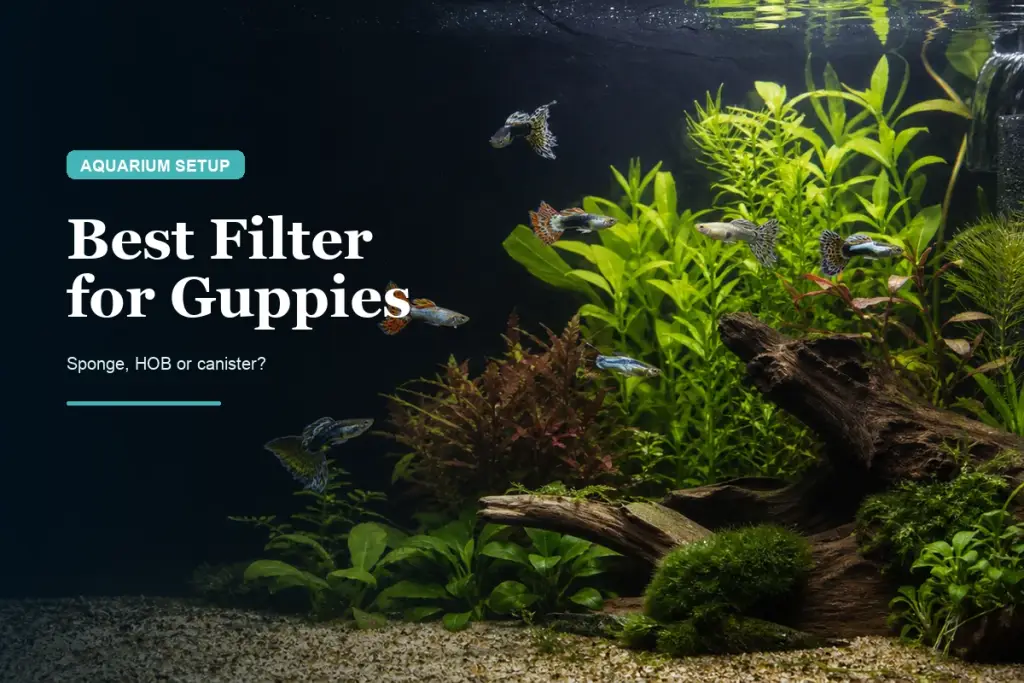
Quick answer: the best filter for guppies is the one that keeps water stable without creating a current that constantly pushes fish or fry around. For many guppy tanks, a properly sized sponge filter or a gentle hang-on-back filter is a practical starting point; choose based on tank volume, fry risk, maintenance, and the real stocking load.
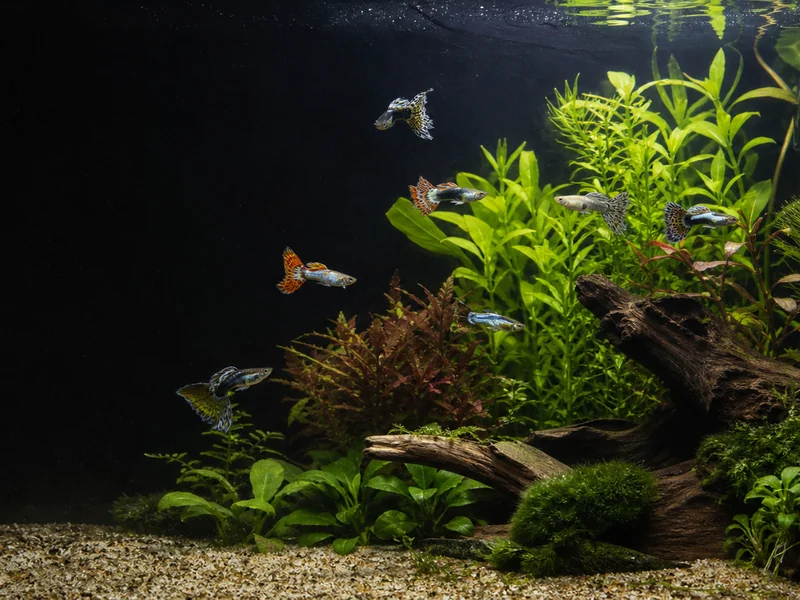
Best filter for guppies: sponge, HOB, or canister?
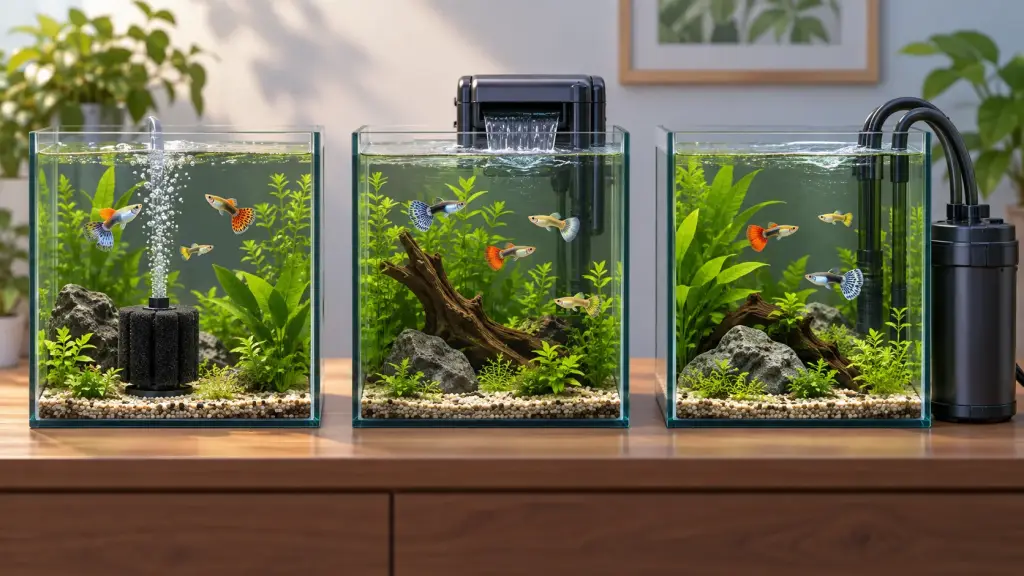
- Sponge filter: gentle flow, useful around fry, and simple to maintain with an air pump.
- Hang-on-back filter: convenient mechanical and biological filtration for many community tanks; protect the intake if small fish or fry are present.
- Canister filter: can suit larger or heavily planted systems, but it is not required merely because the fish are guppies.
There is no single filter that compensates for overstocking or missed maintenance. Filter capacity, water testing, measured feeding, and water changes work together.
Match flow to the fish and the tank
Watch the fish after the filter is running. If guppies are constantly fighting the current, resting in one sheltered spot, or fry are drawn toward an intake, adjust the output or add appropriate protection. Gentle circulation should distribute warmth and oxygen without turning the aquarium into a high-flow stream.
Maintenance without resetting the aquarium
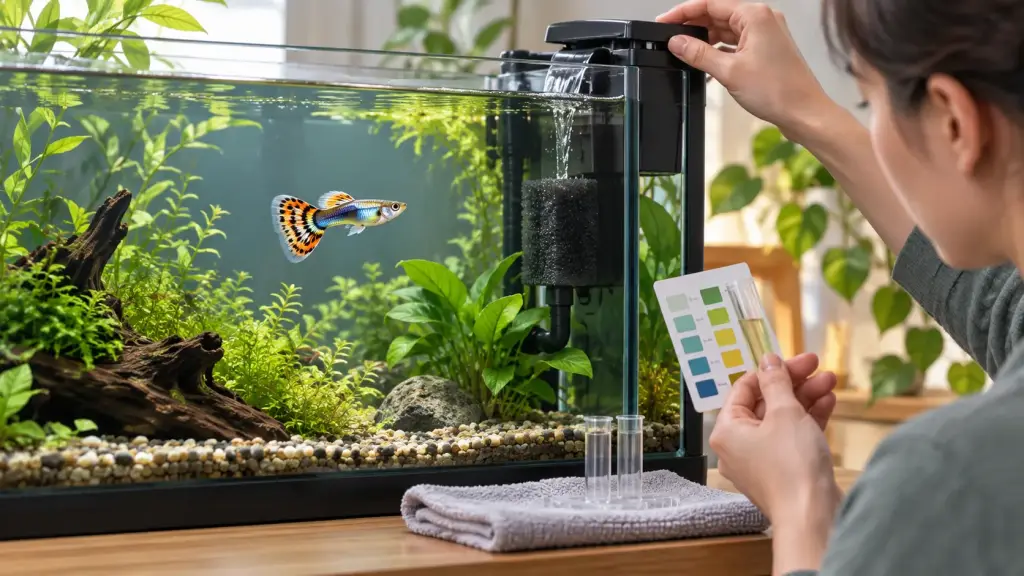
Clean filter media only when flow or accumulated debris shows it is needed, and rinse it gently in removed tank water rather than replacing all biological media at once. Keep notes on water tests and filter maintenance so a change in fish behavior can be investigated with context.
Plan for fry before breeding
A mixed-sex guppy group may produce fry. A sponge filter or protected intake can reduce immediate risk to small fish, but it does not solve future space, water-change, or rehoming needs. Read the Raising Guppy Fry Guide and build capacity before numbers increase.
Pair your filter choice with the Guppy Tank Setup Guide and the current Water Change Schedule.
Set up the rest of the system: Pair filter decisions with the Guppy Tank Setup Guide and Guppy Care Guide. Check current product details separately before choosing equipment.
Choose a filter by function and maintenance, not by a single “best” label
The best filter for a guppy tank is the one that supports stable biological filtration, removes debris appropriately, provides usable circulation and can be maintained consistently. The RSPCA aquarium water-quality guidance explains the importance of biological filtration and preserving beneficial bacteria on filter media. Its general tropical-fish care guidance also reinforces matching equipment and aquarium conditions to the animals being kept.
| Filter type | Why aquarists choose it | What to check |
|---|---|---|
| Sponge filter | Simple biological filtration and gentle intake when correctly sized and powered | Airflow, debris buildup, cleaning routine and whether circulation is adequate across the tank |
| Hang-on-back filter | Convenient mechanical and biological media with visible return flow | Intake protection, adjustable flow if available, media maintenance and whether the return creates excessive current |
| Canister filter | More media capacity and flexible circulation on larger or more demanding systems | Flow placement, intake safety, hose maintenance and whether the system is unnecessarily complex for the tank |
No filter is automatically “fry safe” in every setup. Check openings, suction and actual fish behavior, especially with very small juveniles. Likewise, a high advertised flow rate does not guarantee good circulation everywhere in the aquarium.
Match flow and media to the aquarium you actually maintain
Look beyond the filter name and examine how water moves through the whole tank. A strong return concentrated in one corner can still leave quiet areas where debris settles, while excessive current can make normal swimming and feeding harder for some fish. Position the intake and return so circulation is useful without turning the aquarium into a constant high-flow channel.
Media capacity also matters. Mechanical media catches visible debris, while established biological media supports the bacterial community involved in processing waste. During routine cleaning, avoid replacing every mature piece of biological media at the same time unless there is a specific reason to do so. Instead, maintain flow, remove accumulated debris and monitor water tests after significant maintenance. The right filter is therefore the one that fits the tank size, stocking load and maintenance routine you can sustain consistently.
For the full setup sequence, see How to Set Up a Guppy Tank for Beginners. If fish are repeatedly gathering at the surface or bottom, use the top-or-bottom troubleshooting guide rather than assuming the filter model alone explains the behavior.
Frequently Asked Questions
What is the best filter for a guppy tank?
Choose one that supports stable water and suitable circulation for your tank’s volume, stocking and maintenance routine. No single filter is best for every setup.
Is a sponge filter or hang-on-back filter better?
A sponge filter offers gentle, air-driven flow; a hang-on-back filter may combine mechanical and biological filtration. Fit, current and upkeep matter more than the label.
Do guppies need a canister filter?
Not simply because they are guppies. A canister may suit a larger or more heavily stocked aquarium, but size the system to the actual setup.
How do I protect fry from a filter?
Use an appropriate sponge or intake guard and observe the tank. Protection can reduce intake risk, but it does not guarantee every fry will be safe.
Behind the care guides
Care begins with steady systems
Our guppy guides focus on practical routines: keep water stable, observe fish closely and allow for natural variation.
Care systems
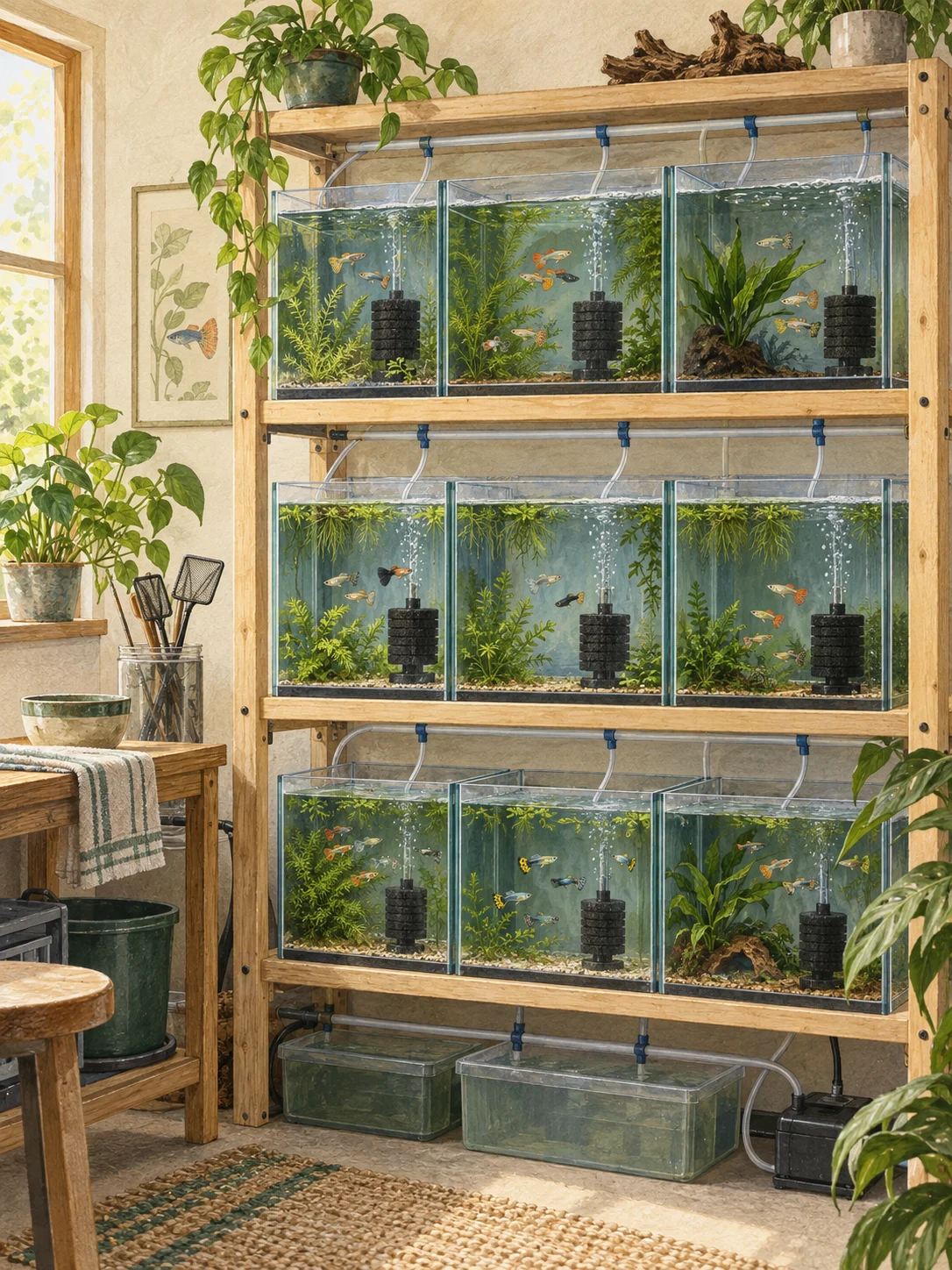
Steady water, thoughtful care
Gentle filtration and regular observation support healthy aquarium routines.
Natural variation
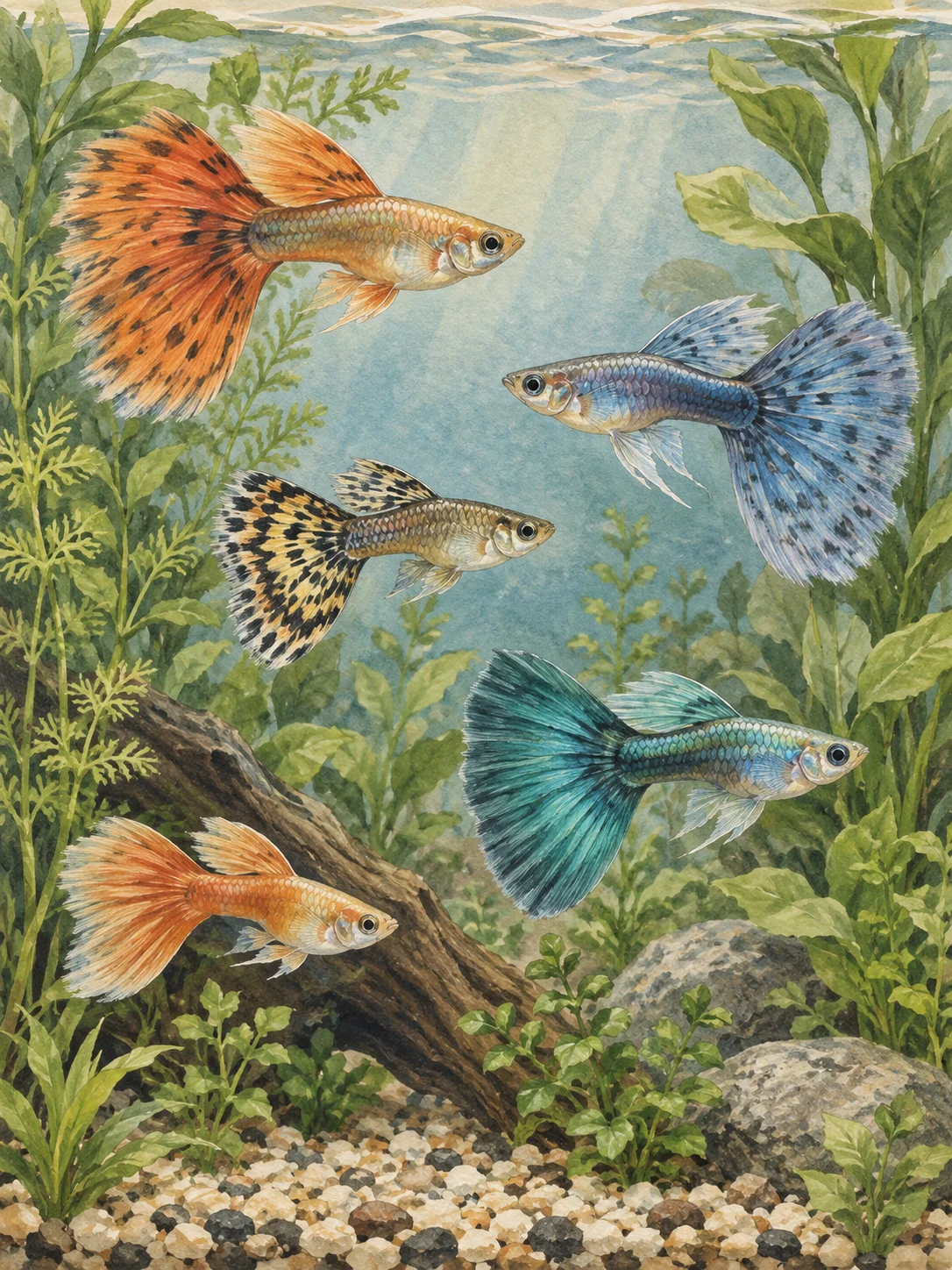
Every guppy is different
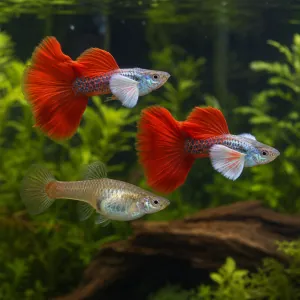
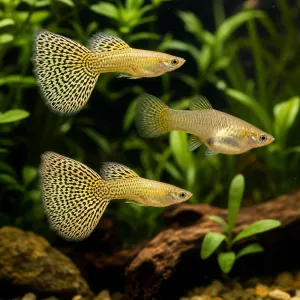
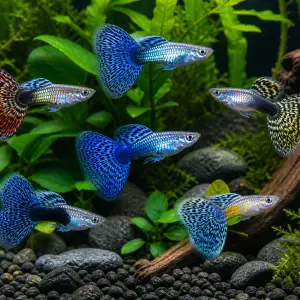
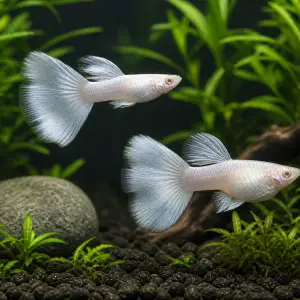
Color, size and fin shape vary with strain, age and each individual fish.
Editorial illustrations for context; they do not depict HiGuppy's exact facility or current fish stock.