The HiGuppy Journal
Why Is My Guppy Lethargic? Causes and What to Do
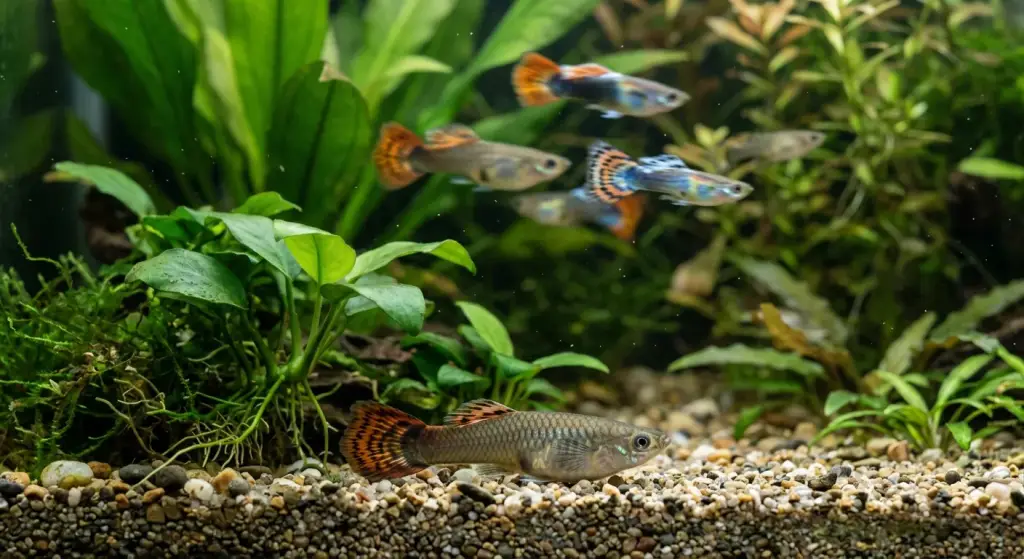
Why is my guppy lethargic? A lethargic guppy is most often reacting to poor water quality, a wrong temperature, stress, or the start of an illness. Test the water first, check the temperature, then look for other symptoms. Our complete guppy care guide covers the baseline conditions guppies need.
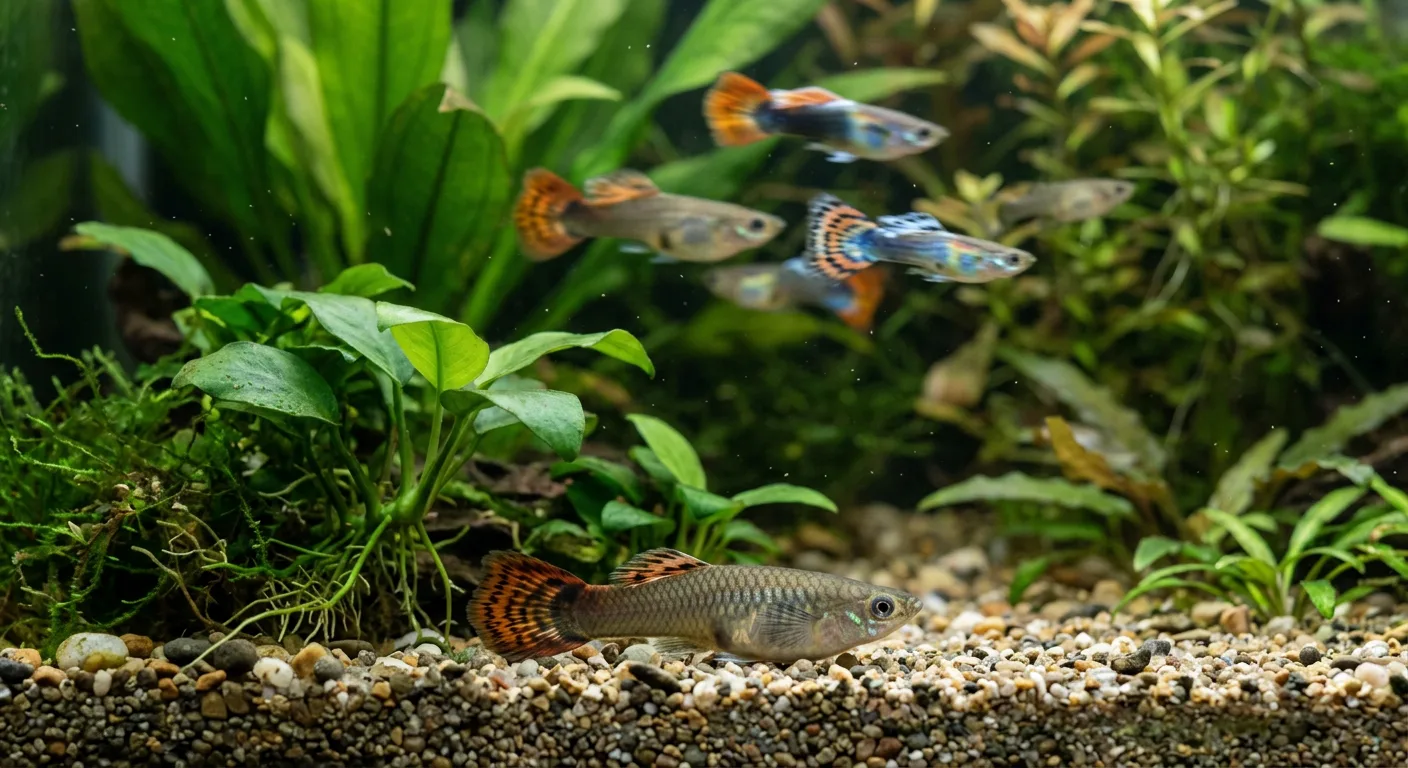
Guppies are normally busy, curious fish. When one sits still, hangs at the bottom, or barely reacts at feeding time, it is telling you something is wrong. The good news is that many cases are fixable if you act early. This guide explains the common causes, how to narrow them down, and what to do next. Treat the advice as general guidance and adjust to your own tank.
Why is my guppy lethargic? The most common causes
When you ask why is my guppy lethargic, the answer usually falls into a few groups. Start with the easiest to check and work down the list.
| Possible cause | What you may see | First step |
|---|---|---|
| Poor water quality | Sitting at the bottom or surface, fast gills | Test water, do a partial change |
| Wrong temperature | Slow movement, hiding | Check thermometer and heater |
| Stress or bullying | Hiding, clamped fins | Review tank mates and cover |
| Illness or parasites | Spots, stringy waste, flicking | Isolate and identify |
| New arrival or shipping | Quiet for the first days | Give calm, stable conditions |
| Pregnancy or age | Slower, heavy swimming | Watch, offer cover and good food |
Check the water first
Water quality is the top suspect. Ammonia and nitrite build up quietly, and guppies often become sluggish before anything else shows. Use a liquid test kit and look at ammonia, nitrite and nitrate. Ammonia and nitrite should read zero in a healthy, cycled tank. If you see a reading, do a partial water change with dechlorinated water and read our guide to ammonia poisoning in guppies.
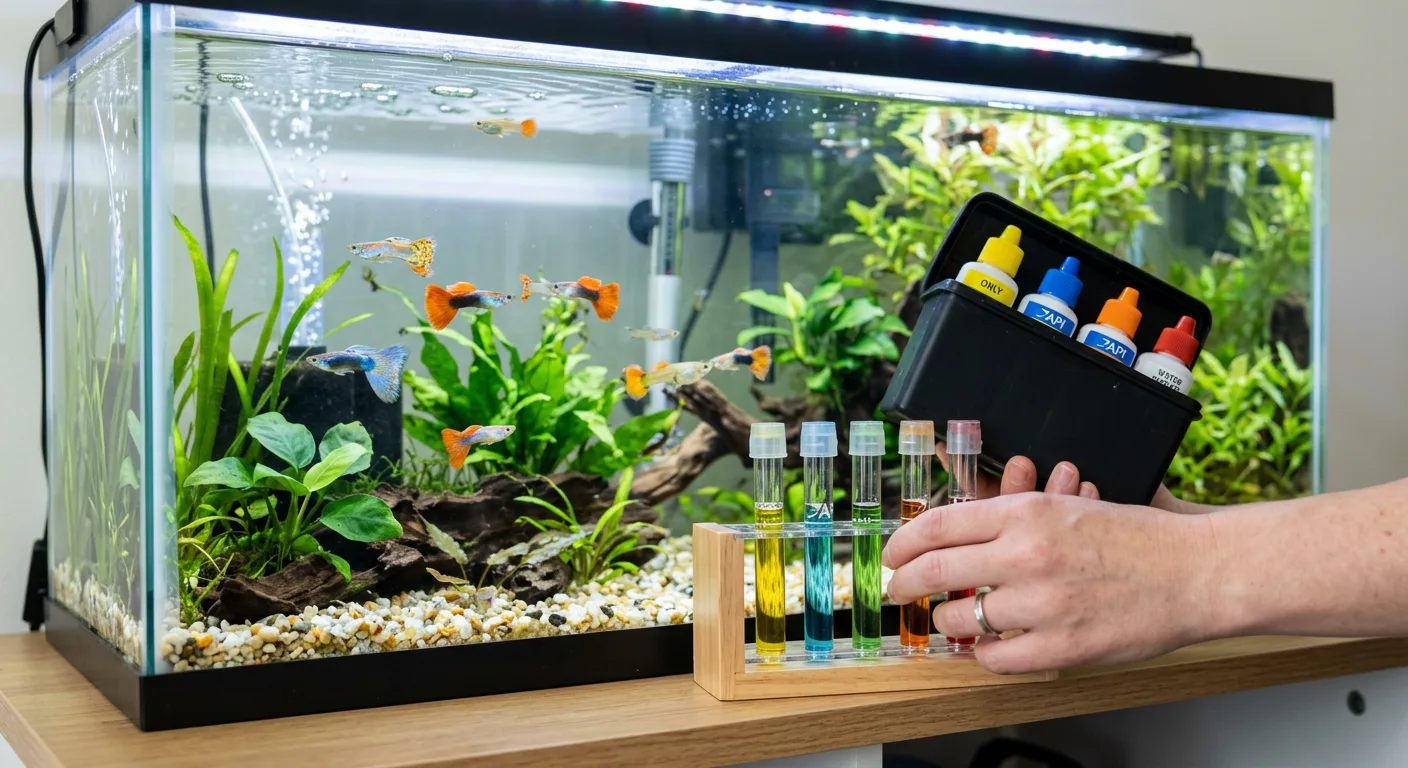
Also check that the filter is running and the tank is not overcrowded. A new tank that has not finished cycling is a frequent reason a guppy is lethargic. If that sounds familiar, follow the guppy tank cycling checklist and keep up with regular care using the guppy tank maintenance schedule.
Temperature and why a lethargic guppy may be too cold
Guppies are tropical fish. Water that is too cool slows their metabolism, so they swim less, eat less and hide. Water that is too warm can also stress them and reduce oxygen. A reliable thermometer is a cheap and useful tool, and a heater helps keep things steady. See the guppy temperature guide for suitable ranges, and our post on whether guppies need a heater.
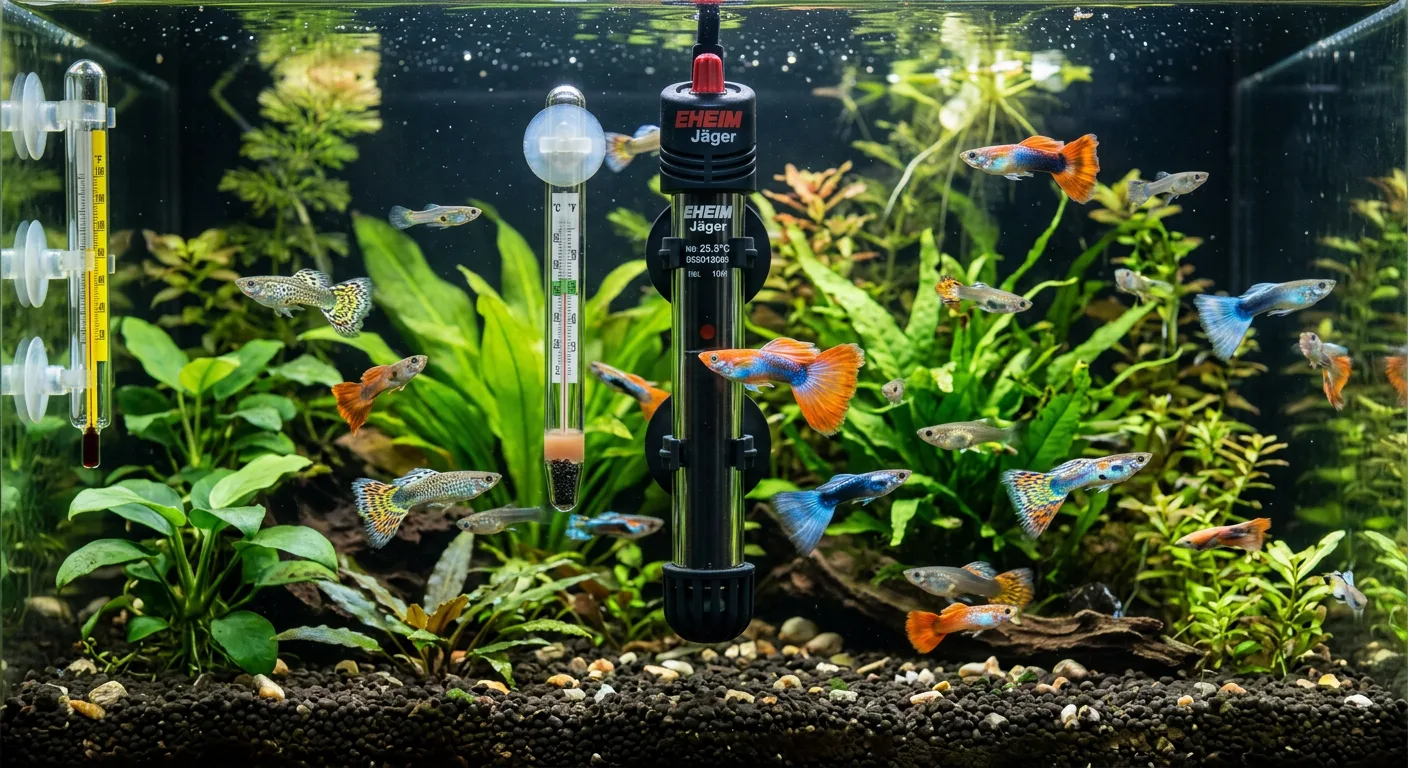
Sudden swings matter as much as the number itself. Cold night drops, a heater that fails, or a big water change with mismatched temperature can all leave fish quiet for a day or two. Change temperature gradually rather than all at once.
Stress, tank mates and a lethargic guppy
If the water and temperature look fine, look at behavior around the tank. A guppy that is chased by tank mates, or by other males, may stay hidden and still. Signs include clamped fins, hiding and torn tails. Read about guppy bullying signs and the signs of stress in guppies. Adding plants, adjusting the male to female balance and removing aggressive fish often calms a tank.
Is it a new fish?
Newly arrived guppies are often quiet for the first days while they adjust to new water and light. Shipping is stressful for any live fish. Keep the lights dim at first, offer small meals and avoid moving decorations around. Our post on the first week with new guppies explains what is normal.
Illness: when a lethargic guppy needs treatment
If a guppy stays lethargic and also shows other symptoms, think about disease. Compare what you see with these common problems:
- Clamped fins: often stress or poor water; see guppy clamped fins.
- White spots: may point to ich; read guppy ich treatment.
- Gasping at the surface: see guppy gasping at surface.
- Refusing food: check why your guppy is not eating.
- Stringy white waste or thin body: may indicate internal parasites.
When you suspect illness, move the fish to a hospital tank if you can, so you can watch it closely and treat without affecting the main tank. Our guide to a hospital tank shows how. Always follow the medication label, and if you are unsure of the cause, change water and observe before adding chemicals.
Food, age and other quiet causes of a lethargic guppy
Diet plays a role too. A guppy fed only one dry food, or fed too much, may swim less and look bloated or thin. A varied diet with quality flakes or micro pellets and the occasional frozen or live treat helps keep energy up. Age matters as well: older guppies slow down naturally, and a fish that has lived a long, healthy life may simply be near the end of it. Finally, remember that bright lights running all day can leave fish tired and jumpy, so a steady day and night rhythm helps. Combine these checks with the water tests above and you will usually find the reason a guppy is lethargic within a day or two.
Step-by-step: what to do for a lethargic guppy
- Test ammonia, nitrite and nitrate, and note the temperature.
- Do a partial water change if anything is off, using dechlorinated water at a similar temperature.
- Watch for other symptoms such as spots, clamped fins or odd waste.
- Check for bullying and add cover with plants.
- Offer a small amount of quality food and remove leftovers; avoid overfeeding.
- Isolate the fish if it worsens or others start to show signs.
How to prevent a lethargic guppy
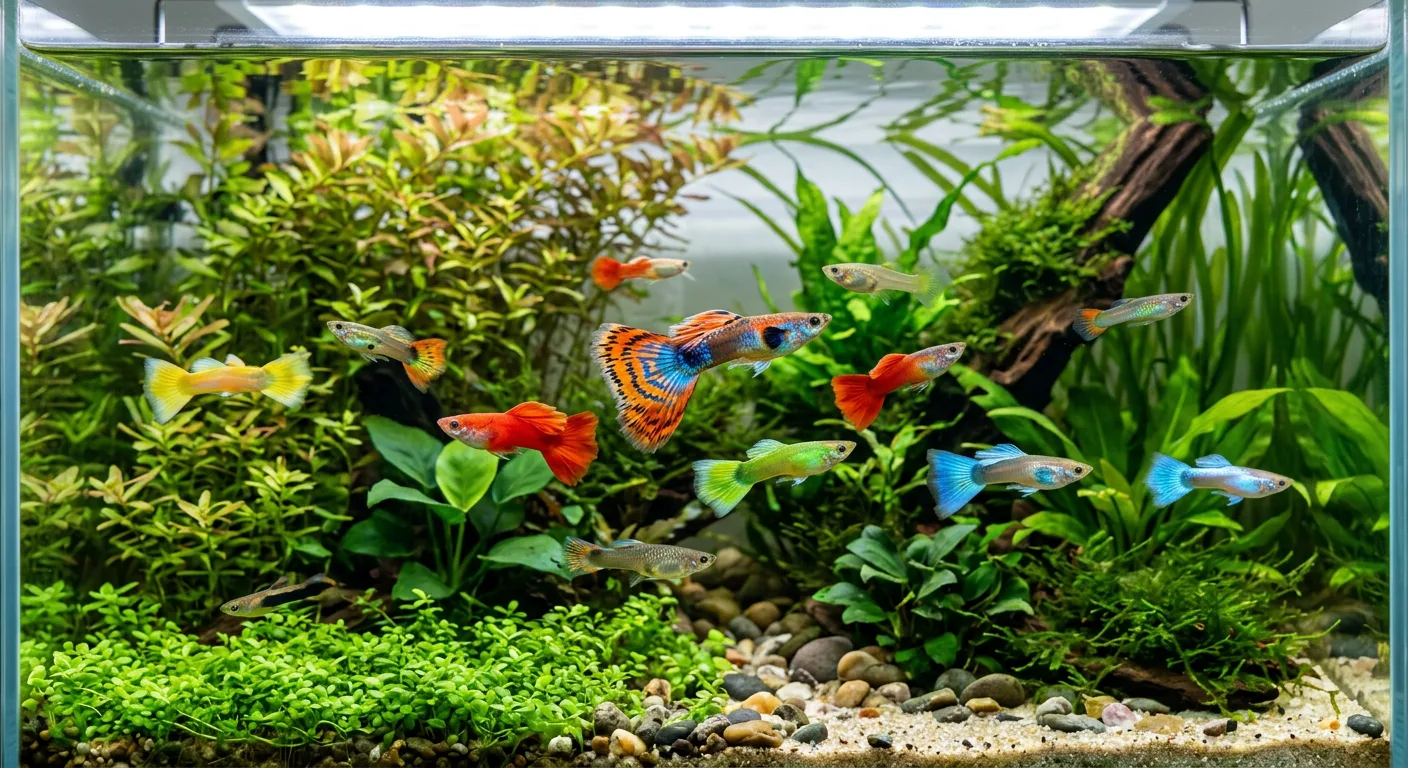
Prevention is simple and mostly routine. Keep water clean with regular partial changes, keep temperature steady, avoid overcrowding, feed small portions, and quarantine new fish before adding them to the main tank. Our guide to quarantining new guppy fish helps you avoid bringing in problems. Healthy stock also helps; if you are buying, see how to choose healthy guppy fish online, and browse our male guppies for active, well-conditioned fish. For general species background, see the Wikipedia page on the guppy.
Finally, learn what normal looks like for your fish. Some guppies are naturally calmer, and females late in pregnancy move slowly. A one-off quiet moment is not an emergency, but a change that lasts more than a day deserves attention. Come back to the guppy care guide any time you want to double-check your routine against the basics.
FAQ
Why is my guppy lethargic and staying at the bottom?
Common reasons are poor water quality, cold water, stress or early illness. Test the water, check the temperature and look for other symptoms before treating.
Can a lethargic guppy recover?
Often yes, especially when the cause is water quality or temperature and you fix it early. Illness takes longer and may need isolation and treatment.
Is it normal for a guppy to be lethargic after shipping?
Some quiet behavior is common for the first days as the fish adjusts. Keep conditions stable, light dim and feeding light, and watch for signs that do not improve.
Should I do a water change for a lethargic guppy?
If tests show ammonia or nitrite, or you cannot test, a partial change with dechlorinated, temperature-matched water is usually a safe first step.
How long should I wait before treating a lethargic guppy?
Fix water and temperature first and observe for a day. If the guppy worsens or shows spots, clamped fins or gasping, move it to a hospital tank and treat the specific problem.
Behind the care guides
Care begins with steady systems
Our guppy guides focus on practical routines: keep water stable, observe fish closely and allow for natural variation.

Care systems
Steady water, thoughtful care
Gentle filtration and regular observation support healthy aquarium routines.

Natural variation
Every guppy is different
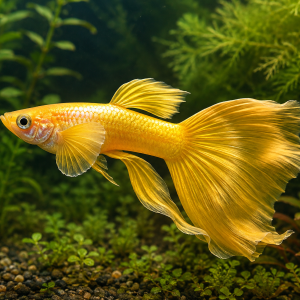
Color, size and fin shape vary with strain, age and each individual fish.
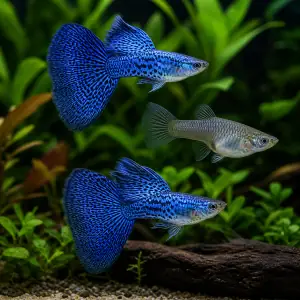
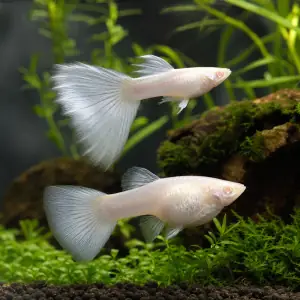
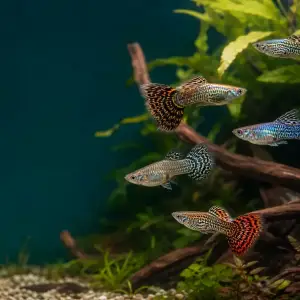
Editorial illustrations for context; they do not depict HiGuppy's exact facility or current fish stock.