The HiGuppy Journal
Can Guppies Live With Snails? Beginner Tank Mate Guide
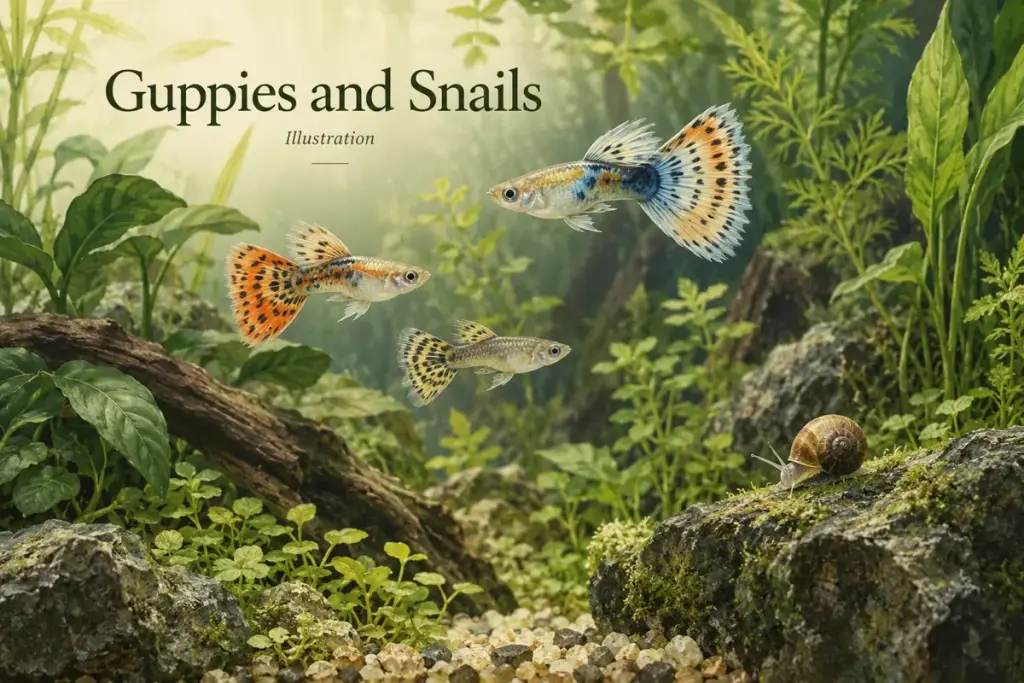
Guppies can usually live with many common freshwater aquarium snails when the tank is stable and the snail species fits the setup. Check the snail’s adult size, shell and water needs, and reproduction habits before adding it. Snails may graze on algae or leftover food, but they do not replace water changes, filtration, or a sensible feeding routine.
The word “snail” covers animals with different needs. Nerite, mystery, ramshorn, bladder, and Malaysian trumpet snails do not behave the same way or reproduce at the same pace. A guppy tank can suit some of them, but the choice should be specific rather than based on the idea that every snail is a harmless cleaner.
Why guppies and snails often share a tank well
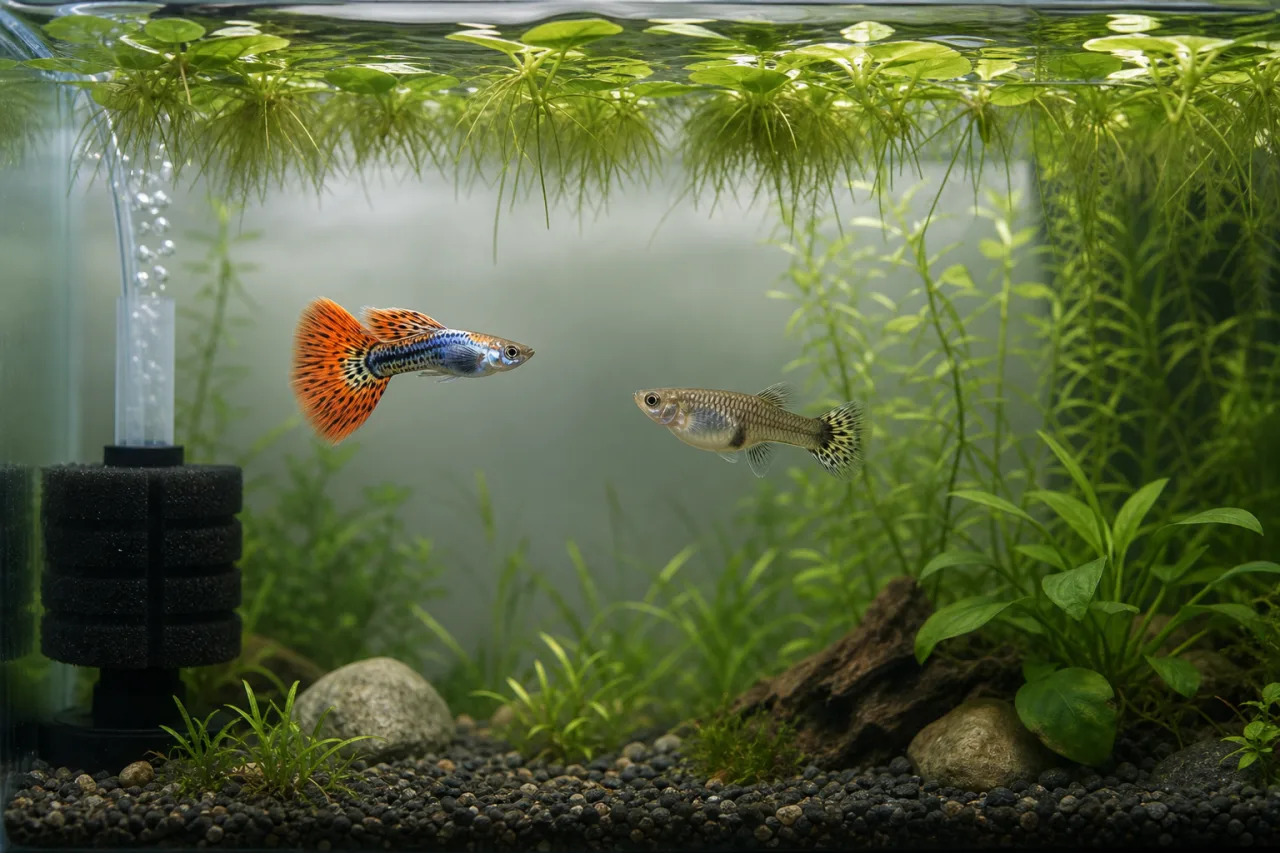
Guppies spend much of their time in the upper and middle water, while many aquarium snails graze on glass, décor, plants, or the substrate. Their routines often overlap less than those of two competing fish species. Aqueon’s snail overview describes many freshwater snails as compatible with a wide range of aquarium fish, while also recommending that keepers research each species before introducing it.
In a community aquarium, peaceful behavior and matching water conditions matter more than the label “beginner-friendly.” Check the guppy group’s behavior, available space, filtration, and water stability. The best tank mates for guppies guide explains the same compatibility checks for fish companions.
Which snails can live with guppies?
Nerite snails are often chosen for grazing algae, but their food supply still matters: a clean tank with very little natural algae may not provide enough. Aquarium Co-Op’s nerite care guide recommends peaceful tank mates that will not eat or harass them. They may leave hard, white egg capsules on glass or décor, but the nerites commonly sold for freshwater aquariums do not establish a growing baby-snail population in ordinary freshwater. This does not mean they stop laying eggs.
Mystery snails are larger and more visible. They need adequate minerals for shell growth and a lid that prevents escape. Aquarium Co-Op’s mystery snail guide describes them as peaceful invertebrates that can live with many community fish whose water preferences overlap. Their size and food needs mean they should be planned as pets, not added automatically as a cleanup tool. They lay egg clutches above the waterline. A female may store sperm, so even one newly purchased mystery snail can lay fertile eggs.
Small hitchhiker snails such as bladder or ramshorn snails may arrive on plants. Some aquarists welcome them; others do not want a population that can increase when extra food is available. Aqueon’s snail guidance says that outbreaks often track uneaten food, dead plant material, or other organic waste. The best response begins with reducing the food supply and removing debris, not adding a predator without checking whether it suits the aquarium.
Quick comparison
| Snail type | What to consider | Beginner check |
|---|---|---|
| Nerite | Algae availability; escape risk; small egg marks | Confirm there is a food source and keep a secure lid. |
| Mystery | Adult size; shell minerals; air space above water | Check water requirements and allow room to reach the surface. |
| Ramshorn or bladder | Can multiply when food is abundant | Inspect new plants and keep feeding measured. |
| Malaysian trumpet | Burrows in substrate and may increase in number | Decide whether a burrowing population fits your maintenance plan. |
Species names can be misused in store listings. If you cannot identify the snail or find its adult care needs, wait before buying. A little research helps avoid an animal that will outgrow the setup or need water conditions your guppy aquarium cannot provide.
Water conditions and tank space for guppies and snails
For an identified mystery snail and a typical guppy community, a stable temperature around 74–78°F (23–26°C) and pH around 7.2–8.0 provide a practical area of overlap. These are planning ranges, not targets to chase with sudden chemical changes. Mystery snails need mineral-rich water; Aquarium Co-Op recommends general hardness above 150 ppm, or about 8 dGH. Check the specific snail species before applying these numbers to a different animal.
Test ammonia and nitrite: both should read 0 ppm in a cycled aquarium. Check general hardness (GH), pH, and nitrate as part of the normal routine. Shell pitting or erosion is a reason to review minerals and water chemistry, not to add calcium or raise pH blindly. Our guppy water parameters guide explains how to interpret the fish’s side of these requirements.
A snail adds to the aquarium’s waste load. Do not use a snail’s small shell as proof that an already crowded tank has spare capacity. A mystery snail needs room to move, regular food, and access to the surface to breathe; leave an air gap under a secure lid. Nerites also need escape-proof openings and an established food supply. Adding several algae eaters to a newly cleaned tank can leave too little food for them.
Check medications before use. Copper-based medications can harm snails, and mystery snails are also sensitive to salt treatments. Do not add aquarium salt as a routine guppy-tank ingredient when keeping snails. If a fish needs treatment, check the label for the exact species and use a suitable separate treatment tank when necessary. Never assume that a product safe for guppies is safe for invertebrates.
How to introduce snails safely
- Identify the species, confirm that local rules allow keeping it, and choose an active snail with an intact shell.
- Observe new arrivals separately when practical and inspect for unwanted hitchhikers. Use separate equipment to avoid carrying water between tanks.
- Follow the seller’s species-specific acclimation instructions and avoid abrupt changes in temperature or water chemistry. Transfer the snail without pouring shipping water into the aquarium.
- Watch the guppies during the first few days. Repeated pecking at a snail’s antennae or foot is a reason to separate the animals.
- Check that the snail can reach appropriate food. Mystery snails may need sinking invertebrate food or small portions of suitable vegetables; nerites can be reluctant to accept prepared foods. Remove uneaten food before it spoils.
Keep snail populations manageable
A sudden increase in small snails usually means there is enough food for them, not that the tank needs a stronger chemical. Feed guppies only what they finish promptly, remove leftovers you can see, and keep up with substrate cleaning and water changes. Our overfeeding guppies guide can help you spot a portion problem.
Inspect live plants, ornaments, and hardscape before they enter the aquarium. A few tiny snails or eggs can be difficult to notice. If a population grows beyond what you want, remove visible snails by hand or use a trap designed for aquarium use. Recheck the feeding and maintenance routine so the same conditions do not keep supporting new growth.
Avoid adding a snail-eating fish as a quick fix. Predatory species may need a larger aquarium, different water conditions, or tank mates that do not include guppies. Chemical products can also harm other invertebrates or destabilize a tank if many snails die at once. Use species research and gradual, manual control first.
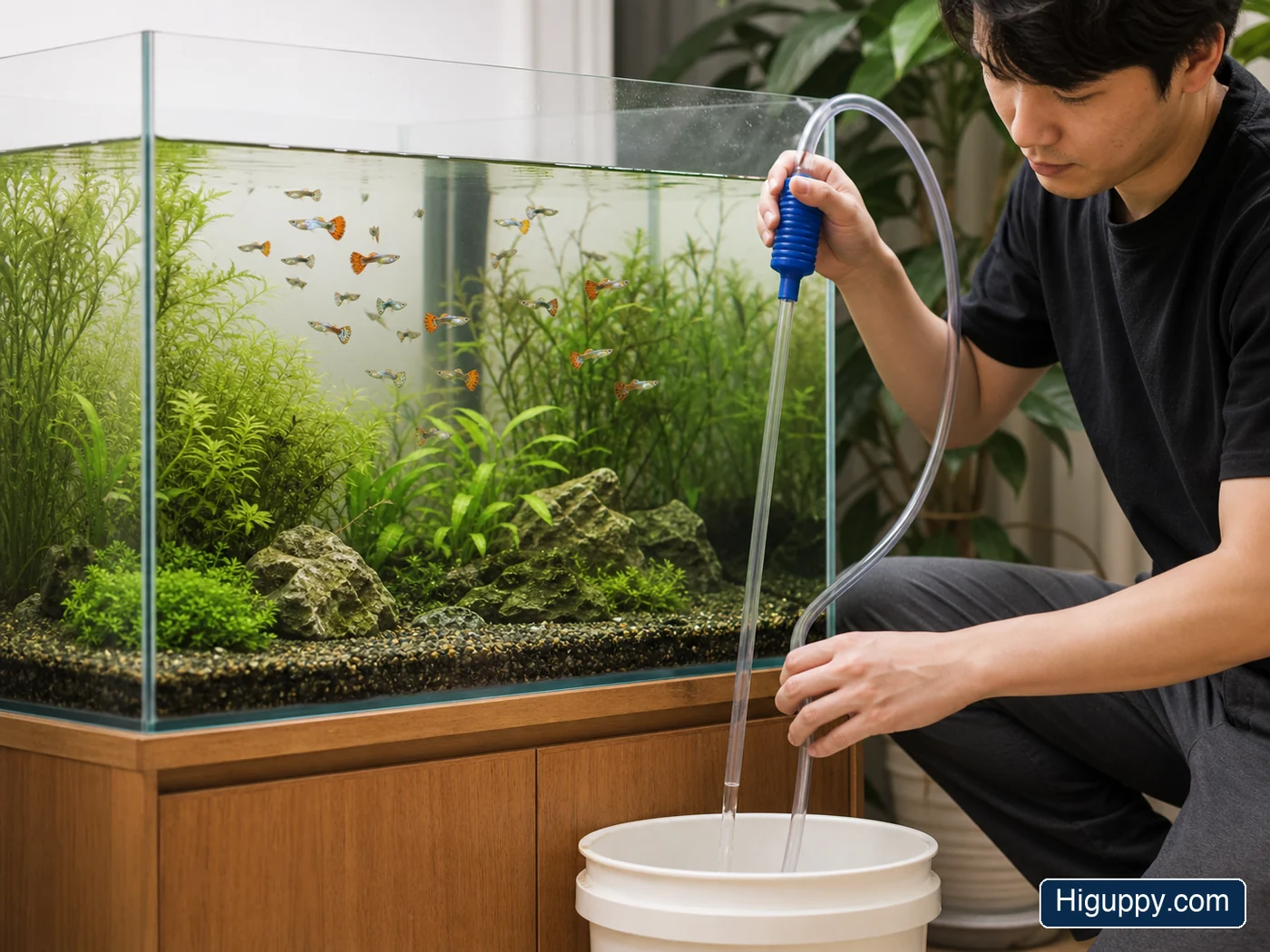
Snails help with leftovers; they do not clean the aquarium
Most snails eat only some of the algae or organic matter they encounter. They also produce waste, need oxygen and suitable water, and can become unhealthy if their food supply is inadequate. A snail cannot remove dissolved waste or replace a cycled filter. The aquarium still needs regular checks, maintenance, and an appropriate stocking level.
If algae is the reason you want a snail, look at light exposure and feeding too. A snail may graze certain surfaces, but it will not correct an aquarium with long direct sunlight, excess nutrients, or inconsistent care. Use our guppy water-change guide for a more complete prevention routine.
Before introducing any snail, check whether the aquarium is mature enough to provide food, whether the filter is working, and whether the water suits both animals. For a broader baseline, see the complete guppy care guide. If the snail’s needs do not fit, choose a different species or keep the guppy tank as it is.
A simple pre-addition checklist
- Identify the snail species and its expected adult size.
- Check water and mineral needs against the existing aquarium.
- Confirm the tank has room, a secure lid if needed, and a food source.
- Inspect plants and décor for hitchhikers before adding them.
- Plan to keep feeding, filtration, testing, and water changes on schedule.
Frequently Asked Questions
Will guppies eat snails?
Guppies may peck at very small snails or exposed tissue, and behavior varies with the fish and snail species. Most adult aquarium snails are too large for a guppy to swallow, but observe the first days after introduction. If the snail is repeatedly harassed or cannot feed, separate it and reassess the pairing.
Do aquarium snails clean guppy tanks?
They can graze on some algae and eat some leftover food or decaying material. They do not remove every kind of waste and cannot replace a filter, water changes, or manual cleaning.
Why are there suddenly so many snails?
Small snail populations can grow when uneaten food and organic debris are plentiful. Reduce excess feeding, remove visible leftovers, and review routine maintenance before considering any other control.
Which snail is best for a guppy tank?
There is no single best choice for every setup. Compare the species’ adult size, food supply, water needs, and reproduction habits with your aquarium. Nerites and mystery snails have different care requirements, so identify the animal before buying.
Can snails live with guppy fry?
Some aquarists keep snails in fry-rearing tanks, but results depend on species and tank conditions. Snails do not protect fry from adult fish, and they can compete for food that reaches the bottom. Monitor feeding and keep the fry-care plan separate.
Behind the care guides
Care begins with steady systems
Our guppy guides focus on practical routines: keep water stable, observe fish closely and allow for natural variation.

Care systems
Steady water, thoughtful care
Gentle filtration and regular observation support healthy aquarium routines.

Natural variation
Every guppy is different
Color, size and fin shape vary with strain, age and each individual fish.
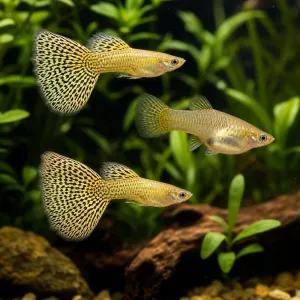
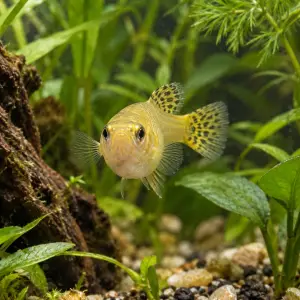
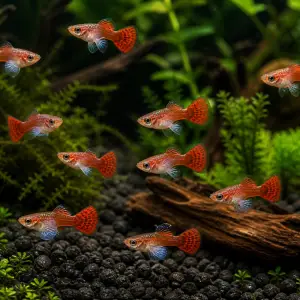
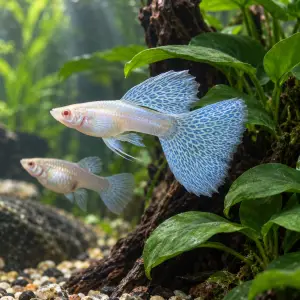
Editorial illustrations for context; they do not depict HiGuppy's exact facility or current fish stock.