The HiGuppy Journal
How Often Do Guppies Give Birth? Cycle, Timing and Tips
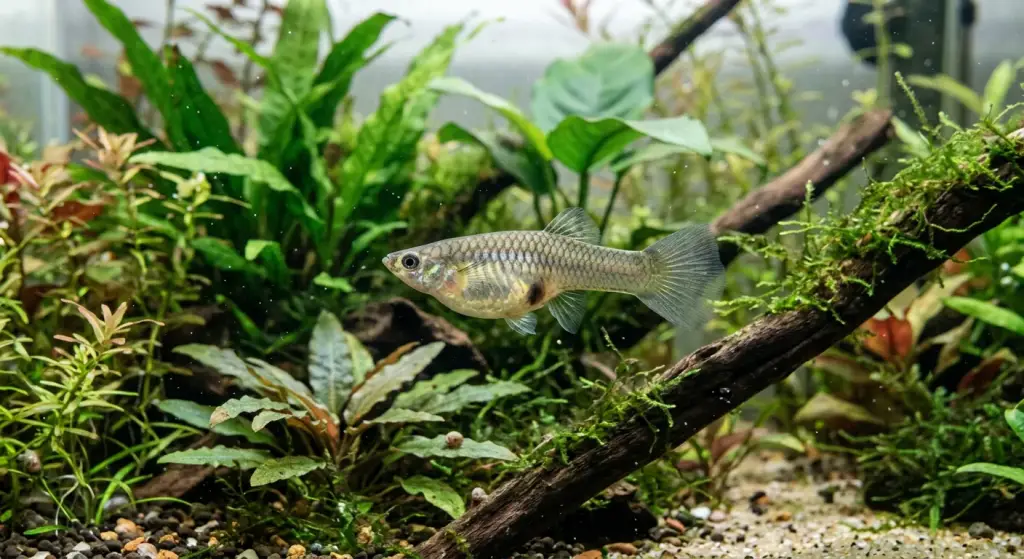
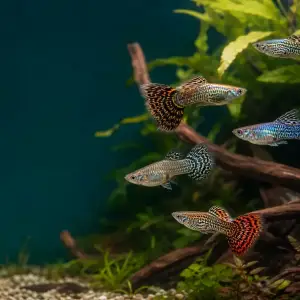
How often do guppies give birth? A healthy female guppy can give birth roughly every four to six weeks, because pregnancy usually lasts about three to five weeks and she can get pregnant again soon after. Our guppy care guide covers the setup that keeps her healthy through repeated broods.
If you are wondering how often do guppies give birth in a home tank, the real answer depends on temperature, age, diet and stress. This guide explains the cycle, why females can seem to be always pregnant, and how to manage it.
How often do guppies give birth? The quick answer
Guppies are livebearers, so the female holds the eggs inside her and gives birth to free-swimming fry. The gap between broods is mostly the length of one pregnancy. Warmer water in the comfortable range tends to speed things up, and cooler water tends to slow them down.
When keepers ask how often do guppies give birth, they usually see a new batch about once a month. The table gives typical ranges. These are approximate and vary from fish to fish.
| Factor | Typical range | Effect on birth timing |
|---|---|---|
| Pregnancy length | About 3 to 5 weeks | Sets the minimum gap between broods |
| Time between broods | About 4 to 6 weeks | What most keepers see in a stable tank |
| Warmer stable water | Upper comfort range | Often a shorter pregnancy |
| Cooler water or stress | Lower range | Often a longer pregnancy and smaller broods |
| Young or old female | Varies | First broods and late broods are often smaller |
Why female guppies seem to be always pregnant
Female guppies can store sperm after a single mating. That means one encounter can fertilize several broods over the following months, even if you remove the male. This is why a female bought from a mixed tank can surprise you with fry weeks later.
Males also chase females constantly. If you keep more than one or two males per female, the stress can add up. Our post on why guppies chase each other explains how to calm the tank.
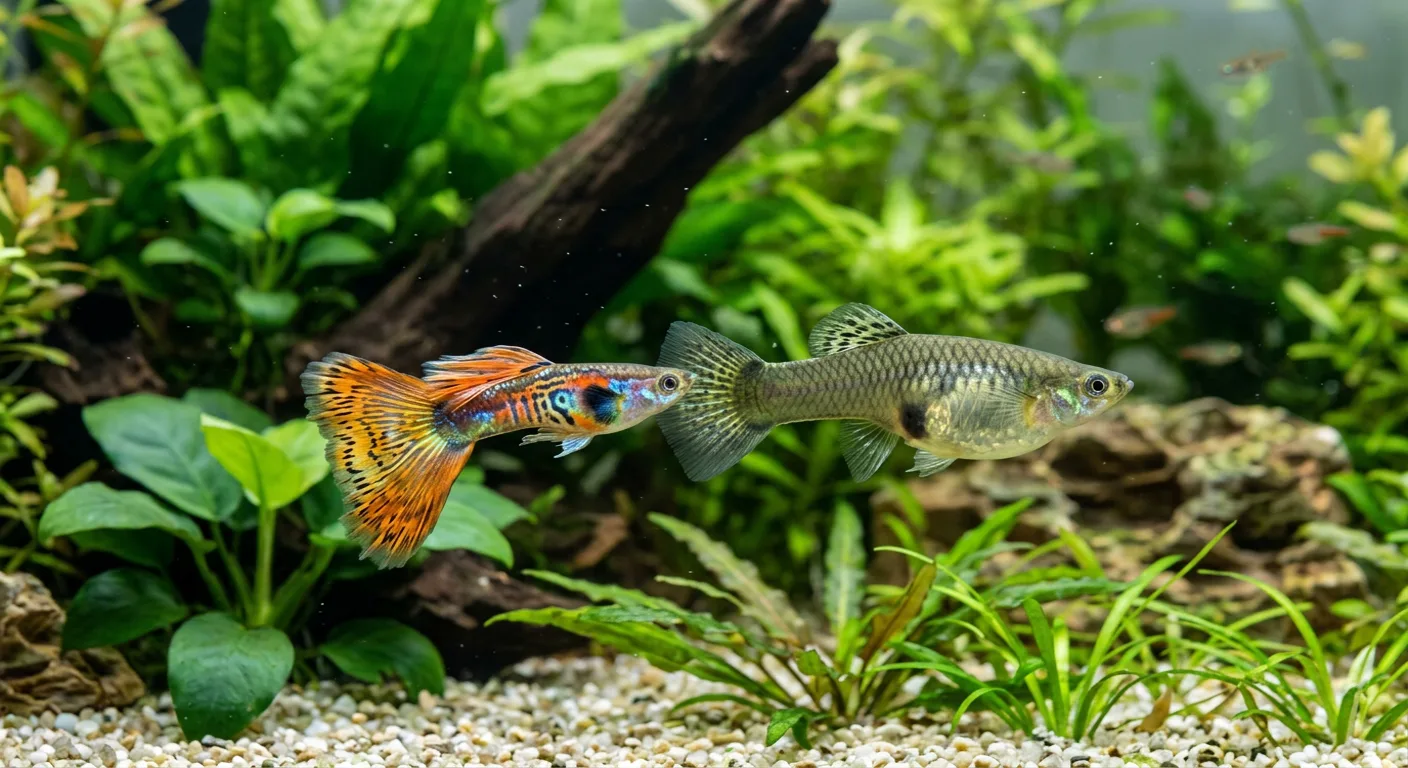
The guppy birth cycle step by step
1. Mating and fertilization
The male approaches with a courtship display and transfers sperm. Fertilization happens inside the female, and the eggs develop in her body.
2. Pregnancy
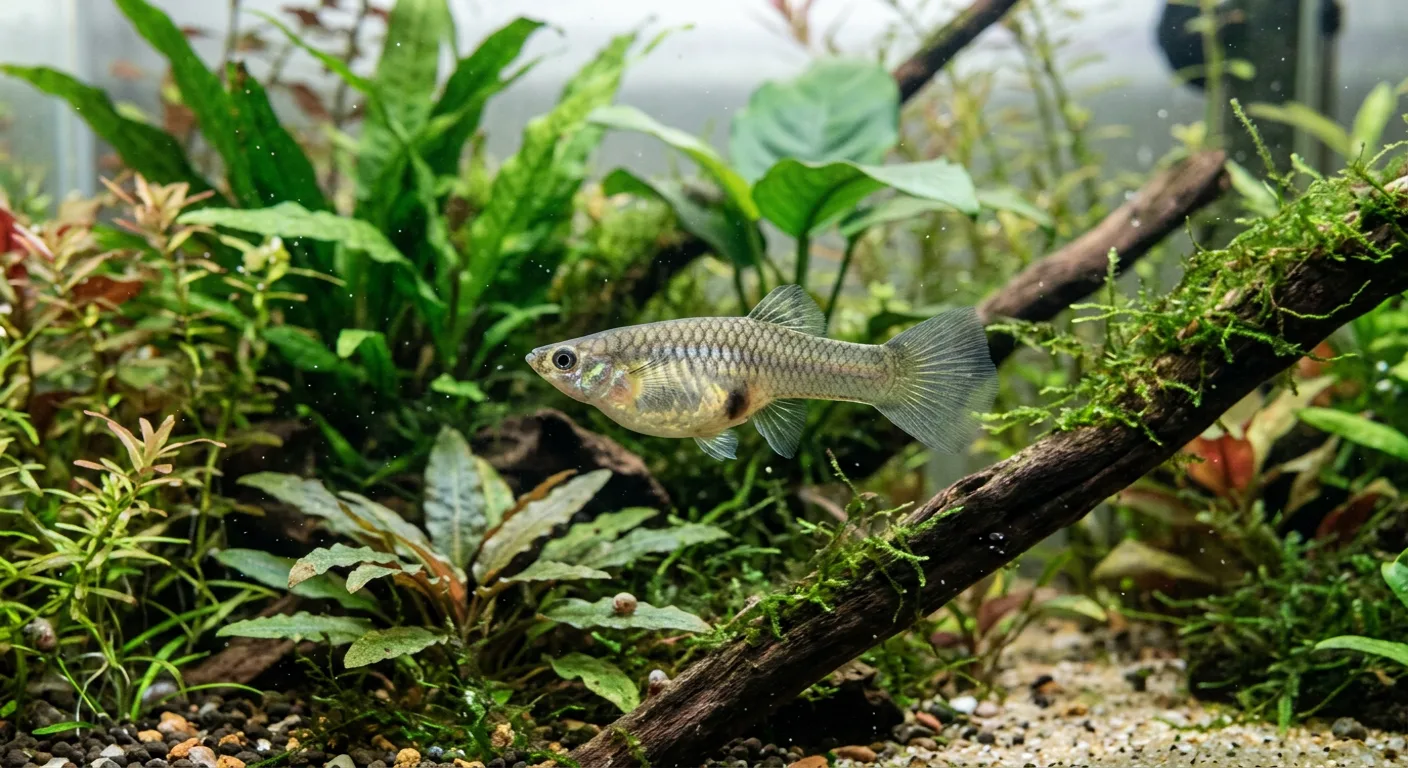
Over a few weeks her belly grows and the dark gravid spot near the vent gets bigger. Our page on guppy pregnancy stages and gestation shows each stage in detail, and the guide to a pregnant or fat guppy helps you tell the two apart.
3. Birth
The female releases fry over several hours, sometimes up to a day. Fry swim right away and look for cover. Brood size varies a lot, as explained in how many babies guppies have.
4. Recovery and the next brood
She can become pregnant again very soon, so the cycle may restart without any break. Good food and clean water help her recover between broods.
What changes how often guppies give birth
Temperature
Stable, comfortable warmth keeps pregnancy moving at a normal pace. Big swings stress the fish. See our guppy temperature guide for the range to aim for.
Diet and condition
A well-fed female with varied food usually carries bigger and healthier broods. Poorly fed fish may have smaller broods or longer gaps.
Stress and water quality
Poor water, harassment from males or a crowded tank can delay birth or lead to weak fry. Check the numbers against the guppy water parameters guide.
Age
Young females tend to have smaller first broods, and older females slow down. Most keepers see the best broods in the middle of her breeding life.
Signs your guppy is close to giving birth
Knowing how often do guppies give birth helps you time your checks. In the last few days, the female usually looks boxy and rounded, and her gravid spot turns dark. She may hide, hang near the surface or breathe faster, and she often refuses food shortly before labor.
- A square, full belly when seen from above.
- A dark, enlarged gravid spot.
- Hiding in plants or staying in a corner.
- Less interest in food, or restless pacing.
Try not to chase or net her at this stage. Moving a stressed female can trigger an early or incomplete birth, so any move should be gentle and calm.
What to do right after the birth
Guppy parents do not guard fry, and adults will often eat newborns they can catch. Dense cover is the easiest protection. Our guide on whether guppies eat their babies explains the risk and how to lower it.
Feed the mother a good meal once she is calm, since birth takes energy. Keep the water clean with small, frequent water changes rather than one large change. Fry are sensitive to sudden shifts in temperature and water chemistry.
When to move the fry
Many keepers wait until the fry are large enough that adults cannot swallow them. Our post on when guppy fry can join adults gives a practical guide.
Common myths about guppy birth timing
One myth says guppies give birth on an exact day. In reality, the date moves with temperature and the individual fish, so treat any number as a range. Another myth says a female needs a male present to have more broods, but stored sperm often covers several of them.
A third myth is that a thin female cannot be pregnant. Some fish carry small broods and stay slim until late. Watch the gravid spot and the shape of her belly instead of guessing from weight alone. Keeping a simple note of dates in a notebook can also show you the real rhythm of your own fish over a few months.
How to manage frequent births in your tank
Constant breeding can wear a female down and quickly overpopulate a tank. These steps help you stay in control.
- Keep a ratio of about two or three females per male so no single female takes all the attention.
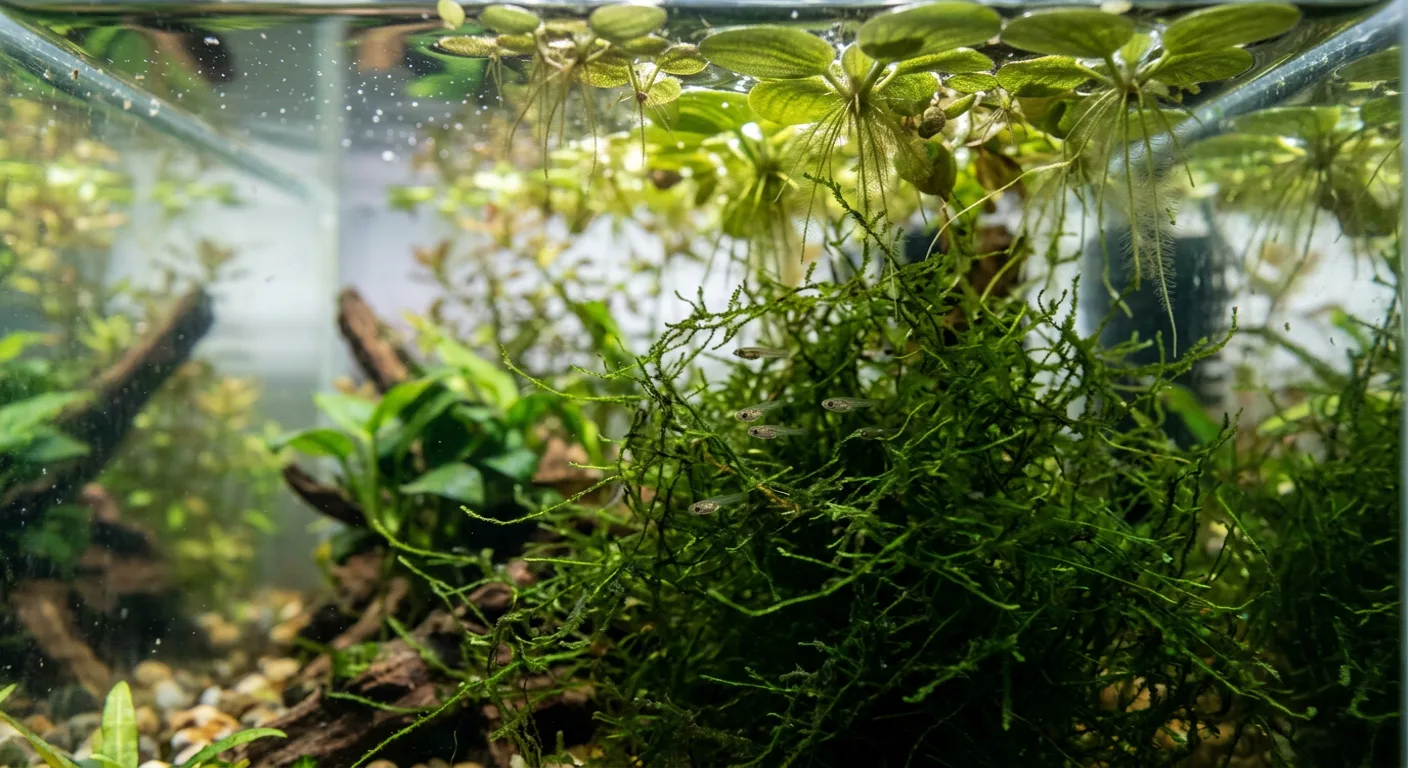
- Add dense plants such as java moss so fry can hide.
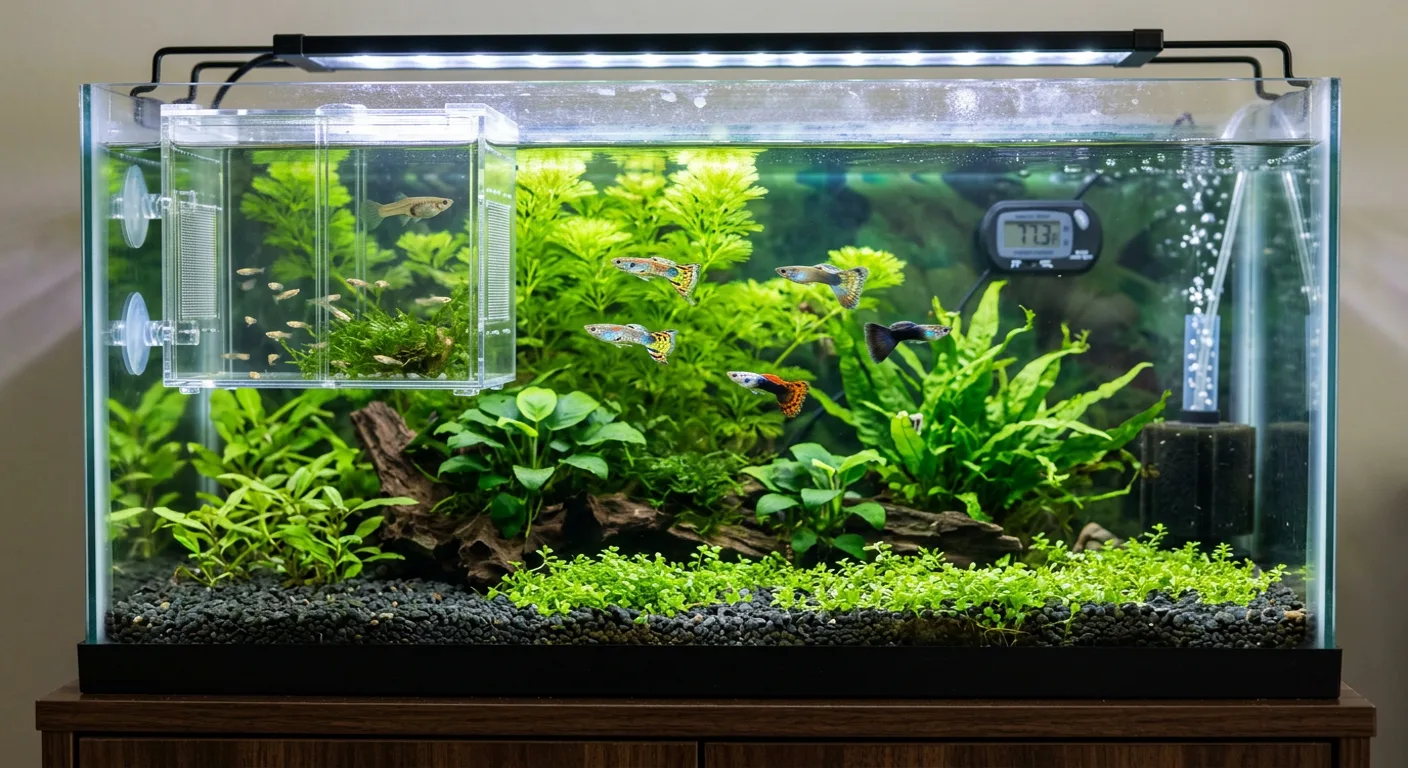
- Separate pregnant females into a calm setup if you want to save every fry, using our guppy breeding tank setup.
- Feed fry small meals often, following the guppy fry feeding schedule.
- Plan where extra fry will go, or keep only one sex if you do not want babies.
Choosing guppies if you want steady broods
Healthy, well-grown breeders are the best start. If you are planning a breeding project, browse our breeder trios, which pair one male with two females. For general background on the species, see Wikipedia’s guppy page, then return to our complete guppy care resource for tank routines.
FAQ
How often do guppies give birth in a year?
A healthy female can give birth many times a year, roughly every four to six weeks in a stable warm tank. In practice the number is lower when she is stressed, underfed or older.
How long are guppies pregnant?
Pregnancy usually lasts about three to five weeks. Warmer stable water tends to shorten it and cooler water tends to lengthen it.
Can a female guppy have babies without a male?
Yes, if she mated earlier. Females can store sperm and use it for several broods, so fry can appear weeks or months after the male was removed.
Do guppies have a rest period between broods?
Not a fixed one. A female can become pregnant again soon after giving birth, so good food and clean water matter for her recovery.
How can I slow down guppy breeding?
Keep only one sex, or use a single male with several females and rehome extra fry. Fewer males also means less stress for the females.
Behind the care guides
Care begins with steady systems
Our guppy guides focus on practical routines: keep water stable, observe fish closely and allow for natural variation.

Care systems
Steady water, thoughtful care
Gentle filtration and regular observation support healthy aquarium routines.

Natural variation
Every guppy is different
Color, size and fin shape vary with strain, age and each individual fish.
Editorial illustrations for context; they do not depict HiGuppy's exact facility or current fish stock.