The HiGuppy Journal
Bloated Guppy: Pregnancy, Overfeeding or Health Problem?
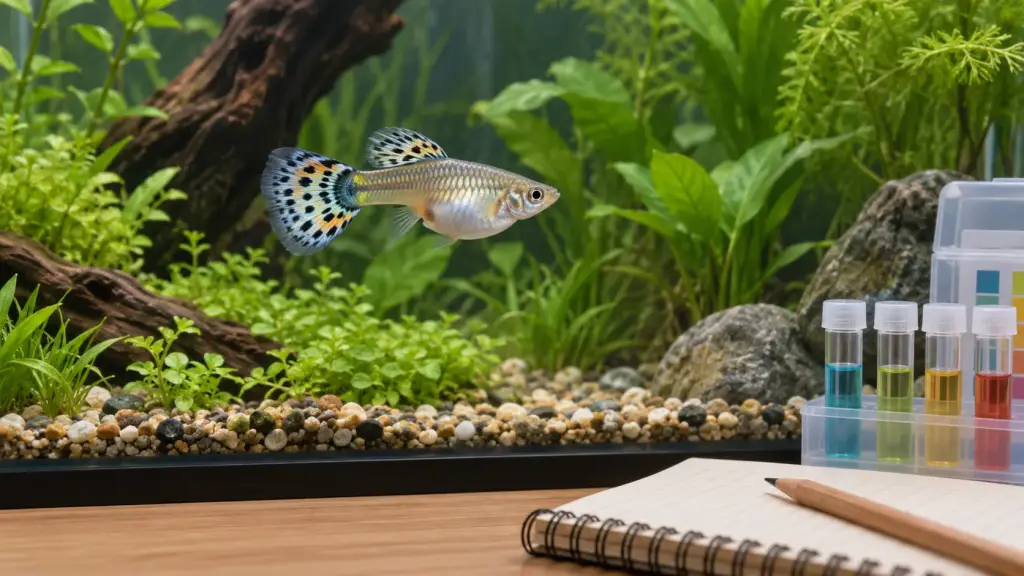
A bloated guppy can have several very different explanations. A female may be pregnant, a fish may have eaten too much, the digestive tract may be irritated, or swelling may be part of a more serious illness. The safest approach is to look at sex, how quickly the abdomen changed, appetite, swimming, scales, breathing, feces, and water quality together.
Use this guide to record the pattern and recognize when to seek help. A photograph or a round abdomen alone cannot confirm pregnancy, constipation, parasites or infection.
Quick Answer
A gradually enlarging female may be pregnant, and a full abdomen after a large meal may be temporary. Swelling alone cannot distinguish these possibilities from illness. Compare sex, timing, appetite, posture, scales and water results. Raised scales, rapid breathing, loss of balance, severe lethargy, refusal to eat or rapid worsening need prompt attention and qualified evaluation.
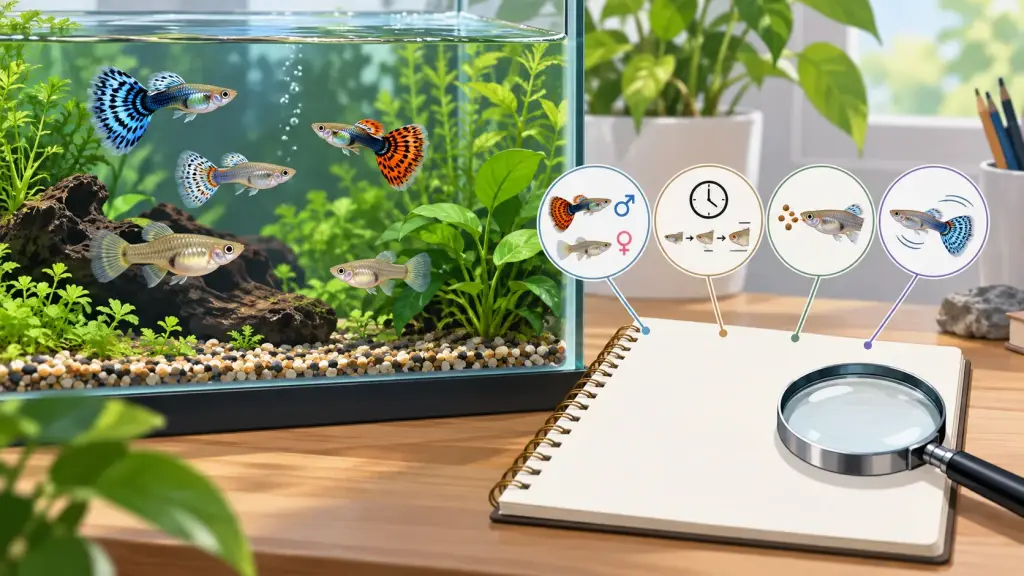
Pregnant, Overfed or Unwell? Compare Several Clues
| What to check | How to read it cautiously |
|---|---|
| Sex and timing | Pregnancy is possible only in females. Gradual enlargement with breeding context may fit, but sex and timeline alone do not confirm the cause. |
| Recent feeding and appetite | Fullness after a large meal may be temporary. Note portion, leftovers and whether the shape changes; appetite alone cannot confirm pregnancy. A new refusal to eat or falling appetite is a warning sign. |
| Swimming and posture | Normal, controlled swimming is reassuring but cannot rule out illness. Weakness, tilting, loss of balance, or uncontrolled floating or sinking needs closer attention. |
| Scales and breathing | Raised “pinecone” scales, rapid breathing, ulcers, severe lethargy or fast decline are warning signs, but do not identify a cause by themselves. |
| Water and tank history | Test ammonia and nitrite; verify temperature and oxygen; review stocking, feeding and recent maintenance. If signs are severe, persistent or worsening, seek an aquatic veterinarian or fish-health professional. |
1. Pregnancy
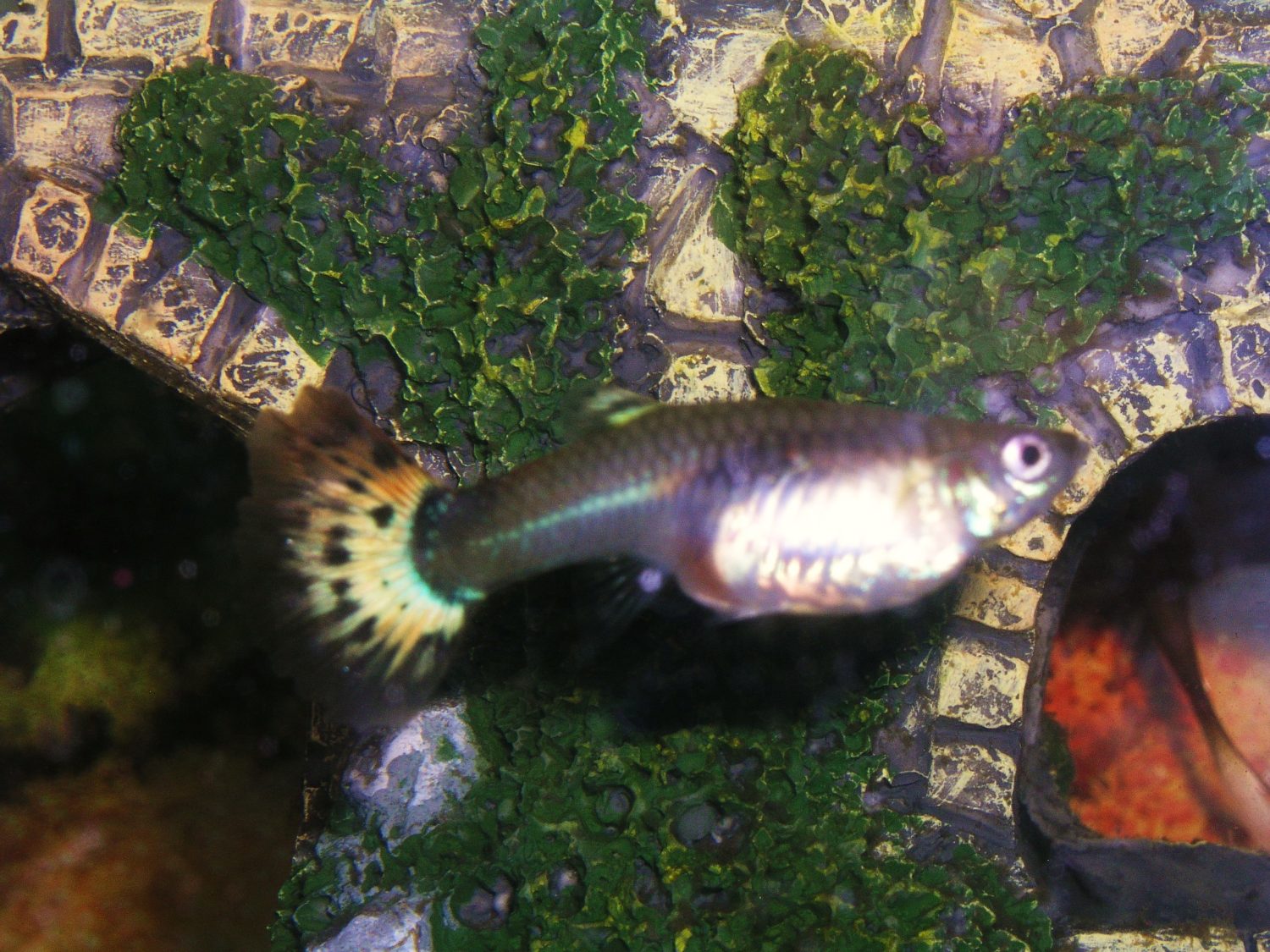
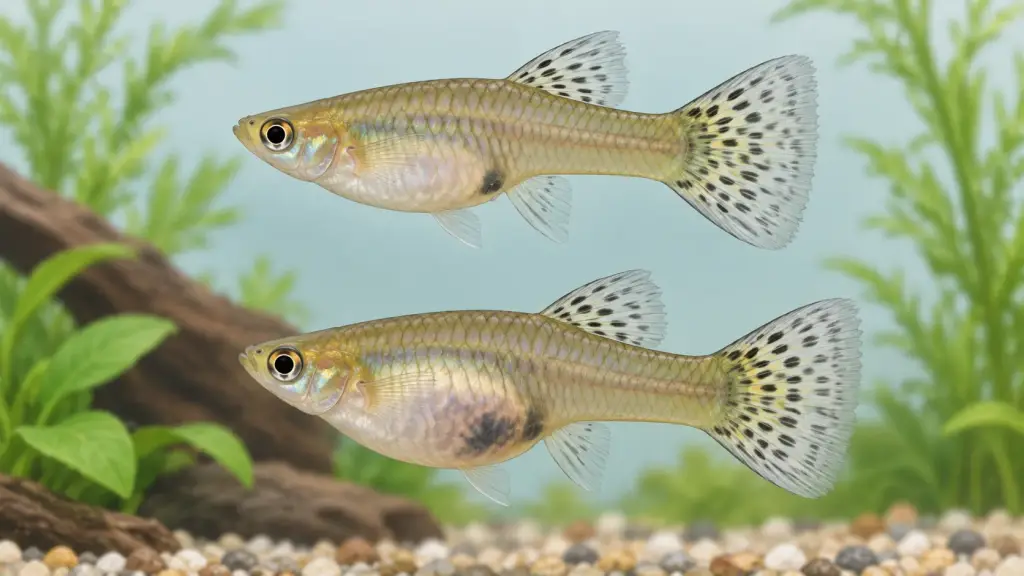
Female guppies naturally become rounder as fry develop. Near the end of gestation, the abdomen may appear more squared than simply balloon-like. A gravid spot can be visible in many females, though its appearance varies by strain and body color.
Pregnancy is more plausible when the change is gradual and the fish remains otherwise normal. Use Male vs Female Guppy if sex is uncertain, then compare the fish with our Guppy Pregnancy Stages and Gestation Guide.
Do not move a healthy pregnant female into a tiny container simply because the belly is large. Stable water, low stress, cover for fry, and a planned breeding setup are usually more useful.
2. Overfeeding or Temporary Digestive Distension
Guppies are enthusiastic feeders and will often continue begging after they have eaten enough. A noticeably fuller abdomen soon after an oversized meal may be dietary rather than disease.
Instead of repeatedly fasting or adding remedies automatically, return to small measured portions and watch whether the abdomen normalizes while behavior remains normal. Remove uneaten food, because excess food also increases organic waste and can worsen water quality.
See How Often to Feed Guppies and Best Food for Guppies for routine feeding.
3. Water Quality and Environmental Stress
A swollen fish can still have a tank problem unrelated to the abdomen itself. Ammonia, nitrite, unstable temperature, and low oxygen can reduce appetite and weaken fish, making other disease signs worse.
Test the tank before assuming a specific diagnosis. Start with the Guppy Water Parameters Guide and, if ammonia is detectable, review Ammonia Poisoning in Guppies.
4. Dropsy or Systemic Disease
“Dropsy” describes abnormal fluid accumulation and swelling; it is not one single disease. One of the most important warning signs is raised scales that create a pinecone appearance, especially when combined with lethargy, poor appetite, abnormal eyes, or rapid decline.
If scales are raised or the fish is clearly deteriorating, seek qualified help promptly and use the Guppy Dropsy guide for the signs to record. Flat scales do not exclude an internal problem.
5. Internal Parasites or Other Internal Problems
Bloating or white feces alone cannot identify a parasite. Record changes in weight, appetite and feces, and photograph any visible material near the vent without pulling or handling it. A fish-health professional may need an examination or laboratory tests to distinguish parasites from other internal problems.
See Internal Parasites in Guppies for a symptom-based comparison. If feces are the main concern, use Guppy White Stringy Poop.
6. Swim Bladder or Buoyancy Problems
If the swollen fish also floats uncontrollably, sinks, rolls, or cannot maintain a normal position, abnormal buoyancy needs attention alongside the swelling. Read Guppy Swim Bladder Disorder and still check water quality first. If the main change is where the fish stays rather than loss of balance, compare the top-or-bottom troubleshooting guide.
What to Do First
- Confirm sex. A male guppy cannot be pregnant, so abdominal swelling in a male needs another explanation.
- Review the timeline. Note whether the abdomen changed over hours, days, or weeks.
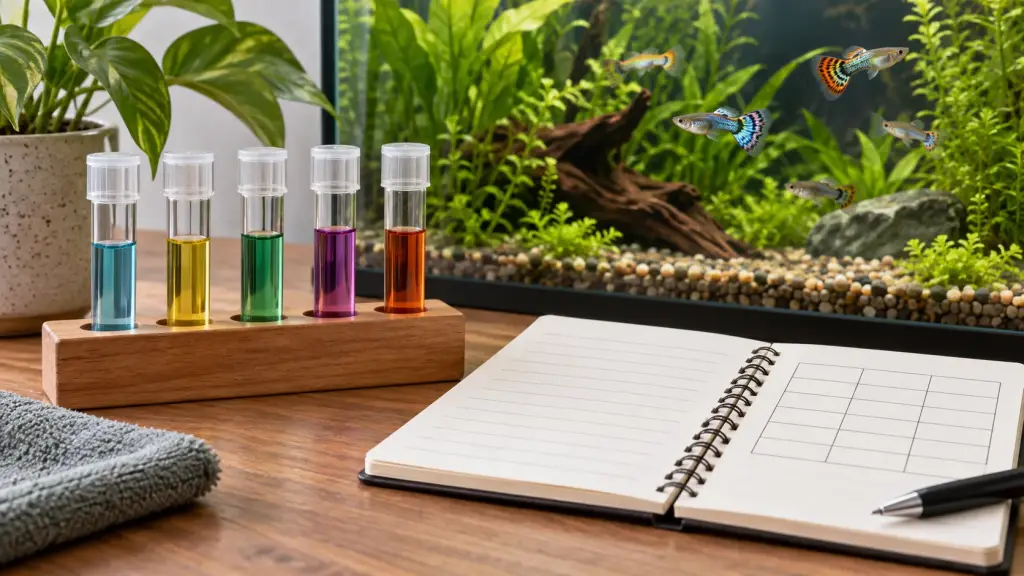
- Test water. Record ammonia, nitrite, nitrate, pH and temperature, plus recent maintenance. Check filter flow and surface movement.
- Observe appetite and swimming. A normal appetite and controlled swimming are reassuring but do not rule out every problem.
- Look closely at the scales. Raised scales are more concerning than a smooth rounded belly.
- Review recent feeding. Note oversized meals, new foods, and leftover food.
- Prepare safe separation if needed. A stable, filtered sick-guppy hospital tank can allow closer observation or protect a fish from bullying. Avoid moving it into an unheated or uncycled container, and minimize handling.
What Not to Do
- Do not assume every round female is sick.
- Do not assume every swollen fish is “constipated” without checking water and other signs.
- Do not add medications, aquarium salt or Epsom salt simply because the abdomen is swollen. Treatment depends on the underlying problem and the animals sharing the tank.
- Do not keep feeding heavily because the fish still begs.
- Do not ignore raised scales, severe lethargy, loss of balance, or rapid breathing.
When Is Bloating Urgent?
Escalate quickly when swelling is accompanied by pineconing, inability to swim normally, severe lethargy, refusal to eat, very fast breathing, ulcers, eye swelling, or multiple fish becoming sick. Contact an aquatic veterinarian or fish-health specialist promptly rather than waiting for the belly to settle. Bring water-test results, the timeline, feeding and treatment history, and side/top photographs or a short swimming video. Stabilize the environment while arranging help; use safe separation when needed.
FAQ
How can I tell if my guppy is pregnant or bloated?
A gradually enlarged abdomen in a female may fit pregnancy, while fullness after a large meal may be temporary. Neither belly shape nor normal appetite proves the cause. Compare timing, behavior, swimming, scales and water results; raised scales, rapid breathing, loss of balance, persistent appetite change or fast decline deserve qualified assessment.
Can a male guppy get bloated?
Yes. A swollen male is not pregnant, so review feeding, water quality, digestive signs, buoyancy, and disease clues.
Can overfeeding make a guppy look swollen?
Yes, especially after an unusually large meal. Return to measured feeding and watch the fish. Persistent or worsening swelling should not be dismissed as overfeeding.
Does a bloated guppy always have dropsy?
No. Dropsy is one possible explanation, but other problems can also enlarge the abdomen. Raised pinecone-like scales are a warning sign; they do not confirm a diagnosis by themselves, especially without the rest of the clinical picture.
Reference
The Merck Veterinary Manual describes abdominal fluid accumulation among signs of systemic illness and explains that bacterial diagnosis requires laboratory testing: Disorders and Diseases of Fish.
For the broader health framework, visit the Guppy Diseases Guide or Complete Guppy Care Guide.
Use several signs and reliable sources, not one symptom
A swollen appearance is not a diagnosis. Use the comparison above to organize observations. The Aqueon livebearer care guide gives reproduction context; the Merck Veterinary Manual table of common signs of illness in fish and its fish disorders guide provide broader health context. The RSPCA water-quality guidance supports checking the aquarium when behavior or appearance changes.
These references cannot diagnose an individual fish. If signs are severe, persistent or worsening, isolate when appropriate and seek assessment from an aquatic veterinarian or qualified fish-health specialist.
Behind the care guides
Care begins with steady systems
Our guppy guides focus on practical routines: keep water stable, observe fish closely and allow for natural variation.

Care systems
Steady water, thoughtful care
Gentle filtration and regular observation support healthy aquarium routines.

Natural variation
Every guppy is different
Color, size and fin shape vary with strain, age and each individual fish.
Editorial illustrations for context; they do not depict HiGuppy's exact facility or current fish stock.