The HiGuppy Journal
Guppy Symptom Triage Checklist: Safe First Checks
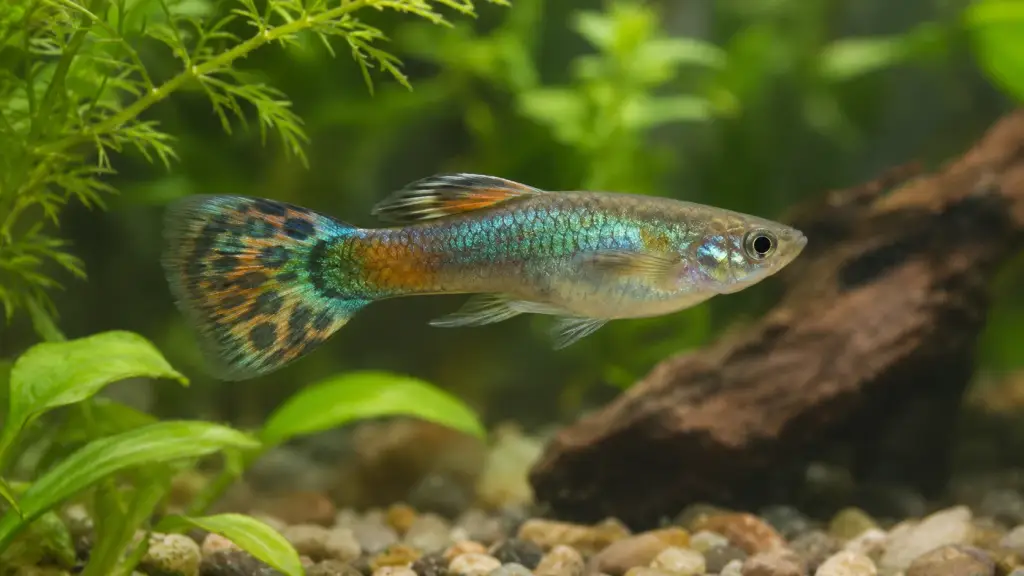
What should you check first when your guppy looks unwell? Look for urgent signs first: several fish gasping, sudden deaths, severe loss of balance, or possible chemical or electrical hazards. If equipment is safe, check aeration, filter flow and temperature promptly while you count the affected fish and test ammonia and nitrite. Record what changed and use the symptom-to-guide table for the next detailed guide. The guppy symptom triage checklist keeps those checks in a fixed order so a single sign does not turn into a guess; do not diagnose an infection or add medication from a single visible sign.
This is a first-check and navigation guide for owners of guppy fish (Poecilia reticulata). It is not a list of drug regimens or an attempt to identify a disease from a photograph. Several different problems can look similar at first: a guppy may clamp its fins, hide, rub against objects, breathe rapidly or refuse food. Your goal is to collect useful observations and choose the correct detailed next guide without making the situation worse.
For full disease descriptions and professional-care considerations, open HiGuppy’s Guppy Diseases Guide. If your main question is simply what stress looks like, use Signs of Stress in Guppies. Here, we focus on which problem to investigate first and where to go next.
How to use the guppy symptom triage checklist
Use the guppy symptom triage checklist steps in order. You do not need to know a disease name to begin. First check the seriousness and whether several fish are affected; then verify the shared environment; finally follow the most relevant symptom guide. If fish are severely distressed, do not delay practical safety checks to read every section here.
- Check urgency: look for sudden changes across several fish, abnormal breathing, loss of balance or rapid deaths.
- Check the aquarium: inspect filtration, aeration, temperature, test results and any recent source-water or equipment change.
- Separate observations from diagnoses: record what you can see (for example, ‘tail edge shortened since yesterday’) rather than writing ‘fin rot’ as a certainty.
- Follow one detailed route: open the article linked to the most distinctive symptom and ask for specialist help when there are severe or worsening signs.
- Reassess after action: note what changed in the water and how the group behaves instead of adding multiple treatments at once.
Step 1 of the guppy symptom triage checklist: decide whether it is urgent
A single guppy hiding briefly is different from several fish breathing hard at the surface immediately after a water change. Use the pattern and severity to prioritize your next action. These categories are a practical urgency guide, not a veterinary diagnosis.
| What you notice | First priority | Next resource |
|---|---|---|
| Several fish suddenly gasping, losing balance or dying | Promptly check aeration, filter/heater, ammonia and nitrite; seek qualified fish-health advice, especially when symptoms are rapid or severe | Guppy Diseases: emergency signs |
| One fish with clear injury, marked lethargy or worsening tissue changes | Check environment, protect from bullying, document the progression; obtain specialist help if worsening | Fin Rot vs Torn Fins |
| One fish hiding or less active, while the group looks normal | Review recent introductions, aggression, feeding and water readings; observe whether the behavior persists | Signs of Stress |
| No acute signs; looking to prevent problems | Return to a repeatable water-testing, feeding and quarantine routine | Disease Prevention |
A dangerous electrical fault or suspected household chemical spill calls for extra safety precautions: stop exposure and isolate unsafe equipment safely. Do not put hands in a tank with suspected energized equipment. If ammonia or nitrite is measurable, prioritize suitable conditioned replacement water and biofilter/aeration checks according to actual test readings, avoiding extreme rapid changes.
Immediate safety checks when several fish are gasping: Once electrical hazards have been ruled out, restore safe aeration and surface movement if an air pump or filter has stopped; do not postpone this check while waiting for water-test results. If the signs began after adding tap water, verify that an appropriate conditioner was used for chlorine and chloramine and that the replacement water was temperature-compatible. When tests show ammonia or nitrite, use suitable partial water changes with conditioned, compatible water and retest rather than rushing into an uncontrolled full replacement. Seek prompt qualified aquatic-fish-health advice for severe breathing trouble, rapid deaths or continuing decline.
Step 2 of the guppy symptom triage checklist: check shared water and equipment
The guppy symptom triage checklist puts water checks second because water can look crystal clear while ammonia or nitrite is unsafe. The OATA guppy and molly care sheet recommends an established filter and monitoring water quality, with ammonia and nitrite at zero. Its general guppy temperature range is 20–28°C, but the stable setting should suit the particular stock and tankmates; do not chase one number with abrupt changes.
| Check | What to record now | Why it helps choose the next guide |
|---|---|---|
| Ammonia and nitrite | Actual test values with units and test time | An aquarium-wide water issue can mimic several illness symptoms |
| Temperature and heater | Current temperature, whether it changed, and heater operation | Rapid or unsuitable fluctuations may affect behavior |
| Filter and aeration | Whether water returns normally, surface ripple and any recent power interruption | Loss of movement or biological processing can affect the whole group |
| Recent maintenance | Water-change date, conditioner, new substrate/decor or filter cleaning | A shared event may explain simultaneous signs |
| Stocking and behavior | Number of guppies, new arrivals, aggressive fish and visible chasing | Competition or bullying may primarily affect one fish |
If the readings are unfamiliar, refer to Guppy Water Parameters for the full testing routine rather than experimenting with pH adjusters or salt. A test result is part of the situation, not a guarantee that there is no other health problem.
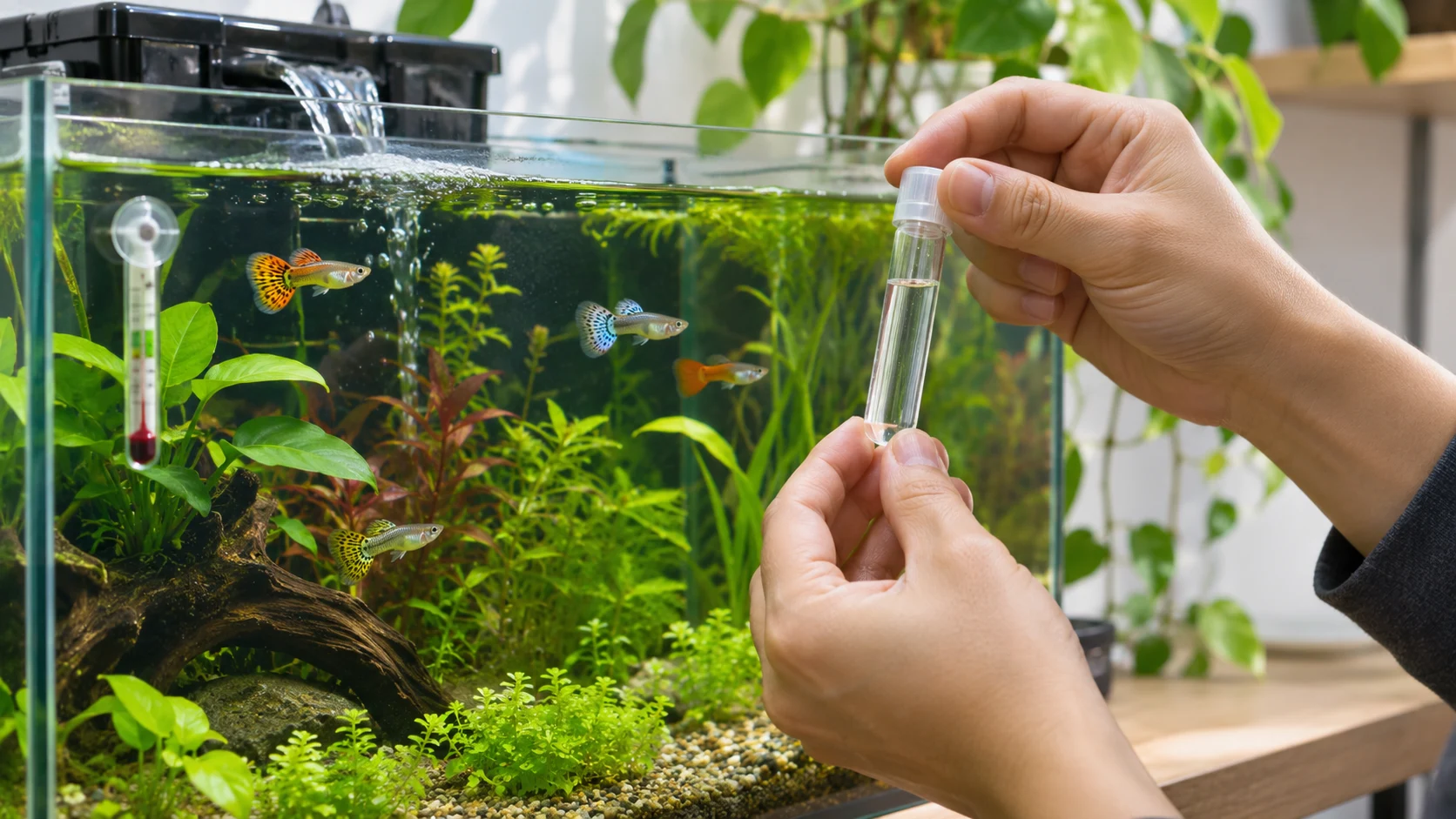
Step 3 of the guppy symptom triage checklist: count affected guppies
One fish with a new split in its tail may have a local injury or fin problem. Several fish breathing unusually fast at the same time suggests first checking shared conditions. Neither observation proves the underlying cause, but this distinction — which the guppy symptom triage checklist uses to choose the next route — helps determine what information a specialist will need.
| Pattern | Ask this first | Avoid assuming |
|---|---|---|
| Only one fish affected | Is it being chased? Is one fin damaged? Has it eaten normally? | The entire aquarium must need medication |
| Several fish affected at once | Did the filter stop, the heater change, or new water/food enter? | Every fish independently caught the same infection |
| New arrival different from the established group | How recently did it travel and which water does it now live in? | All unusual behavior must be harmless shipping stress |
| A slowly worsening problem over several days | Which sign progressed? Are body shape, breathing and appetite changing? | Waiting indefinitely is always safe |
For a serious or unexplained situation, the Merck Veterinary Manual’s aquarium fish management guidance emphasizes environmental history, number of affected animals, water testing and diagnostic information before selecting treatments.
The guppy symptom triage checklist’s symptom-to-guide decision table
Find the closest observable change below. The links explain that problem in greater detail; this page intentionally does not repeat their diagnostic lists or treatments. More than one symptom can appear at once, so start with water and urgency before choosing a second route.
| Symptom you can describe | Useful first check | Next detailed guide |
|---|---|---|
| Fast gill movement or persistent surface gasping | Test ammonia/nitrite and check aeration/temperature promptly | Guppy Gasping at the Surface |
| Clamped fins, pale color, hiding or darting | Review water, recent changes, tankmates and behavior of the whole group | Signs of Stress in Guppies |
| New tear or steadily shortening, inflamed fin edge | Note whether damage occurred once or continues to worsen; check chasing and rough décor | Fin Rot vs Torn Fins |
| New white spots, swollen body, ulcers or severe unexplained signs | Do not name a specific disease from one image; record change and seek expert advice if severe | Guppy Diseases Guide |
| Repeated chasing, fin nipping or a fish isolated by tankmates | Observe which fish initiates aggression and whether the target can feed and rest | Guppy Bullying Signs |
| Unusual behavior after adding new fish | Verify tank readiness and introduction history; observe closely without mixing equipment carelessly | Quarantine / Hospital Tank Guide |
| Recurring issues while fish currently appear well | Review water and maintenance schedule to prevent avoidable stress | Disease Prevention Guide |
If multiple serious signs appear together, the most detailed guide may not be enough. Consult a qualified aquatic veterinarian or fish-health professional when the condition is severe, progressing, or the cause remains uncertain.
Hiding, clamped fins and unusual swimming: avoid instant labels
Hiding can be linked to stress, aggression, a recent move, or a health problem; clamped fins and erratic movement also have multiple explanations. Notice whether the fish is briefly using plant cover or persistently isolating, and whether other guppies show the same change. An otherwise active fish may behave differently during feeding, resting or courtship.
Instead of adding one medicine for ‘stress’ and another for ‘fins,’ review the environmental checklist and open the dedicated stress guide. If the fish is being chased, the bullying guide is a better next step than assuming an infection.
Torn fins or tissue changes: document progression
A single notch after a collision or nip is not identical to a fin edge that steadily recedes or becomes inflamed over several days. Within the guppy symptom triage checklist this step is ‘document progression’: take a clear dated photograph if possible, watch for new damage, and check water and tankmates before selecting any treatment. The Fin Rot vs Torn Fins guide explains the signs and when the situation requires further assessment.
Do not cut damaged fins, add strong chemicals by guesswork, or assume clean water alone cures every condition. If tissue loss continues, the animal stops eating, or there are severe sores, seek qualified fish-health advice.
Poor appetite: do not turn a symptom into extra waste
A recently moved guppy may hesitate to eat, while a normally eager fish that stops feeding for a prolonged period merits a closer look at water, temperature, competition and possible illness. As in the rest of the guppy symptom triage checklist, check whether one fish is missing meals or the entire group has changed, and whether food is appropriate to fish size.
Do not keep adding food when the guppy refuses it. Remove leftovers appropriately: rotting food can worsen water quality. Use the same triage route—water first, count affected animals, document the duration—and consult the disease overview if other illness signs appear. This is an observation step, not a diagnosis.
When an observation or quarantine tank may help
At this point in the guppy symptom triage checklist, an established, safely filtered observation or quarantine tank can make it easier to watch one fish that is being bullied or needs closer monitoring, but the move itself adds stress. A freshly filled uncycled bowl is not an appropriate substitute for a stable aquarium. Use separate, clean equipment and minimize unnecessary handling when managing a suspected transmissible condition.
Merck’s pet fish health guidance highlights water quality, sanitation and quarantine as foundations of fish care. The detailed setup and limitations belong in HiGuppy’s Hospital Tank Guide; this checklist does not recommend an arbitrary isolation duration or medication.
A 60-second note to share with a fish-health professional
The guppy symptom triage checklist ends with a short, factual log, which often helps more than a long guess about a disease name. Record the water and equipment situation, the number of affected fish, how quickly the sign developed and what has already changed.
| Write down | Example of a useful observation | Avoid writing as a certainty |
|---|---|---|
| Which fish are affected? | One adult female hides; six other guppies behave normally | The whole tank is infected |
| Water tests and temperature | Ammonia 0, nitrite 0, measured temperature and test time | Water is definitely perfect |
| Timeline | New fish arrived yesterday; fin damage seen this morning | The new fish caused an infection |
| Visible signs | Tail edge shortened since a dated photo; eating less today | Diagnosed bacterial fin rot from photo |
| Interventions so far | Filter checked, food reduced, conditioned water change made | A certain remedy cured or caused the problem without evidence |
If a product, conditioner, medication or chemical was added, record its name and timing without making additional changes solely to test a theory. For rapid deaths or severe distress, professional help takes priority over finishing the log.
Three mistakes to avoid when using the guppy symptom triage checklist
- Medicines or salt by guesswork: do not dose the whole aquarium from a single nonspecific sign. Merck cautions against unconfirmed preventive antimicrobial use.
- Large, abrupt water-chemistry changes: even when correction is needed, use properly conditioned replacement water suited to the situation and avoid extreme temperature or pH shifts.
- Ignoring the rest of the aquarium: one attractive fish may be the first noticeable case, but the filter, water test, feeding and behavior of tankmates all matter.
If several animals are rapidly worsening, or oxygenation/equipment is failing, the guppy symptom triage checklist starts with immediate safe checks and qualified help rather than following routine advice for an otherwise stable tank.
Guppy symptom triage checklist done: switch to prevention
Once the guppy symptom triage checklist has assessed urgent signs and the aquarium is stable, return to a routine of measured water tests, sensible feeding, low-stress stocking, safe introductions and regular observation. A prevention routine cannot guarantee disease-free guppies, but it makes changes easier to recognize and document.
Use HiGuppy’s Disease Prevention Guide for a repeatable daily/weekly plan. This symptom triage article is the entry point when something has already changed, not a replacement for that prevention checklist.
Guppy symptom triage checklist FAQ
What should I check first if my guppy is acting strange?
The guppy symptom triage checklist starts with how many fish are affected, their breathing and swimming, and the aquarium’s filter, aeration, temperature, ammonia and nitrite. Then use the matching symptom guide rather than assuming one diagnosis.
When is a guppy problem urgent?
Under the guppy symptom triage checklist, several fish suddenly gasping or dying, severe balance loss, rapid worsening, and possible chemical or equipment hazards deserve prompt water and safety checks and qualified fish-health help.
Do clamped fins always mean fin rot?
No; the guppy symptom triage checklist treats clamped fins as nonspecific and can accompany stress, water problems, aggression and illness. Check the environment and use the fin-rot comparison only when there is actual progressing tissue damage.
Why is only one guppy hiding while the others look fine?
The guppy symptom triage checklist says to check whether it is being chased, has recently arrived, can reach food, or has a visible injury. Observe whether the behavior persists; one fish’s change does not automatically explain the whole tank.
Should I add medicine immediately when a guppy refuses food?
The guppy symptom triage checklist says not to medicate from poor appetite alone. Check water and other signs, remove leftover food and record duration. Seek professional guidance if the fish worsens or has serious additional symptoms.
Is a hospital tank necessary for every stressed guppy?
No; the guppy symptom triage checklist notes a stable separate tank can help certain fish that need isolation or closer observation, but catching and moving fish can increase stress. Use a properly established tank and follow relevant care guidance.
How does this checklist differ from the Guppy Diseases Guide?
The guppy symptom triage checklist helps you prioritize observations and choose a next article. The diseases guide explains possible illness categories, diagnostic uncertainty and treatment considerations in greater detail.
Should I replace all the water if several guppies are gasping?
Not automatically; the guppy symptom triage checklist first checks for unsafe electrical equipment, then check or restore safe aeration, filter flow and temperature. Test ammonia and nitrite and review any recent water changes. If water correction is needed, use appropriately conditioned, compatible replacement water for a measured partial change instead of an abrupt full replacement. Severe or fast-worsening breathing problems call for qualified fish-health advice.
Sources behind the guppy symptom triage checklist
General guppy husbandry and observable warning signs: OATA Guppies & Mollies Care Sheet. Veterinary approach to fish history, water quality, diagnostic uncertainty and quarantine: Merck Veterinary Manual — Management of Aquarium Fish and Routine Health Care of Fish. Use the detailed HiGuppy guides for specific issues: Guppy Diseases, Stress, Fin Damage and Prevention. This guppy symptom triage checklist is an educational navigation tool, not a veterinary diagnosis, a prescription or a promise of recovery.
Behind the care guides
Care begins with steady systems
Our guppy guides focus on practical routines: keep water stable, observe fish closely and allow for natural variation.
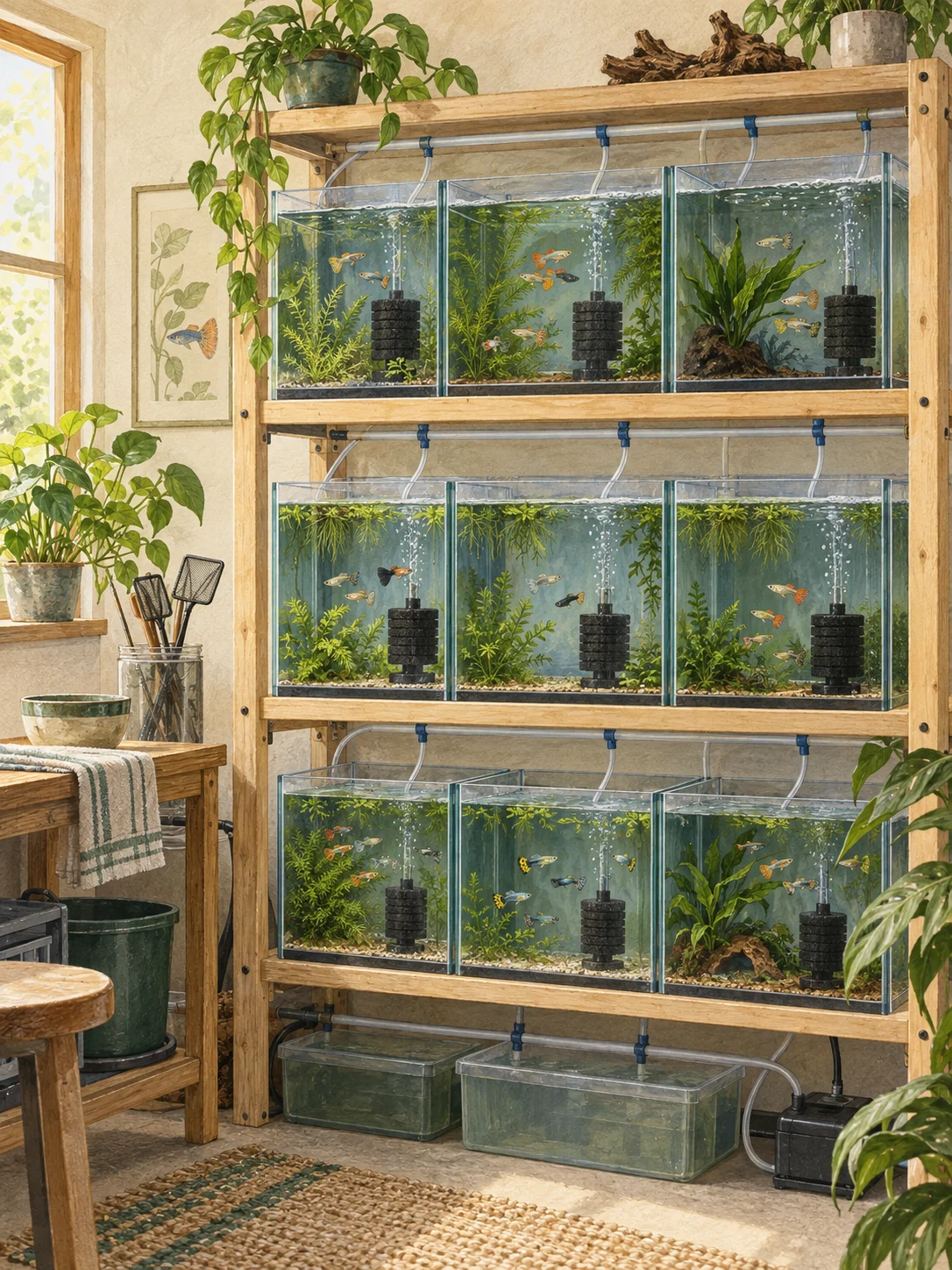
Care systems
Steady water, thoughtful care
Gentle filtration and regular observation support healthy aquarium routines.
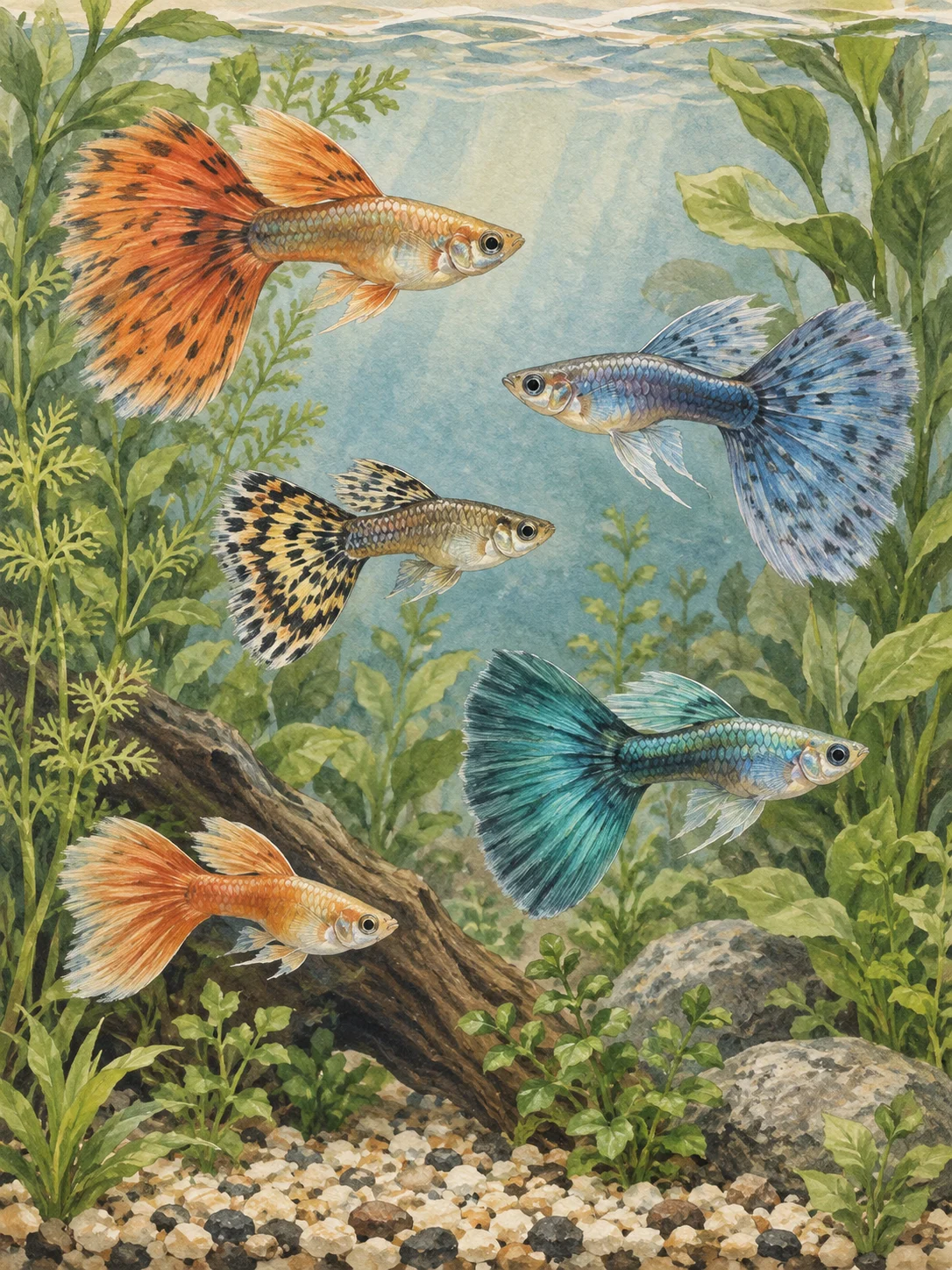
Natural variation
Every guppy is different
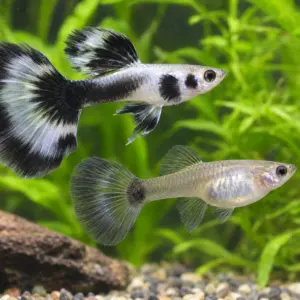
Color, size and fin shape vary with strain, age and each individual fish.
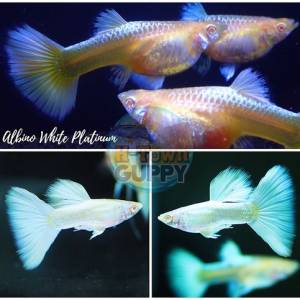
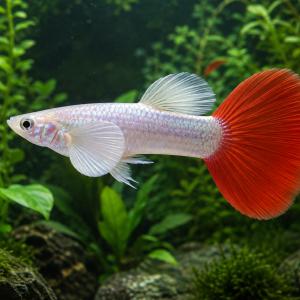
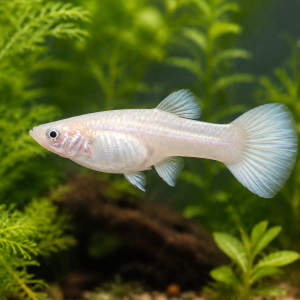
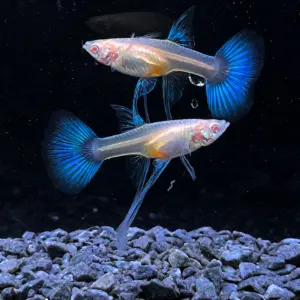
Editorial illustrations for context; they do not depict HiGuppy's exact facility or current fish stock.