The HiGuppy Journal
Can Guppies See in the Dark? Night Vision and Lighting Guide
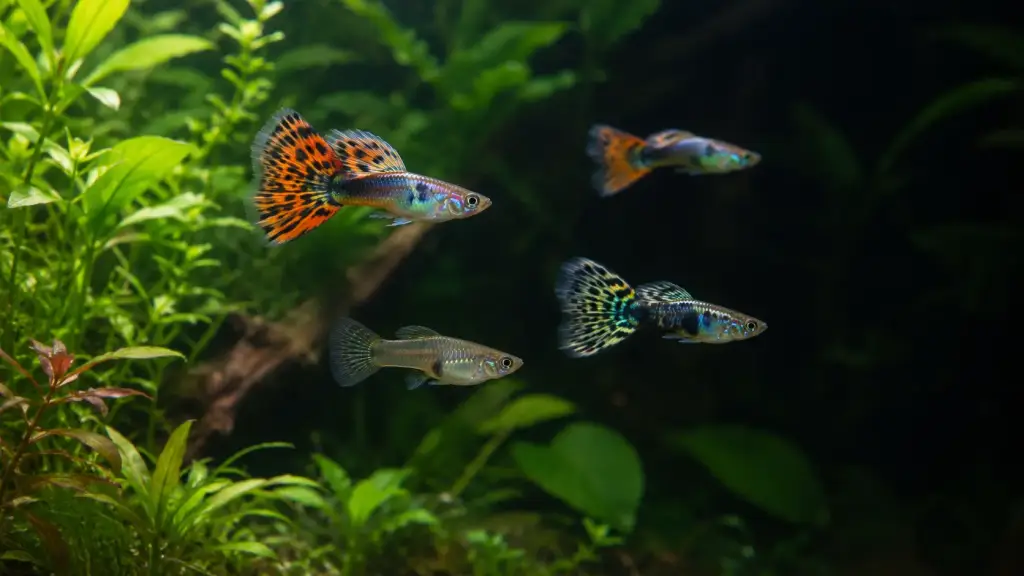
Can guppies see in the dark? Guppies can use visual information when some light is available, but vision requires light; they cannot see in complete darkness. There is no reliable distance or minimum light level that applies to every guppy and aquarium. They do not need a night light to be safe: a regular dark period is part of a healthy day–night routine.
Can guppies see in the dark or just low light?
Can guppies see in the dark? Low light and complete darkness are different. In a dim room, light from a window or nearby hallway may still reach the aquarium. Guppies can respond to visual cues under different lighting conditions, though those cues may become less useful as illumination falls. Research on guppy vision and foraging shows that the light environment affects how fish respond to visual information; it does not establish a precise “night vision range” for the guppy in your tank.
In complete darkness, there is no light for the eyes to detect. A fish may still respond to its surroundings through non-visual cues, but movement in a dark aquarium does not prove it can see the tank clearly. Rather than testing your fish by suddenly changing the lights, use a consistent routine and observe normal behavior during the day.
Can guppies see in the dark enough to navigate a dim tank?
Can guppies see in the dark as light fades? Colors and fine details become less useful as visual cues. A familiar aquarium may also contain water currents, scents and nearby objects that give fish information about their surroundings. These clues are not a replacement for vision and do not show exactly what an individual guppy perceives. Guppy studies have examined how changing the light environment affects visual responses and foraging, but their experimental results should not be turned into a precise night-vision distance for every aquarium.
For a practical home setup, the important question behind can guppies see in the dark is not whether the room is perfectly black. It is whether there is a predictable rest period without a bright tank light or frequent disturbances. Ordinary changes in ambient room light are different from placing a lamp directly over the aquarium all night.
Can guppies see in the dark, or do they need a light on at night?
No. Give guppies a predictable period of darkness instead of leaving the aquarium light on around the clock. The guppy tank lighting schedule explains how to use a timer and balance the needs of fish and plants. For many home guppy tanks, about 6–8 hours of aquarium lighting per day is a reasonable starting point; adjust gradually for the plants, room light and algae while keeping a regular dark period. The 12-hour light and 12-hour dark cycle used as a control in a guppy study was an experimental condition, not proof that a 12-hour aquarium-light schedule is best for home tanks.
For keepers asking can guppies see in the dark, the bigger issue is that artificial light at night can change guppy behavior. In a controlled 10-week study of guppies, fish given dim or bright light at night emerged sooner from a refuge during daytime tests than fish given dark nights; the bright-light group also spent relatively more time in open space. These findings concern the measured behaviors in that experiment, not a proven safe brightness threshold or an ideal lighting duration for every home aquarium.
Can guppies see in the dark under blue lights or moonlights?
Can guppies see in the dark under blue light? Blue light is still light. A dim viewing light briefly used in the evening is different from illuminating the aquarium throughout the night. If a light visibly illuminates the tank all night, switch it off during the normal dark period. If you want to observe your fish, avoid repeatedly switching bright lights on and off after they have settled.
Example lighting schedules for guppy tanks
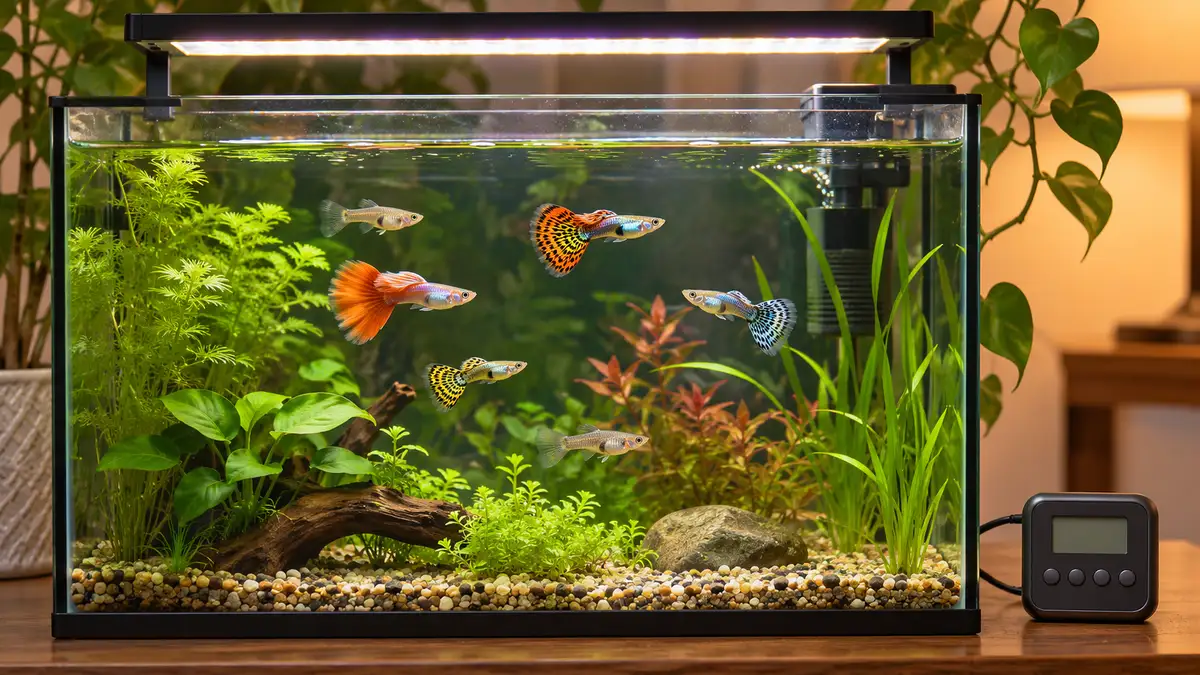
Choose a schedule that you can repeat. The examples below are starting points, not a measured sleep requirement or a guarantee that every plant will thrive. Check your plant species and light intensity, and adjust the daytime period gradually if needed. Keep a distinct dark interval every day.
| Setup | Example daytime lighting | Night routine |
|---|---|---|
| Fish-focused tank | Lights on from 9 a.m. to 5 p.m. (8 hours). | Tank light off overnight; avoid direct room lighting into the tank. |
| Planted tank | Start with a plant-appropriate period, such as 8 hours, then adjust for the plants and equipment. | Keep a consistent dark period instead of adding an all-night viewing light. |
| Evening viewing | Shift the daytime timer later, for example 1 p.m. to 9 p.m. (8 hours). | Keep the off period consistent even if the schedule starts later. |
A timer controls the aquarium light, not the filter or heater. Keep life-support equipment operating as intended overnight. The amount of light from windows and room lamps can vary, so avoid placing a tank where direct sun heats the water or where a bright room light shines into it through the rest period. A steady timer matters more than asking can guppies see in the dark — guppies rely on routine, not night vision. See our complete tank lighting schedule for planted-tank considerations.
How to set up a calm nighttime routine
- Use a timer. Keep the tank lights on and off at consistent times rather than changing the schedule every day.
- Allow a dark period. Turn off aquarium and decorative night lights for the regular rest phase.
- Make transitions gentle. Where practical, let normal room light change before switching a bright tank light on or off.
- Provide sheltered areas. Plants and decor can give fish quieter places while leaving open swimming space. Check that the filter and heater continue running.
- Feed during the active period. Offer appropriate food while the lights are on and remove uneaten food as needed.
Can guppies see in the dark when lights flip suddenly? If fish dart or jump when the lights change, check the lid, water quality and tank mates as well as the lighting transition. Persistent frantic swimming, rapid breathing or daytime lethargy deserves investigation; do not assume darkness alone is the cause.
What to do if guppies dart when the lights change
Since can guppies see in the dark is effectively no, an abrupt change from a dark room to a bright aquarium can startle fish. If the group reacts, first check that the lid is secure and that nobody is injured. On future days, allow ambient room light before switching on a strong tank light. A light with a gradual transition can help make the change less abrupt, but an expensive light is not necessary for a healthy routine.
Do not assume every dash is caused by lighting. Watch for repeated chasing, sharp decor, excessive current, gasping, lesions or behavior that continues during normal daylight. Test ammonia and nitrite and check filter flow and temperature. If several fish are distressed, there are sudden deaths, or signs persist or worsen, seek advice from an aquatic veterinarian. Our water-testing guide explains the first checks.
Are my guppies sleeping or unwell?
Guppies often become less active during their dark period and may hover or rest near cover. They should return to their usual behavior when active. Gasping, persistent daytime inactivity, loss of balance, visible wounds or several fish becoming unwell are reasons to check equipment, aeration and water promptly and seek an aquatic veterinarian when signs are severe or worsening. Compare the examples in Do Guppies Sleep? and use the symptom triage checklist if you are concerned.
Nighttime care for guppy fry and community tanks
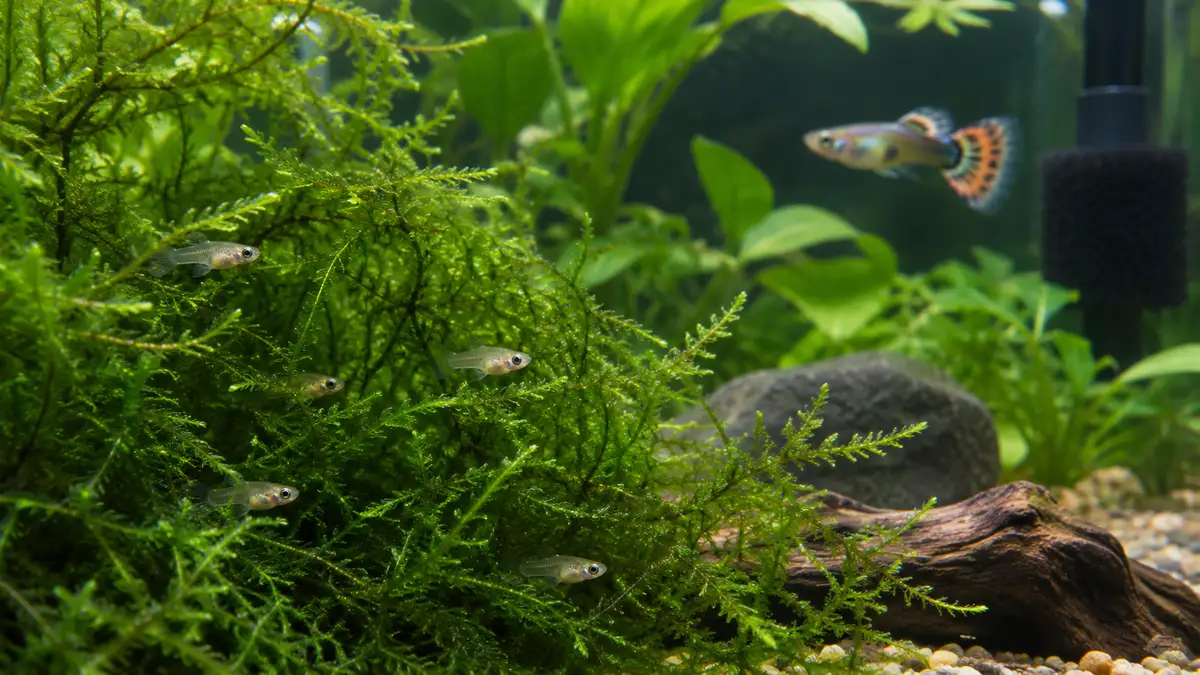
Can guppies see in the dark as fry? Fry benefit from a stable routine too. Provide suitable cover and a safe filter intake, and keep their water and feeding routine appropriate to their stage of growth. Do not leave a bright light on all night simply to watch for newborns. If the tank contains species with different activity patterns, research their needs separately and make sure active tank mates cannot harass resting guppies.
Plants may offer cover, but dense planting does not guarantee that adults will not eat fry. Plan stocking and nursery space in advance, and review why guppies may eat their babies if you expect a brood. Keep enough open space for swimming and maintenance.
Can guppies see in the dark? Common mistakes about guppies and darkness
- Assuming “low light” means no light: a dim tank may still receive light from a window or lamp.
- Keeping a moonlight on continuously: even dim light is a source of nighttime illumination, so provide an off period.
- Switching off equipment with the light: filtration and appropriate temperature control still matter at night.
- Calling every motionless fish asleep: compare the time of day, breathing, posture and return to normal activity.
- Using a fixed vision-distance claim: the available evidence does not establish a universal distance for home aquariums.
Can guppies see in the dark to find food in low light?
Guppies do not depend on sight alone to locate food. In an experiment on guppy sensory development, fish raised in low light showed a stronger response to chemical food cues tested on their own than fish raised in brighter conditions. The study shows that sensory responses can differ with rearing conditions; it does not mean every guppy immediately switches senses when a tank light goes off.
For everyday feeding, use the fish’s normal active period. Offer an appropriate portion while the aquarium is lit and check that all fish have access without persistent chasing. Look for uneaten food and remove it as needed. Feeding after lights-out makes it harder to judge how much was eaten and is not needed to help guppies rest. Fry have different feeding needs; follow a fry feeding schedule rather than relying on a night light.
What if the room is bright after the aquarium light is off?
Can guppies see in the dark when the room stays bright? An aquarium does not need a completely black room, and ordinary light from another part of the house is different from a bright lamp aimed straight into the tank. If your living room stays bright late into the night, move or angle lamps away from the aquarium, reduce direct glare where practical, and keep the tank light on a consistent timer. Avoid covering the aquarium in a way that blocks ventilation, traps heat or interferes with equipment.
To check your setup, stand at the tank at the usual bedtime without turning on a flashlight. Notice whether a nearby lamp or television shines directly into the water, whether fish have sheltered areas, and whether the room returns to a predictable quiet period. This is an observation checklist, not a substitute for measuring light intensity or a claim that a particular room brightness is proven safe for all guppies.
What if the power goes out at night?
Can guppies see in the dark during a power cut? A short period without the aquarium light is usually not the first concern during a power cut. Prioritize whether filtration, aeration and temperature control have stopped, how long the outage may last, and how the fish are behaving. More heavily stocked aquariums may have less margin if water circulation and gas exchange stop. Avoid repeatedly disturbing the fish with bright light to check them.
Use a suitable battery-powered air pump if you already have one and follow its instructions. When power returns, check that equipment restarts and inspect water quality, particularly after a prolonged interruption. The appropriate response depends on the tank, stocking and outage length; use our guppy tank power-outage guide for a fuller plan.
A quick night-check checklist
- Before lights-out: check the lid, timer, heater and filter; confirm the regular light schedule is set.
- During the dark period: leave fish undisturbed where possible. A brief check is reasonable if you suspect a problem, but avoid shining intense light directly at them.
- In the morning: look for normal swimming, appetite and breathing once the tank is in its usual active period.
- If something is wrong: test the water, assess equipment and note which fish are affected. Persistent gasping, loss of balance or multiple fish deteriorating calls for prompt qualified help.
Keep a short record of the time, lighting changes, test results and behavior when a pattern repeats. One observation after lights-out cannot diagnose a disease; a sequence of observations is more useful when discussing the problem with a fish-health professional.
Frequently asked questions: can guppies see in the dark?
Can guppies see in the dark at all?
No. Vision depends on available light. Guppies may still react to other cues, but it would be misleading to give a specific distance at which they can see in a dark home aquarium.
Can guppies see in the dark under a blue light left on?
They do not need one overnight. Provide a regular dark period rather than continuous aquarium lighting.
Can guppies see in the dark well enough to find food?
Fish can use cues besides sight when searching for food, but their success depends on the conditions. Feed during their usual active, illuminated period instead of relying on nighttime feeding.
Can guppies see in the dark while they sleep with open eyes?
Yes. Guppies do not close their eyes to rest. Look for a regular reduction in activity during darkness and a return to normal behavior afterward.
Sources
- Guppy visual sensitivity and light environment, BMC Evolutionary Biology.
- Artificial light at night and behavior in guppies, Scientific Reports.
- Rest–activity cycles of uninfected and parasite-infected guppies, Proceedings of the Royal Society B.
Behind the care guides
Care begins with steady systems
Our guppy guides focus on practical routines: keep water stable, observe fish closely and allow for natural variation.
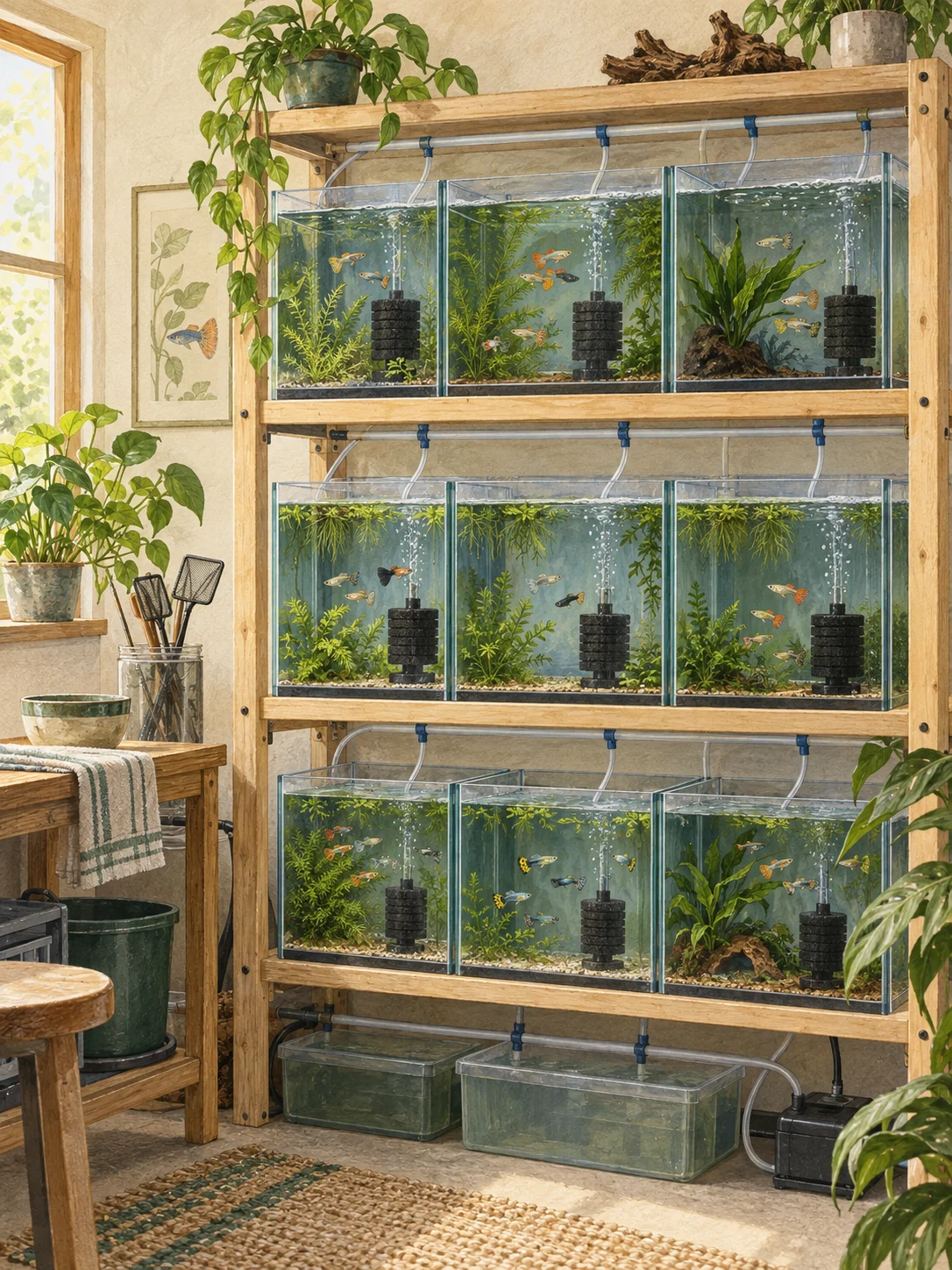
Care systems
Steady water, thoughtful care
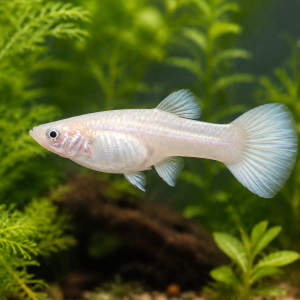
Gentle filtration and regular observation support healthy aquarium routines.
Natural variation
Every guppy is different
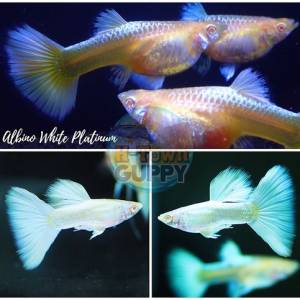
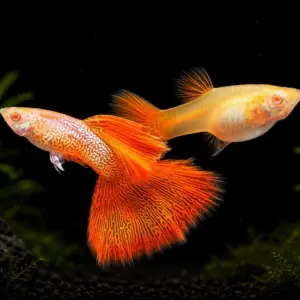
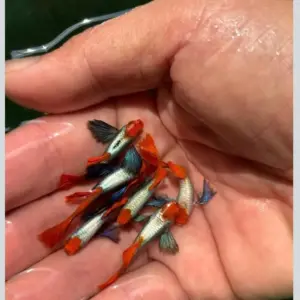
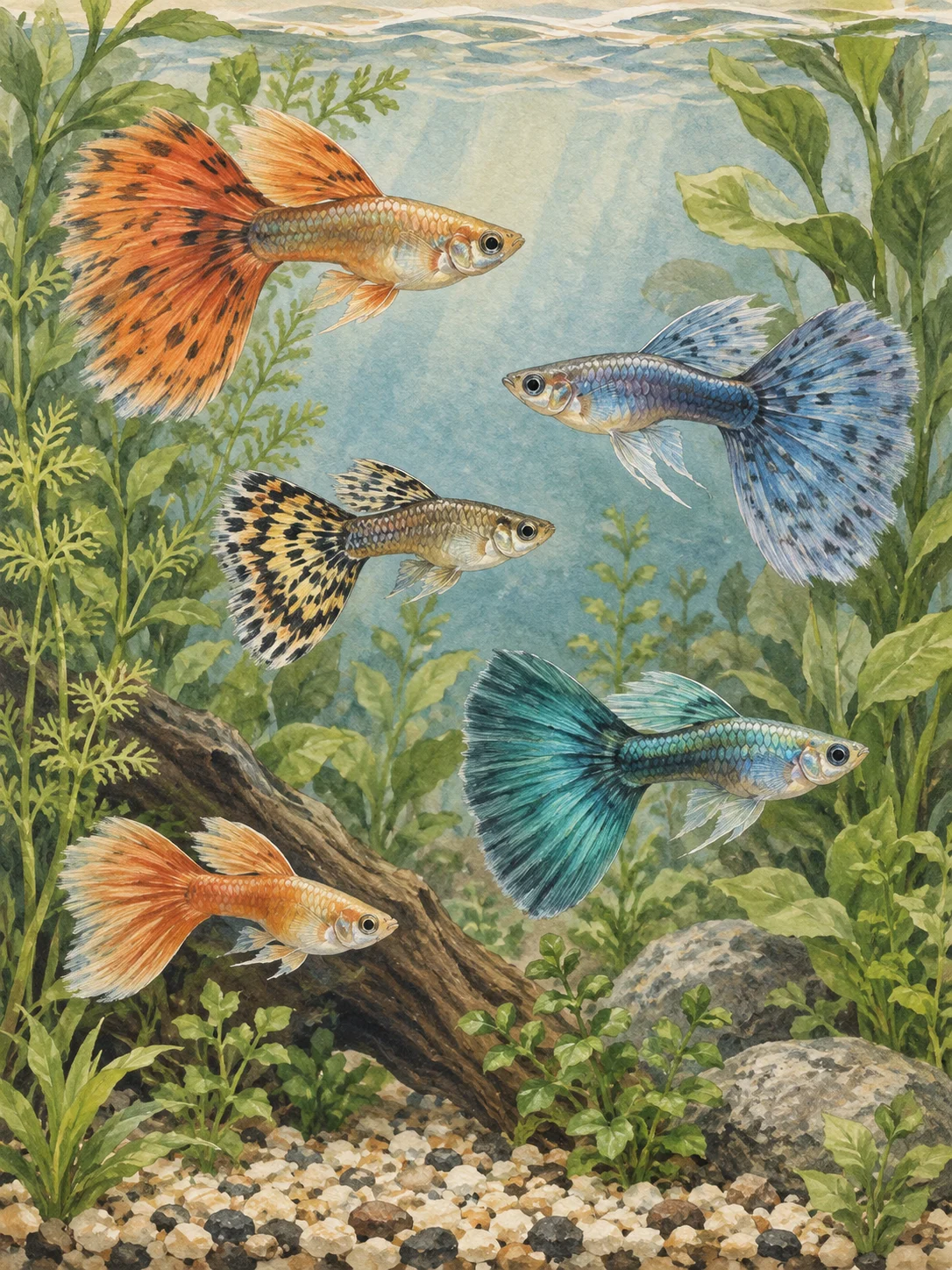
Color, size and fin shape vary with strain, age and each individual fish.
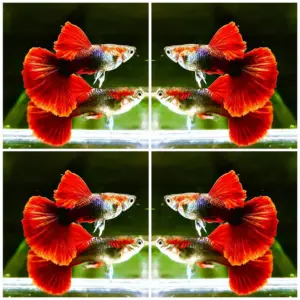
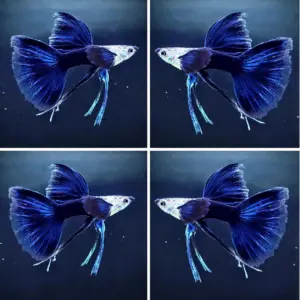
Editorial illustrations for context; they do not depict HiGuppy's exact facility or current fish stock.