The HiGuppy Journal
Why Is My Guppy Not Giving Birth? Causes and What to Do
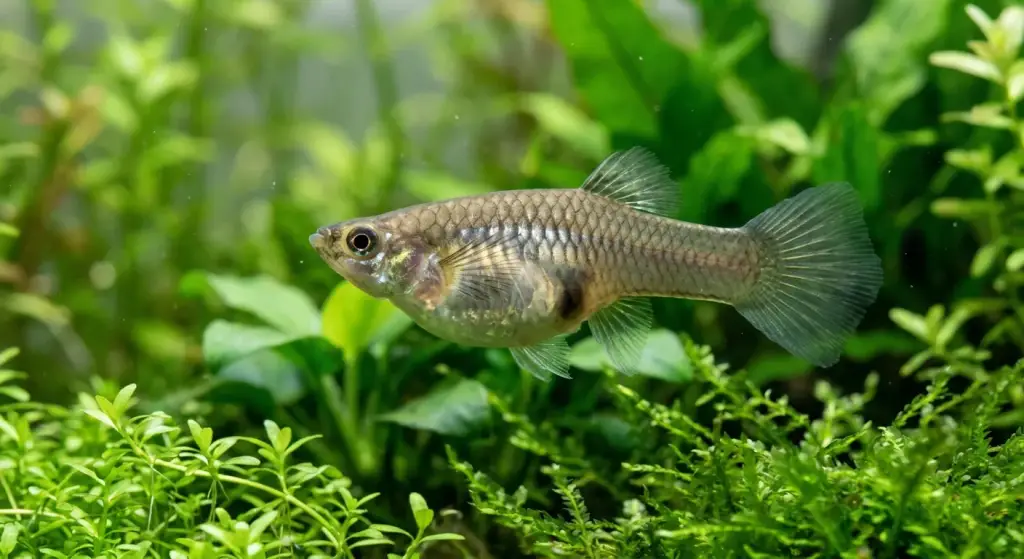
Why is my guppy not giving birth? Most of the time she simply is not ready yet. Guppy pregnancy usually lasts about three to six weeks, and stress, cool water, a crowded tank or a first pregnancy can all stretch it out. Rule out a bloated fish too. Our guppy care guide covers the basics that keep a pregnant female calm.
This guide shows how to tell a normal wait from a real problem, what delays labor, and what you can safely do while you wait.
Why is my guppy not giving birth? The quick answer
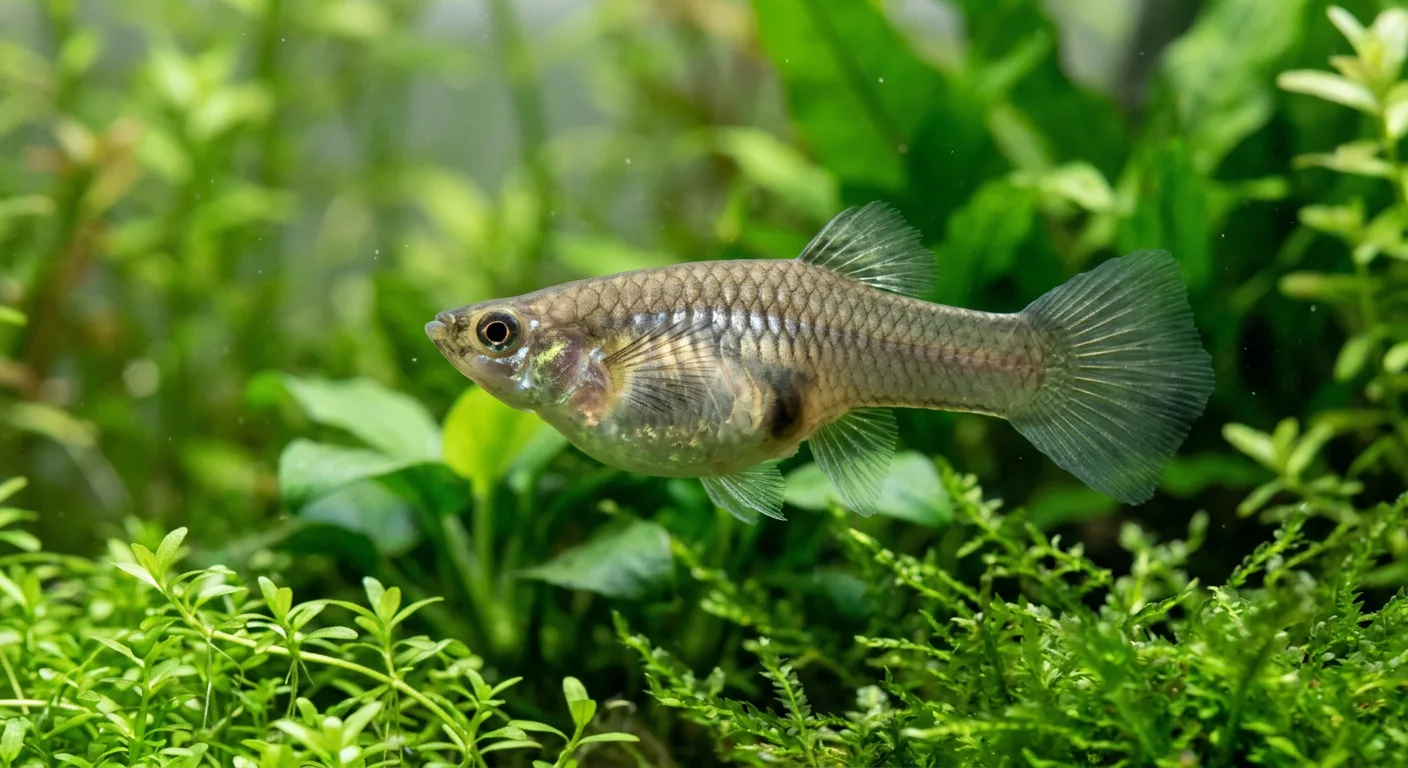
If you are asking why your guppy is not giving birth, start by checking whether she is really pregnant and how long it has been. Guppies are livebearers, and the timing is not exact. A female can look “ready” for days or even a couple of weeks before fry appear. Water temperature, stress and the number of fry she carries all change the schedule.
Patience is usually the right call. Unless she is sick, clamped, or visibly struggling, a late guppy is normally a healthy guppy waiting for the right moment. Our guide on guppy pregnancy stages and gestation shows the normal timeline in detail.
Is she really pregnant?
A round belly does not always mean fry. Overfeeding, constipation and illness can all swell a guppy. Look for these signs of real pregnancy:
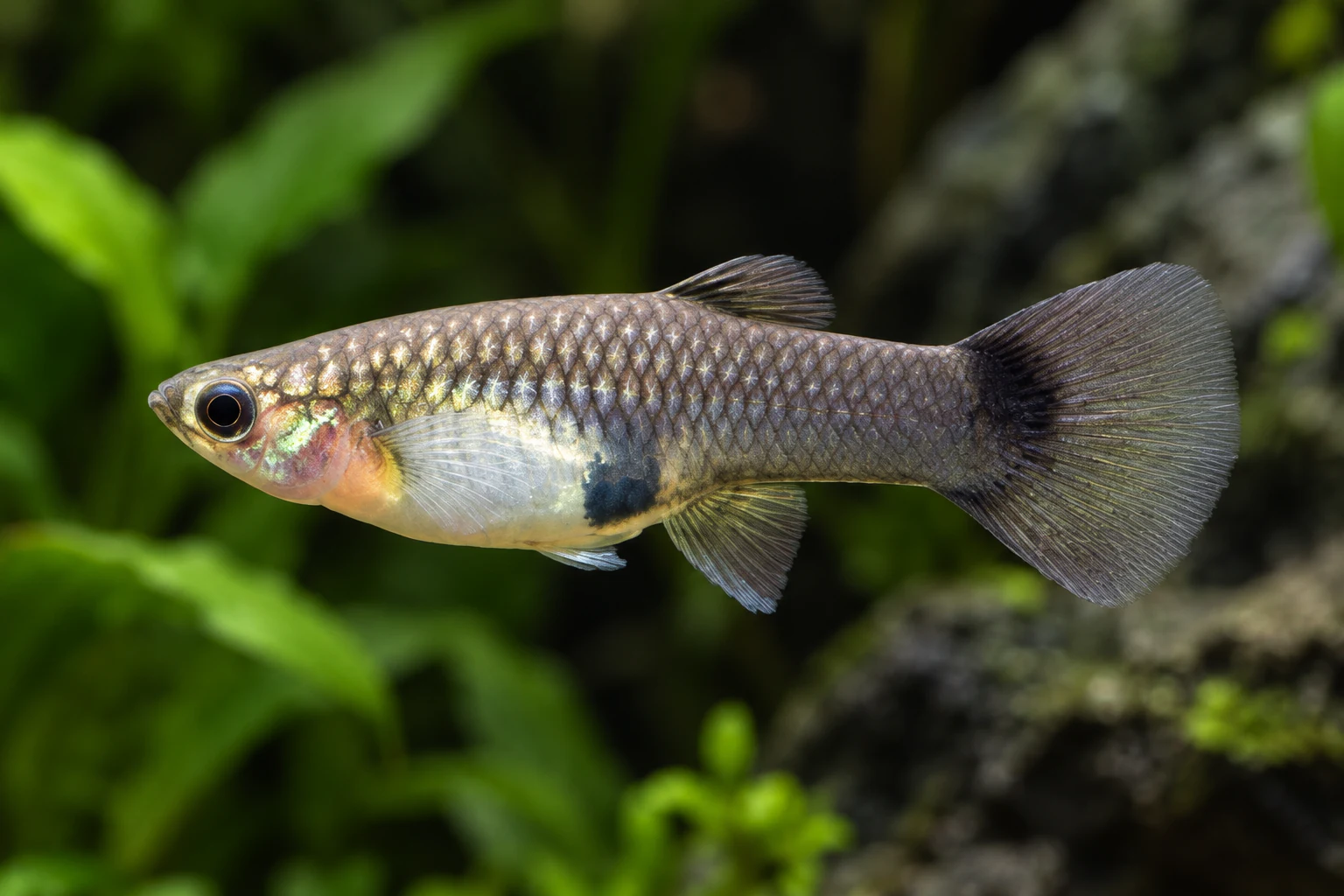
- A dark, enlarged gravid spot near the back of the belly.
- A square or boxy belly shape when seen from above, rather than a soft round bulge.
- Steady swelling over several weeks, not a sudden puff after a big meal.
- Normal swimming and eating.
If the belly looks pinecone-like with scales sticking out, that is not pregnancy. See our guides to pregnant or fat guppy, bloated guppies and guppy dropsy.
Common reasons a pregnant guppy is late
Stress from the tank
Stress is the most common delay. Loud movement, bright light all day, aggressive tank mates or constant chasing by males can make a female hold back. If males harass her, see why guppies chase each other and add more females or cover to spread out attention.
Water that is too cool or unstable
Warm, stable water helps pregnancy move along. Cool water tends to slow things down. Check your guppy temperature guide and avoid sudden swings. Poor water quality also adds stress, so test regularly and review the guppy water parameters guide.
First pregnancy or small female
Young or small females sometimes take longer and may carry fewer fry. Larger, older females often carry bigger broods. Brood size varies a lot, as explained in how many babies guppies have at once.
Moving her too early
Netting a pregnant female and putting her in a small box or new tank can pause labor. A move is stressful, and it often delays birth instead of speeding it up.
Miscounted dates
Females can store sperm and give birth to several broods from a single mating. That makes it hard to know when she was last fertilized. Often the guppy is not late at all, you just started counting at the wrong time. Read how often guppies give birth for the cycle.
Normal wait vs worrying signs
| What you see | Usually means | What to do |
|---|---|---|
| Boxy belly, dark gravid spot, active | Normal late pregnancy | Keep water stable and wait |
| Hiding, resting near the surface or plants | Getting close to birth | Add cover, keep the tank quiet |
| Males chasing her constantly | Stress delaying labor | Add females, plants or a divider |
| Clamped fins, no eating, lying on the bottom | Possible illness or distress | Check water, then consider a hospital tank |
| Scales sticking out, pinecone look | Dropsy, not pregnancy | Isolate and act quickly |
| Belly shrinks but no fry seen | Fry may be hidden or eaten | Look in plants and moss |
What to do while you wait
If you are still wondering why your guppy is not giving birth, the answer is often a quiet tank and more time. These steps give her the best chance.
- Keep the tank calm. Dim the lights a little, reduce noise and avoid rearranging decor.
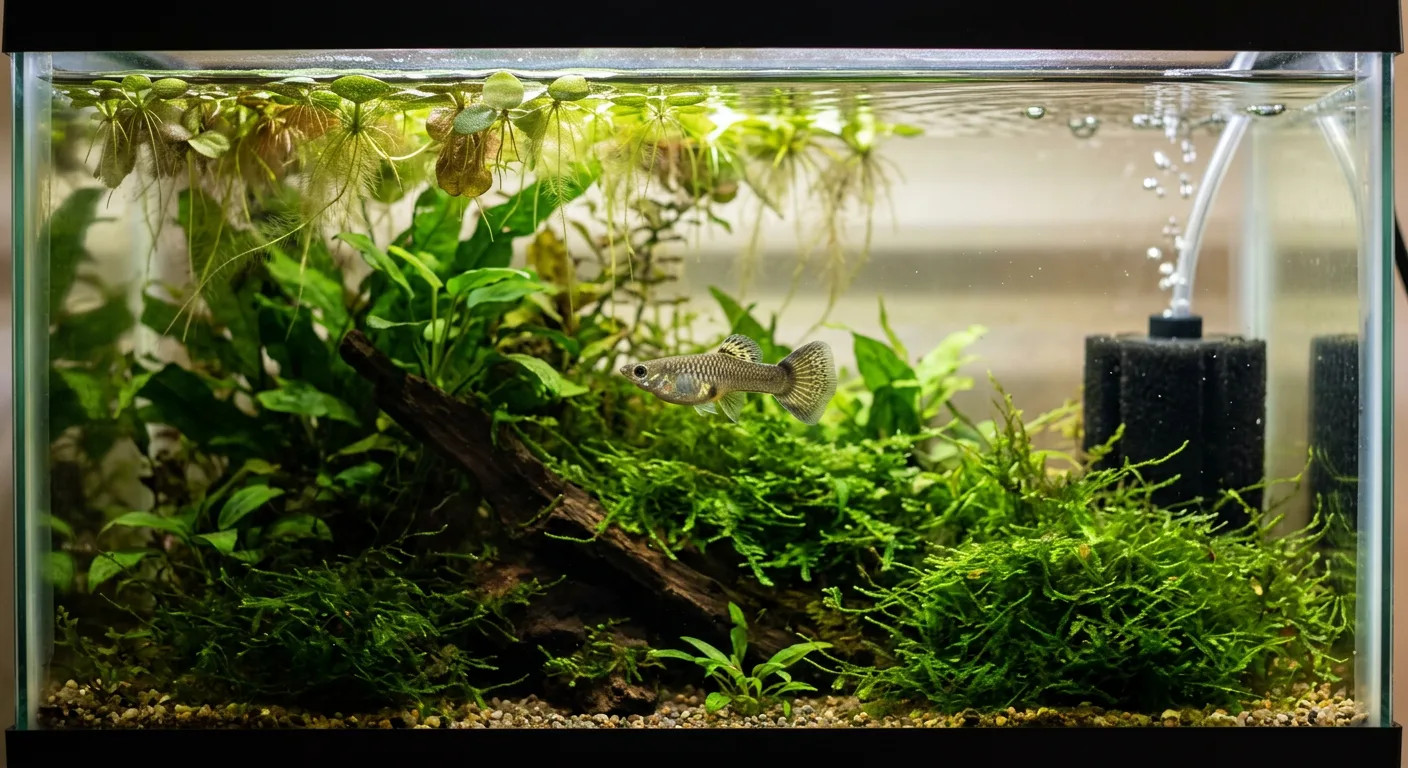
- Add cover. Floating plants and java moss give her a safe place to deliver and give fry places to hide.
- Keep the water clean and warm. Do small, regular water changes with temperature-matched water instead of one large change.
- Feed lightly. Offer small portions of good food. Overfeeding adds waste and can bloat her.
- Reduce harassment. Remove or distract pushy males if they will not leave her alone.
Our guppy breeding tank setup shows how to prepare a quiet place for fry if you plan to raise them.
Should you use a breeding box?
Many keepers avoid breeding boxes for late pregnancy. The small space can stress the female and slow things down, which is the opposite of what you want. If you do use one, move her gently and only when she is clearly close to delivery, then return her to the main tank soon after birth. A planted tank corner or a separate, roomy tank is usually kinder.
When to worry
Why is my guppy not giving birth when she looks so ready? Usually it is nothing serious. A late guppy is not an emergency. Worry only if you see changes beyond a long wait. Watch for clamped fins, heavy breathing, lying on the bottom, refusing food for days, or a pinecone-like body. Straining without producing fry for a long period is also a red flag. In those cases, check the water first, since ammonia and nitrite problems cause many sudden illnesses, then isolate her if she is clearly sick. Our hospital tank guide explains how to set one up. For a fish that seems to be in serious distress, ask an experienced aquarium professional or aquatic vet for advice.
After the fry arrive
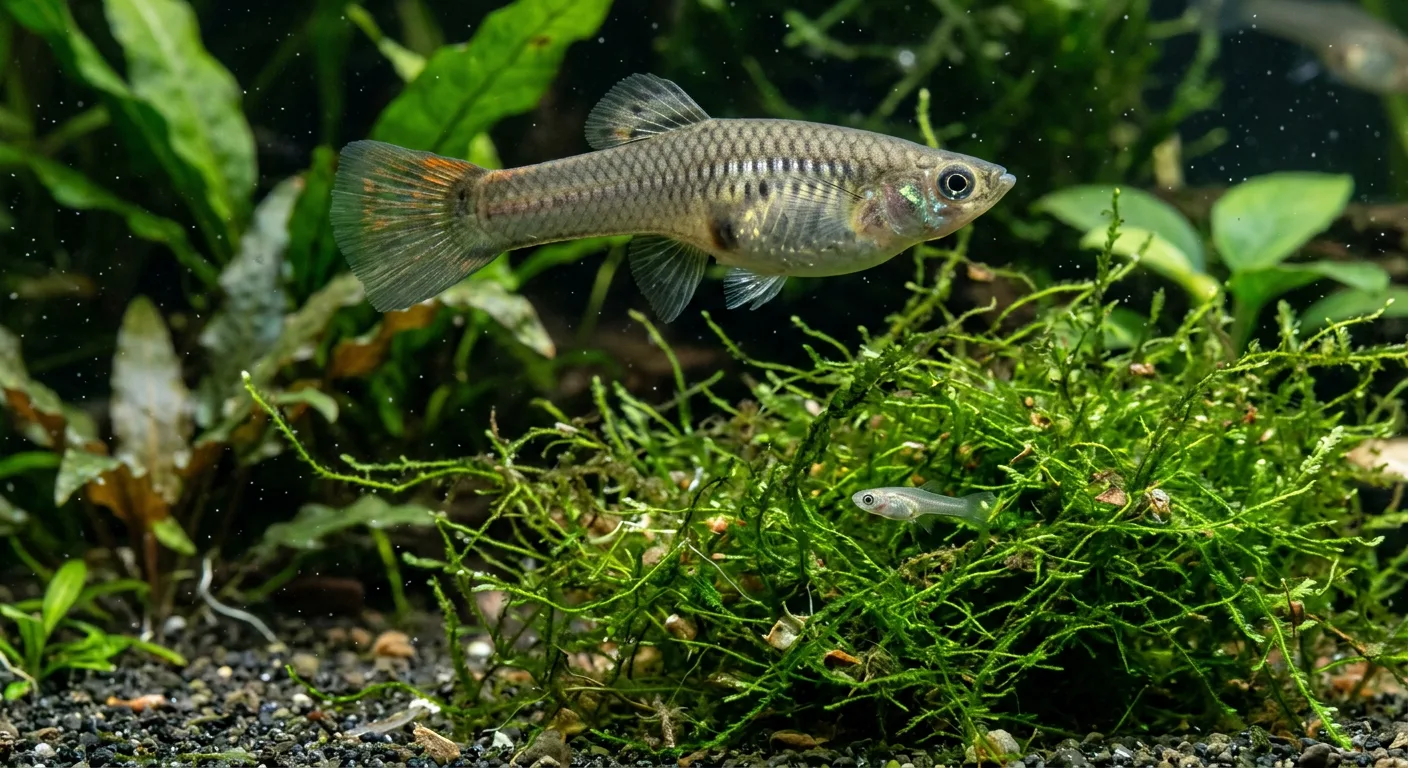
Once birth starts, a female may drop fry over several hours or even spread them out across a day. Newborns hide in plants straight away. Adults may eat them, so keep cover thick and consider a separate rearing tank. Feed tiny, frequent meals and keep the water spotless. If you want healthy parent stock for your next batch, browse our premium guppy pairs. Guppies belong to the species Poecilia reticulata, as described on Wikipedia.
Long-term tips for easier births
Next time you ask why is my guppy not giving birth, a calm routine will already be in place. Healthy pregnancies start long before the female looks round. Keep a stable routine with consistent feeding, steady temperature and regular water changes. A balanced group with more females than males spreads out mating attention so no single female gets worn down. Plenty of plants, caves and floating cover help every fish feel safe, which lowers stress and supports smooth births.
Good food also matters. A varied diet of quality flakes with occasional frozen or live food supports strong fry and a healthy mother. Avoid sudden changes in food or water. Keep notes on when each female looks pregnant and when fry appear, so you can estimate timing next time. For the full routine, return to our complete guppy care basics.
FAQ
Why is my guppy not giving birth after a month?
A month is still within the normal range. Many pregnancies last roughly three to six weeks, depending mainly on temperature and stress. A female that looks ready can still wait several more days, so a short delay is usually normal.
Can stress stop a guppy from giving birth?
Stress can delay labor. Constant chasing, poor water, bright lights or a sudden move may make her hold off until the tank feels calmer.
How can I tell if my guppy is about to give birth?
Common signs include a very boxy belly, a dark gravid spot, hiding, resting near plants or the surface, and less interest in food. These signs are not exact timers.
Should I move my pregnant guppy to a separate tank?
Often it is better not to. Moving can add stress and delay birth. If you do, use a roomy, cycled, planted tank rather than a tiny box, and match the water temperature.
Is my guppy bloated or pregnant?
A pregnant guppy has a firm, boxy belly with a dark gravid spot and swims normally. A bloated or dropsy guppy may look pinecone-like, stop eating or sit at the bottom, and needs different care.
Behind the care guides
Care begins with steady systems
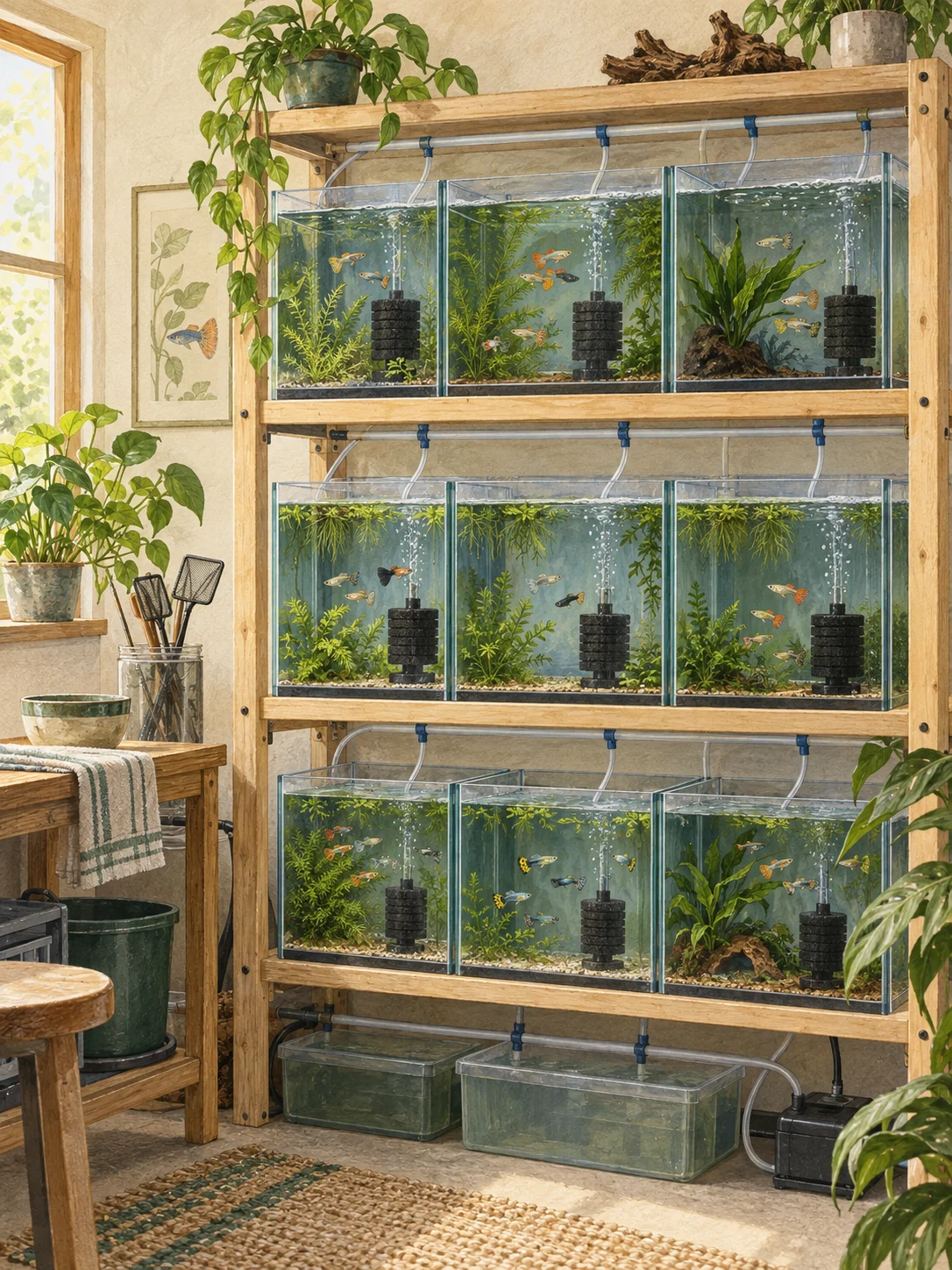
Our guppy guides focus on practical routines: keep water stable, observe fish closely and allow for natural variation.
Care systems
Steady water, thoughtful care
Gentle filtration and regular observation support healthy aquarium routines.
Natural variation
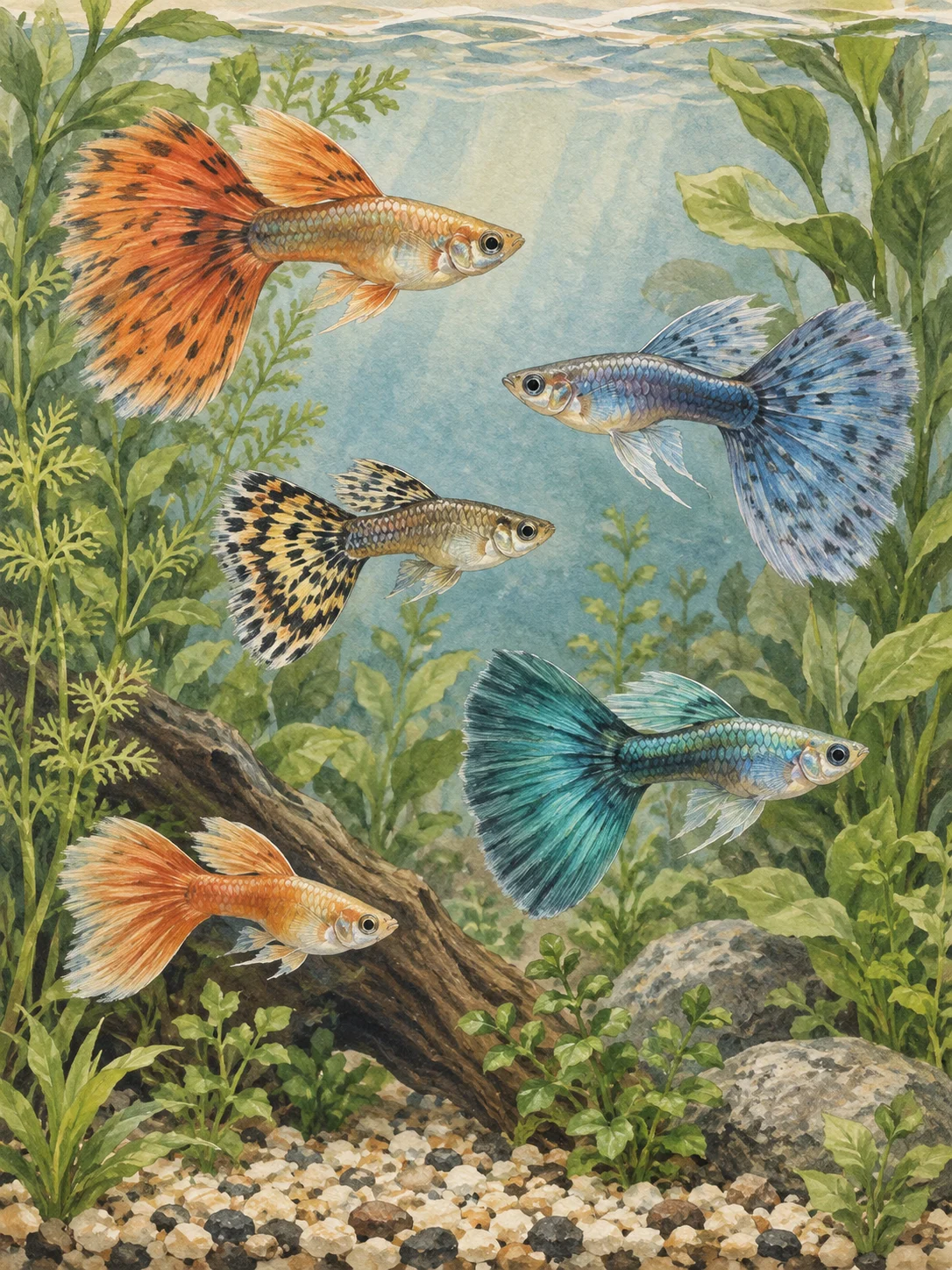
Every guppy is different
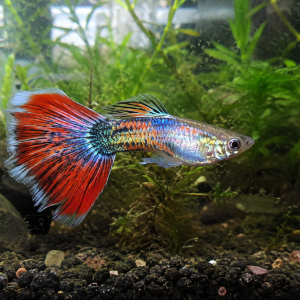
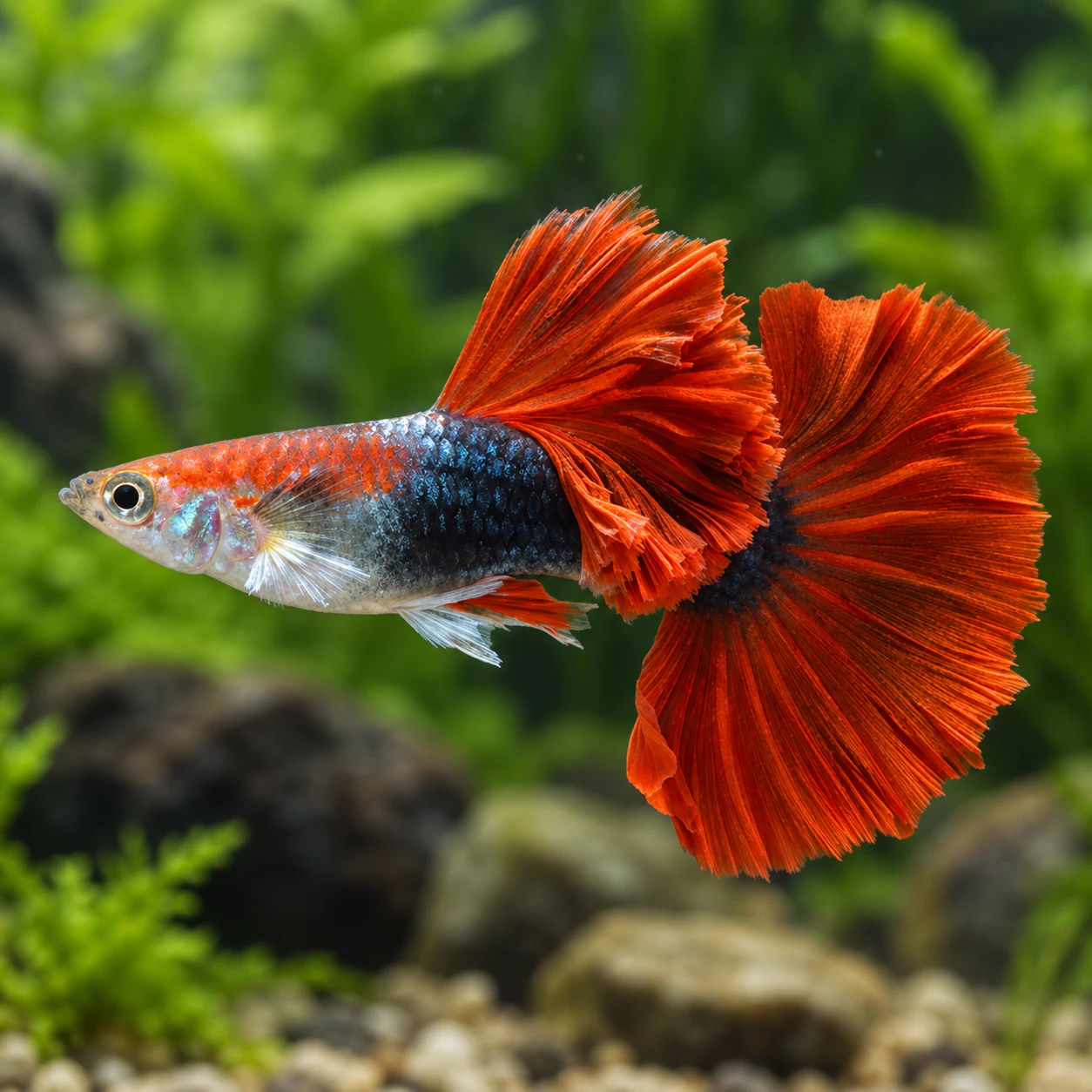
Color, size and fin shape vary with strain, age and each individual fish.
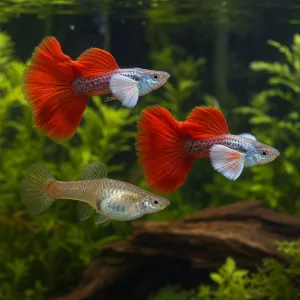
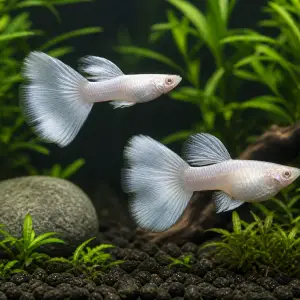
Editorial illustrations for context; they do not depict HiGuppy's exact facility or current fish stock.