The HiGuppy Journal
Male to Female Guppy Ratio: How Many of Each to Keep
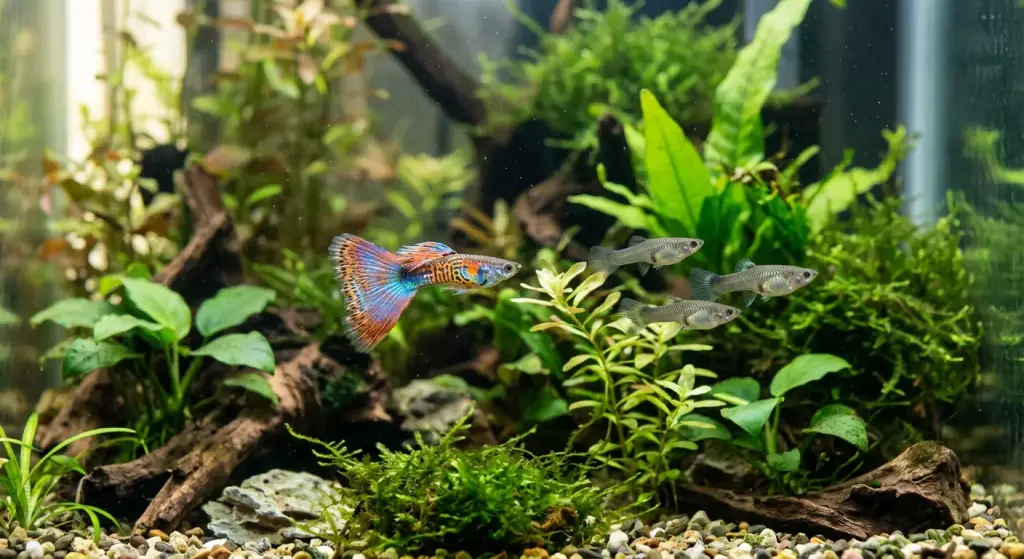
What is the best male to female guppy ratio? A good rule is one male for every two to three females, so at least two females per male. This spreads out the male’s constant courting and keeps the females from being worn out. Our guppy care guide covers the rest of the basics.
The male to female guppy ratio matters more than most beginners expect. Male guppies spend much of the day chasing females, and when there are too few females, the ones you have get harassed. This guide explains the ratio, why it works, and how to adjust it for your tank size.
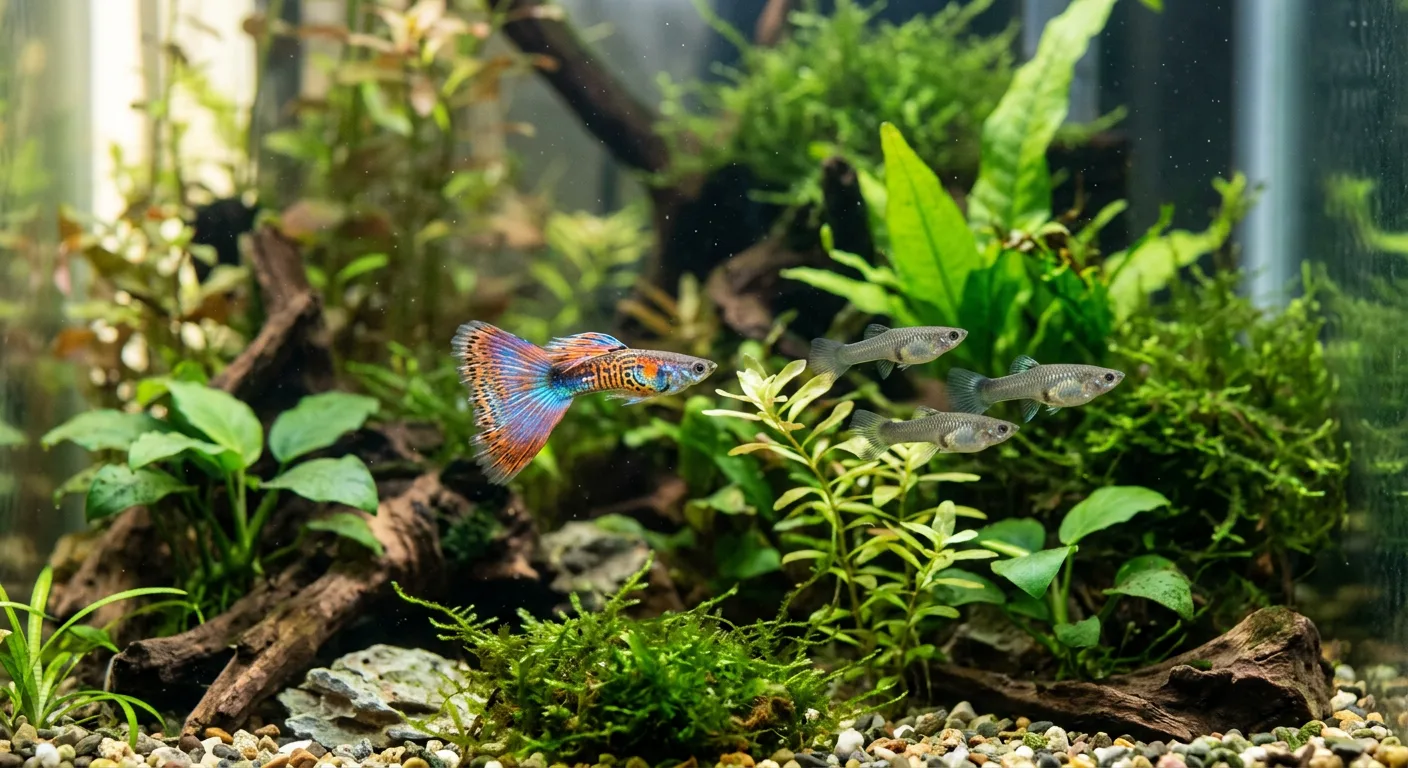
Quick answer: the ideal male to female guppy ratio
| Setup | Suggested ratio | What to expect |
|---|---|---|
| Breeding group | 1 male : 2–3 females | Regular fry, less stress on each female |
| Community tank | 1 male : 3 females or more | Calmer tank, males spread attention |
| Males only | No females | No fry, but males may squabble |
| Females only | No males | Calm, no new fry (stored sperm may still produce a brood) |
| Equal numbers | 1 : 1 | Not recommended, females get harassed |
Why the male to female guppy ratio matters
Male guppies are driven to mate. They display, follow and try to mate with females again and again. If there is one female and one male, she gets all of that attention. Over time this can mean stress, hiding, torn fins and less eating.
With more females, the attention is shared. Each female gets breaks, and the tank looks more relaxed. That is why most keepers aim for the 1 male to 2 or 3 females pattern. If you notice constant chasing anyway, read why guppies chase each other.
How to tell males from females
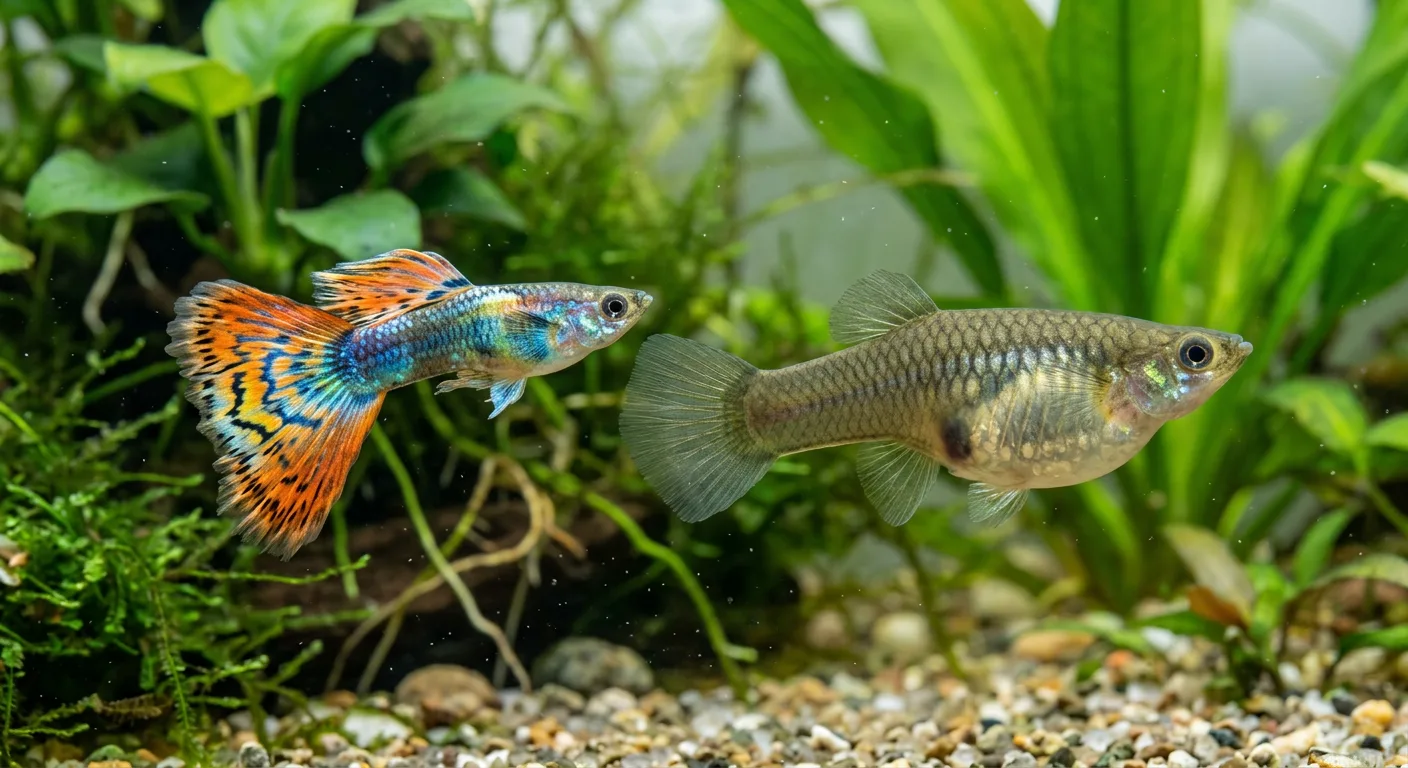
Before you work out any ratio, you need to sex your guppies correctly. Males are usually smaller and more colorful, with a thin pointed anal fin called a gonopodium. Females are larger, plainer and have a rounded belly and a fan-shaped anal fin. Our male vs female guppy guide shows the differences in detail.
Best male to female guppy ratio by tank size
Ratio is only half of the picture. Tank size decides how many guppies can live together comfortably. As a rough guide, a 10-gallon tank suits a small group, and a 20-gallon tank gives more room for a trio plus extras. See how many guppies per gallon for stocking limits.
| Tank size | Example group | Notes |
|---|---|---|
| 5 gallons | 1 male + 2 females at most, or a single sex group | Very tight; breeding will outgrow it fast |
| 10 gallons | 1 male + 3 females | Needs plants and regular water changes |
| 20 gallons | 2 males + 5 or 6 females | Good space for a mixed group |
| 29 gallons and up | 3 males + 8 or more females | Easier to keep stable |
These are starting points, not strict rules. Heavy plants, good filtration and a regular cleaning routine allow more guppies, while a bare tank with weak filtration allows fewer.
Setting up the tank so the ratio works
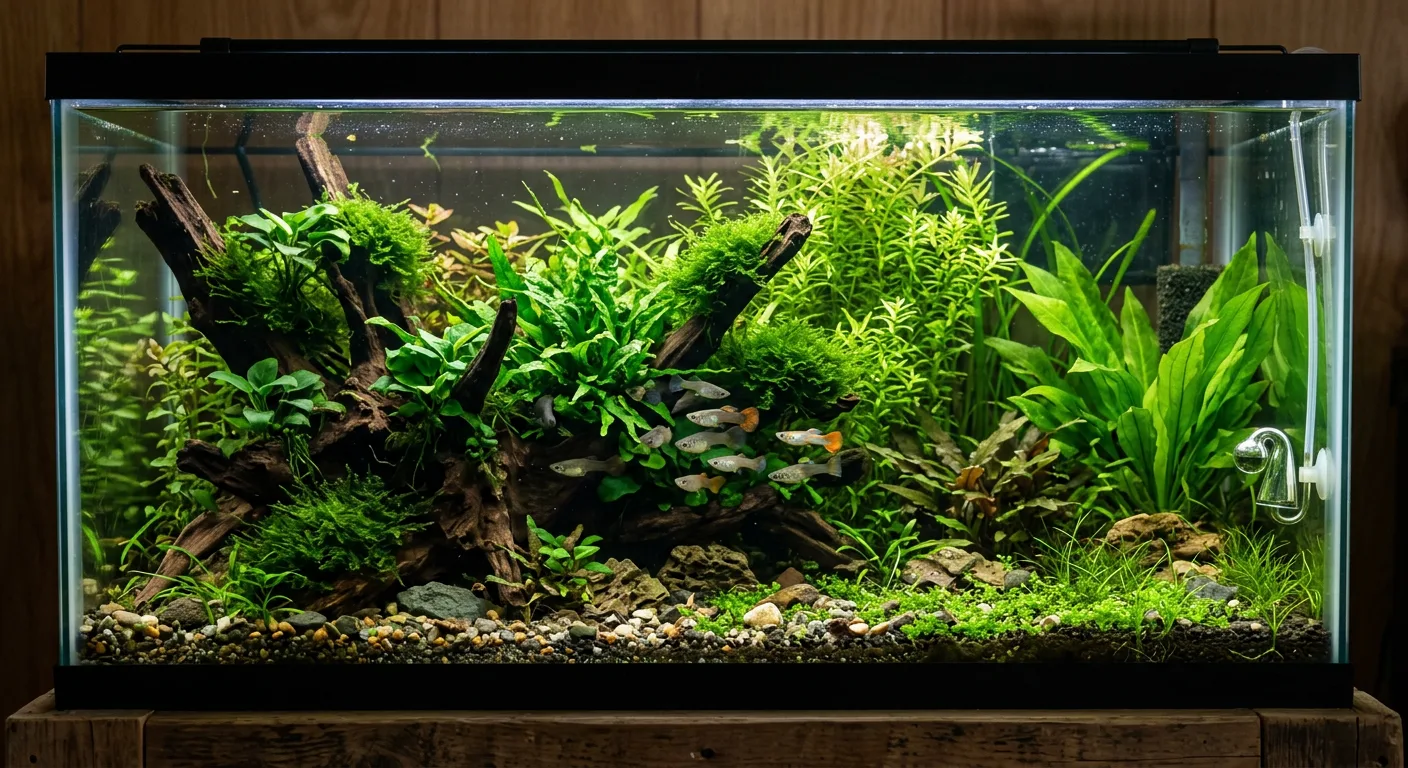
Even the right male to female guppy ratio fails in a bare tank. Dense plants such as java moss, hornwort or floating plants give females somewhere to rest out of sight. A planted layout also gives newborn fry cover. For ideas, see our planted guppy tank setup.
Tips for a calm tank
- Add plants and decorations that break up the line of sight.
- Keep more females than males. When in doubt, add another female.
- Feed small portions once or twice a day so everyone eats.
- Do regular partial water changes to keep the water clean.
- Watch for a female that is always hiding or has torn fins.
Signs your ratio is wrong
Your guppies will show you if the group is out of balance. Watch the females for a few minutes each day. A healthy tank has males displaying and females swimming freely, eating and resting between short bursts of courtship.
| Sign | Likely meaning | What to try |
|---|---|---|
| Female hides all day | Too much male attention | Add females and plants |
| Ragged or torn fins | Constant chasing or nipping | Rebalance the group, check water |
| Females stop eating | Stress from harassment | Give a rest tank for a few days |
| Males fight each other | Too many males for the space | Remove a male or add more females |
A simple fix: a rest tank
If one female looks worn out, move her to a small separate tank for a few days. A clean, planted container with gentle filtration is enough. Return her once she is eating well and her fins have recovered, ideally after you have improved the ratio in the main tank.
Does the ratio change for breeding?
For breeding, the same guideline applies, with one extra point: pregnant females need calm conditions. A guppy can be pregnant for roughly a month, and stress may affect her. If you want to see how the cycle works, our how to breed guppies guide walks through it step by step. Keeping more females also means you can rotate which females are with the male, giving each a break between broods.
If you plan to raise the fry, think about where they will live before the first birth. A second tank or a densely planted corner saves a lot of trouble later.
What to do if you already have too many males
If your tank leans heavily toward males, the simplest fix is to add females or move some males to another tank. Do this gradually and quarantine anything new first. Our guide to quarantining new guppies explains how.
If you have too many females, there is little harm. Extra females are usually fine and often calmer. The main issue is that females can give birth often, so the population can rise quickly. You can read more about the biology of the species on Wikipedia’s guppy page.
Buying guppies in the right ratio
The easiest way to get the ratio right is to buy a group that already has it. A trio is one male with two females, which fits the male to female guppy ratio guideline. You can browse our breeder trios if you want a ready-made breeding group.
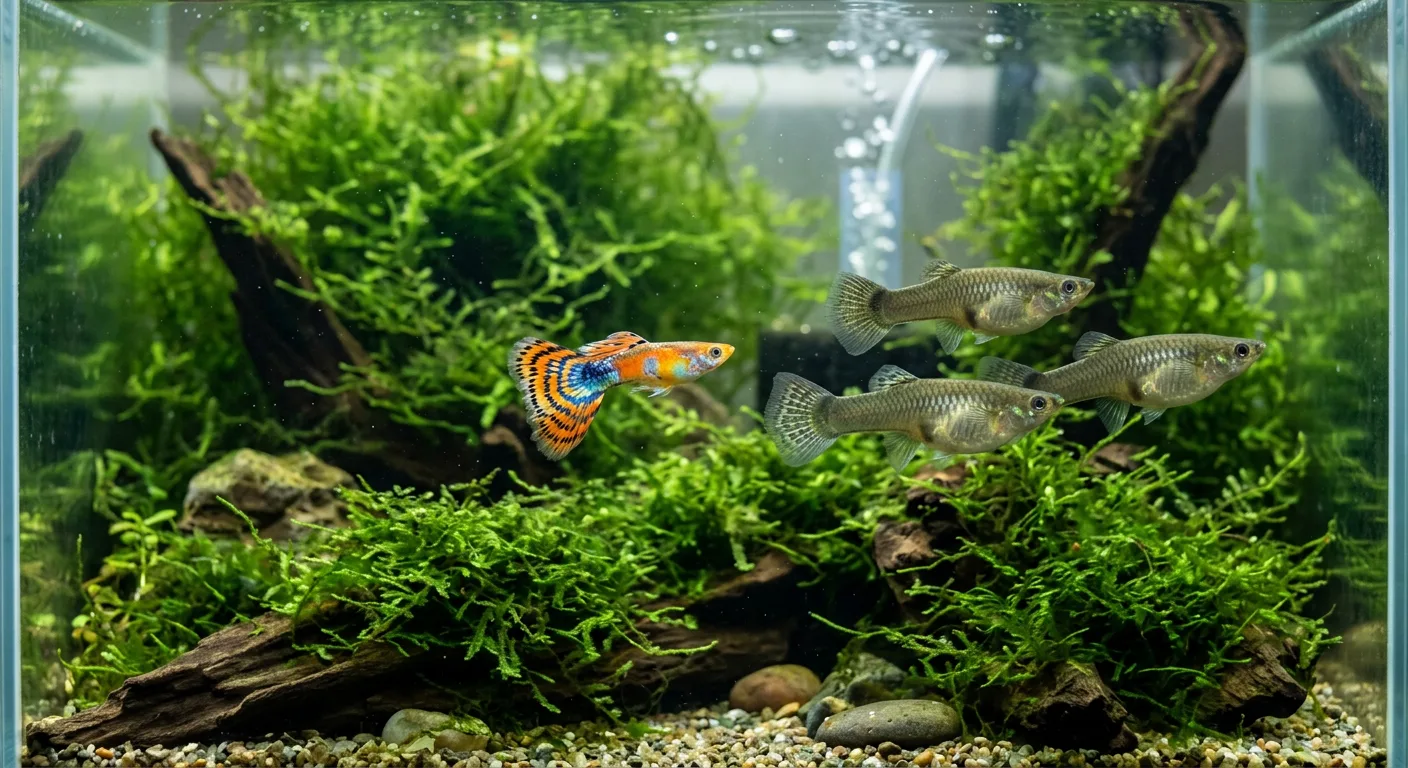
If you want to scale up later, add females first, then another male once the tank has space. For more on choosing your group size, check how many guppies should I buy, and return to the complete guppy care resource whenever you need a refresher.
FAQ
What is the best male to female guppy ratio?
Most keepers use one male to two or three females. More females is better than fewer, because it spreads the male’s attention across the group.
Can I keep one male and one female guppy?
You can, but the female may be chased constantly. Adding a second female usually makes the pair calmer and healthier.
Can I keep only male guppies?
Yes. A male-only tank will not produce fry. Males can still display and sometimes squabble, so give them plants and enough space.
Do I need males to get baby guppies?
Yes, a male is needed to fertilize a female. A female can also store sperm, so she may give birth for several months after being with a male.
What if I have too many females?
Too many females is usually not a problem for behavior. Just plan for more fry, since females can give birth regularly, and make sure the tank is not overcrowded.
Behind the care guides
Care begins with steady systems
Our guppy guides focus on practical routines: keep water stable, observe fish closely and allow for natural variation.

Care systems
Steady water, thoughtful care
Gentle filtration and regular observation support healthy aquarium routines.

Natural variation
Every guppy is different
Color, size and fin shape vary with strain, age and each individual fish.
Editorial illustrations for context; they do not depict HiGuppy's exact facility or current fish stock.