The HiGuppy Journal
Do Guppies Eat Their Babies? How to Save the Fry
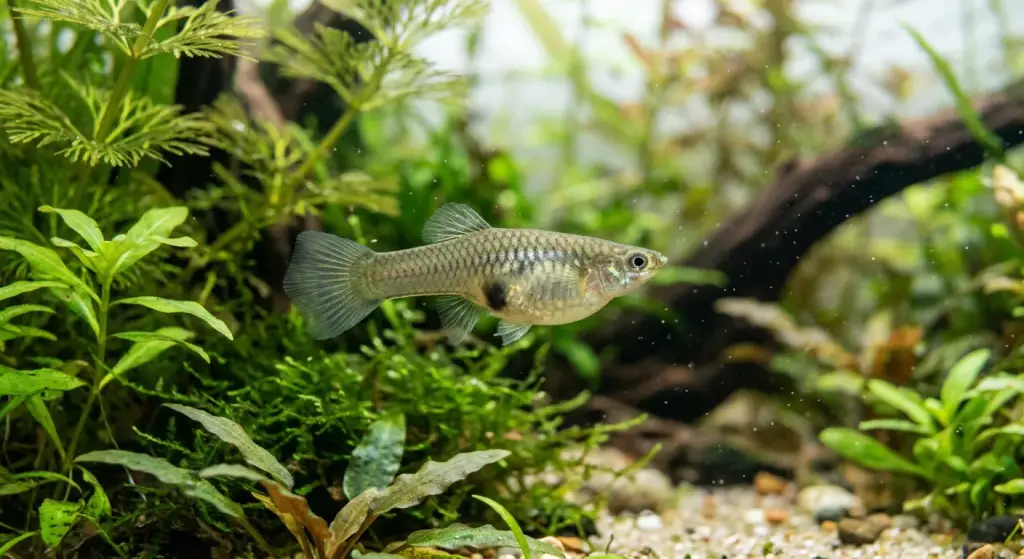
Do guppies eat their babies? Yes, they can. Adult guppies, including the mother, treat newborn fry as small moving food and will eat many of them if the fry have nowhere to hide. The good news is that dense plants, a breeder box and a well-fed tank can save most of a brood. Our guppy care guide covers the basics behind a calm tank.
If you are asking do guppies eat their babies because you just found fry in your tank, act in the next few minutes. This guide explains why it happens and how to protect the fry.
Do guppies eat their babies? Why it happens
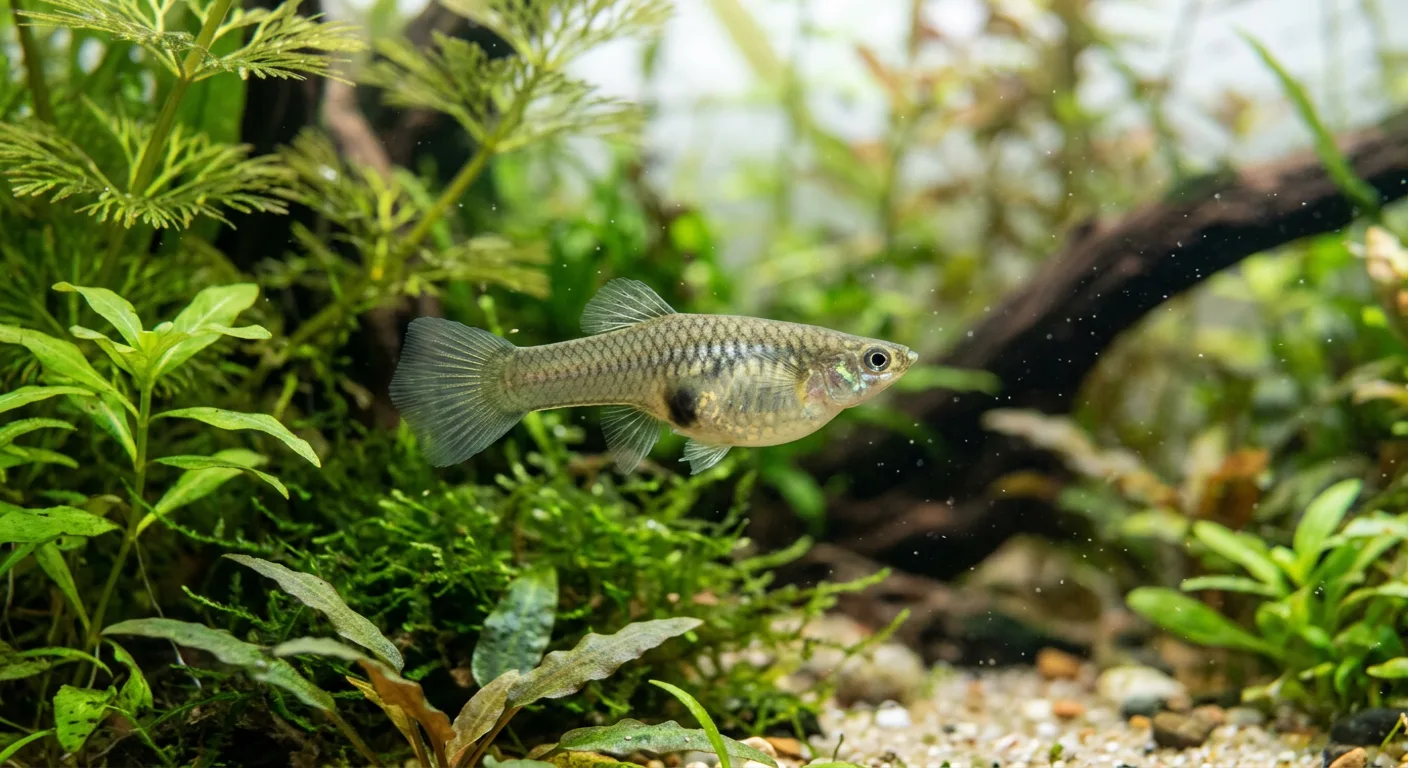
Guppies (Poecilia reticulata) are livebearers that give no parental care after birth. The guppy overview on Wikipedia notes that they will eat their own young. Newborn fry are small, slow and easy to catch, so to a hungry adult they look like food. It is instinct, not cruelty.
That is why so many first-time owners wonder whether do guppies eat their babies is just a myth. It is not, but you have a lot of control over the outcome.
What raises or lowers the risk
| Factor | Higher risk | Lower risk |
|---|---|---|
| Cover | Bare tank, few plants | Dense java moss, floating plants |
| Feeding | Adults underfed or fed rarely | Adults fed small meals regularly |
| Tank size | Small, crowded tank | Roomier tank, fewer adults |
| Birth location | Open water, no protection | Breeder box or separate tank |
Treat this table as a general guide. Every tank is a little different.
Use plants as the easiest protection
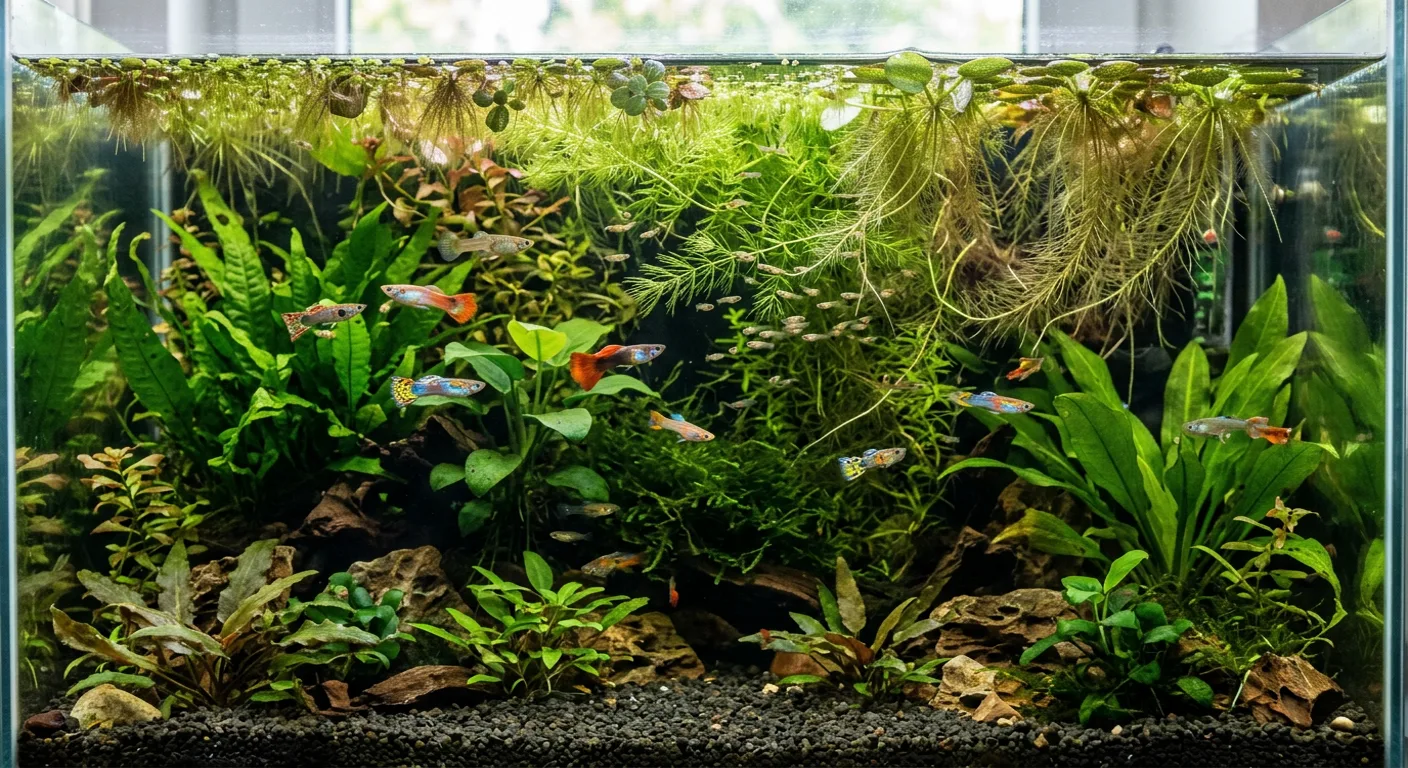
Fry instinctively swim to the top and into cover after birth. Thick clumps of java moss, hornwort or floating plants give them small spaces that adults cannot easily reach. Our guide to the best live plants for guppies lists good options.
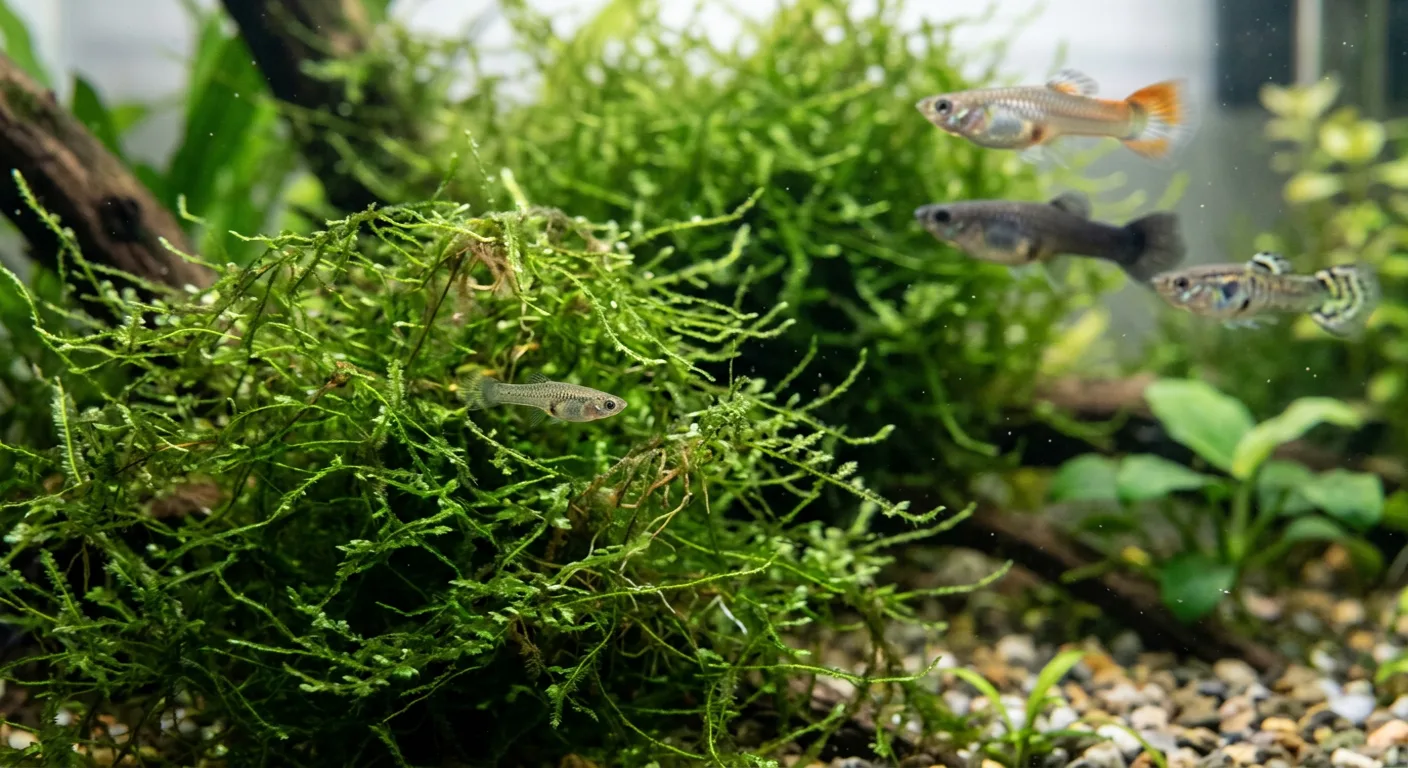
A planted tank also keeps adults busy picking at algae and leftovers, which lowers the urge to hunt. You will rarely save every fry this way, but plants usually let a good share survive.
Breeder box or separate tank
A breeder box or a small separate tank gives the best odds. Move the pregnant female only when she looks ready, because stress can be a problem. You can read the signs in our guppy pregnancy stages guide. After she gives birth, return her to the main tank right away so she does not eat the fry.
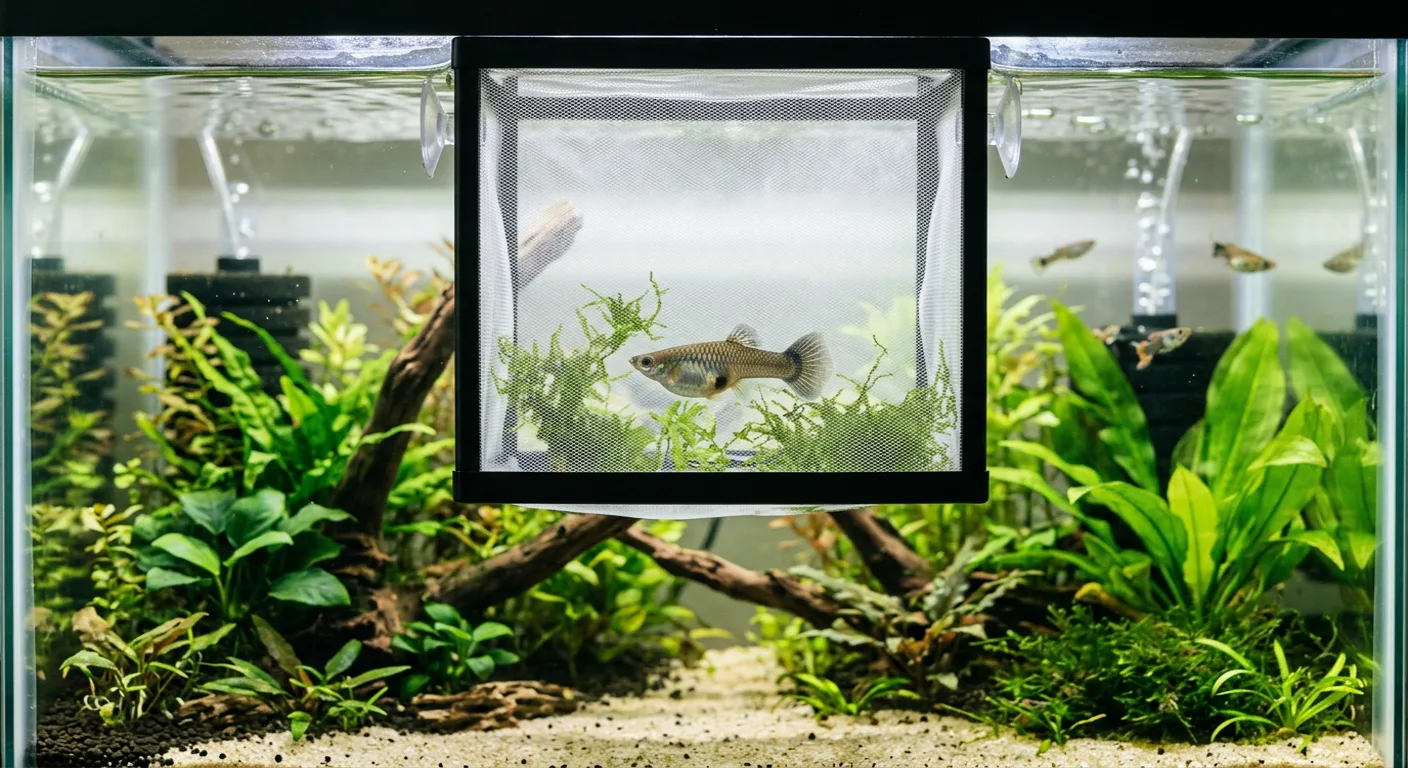
- Pick a box with narrow slots so fry can drop through to a safe area.
- Do not leave the mother in a small box for days.
- Keep the water clean and at the same temperature as the main tank.
A separate, bare-bones grow-out tank is better when you plan to raise a whole brood. See our guppy breeding tank setup for a simple build.
Feed the adults, then feed the fry
Well-fed adults are less eager to hunt. Offer small meals once or twice a day rather than one big feeding. Fry need tiny food several times a day, such as crushed flakes or fry food, and our guppy fry feeding schedule shows how often.
When can fry join the adults?
Fry are safe with adults only once they are too big to fit in an adult’s mouth. This usually takes several weeks, depending on growth and food. Compare the fry with your smallest adult before moving them. Our guide on when guppy fry can join adults explains the timing.
If you want healthy breeding stock to start with, browse our guppy breeder trios. For a wider overview of raising a healthy tank, return to the complete guppy care guide.
Do guppies eat their babies in every tank?
Not every brood is lost. In a heavily planted community tank, some fry slip through every time, and a few reach adult size without any help. Still, you should never count on luck. If you want a real number of survivors, plan cover, feeding and separation before the female drops her fry, and ask yourself again whether do guppies eat their babies in your setup, then prepare for the answer being yes. That mindset saves more fry than any single product.
Common mistakes to avoid
- Leaving the tank bare with no hiding places.
- Waiting until fry appear before adding plants.
- Keeping the pregnant female in a tiny box for too long.
- Skipping regular feeding of adult fish.
- Moving fry in with adults too early.
Most guppy keepers accept that some fry will be lost. The goal is to improve the odds, not to reach a perfect survival rate. Prepare cover and a safe space before the birth, and you will usually keep more fry than you expected.
How to spot labor and be ready
A pregnant female usually grows boxy, her gravid spot darkens and she may hide, breathe faster or shake near the end. Birth tends to happen in several short rounds, so fry can appear over hours rather than all at once. If you know the female is close, add extra plants a few days ahead so the cover is already settled when the first fry arrive. Do not chase her around the tank with a net, because that adds stress and can make things worse.
What to do in the first hour after birth
Newborn fry drop to the bottom or dart toward the surface and nearby plants. In the first hour, watch the tank calmly and avoid sudden changes. If you do not use a breeder box, you can gently scoop fry with a small cup into a separate container of tank water. Moving them with a net can injure them, so use a cup or a fine spoon instead. Match the temperature and avoid pouring in fresh tap water.
- Keep the lights on a normal schedule and avoid loud movement near the tank.
- Check the plants and make sure fry can reach cover.
- Feed the adults a small meal so they are less likely to hunt.
- Move fry to a grow-out tank if you want the best survival odds.
- Offer fry tiny food within the first day.
Is it worth saving every fry?
Guppies can have large broods, and a single female can produce many fry across a season. If you do not want a crowded tank, letting nature take its course is a valid choice, and many keepers allow some natural culling. If you want to raise the fry for a strain project or to sell, plan for extra tank space, clean water and daily feeding before you start. Raising fry is a bigger commitment than most beginners expect, so decide early how many you can house.
FAQ
Do guppies eat their babies?
Yes. Adults, including the mother, may eat newborn fry because they look like small food. Plants and a breeder box lower the risk a lot.
Do guppies always eat their babies?
No. Many fry survive in a planted tank with plenty of cover and well-fed adults, although some losses are common.
Should I remove the mother after birth?
Yes, if she is in a breeder box or separate tank. Return her to the main tank soon after the birth so she does not eat the fry.
Do male guppies eat the babies too?
Yes. Any adult guppy may eat fry that swim into reach, so cover matters even in a tank with only a few adults.
How long until fry are safe with adults?
Usually several weeks, once the fry are too large to be swallowed. Check their size against your smallest adult before moving them.
Behind the care guides
Care begins with steady systems
Our guppy guides focus on practical routines: keep water stable, observe fish closely and allow for natural variation.

Care systems
Steady water, thoughtful care
Gentle filtration and regular observation support healthy aquarium routines.

Natural variation
Every guppy is different
Color, size and fin shape vary with strain, age and each individual fish.
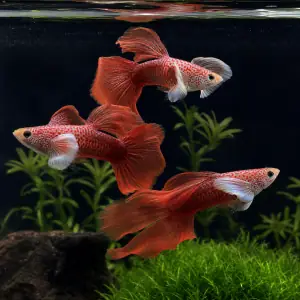
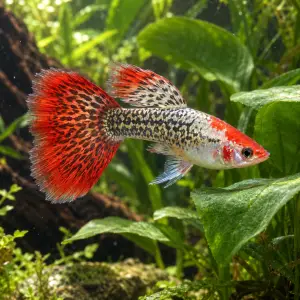
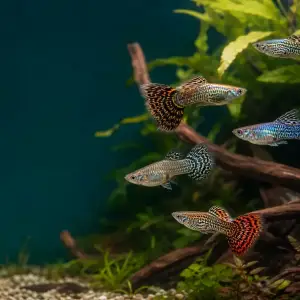
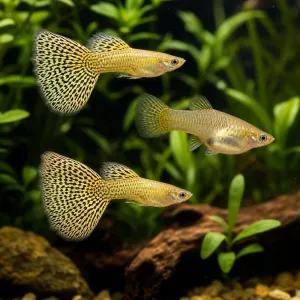
Editorial illustrations for context; they do not depict HiGuppy's exact facility or current fish stock.