The HiGuppy Journal
Guppy Breeding Chart: Gestation, Fry Growth and Genetics at a Glance
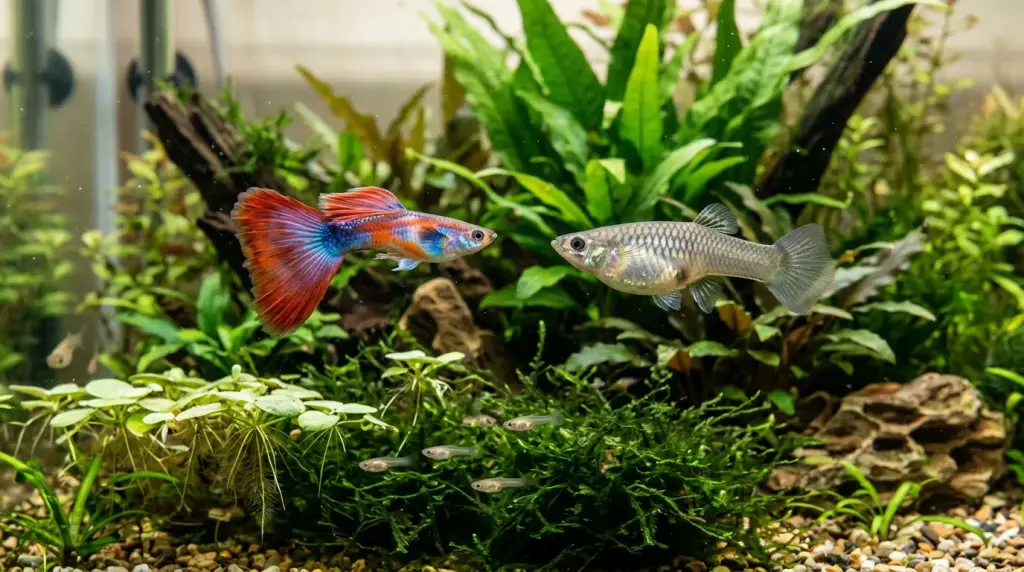
Guppy breeding chart in brief: guppies mature at about 2–3 months, gestation lasts roughly 21–35 days (about 28 days at 26°C), and a female drops 5–60 fry, sometimes up to 100, every four to five weeks from stored sperm. Fry reach adult size in about three months. Breed at 25–27°C with one male to two or three females.
Breeding is the part of guppy care that surprises most beginners, because it happens so fast. This guppy breeding chart puts the key numbers in one place: breeding basics, gestation, fry growth week by week, feeding, and how colour genes are passed on. Bookmark the guppy breeding chart as a reference next to your tank, and treat the ranges as typical rather than exact, since every line and tank is a little different.
Key takeaways
- Fast cycle: about one brood every 4–5 weeks per female, from a single mating thanks to sperm storage.
- Temperature drives timing: warmer water (up to about 27°C / 80°F) shortens gestation and speeds fry growth.
- Brood size grows with the female: first broods are often 5–20 fry; large adult females can drop 50 or more.
- Separate sexes early: young guppies can breed from about 2–3 months, so sort males and females at around 4–8 weeks if you want control.
- Genetics are predictable: many male colour traits pass from father to sons, while gold, blond and albino are recessive.
Guppy breeding chart: the basics at a glance
| Breeding factor | Typical value | Notes |
|---|---|---|
| Sexual maturity | About 2–3 months | Males often mature earlier than females; some breed from 6–8 weeks in warm water |
| Gestation period | About 21–35 days | Around 28 days at 26°C (79°F); longer in cooler water |
| Brood size | 5–60 fry (up to about 100) | Young or small females drop fewer; large, well-fed females drop more |
| Time between broods | About 4–5 weeks | Females can be pregnant again within days of giving birth |
| Sperm storage | Several broods per mating | A female can give birth months after the male was removed |
| Best breeding temperature | 25–27°C (77–80°F) | Keep it stable; sudden swings stress pregnant females |
| Water parameters | pH 7.0–8.0, moderately hard | Ammonia and nitrite at 0 ppm; nitrate kept low with water changes |
| Sex ratio | 1 male : 2–3 females | Reduces harassment of any single female |
| Productive breeding life | About 1–1.5 years per female | Brood size and frequency drop with age |
Guppy gestation period chart: what happens week by week
This part of the guppy breeding chart follows a single pregnancy. Guppies are livebearers, so the embryos develop inside the female and are born as free-swimming fry. The timeline below assumes about 26°C.
| Stage | Approximate timing | What you see |
|---|---|---|
| Mating | Day 0 | Male chases and displays; mating takes a split second |
| Early pregnancy | Days 1–10 | Little visible change; gravid spot slightly darker |
| Mid pregnancy | Days 10–20 | Belly rounds out; gravid spot clearly darker and larger |
| Late pregnancy | Days 20–28+ | Boxy, squared belly; fry eyes may show in the gravid spot |
| Birth | About day 21–35 | Female hides or hovers; fry are born over a few hours |
| Next brood | About 4–5 weeks later | Stored sperm often starts the next pregnancy almost at once |
For pictures of each stage, see our guppy pregnancy stages and gestation guide.
Guppy fry growth chart by age
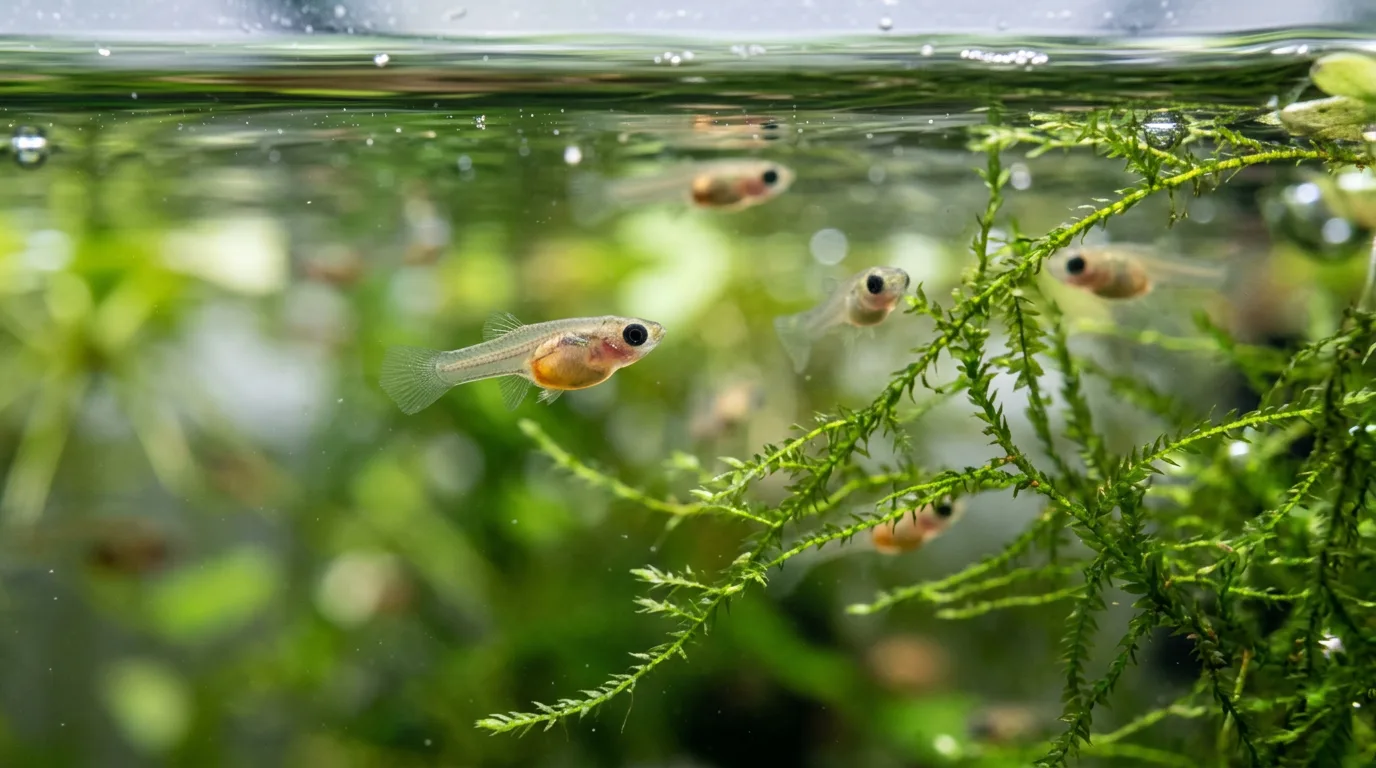
Fry growth depends on temperature, food, water changes and how crowded the tank is. These are typical milestones in a warm, clean grow-out tank with frequent small feedings.
| Age | Typical size | Milestone | Care focus |
|---|---|---|---|
| Birth (day 0) | About 6–7 mm (0.25 in) | Free swimming, hides in plants | Cover, gentle filter, first food within hours |
| Week 1–2 | About 7–10 mm | Feeding actively, staying near the surface and plants | 4–5 tiny meals a day |
| Week 3–4 | About 1–1.5 cm | Body fills out; first colour may show in tails | Small daily water changes |
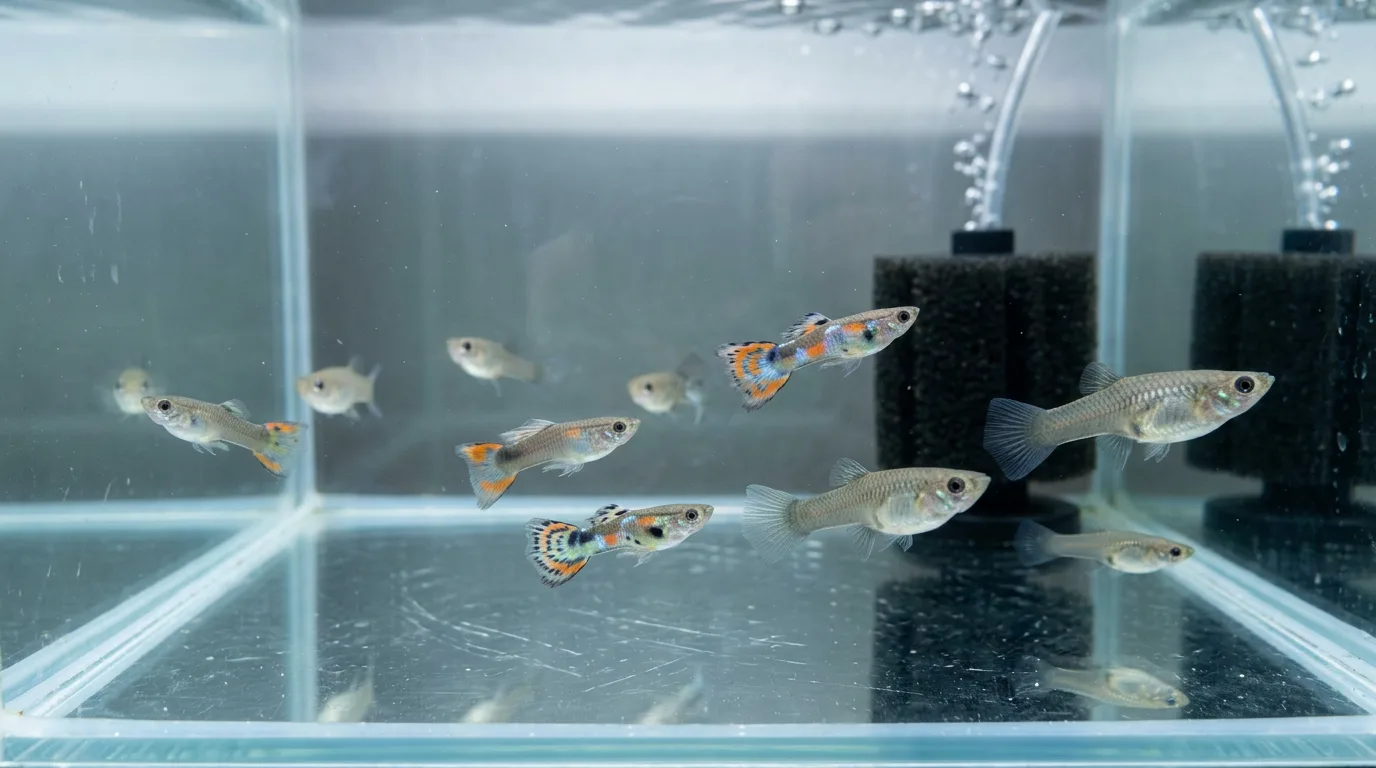
| Week 4–8 | About 1.5–2 cm | Females may show a gravid spot; male anal fin starts turning into a gonopodium | Sort males and females if you want control |
| Month 2–3 | About 2–3 cm | Males colour up and fins lengthen; young fish can breed | Move to adult food; more swimming space |
| Month 3–6 | Adult size (males about 3–3.5 cm, females up to 5–6 cm) | Full colour and finnage; females keep growing | Select breeders; adult care |
For a more detailed stage-by-stage view, read our guppy growth stages guide and the full guide to raising guppy fry.
Guppy breeding chart for fry feeding
| Age | Best foods | Meals per day |
|---|---|---|
| Week 1–2 | Baby brine shrimp, microworms, finely powdered fry food | 4–5 small meals |
| Week 3–6 | Baby brine shrimp, crushed flake, micro pellets | 3–4 meals |
| Week 6–12 | Crushed flake, small pellets, frozen daphnia or brine shrimp | 2–3 meals |
| Adults | Quality flake or pellets plus live or frozen foods | 1–2 meals |
Feed only what the fry finish in about a minute, and siphon leftovers. Our guppy fry feeding schedule gives a day-by-day plan.
Guppy genetics chart: how traits are passed on
The last table in this guppy breeding chart covers guppy genetics.
Fancy guppy colours and fins are controlled by many genes, but a few inheritance patterns explain most of what breeders see. Knowing which pattern a trait follows tells you how to pair your fish.
| Inheritance type | How it passes | Example traits | Breeding tip |
|---|---|---|---|
| Y-linked | Father to all sons; daughters do not show it | Many male body colours and patterns, such as classic snakeskin lines | Choose the male carefully; he sets the sons’ look |
| X-linked | Carried on the X chromosome; can pass to sons and daughters | Half-black (tuxedo) in many lines | Females carry and pass these traits even when they look plain |
| Autosomal recessive | Shows only when both parents pass a copy | Albino, gold, blond | Crossing to a non-carrier hides it; breeding the offspring together brings back about 25% |
| Autosomal dominant | Shows with one copy from either parent | Wild-type grey body colour over gold or albino | One parent with the trait is enough |
A simple recessive example
Pair an albino guppy with a normal grey guppy that carries no albino gene. All the first-generation fry look normal but carry one albino copy. Breed two of those fry together and, on average, about one in four of their young will be albino, two in four will be carriers, and one in four will be non-carriers. This is why breeders keep good records and often keep several generations of the same line.
Line breeding and inbreeding
Breeders fix traits by pairing related fish from the same line, then selecting the best of each generation. Done carefully, this keeps colour consistent. Done carelessly, it can cause smaller broods, bent spines and weaker fry. Bring in an unrelated fish of the same strain every few generations. Our step-by-step guide on how to breed guppies covers selection and record keeping in more detail.
How to use this guppy breeding chart
- Plan the space first. Each female can add dozens of fry a month, so set up a grow-out tank before you start. See guppy breeding tank setup.
- Pick healthy breeders. Choose active fish with full colour, straight spines and complete fins, ideally from the same strain.
- Mark the calendar. Note when females go in with males and when each brood is born; gestation and brood intervals become easy to predict.
- Sort the fry. Separate males and females at about 4–8 weeks, then decide which fish join the adults. Our page on when guppy fry can join adults explains the size to wait for.
- Keep water clean. Fry tanks foul fast with frequent feeding, so small daily or every-other-day water changes pay off.
New to keeping guppies at all? Start with our page on how to take care of guppies, then come back to this chart when you are ready to breed. For background on guppy biology and reproduction, see Wikipedia’s guppy article.
FAQ
How often do guppies breed?
A mature female usually gives birth about every four to five weeks. She can store sperm, so one mating can produce several broods in a row without a male present.
How long are guppies pregnant?
Guppy gestation lasts about 21–35 days, usually around four weeks at 26°C (79°F). Cooler water slows development and warmer water speeds it up.
How many fry does a guppy have?
Most broods are 5–60 fry. First broods from young females are often 5–20, while large, well-fed adult females can drop 50 or more, occasionally close to 100.
At what age can guppies breed?
Guppies can breed from about 2–3 months old, and some males are ready earlier in warm water. Separate young males and females by about 4–8 weeks if you want to control pairings.
How fast do guppy fry grow?
Fry are born about 6–7 mm long, reach about 1.5–2 cm by 4–8 weeks, and approach adult size by about three months. Warm water, frequent small meals and clean water speed growth.
Behind the care guides
Care begins with steady systems
Our guppy guides focus on practical routines: keep water stable, observe fish closely and allow for natural variation.
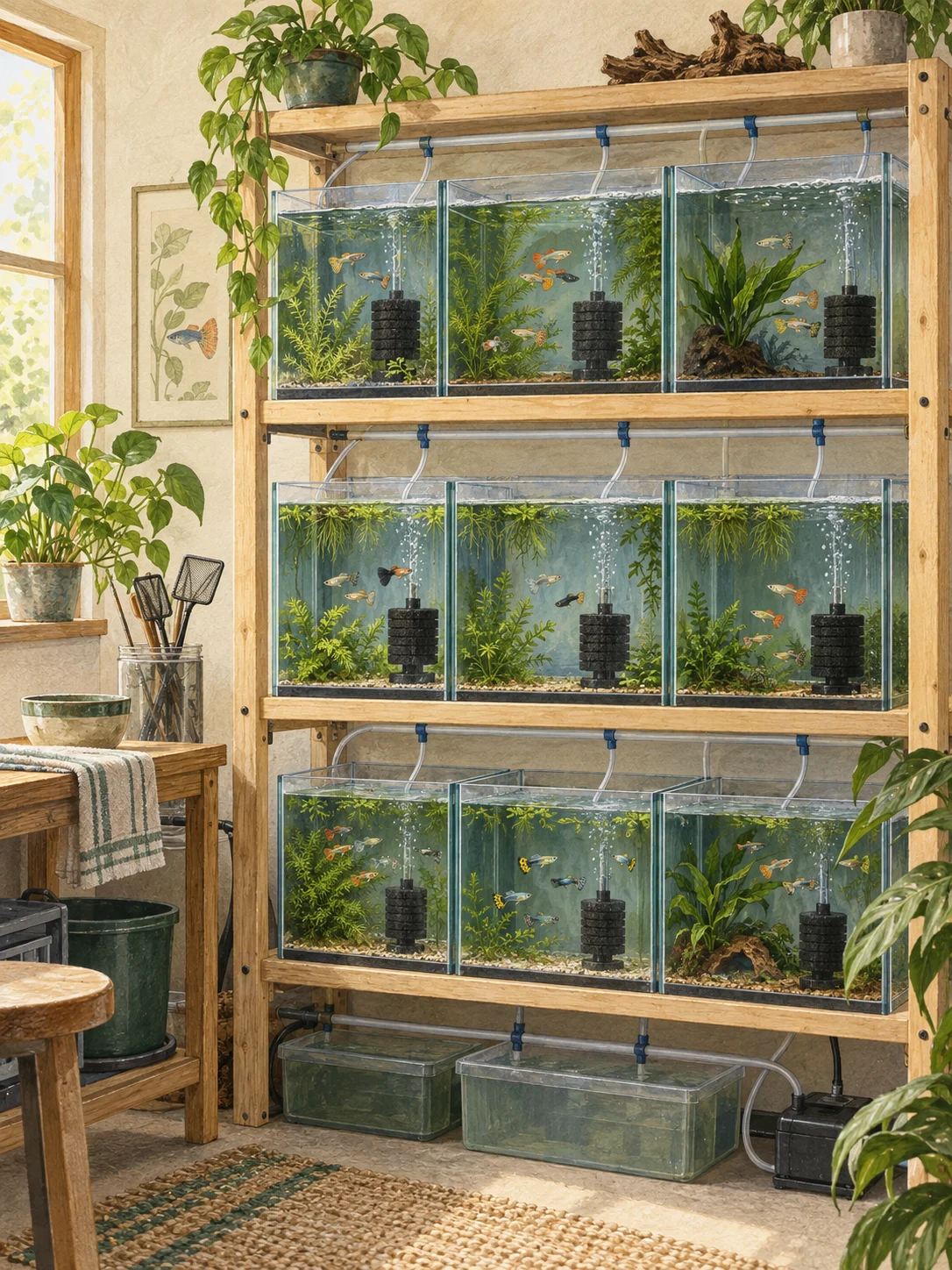
Care systems
Steady water, thoughtful care
Gentle filtration and regular observation support healthy aquarium routines.
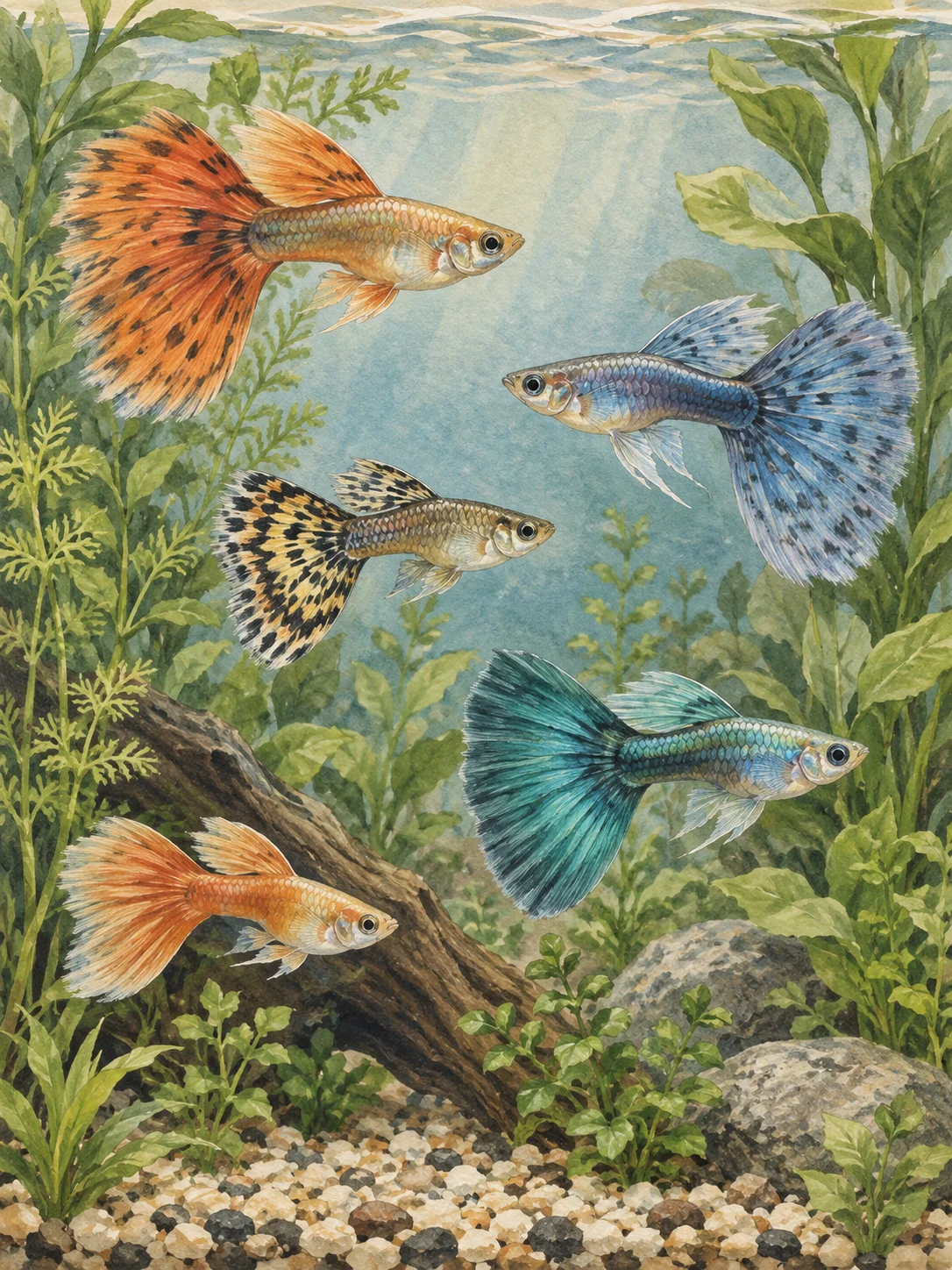
Natural variation
Every guppy is different
Color, size and fin shape vary with strain, age and each individual fish.
Editorial illustrations for context; they do not depict HiGuppy's exact facility or current fish stock.