Guppy Care Article
Guppy Fin Rot vs Torn Fins: Signs, Causes & First Steps
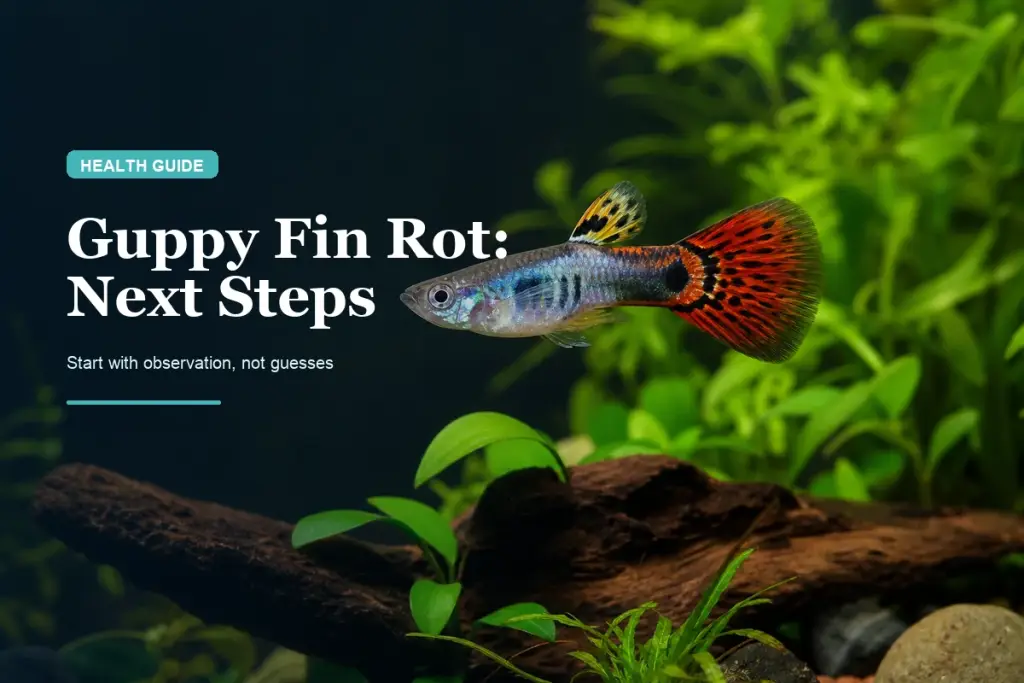
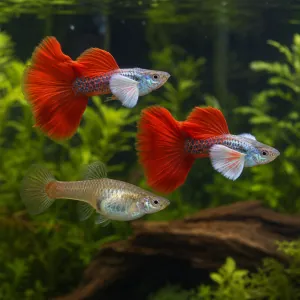
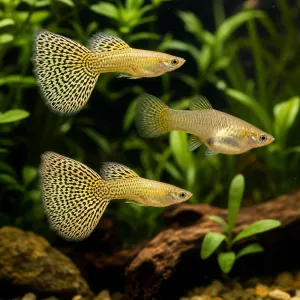
Guppy fin rot usually describes fins that progressively fray, recede, discolor, or develop inflamed edges. But not every ragged tail is an infection: guppies can also tear fins on decor, suffer fin-nipping, or arrive with shipping damage. The most useful clue is progression—a clean tear that starts healing behaves differently from an edge that keeps eroding.
Quick answer
Check ammonia and nitrite first, then look for chasing, sharp decor, unstable temperature, and whether the fin edge is improving or worsening day by day. Stable clean water and removal of the original stressor are the first priorities. If tissue loss continues, the edge becomes red or cloudy, ulcers appear, or the fish becomes lethargic or stops eating, move beyond “wait and see” and seek qualified fish-health guidance.
What does guppy fin rot look like?
Fin rot is a descriptive aquarium term rather than a single laboratory diagnosis. Possible signs include:
- Fin edges becoming increasingly ragged or uneven
- A tail or dorsal fin appearing shorter over several days
- Whitish, gray, reddish, or inflamed-looking edges
- Small areas of tissue loss that continue to expand
- Clamped fins, hiding, reduced appetite, or lower activity
- Other skin lesions, redness, or ulcers in more serious cases
Because several problems can damage fins, use the broader Guppy Diseases Guide if the fish has additional symptoms that do not fit simple fin damage.
Fin rot vs a torn or nipped fin
| Clue | More consistent with a tear or nipping | More concerning for progressive fin disease |
|---|---|---|
| Shape | One split, notch, or missing section | Multiple edges becoming increasingly ragged |
| Progression | Stable or gradually improving | Fin margin keeps receding |
| Edge appearance | Usually clean after the initial injury | May become cloudy, pale, red, or inflamed |
| Behavior | Fish may otherwise act normally | May clamp fins, hide, eat less, or become lethargic |
| Tank clues | Chasing, fin-nipping, or sharp decor | Poor water quality, chronic stress, injury plus secondary infection |
A torn fin can become infected if water quality is poor or the fish remains stressed, so the categories are not mutually exclusive. Take a clear photo from the same angle each day if you are unsure whether the edge is healing.
Common causes and risk factors
1. Poor or unstable water quality
Ammonia, nitrite, heavy organic waste, low oxygen, and abrupt parameter changes can damage gills and skin defenses and increase disease risk. Merck Veterinary Manual notes that bacterial outbreaks in aquarium fish are often associated with poor water quality, organic loading, transport, temperature changes, hypoxia, and other stressors.
Compare your readings with Higuppy’s Guppy Water Parameters Guide and use gradual maintenance practices from the Guppy Water Change Guide.
2. Fin-nipping and aggression
Repeated chasing can keep reopening tissue. Watch the tank rather than only the injured fish: a problem that looks “infectious” may be physical damage happening every day. Review compatible stocking in the Best Tank Mates for Guppies guide.
3. Sharp decor or equipment
Rough plastic plants, sharp rock edges, intake gaps, or hard netting can tear large guppy tails. Run a finger carefully over decor and inspect any area where fish squeeze through.
4. Shipping and handling stress
New arrivals may have minor splits or compressed fins after transport. Give them stable conditions, low stress, and observation rather than immediately combining several medications. Higuppy’s Guppy Acclimation Guide and quarantine and observation process cover the first-arrival workflow.
5. Bacterial disease
Several bacteria can cause fin, skin, and ulcerative disease in freshwater fish. Visual appearance alone cannot identify the organism. Merck recommends correcting predisposing stressors and, when antimicrobial treatment is warranted, selecting therapy based on diagnosis and sensitivity testing when possible rather than using antibiotics indiscriminately.
What to check first
- Test ammonia and nitrite. Both should be at safe, non-detectable levels in a mature aquarium. Also review nitrate, pH, and temperature.
- Compare photos over 24–48 hours. Is the fin edge stable, healing, or continuing to recede?
- Watch for bullying. Observe feeding time and quieter periods when chasing may be easier to spot.
- Inspect decor and filter intakes. Remove or smooth obvious hazards.
- Check oxygen and temperature stability. Increase surface movement if oxygenation is questionable.
- Perform appropriate maintenance. Correct water-quality problems without causing a sudden temperature or pH swing.
- Isolate when needed. A calm hospital or quarantine setup can be useful if the fish is being attacked or needs close observation.
When clean water may be enough—and when it may not be
A small mechanical tear that stops worsening can often heal when the source of injury is removed and water quality is excellent. You should become more concerned when tissue loss continues, redness spreads, the fin base becomes involved, ulcers appear, the fish stops eating, breathing becomes abnormal, or multiple fish develop similar lesions.
Those signs justify professional fish-health assessment rather than repeated trial-and-error medication. Diagnostic testing matters because bacterial, parasitic, fungal, and physical problems can look similar.
Should you medicate guppy fin rot?
Do not treat every damaged fin with antibiotics “just in case.” Aquarium-fish guidance from Merck recommends environmental correction plus targeted therapy and discourages prophylactic medication without diagnosis because inappropriate antimicrobial use can contribute to resistance and complications.
If medication is recommended, calculate the true water volume, follow the product or veterinarian’s directions precisely, and avoid mixing treatments unless the combination is specifically supported.
How to help fins recover
- Keep ammonia and nitrite controlled and water parameters stable.
- Reduce aggression and overcrowding.
- Remove sharp or abrasive decor.
- Maintain gentle but adequate filtration and surface movement.
- Feed a balanced diet without overfeeding.
- Keep nets and quarantine tools clean and separate.
- Observe the fin edge daily instead of making frequent unnecessary changes.
Fin tissue can regrow after mild damage if the fin base remains healthy and the underlying problem is corrected. Regrowth may initially look clear or translucent before developing more normal color.
Frequently asked questions
Can guppy fins grow back after fin rot?
Minor to moderate fin loss can regrow when the damage stops and the fish remains otherwise healthy. Recovery is less predictable when tissue loss reaches the fin base or when a serious systemic illness is present.
Is every torn guppy tail fin rot?
No. A single clean split is often mechanical injury or nipping. Fin rot is more concerning when the margin continues to erode or changes color and the fish develops other signs of illness.
Is guppy fin rot contagious?
The appearance called “fin rot” can have different causes. Some infectious causes can spread or affect multiple stressed fish, while a torn fin itself is not contagious. Isolation is useful when diagnosis is uncertain or the fish is being bullied.
Does salt cure fin rot?
Salt is not a universal cure and may be inappropriate for some tank inhabitants or underlying conditions. Correct water quality and the cause of the damage first; use any treatment only when it fits the diagnosis and is dosed appropriately.
How fast should a damaged guppy fin improve?
There is no single timetable. The important early sign is that tissue loss stops progressing. If the fin continues to shrink or the fish becomes systemically unwell, seek qualified advice.
References: Merck Veterinary Manual, Bacterial Diseases of Fish and Management of Aquarium Fish.
Educational note: This guide helps with observation and husbandry decisions; it is not a veterinary diagnosis. Rapid tissue loss, ulcers, severe lethargy, breathing distress, or multiple deaths warrant aquatic veterinary or diagnostic help.
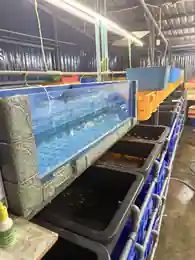
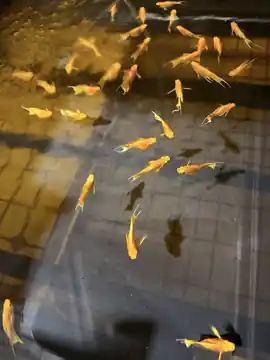
Real HiGuppy photographs
Inside the facility behind our guppy guides
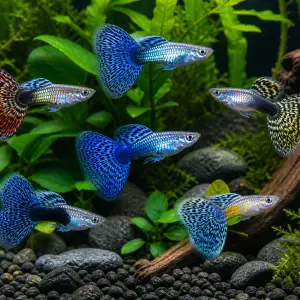
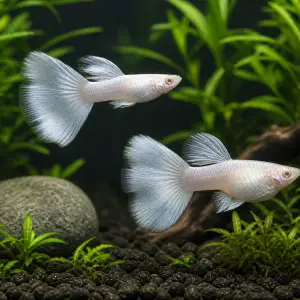
These photographs show real HiGuppy holding, breeding and observation work. They document our facility and fish stock; they are not presented as the exact individual fish or strain discussed on every page.