The HiGuppy Journal
Blue Topaz Guppy Guide: Identification, Care & Breeding
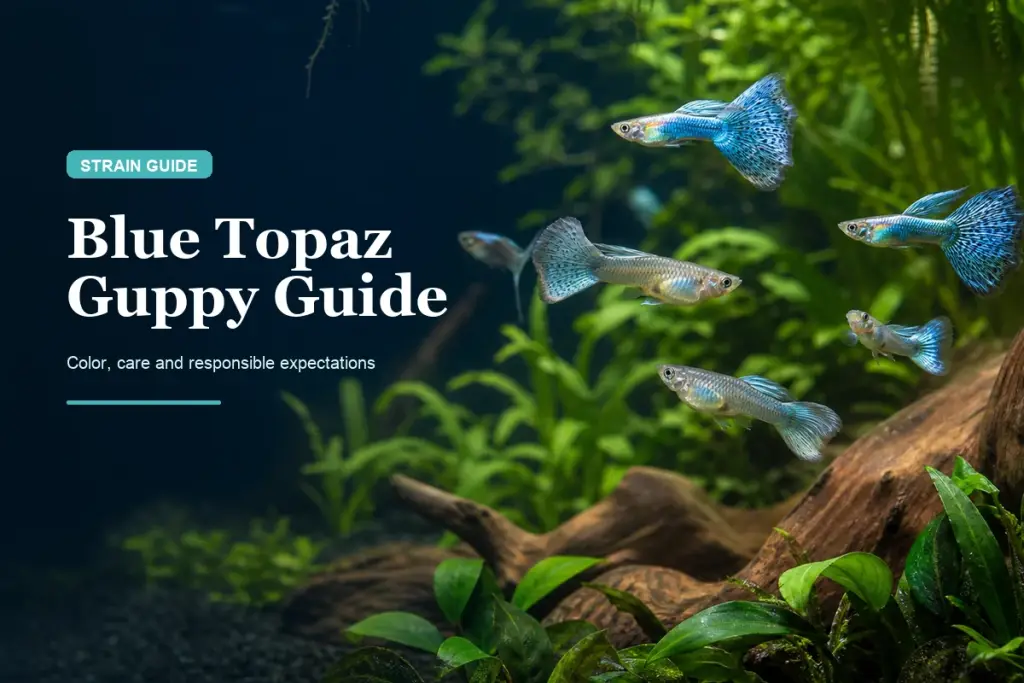
Quick answer: “Blue Topaz guppy” is a trade name for fancy guppies selected for a bright blue, blue-green or pale metallic look. It is not a universal scientific variety standard, and appearance can differ by breeder, individual fish, age and lighting. Confirm current photos and listing details before ordering.
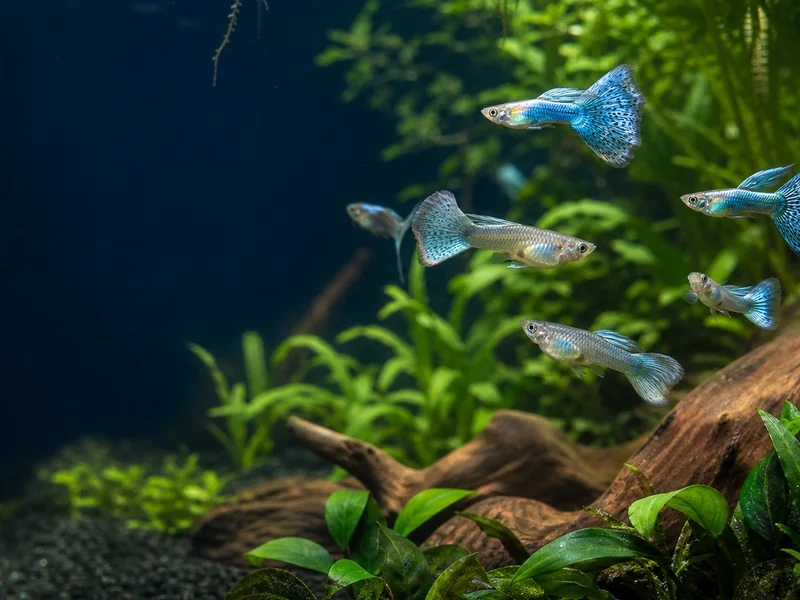
What people usually mean by Blue Topaz guppy
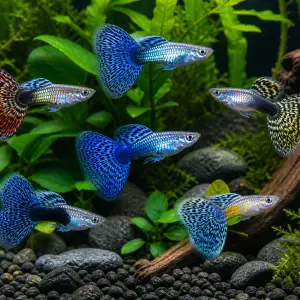
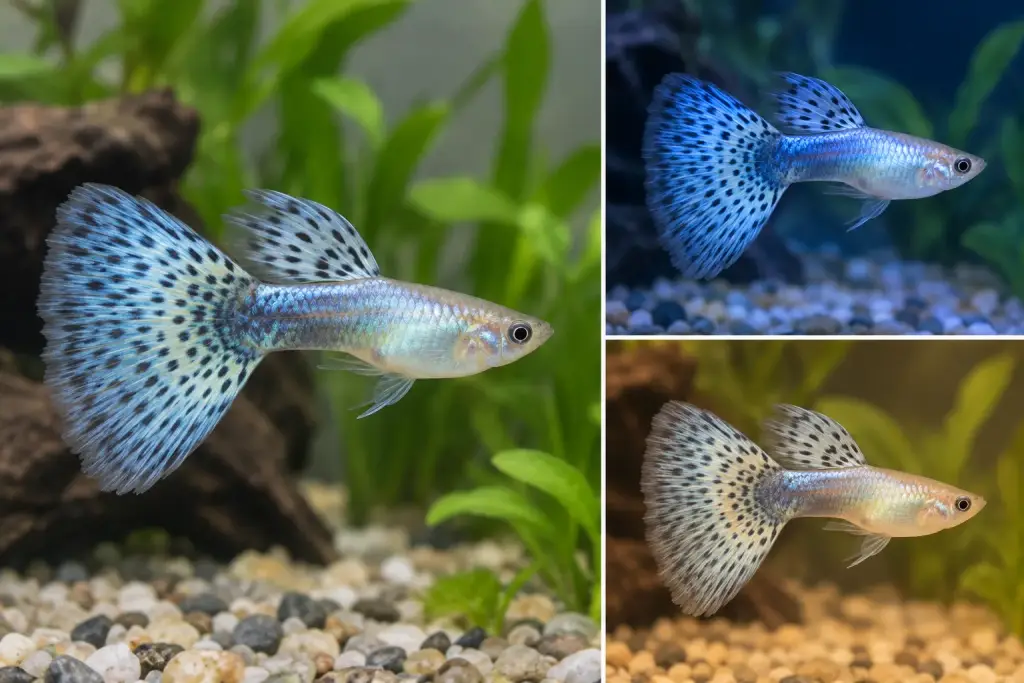
Fancy guppy names commonly describe a visible color impression, a tail or body pattern, or a breeding line. “Blue Topaz” is usually used for an eye-catching cool blue look, often with pale, silvery, or metallic areas. It is not a universal scientific variety standard. Lighting, age, diet, water conditions, and genetics all influence how a guppy appears in an aquarium or photo.
When selecting any fancy guppy, assess the individual listing rather than relying only on the strain name. Look for current photos or video, the stated sex and group count, and a clear indication of whether the pictured fish are representative or the exact fish being sent. HiGuppy will add those listing-specific details as current stock is confirmed.
How to appreciate the color without overpromising
- Use neutral viewing light: aquarium lighting can make blue pigments and metallic scales look more intense or more muted.
- Expect individual variation: fish from the same line can differ in pattern coverage, tail shape, and saturation.
- Give new fish time to settle: a newly shipped or moved fish may not show its most relaxed coloration immediately.
- Avoid “color guarantee” assumptions: healthy water, appropriate food, and low stress support normal condition but do not turn one line into another.
Care foundations are the same as for other fancy guppies
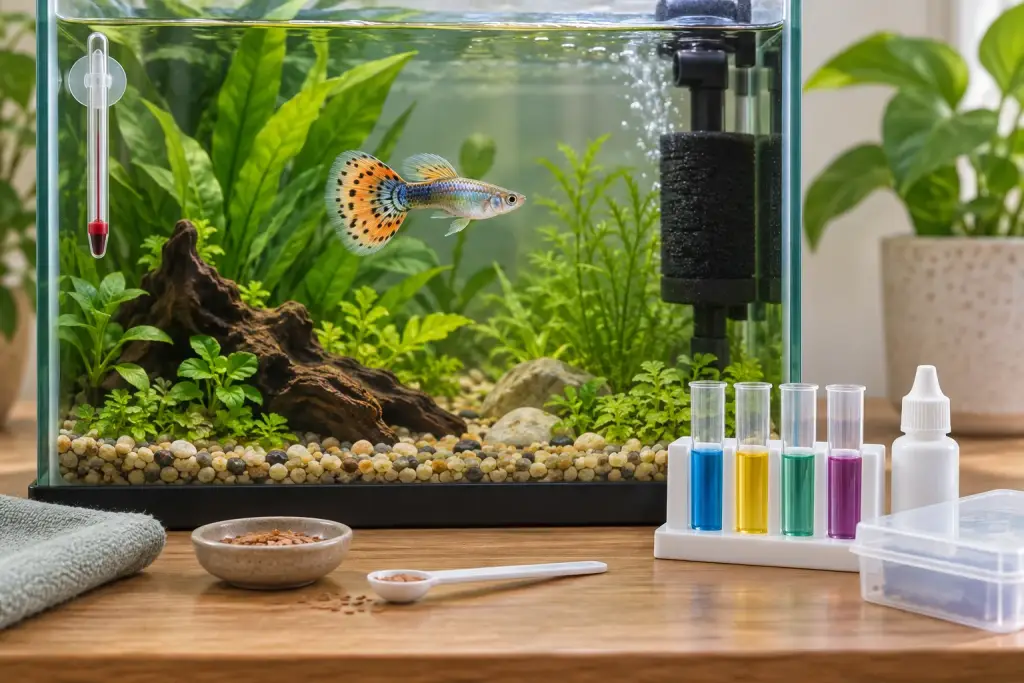
Blue Topaz is a fancy presentation name, not a different species. The care priorities are a fully cycled aquarium, stable temperature, routine water testing, filtration appropriate to the tank’s bioload, and compatible tank mates. FishBase lists the guppy as Poecilia reticulata, a species found in varied freshwater habitats; a home aquarium still needs stability rather than sudden parameter changes.
Start a new group in a tank with verified water quality and enough room to manage waste and growth. Larger, well-maintained systems are generally easier to keep stable than a cramped setup. If fish show persistent stress, loss of balance, gasping, visible lesions, or a sudden group decline, test the water first and seek qualified aquatic guidance rather than treating color change as a diagnosis.
Choosing a group and planning for fry
Sex ratio affects behavior and future stocking. A mixed breeding group can produce fry, which changes feeding, filtration, water-change, and rehoming needs quickly. If your goal is a display tank rather than breeding, choose a group intentionally and confirm the sex/count on the listing. Do not add fish simply because a color line looks compatible in a photograph.
Before keeping fry, prepare a grow-out plan: appropriate food size, a filtration approach that protects small fish, water-test capacity, and space. Our Complete Guppy Care Guide covers day-to-day foundations, while the Raising Guppy Fry Guide helps with capacity planning.
Before ordering a color strain online
- Check that the destination is eligible under the current Shipping Policy.
- Have a cycled tank, thermometer, and water test kit ready before an order is placed.
- Read the current Acclimation Guide before delivery day.
- Confirm the specific listing’s sex, quantity, availability, and current images—never infer them from a general strain guide.
Frequently Asked Questions
What does “Blue Topaz guppy” mean?
It is a trade name commonly used for a bright blue, blue-green or metallic-looking fancy guppy. The label alone does not guarantee one exact shade, pattern or tail shape.
Is Blue Topaz a separate guppy species?
No. Guppies are Poecilia reticulata; Blue Topaz is a trade-style appearance name, not a separate species.
Will every Blue Topaz guppy look the same?
No. Color and pattern can vary among fish and change in appearance with maturity, lighting and individual line.
How should I care for a Blue Topaz guppy?
Use the same stable, cycled-aquarium basics as for other fancy guppies: test the water, provide appropriate filtration, and plan stocking and fry capacity.
References and related reading
For species-level context, see the FishBase profile for Poecilia reticulata. For general aquarium-care checks, see our Guppy Temperature Guide and the current Water Change Schedule.
For a broader comparison, browse the Guppy Strains and Types overview.
Behind the care guides
Care begins with steady systems
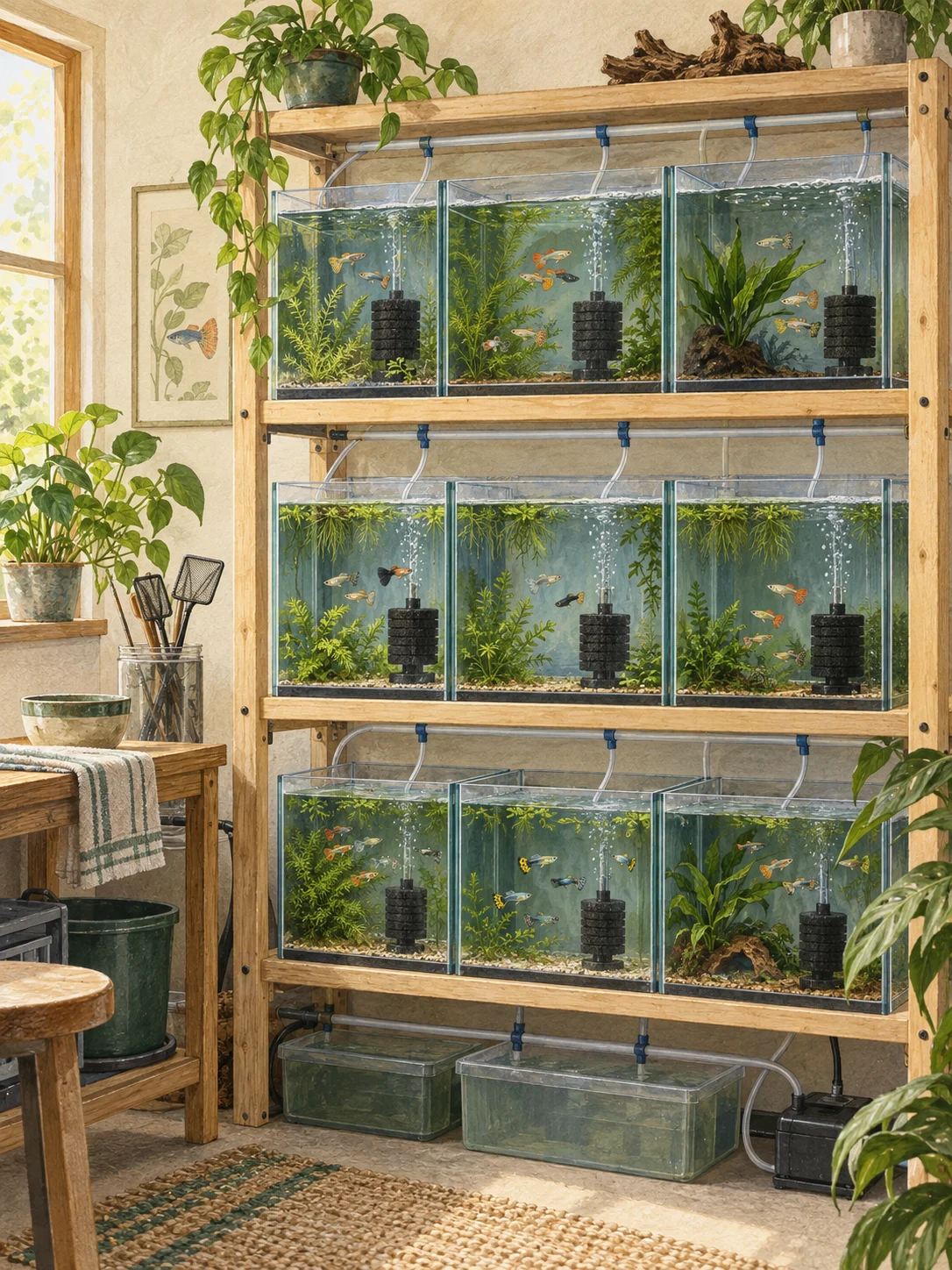
Our guppy guides focus on practical routines: keep water stable, observe fish closely and allow for natural variation.
Care systems
Steady water, thoughtful care
Gentle filtration and regular observation support healthy aquarium routines.
Natural variation
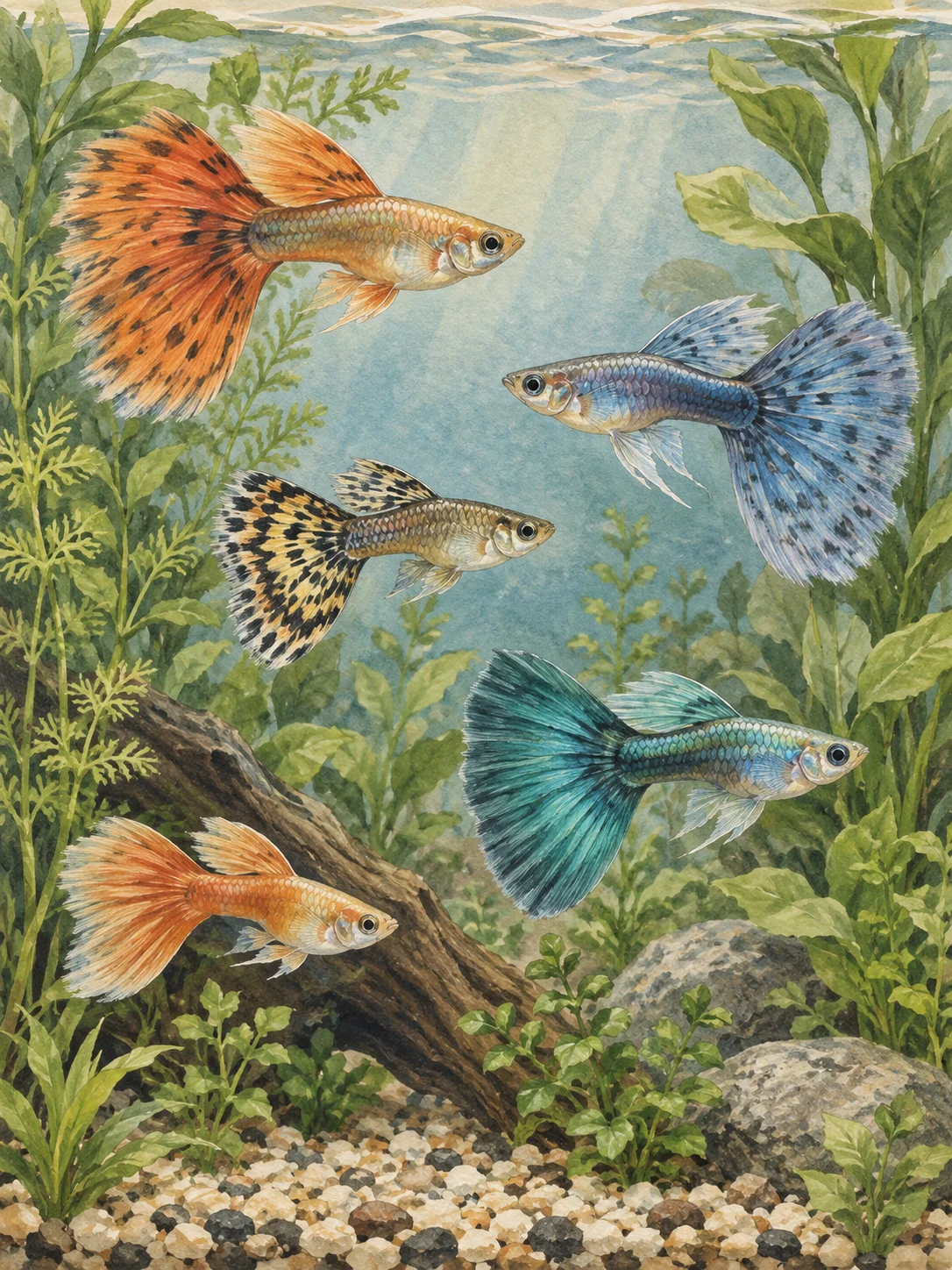
Every guppy is different
Color, size and fin shape vary with strain, age and each individual fish.
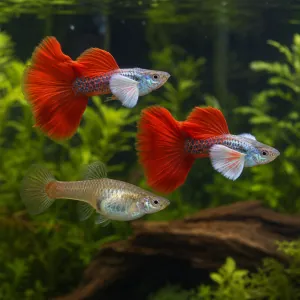
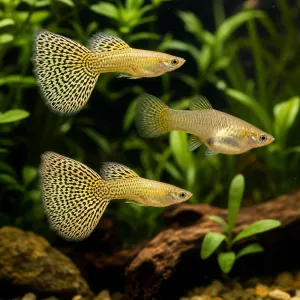
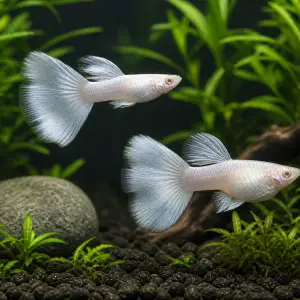
Editorial illustrations for context; they do not depict HiGuppy's exact facility or current fish stock.