Guppy Care Article
Guppy Growth Stages: From Newborn Fry to Adult
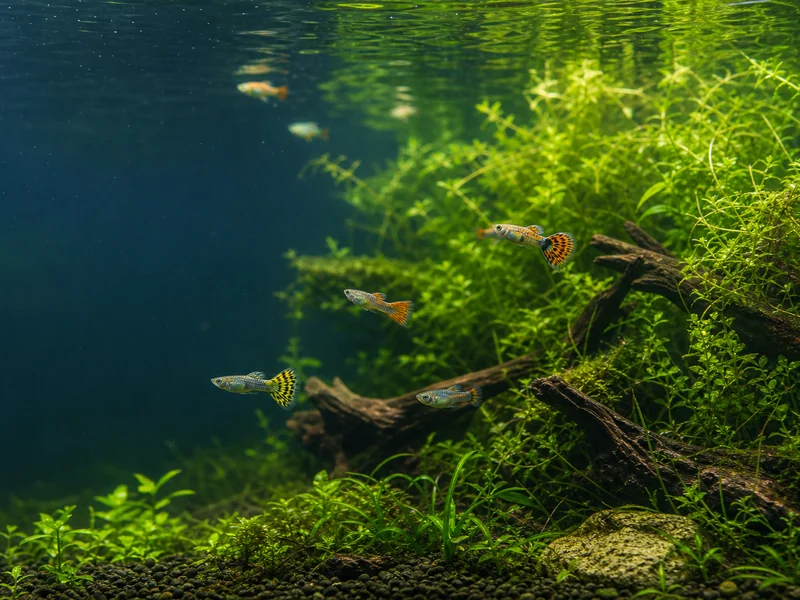
Quick answer: Guppies grow from free-swimming newborn fry into early fry, juveniles, young adults and mature adults. There is no single fixed timetable because genetics, sex, food, temperature, water quality, stocking density and health all affect development. Use body size, fin development, sex characteristics and behavior—not age alone—to judge each stage.
Understanding guppy growth stages helps you decide when to change food size, reduce crowding, separate sexes and move juveniles into a larger tank. It also prevents a common beginner mistake: trying to force rapid growth with heavy feeding while ignoring water quality and space.
The stages below are practical husbandry categories rather than rigid deadlines. Siblings from the same brood can develop at noticeably different rates.
Guppy growth stages at a glance
| Stage | What you usually notice | Main care priority |
|---|---|---|
| Newborn fry | Tiny, free-swimming, little visible color | Safety, small food, fry-safe filtration |
| Early fry | Rapid body growth and stronger swimming | Frequent small meals and clean water |
| Juvenile | Body shape and early sex differences become clearer | Space, grading if needed, sex monitoring |
| Young adult | Male color and fins become more obvious; females fill out | Prevent unwanted breeding and crowding |
| Mature adult | Stable adult body shape and established coloration | Balanced maintenance, breeding or display plan |
Stage 1: Newborn guppy fry
Guppies are livebearers, so the fry are born free-swimming rather than hatching from eggs in the aquarium. Newborns are small, lightly colored and vulnerable to being eaten by larger fish. Strong filter intakes can also be a risk.
Priorities at this stage are simple: stable water, gentle filtration, cover and appropriately sized food. The raising guppy fry guide covers survival, grow-out space and day-to-day care in more detail.
Stage 2: Early fry growth
As fry become stronger swimmers, body mass increases and feeding becomes easier to observe. Growth can look fast when conditions are stable, but extra food is not automatically better. Uneaten food raises the waste load and can erase the benefit of a high-protein diet by degrading water quality.
Spread small portions across the tank so smaller fry have a chance to eat. For a practical routine, use the guppy fry feeding schedule.
Stage 3: Juvenile development
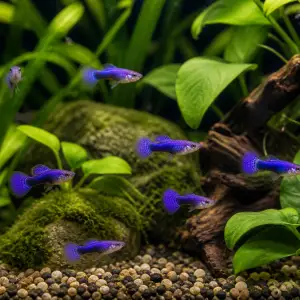
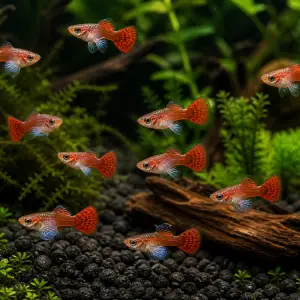
Juveniles begin to look less like tiny fry and more like miniature adults. Body shape becomes clearer, fins develop and early sex differences may become easier to recognize. Males may begin showing stronger color and a developing gonopodium, while females generally become fuller-bodied.
Sexing should be based on multiple features rather than color alone. The male vs female guppy guide explains the adult differences that juveniles gradually grow into.
Stage 4: Color and fin development
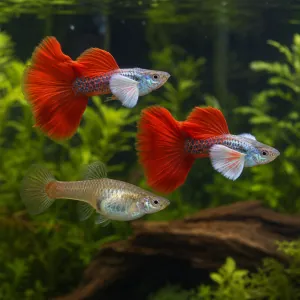
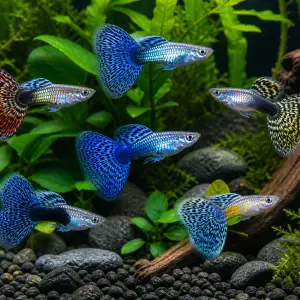
Young males often become noticeably more colorful as they develop. Tail shape and dorsal-fin size also become easier to evaluate. Females can show attractive color too, but many remain less intense than males depending on the strain.
Genetics set the basic potential for pattern and color. Food, water quality, lighting and stress influence how that potential is expressed, but they cannot turn one strain into another. Avoid judging young breeding stock too early when the fish are still developing.
Stage 5: Young adult and sexual maturity
Guppies can become capable of breeding before they have reached their final adult size or full color. This is why mixed-sex juvenile groups need regular observation. If you do not want an unplanned brood, separate males and females as soon as sex can be identified with confidence.
For breeding groups, review the how to breed guppies guide and the breeding tank setup guide before pairing fish.
Stage 6: Mature adult
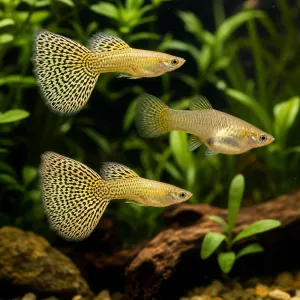
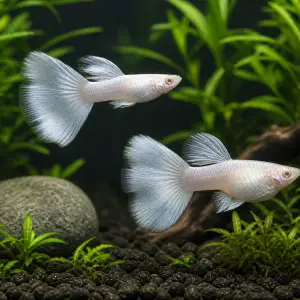
A mature adult has an established body shape, developed fins and relatively stable coloration for its genetics and condition. At this point your priorities shift from rapid juvenile development to long-term maintenance: stable water, sensible feeding, appropriate stocking and a clear breeding or display plan.
Why guppy siblings grow at different speeds
Variation within one brood is normal. Common reasons include:
- Genetics: growth potential and adult size vary between individuals and strains.
- Sex: males and females often develop different body shapes and growth patterns.
- Food access: larger or more assertive fry may reach food first.
- Water quality: chronic ammonia, nitrite or high waste load can suppress healthy development.
- Stocking density: crowded grow-out tanks increase competition and maintenance pressure.
- Health: parasites, deformities or chronic stress can cause one fish to fall behind its siblings.
How to support healthy guppy growth
- Use fry-safe filtration and keep ammonia and nitrite controlled.
- Feed appropriately sized food in small portions rather than overfeeding.
- Perform regular water changes that match the tank’s actual waste load.
- Reduce crowding as the fish gain size.
- Provide cover without eliminating open swimming space.
- Separate sexes before unwanted breeding begins.
- Track appetite, swimming, body shape and growth trends—not just color.
If you are deciding when juveniles can safely move into a community tank, see when guppy fry can join adults.
Signs growth may be off track
One smaller fish is not automatically unhealthy, but investigate when poor growth comes with a pinched belly, persistent hiding, abnormal feces, bent spine, clamped fins, breathing difficulty or loss of appetite. Start by checking the water and feeding access before assuming a specific disease.
The Guppy Diseases Guide can help when slow growth appears together with other symptoms.
Frequently asked questions
How fast do guppy fry grow?
There is no single reliable growth rate for every guppy. Genetics, sex, diet, temperature, space, water quality and health all change the pace. Compare a fry with its own brood and development trend rather than a fixed calendar promise.
When do male guppies start showing color?
Color often becomes more obvious during juvenile development, but the timing and final intensity vary by strain and individual. Fin shape and sex characteristics are more useful than color alone when sexing young fish.
When should young males and females be separated?
Separate them once sex can be identified reliably and before you are comfortable with breeding occurring. Do not wait for every fish to reach full adult size or final coloration.
Can you make guppy fry grow faster?
You can support healthy growth with clean water, good food, enough space and low stress, but forcing growth through excessive feeding is counterproductive. The goal is steady development, not the fastest possible size gain.
When you are ready for established adult or breeding stock, browse the current HiGuppy shop and review our guppy quality standards.
Real HiGuppy photographs
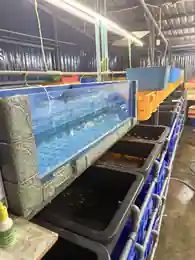
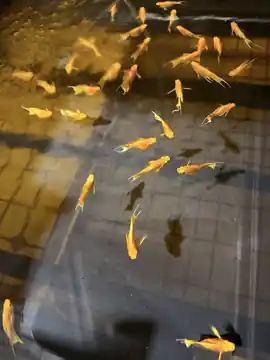
Inside the facility behind our guppy guides
These photographs show real HiGuppy holding, breeding and observation work. They document our facility and fish stock; they are not presented as the exact individual fish or strain discussed on every page.