Guppy Care Article
Sponge Filter for Guppy Tanks: Fry-Safe Filtration, Setup & Care
A sponge filter is one of the most useful filtration options for guppy tanks because it combines gentle water movement, biological filtration, basic mechanical filtration, and excellent fry safety. It is especially practical for breeding tanks, grow-out tanks, quarantine systems, and smaller guppy aquariums where strong intake suction is unnecessary.
This guide explains how sponge filters work, when they are enough on their own, when to pair them with another filter, and how to maintain them without damaging the biological filter.
Quick answer
Yes, a properly sized and mature sponge filter can be an excellent filter for many guppy tanks. It is particularly good for fry and breeding setups because there is no exposed high-suction intake. The air bubbles also create surface movement, but the sponge still needs to be sized for the tank, kept running consistently, and cleaned gently when flow drops.
How a sponge filter works
An air pump pushes air through an uplift tube. Rising bubbles move water through the sponge, where particles are trapped and beneficial microbial communities grow on the porous surface. That gives the filter two important jobs:
- Mechanical filtration: the sponge captures suspended debris and fine waste.
- Biological filtration: the sponge provides surface area for microbes involved in processing fish waste.
The bubbles themselves do not “inject” large amounts of oxygen directly into the fish. Most of the oxygen benefit comes from the water movement and surface agitation they create. For more detail, see Do Guppies Need an Air Pump?.
Why sponge filters are a strong match for guppies
- Fry-safe intake: baby guppies are far less likely to be pulled into a sponge than into an unguarded power-filter intake.
- Gentle current: guppies are active swimmers, but fry, recovering fish, and heavily finned varieties can benefit from calmer flow.
- Simple maintenance: there are few moving parts inside the aquarium.
- Useful in breeding systems: mature sponges can be moved between prepared tanks when biosecurity practices allow.
- Affordable redundancy: adding a second sponge filter can provide backup biological capacity and surface agitation.
Best uses for a sponge filter
| Tank type | Why a sponge filter works well | Important note |
|---|---|---|
| Beginner guppy tank | Simple, gentle, easy to inspect | Size it for the stocking level and monitor water quality |
| Breeding tank | Low suction and gentle flow | Keep the sponge mature before relying on it |
| Fry grow-out tank | Protects small fry from intake suction | Heavy feeding can increase maintenance needs |
| Quarantine/hospital tank | Simple equipment and easy observation | Do not move contaminated media back to a clean system |
| Backup filtration | Adds biological capacity and aeration | Useful even when another filter is already present |
For fry-focused systems, also read Guppy Breeding Tank Setup and Raising Guppy Fry. For isolation tanks, see Sick Guppy Hospital Tank.
Is a sponge filter enough for a guppy tank?
Often, yes—but “enough” depends on tank volume, fish load, feeding, maintenance, and how mature the sponge is. A lightly to moderately stocked guppy tank can run very well on an appropriately sized sponge filter. A heavily stocked display tank may benefit from multiple sponge filters or a second filter that adds more mechanical filtration and circulation.
Do not judge filtration only by how clear the water looks. Use ammonia, nitrite, nitrate trends, fish behavior, and maintenance history. The Guppy Water Parameters Guide explains the core checks.
Sponge filter vs HOB vs canister for guppies
| Filter type | Main strength | Potential downside | Best fit |
|---|---|---|---|
| Sponge | Gentle, fry-safe, strong biological filtration | Less polished mechanical filtration and visible equipment | Breeding, fry, quarantine, simple setups |
| HOB | Good mechanical filtration and easy media access | Intake may need a prefilter sponge for fry | Display tanks and moderate stocking |
| Canister | High media capacity and customizable flow | More cost and maintenance complexity | Larger or heavily equipped tanks |
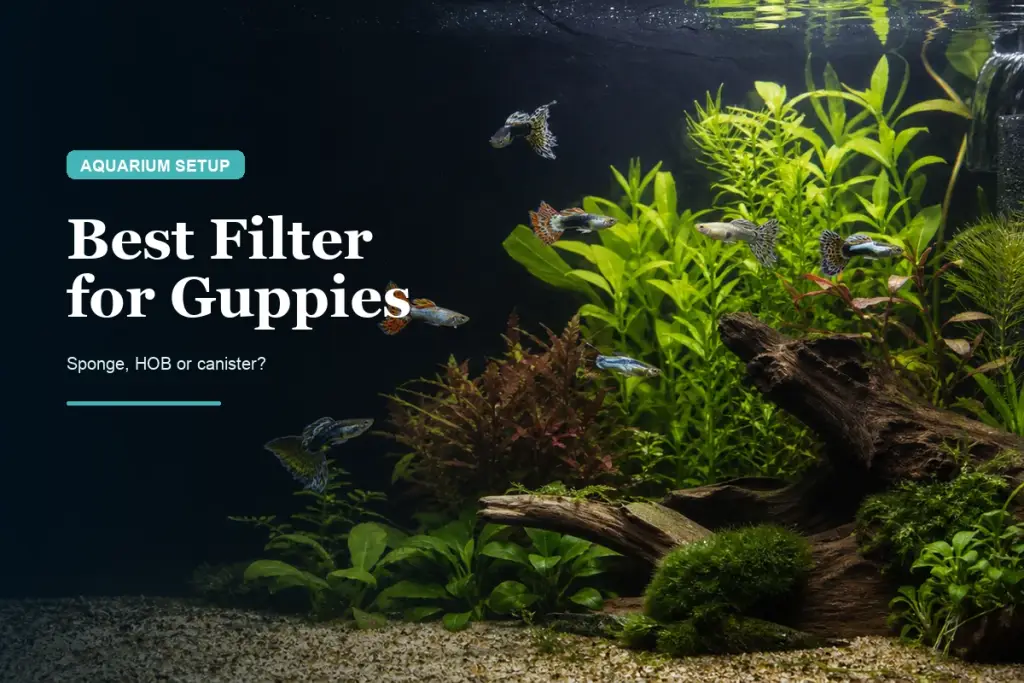
For a broader comparison, use Best Filter for Guppies: Sponge, HOB or Canister?.
How to set up a sponge filter for guppies
- Choose an appropriately sized sponge. Avoid selecting only by the smallest advertised tank rating if the tank will be heavily stocked or heavily fed.
- Connect airline tubing to an air pump. Use a check valve when appropriate for the pump position and setup.
- Place the sponge where water can circulate around it. Do not bury it behind dense decor where flow is restricted.
- Run it continuously. Biological filtration depends on a stable, oxygenated environment.
- Allow it to mature before depending on it for a full fish load. If the tank is new, follow a proper cycling process first.
If this is a new aquarium, follow the Guppy Tank Cycling Checklist rather than assuming a new sponge becomes biologically ready as soon as bubbles appear.
How to clean a sponge filter without crashing the tank
Clean the sponge when flow drops noticeably or it is heavily loaded with debris—not on an arbitrary daily schedule. During a routine water change, gently squeeze or swish the sponge in removed aquarium water or other appropriately conditioned water. The goal is to restore flow while preserving as much useful biological activity as practical.
- Do not scrub the sponge until it looks brand new.
- Do not replace all mature sponges at the same time unless there is a contamination or damage reason.
- Do not let a mature sponge dry out during routine maintenance.
- Do not return quarantine media to a healthy display tank after it has been exposed to sick fish.
Pair this with the Guppy Tank Maintenance Schedule.
Common sponge-filter mistakes
- Using a tiny sponge on an overstocked tank. The design is good, but capacity still matters.
- Cleaning it too aggressively. A little discoloration is normal; the sponge does not need to look sterile.
- Turning the air pump off for long periods. Consistent operation is safer for the biological filter.
- Assuming bubbles equal safe water. A tank can have plenty of surface movement and still contain ammonia or nitrite.
- Ignoring fry feeding waste. Fry tanks are often fed frequently, so debris can load the sponge quickly.
FAQ
Do sponge filters provide enough oxygen for guppies?
They can provide strong surface movement because the rising bubbles circulate water. Whether that is enough depends on temperature, stocking, tank shape, and other equipment. Watch fish behavior and surface movement rather than relying only on bubble volume.
Can guppy fry get stuck in a sponge filter?
A properly installed sponge filter is one of the safest filter styles for fry because there is no exposed high-suction intake. Fry may graze on the sponge surface without being pulled into the filter.
How often should I clean a sponge filter?
Clean it when flow decreases or debris accumulation becomes significant. Tank stocking and feeding determine the interval more reliably than a fixed calendar.
Should I run two sponge filters?
Two can be useful in larger, more heavily stocked, breeding, or backup-focused systems. Redundancy also lets you service one unit while the other continues running.
If you are preparing a tank before buying fish, complete the Guppy Tank Setup Checklist Before Buying. Once the aquarium is stable, you can browse available fish in the HiGuppy Shop.
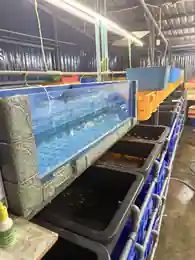
Real HiGuppy photographs
Inside the facility behind our guppy guides
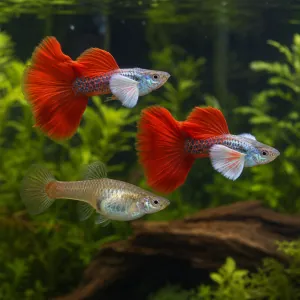
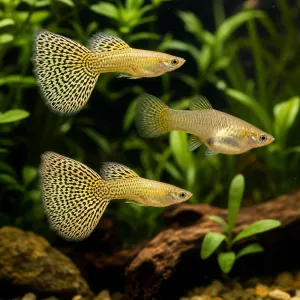
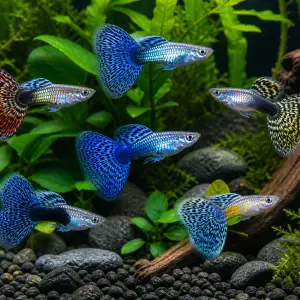
These photographs show real HiGuppy holding, breeding and observation work. They document our facility and fish stock; they are not presented as the exact individual fish or strain discussed on every page.