The HiGuppy Journal
Best Tank Mates for Guppies: Compatibility Guide
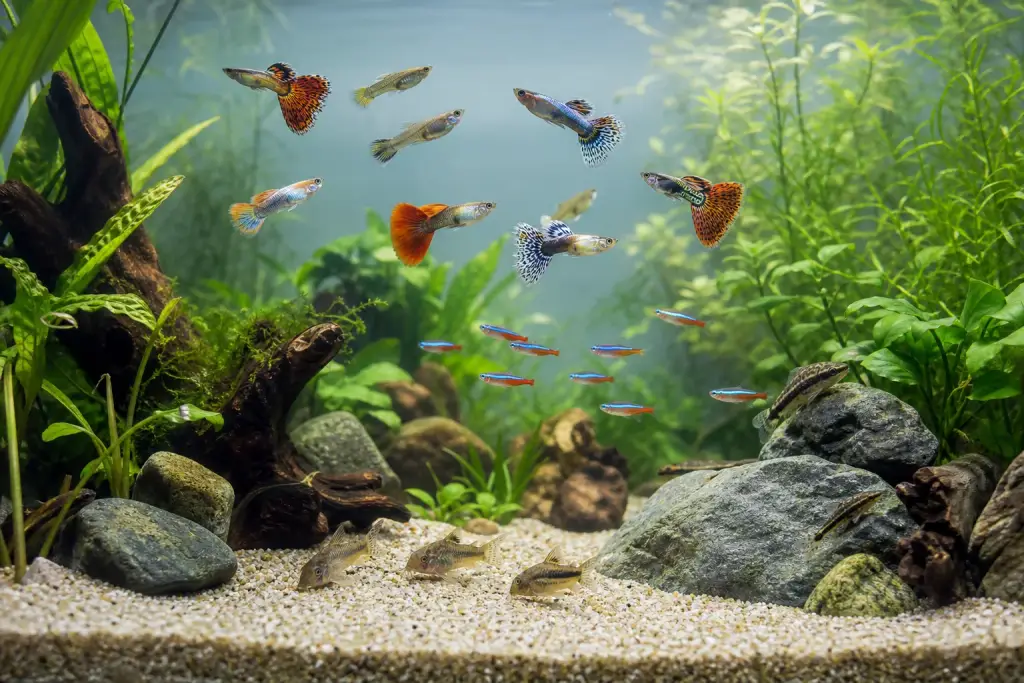
Quick answer: The best tank mates for guppies are peaceful animals that fit the same aquarium size, water conditions, temperature, feeding plan, and activity level. Compatibility is never guaranteed by species name alone. Start with adequate space, avoid known fin-nipping or predatory combinations, and have a backup plan if individuals do not get along.
Guppies are active livebearers with flowing fins, so community planning has two sides: protecting guppies from aggressive or predatory fish, and preventing the guppy group from overcrowding the tank through reproduction. “Peaceful” does not mean every species belongs in every aquarium.
Tank mate compatibility checklist
- Adult size and mouth size are safe for guppies.
- Temperature, hardness, pH, and water-flow preferences overlap.
- The tank provides enough floor area, swimming room, and hiding places.
- Feeding styles do not leave one species chronically underfed.
- The candidate is not known for persistent fin nipping.
- You can separate fish if behavior changes.
- The stocking plan includes future guppy fry or uses a same-sex guppy group.
Common guppy tank mate options
| Candidate | Why keepers consider it | Check before adding |
|---|---|---|
| Small Corydoras | Peaceful bottom activity | Species-specific group size, footprint, substrate, and temperature |
| Small peaceful rasboras | Use the mid-to-upper water column | School size, flow, adult size, and water overlap |
| Platies | Similar active livebearer behavior | Extra bioload, fry production, and tank volume |
| Some mollies | Overlapping livebearer care in suitable water | Larger adult size, higher space needs, and individual temperament |
| Nerite snails | Low-conflict invertebrate option | Mineral needs, algae/food availability, and escape prevention |
| Amano shrimp | Active scavenging in planted tanks | Molting cover; small shrimp and shrimplets may be eaten |
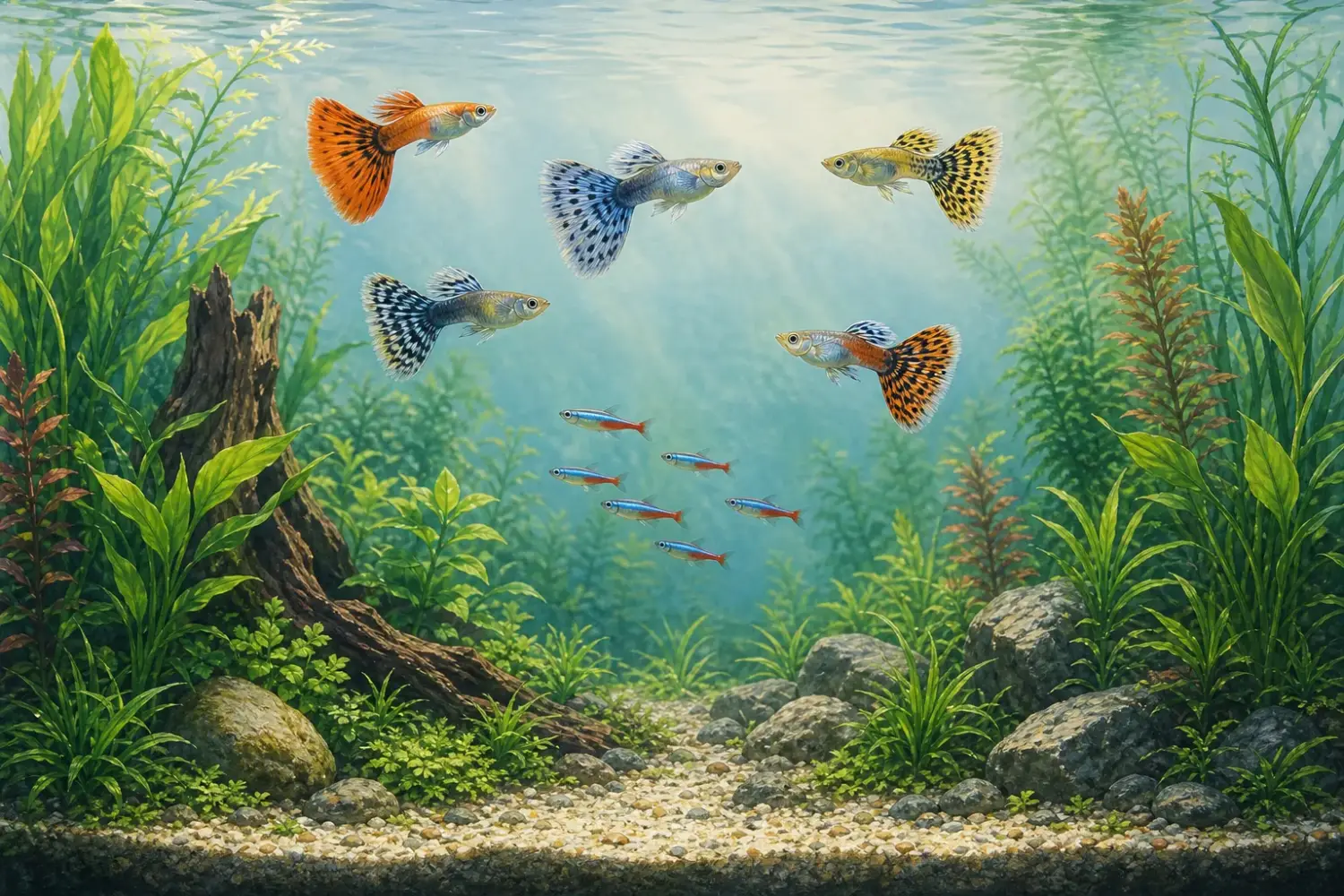
These are candidates, not promises. Research the exact species rather than buying a fish labeled only “cory,” “tetra,” or “algae eater.” Adult size and social requirements can differ greatly within a broad group.
Tank mates that require extra caution
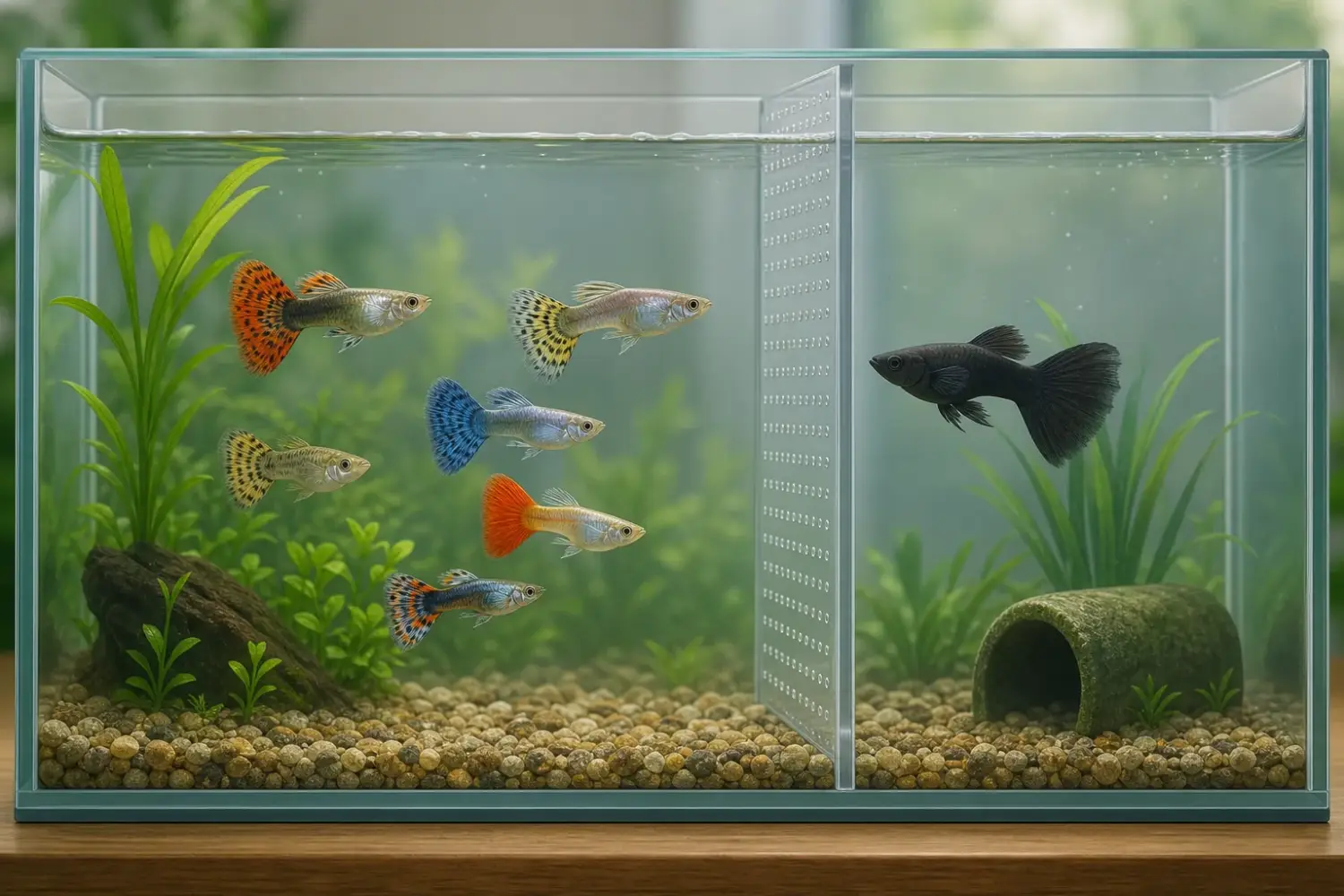
Fin nippers
Fast or territorial fish may repeatedly target long-finned male guppies, especially when kept in an undersized group or cramped tank.
Large fish
A fish can be calm and still eat a guppy if the guppy fits in its mouth. Juvenile size is not the correct planning size.
Territorial centerpiece fish
Individual temperament varies. Flowing fins and constant guppy movement can trigger chasing in some combinations.
Avoid adding any fish simply to “control” guppy fry unless its full care needs and predatory behavior fit the aquarium. Population management is the keeper’s responsibility.
Tank size matters more than a compatibility list
A species combination that works in a long, mature aquarium may fail in a small tank. Bottom fish need floor area, schooling fish need group space, and guppies need open swimming room plus visual cover. Filtration capacity does not replace physical territory.
Build the aquarium around the total adult community. Use How to Set Up a Guppy Tank for Beginners and Best Planted Tank Setup for Guppies before buying tank mates.
How to introduce new tank mates
- Research the exact species, adult size, group requirement, and water needs.
- Quarantine and observe new arrivals separately.
- Recheck stocking and water quality before the move.
- Adjust cover and sight breaks without removing all swimming space.
- Introduce calmly and observe feeding, chasing, hiding, and fin condition.
- Separate animals if harassment is persistent or any fish cannot feed normally.
Guppy tank mate FAQ
Can guppies live with bettas?
This is a high-variability combination. Flowing fins and individual betta temperament can cause aggression, so it is not a dependable beginner pairing and requires a backup tank.
Can guppies live with shrimp?
Adult shrimp may coexist in a planted tank, but guppies can eat small shrimp and shrimplets. Provide dense cover and do not expect guaranteed breeding success.
Can guppies live with mollies and platies?
They can share overlapping conditions in a suitably sized aquarium, but mollies are larger and all three are livebearers that can create substantial bioload and fry.
Are tetras good guppy tank mates?
Some small peaceful species may work, while others are active fin nippers or prefer different water. Research the exact tetra species and keep the correct school size.
What is the safest guppy-only setup?
A same-sex guppy group in a cycled, adequately sized tank avoids cross-species compatibility and reduces unplanned breeding, though social behavior still needs observation.
For ongoing care, continue to the Guppy Care learning hub and quarantine guide.
Plan the aquarium next: Review the Guppy Tank Setup Guide and Guppy Care Guide. If your stocking or compatibility situation is specific, contact HiGuppy before ordering.
Use compatibility criteria, not a permanent “safe” label
A useful tank-mate list is a starting point, not a guarantee. The Aqueon livebearer guide and Aqueon tetra guide illustrate why different fish groups have their own social and husbandry needs. The RSPCA tropical-fish care guidance reinforces the broader principle: aquarium conditions and stocking should suit the animals being kept.
- Water overlap: choose species whose normal care can overlap under conditions you can maintain consistently.
- Social needs: schooling or group-living fish need enough companions of their own kind.
- Space: combine adult size, swimming level and total stocking load rather than counting fish alone.
- Behavior: watch chasing, fin damage, food access and persistent hiding after introduction.
- Exit plan: keep a realistic separation option if a combination does not work in your aquarium.
Build the environment first with our beginner guppy tank setup guide, then match filtration to the actual stocking and maintenance plan using the Best Filter for Guppies guide. Species-specific compatibility pages should be used for the final decision rather than assuming every fish on a general list will behave identically.
Behind the care guides
Care begins with steady systems
Our guppy guides focus on practical routines: keep water stable, observe fish closely and allow for natural variation.
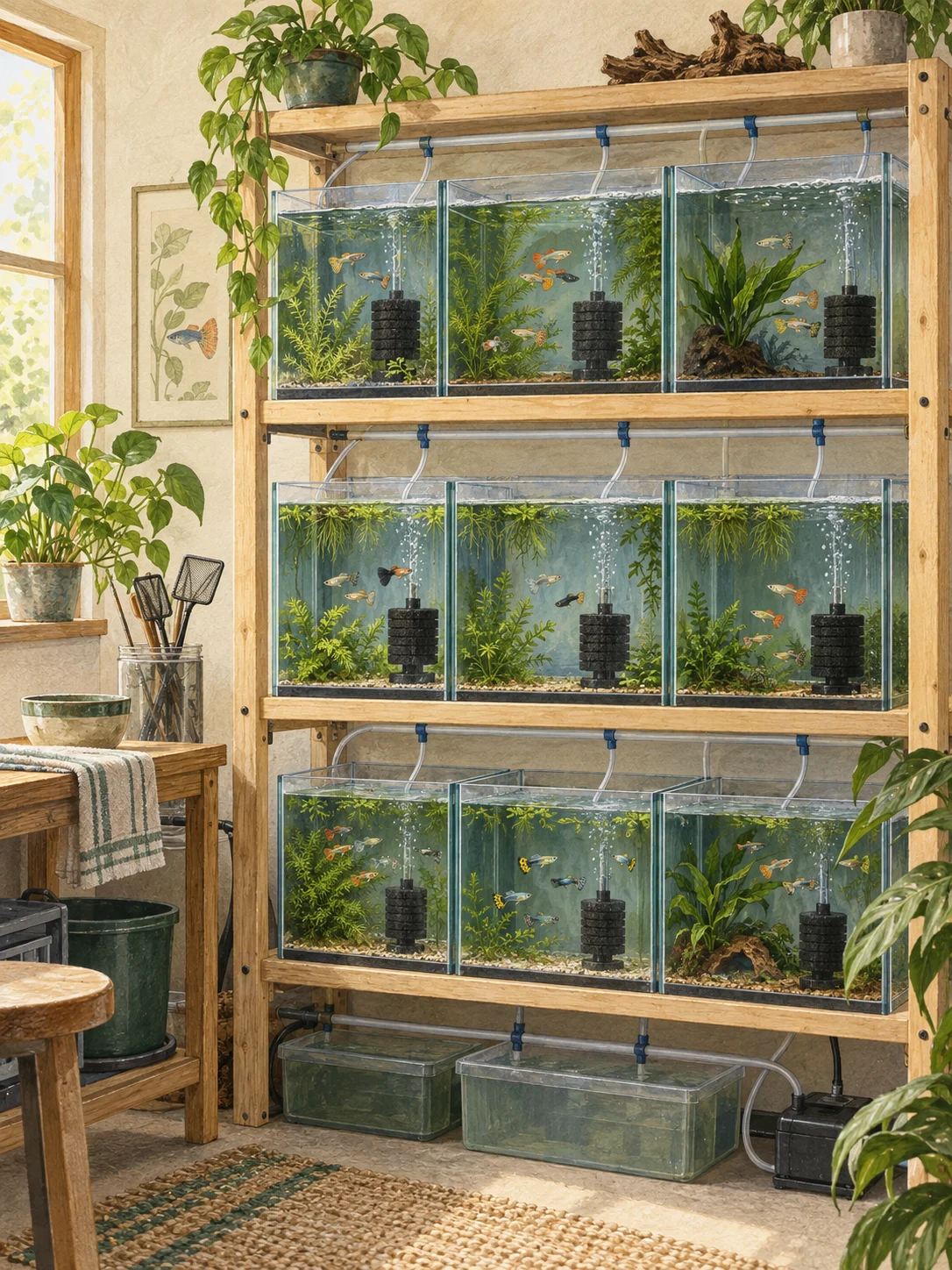
Care systems
Steady water, thoughtful care
Gentle filtration and regular observation support healthy aquarium routines.
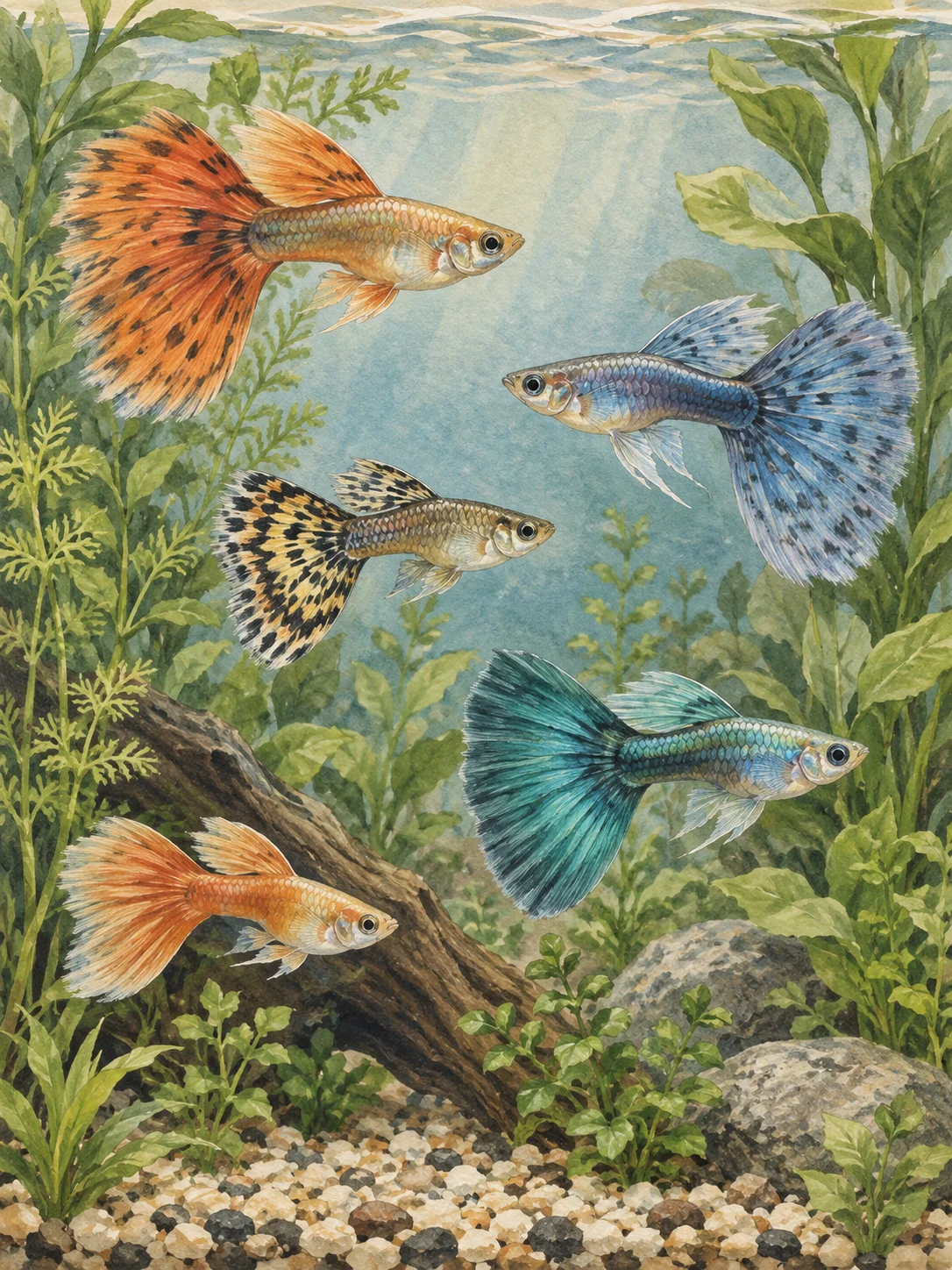
Natural variation
Every guppy is different
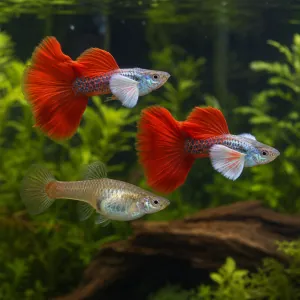
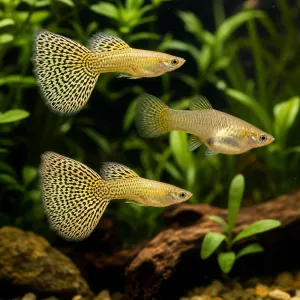
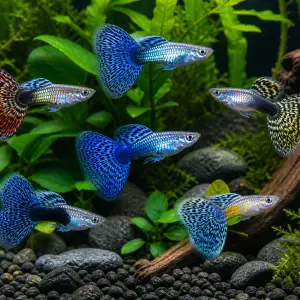
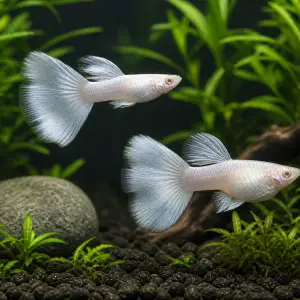
Color, size and fin shape vary with strain, age and each individual fish.
Editorial illustrations for context; they do not depict HiGuppy's exact facility or current fish stock.