The HiGuppy Journal
Blue Grass Guppy Strain Guide: Pattern, Care & Breeding
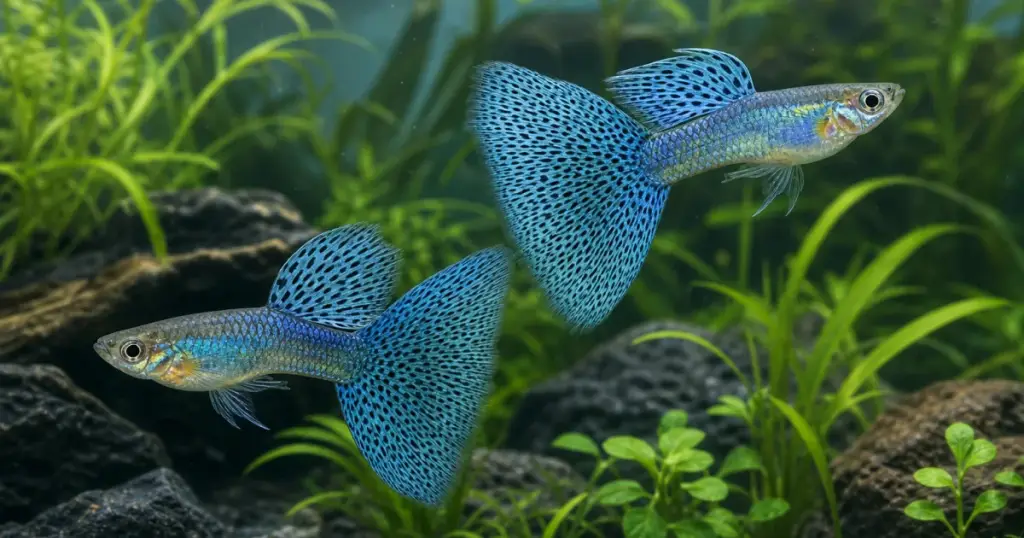
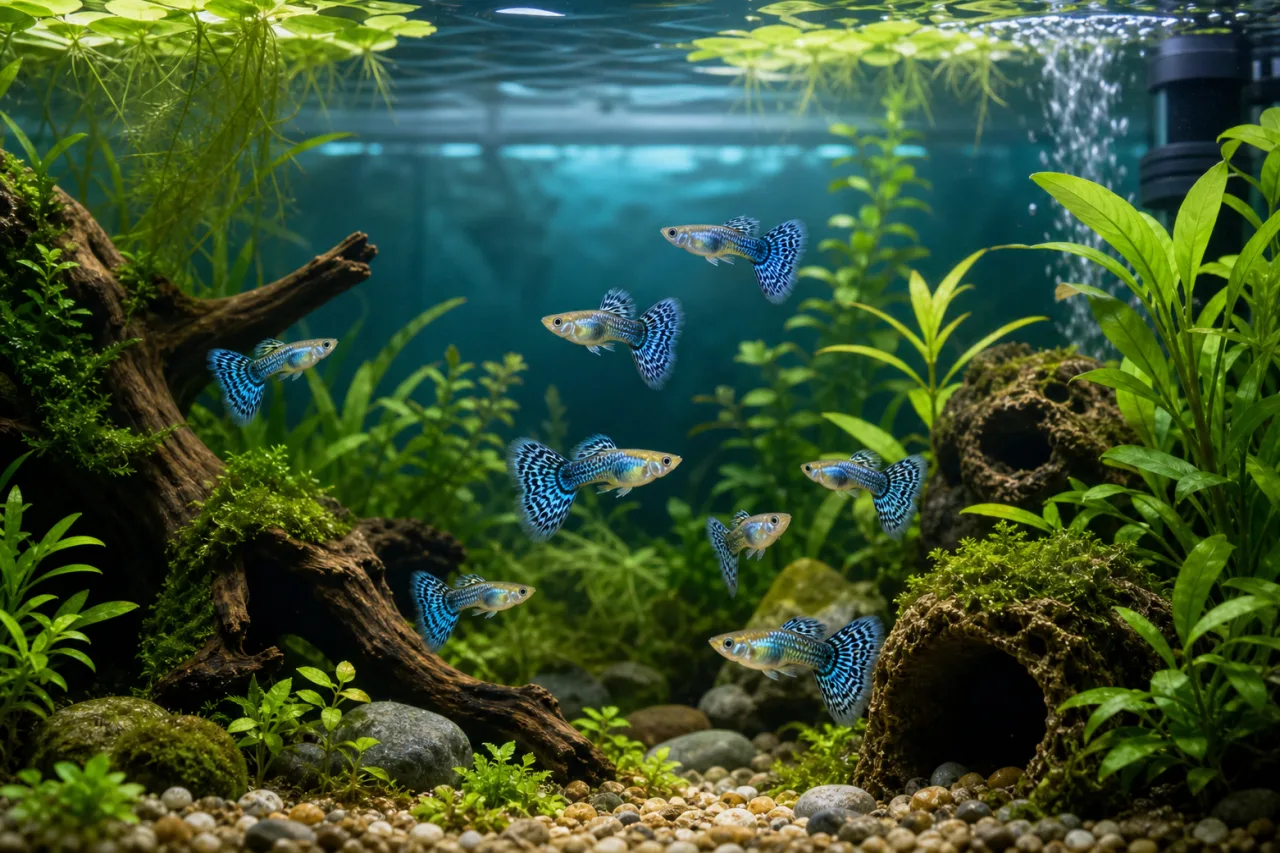
Quick answer: A Blue Grass Guppy is recognized by a blue-toned body or fins combined with fine, grass-like dots or short markings, especially across the tail and dorsal fin. The pattern should look finer than a bold mosaic. Keep the fish in stable, clean water and judge color only after acclimation.
How to recognize Blue Grass pattern
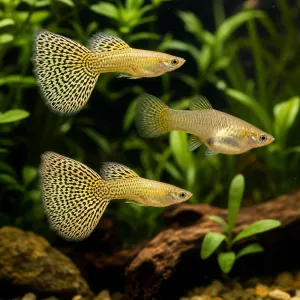
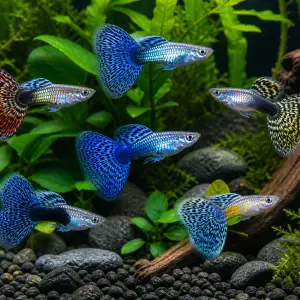
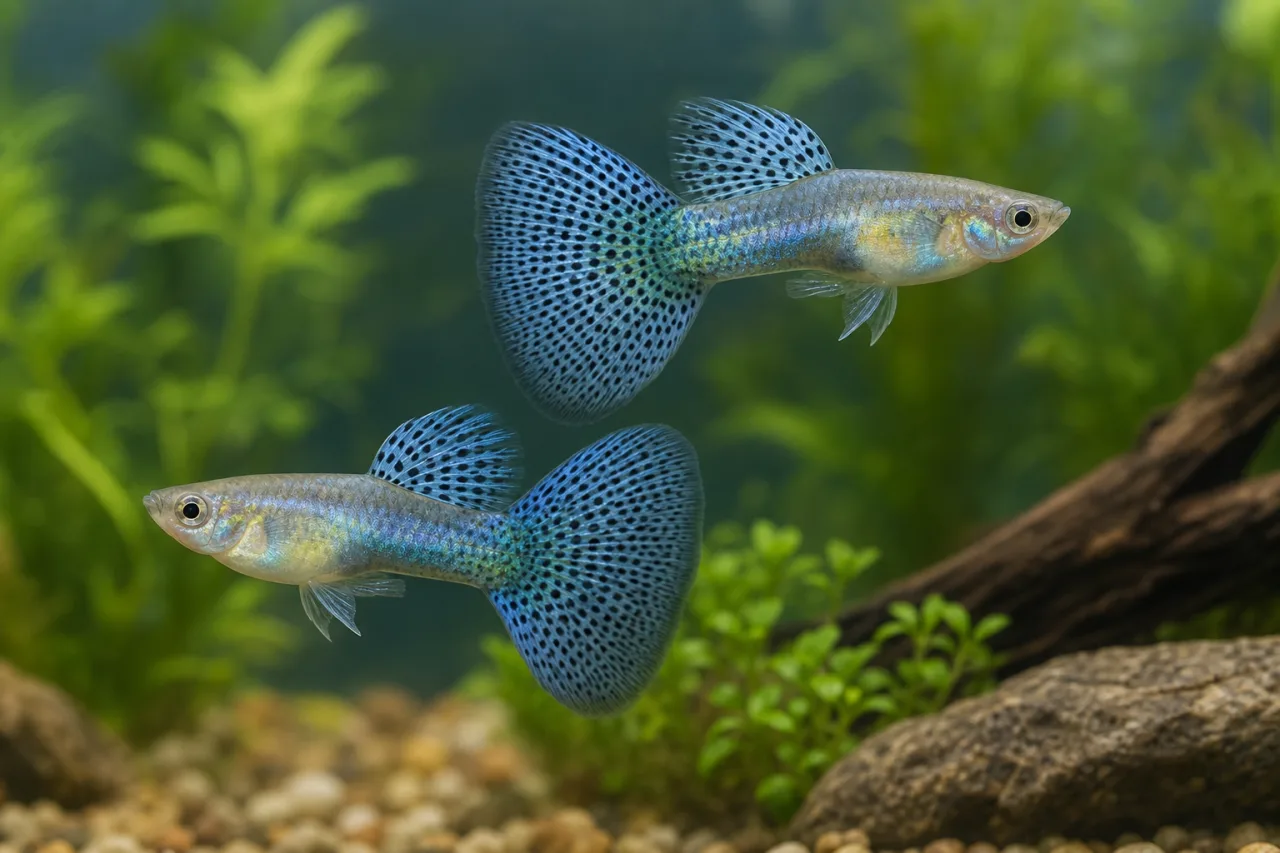
“Grass” describes a field of small dots, flecks, or short marks. In Blue Grass lines, those markings sit over a blue, steel-blue, gray-blue, or partly translucent base. Pattern density and blue intensity vary between individuals, sexes, ages, and lighting conditions.
Fine tail markings
Look for many small marks spread across the tail instead of a few large patches.
Blue base color
The blue may appear metallic, smoky, pale, or deep depending on the line and light angle.
Dorsal agreement
Many fish repeat some of the tail pattern in the dorsal fin, creating a more balanced display.
Grass is a fine repeated pattern; mosaic usually reads as larger, bolder patches or connected shapes.
Blue Grass Guppy care at a glance
| Care factor | Practical target |
|---|---|
| Temperature | About 72–80°F (22–27°C) |
| pH | Approximately 7.0–8.0, stable |
| Ammonia / nitrite | 0 ppm |
| Lighting | Consistent aquarium lighting with shaded cover |
| Tank mates | Peaceful, non-nipping community fish |
| Food | Balanced small foods; avoid overfeeding |
Blue appearance is influenced by the light source, background, camera, and stress. Do not chase color by making abrupt water or lighting changes. Start with the care hub and stable water parameters.
Male, female, and quality notes
Male
- Usually smaller with a larger display tail
- Often shows denser blue and grass pattern
- Has a pointed gonopodium
Female
- Usually larger and deeper-bodied
- May show lighter tail pattern
- Has a fan-shaped anal fin
For selection, look beyond maximum blue. Choose fish with clean fins, even swimming, a balanced tail, and a fine pattern that remains readable rather than merging into large blotches.
Breeding Blue Grass Guppies
Blue Grass Guppies are livebearers, and fry can vary widely in blue intensity, mark size, tail coverage, and body color. Keep brood records and evaluate juveniles over time. Dense plants may protect some fry, while a separate cycled grow-out tank gives more control.
Use the breeding hub for navigation and the detailed breeding article for the full process. Compare group options in Pair vs Trio.
Blue Grass Guppies after shipping
Blue color may look gray or washed out immediately after shipping. Give the fish quiet, stable conditions and follow the acclimation guide. Check the current shipping policy and live-arrival policy rather than relying on an older article for rules.
Blue Grass Guppy FAQ
What is the difference between Blue Grass and Blue Mosaic?
Grass usually has many fine dots or short marks. Mosaic commonly has larger, more connected patches. Hobby naming can overlap, so inspect the fish.
Why does my Blue Grass Guppy look gray?
Stress, lighting, background color, and camera settings can all soften blue. Persistent dullness with abnormal behavior may signal a care problem.
Do Blue Grass Guppies need blue lighting?
No. Use normal, consistent aquarium lighting and provide plants or shade. Colored lighting can misrepresent the fish.
Are they suitable for beginners?
Healthy Blue Grass Guppies can be beginner friendly when the tank is fully cycled and the keeper understands routine guppy care.
See the Guppy Strains & Types hub for more pattern comparisons and the shop for current inventory only.
Behind the care guides
Care begins with steady systems
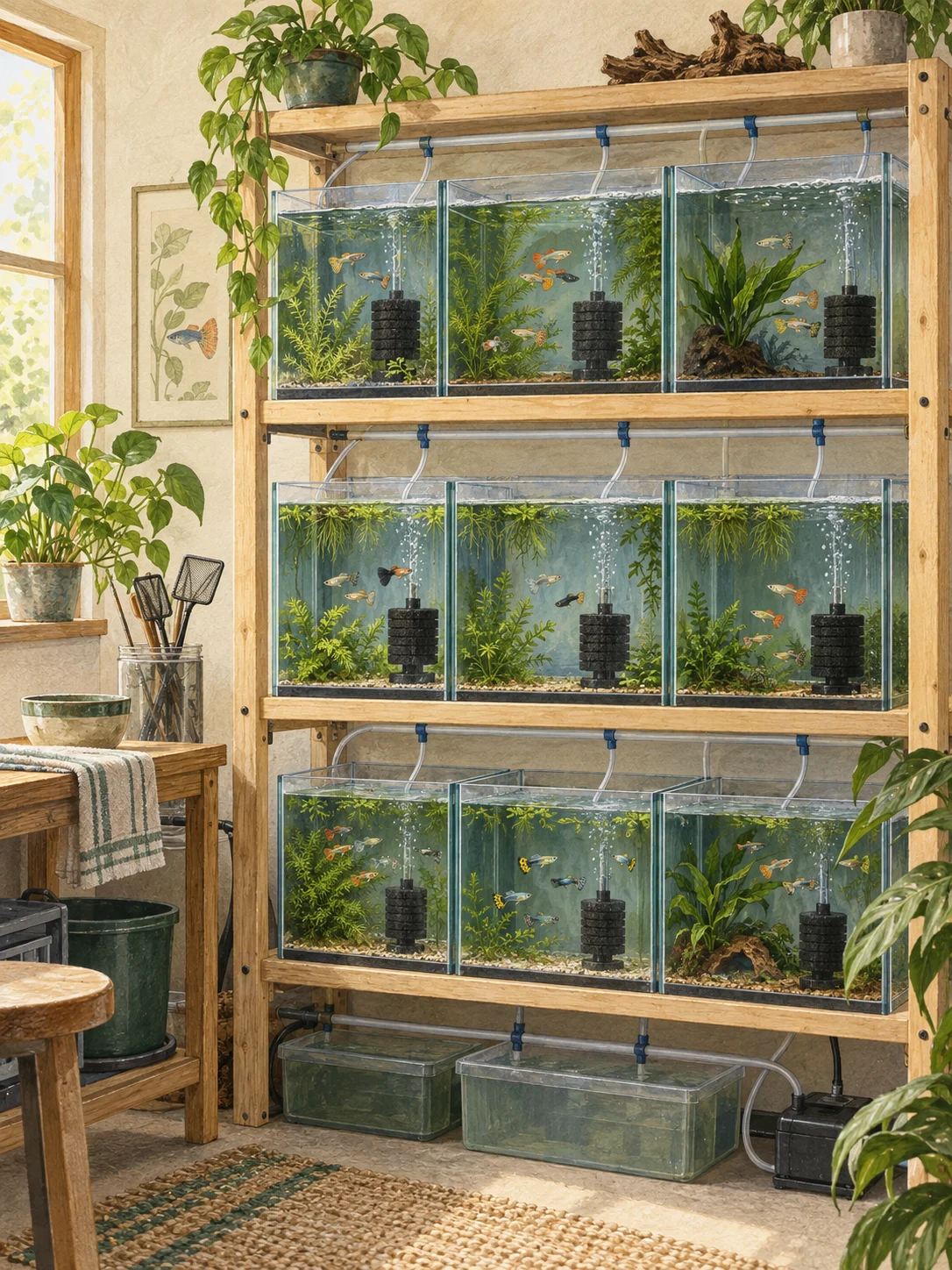
Our guppy guides focus on practical routines: keep water stable, observe fish closely and allow for natural variation.
Care systems
Steady water, thoughtful care
Gentle filtration and regular observation support healthy aquarium routines.
Natural variation
Every guppy is different
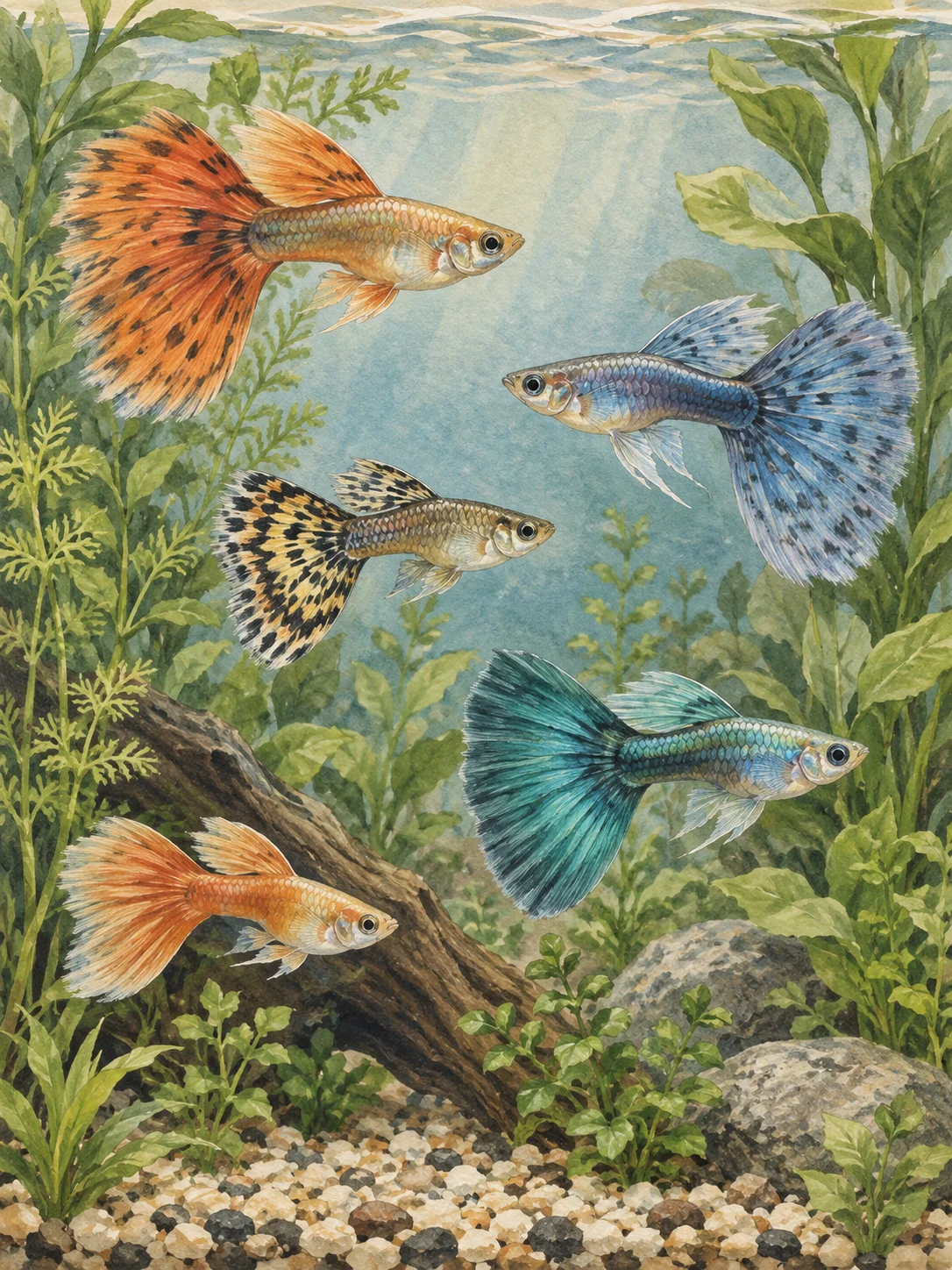
Color, size and fin shape vary with strain, age and each individual fish.
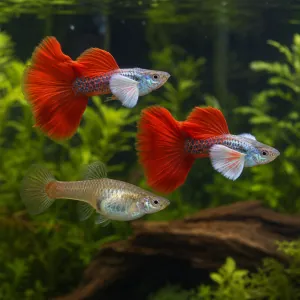
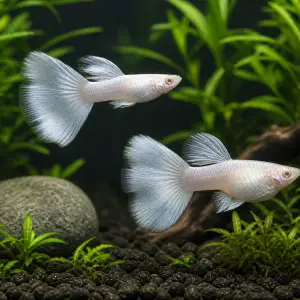
Editorial illustrations for context; they do not depict HiGuppy's exact facility or current fish stock.