The HiGuppy Journal
How to Tell How Old a Guppy Is: Size, Color and Age Signs
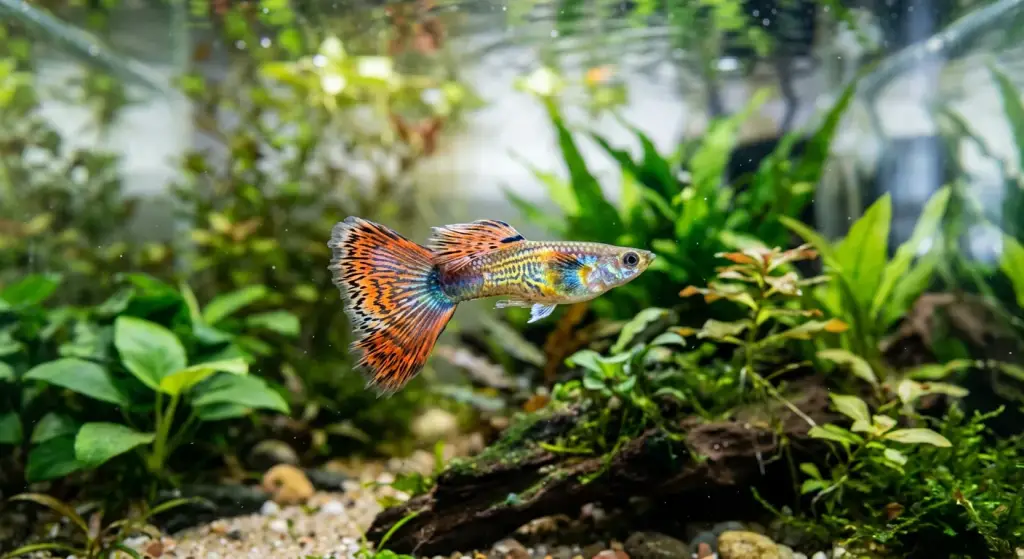
How to tell how old a guppy is? You can’t read a guppy’s age exactly, but you can estimate it within a few weeks by combining body length, sex-specific development, color, fin shape and body condition. A 1 cm fry is a few weeks old, a fully colored male of about 3 cm is usually 3 to 6 months, and a faded, thin fish with a hollow belly is often past its second year. This guide walks through each clue and sits alongside our complete guppy care guide.
Knowing the approximate age matters more than most keepers realize. It tells you when to start separating the sexes, when a female is ready for a first brood, how much food and what size food a fish needs, and when the signs of slowing down are normal aging rather than disease. All numbers below are general hobby ranges at roughly 76 to 80 °F (24 to 27 °C), not guarantees, because genetics, food and temperature all move the timeline.
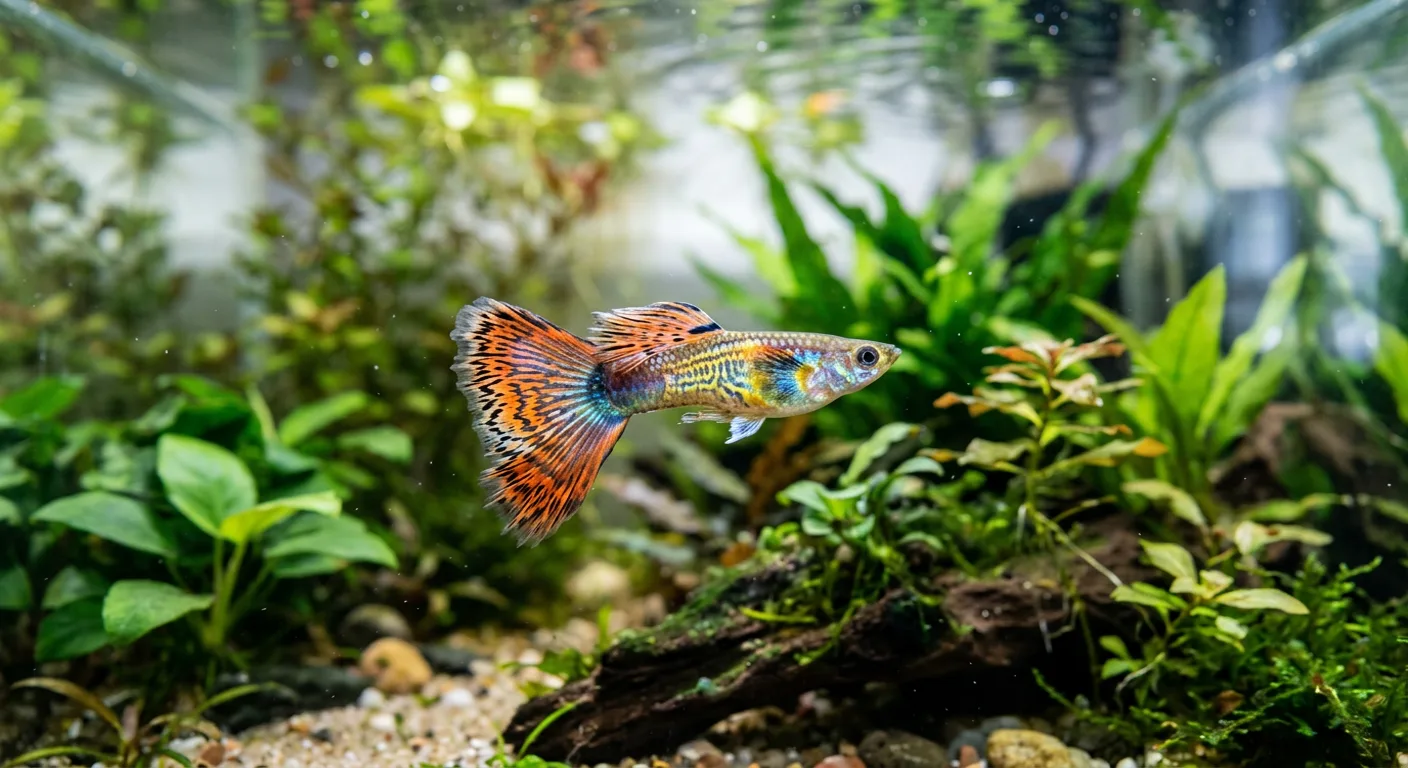
How to tell how old a guppy is: the five clues that work
No single feature gives a guppy’s age. Experienced keepers stack several clues, the way a vet estimates a dog’s age from teeth, coat and movement. Here are the five that are most reliable, in the order we suggest checking them.
- Body length. Size is the quickest clue for fish under about four months, because growth is fast early and slows after maturity.
- Sexual development. The gonopodium in males and the gravid spot in females tell you whether a fish is a juvenile or an adult.
- Color and finnage. Males gain color and long tails over the first months; very old fish often lose intensity.
- Body shape and condition. Rounded, firm bodies suggest prime adults; a thin back and sunken belly can suggest age or illness.
- Behavior and activity. Young fish dart and school; older fish rest more and swim slower.
No clue is perfect alone. A cold, underfed 6-month-old can look like a 3-month-old, and a sick young fish can look old. Treat the result as a range, then refine it with the history you know, such as when the fish was born or bought.
Why the answer is always a range
Guppies are small livebearers from streams and pools, and their growth is plastic: it speeds up in warm, food-rich water and slows in cool or crowded tanks. Two siblings born the same day can differ by a centimeter at three months if one was bullied away from food. Selective strains such as large-tailed show lines also grow differently from plain feeder-type fish, which is one reason our guide on fancy versus feeder guppies is worth a look before comparing sizes.
What you need before you start
- A ruler or a printed 1 cm grid taped behind the glass, or a small clear container to hold the fish briefly.
- Good lighting from the side, not only from the top, so you can see fin and body detail.
- Patience: a calm 5-minute observation beats chasing the fish with a net.
- Any records you have, such as purchase date or the date a female dropped fry.
Age by size: a guppy length chart
Length is measured from the nose to the base of the tail (the caudal peduncle), not including the tail fin. Females end up larger than males, so use the correct column. The ranges below are typical for well-kept fish and will vary by strain.
| Approx. age | Typical length (body) | What it usually looks like |
|---|---|---|
| Newborn | About 0.6 to 0.8 cm | Transparent, big eyes, stays near plants and surface |
| 2 to 4 weeks | About 1 to 1.5 cm | Slim, pale gold or gray, no visible color |
| 6 to 8 weeks | About 1.5 to 2 cm | Hint of color; sexes become visible |
| 3 months | Males about 2 to 2.5 cm; females about 2.5 to 3.5 cm | Young adult, males colorful, females filling out |
| 4 to 6 months | Males about 2.5 to 3.5 cm; females about 3.5 to 5 cm | Full adult shape and color |
| 1 year or more | Near full size; females may keep growing slowly | Mature, strong color, stable body |
For the final adult sizes of males and females, see our article on how big guppies get. If your fish is clearly larger than the chart for the age you expect, it may be older than you think, or it may be a larger strain.
How to measure a guppy without stress
- Tape a ruler or millimeter grid to the outside of the glass at the level where the fish swims.
- Wait until the fish passes alongside the ruler and take a photo from straight on.
- Measure from nose to the end of the body, ignoring the tail.
- Repeat on two or three different days and use the average.
This avoids netting, which can damage fins and slime coat, especially on fry and older fish.
Reading age from sex and development
Once a fish is a few weeks old, the sexual organs say more about age than size alone does. Males and females change in different ways.
Male guppies
- Under 4 weeks: no visible difference from females.
- About 4 to 6 weeks: the anal fin starts to thicken and point backward.
- About 6 to 10 weeks: the gonopodium becomes a narrow rod, and color begins to appear on the tail and body.
- About 3 to 4 months: the tail is longer, color is richer, and the male actively displays to females.
- Over 1 year: color is usually stable; in older fish it may fade slightly, and the fins can look a little ragged.
Female guppies
- Under 6 weeks: slim, with a faint gravid spot at best.
- About 8 to 12 weeks: the gravid spot near the vent darkens and the body deepens.
- 3 to 6 months: rounder belly, more weight, and often the first brood.
- Over 1 year: a large, heavy body; broods may become smaller or less regular in later life.
If you are unsure which sex you are looking at, read male vs female guppy first. For when a female is ready for pregnancy, see when guppies are old enough to breed.
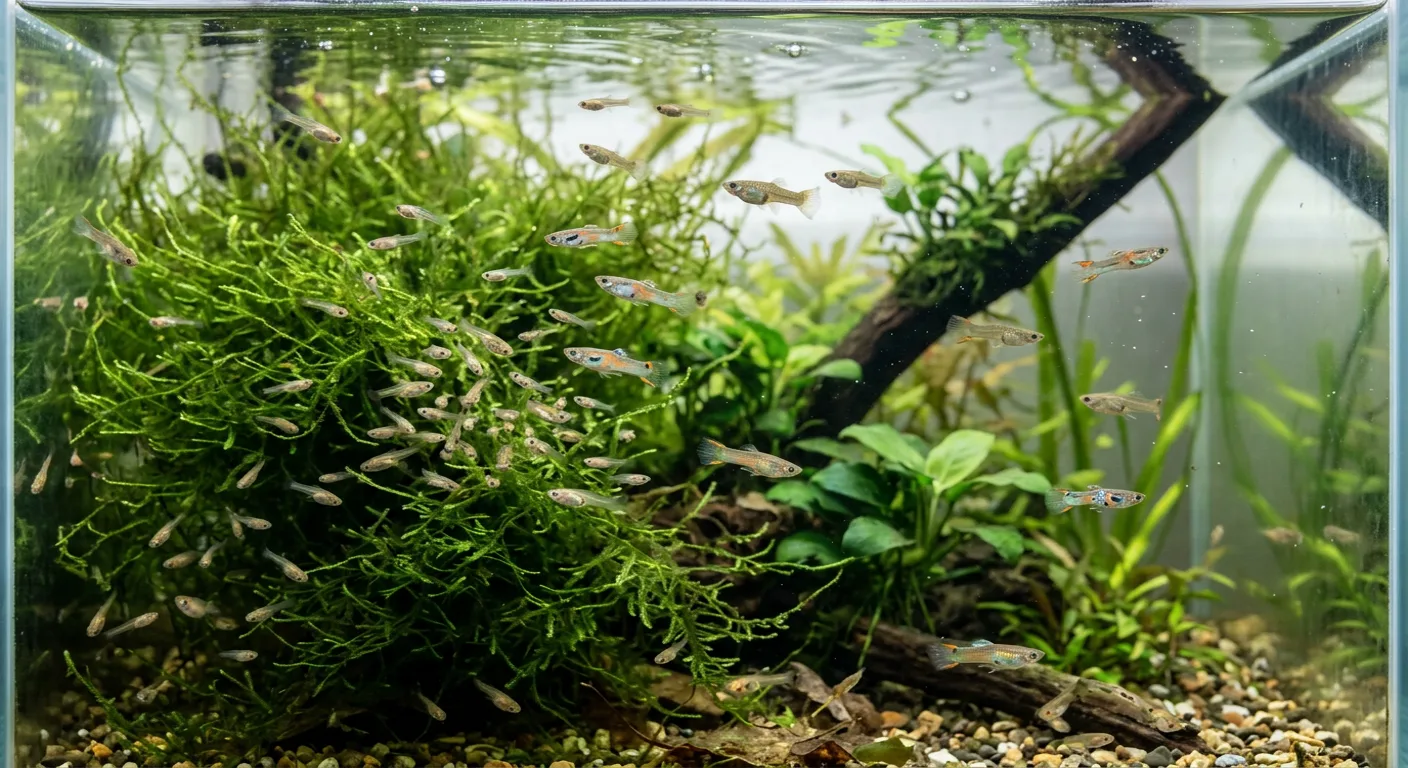
Guppy life stages and what each looks like
Thinking in stages is easier than thinking in exact weeks. Below is a practical map that most hobbyists use. Our guppy growth stages guide goes deeper on the early weeks.
Fry (0 to 4 weeks)
Newborns are almost transparent with dark eyes and a visible stomach. They hide in plants and spend time near the surface. They need frequent small meals of powdered flake, crushed pellet or baby brine shrimp; see the guppy fry feeding schedule.
Juveniles (1 to 3 months)
Body shape elongates, color starts to show and fins begin to develop. This is the stage when many keepers mistake males for females. It is also when you should separate the sexes if you do not want constant breeding.
Adults (3 to 12 months)
Fish look “finished”: males have full tails and color, and females have a heavy, rounded body. This is the prime breeding window, and fish in this range often show the best fin and color quality.
Seniors (about 18 months or older)
Many aquarium guppies live roughly 1.5 to 3 years depending on care, though some live less. See how long guppies live for the factors that affect lifespan. Seniors slow down and may show faded color, thinner bodies and a sway-back look.
Color, fins and body shape as age clues
These clues are most useful for adults, where size no longer helps. They are subjective, so combine them with the others.
Signs of a young adult
- Bright, saturated color without gray patches.
- Smooth, intact fin edges.
- Streamlined body, strong appetite and lively swimming.
Signs of an older guppy
- Color that has slowly dulled, especially on the body.
- Thin back behind the head, sometimes with a slightly curved spine.
- Tail fins that look worn or torn at the edges even with clean water.
- Reduced chasing, slower response at feeding time.
These signs overlap with stress and disease, so rule those out first. Our guide to why a guppy loses color and the article on signs of stress in guppies help you tell the difference.
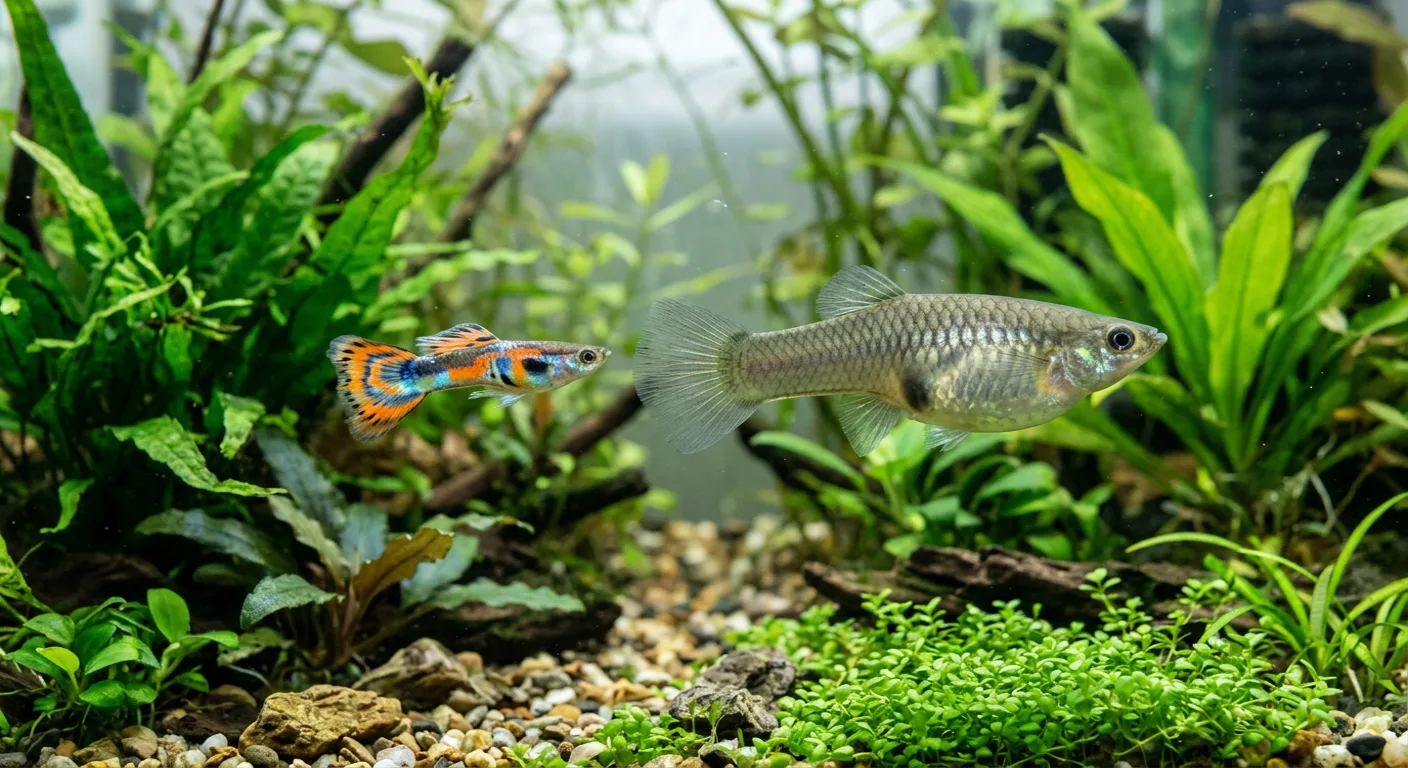
Comparing signs side by side
| Feature | Young (under 3 months) | Prime adult (3 to 12 months) | Older (18+ months) |
|---|---|---|---|
| Body size | Small, slim | Full size, firm | Full size, sometimes thin |
| Color | Developing | Strong | May fade |
| Fins | Short, growing | Full and neat | May fray or thin |
| Activity | Fast, darting | Active, displaying | Slower, rests more |
| Breeding | Not yet or just starting | Most productive | Smaller or fewer broods |
What changes the estimate: temperature, food and genetics
If your estimate keeps seeming off, one of these factors is probably shifting the fish’s growth curve.
Water temperature
Warmer water within the safe range speeds up metabolism and growth; cooler water slows it. Most keepers hold guppies around 74 to 82 °F (23 to 28 °C). Keep temperature steady, and see our guppy temperature guide for safe ranges. A fish raised cool may be older than its size suggests.
Food quality and quantity
Fry fed several tiny meals a day, including live or frozen foods, usually grow faster than fry fed once. Underfed fish can be stunted, and overfed fish can look larger but suffer for it. Balance is key; see how often to feed guppies.
Tank size and crowding
Crowded tanks with poor water can stunt growth. Fish raised in a clean, roomy tank usually reach full size sooner than the same fish crowded together.
Genetics and strain
Strains differ in adult size and tail length. A large delta-tail male can look “older” than a plain strain male of the same age simply because he is bigger. When you buy from a breeder, ask for the age range; the male guppies in our shop are listed so you can compare strains and sizes.
Step-by-step: estimate the age of a guppy you already own
- Collect history. Note the purchase date, the seller’s age statement and any known birth date.
- Identify the sex. Look for a gonopodium or a gravid spot.
- Measure the body. Use the grid method and compare with the length chart above.
- Judge development. Is color finished? Are fins full? Is the gonopodium fully formed?
- Check condition. Firm, round body suggests prime adult; thin, bent or faded suggests an older fish or illness.
- Combine and give a range. For example, “about 4 to 6 months” or “over 1 year”.
- Re-check in 3 to 4 weeks. Growth speed over a month helps confirm whether the fish is still growing, which points to youth.
A real-world example
Imagine a male around 2.8 cm with a fully formed gonopodium, saturated color, a full tail and a very active display. Using the clues above, he is most likely 4 to 6 months old. Now imagine a female of 4.5 cm with a heavy body and a dark gravid spot that has dropped several broods; she is likely 6 months or older. Neither estimate is exact, but both are good enough for planning feeding, breeding and tank space.
Common mistakes when guessing guppy age
Judging by size alone
Stunted fish can be much older than they look. Always confirm with development and condition.
Confusing illness with aging
Faded color, thin bodies and clamped fins are classic disease signs. Check water quality first: test ammonia, nitrite and nitrate, and review the guppy water parameters guide.
Ignoring sex differences
A 3 cm female and a 3 cm male are at different stages. Always compare males with males and females with females.
Comparing across strains
A giant show strain will not match the chart. Compare siblings or fish of the same line.
Assuming fish from pet stores are all the same age
Store tanks often mix batches. Estimate each fish individually and consider quarantine; see quarantining new guppies.
Why knowing a guppy’s age changes how you care for it
Age is not only trivia. It shapes almost every care decision, and getting it roughly right prevents the most common beginner problems.
Feeding by age
Fry need tiny particles several times a day because their mouths and stomachs are very small. Juveniles can take crushed flake and micro pellets two or three times daily. Adults do well on one or two small feedings, where the rule is to give only what they finish in about two minutes. Older fish may eat less and are easy to overfeed, which fouls the water, so cut portions slightly if a senior leaves food behind.
Tank mates and space by age
Fry and small juveniles can be eaten by adults, so keep them in a separate tank or a densely planted section until they are clearly too big to swallow. A common hobby guideline is to wait until fry are roughly the size of an adult’s mouth plus a safe margin, often around 6 to 8 weeks. Read when guppy fry can join adults for a fuller plan.
Breeding and culling decisions
If you breed guppies, age tells you when to pair, when to pick the best males and when to retire older females. Many breeders avoid using very young females and rotate out females that have clearly slowed down. Keeping an age log makes these decisions easy and keeps strains consistent from one generation to the next.
Health monitoring by age
Young fish are more sensitive to water swings, so test often when raising fry. Older fish are more prone to slow decline, so watch weight, color and appetite monthly. When a senior guppy seems to be failing, the best response is gentle: stable temperature, clean water, easy-to-eat food and low stress, rather than aggressive medication without a clear diagnosis.
Tips for beginners and long-time keepers
For beginners
- Keep a simple log with purchase date, estimated age and notes.
- Photograph new fish with a ruler for reference.
- Do not breed until females are around 4 to 6 months old.
For experienced keepers
- Mark generations by keeping each brood in a labeled tank with a birth date.
- Track growth in a spreadsheet for different foods and temperatures.
- Cull and rehome based on development at set ages, not just size, to keep strain quality.
Quick checklist: how to tell how old a guppy is
- Measure body length and compare with the correct sex column.
- Check for a gonopodium or gravid spot.
- Look at color and fin quality.
- Check body condition and activity.
- Rule out disease and bad water.
- Give a range and re-check in a month.
If you want fish of known age, our premium guppy pairs and guppy fry packs let you start at a clear stage. For daily care routines that keep every age healthy, return to the guppy care guide. For more background on the species, the Wikipedia guppy article is a good reference.
FAQ
Can you tell a guppy’s age by its size?
Partly. Size is a good guide for fish under about four months, when growth is fast. After that, size varies by strain, sex and food, so combine it with color, fin shape and body condition.
How old is a guppy when it gets color?
Males usually begin showing color at roughly 6 to 10 weeks, with full color by about 3 to 4 months. Females stay more muted, often with soft color on the tail.
How can I tell if my guppy is old?
Older guppies usually move more slowly, lose some color and show a thinner body or worn fins. Because illness looks similar, test your water and watch for other symptoms before assuming age.
How long do guppies live?
Many pet guppies live around 1.5 to 3 years with good care, though some live less in poor conditions. Stable temperature, clean water and varied food help them live longer.
How big is a 3-month-old guppy?
A typical 3-month-old male is roughly 2 to 2.5 cm in body length and a female around 2.5 to 3.5 cm, though strain, diet and temperature can change this by a noticeable margin.
Can I tell the age of a guppy I bought from a store?
Only roughly. Measure the fish, check sexual development and condition, and ask the seller for an age range. Quarantine and re-measure over a month to refine the estimate.
Behind the care guides
Care begins with steady systems
Our guppy guides focus on practical routines: keep water stable, observe fish closely and allow for natural variation.

Care systems
Steady water, thoughtful care
Gentle filtration and regular observation support healthy aquarium routines.

Natural variation
Every guppy is different
Color, size and fin shape vary with strain, age and each individual fish.
Editorial illustrations for context; they do not depict HiGuppy's exact facility or current fish stock.