The HiGuppy Journal
Fancy Guppies vs Feeder Guppies: Key Differences and Which to Buy
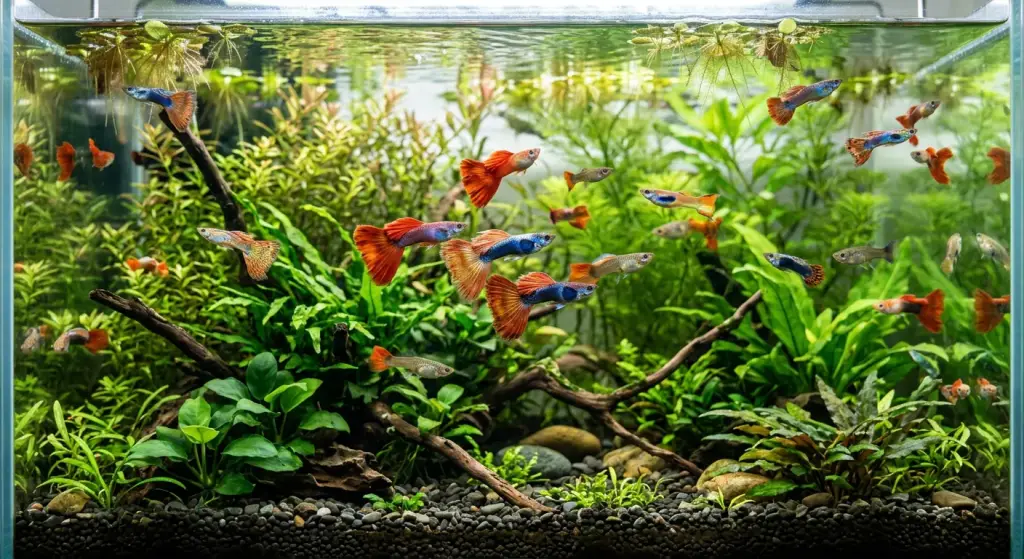
What is the difference between fancy guppies vs feeder guppies? Fancy guppies are selectively bred for bright colors, big tails and patterns, while feeder guppies are cheap, plain, mixed-quality fish sold in bulk, often as live food. Both are the same species, so the real difference is breeding, size, color and care history. Our complete guppy care guide covers the basics for either type.
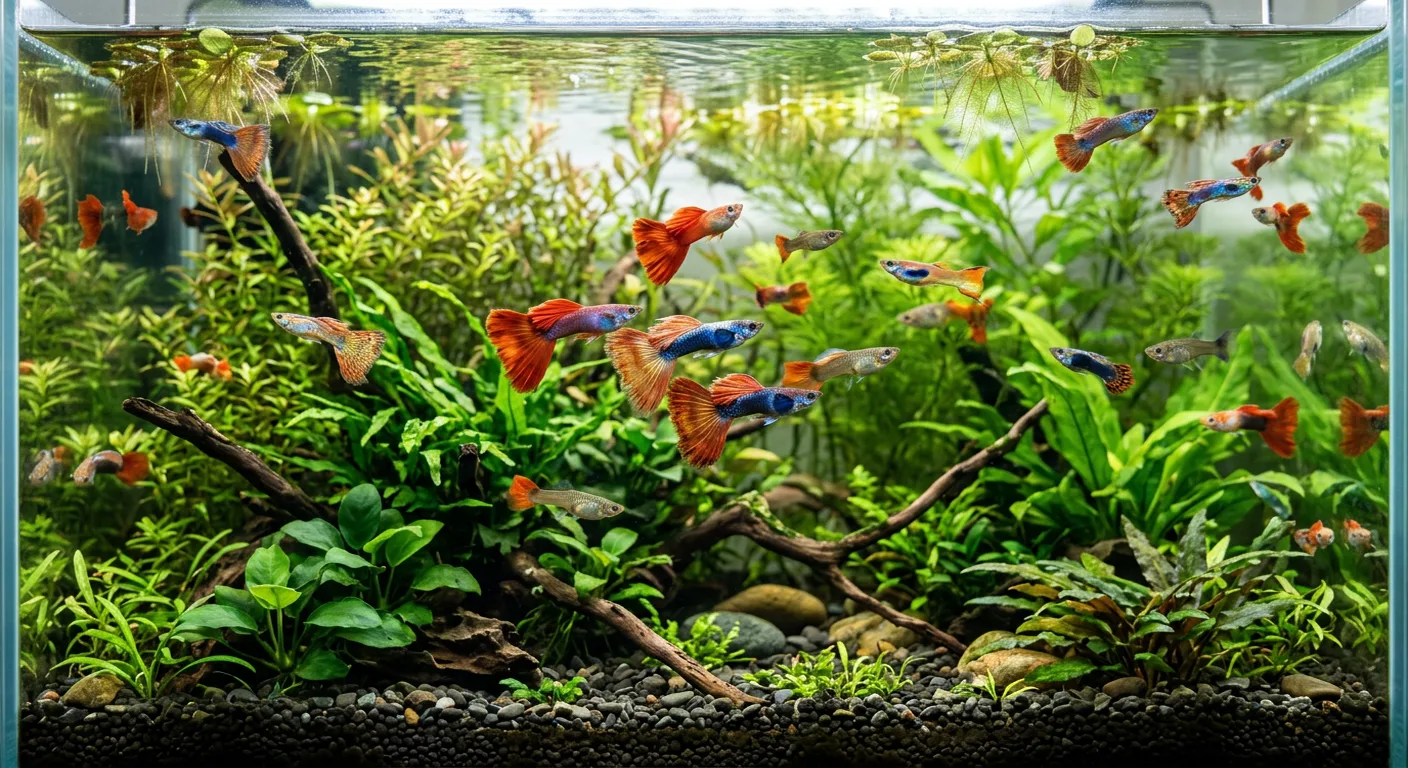
If you are deciding which to buy for a first tank, a breeding project or a colorful display, this guide compares fancy guppies vs feeder guppies side by side, explains the risks of cheap bulk fish and shows how to pick healthy stock.
Fancy guppies vs feeder guppies at a glance
Both are Poecilia reticulata. Nothing about the species changes, so a feeder guppy is not a different animal. The gap comes from how the fish were bred and raised, and that gap shows up in color, tail shape, price and predictability.
| Feature | Fancy guppies | Feeder guppies |
|---|---|---|
| Breeding | Selected for color, pattern and tail | Bulk bred, little selection |
| Color | Vivid, often strain-specific | Mostly gray, silver or muted |
| Tails | Delta, fan, veil and other large types | Short, small tails |
| Price | Higher per fish | Usually very cheap |
| Offspring | More predictable within a strain | Random, mixed results |
| Health history | Varies by seller, ask questions | Often unknown, crowded tanks |
| Best for | Display, breeding, showing | Live food or a budget start |
What are feeder guppies?
Feeder guppies are guppies sold cheaply to be eaten by larger fish such as oscars or arowana. They are usually raised in large numbers in simple tanks or ponds, so growers do not spend time selecting for color or tail shape. Quality varies a lot. Some feeders are perfectly healthy, but others come from crowded, stressful conditions where disease can spread quickly.
That does not mean a feeder guppy cannot live a normal life in a home tank. Many people keep them as pets. The trade-off is that you accept plain looks and a higher chance of hidden problems, so quarantine matters even more.
What are fancy guppies?
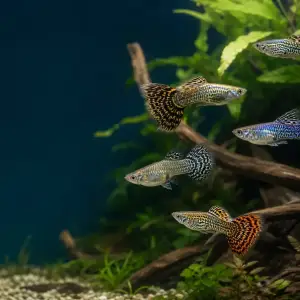
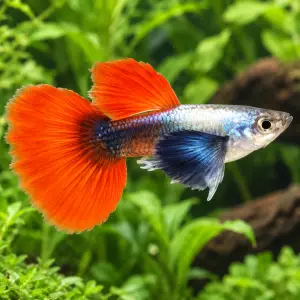
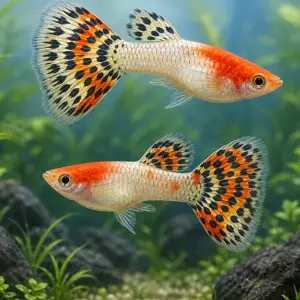
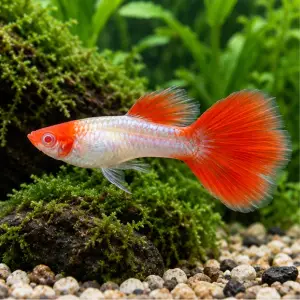
Fancy guppies are the show-style and ornamental fish most hobbyists picture: males with large tails in red, blue, gold, black or mosaic patterns. Breeders choose the best parents over many generations to hold a look. To explore the look, see our guppy color types and guppy tail types guides.
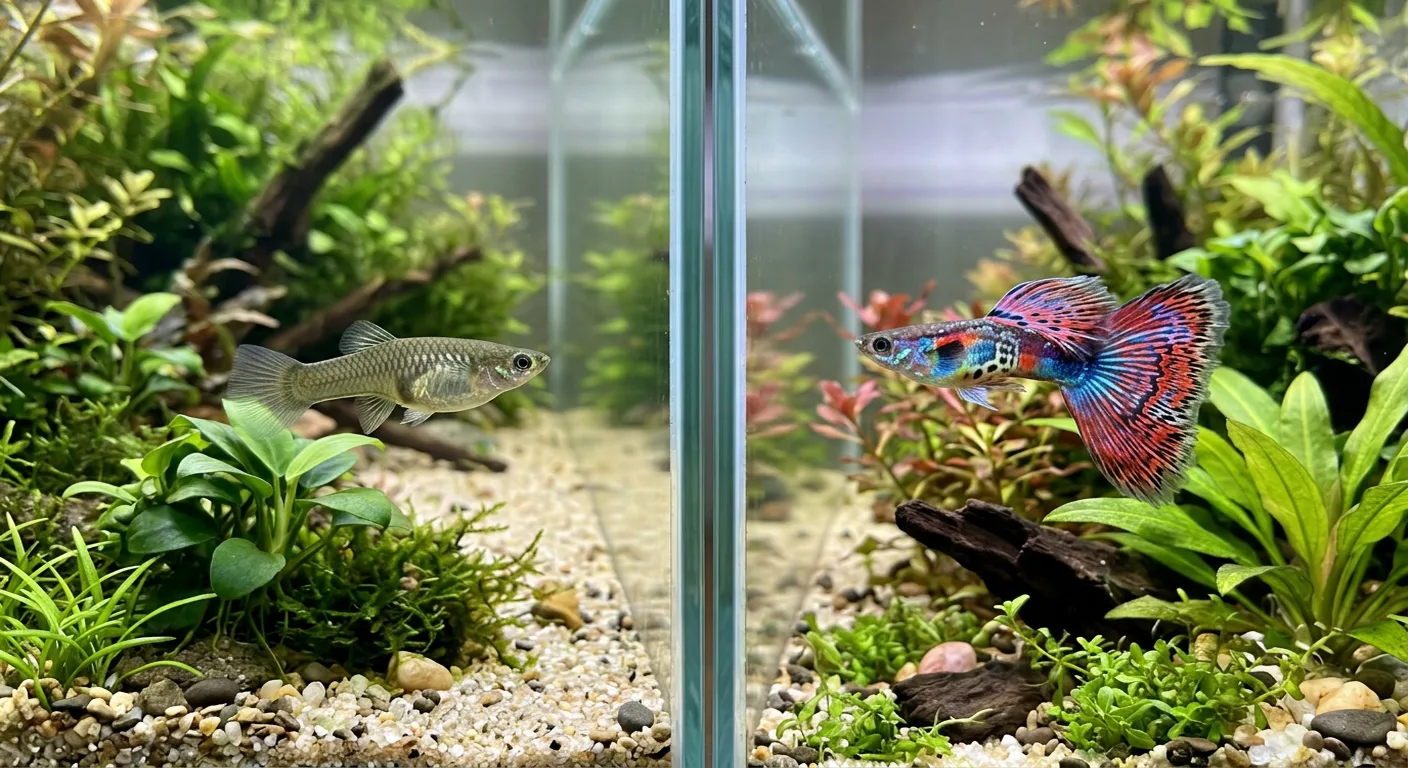
Key differences between fancy and feeder guppies
Color and tail shape
This is the easiest way to tell them apart. A fancy male usually has strong color and a large, well-shaped tail. A feeder male is often smaller with a short tail and washed-out color. Females of both types look more similar, since females are naturally plainer.
Price and what you get for it
Feeders cost far less, but cheap does not always mean good value if half the group struggles. Fancy guppies cost more because of the breeding work behind them. Our how much do guppies cost article explains typical price ranges and what drives them.
Breeding results
Guppies breed easily, but fancy stock bred within one strain tends to give more consistent fry. Feeder fry are a mixed bag. If you want to build a line, start with fancy stock from a known source and read about guppy inbreeding risks before you pair relatives.
Health and hardiness
Do not assume fancy always means delicate or feeder always means tough. Heavily inbred show lines can be less robust, while mixed feeders can be hardy but carry unknown parasites. In both cases, stable water and a calm setup do most of the work. For ranges, see our guppy water parameters guide.
Risks of buying feeder guppies as pets
- Unknown health: Crowded holding tanks can spread parasites and bacteria. Quarantine every new fish.
- Stress: Rough handling and sudden moves can weaken fish before you ever see them.
- Mixed genetics: You cannot predict color or size in the fry.
- Shortened lifespan: Poor early care can affect fish for life, though results vary.
Follow the steps in our quarantine new guppy fish guide whichever type you choose.
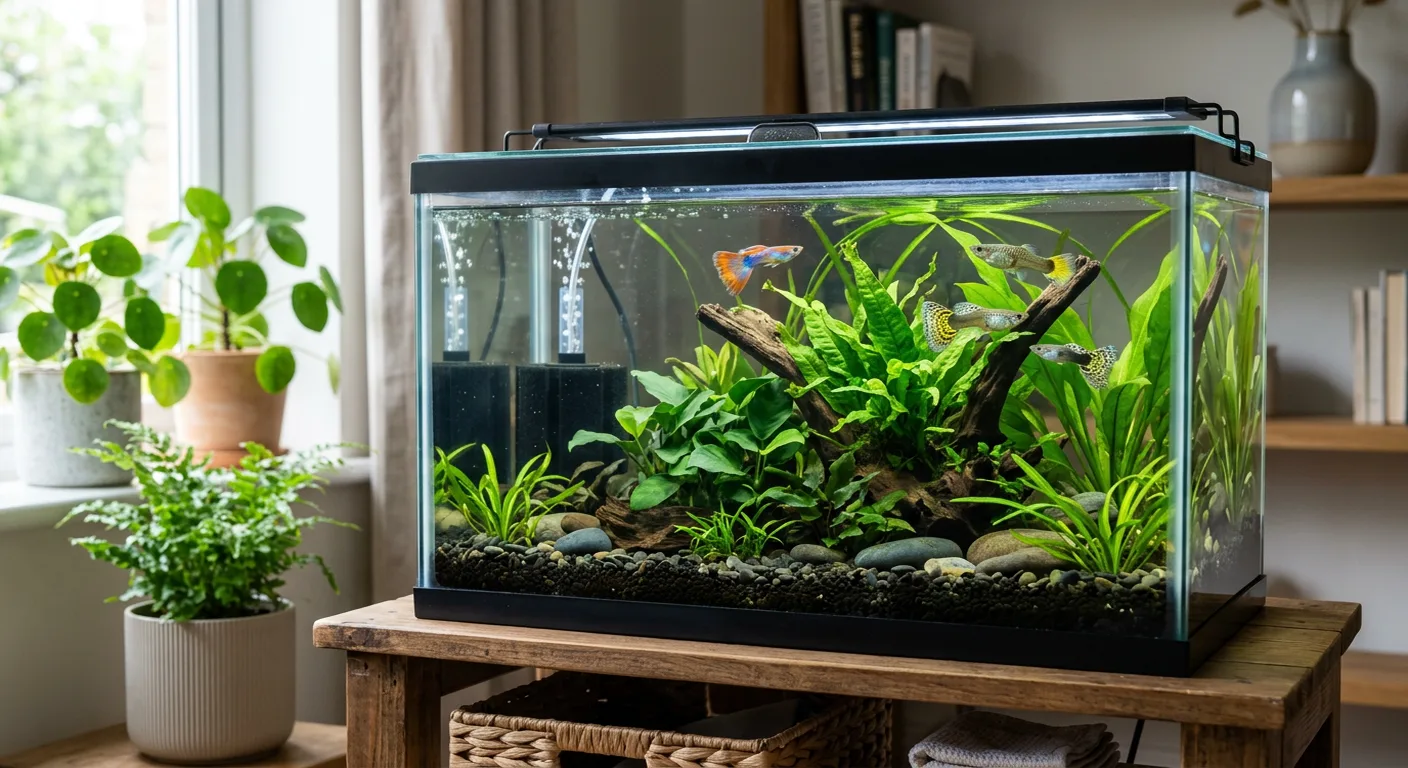
Common myths about fancy guppies vs feeder guppies
Several myths make the fancy guppies vs feeder guppies debate confusing. One myth says feeders are a different, weaker species. They are not; any guppy can be sold as a feeder if the seller chooses. Another myth says fancy guppies always die quickly. In reality, a well-kept fish of either type can do well when the tank is cycled and the water stays stable.
A third myth is that color alone proves health. A bright fish can still be sick, and a plain fish can be perfectly fine. Judge by behavior, appetite, fin condition and the conditions in the seller’s tank, not only by looks. Finally, do not assume expensive means perfect. Ask about the strain, age and how the fish were fed, and take your time before you buy.
Which should you choose?
The choice between fancy guppies vs feeder guppies depends on your goal.
- Beginner with a small display tank: Fancy guppies, bought from a seller who can tell you the strain and age.
- Breeder: Fancy guppies of one strain, ideally a trio or pair.
- Feeding a predator fish: Feeders are sold for this, but be aware they can bring disease into your tank.
- Tight budget: Feeders can work, if you quarantine and accept plain looks.
If you want colorful stock, browse our male guppies and see which colors you like. For a starter pick, our best first guppy pack for beginners is a good place to start.
How to spot a healthy guppy, fancy or feeder
Whatever you buy, look closely before paying. Healthy guppies swim actively, hold their fins open, eat readily and have clear eyes and smooth bodies. Avoid fish with clamped fins, white spots, ragged tails, swollen bellies or gasping at the surface. Our how to choose healthy guppy fish online guide has a full checklist that also works for buying locally.
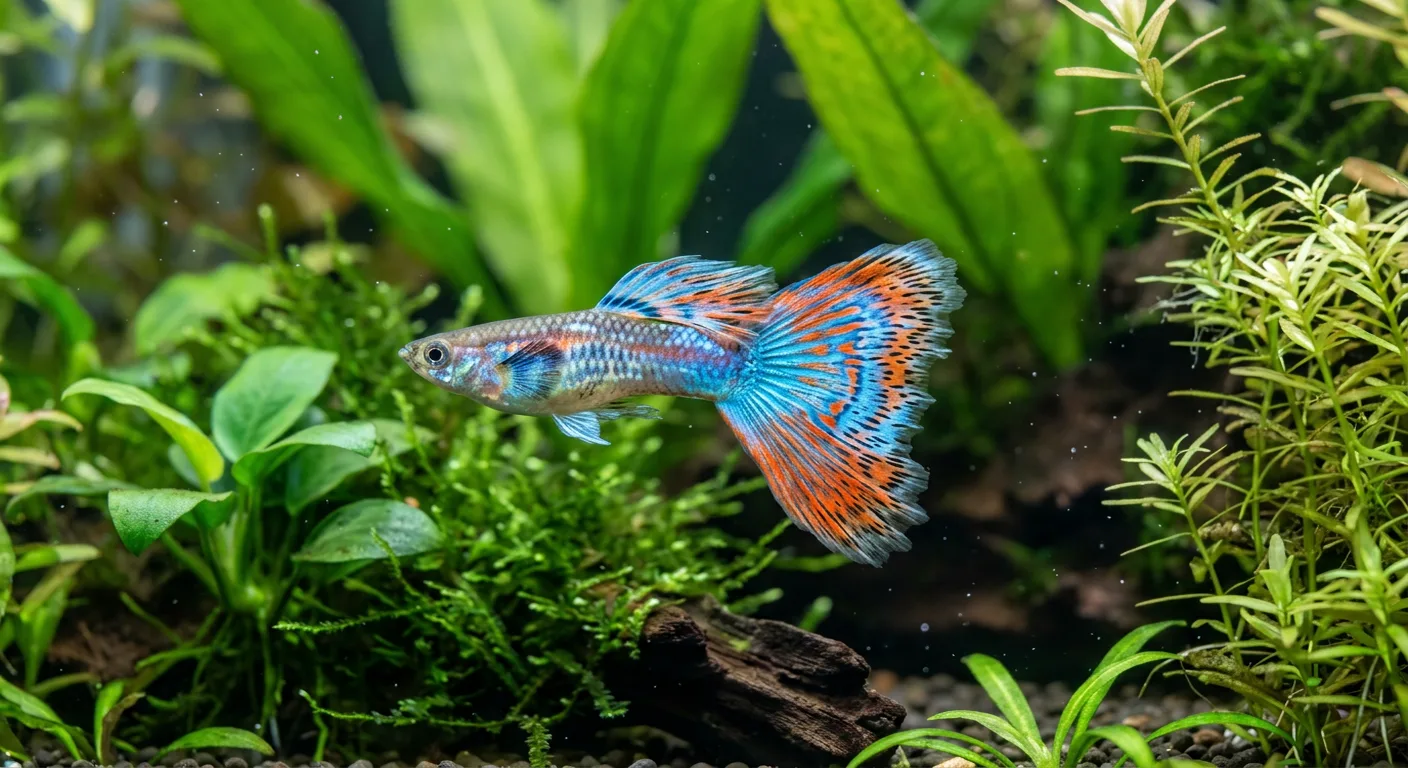
Also check the tank the fish came from. If dead fish sit at the bottom or the water looks cloudy, walk away. Ask how long the fish have been in stock and what they have been eating. A good seller answers openly.
Caring for either type
Once home, both types need the same basics: a cycled tank, a filter, steady warm water, a varied diet and regular small water changes. Feed small amounts once or twice a day. Keep males and females in a sensible ratio so females are not harassed, and plan for fry, because guppies breed readily. For daily routines, return to our how often to feed guppies article. If you would like background on the species, the Wikipedia guppy page is a helpful overview.
One practical tip: whatever you buy, start with a small group rather than a crowded bag of fish. Smaller groups are easier to watch for early signs of illness, and they give you time to learn the routine before the tank fills with fry. If something does go wrong, the sooner you notice, the easier it is to fix.
For ongoing help, the guppy care guide is the best single page to bookmark.
FAQ
Are feeder guppies the same as fancy guppies?
They are the same species, but fancy guppies are selectively bred for color and tails, while feeder guppies are bulk-bred with little selection and usually look plainer.
Can I keep feeder guppies as pets?
Yes, many people do. Quarantine them first, keep water clean and expect plainer color and less predictable fry than fancy stock.
Can fancy and feeder guppies live together?
They can share a tank, since they are the same species and have the same needs. Interbreeding will produce mixed fry, so keep them apart if you want a pure strain.
Are fancy guppies harder to keep than feeder guppies?
Not necessarily. Both need stable water and good food. Some heavily inbred lines can be less robust, so choosing a healthy source matters more than the label.
Why are feeder guppies so cheap?
They are raised in large numbers with little selection or grading, so sellers can price them low. Lower cost often comes with less information about health and genetics.
Behind the care guides
Care begins with steady systems
Our guppy guides focus on practical routines: keep water stable, observe fish closely and allow for natural variation.

Care systems
Steady water, thoughtful care
Gentle filtration and regular observation support healthy aquarium routines.

Natural variation
Every guppy is different
Color, size and fin shape vary with strain, age and each individual fish.
Editorial illustrations for context; they do not depict HiGuppy's exact facility or current fish stock.