The HiGuppy Journal
Male or Female Guppies? Pros, Cons and Best Ratios
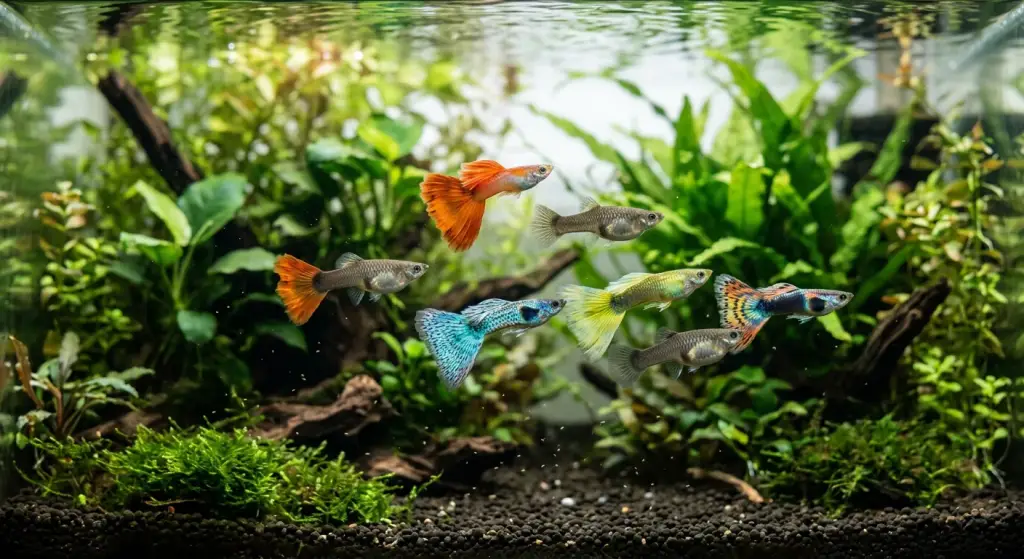
Should you buy male or female guppies? For most beginners, the best choice is a mix: one male for every two or three females, or a males-only tank if you want maximum color without fry. Males bring the big, bright tails, while females are larger, calmer and the only ones that give birth. Our complete guppy care guide covers the basics behind every choice below.
Picking male or female guppies shapes everything that follows: how colorful the tank looks, how much the fish chase each other, whether you end up with dozens of fry, and how much work the tank takes. This guide walks through the real differences, the pros and cons of each option, the best ratios, and a step-by-step way to decide. All numbers are general ranges, so adjust them to your tank and strain.
Male or female guppies: the short answer
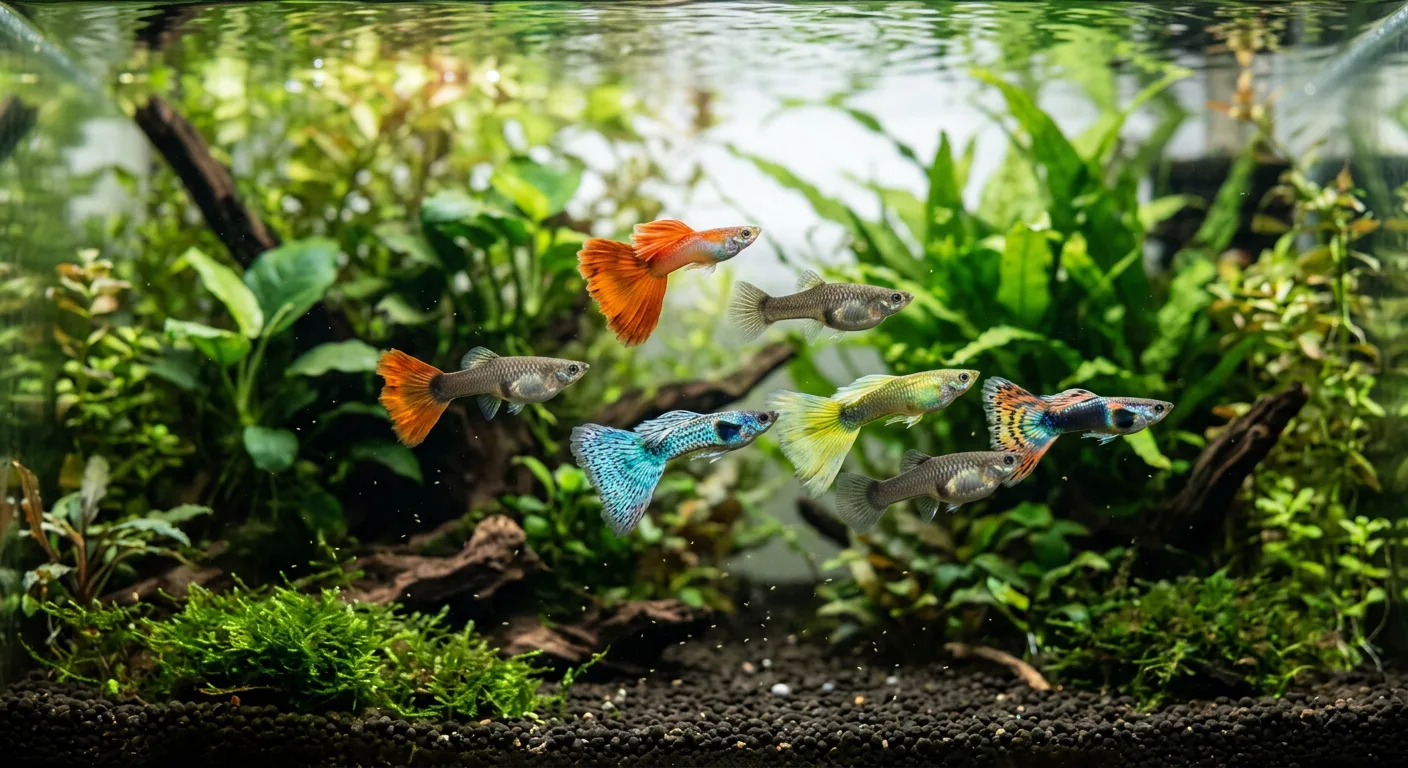
If you only remember one thing, remember this: males are for looks, females are for breeding, and a balanced group is the easiest way to keep both happy. A single male with no females is fine. A single male with just one female is usually not, because he will pursue her all day. That is why most keepers aim for at least two females per male.
Quick decision guide
- You want the most color and no fry: choose a males-only group.
- You want a calm, easy tank with some babies: choose one male and two or three females.
- You want to breed a strain: choose a breeder trio or several females per male.
- You want the largest, sturdiest fish: choose females, who grow bigger than males.
- You are brand new and unsure: start with a small mixed group in a tank of 10 gallons or more.
Comparison at a glance
| Feature | Male guppies | Female guppies |
|---|---|---|
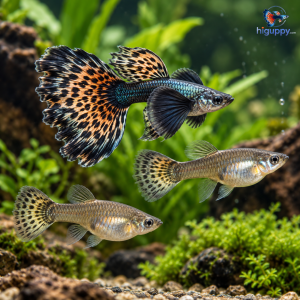
| Color and tails | Bright, patterned, long fins | Mostly silver, gray or pale, with short fins |
| Typical adult size | Smaller, often around 1 to 1.5 inches | Larger, often around 2 to 2.5 inches |
| Behavior | Active, display and chase | Calmer, spends more time exploring |
| Breeding | Cannot give birth | Gives birth to live fry |
| Care effort | Low if kept without females | Higher once pregnant and fry appear |
How to tell male and female guppies apart
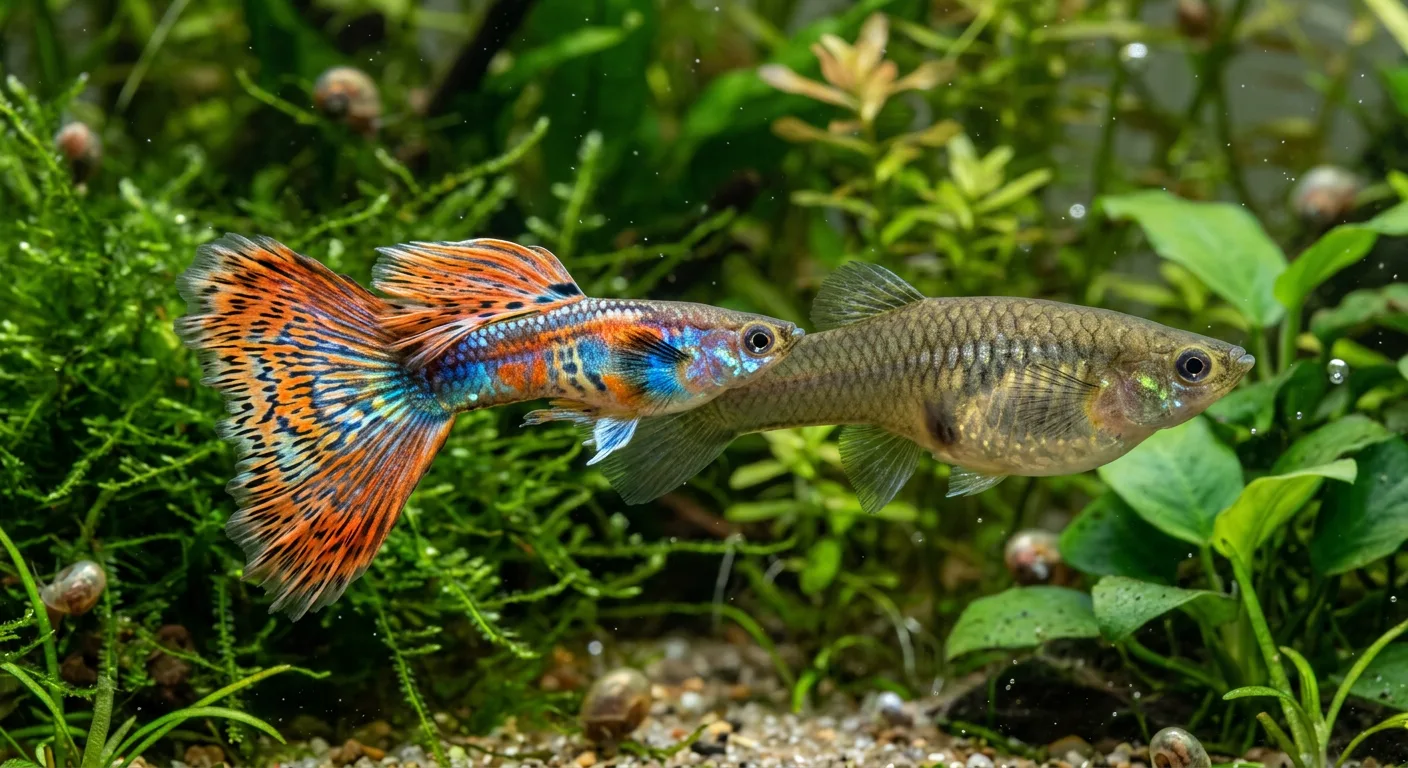
Before you buy, you need to be able to sex your fish. Adult guppies are easy to tell apart, and juveniles take a little more patience. For a deeper side-by-side look, see our male vs female guppy comparison.
Signs of an adult male
- Slim body and noticeably smaller than females of the same age.
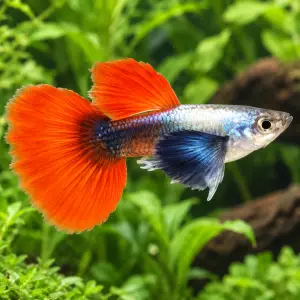
- Bright colors, spots or patterns on the body and a large, decorative tail.
- A gonopodium: a thin, pointed anal fin that looks like a small rod and is used for mating.
- Constant swimming, flaring and following females.
Signs of an adult female
- Rounder, deeper body, especially when carrying young.
- Duller coloring, though some strains show more color on the tail.
- A fan-shaped anal fin instead of a rod.
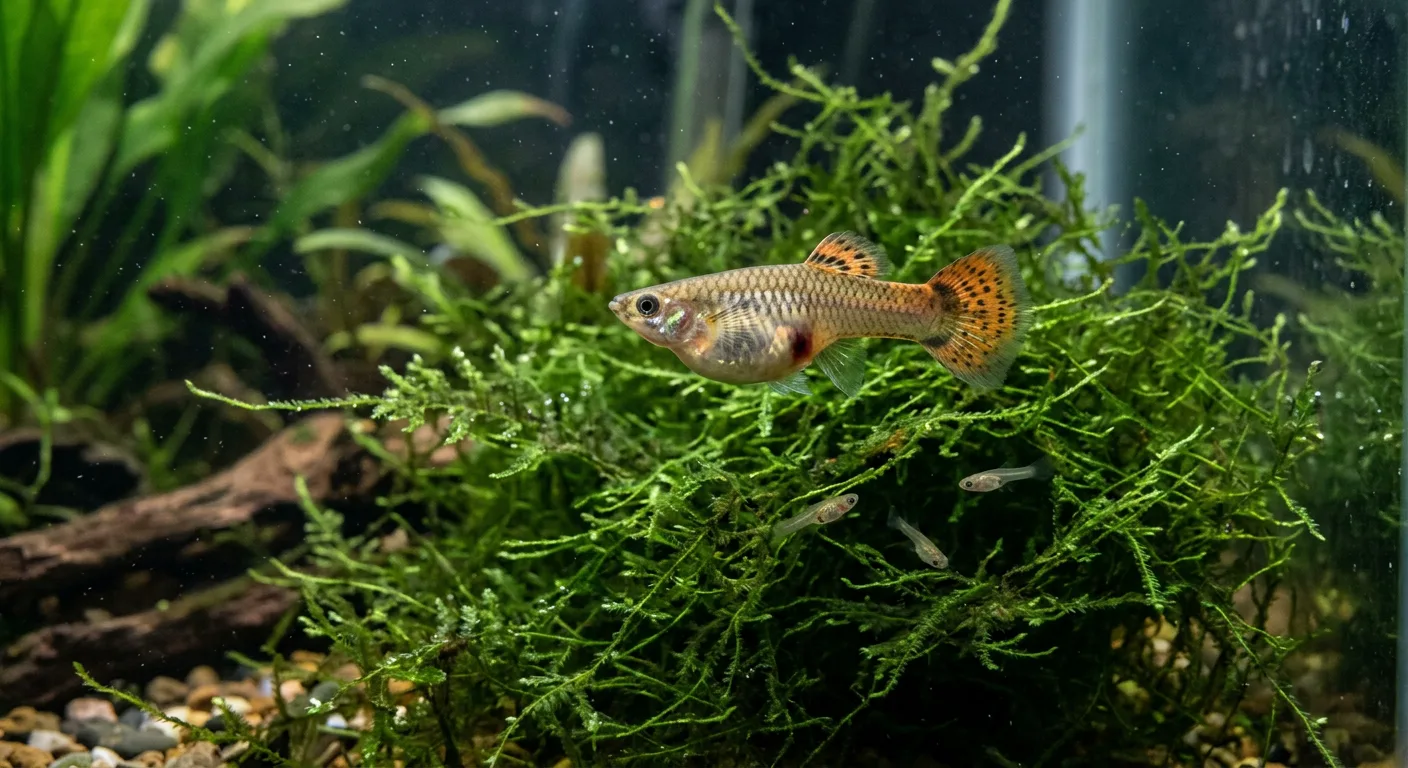
- A dark gravid spot near the rear of the belly that grows darker and larger as pregnancy advances.
Sexing young guppies
Very young fry look alike. Many keepers can start to see a gravid spot on females or a thickening anal fin on males at roughly 3 to 6 weeks, though timing varies with temperature, feeding and genetics. If you are buying fry, expect a mix, and consider our guppy growth stages guide to know what to look for as they develop.
Pros and cons of buying male guppies
Males are what most people picture when they think of fancy guppies. They are the main reason the hobby has so many named strains. If color is your priority, you can browse our male guppies collection.
Why people choose males
- Maximum color, with large tails and bold patterns.
- No fry, so the tank never becomes overcrowded unexpectedly.
- Smaller bodies, so a group produces a little less waste than the same number of females.
- Very active and entertaining to watch.
The downsides of males
- Males harass females nonstop if the ratio is wrong.
- Males can nip or chase each other, especially when space is tight.
- Long tails are more exposed to fin damage and fin rot if water quality slips. See our guppy fin rot guide.
- Males are generally smaller and some keepers feel they age earlier than females.
Is a males-only tank a good idea?
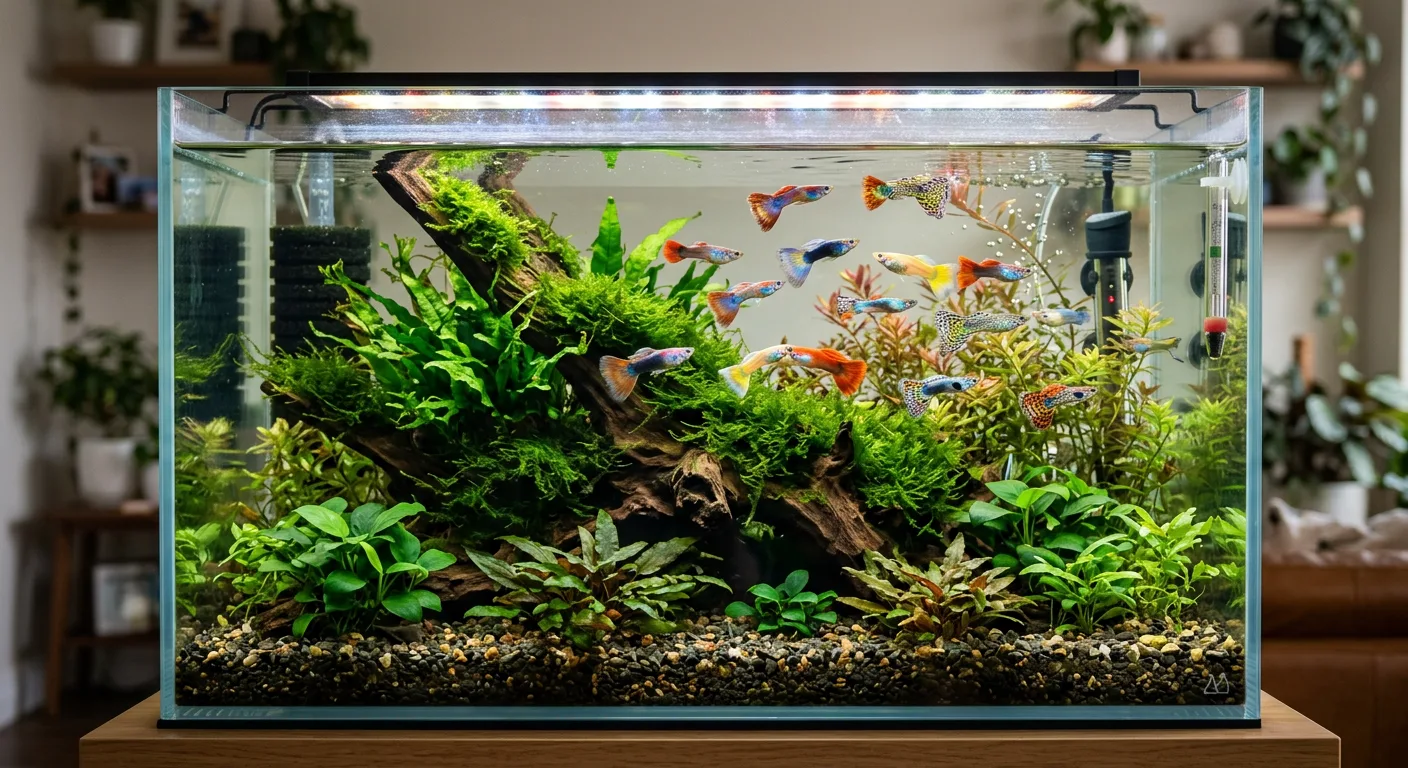
Yes, for many keepers it is the easiest way to enjoy guppies. With no females, there is no mating pressure and no fry. Males still display at each other, so give them room and plants. A tank of at least 10 gallons for a small group, and more for a larger group, gives them space to spread out. Read our male-only guppy tank guide for setup details.
Pros and cons of buying female guppies
Females are often overlooked but are hardy, larger and calm. They suit anyone who wants to breed guppies or who prefers a more relaxed tank. Our female guppy care guide covers their needs in detail.
Why people choose females
- Larger, sturdier bodies that many keepers find hardy.
- Less aggressive behavior and no fin display contests.
- They are needed for breeding and can store sperm, so one mating can lead to several broods.
- Plain colors can still be attractive, and some strains have richer female color.
The downsides of females
- Pregnancy leads to fry, and fry mean more fish than your tank may hold.
- Pregnant females need low stress and hiding places.
- Less color, so the tank looks quieter.
- Repeated pregnancies can wear a female down if she is also harassed by males.
Female-only tanks
A group of females can live together peacefully. Be aware that females bought from a mixed tank may already be pregnant, because they can store sperm for months. If you want a truly fry-free tank, ask the seller about the history of the fish. See our female-only guppy tank article for more.
The best male to female guppy ratio
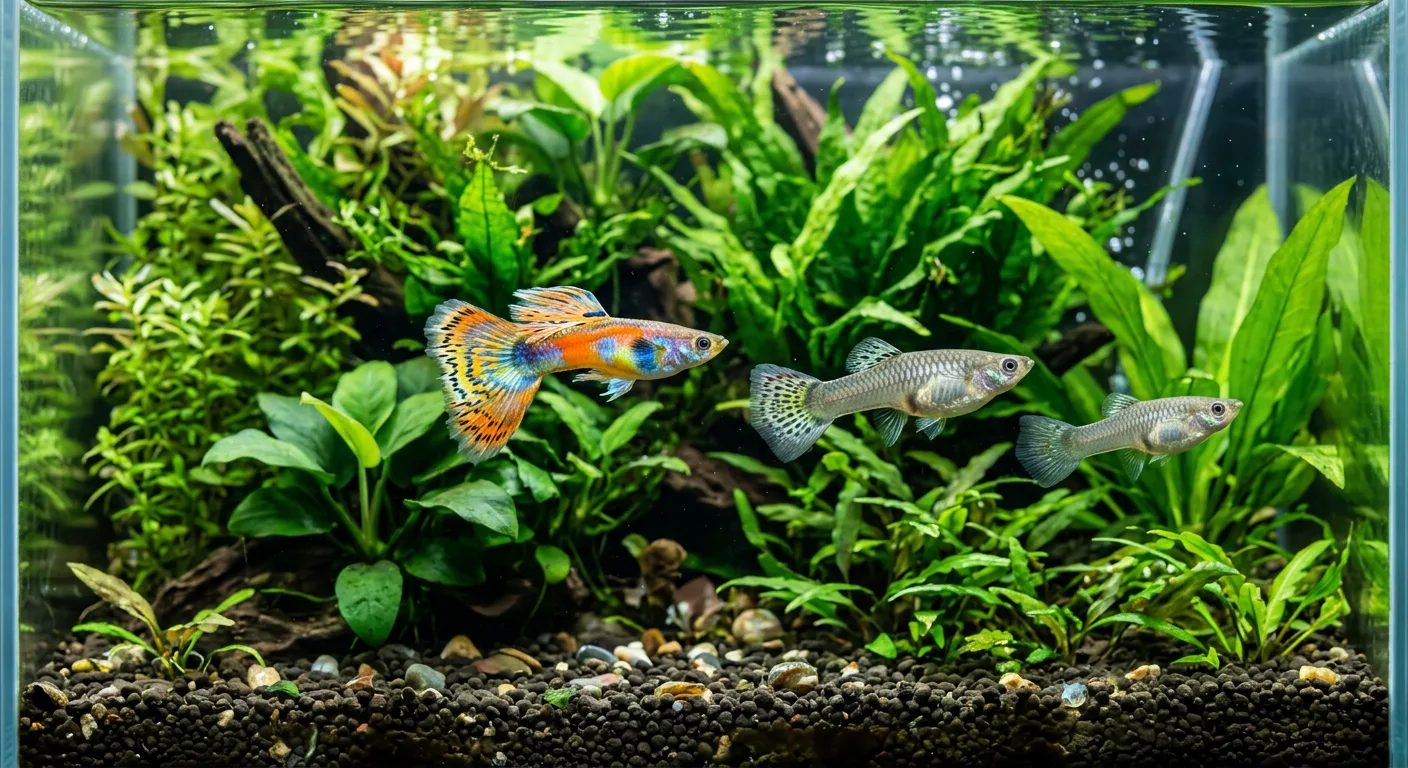
Ratio is the most important part of keeping both sexes together. Males spend much of their time trying to mate, and a small number of females absorbs all that attention. A common recommendation among keepers is at least two females per male, and many prefer three or more.
Ratio chart
| Goal | Suggested ratio | Notes |
|---|---|---|
| Calm community tank | 1 male : 2 to 3 females | Spreads out male attention |
| Breeding a strain | 1 male : 2 females (trio) | Easy to track lines and offspring |
| Color display only | Males only | No fry, needs space and plants |
| Larger group | 1 male : 3+ females | Keep stocking within tank size |
| Not recommended | 1 male : 1 female | Female is harassed constantly |
For a deeper look at the numbers, read our male to female guppy ratio guide. To plan stocking by tank size, use how many guppies per gallon.
Tank size matters as much as ratio
A good ratio in a tiny tank still causes stress. As a general rule, a 10 gallon tank suits a small group of about 5 to 6 guppies, and a 20 gallon tank gives more freedom. Because females breed, always plan for the extra fish that will arrive.
How to choose: a step-by-step plan
- Decide your goal. Color only, relaxed community, or breeding?
- Check your tank size. Count gallons and be honest about how many fish it can hold.
- Pick a ratio. Use the chart above. Two to three females per male is the safe default.
- Plan for fry. If you keep females, decide now whether you will raise, rehome or sell the babies.
- Buy healthy fish. Look for active swimming, clean fins and good appetite. See how to choose healthy guppy fish online.
- Quarantine new arrivals. Keep them separate for a couple of weeks before adding them to your main tank.
- Watch behavior for the first week. If females are hiding constantly, add plants or more females.
Breeding considerations
If you plan to breed, the sex of your fish matters even more. Guppies are livebearers, and a female can produce fry roughly every month under good conditions, with broods that vary from a handful to dozens of babies. Our how to breed guppies article walks through the whole process.
Trios and pairs
For breeders, a trio of one male and two females keeps things tidy and shares the male’s attention. Pairs are simple, but the female may feel more pressure. If you prefer ready-made groups, see our breeder trios and premium guppy pairs.
Managing fry
Adult guppies may eat newborn fry, so dense plants or a separate rearing tank help. Read raising guppy fry for a practical routine. If you do not want fry, keep males only or females only.
Common mistakes when choosing male or female guppies
Buying one male and one female
This is the most frequent beginner mistake. The male has only one target and the female gets no rest. Add a second or third female.
Buying only females without checking
Females from mixed tanks can already be pregnant, so a “female-only” tank may suddenly have fry. Plan for the possibility.
Overcrowding with too many males
A big group of males in a small tank leads to chasing and torn fins. Increase space or reduce numbers.
Forgetting about fry growth
Fry grow fast and can overload filters and water quality in a few months. Keep to your water change routine. See how often to change guppy tank water.
Care differences between males and females
Basic care is the same: stable temperature around 74 to 82 F, regular water changes and good food. The differences are in emphasis.
Feeding
Females, especially pregnant ones, benefit from steady, high-quality food in small portions. Males look best with varied foods that support color. Avoid overfeeding either way. See how often to feed guppies.
Water quality
Groups with fry produce more waste. Test regularly and keep ammonia and nitrite at zero. A guide to target numbers is in the guppy water parameters guide.
Stress signals
| Sign | Likely cause | Fix |
|---|---|---|
| Female hiding or clamped fins | Too much male attention | Add females, plants, or remove a male |
| Torn male fins | Male fighting or poor water | Add space and check water |
| Rapid breathing | Water problems or stress | Test and do a partial water change |
| Pale color | Stress, illness or diet | Review care and feeding |
Real-life scenarios: which option fits you?
Numbers and ratios are useful, but most people decide based on a situation. These examples show how the same question leads to different answers. For general background on the species, the guppy article on Wikipedia is a good reference.
Scenario 1: a first 10 gallon tank on a desk
You want something pretty and low maintenance. A group of four or five males gives the strongest visual impact, produces no fry and keeps the stocking level predictable. If you prefer a softer look, try two males and four females, but then plan for babies within a couple of months. Keep a weekly water change habit so the tank stays stable even if the population grows.
Scenario 2: a family tank where kids want to see babies
Choose one male and three females. Add dense plants such as java moss or floating plants so newborn fry have somewhere to hide. Decide early what happens to the extra fish, because a small tank fills quickly. Many families set up a small second tank for growing fry, and rehome or sell the surplus to local shops or fellow hobbyists.
Scenario 3: a hobbyist who wants to work on a strain
Start with trios from a reliable source, keep lines separate and record which fish are paired. Females matter as much as males here, because the female contributes half of the genetics. Do not judge a line by male color alone. Look at female body shape, tail shape and size too, and read about the risks of close breeding in our guppy inbreeding guide.
Scenario 4: a larger planted community tank
If you are mixing guppies with peaceful species, a female-heavy group usually looks calmer and reduces chasing. Males can still be added in small numbers for color. Check compatibility first, for example with our best tank mates for guppies list.
Cost and long-term effort
Sex affects not just looks but also your time and budget. Males are often priced higher in shops because of their color and tail shape, while females are commonly cheaper and sometimes sold as part of packs. Over time, though, females can cost more through extra tanks, food for fry and the effort of raising babies.
Time commitment
| Setup | Weekly effort | Main extra task |
|---|---|---|
| Males only | Low | Watch for fin nipping |
| Females only (no prior mating) | Low | Watch for stored sperm and surprise fry |
| Mixed group | Medium | Manage fry and population |
| Breeding project | High | Separate tanks, feeding, culling and records |
Planning the population
A single female can have a brood roughly every month under good conditions, so even a modest group can grow fast. If you keep a mixed group, you have three options: keep the fry and upgrade the tank, share them with other keepers, or accept that nature and tank-mates will keep numbers down. Whichever you choose, avoid letting the tank become overstocked, because crowding hurts water quality and makes disease more likely. Our why are my guppies dying article lists the problems that follow overcrowding.
Tips for beginners and experienced keepers
For beginners
- Start with a mixed group in a cycled tank, not a bare new setup.
- Choose more females than you think you need. It makes the tank calmer.
- Add plants before the fish arrive so hiding spots are ready.
- Do not panic about every chase. Short bursts are normal, constant pursuit is not.
- Keep a notebook with the date you added each fish and when you see a gravid spot darken.
For experienced keepers
- Rotate males between female groups to give females rest and to avoid inbreeding.
- Use a separate males-only tank to show off color while keeping breeding females stress-free.
- Select females as carefully as males when you want to improve a line.
- Keep a few spare females so you can fix a ratio quickly if a male gets too pushy.
Checklist before you buy
- I know my goal: color, community or breeding.
- My tank is cycled and large enough for the group plus fry.
- I picked a ratio of at least two females per male, or a single-sex group.
- I have plants or hiding places.
- I have a plan for fry or a single-sex tank to avoid them.
- I will quarantine the new fish.
Ready to choose? Explore our pairs and male guppies, and keep the guppy care guide handy once they arrive.
FAQ
Is it better to have male or female guppies?
Neither is better in every case. Males give the most color and no fry, while females are larger, calmer and needed for breeding. A mix with two to three females per male suits most keepers.
How many female guppies per male?
Aim for at least two females per male, and three or more if your tank has room. This spreads out mating attention so no single female is harassed.
Can I keep only male guppies together?
Yes. Males-only tanks are popular because there are no fry and the colors are strong. Give them space and plants, since males may chase each other.
Will female guppies get pregnant without a male?
Not without prior mating, but females can store sperm for months. A female bought from a mixed tank may give birth even after being separated.
Which guppies live longer, males or females?
Results vary with care and genetics. Many keepers find females hardy and long-lived, but good water and low stress matter more than sex.
Are male guppies aggressive?
They are mostly persistent rather than aggressive. They chase females and display at other males, but proper ratios, space and plants keep this under control.
Can I tell male from female before buying online?
Yes, adult guppies are easy to sex by color, size and anal fin shape. Buy from a seller who labels sexes clearly and shows photos.
Behind the care guides
Care begins with steady systems
Our guppy guides focus on practical routines: keep water stable, observe fish closely and allow for natural variation.

Care systems
Steady water, thoughtful care
Gentle filtration and regular observation support healthy aquarium routines.

Natural variation
Every guppy is different
Color, size and fin shape vary with strain, age and each individual fish.
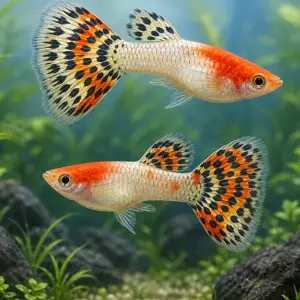
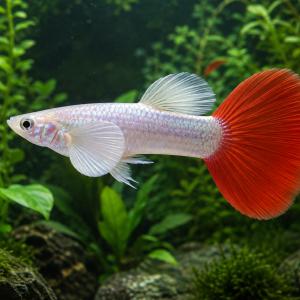
Editorial illustrations for context; they do not depict HiGuppy's exact facility or current fish stock.