Blog Category
Troubleshooting
Use cautious guppy troubleshooting guides to check water, oxygen, stress, behavior, and other common causes before choosing the next step.
-
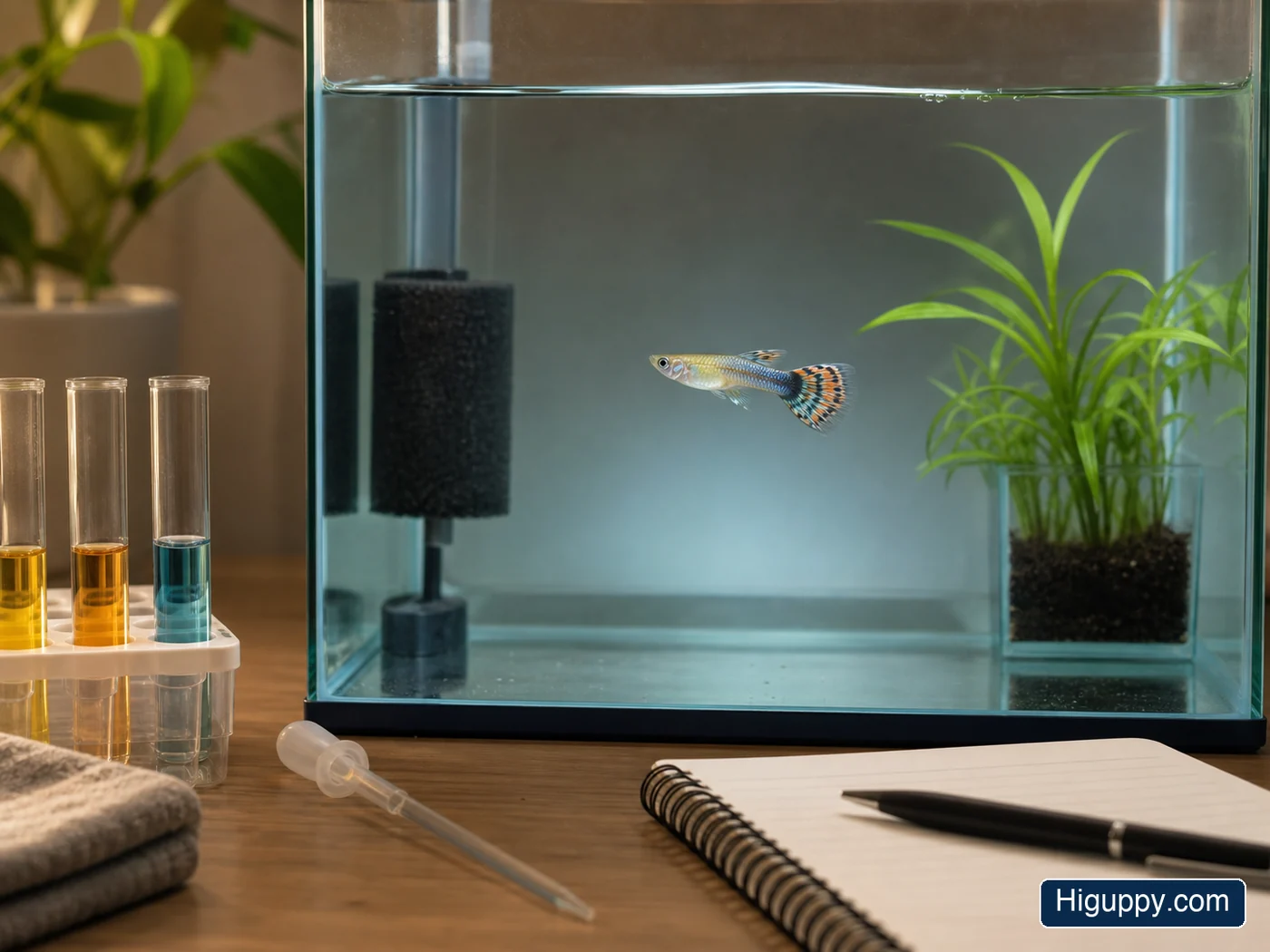
Internal Parasites in Guppies: Symptoms, Wasting & Diagnosis
Learn the signs of possible internal parasites in guppies, including wasting and fecal changes, how to compare look-alikes, and why diagnosis matters before treatment.
| by HiGuppy Team
-
Guppy Swim Bladder Disorder: Floating, Sinking & Recovery Steps
Learn why a guppy may float, sink, tilt or roll, how to rule out water-quality emergencies, and which recovery steps are safest before treatment.
| by HiGuppy Team
-
Guppy Gill Flukes: Symptoms, Fast Breathing & Safer Treatment Steps
Learn possible guppy gill fluke symptoms, how to rule out oxygen and water problems, how flukes are confirmed, and safer treatment principles.
| by HiGuppy Team
-
Guppy Columnaris: Symptoms, Cotton-Mouth Look-Alikes & Urgent First Steps
Learn the signs of columnaris in guppies, why cotton-mouth lesions can be confused with fungus or fin rot, and the safest urgent first steps.
| by HiGuppy Team
-
Guppy Velvet Disease: Symptoms, Velvet vs Ich & Safe First Steps
Learn the signs of guppy velvet disease, how velvet differs from ich, what to rule out first, and safer next steps for suspected Piscinoodinium infection.
| by HiGuppy Team
-
Guppy White Stringy Poop: Causes, What It Means & When to Worry
White stringy poop in a guppy does not automatically mean parasites. Learn how appetite, weight loss, diet, stress and water quality help narrow the cause.
| by HiGuppy Team
-
Why Is My Guppy Gasping at the Surface? Causes & First Steps
A guppy gasping at the surface can signal low oxygen, water-quality stress, heat, gill irritation or disease. Follow these immediate aquarium checks first.
| by HiGuppy Team
-
Guppy Clamped Fins: Causes, Warning Signs & What to Check First
Clamped fins are a warning sign, not a diagnosis. Learn the water, temperature, oxygen, stress and disease checks to make first when a guppy keeps its fins folded.
| by HiGuppy Team
-
Guppy Dropsy: Pinecone Scales, Swelling, Causes & Supportive Care
Guppy dropsy is a symptom pattern involving abnormal fluid buildup and often pinecone scales. Learn how to distinguish it from pregnancy or bloating, what to check first, and why treatment depends on the underlying cause.
| by HiGuppy Team
-
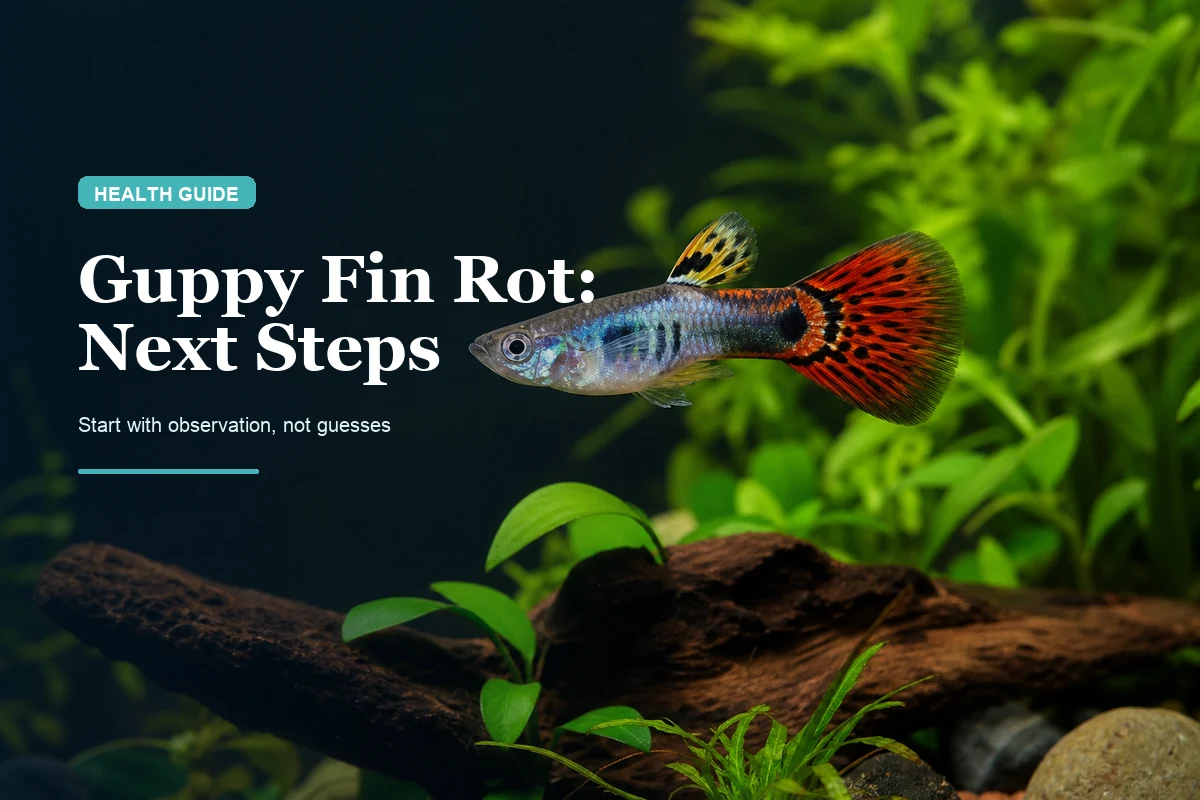
Guppy Fin Rot vs Torn Fins: Signs, Causes & First Steps
Learn how to tell guppy fin rot from a torn or nipped fin, what water and tank conditions to check first, and when progressive fin damage needs professional fish-health assessment.
| by HiGuppy Team