The HiGuppy Journal
Ideal pH for Guppies: Safe Range and How to Adjust It
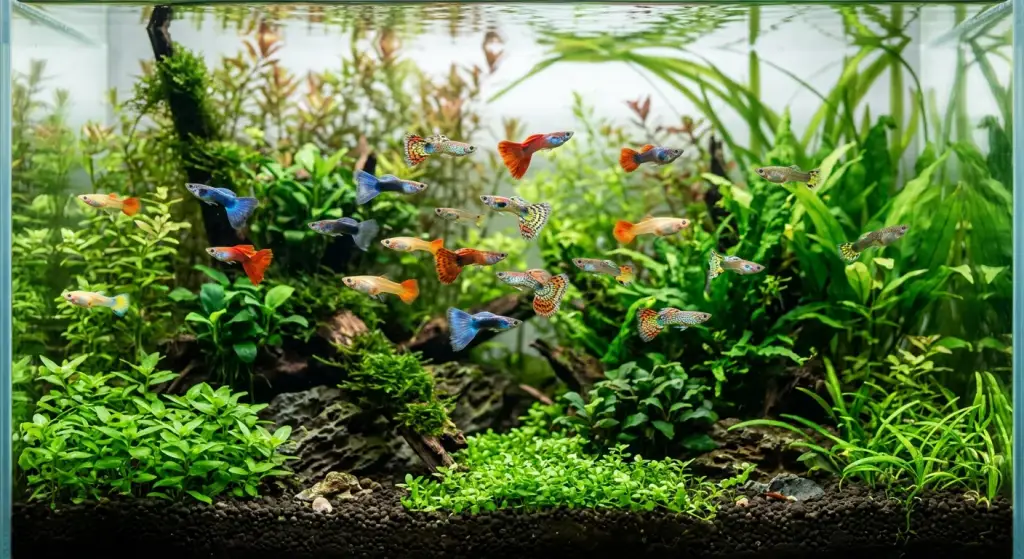
What is the ideal pH for guppies? Most guppies do best at a stable pH of about 7.0 to 7.8, and many keepers aim for roughly 7.2 to 7.6 with moderately hard water. Guppies tolerate a wider range than many tropical fish, but sudden swings hurt them far more than a number that is a little off. Our complete guppy care guide covers the rest of the basics that sit alongside pH.
pH is one of the most searched and most misunderstood numbers in the hobby. New keepers buy a bottle of “pH down” because a forum told them 7.0 is perfect, then watch their fish crash a week later. This guide explains what pH actually measures, what range guppies prefer, how to test it properly, how to raise or lower it safely, and which mistakes cause the most losses. All figures are general ranges, so treat them as a starting point and watch your own fish.
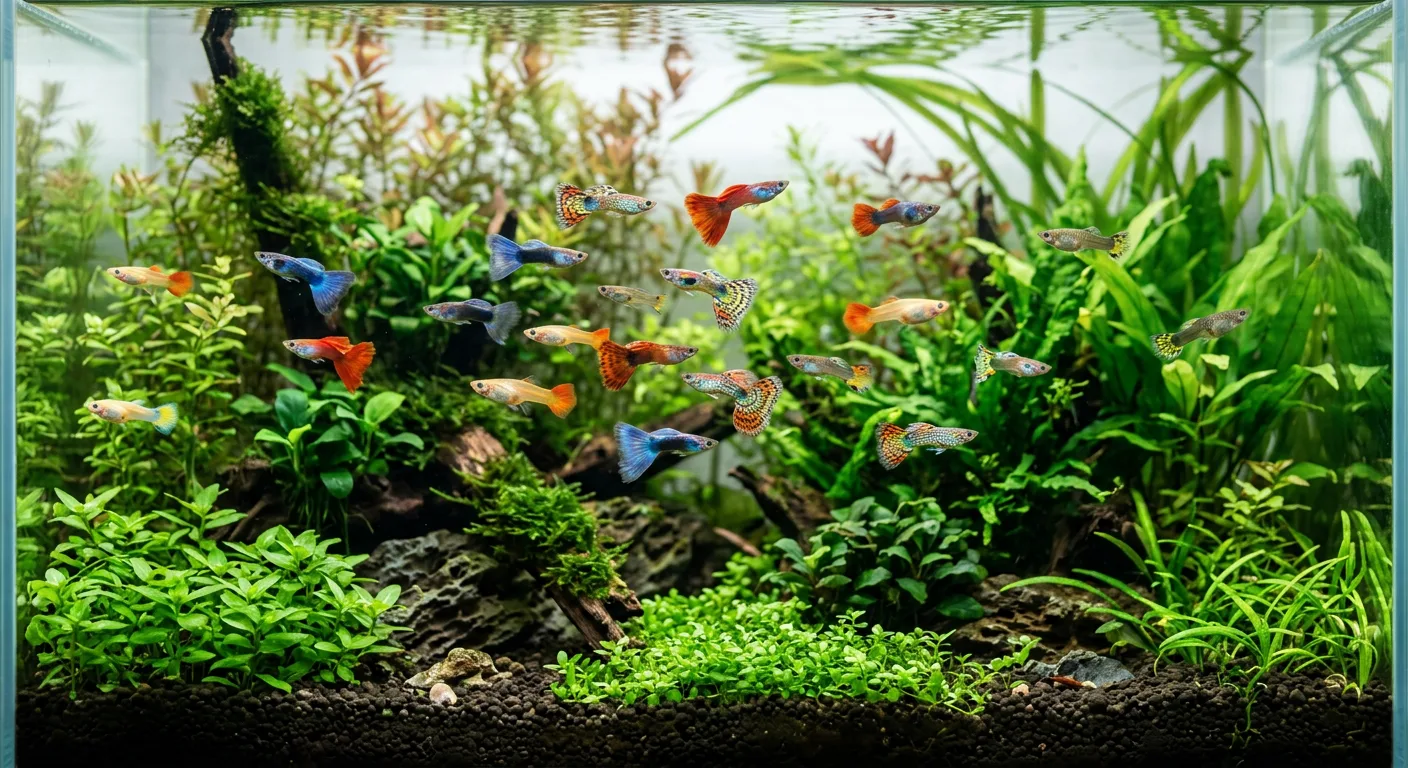
Ideal pH for guppies: the short answer
Guppies are livebearers, and livebearers generally come from water that is neutral to slightly alkaline and fairly hard. In captivity, a pH between 7.0 and 7.8 suits most strains. Fancy and show-type guppies bred for generations in tanks are usually less fussy than wild-type fish, yet they still prefer water that is not acidic.
The most important rule is stability. A tank that sits at pH 7.9 all month is healthier than one bouncing between 6.8 and 7.6 every few days. Chasing a perfect number with chemicals is the single most common way beginners harm their fish.
What pH actually measures
pH is a scale from 0 to 14 that shows how acidic or alkaline water is. Seven is neutral, lower numbers are acidic and higher numbers are alkaline. The scale is logarithmic, so a change from 7.0 to 6.0 is a tenfold shift in acidity, not a small nudge. That is why a “little” adjustment can be a big shock for a fish.
Safe pH range at a glance
| pH level | What it means for guppies | What to do |
|---|---|---|
| Below 6.4 | Too acidic, stress, clamped fins, poor appetite | Raise slowly and look at KH and water changes |
| 6.5 to 6.9 | Tolerable for many tank-raised fish but not ideal | Aim to raise gently if KH is low |
| 7.0 to 7.8 | Comfortable range for most guppies | Keep it stable, test weekly |
| 7.9 to 8.2 | Usually fine if it is stable and the fish are healthy | No change needed |
| Above 8.4 | High, ammonia becomes more toxic, stress risk | Check ammonia and reduce slowly if needed |
Why pH stability matters more than the number
Fish do not feel pH the way we read it on a test strip. They feel the change. Their gills and skin are in constant contact with the water, and a rapid shift forces their bodies to adjust faster than they can. The result is often called pH shock: gasping, darting, lying at the bottom, or in the worst case sudden death within hours.
Why tap pH and tank pH can differ
Fresh tap water often sits at a different pH from your tank. Over time, the tank pH usually drifts lower because fish waste, decaying plant matter and the nitrogen cycle all produce acids. Carbonate hardness (KH) acts as a buffer that resists this drop. When KH is high, pH stays steady. When KH is very low, pH can crash without warning, especially in a tank that has gone too long between water changes.
The role of KH and GH
Two other numbers matter alongside pH. KH measures carbonate hardness, the buffer. GH measures general hardness, the dissolved calcium and magnesium. Guppies generally like moderate to hard water. As a rough guide, many keepers aim for GH around 8 to 18 dH and KH around 5 to 12 dH, though fish bought from a different water source adapt well if you acclimate them slowly. Read our guppy water parameters guide for the complete set of targets.
How to test guppy tank pH correctly
You cannot manage what you do not measure. A reliable test turns pH from a guess into a trend you can act on.
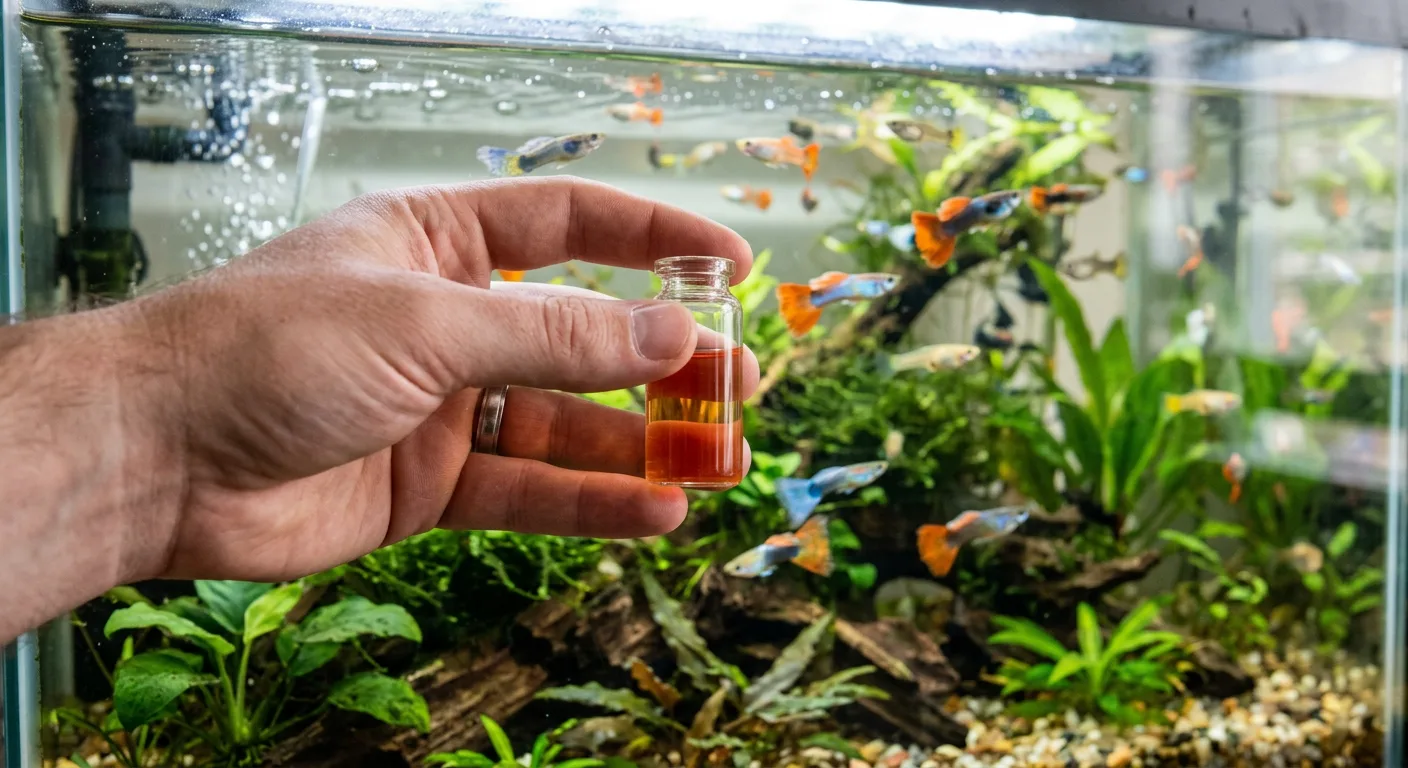
Test kit options
- Liquid drop kits: usually the best value and more accurate than paper strips. A freshwater master kit also covers ammonia, nitrite and nitrate.
- Test strips: quick and convenient, but they can be hard to read and may drift when stored in humid places.
- Digital pH pens: precise, but they need calibration solutions and regular maintenance, so they suit experienced keepers.
Step-by-step: how to test pH
- Rinse the test tube with tank water, never with soap.
- Fill the tube to the marked line with water from mid-tank, away from the surface and filter outflow.
- Add the drops exactly as the instructions say, holding the bottle upright.
- Shake or swirl as directed and wait the full time listed on the kit.
- Compare the color against the card in daylight or neutral white light.
- Write the result down with the date, then test the fresh tap water the same way.
How often to test
Test weekly for an established tank and every day or two during the first month of a new tank. Always test after a medication course, after adding a lot of new decor, and whenever your fish look unwell. Keeping a short log makes it obvious when the numbers start to drift.
How to raise pH in a guppy tank safely
Low pH is the more common problem in tanks with soft tap water or lots of driftwood. The goal is not to jump to a target but to raise the buffer so pH stops falling.
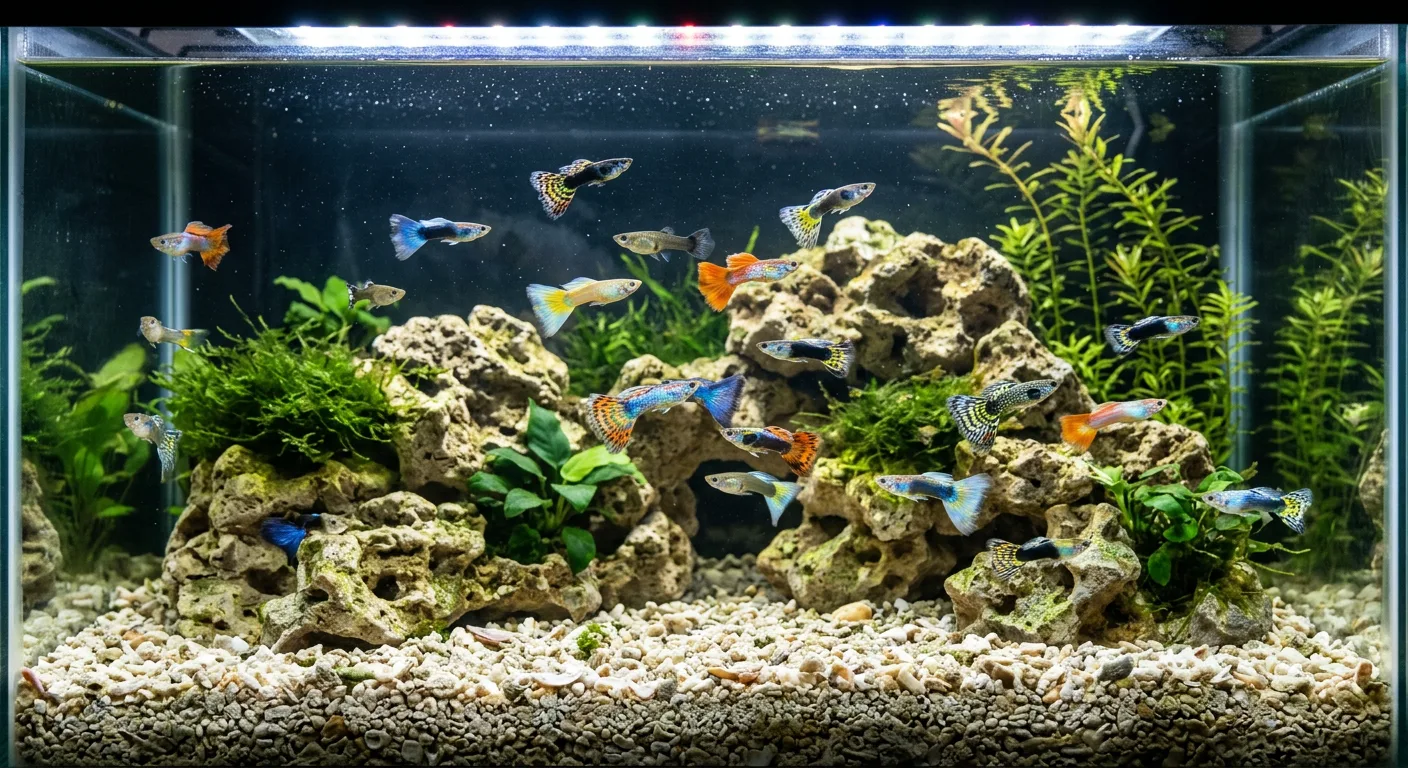
Gentle methods that work
- Regular partial water changes with tap water that has a higher pH and KH, which refreshes the buffer.
- Crushed coral or aragonite in a mesh bag inside the filter, which dissolves slowly and adds carbonates.
- Limestone or holey rock, used sparingly, since it slowly raises hardness and pH.
- Removing large amounts of driftwood or peat if you added them and the pH is falling.
- Baking soda in small, measured doses for emergencies only, because it raises KH quickly and can overshoot.
Step-by-step: raise pH slowly with crushed coral
- Rinse about a handful of crushed coral until the water runs clear.
- Place it in a fine mesh bag in the filter chamber or a media basket.
- Wait 48 hours, then test pH and KH again.
- Add or remove small amounts until pH stabilizes at your target.
- Keep changing water on schedule, since the coral dissolves and needs the fresh water to keep the system steady.
A good rule is to change pH by no more than about 0.2 to 0.3 units in a day. If it is lower than you like, accept a slow climb over a week or two rather than forcing it overnight.
How to lower pH in a guppy tank safely
Most guppies do not need low pH, and many tap sources naturally sit at 7.5 to 8.2. If your fish are healthy and active, leave it alone. Lower pH only if it is above about 8.4 and you see signs of stress, or when you are keeping a specific strain with an unusual requirement.
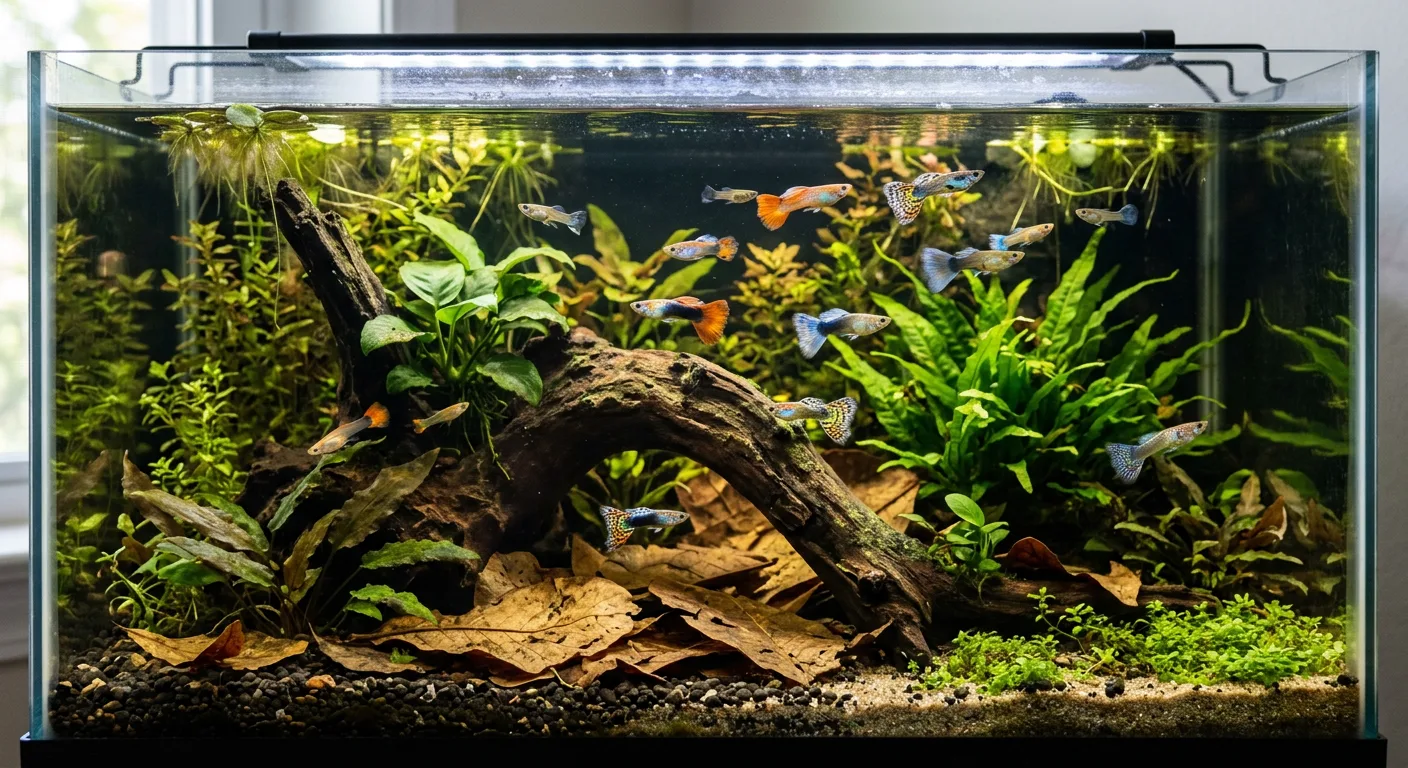
Natural ways to bring pH down
- Driftwood: releases tannins that slowly soften and acidify water. Soak it first to reduce tea-colored water.
- Indian almond leaves: a mild, gradual effect that also gives fry shelter and grazing.
- Live plants: they take up carbon dioxide and nitrate, which helps keep water balanced.
- Reverse osmosis (RO) water mixed with tap: lets you control hardness as well, but must be remineralized to avoid a KH crash.
Why to avoid “pH down” products
Chemical pH reducers can work in the short term, but they often drop pH too quickly, and if KH is high the buffer pulls it back up within hours. This creates a damaging roller coaster. If you decide to use one, do it in small doses in a bucket of replacement water, test, and then perform the water change gradually. Never add it directly to a tank holding fish.
Common pH mistakes that harm guppies
Most pH problems are self-inflicted. Here are the mistakes we see most often and the fix for each.
Chasing 7.0
Seven is neutral, not magical. Guppies often live better at 7.4 than at a forced 7.0 with unstable KH. Pick a stable, achievable number and stay there.
Adjusting too fast
Dumping chemicals or changing half the tank with very different water shocks the fish. Aim for small, steady steps.
Ignoring ammonia at high pH
At higher pH and temperature, a larger share of ammonia exists in its toxic form. A pH of 8.2 with a small ammonia spike is more dangerous than the same ammonia at pH 7.0. Always test ammonia when pH is high, and see our guide on ammonia poisoning in guppies for emergency steps.
Overdosing “buffers”
Powdered buffers and baking soda are tools, not routines. Follow the label strictly and re-test before adding more.
Skipping water changes
Long gaps between changes allow acids to build up and KH to burn off, which drops pH. Our guide on how often to change guppy tank water explains a schedule that keeps the buffer healthy.
Water changes, acclimation and shipping
Water change habits decide whether your pH stays stable. A weekly change of roughly 20 to 30 percent, using dechlorinated water at a similar temperature, keeps the buffer topped up without shocking the fish.
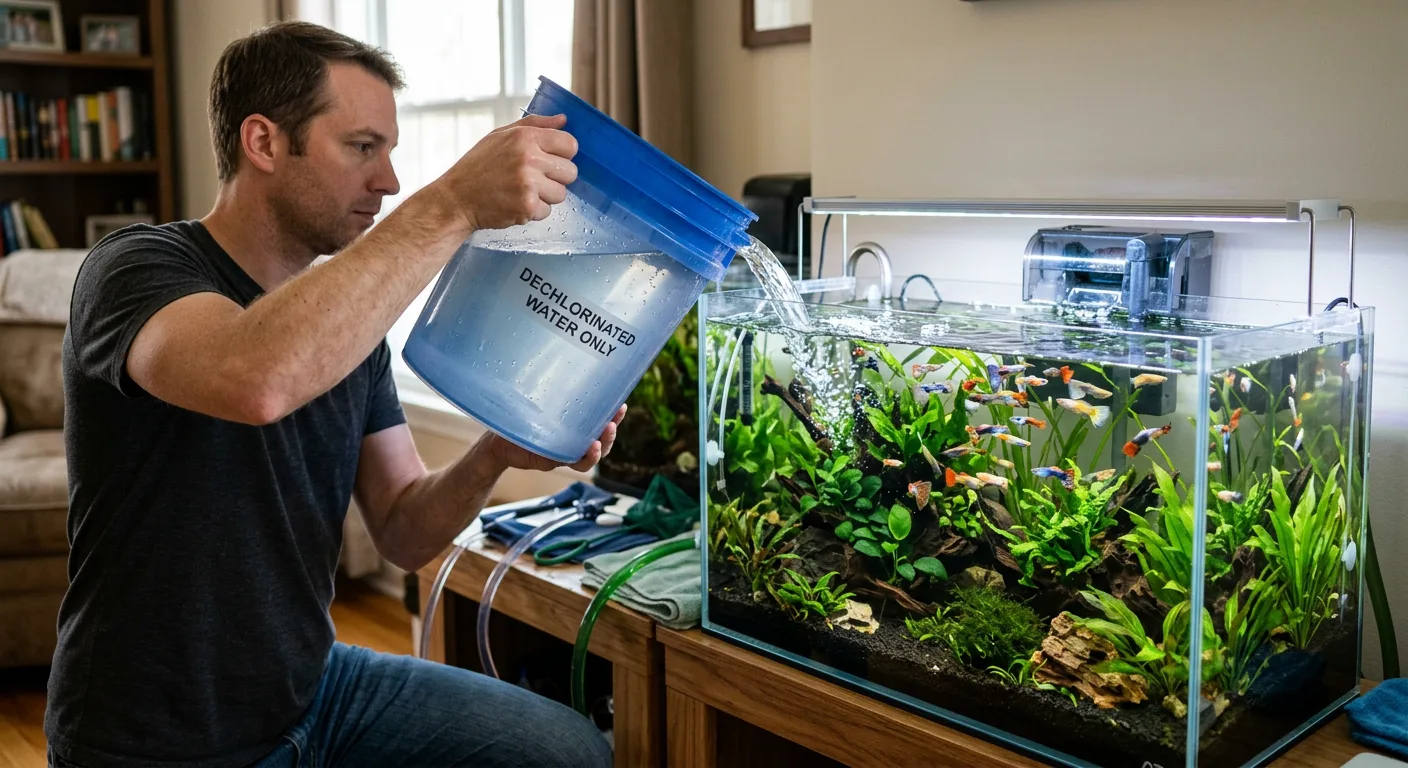
Step-by-step: a pH-safe water change
- Test pH and KH of the tank and of your treated tap water.
- Prepare the replacement water in a clean bucket with dechlorinator and match the temperature within about one degree.
- Siphon the old water from the substrate to remove waste.
- Pour the new water slowly down the glass or over your hand to avoid disturbing fish.
- Re-test the pH an hour later and record the result.
Acclimating new guppies to your pH
Fish shipped to you may arrive in water with a different pH from your tank. Float the sealed bag for about 15 minutes to equalize temperature, then add small amounts of tank water to the bag over 20 to 30 minutes before releasing the fish. If your water is very different from what they came from, extend the process. Our guide to how to acclimate guppies shows each step, and the what to do when guppies arrive article covers the first hours.
Signs your guppies are reacting to bad pH
Fish rarely show only one symptom, and pH problems overlap with disease and poor water quality. Treat pH as one suspect, and test before assuming.
Symptoms of low pH
- Clamped fins and sluggish behavior.
- Reduced appetite and pale color.
- Hovering near the bottom or hiding.
- Increased slime coat and cloudy-looking skin.
Symptoms of high pH or swings
- Rapid gill movement or gasping at the surface.
- Darting, scratching on decor and jerky swimming.
- Lethargy after a water change or a new addition.
- Faded color combined with ammonia burns on the gills.
If several fish show these signs together, test pH, ammonia and nitrite immediately and do a modest water change with matched water. Our article on why guppies die helps you rule out other causes.
Tank setup choices that keep pH steady
Good planning at setup saves constant fixing later. A few decisions make a big difference.
Substrate and decor
Inert gravel or sand will not change pH, which is the safe default. Active soils sold for planted tanks can pull pH down toward 6.5, so they suit soft water species more than guppies. Limestone and crushed coral push the other way. Choose one direction and keep the rest of the tank consistent.
Plants and filtration
Healthy live plants help absorb waste and give you a more stable cycle. A properly sized filter removes waste before it becomes acid. See best live plants for guppies and plan for gentle flow that keeps oxygen high.
Stocking and feeding
Overcrowding and overfeeding raise waste, drop pH and burn through KH faster. Keep to sensible numbers, and read how many guppies per gallon if you are planning the stocking level.
Match the water you buy fish from
If you buy from a seller whose water is very different from yours, slow acclimation is even more important. Our live fish are shipped from Vietnam with careful packing, and you can browse the male guppies or premium guppy pairs for strong, tank-raised options.
Quick pH checklist for guppy keepers
- Aim for a stable pH of about 7.0 to 7.8; do not chase a single number.
- Test pH, KH and GH weekly, and ammonia whenever pH is high.
- Test your tap water and compare it with tank water.
- Change pH by no more than about 0.2 to 0.3 per day.
- Use crushed coral to raise and driftwood or almond leaves to lower, in small steps.
- Avoid direct additions of chemicals to the tank.
- Do weekly partial water changes with dechlorinated, temperature-matched water.
- Acclimate new fish slowly, especially if water differs.
- Record every result in a log so you can see trends.
Beginner tips versus experienced tips
| Level | Best practice | Why it helps |
|---|---|---|
| Beginner | Test weekly and change 25% of water weekly | Builds a stable, predictable routine |
| Beginner | Leave pH alone if fish are healthy | Avoids needless chemical swings |
| Experienced | Mix RO and tap to target hardness | Fine control for breeding projects |
| Experienced | Track KH as the main stability number | Predicts pH crashes before they happen |
| Experienced | Pre-mix water in a barrel and age it | Allows consistent, matched changes |
Real-world examples
The soft-water tank that kept crashing
A keeper in an area with soft tap water saw pH fall from 7.2 to 6.4 within ten days of every water change. The cause was low KH. Adding a small bag of crushed coral and keeping a steady weekly change let KH settle at a healthy level, and pH stayed near 7.4 without any additives.
The hard-water tank with a “pH down” habit
Another keeper had tap water at pH 8.0 and used a pH reducer every week. Fish were scratching, color dulled and fry were weak. Stopping the product and keeping pH at its natural, stable level cleared the symptoms within a couple of weeks, because the fish adapted perfectly well to hard water.
The new batch that arrived stressed
A hobbyist rushed acclimation and dropped newly arrived guppies directly into a tank with a very different pH. Two fish were lost. The remaining fish recovered after being moved to a small, matched container and slowly blended in over an hour. Patience at the start is the cheapest insurance in the hobby, and our guide to choosing healthy guppies online shows what to look for when fish arrive. For more detail on the entire routine, return to our guppy care pillar page. For background on the species, see the Wikipedia entry on the guppy.
FAQ
What is the ideal pH for guppies?
Most guppies thrive at a stable pH of about 7.0 to 7.8. Many keepers aim for around 7.2 to 7.6. Stability matters more than the exact number, so avoid daily adjustments.
Can guppies live in pH 6.5?
Some tank-raised guppies tolerate pH 6.5, but it is not ideal and low KH can make it drop further. Raise it slowly with crushed coral and regular water changes. Check KH, since that is usually the real problem.
Can guppies live in pH 8?
Yes, guppies are usually comfortable at pH 8.0 if it is stable and ammonia is zero. They come from water that is neutral to slightly alkaline. Do not try to lower it with chemicals unless the fish show clear stress.
How do I raise pH for guppies naturally?
Use crushed coral or aragonite in a filter bag, perform regular water changes with harder tap water, and consider a small amount of limestone. Make changes slowly, by no more than about 0.2 to 0.3 per day. Test again after 48 hours.
How do I lower pH in a guppy tank?
Add driftwood or Indian almond leaves, or mix in a little RO water for gradual change. Avoid strong chemical pH reducers. Only lower pH if it is above about 8.4 and the fish look stressed.
Does pH change after a water change?
It can, if your tap water pH or KH differs from the tank. Test both before you change water, and match temperature and treatment. A modest 20 to 30 percent change is usually safe.
How often should I test guppy tank pH?
Weekly is enough for a stable tank, and every day or two in a brand-new tank. Test after medication, large water changes and whenever fish look unwell. Keep a log to spot slow drift.
Do guppies need a pH buffer?
Not usually. If your KH is low and pH keeps falling, a mild buffer like crushed coral works better than liquid products. Always use it in measured amounts and re-test before adding more.
Behind the care guides
Care begins with steady systems
Our guppy guides focus on practical routines: keep water stable, observe fish closely and allow for natural variation.

Care systems
Steady water, thoughtful care
Gentle filtration and regular observation support healthy aquarium routines.

Natural variation
Every guppy is different
Color, size and fin shape vary with strain, age and each individual fish.
Editorial illustrations for context; they do not depict HiGuppy's exact facility or current fish stock.