The HiGuppy Journal
Can Guppies Live With Corydoras? Setup, Feeding and Tips
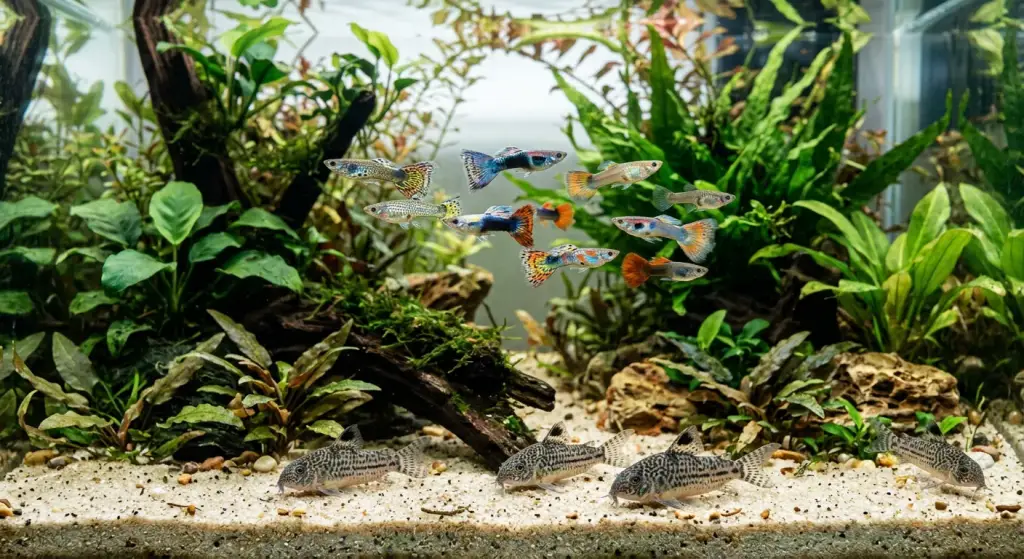
Can guppies live with corydoras? Yes, guppies can live with corydoras. Both are peaceful, small, tropical freshwater fish that like similar water, and they use different parts of the tank: guppies swim near the top and middle, corydoras stay near the bottom. Our complete guppy care guide covers the shared basics.
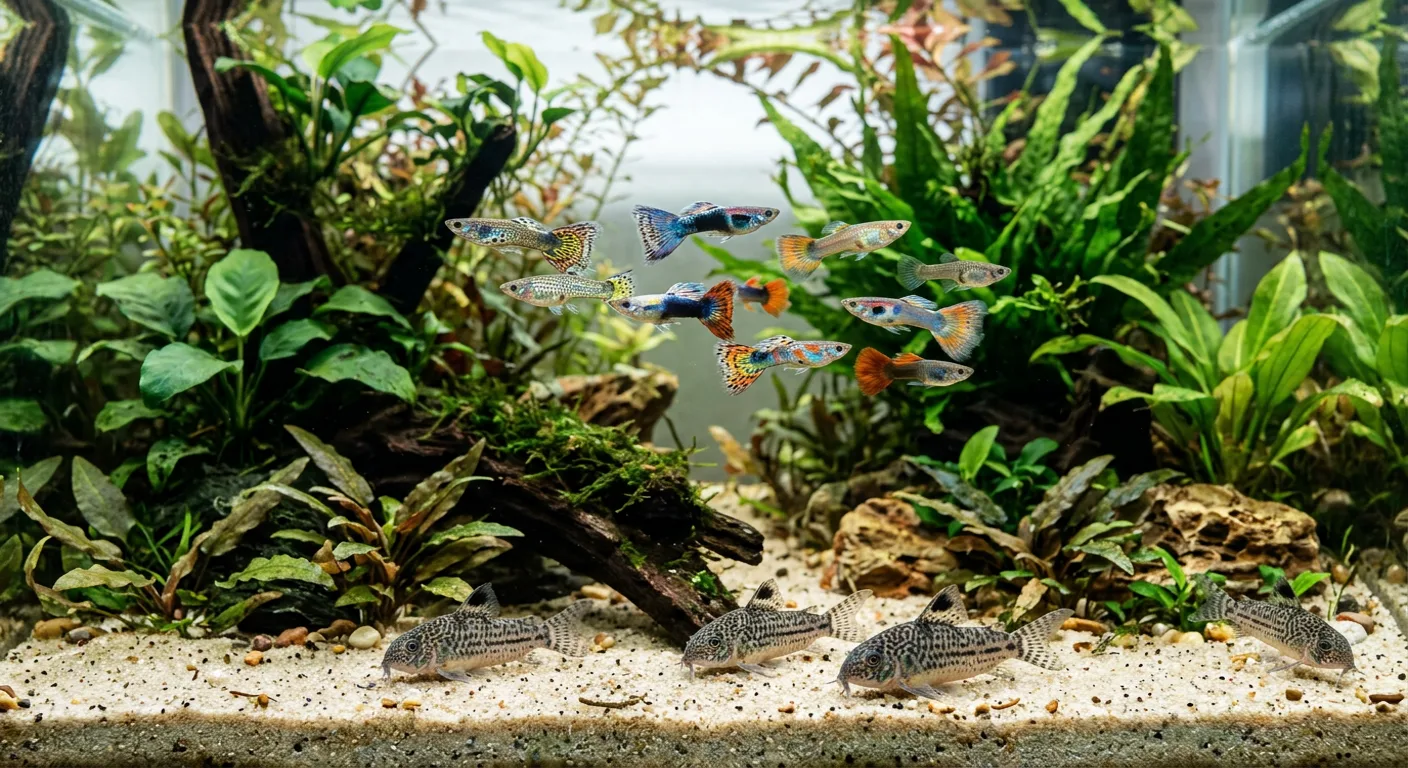
Corydoras, often called cory catfish, are one of the most popular bottom dwellers for community tanks. They are social, calm and spend the day sifting the substrate for food. This guide explains why guppies and corydoras work well together, which setup helps, and what to watch for. Treat the numbers as general guidance and adjust to your own tank.
Can guppies live with corydoras? Why it works
The main reason guppies can live with corydoras is compatibility. Neither fish is aggressive, both prefer warm, stable water, and neither competes much for space. Guppies hover in the upper and middle water, while corydoras cruise the floor. That separation reduces conflict and makes the tank feel busier and more natural.
| Trait | Guppies | Corydoras |
|---|---|---|
| Temperament | Peaceful, active | Peaceful, social |
| Tank level | Top and middle | Bottom |
| Temperature | Warm tropical range | Warm tropical range, species vary |
| Group size | Several, with more females than males | Groups of at least a few of the same species |
| Food | Flakes, micro pellets, treats | Sinking wafers, pellets, leftovers |
Species of corydoras differ in their preferred temperature, so check the one you choose. Many common types do fine alongside guppies, but always confirm before buying. For the guppy side of the question, read our guppy temperature guide.
Best tank setup for guppies and corydoras
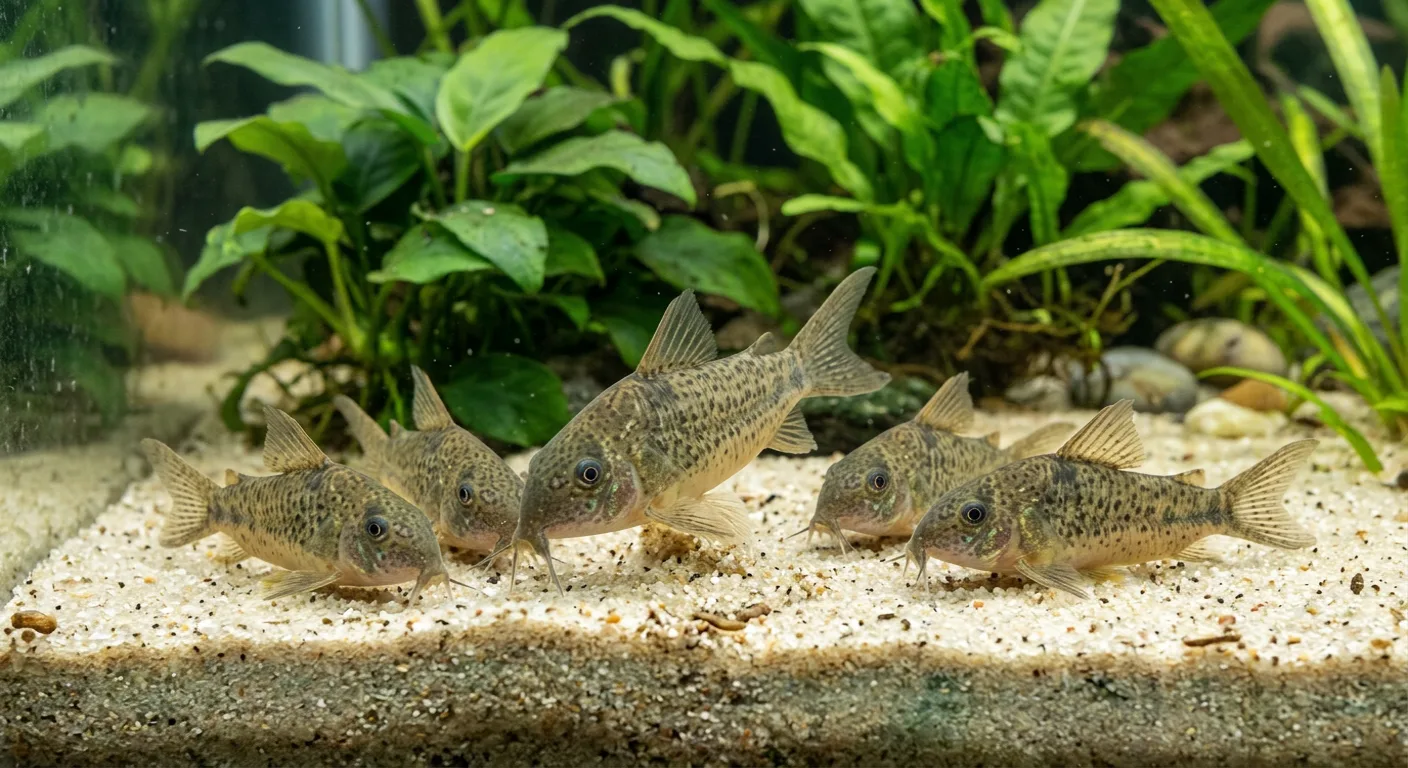
The substrate matters most. Corydoras have sensitive barbels they use to search for food, so soft sand or smooth, fine gravel is kinder than sharp gravel. If you are choosing, see our guide to the best substrate for a guppy tank.
Tank size
A tank of about 20 gallons gives a small group of guppies and a few corydoras room to settle. Smaller tanks can work for tiny groups, but waste builds up faster. If you are unsure how many fish fit, our post on how many guppies in a 20 gallon tank is a good start.
Plants, hiding spots and filtration
Live plants, driftwood and smooth decorations give both species cover. Add a gentle filter, since corydoras stir up the bottom and produce waste along with the guppies. A sponge filter is a safe, gentle option. A planted guppy tank suits both fish well.
How many corydoras and guppies should you keep?
Corydoras are happiest in groups, and a lone cory often seems stressed. Many keepers choose at least three to six of the same species, tank size permitting. For guppies, a ratio with more females than males reduces chasing; see the male to female guppy ratio. Do not overstock, because both fish add to the waste load.
Feeding guppies and corydoras together
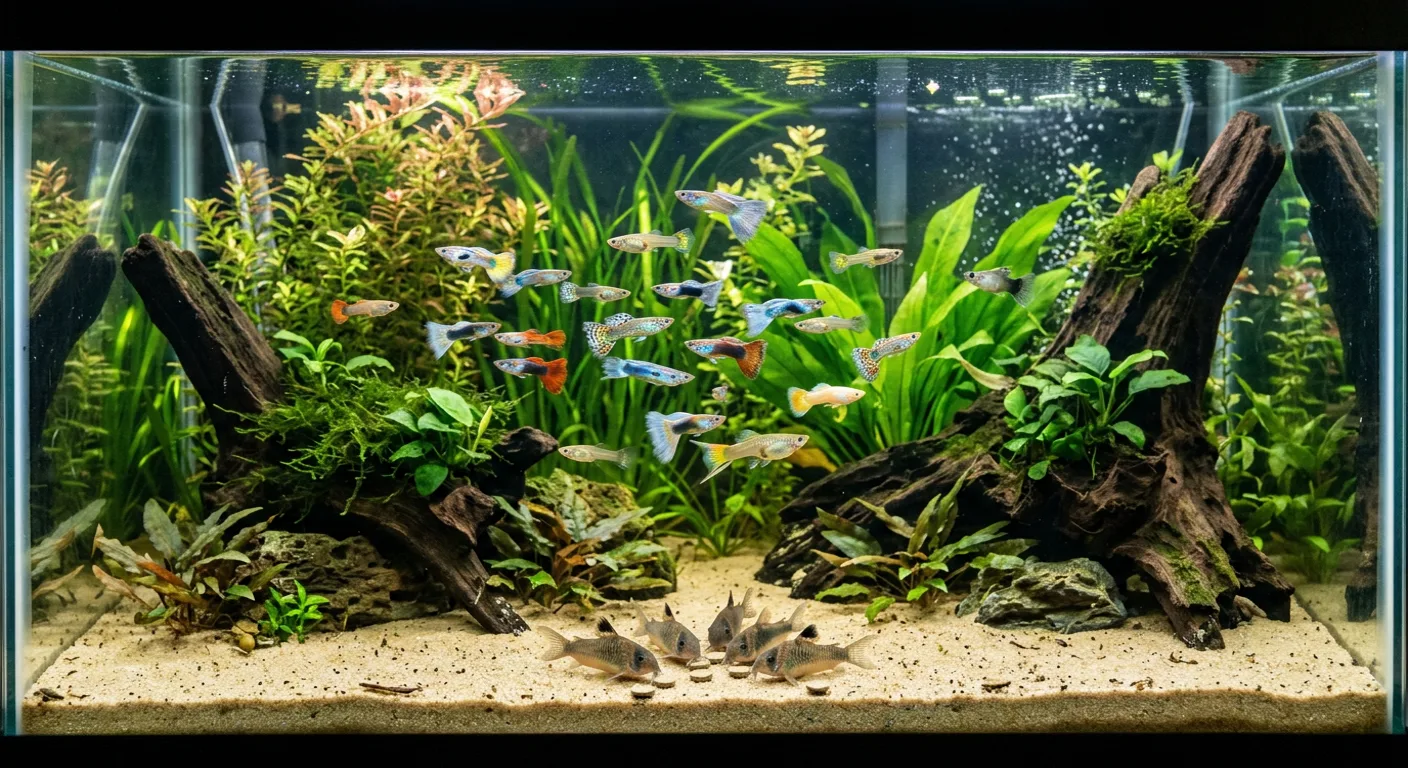
Guppies are quick at the surface and will take most flakes before they sink. Corydoras then need their own food, so offer sinking wafers or pellets near the bottom, ideally after the guppies have eaten. Do not count on leftovers: corydoras are scavengers, not cleaners, and they need real food. Overfeeding fouls the water, so keep portions small and review how often to feed guppies.
Common problems and how to avoid them
- Sharp gravel: can wear down corydoras barbels; choose sand or smooth gravel.
- Not enough food for corydoras: add sinking food daily or every other day.
- Too few corydoras: keep a small group of one species.
- Poor water quality: test water and keep up with changes; see our guppy tank maintenance schedule.
- Medication sensitivity: corydoras can react to some treatments, so read the label and use a hospital tank when possible.
Water changes are another shared priority. Corydoras are bottom feeders, so they spend their day in the layer of the tank where waste settles, and they respond quickly to poor water. A weekly partial change and a gentle gravel-vac over the sand keeps conditions steady for both species. Avoid sudden swings in temperature or hardness, since stable water is more important than chasing perfect numbers. If you also plan to add live plants, choose hardy types that tolerate being dug around, such as java fern or anubias, so the corydoras do not uproot them.
Do guppy fry get eaten by corydoras?
Corydoras are not hunters, but they may eat tiny fry they find on the bottom, as many fish will. Newborn guppies usually hide in plants near the surface, which gives them some protection. If you want to raise as many fry as possible, a separate tank is safer. Our guppy breeding tank setup explains how.
Signs your guppies and corydoras are getting along
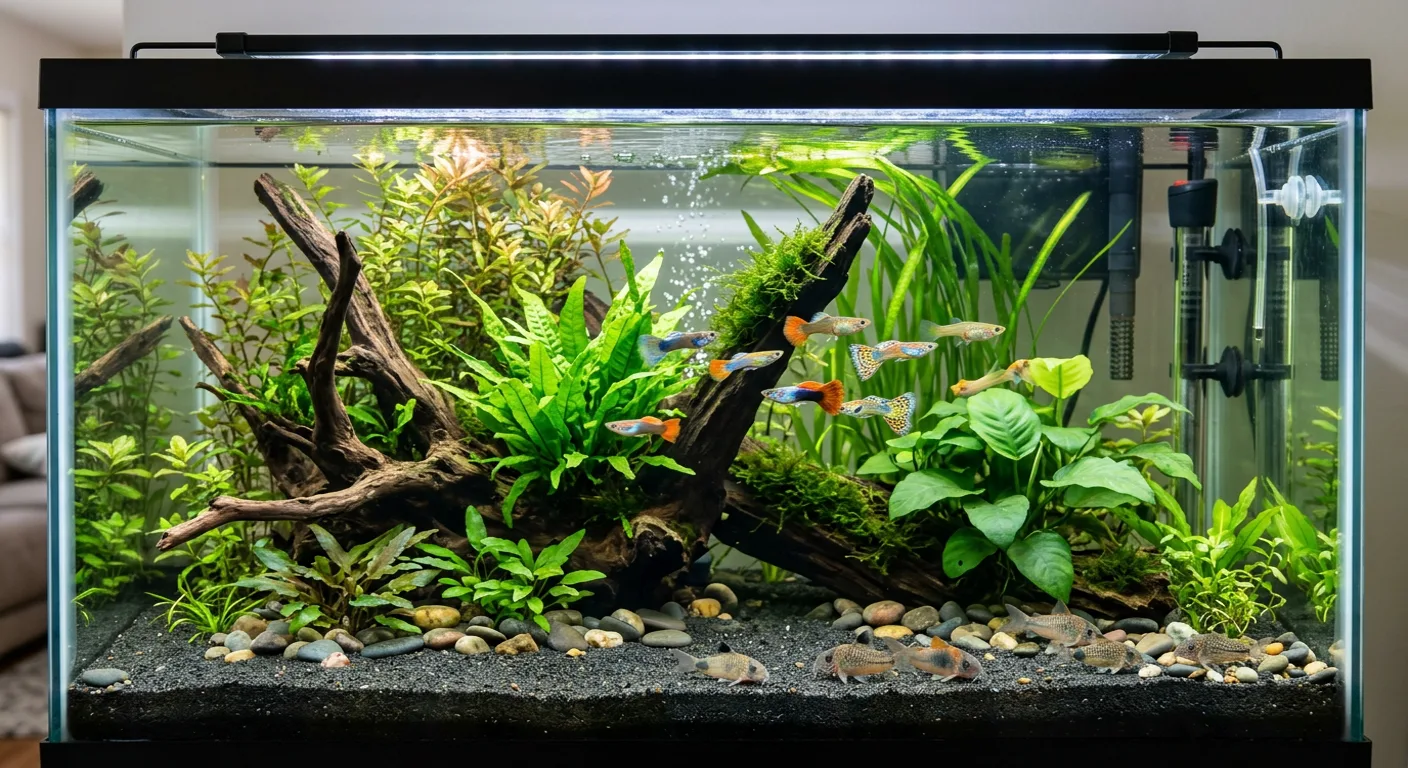
A healthy mixed tank looks relaxed. Guppies swim openly and flare their tails without being chased, while the corydoras move around the bottom in a loose group, sift the sand and rest on leaves or decorations. Occasional darting to the surface for air is normal for many corydoras. What you do not want to see is hiding all day, clamped fins, torn tails or one fish being cornered. If that happens, test the water first, then check stocking levels and food.
It also helps to watch at feeding time. If the guppies eat everything before it sinks, the corydoras may go hungry without you noticing, so check that they have round, healthy bellies over the first few weeks. Dropping sinking food once the lights go dim often lets shy corydoras feed in peace. If your guppies show odd behavior, our guide to guppy bullying signs helps you tell normal play from real stress.
Other tank mates for guppies
If corydoras are a good fit, you may also be interested in other peaceful companions. Our guide to the best tank mates for guppies compares several choices, and we have specific notes on guppies with platies. Start with healthy fish: browse our male guppies, and for background on the species see Wikipedia.
Adding corydoras to an existing guppy tank
If your guppies are already established, add the corydoras gradually. Quarantine new fish first if you can, then float the bag to match temperature and acclimate slowly. Watch the first few days for any chasing and check that the corydoras are finding food. Our post on quarantining new fish explains a safe routine, and the how to care for guppies basics still apply after any addition.
Keep the bottom clean with regular gentle vacuuming, because debris builds up where corydoras forage. A healthy, stable tank is the best way to keep both species active and colorful for years.
FAQ
Can guppies live with corydoras?
Yes. Both are peaceful tropical fish, and they live in different parts of the tank, so they usually get along well in a properly sized, planted aquarium.
Do corydoras eat guppy poop or leftovers?
They eat food that reaches the bottom, but they are not cleaners. They need sinking wafers or pellets, and the tank still needs regular maintenance.
How many corydoras should I keep with guppies?
Corydoras like company, so many keepers choose a group of at least three to six of one species, as long as the tank is large enough.
Will corydoras nip guppy tails?
Corydoras are peaceful and rarely bother other fish. If tails are damaged, look for other causes such as fin nipping by other fish or poor water quality.
What substrate is best for guppies and corydoras?
Fine sand or smooth, rounded gravel is best. It protects the sensitive barbels of corydoras and is fine for guppies and live plants.
Behind the care guides
Care begins with steady systems
Our guppy guides focus on practical routines: keep water stable, observe fish closely and allow for natural variation.

Care systems
Steady water, thoughtful care
Gentle filtration and regular observation support healthy aquarium routines.

Natural variation
Every guppy is different
Color, size and fin shape vary with strain, age and each individual fish.
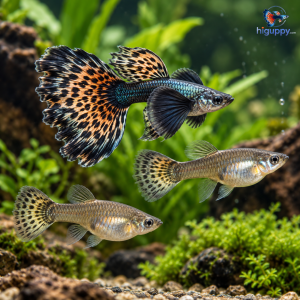
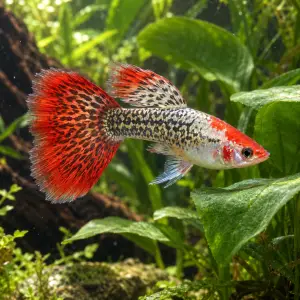
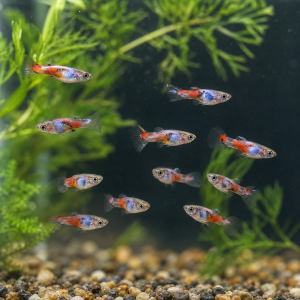
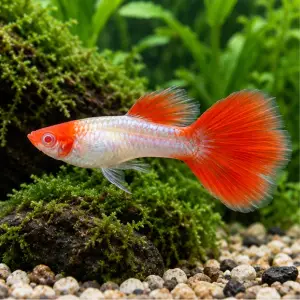
Editorial illustrations for context; they do not depict HiGuppy's exact facility or current fish stock.