The HiGuppy Journal
Endler vs Guppy: Key Differences, Care and Can They Breed?
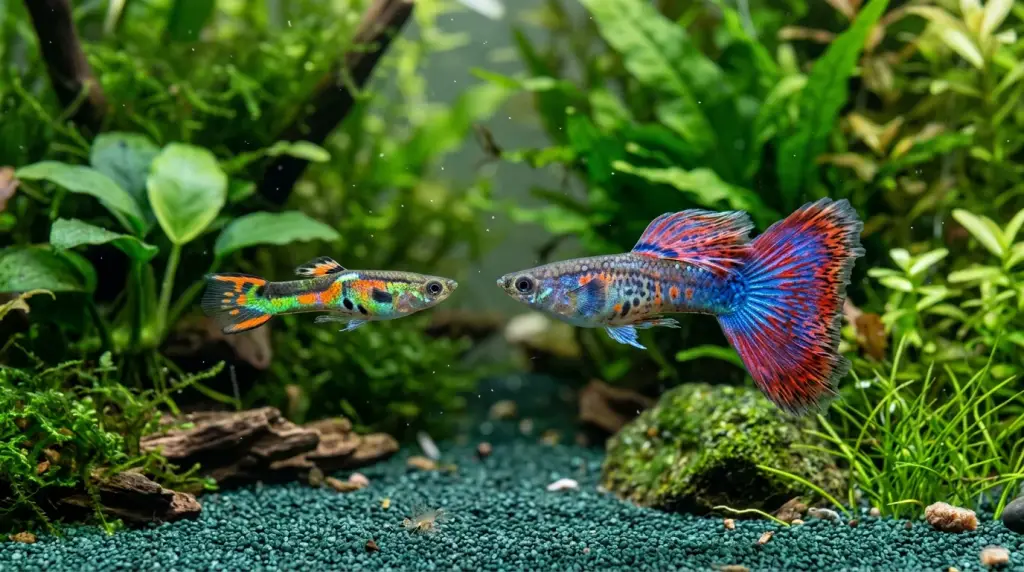
Endler vs guppy, in short: Endlers (Poecilia wingei) and guppies (Poecilia reticulata) are two closely related livebearer species from Venezuela. Endlers are smaller (males about 2.5 cm), with short fins and neon, color-blocked bodies. Fancy guppies are bigger, with long, flowing tails. Care is nearly identical, but the two crossbreed easily.
Key takeaways
- Endlers and guppies are separate species in the same genus, not just color forms of one fish.
- Male Endlers stay around 2.5 cm (1 inch); fancy guppies are larger and carry much bigger fins.
- Both are hardy, peaceful livebearers that thrive in a cycled tank of about 10 gallons or more, in warm, moderately hard water.
- They can interbreed and produce fertile offspring, which is why breeders of pure lines keep them apart.
- Choose Endlers for a nano, active, natural look; choose fancy guppies for big, showy tails and a huge range of strains.
Endler vs guppy: the quick comparison
If you only have a minute, this table covers the main difference between Endler and guppy. The sections below explain each point in more detail.
| Trait | Endler’s livebearer | Guppy (fancy) |
|---|---|---|
| Scientific name | Poecilia wingei | Poecilia reticulata |
| Native range | Small lagoon systems on the Paria Peninsula, northeastern Venezuela | Northeastern South America and the southern Caribbean, including Venezuela and Trinidad |
| Adult male size | About 2–2.5 cm (0.75–1 in) | Larger body plus long finnage; noticeably bigger than an Endler |
| Adult female size | About 3–4.5 cm (1.25–1.75 in) | Up to about 6 cm (2.4 in) standard length |
| Fins | Short, compact tail and dorsal fin | Long, wide tails (delta, veil, lyretail, swordtail and more) |
| Male color | Neon orange, green, black and blue blocks; often a black bar or spot on the flank | Huge variety: solids, mosaics, cobras, tuxedos, metallics and more |
| Typical lifespan | About 2–3 years | About 2 years, sometimes longer with good care |
| Temperature | 24–30°C (75–86°F) | Wide tolerance, about 17–28°C (63–82°F); stable, warm water suits fancy strains |
| pH / hardness | pH 7.0–8.5, moderately hard to hard water | pH 7.0–8.5, moderately hard water |
| Gestation | About 23–24 days | About 4–6 weeks |
| Brood size | Usually 5–25 fry | 5 to 100 fry, depending on the female |
| Best for | Nano and planted tanks, natural-looking colonies | Show-style tanks and keepers who love big, colorful tails |
Species: two fish, one close family
The guppy (Poecilia reticulata)
The guppy was described back in 1859 and is one of the most popular aquarium fish in the world. Wild guppies come from northeastern South America and nearby Caribbean islands, where they live in an extraordinary range of habitats, from mountain streams to swampy ditches. The guppies you see in shops today are the result of decades of selective breeding, which produced the long tails and intense colors of modern fancy strains. If you want to see how wide that range is, our guide to guppy strains and types walks through the main families.
The Endler’s livebearer (Poecilia wingei)
Endlers were first collected in 1937 by Franklyn F. Bond and rediscovered in 1975 by Dr. John Endler at Laguna de Patos near Cumaná, Venezuela, which is where the common name comes from. Hobbyists called them “Cumaná guppies” or “Endler’s guppies” for decades before scientists formally described them as Poecilia wingei in 2005. A 2009 molecular study confirmed it as a valid species, separate from the common guppy.
In the wild, the species is known only from a few small lagoon systems on the Paria Peninsula. The original Laguna de Patos population is thought to be lost after the lake was polluted, according to the Seriously Fish species profile. That rarity in the wild is a big reason why careful hobbyists care so much about keeping pure lines going.
The difference between Endler and guppy: size, color and fins
Size
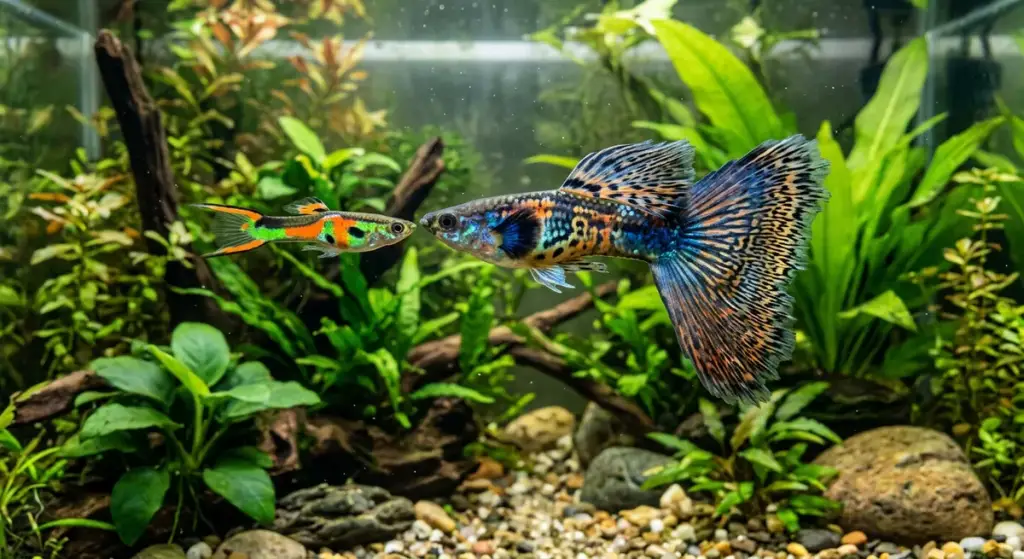
This is the easiest difference to spot. A male Endler is tiny, usually around 2–2.5 cm (under an inch), and females reach roughly 3–4.5 cm. Guppies are clearly larger: females can reach about 6 cm standard length, and fancy males look much bigger once you add their long tails.
Color
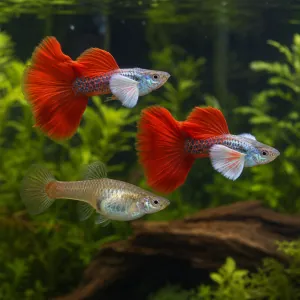
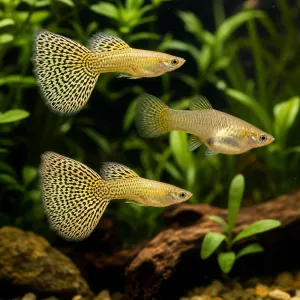
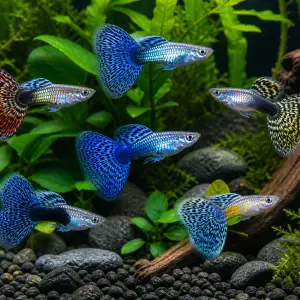
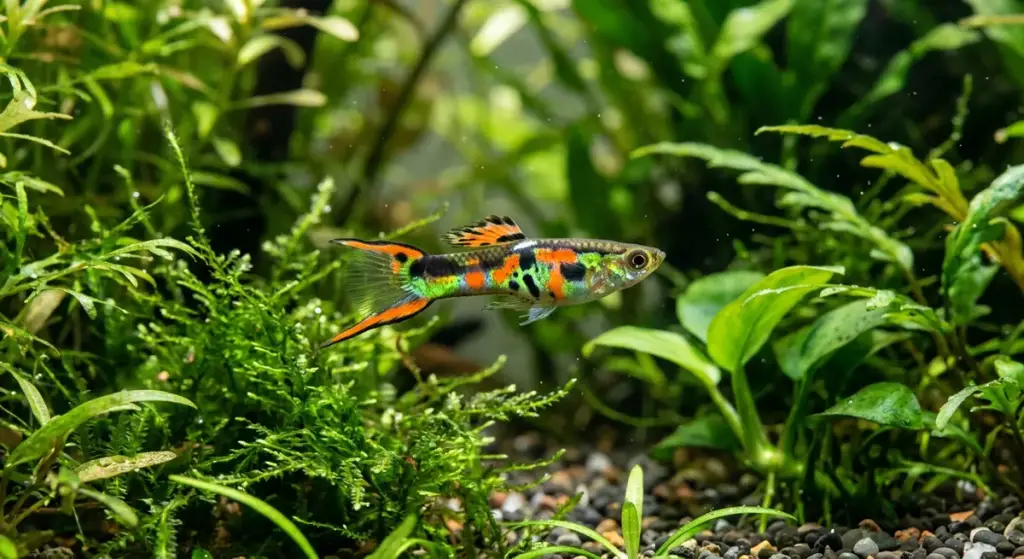
Male Endlers have a bold, “color-blocked” look: patches of neon orange, metallic green, black, yellow and blue packed into a small body. Many strains carry a black bar or spot on the upper side of the body, which is why you will see names like “Black Bar Endler.” Fancy guppies can show almost any color or pattern, and are bred into fixed strains like solid reds, blue grass, cobras and tuxedos.
In both species, females are much plainer than males. Female Endlers are a silvery-gold color, and female fancy guppies are mostly gray or silver, though some strains show color in the tail. Our male vs female guppy guide explains how to sex them, and the same signs (gonopodium, size, gravid spot) apply to Endlers too.
Fins
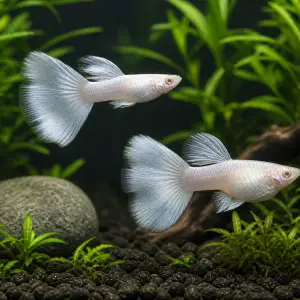
Pure Endlers have short, compact fins that look a lot like those of wild guppies. Fancy guppies have been bred for large, flowing tails such as the delta and the veiltail. Those big fins look stunning, but they also make fancy males slower swimmers and more vulnerable to fin-nippers and fin damage. Endlers, by contrast, are fast, darting fish that use every inch of the tank.
Lifespan
Both species are short-lived compared with many aquarium fish. Endlers commonly live about 2–3 years in good conditions. Most guppies live around 2 years, and well-kept fish from healthy stock can go longer. Water quality, diet, temperature and genetics all play a part; see how long guppies live for the factors you can actually control.
Care and tank size
Daily care
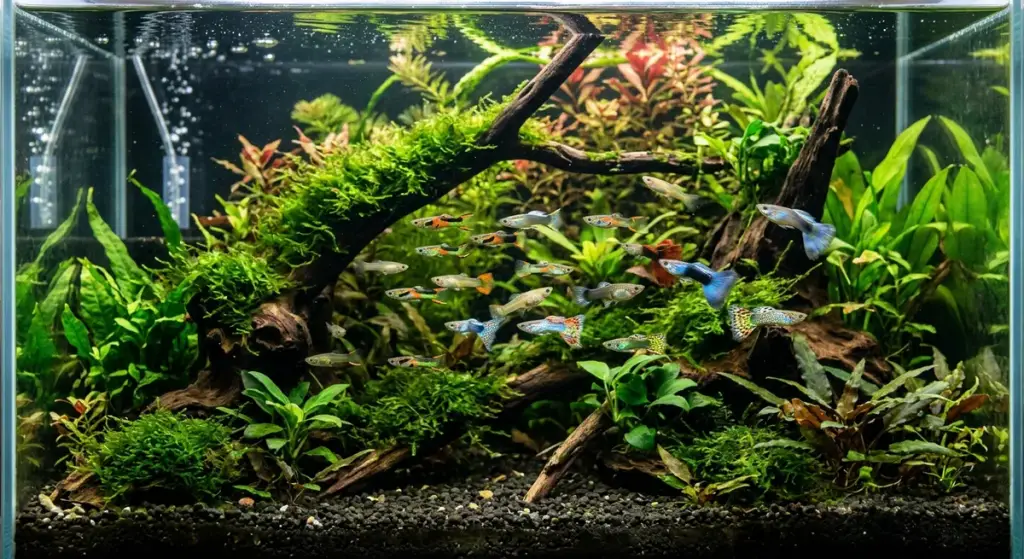
Here’s the good news: care is almost the same for both fish. Both are peaceful omnivores that eat quality flakes, micro pellets and small frozen or live foods like brine shrimp. Both appreciate a planted tank with some floating plants, gentle flow and regular water changes. Endlers have tiny mouths, so crush or choose small foods for them. If you are new to livebearers, start with our complete guppy care guide; it applies almost word for word to Endlers.
Water parameters
Both species come from warm, fairly hard water and do best long term in neutral to alkaline conditions (around pH 7.0–8.5) rather than soft, acidic water. Endlers tolerate slightly warmer water, up to about 30°C. The most important thing is stability: avoid chasing exact numbers with big, sudden changes. Our guppy water parameters guide covers temperature, pH, GH and the nitrogen cycle in detail.
Tank size
A cycled tank of about 10 gallons (40 liters) is a sensible starting point for a small group of either fish. Because Endlers are so small and produce little waste, you can keep a slightly larger group in the same space, but don’t overdo it: livebearers multiply fast. For stocking numbers, see how many guppies fit in a 10 gallon tank.
Tank mates
Both do well with small, peaceful species such as corydoras, peaceful tetras, rasboras, snails and shrimp. Avoid fin-nippers like tiger barbs, especially with long-finned fancy guppies. Endlers are small enough that larger fish may see them as food. Our list of the best tank mates for guppies works well for Endlers too.
Can Endlers and guppies breed?
Yes. This is the most important point in the whole endler vs guppy topic. Endlers and guppies interbreed readily and their offspring are fertile, meaning the hybrids can keep breeding too. A University of Colorado Boulder study found that female Endlers showed no preference for males of their own species, and that the two species produced hybrid offspring. Put males and females of both species in one tank and you will get hybrids.
What is an “Endler guppy”?
Many fish sold as “Endler guppies” or “endler guppy” hybrids are crosses between the two species. They are often very colorful and just as hardy, but they are not pure Poecilia wingei. To keep things clear, the hobby uses a simple class system:
- Class N: pure Endlers with documentation tracing them back to a wild collection point.
- Class P: fish that look pure but have no documentation to prove it.
- Class K: known hybrids with guppies. Popular names like “Tiger” and “Paradise” Endlers fall here.
Why purists keep them separate
Pure Endlers are rare in the wild, the type locality population is thought to be gone, and much of the species’ natural variety has already been lost through inbreeding in the hobby. Once hybrid genes enter a line, there is no way to breed them back out. That’s why serious breeders never mix the two species, and why responsible sellers label hybrids honestly.
If you don’t care about purity and just want a colorful tank, keeping both together is not harmful to the fish. Just know that every fry you produce will be a hybrid, and should be sold or rehomed as one. To avoid hybrids entirely, keep only one species, or keep males only. Note that guppy females can store sperm and keep producing fry for months, so a female from a mixed tank may still give birth after you separate her. Our guide on how to breed guppies covers controlled breeding and raising fry.
Endler or guppy: which should you choose?
Choose Endlers if you want:
- A nano or small planted tank where tiny, active fish look natural.
- Fast, busy swimmers with neon colors and no fragile tails.
- To help preserve a rare species by keeping a pure, documented line.
Choose fancy guppies if you want:
- Big, flowing tails and bold show colors that stand out from across the room.
- A huge choice of strains, from solid reds to full gold and dumbo ears.
- Line-breeding projects where you can select for tail shape and pattern.
Many keepers start with a group of fancy males for color without fry, then add a separate Endler tank later. If showy fins are what you’re after, browse our male guppies, bred in Vietnam and shipped live, or see the full higuppy shop for pairs and trios.
FAQ
Are Endlers a type of guppy?
Not exactly. Endlers (Poecilia wingei) are a separate species in the same genus as the guppy (Poecilia reticulata). They are close relatives, which is why they are often called “Endler’s guppies” in the trade.
Can Endlers and guppies breed together?
Yes. They interbreed easily and their offspring are fertile. These hybrids are sold as Class K or “Endler guppy” fish. Keep the two species apart if you want pure lines.
What is the main difference between an Endler and a guppy?
Size and fins. Male Endlers are about 2.5 cm with short fins and neon, color-blocked bodies. Fancy guppy males are larger, with long, flowing tails bred in many colors and patterns.
Can Endlers and guppies live in the same tank?
Yes. They have similar care needs and are both peaceful. The only issue is crossbreeding, so keep single-sex groups, such as males only, if you don’t want hybrid fry.
Do Endlers live longer than guppies?
Slightly, on average. Endlers often live about 2–3 years, while most guppies live around 2 years. Good water quality, diet and healthy stock matter more than species for either fish.
Behind the care guides
Care begins with steady systems
Our guppy guides focus on practical routines: keep water stable, observe fish closely and allow for natural variation.
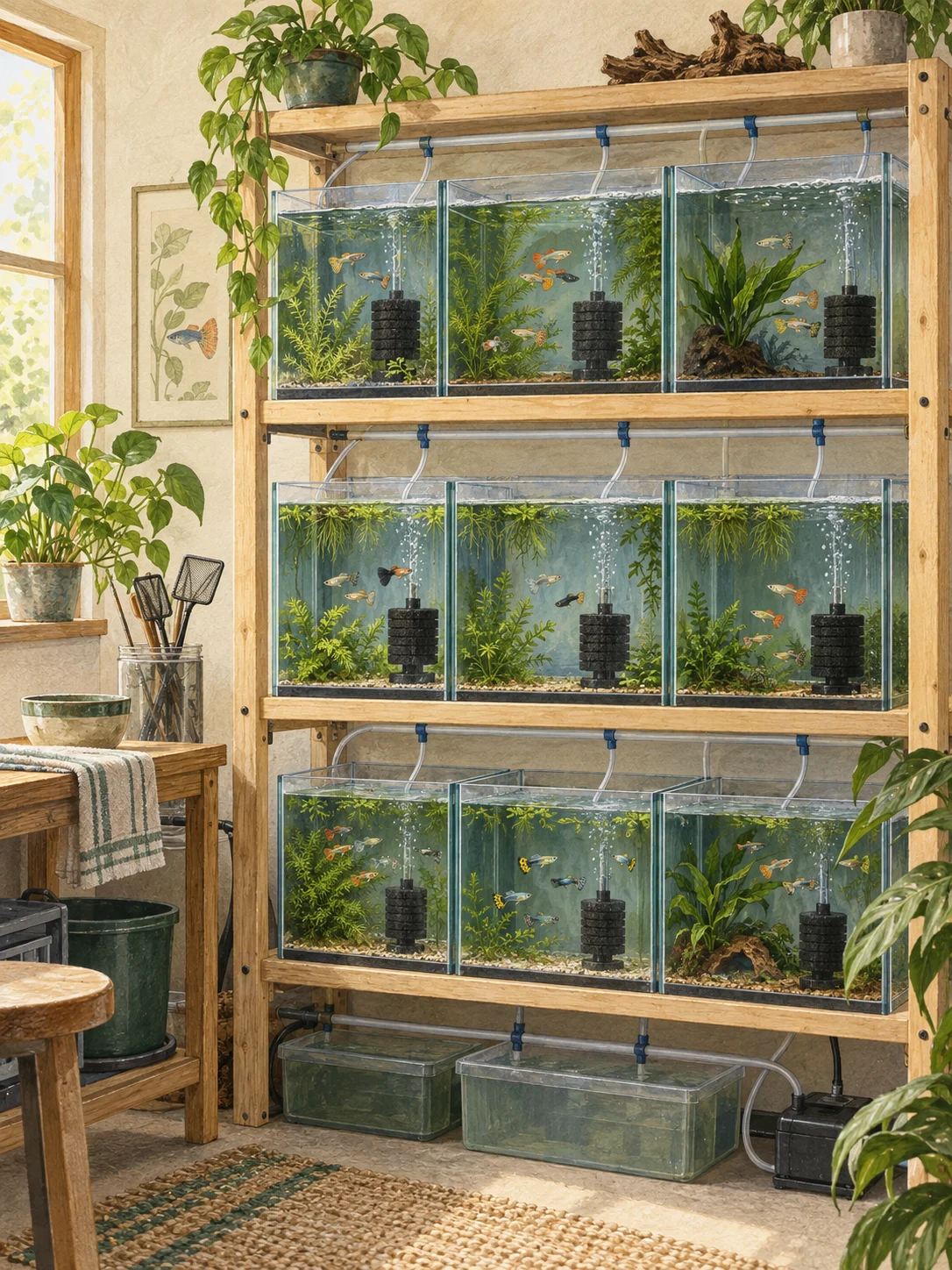
Care systems
Steady water, thoughtful care
Gentle filtration and regular observation support healthy aquarium routines.
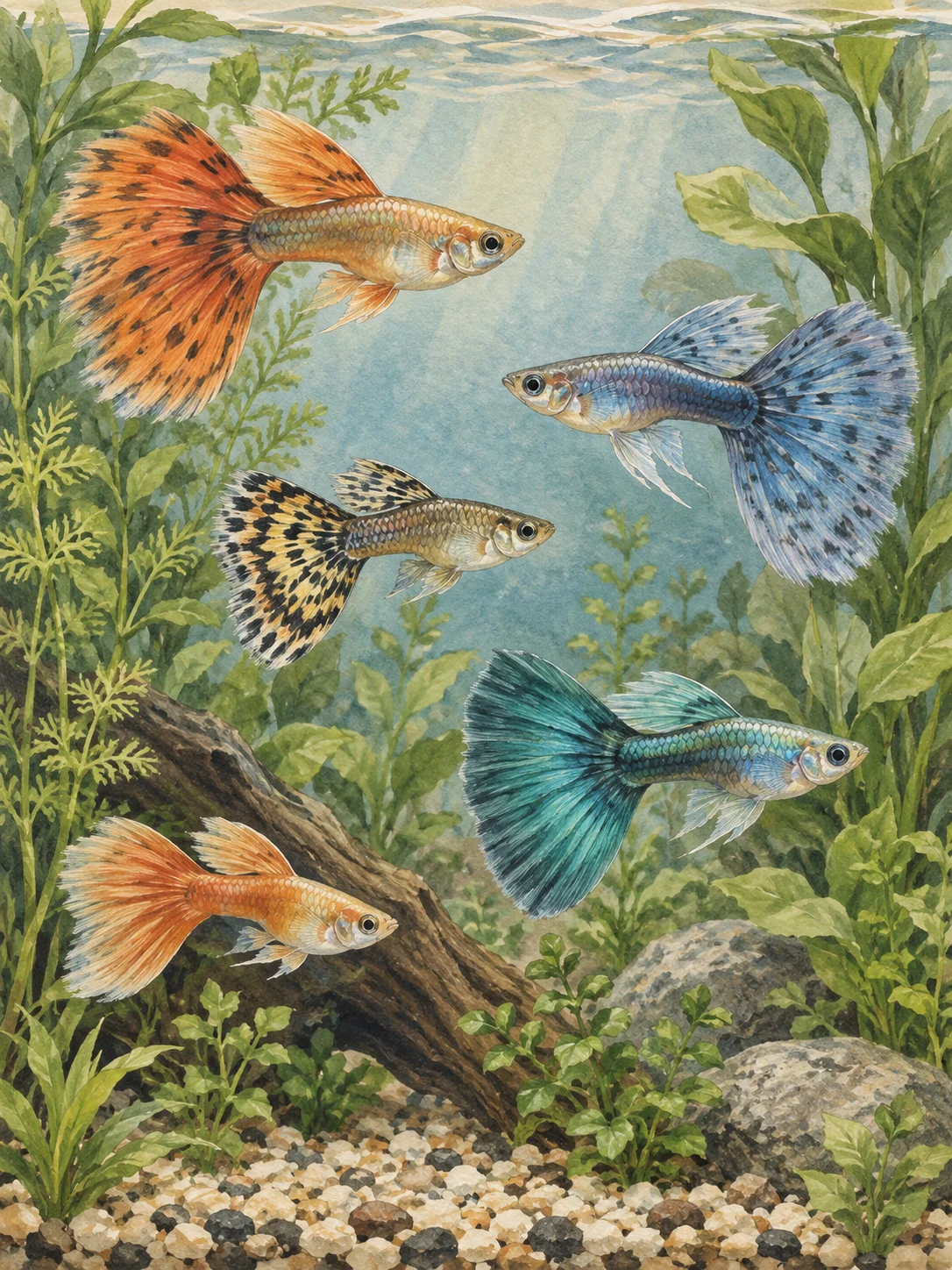
Natural variation
Every guppy is different
Color, size and fin shape vary with strain, age and each individual fish.
Editorial illustrations for context; they do not depict HiGuppy's exact facility or current fish stock.