The HiGuppy Journal
How Many Guppies in a 20 Gallon Tank?
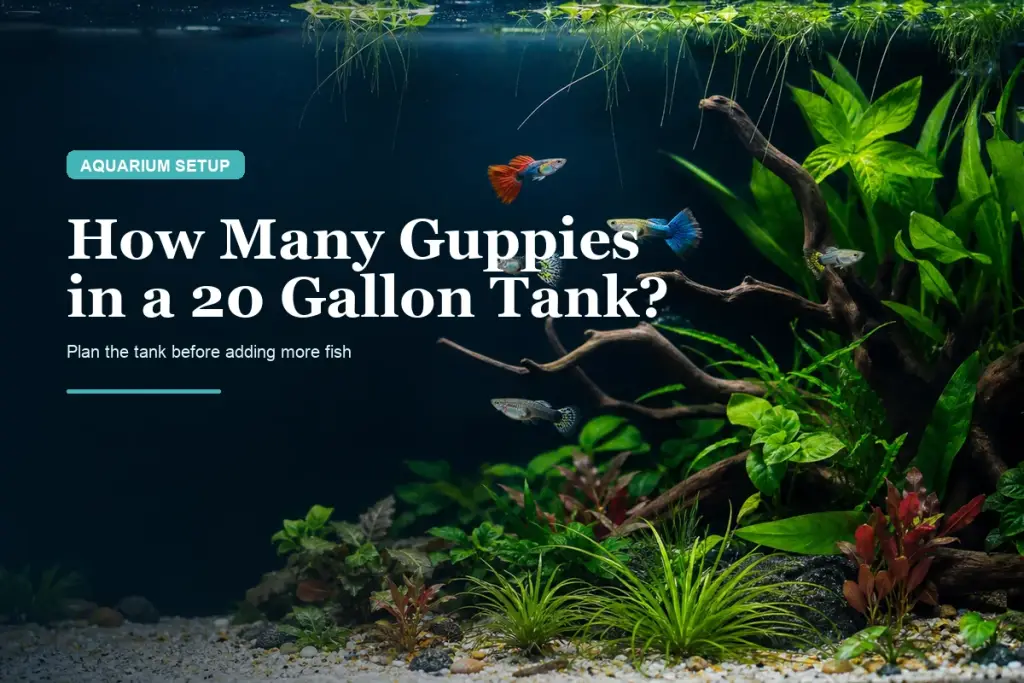
How many guppies in a 20 gallon tank? There is no universal safe or maximum count. Twenty US gallons is about 75.7 litres; twenty imperial gallons is about 90.9 litres. Plan the group around adult size, sex, swimming space, filtration, water quality, tank mates, feeding, and reproduction rather than using a fixed head count.
Checking a 20-litre tank? Twenty litres is about 5.3 US gallons. Use the 5-gallon and 20-litre guppy guide for small-tank limitations before choosing a group; the advice below concerns a much larger 20-gallon aquarium.
Start with a plan, not the maximum
The OATA guppy and molly guide recommends at least 45 litres for a small group of the smaller species. A 20-gallon aquarium exceeds that volume in either gallon system, but this does not establish a particular fish count. Check the tank dimensions and allow for water displaced by substrate, decorations, and equipment. It is still possible to overstock it, especially when fry arrive, extra fish are added quickly, or food accumulates.
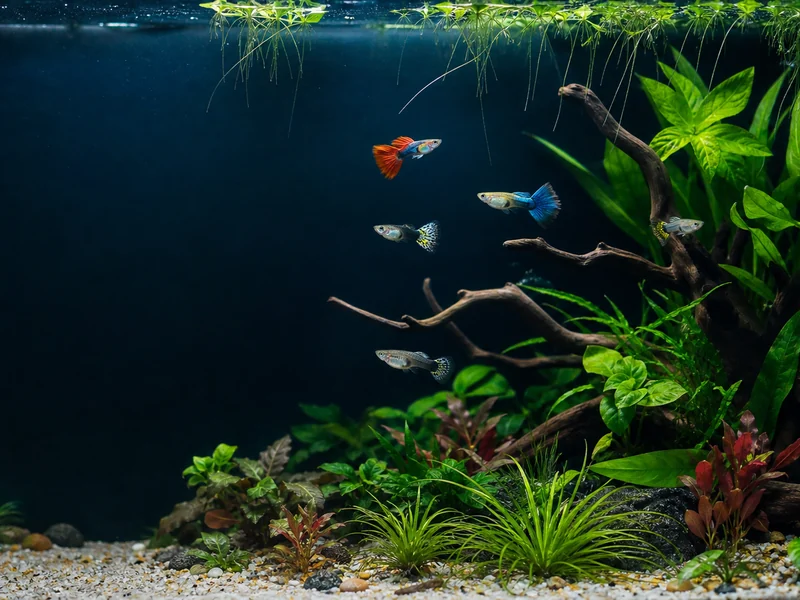
Check the footprint as well as the label. A long, shallow aquarium and a tall aquarium can hold the same volume while offering different swimming routes and surface areas. The RSPCA’s aquarium guidance highlights the importance of surface area for oxygen exchange. Leave open routes around planting so a fish can move away from another fish without being trapped in a corner. More decorative cover should not mean removing all usable swimming room.
Do not turn the 45-litre guidance into a litres-per-guppy calculation or double a smaller tank’s supposed allowance. For a new 20-gallon display, ask a knowledgeable aquatic retailer to review the complete proposed group, tank dimensions and water conditions before you buy. The aim is a group you can maintain through adulthood.
What changes the practical capacity?
- Adult size: plan for fully grown fish; female guppies generally grow larger than males.
- Sex ratio and breeding: fry can change capacity quickly.
- Tank mates: other species use swimming room and add waste.
- Filtration and surface movement: choose equipment for the real load, not the label alone.
- Maintenance: track ammonia, nitrite, nitrate, food, and water changes.
- Planting and layout: plants and cover can help the environment, but they do not erase a stocking problem.
Same-sex display group or breeding group?
An accurately sexed male-only group avoids reproduction within the group. An all-female group is not necessarily fry-free: females that previously mated can produce further broods using stored sperm. Any group still needs monitoring for persistent chasing and access to food. A mixed-sex group requires a separate fry plan before fish are added. Decide where fry will grow, how filtration and water changes will scale, and what responsible rehoming looks like. Do not wait until fry are present to make those choices.
For guppies, the OATA guide suggests at least three together, with two females per male when keeping mixed sexes to reduce pressure on females. Treat this as social and sex-ratio guidance, not a 20-gallon capacity formula. A ratio cannot guarantee that a particular fish will escape harassment. For a same-sex display, have the seller confirm the sex of every fish; colour alone is not a reliable buying check.
Make the fry plan specific: identify a prepared grow-out aquarium, the time and equipment needed to maintain it, and someone able to accept surplus fish responsibly. A breeding box inside the display does not add water volume or reduce the system’s total waste load. Do not count on every fry being eaten to keep the population stable.
Plan the whole 20-gallon community
If other animals will share the aquarium, list them before choosing the guppy group. Include their adult sizes, preferred water conditions, social-group requirements and behaviour. A bottom-dwelling fish still adds waste even when it uses a different part of the aquarium. Avoid treating leftover space as permission to add one of every attractive species.
The RSPCA’s guidance on keeping fish together recommends researching each species’ needs and compatibility. If a prospective tank mate requires a group you cannot accommodate, leave that species out rather than buying a lone representative. When the complete community is difficult to assess, a guppy-only display makes the initial plan simpler. It still needs the same checks for adult space, water quality and social behaviour.
Build in a settling period
Before the first group arrives, complete a fishless cycle using a suitable ammonia source and test the system’s response. Zero readings in a newly filled tank do not show that a working biological filter has developed. The RSPCA recommends fishless cycling; UF/IFAS explains how biological filtration processes ammonia and nitrite. A filter’s advertised tank rating does not show how much waste its current bacterial community can handle.
Plan additions in stages without using a lone guppy as a test fish or leaving another social species without an appropriate group. Have the initial group and introduction sequence checked together. When adding fish to an established population, use the separate new-guppy quarantine guide for the receiving process. Quarantine readiness and display-tank capacity are separate checks.
Add fish gradually only after the system is stable and the group has suitable space. Observe appetite, fins, breathing, social behavior, and water tests after each change. If ammonia or nitrite appears, or nitrate rises unexpectedly, investigate water quality, feeding, and filtration promptly before adding more livestock. A nitrate trend alone does not establish the cause. The RSPCA notes that stocking also depends on behavioural needs; good water tests do not cancel out crowding or persistent harassment.
When should you stop adding guppies?
Keep a short tank record: current adults and juveniles, births, feeding, water-test results, water changes and persistent chasing. Test on a consistent routine and after changes, and compare readings across the normal maintenance interval. One good result immediately after a water change does not show what happens before the next one. Record nitrate in the source water too so you can interpret the aquarium’s trend.
The OATA care guidance specifies zero mg/L for both ammonia and nitrite; check them with appropriate aquarium tests. Detectable results, repeated surface gasping, damaged fins or a fish unable to feed are reasons to pause additions and investigate promptly. Check water and equipment first; these signs do not diagnose overcrowding by themselves. Seek advice from an aquatic specialist or fish veterinarian if fish remain distressed. A larger prepared aquarium or responsible rehoming may be needed if the group has outgrown the plan.
A practical 20-gallon checklist
- Cycle the tank and confirm stable tests before new fish arrive.
- Use a thermometer and avoid sudden temperature changes.
- Provide a filter and gentle intake protection appropriate for guppies and possible fry.
- Keep space for open swimming as well as plants or shelter.
- Plan water changes from test results and waste trends.
- Confirm the count and sex on current listings before ordering.
Use the Guppy Tank Setup Guide for the full system and the 5-Gallon Guppy Guide for why five gallons is a poor basis for a permanent guppy group.
Continue planning: Use the Guppy Tank Setup Guide, Water Parameters Guide, and Guppy Care Guide together when evaluating a tank-size plan.
Behind the care guides
Care begins with steady systems
Our guppy guides focus on practical routines: keep water stable, observe fish closely and allow for natural variation.
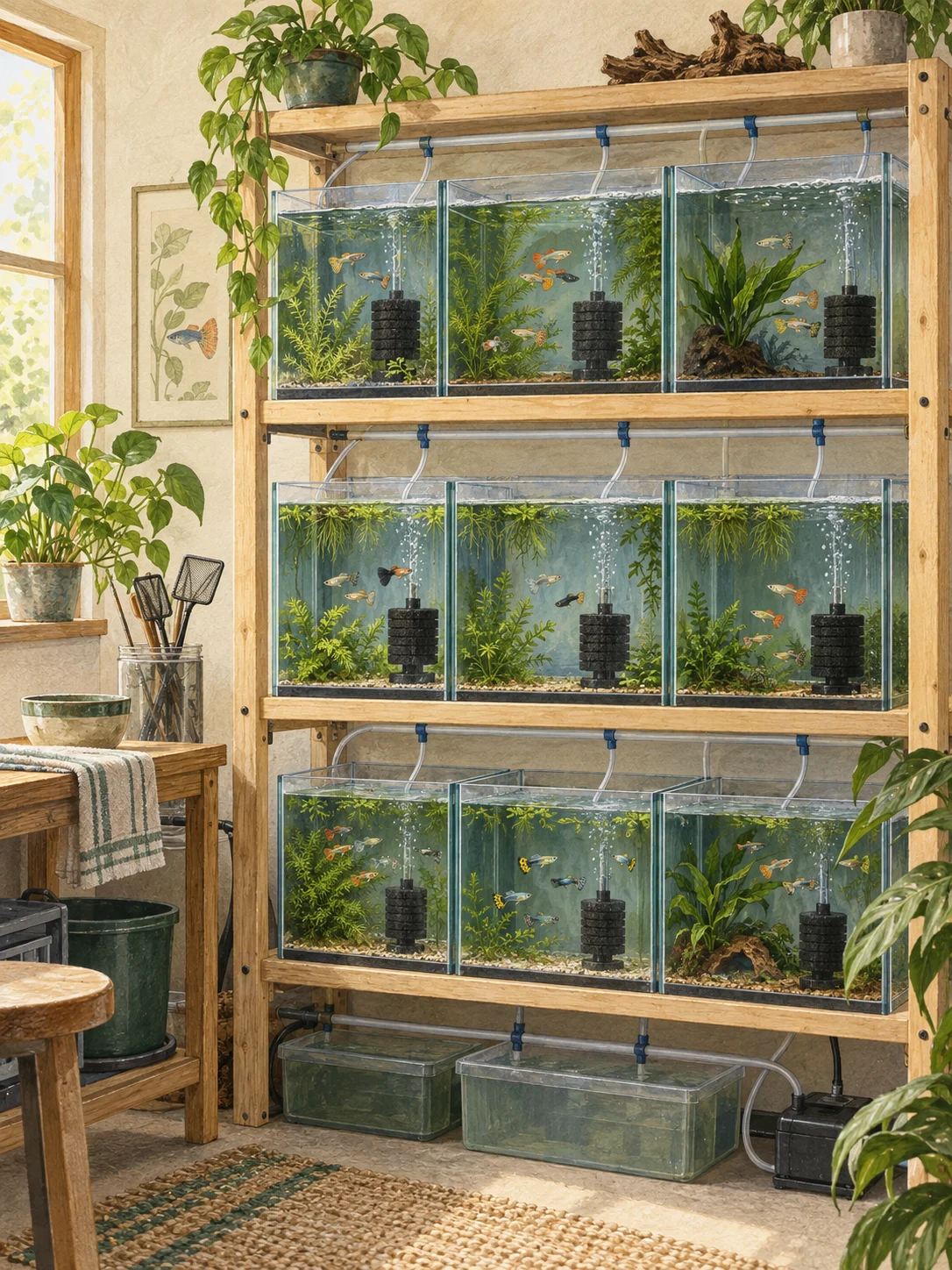
Care systems
Steady water, thoughtful care
Gentle filtration and regular observation support healthy aquarium routines.
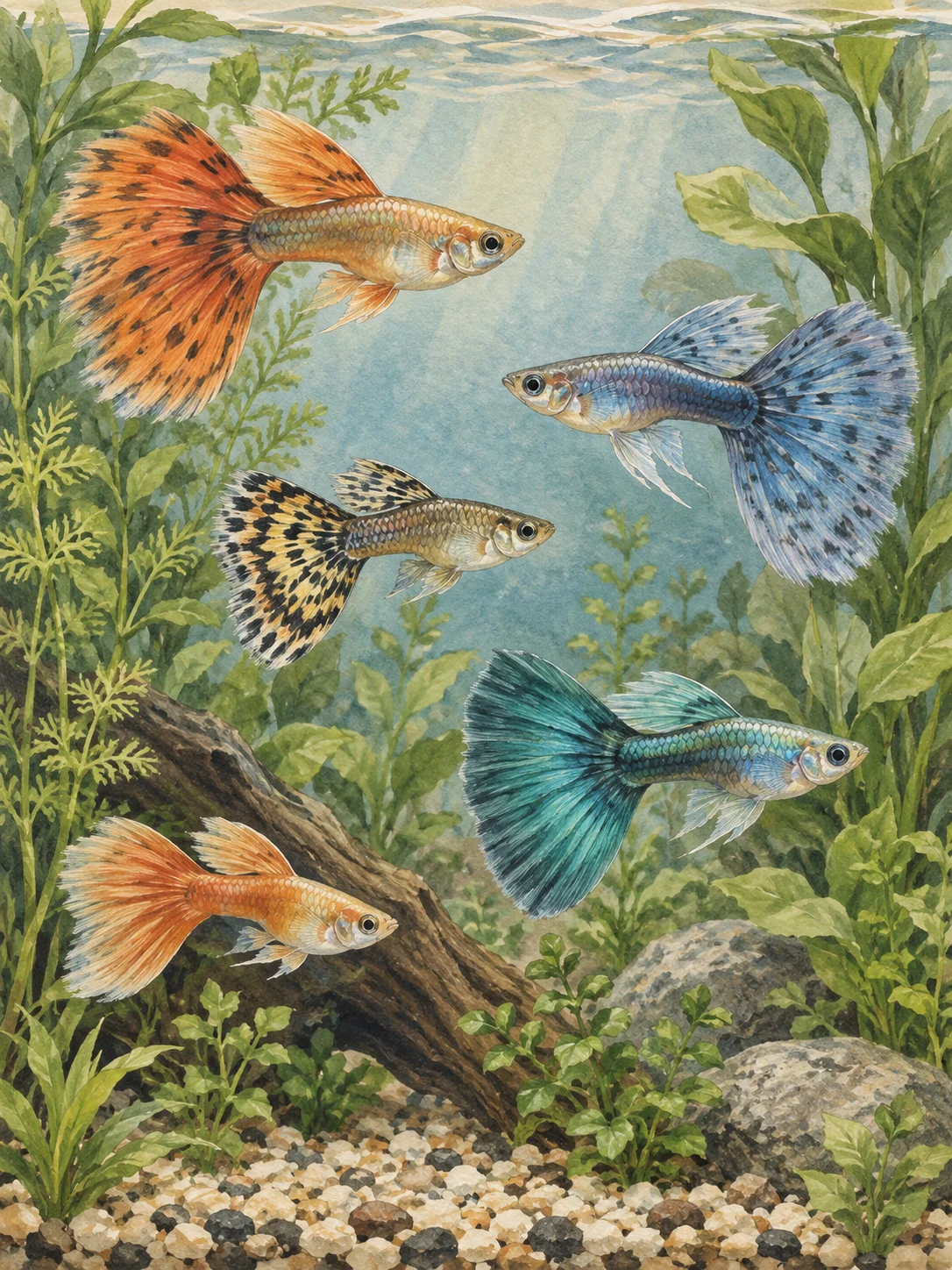
Natural variation
Every guppy is different
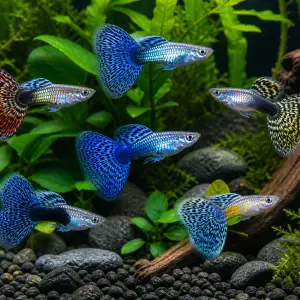
Color, size and fin shape vary with strain, age and each individual fish.
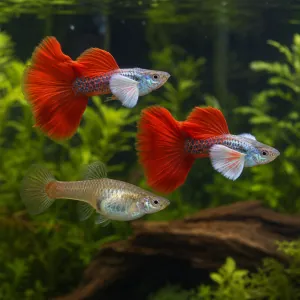
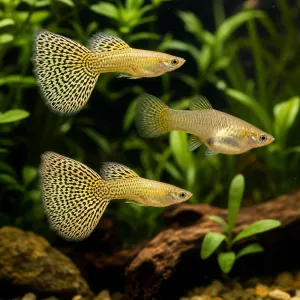
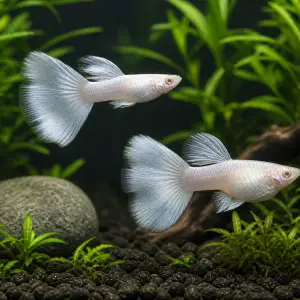
Editorial illustrations for context; they do not depict HiGuppy's exact facility or current fish stock.