The HiGuppy Journal
Guppy Water Change Schedule by Tank & Nitrate
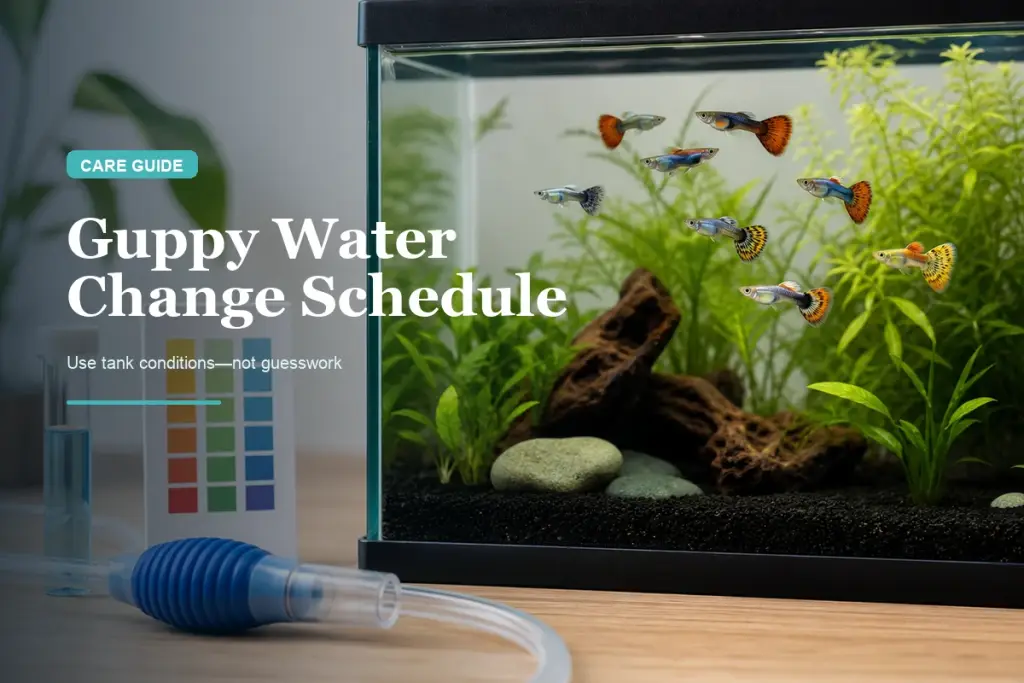
Quick answer: a guppy water-change schedule should respond to tank size, stocking, feeding, filtration, and test results. Use regular partial changes as part of a routine, but do not rely on one universal percentage or calendar rule when the aquarium’s nitrate level, waste load, or fish behavior shows it needs a different approach.
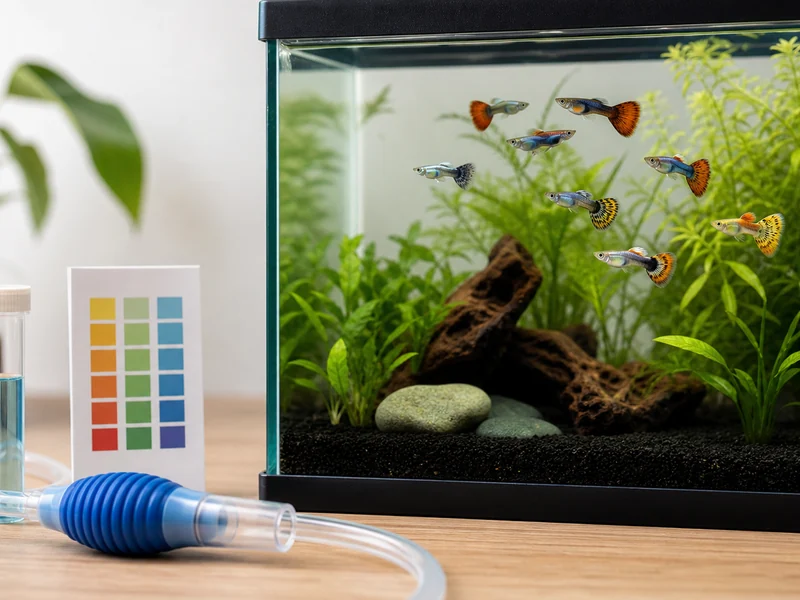
Why a fixed schedule is not enough
Two tanks can have the same volume and need different maintenance. A lightly stocked, planted aquarium with stable filtration may behave differently from a fry grow-out tank or a mixed-sex breeder tank producing extra waste. Test the water, observe the fish, and keep a basic record of water changes so you can recognize changes before they become an emergency.
Start with a regular partial-change routine
Regular partial changes help remove dissolved waste and refresh minerals without making a sudden complete reset. The exact volume and frequency should fit your aquarium. If nitrate trends upward, food is collecting, fry numbers have increased, or tests show water quality is changing, review the routine rather than waiting for a calendar date.
- Use dechlorinated replacement water matched as closely as practical to the tank’s temperature.
- Remove waste from the substrate where it collects without stripping the entire biological filter at once.
- Clean filter media gently in removed tank water when needed; do not replace all beneficial media on a routine day.
- Retest after changes when the tank is new, heavily stocked, or behaving differently.
- Keep notes on test results, fish count, food changes, and water-change dates.
Use nitrate and tank conditions as decision signals
Nitrate is one useful signal, but it should be considered with ammonia, nitrite, pH stability, filtration, and fish behavior. Ammonia or nitrite are not routine “wait until water-change day” issues. If either is present in a cycled aquarium, reduce the immediate risk with appropriate water changes and investigate the source of the problem.
Fry and breeding tanks need capacity planning
Fry can increase the tank’s load faster than a simple adult-only routine assumes. Before feeding more or keeping every fry in one tank, plan filtration, water testing, water-change capacity, and a responsible next home. The Raising Guppy Fry Guide and Guppy Tank Setup Guide can help you plan the system before numbers increase.
Common water-change mistakes
- Changing too much without matching temperature or treating replacement water.
- Cleaning every filter component at the same time.
- Ignoring test results because the water looks clear.
- Overfeeding after a water change instead of addressing the waste source.
- Adding new fish before the system has room and stable water capacity.
Related guides
For a broader routine, read the Complete Guppy Care Guide. If new fish have arrived, follow the Acclimation Guide rather than using a large water change as the only preparation step.
For the related schedule, continue to the Water Change Guide.
Behind the care guides
Care begins with steady systems
Our guppy guides focus on practical routines: keep water stable, observe fish closely and allow for natural variation.
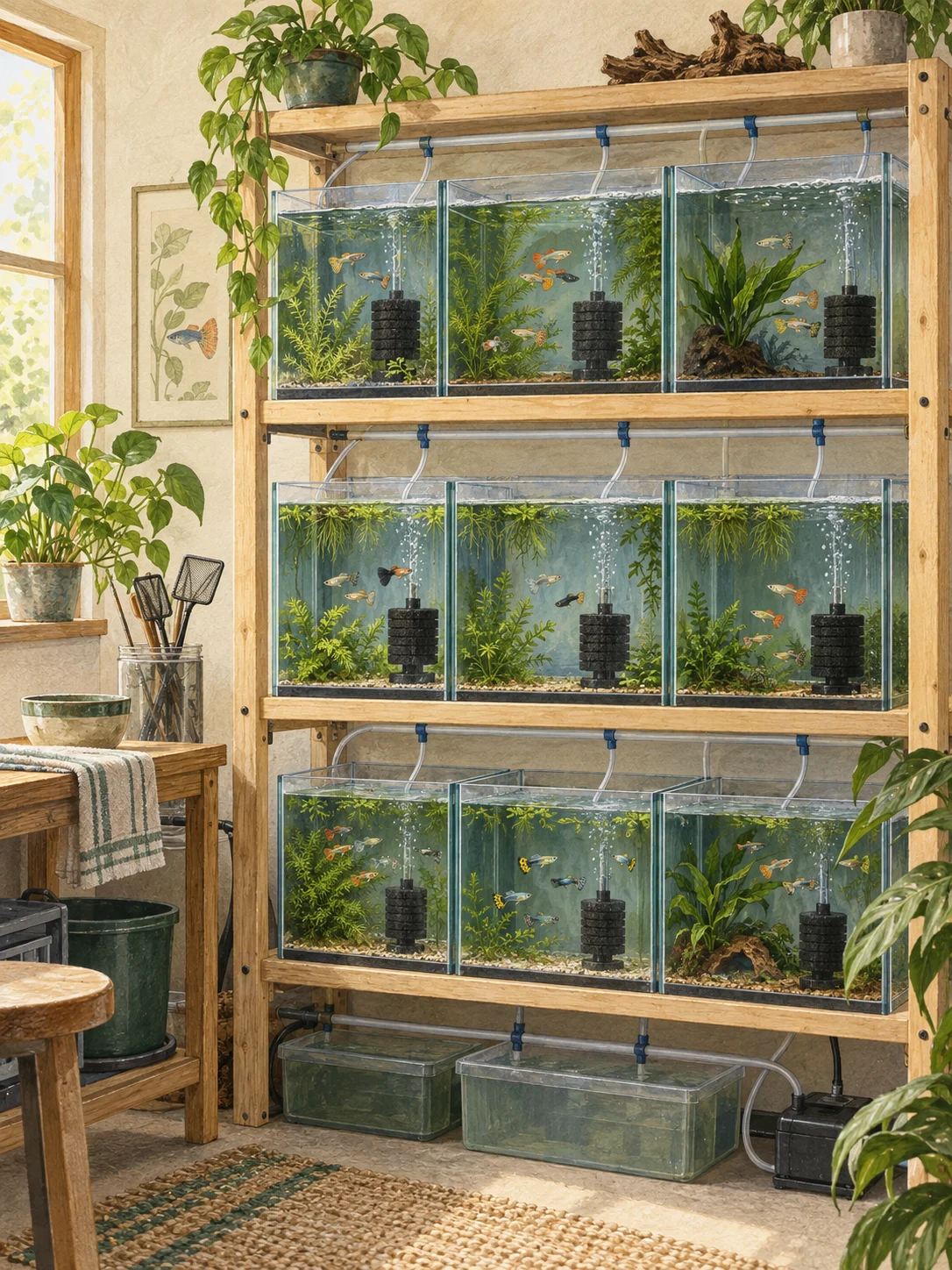
Care systems
Steady water, thoughtful care
Gentle filtration and regular observation support healthy aquarium routines.
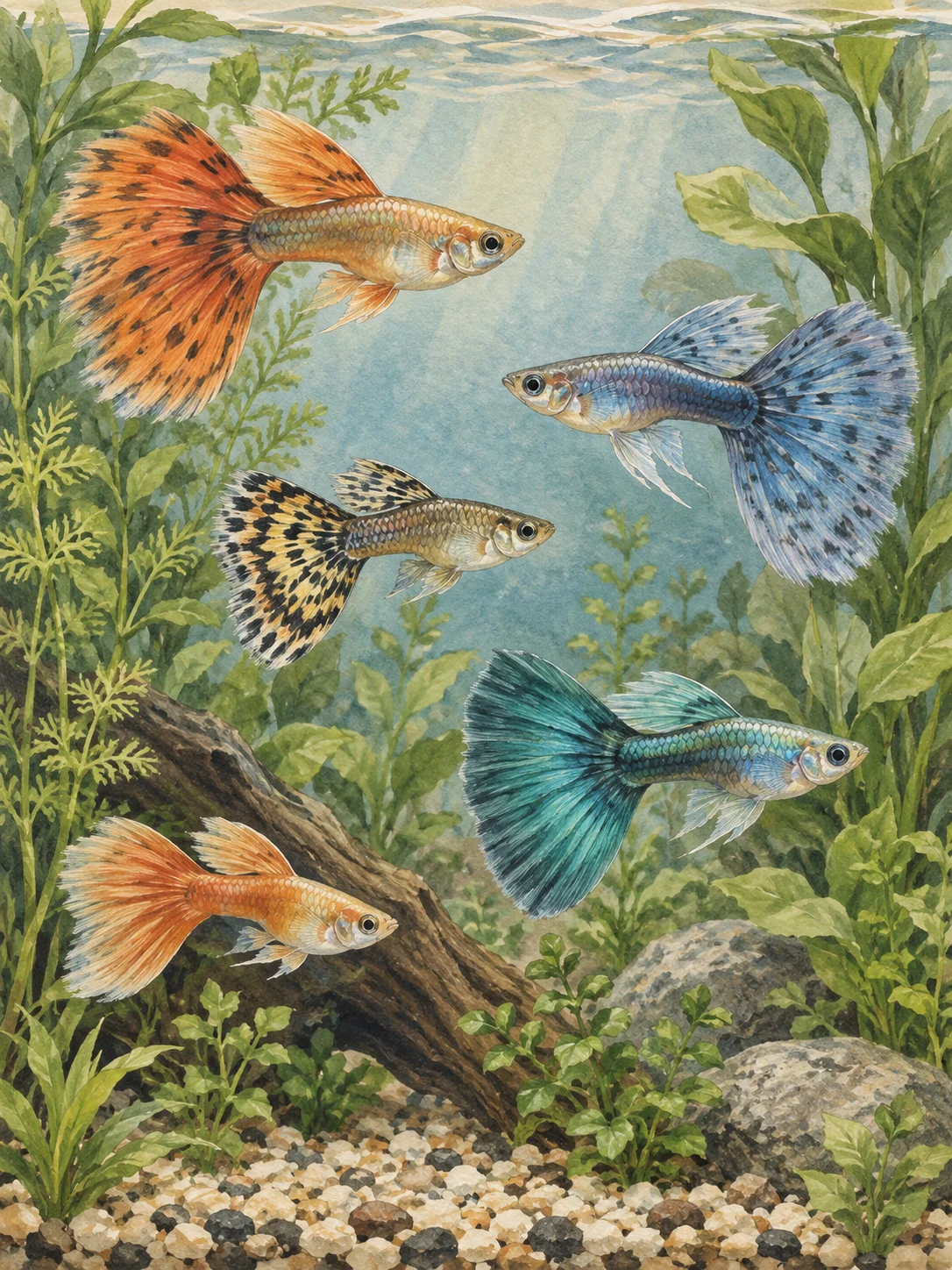
Natural variation
Every guppy is different
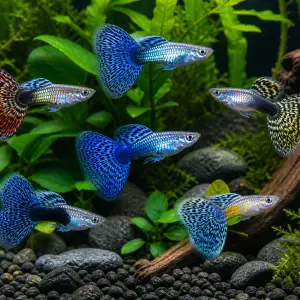
Color, size and fin shape vary with strain, age and each individual fish.
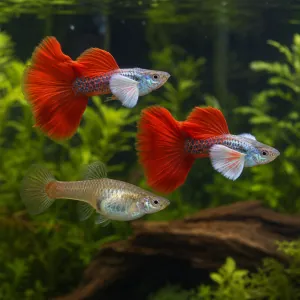
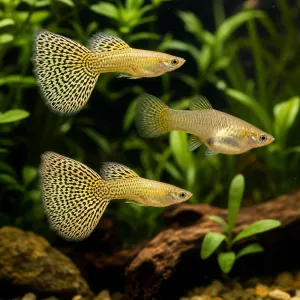
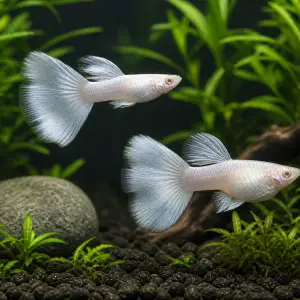
Editorial illustrations for context; they do not depict HiGuppy's exact facility or current fish stock.