Guppy Care Article
Ammonia Poisoning in Guppies: Signs, Causes & First Steps
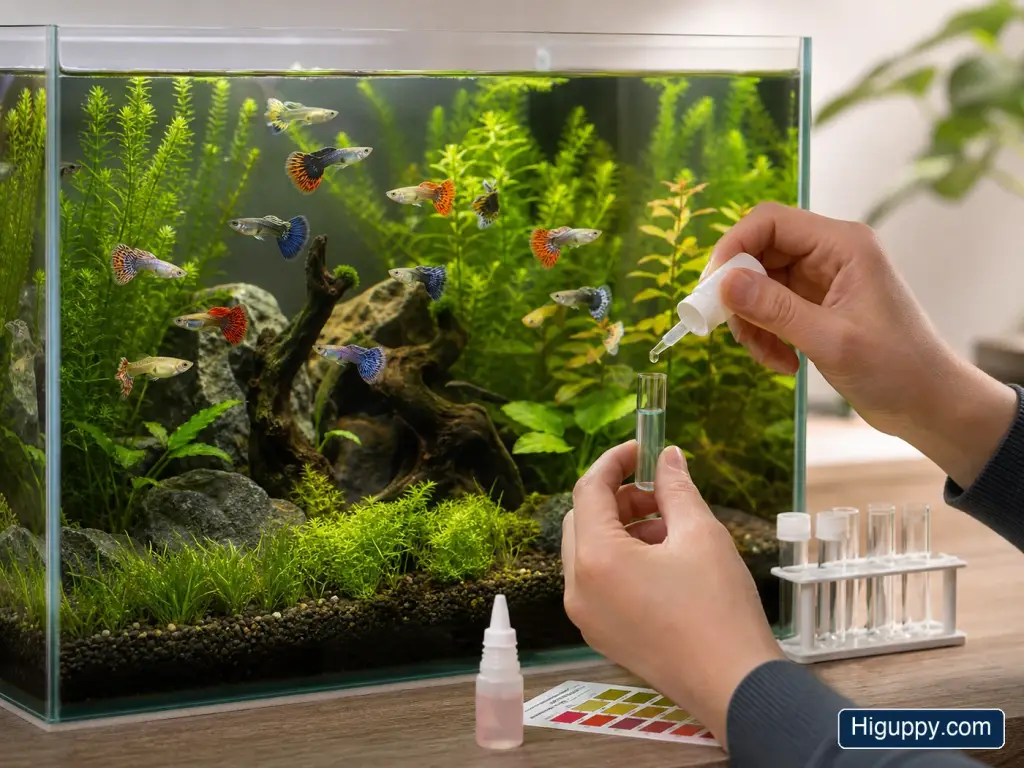
Ammonia poisoning is a water-quality emergency, not a disease you can diagnose from appearance alone. Guppies exposed to harmful ammonia may become lethargic, stop eating, clamp their fins, breathe rapidly, stay near the surface, or die suddenly. Because the same signs also occur with low oxygen, nitrite, chlorine exposure, parasites, and gill disease, the fastest useful step is to test the water rather than guess from symptoms.
This guide explains what ammonia means in a guppy aquarium, what to check first, how to protect the biofilter, and when a broader health problem should be considered.
Quick answer: what should you do first?
If guppies suddenly gasp, become lethargic, stop eating, or clamp their fins, test ammonia and nitrite immediately. Check temperature, pH, filtration, and aeration at the same time. If ammonia is detected, reduce feeding, improve oxygenation, use properly conditioned replacement water for an appropriate partial water change, keep the biological filter running, and retest until the system is stable.
What is ammonia in a guppy tank?
Fish continuously produce ammonia as a metabolic waste product, and additional ammonia can come from uneaten food, feces, dead plant material, and other decomposing organic matter. In a mature aquarium, beneficial microorganisms in the biofilter convert ammonia to nitrite and then nitrate.
Most hobby test kits report total ammonia, which includes ionized ammonium and the more toxic un-ionized ammonia. The proportion in the more toxic form rises as pH and temperature increase. That is why an ammonia reading should be interpreted together with the rest of the water parameters rather than as an isolated number.
For a practical overview of the numbers you should monitor, use our guppy water parameters guide.
Common signs of ammonia stress in guppies
- Rapid breathing or repeated surface gasping
- Lethargy or unusually weak swimming
- Loss of appetite
- Clamped fins
- Hiding or gathering near areas of stronger water movement
- Irritated-looking or unusually dark gill area
- Several fish becoming stressed at the same time
- Sudden deaths after a new tank, overfeeding event, filter failure, or major maintenance mistake
These are not ammonia-specific symptoms. For example, surface breathing can also reflect low dissolved oxygen, nitrite, chlorine exposure, or gill disease. If breathing is the main problem, compare the signs with our guppy gasping at the surface guide.
Why ammonia rises
1. The aquarium is new or not fully cycled
A new biofilter needs time and an ammonia source to establish the microorganisms that process nitrogen waste. Adding too many fish before the filter can handle the load can cause a rapid ammonia or nitrite increase.
2. The biological filter was disrupted
Replacing all filter media, allowing media to dry out, washing biological media too aggressively, or exposing it to untreated chlorinated water can reduce biofilter capacity. A filter can also simply stop working because of a power or mechanical failure.
See do guppies need a filter? for the difference between mechanical filtration, biological filtration, and water movement.
3. Too much waste entered the tank
Overfeeding, a dead fish, decaying plant matter, or a sudden increase in stocking can create more waste than the established biofilter can process. The water may still look clear, so visual appearance is not a reliable ammonia test.
4. Source water or chloramine complicates the reading
Some municipal water supplies use chloramine, and source water can sometimes contribute to total ammonia readings. Use a conditioner appropriate for your local water supply and, when a reading is confusing, test the source water as well as the aquarium.
A safer first-response checklist
- Test ammonia and nitrite. Record pH and temperature too, because they change how ammonia toxicity should be interpreted.
- Increase aeration and surface movement. Stressed gills benefit from good oxygen availability while you correct the underlying water problem.
- Reduce or temporarily stop feeding. Less food means less immediate nitrogen waste while the tank stabilizes.
- Use conditioned, temperature-matched replacement water. An appropriate partial water change can dilute ammonia, but avoid abrupt pH or temperature swings. In a neglected tank with very low pH, correct conditions gradually rather than making a dramatic chemistry change all at once.
- Keep the filter running. Check flow and equipment, but do not throw away all established biological media during the emergency.
- Remove obvious decaying material. Uneaten food, dead livestock, and rotting organic matter should not remain in the aquarium.
- Retest. One water change is not proof the problem is solved. Continue monitoring until ammonia and nitrite remain controlled.
For routine maintenance after the emergency passes, follow a consistent guppy water-change schedule instead of deep-cleaning the entire aquarium at once.
Ammonia vs low oxygen vs gill disease
| Pattern | What it suggests | Best first check |
|---|---|---|
| Several fish decline after a new setup, overfeeding, or filter problem | Water-quality failure is high on the list | Ammonia, nitrite, pH, temperature |
| Fish crowd the surface, especially in warm water or after equipment failure | Low oxygen may be involved | Aeration, surface movement, temperature, water tests |
| One fish has persistent respiratory distress while water tests are normal | Individual disease or injury becomes more plausible | Observe gills/body and compare disease signs |
| Flashing, excess mucus, spots, or progressive lesions are present | Parasites or infectious disease may be involved | Use the disease symptom pattern, not ammonia alone |
If water tests are normal but the fish remain ill, use the Guppy Diseases Guide and compare specific symptoms such as clamped fins, gill distress, spots, wasting, or swelling.
How to prevent ammonia problems
- Cycle and test the aquarium before adding a full stocking load.
- Add fish gradually instead of overwhelming a young biofilter.
- Feed portions the fish can consume without leaving excess food to decay.
- Maintain filter flow and preserve established biological media.
- Do not replace all filter media just because it looks dirty.
- Test after power outages, filter failures, unexplained deaths, or major changes.
- Keep a water conditioner and a reliable test method available before an emergency happens.
FAQ
Can clear aquarium water contain ammonia?
Yes. Ammonia is not something you can reliably see or smell at harmful concentrations. Testing is what tells you whether it is present.
Can ammonia make a guppy stop eating?
Yes. Poor appetite and lethargy can occur during ammonia toxicity, but appetite loss also has many other causes. Confirm water quality first rather than assuming ammonia from appetite alone.
Should I replace all filter media after an ammonia spike?
Usually no. Established biological media is part of the system that processes ammonia. Correct the cause, maintain flow, and clean media gently only as needed rather than discarding the whole biofilter.
Should I add more guppies once the water looks normal?
Wait until repeated tests show the tank is stable. A visually clear aquarium is not proof that the nitrogen cycle is ready for a larger bioload.
Sources and further reading
This article follows aquarium-health guidance from the Merck Veterinary Manual and UF/IFAS Extension: Ammonia in Aquatic Systems. For broader daily husbandry, continue with the Complete Guppy Care Guide.
Real HiGuppy photographs
Inside the facility behind our guppy guides
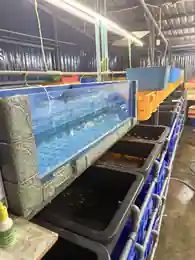
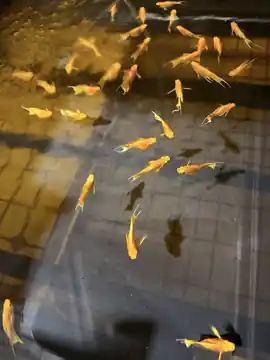
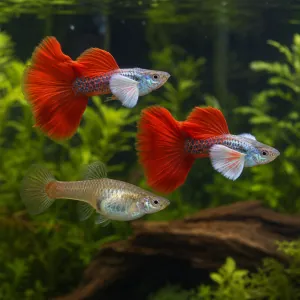
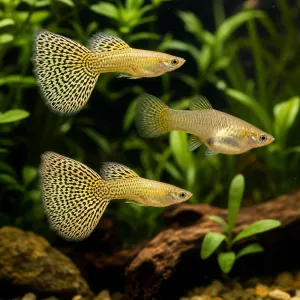
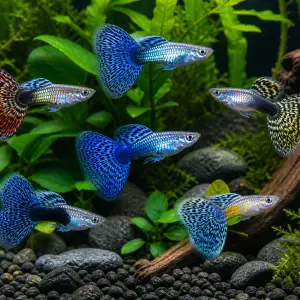
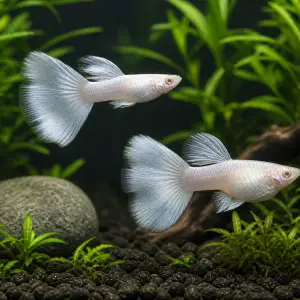
These photographs show real HiGuppy holding, breeding and observation work. They document our facility and fish stock; they are not presented as the exact individual fish or strain discussed on every page.