The HiGuppy Journal
Male vs Female Guppy: How to Tell Sex & Breeding Ratios
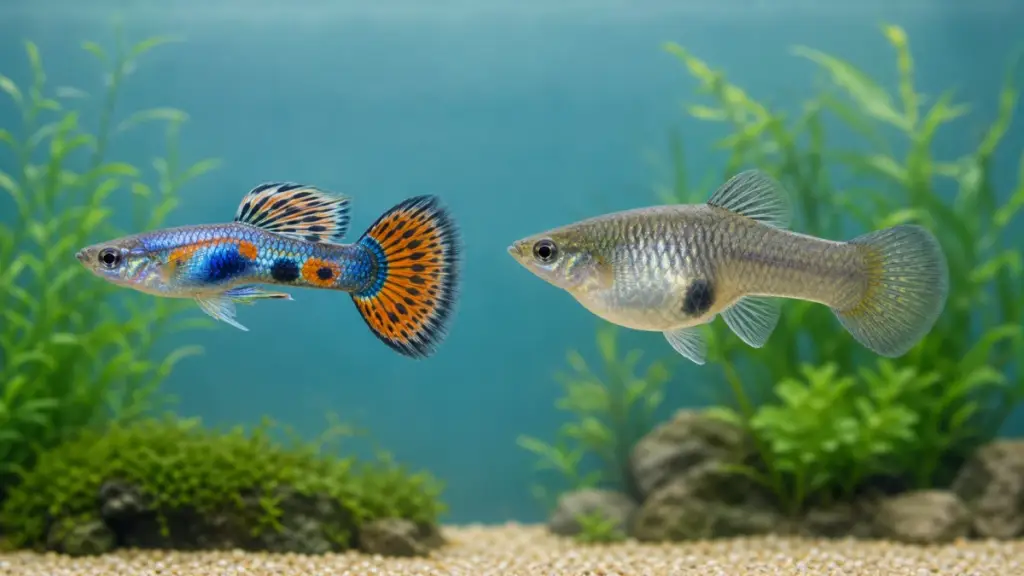
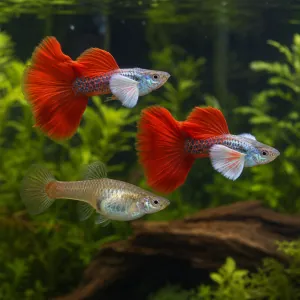
Quick answer: Male guppies are smaller, more colorful, and have a pointed gonopodium (modified anal fin). Female guppies are larger, rounder, less colorful, and may show a dark gravid spot near the rear abdomen. The spot alone does not confirm pregnancy. In mixed tanks, use a deliberate group plan with enough space, cover, and the ability to separate fish; a common ratio is not a welfare guarantee for every aquarium.
Telling male vs female guppy fish is one of the first skills every keeper needs. Sex identification affects stocking, breeding plans, color expectations, and tank harmony. Mistakes are common when fish are young, so learning the reliable markers saves stress later.
For broader care context, see How to Care for Guppies. If you plan to breed, read our Guppy Breeding Guide and Raising Guppy Fry Guide.
Male vs Female Guppy Comparison Table
| Feature | Male Guppy | Female Guppy |
|---|---|---|
| Body size | Smaller, slender | Larger, deeper body |
| Color | Bright patterns on body and fins | Mostly gray or muted tones |
| Tail fin | Large, ornate, often flowing | Shorter, rounded fan shape |
| Anal fin | Gonopodium: thin, rod-like | Standard fan-shaped anal fin |
| Gravid spot | Not present | May show a dark patch near rear abdomen; visibility varies |
| Behavior | More display chasing | More grazing and hiding when harassed |
How to Identify Male Guppies
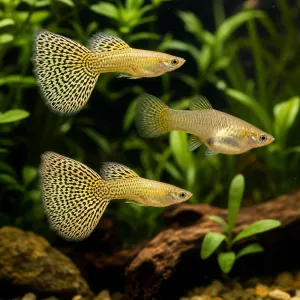
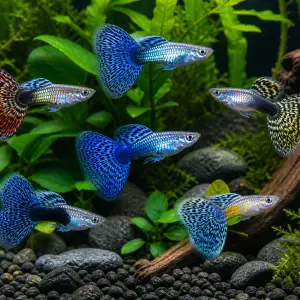
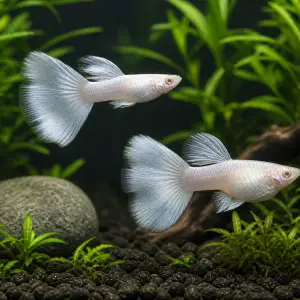
Male guppies are built for display. They usually show stronger color on the body, dorsal fin, and tail. The most reliable marker is the gonopodium: a narrow, tube-shaped anal fin used for mating. Once males mature, this feature is easy to spot compared with the female’s rounded anal fin.
All-male tanks are popular for color-focused displays without fry management. Males may chase each other occasionally, but providing plants and adequate space usually keeps aggression manageable.
How to Identify Female Guppies
Female guppies are generally larger and less colorful. Their tail is shorter and more practical for swimming than showy display. Many females show a pigmented gravid spot near the rear abdomen, but its visibility varies with strain and pigmentation. It can help with sex identification alongside anal-fin shape; its presence alone does not prove that fry are developing.
Females benefit from hiding places and a proper male ratio. Too many males in a small tank can stress females, weaken immunity, and shorten lifespan even when water quality looks fine.
Recommended Male-to-Female Ratios
- Mixed breeding tank: 1 male to 2-3 females
- Color display: all-male group in adequate tank size
- Avoid: equal numbers of males and females in small tanks
Pairs and trios are common in the hobby. A trio usually means 1 male and 2 females, which spreads male attention and can improve female comfort. Learn more about pair and trio options on our Breeding Pairs & Trios page.
Sexing Young Guppies
Juvenile guppies can be difficult to sex before the gonopodium develops. Color may also arrive later in males. If you need specific sex ratios, buy from a seller who can verify sex on mature juveniles or young adults rather than guessing on very small fish.
Note: Fancy strains with extreme finnage can make body shape harder to read at a glance. Focus on anal fin shape when color is still developing.
Frequently Asked Questions
At what age can you sex guppies?
Many fish show clear signs by 6-8 weeks, but reliability improves as the gonopodium forms. Very young fry are often uncertain.
Can female guppies have color?
Some strains show color in females, but most females are still less vivid than males. Do not rely on color alone.
Why are males chasing females constantly?
Mating behavior is normal, but excessive chasing often means too many males or too little cover. Adjust ratio and planting.
Can I keep only female guppies?
Yes. All-female groups avoid male harassment and unwanted breeding, though females may already be pregnant from prior contact.
What is a gravid spot?
A pigmented area near the rear abdomen that can be visible in female guppies, including some that have not mated. Its appearance varies with pigmentation, so do not use the spot alone to confirm pregnancy or its darkness as a countdown to birth.
Do males grow faster than females?
Not always. Females often appear larger earlier because of body depth, while males invest energy in fin growth and color.
How do pairs differ from trios?
A pair is usually 1 male and 1 female. A trio is usually 1 male and 2 females, which is often better for female welfare.
Will females breed without males present?
Females can store sperm and produce multiple broods after a single mating. Plan stocking accordingly.
Shopping for a specific male-female mix? Visit the HiGuppy shop for pairs, trios, and sexed groups with clear strain notes.
For broader breeding context, read the Guppy Breeding Guide; if you are ordering live fish, review the Acclimation Guide first.
Behind the care guides
Care begins with steady systems
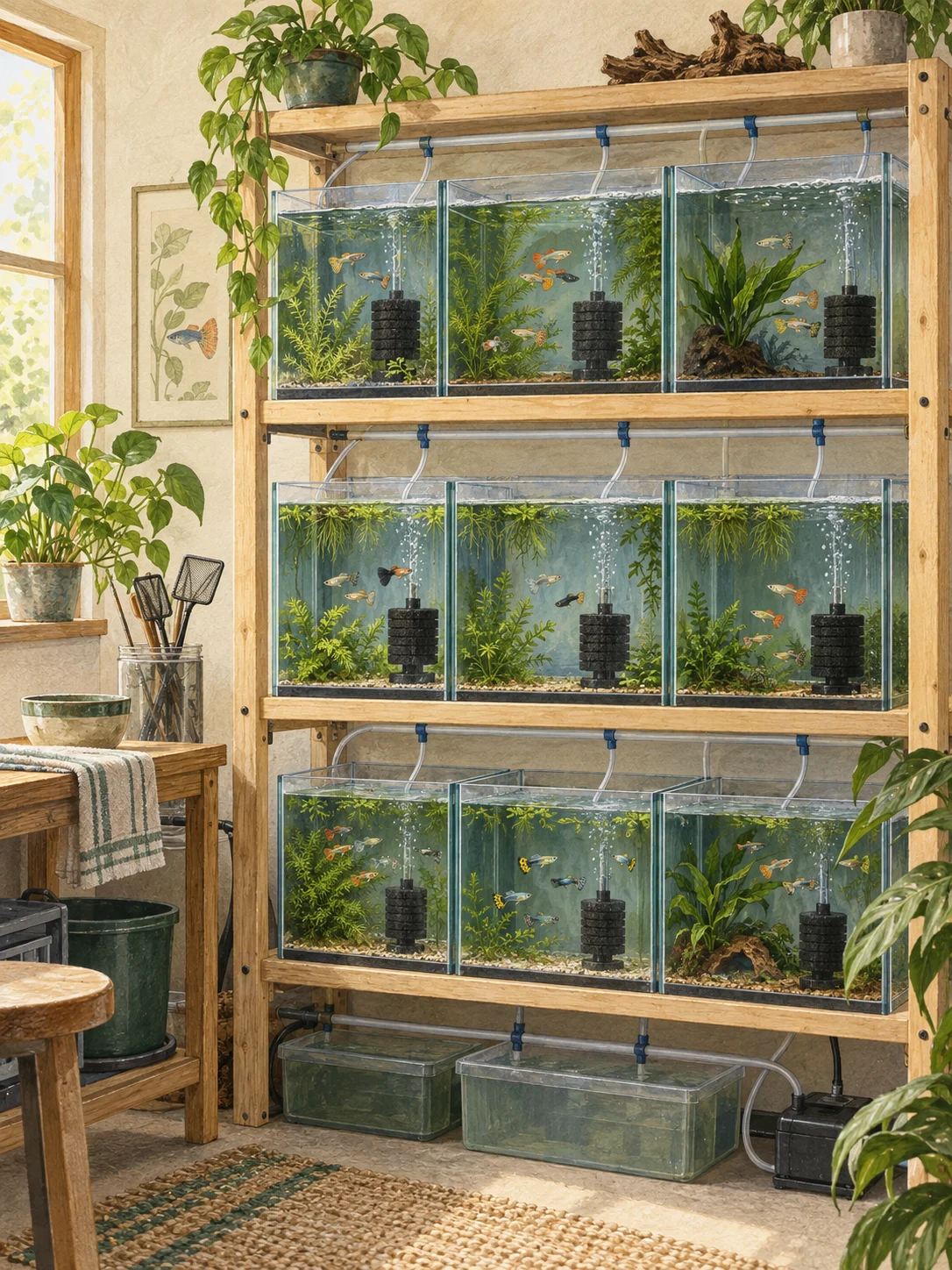
Our guppy guides focus on practical routines: keep water stable, observe fish closely and allow for natural variation.
Care systems
Steady water, thoughtful care
Gentle filtration and regular observation support healthy aquarium routines.
Natural variation
Every guppy is different
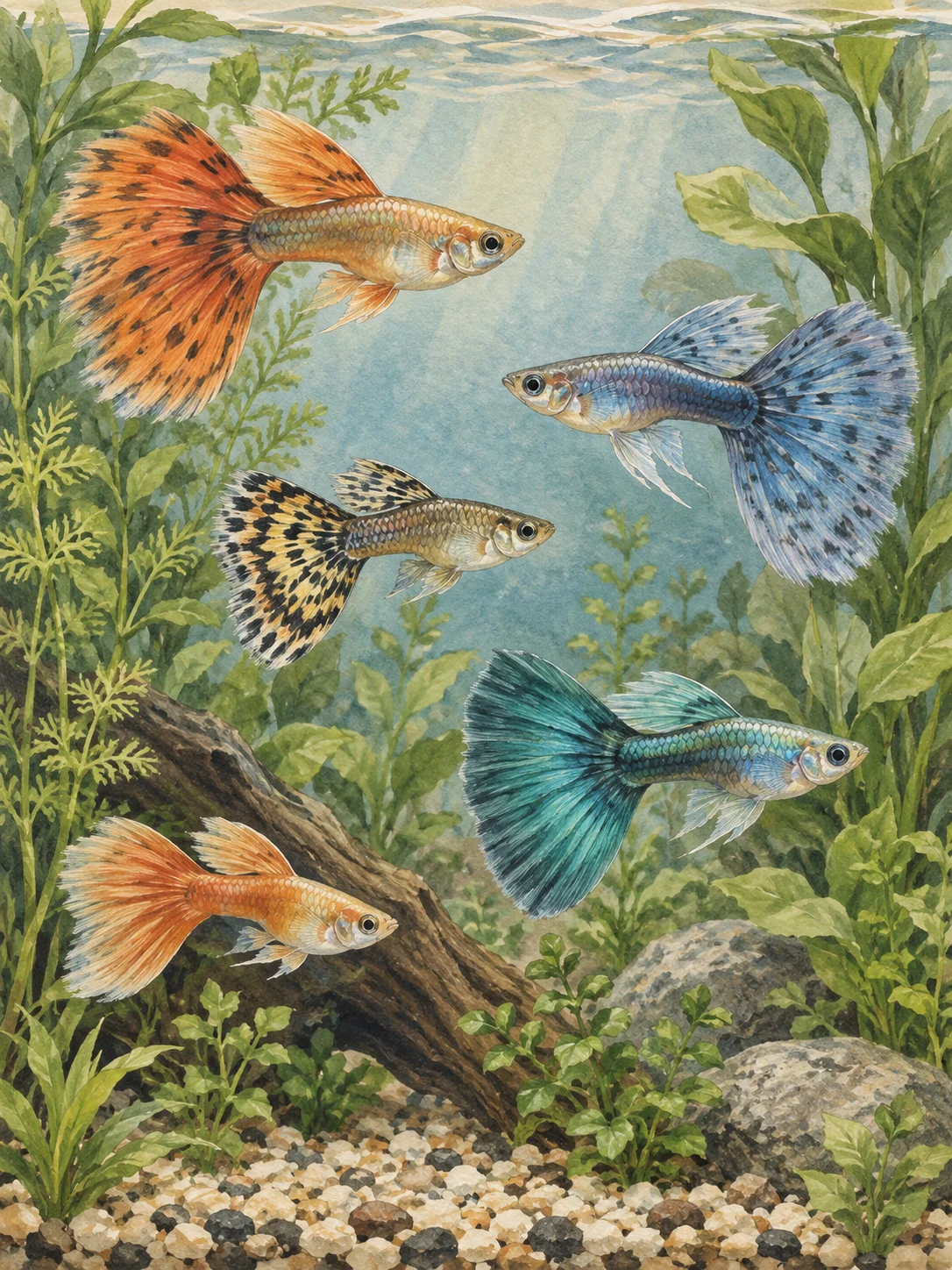
Color, size and fin shape vary with strain, age and each individual fish.
Editorial illustrations for context; they do not depict HiGuppy's exact facility or current fish stock.