The HiGuppy Journal
Oily Film on Guppy Tank Water: Causes & Safe Fixes
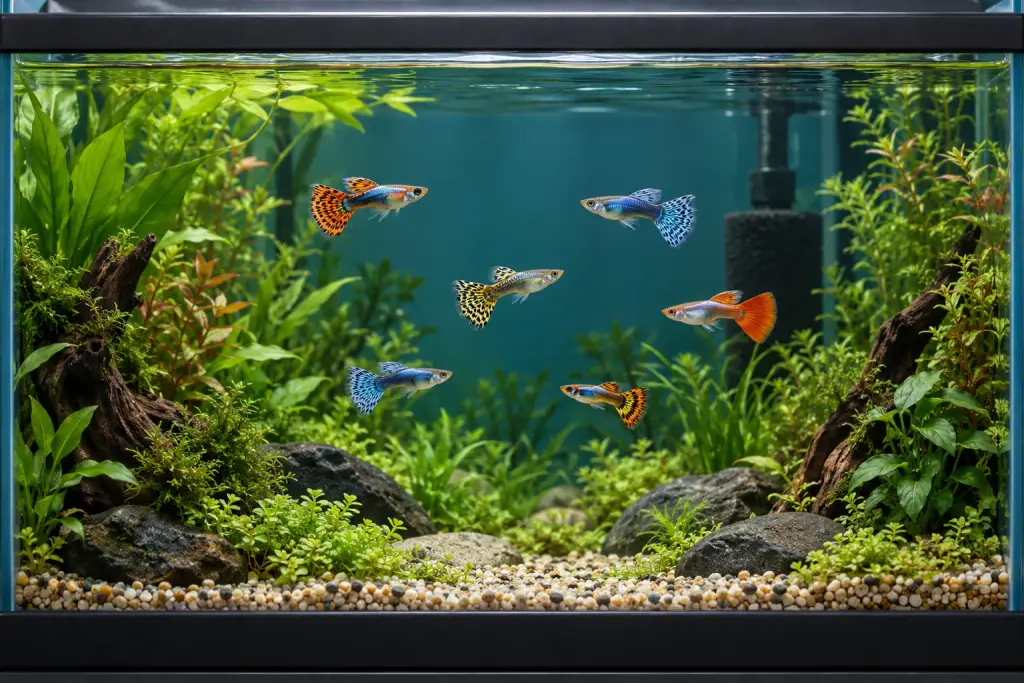
Why is there an oily film on a guppy tank? An oily film on guppy tank water is often a thin surface layer of food fats, proteins or microbial biofilm collecting where the water barely moves. Check fish breathing and water quality first, remove visible film gently, improve surface ripple and reduce excess organic waste. A sudden sheen after cleaners, sprays or chemicals requires a separate contamination check—not just a skimmer.
An oily film or shiny sheet on top of an otherwise clear guppy aquarium can look alarming, but the appearance alone does not identify the substance. It may be an organic surface film, leftover food oils, a film linked to stagnant surface flow, or a contaminant introduced from outside the aquarium. For owners of fancy guppies, breeding groups and fry, the practical goal is to assess the fish, restore healthy gas exchange and remove the ongoing source without destroying the biological filter or overreacting with chemicals. This guide specifically covers water-surface film; the existing Cloudy Guppy Tank Water article deals with material suspended throughout the water column.
What does an oily film look like?
Look across the surface at a low angle while the aquarium light is on. A thin oily film or organic layer can appear grey, milky, slightly iridescent or metallic, sometimes especially where floating plants and decorations block movement. A rainbow-like sheen is not by itself a reliable test for contamination. Likewise, an ordinary microbial layer is not necessarily a dangerous chemical spill.
| What you notice | A possible explanation | Next thing to inspect |
|---|---|---|
| Thin cloudy or oily-looking sheet on still water | Food-related organics and light microbial surface film | Filter outlet direction, surface movement, feeding leftovers |
| Film forms near floating plants or quiet corners | Organic material accumulating where the water barely circulates | Plant density, dead leaves, whether ripples reach the corner |
| Foam or clusters of bubbles above the surface | Air movement, food proteins or other causes of foam | Is it actual three-dimensional foam rather than a thin sheet? |
| The entire tank looks hazy, not just the top | Suspended particles, bacteria or algae may be involved | Follow the separate cloudy-water checklist |
| Sudden unusual sheen after spray, lotion, cleaner or an equipment incident | Possible external oil or chemical contamination | Stop the source, check fish urgently and identify what entered the water |
An oily film’s appearance is a clue, not a confirmed diagnosis. If a fish is gasping, losing balance or behaving abnormally, prioritize water tests and aeration rather than trying to label the film from its color.
Is an oily film harmful to guppies?
A light oily film may be mostly a maintenance clue. A persistent layer across a still water surface can, however, interfere with efficient air–water gas exchange. It deserves attention because guppies still need adequate dissolved oxygen, especially when the tank is warm or heavily stocked.
Aquarium Co-Op’s guide to bubbles and foaming aquarium water describes surface oil slicks linked to fish food, hand oils and other organic compounds, and recommends surface agitation with a filter outlet or sponge filter. It distinguishes a surface film from different causes of aquarium bubbles and foam.
If several guppies breathe rapidly at the surface, have unusual gill movements or show loss of balance, do not assume the oily film alone is responsible. Check ammonia, nitrite, temperature and aeration immediately. See HiGuppy’s Guppy Gasping at the Surface for an animal-health focused guide.
The first five checks before removing an oily film
- 1. Watch the fish. Are they swimming, eating and breathing normally? Multiple distressed fish make this urgent.
- 2. Test the water. Check ammonia, nitrite and temperature before treating a cosmetic film as harmless.
- 3. Inspect the surface. Is the water rippling near the filter return, air stone or sponge filter, or completely still?
- 4. Look for recent changes. Consider new foods, extra feeding, decaying plants, heavy trimming, a stopped filter or products used near the tank.
- 5. Identify outside contamination. Hand lotion, cleaning spray, detergent or equipment oil needs more caution than normal food-related film.
Record what changed and when. You may find that the oily film appears after feeding and fades when surface circulation improves, or that it started immediately after someone used a household product near an open tank.
Common causes of oily film: food oils, organic debris and slow water movement
Fish foods can release fats and proteins into aquarium water, particularly when uneaten food remains in the tank. Fish waste, decaying leaves and other dissolved organic material may also accumulate at the surface. Microorganisms can form part of that thin layer; the term biofilm describes microbial communities, but visible surface sheen is not proof of a specific bacterial species.
| Possible source | Clue to look for | Safer adjustment |
|---|---|---|
| Too much food or food with oily residue | Film appears after feeding; leftovers settle nearby | Offer smaller appropriate meals and remove uneaten food |
| Decaying plants or trapped debris | Melting leaves, debris in still corners, neglected maintenance | Remove decomposing material and maintain the filter |
| Very still water surface | No ripple beyond the filter outlet; thick floating cover | Adjust output direction or use gentle aeration |
| Hands, lotions or cosmetics | Film follows aquarium handling or skin-product use | Prevent residues entering the water; use clean aquarium-safe tools |
| Aerosols, detergent or equipment contamination | Unexpected sheen following a nearby product or equipment incident | Treat as a possible contamination event, not ordinary film |
An oily film does not mean the aquarium must be sterilized. Excessive washing and total filter-media replacement can disrupt beneficial bacteria and lead to a more serious water-quality problem.
How to remove a light oily film safely
If the oily film is light, guppies are behaving normally, ammonia and nitrite are zero, and there is no reason to suspect chemical contamination, start with the least disruptive actions. A clean, unperfumed, unused paper towel briefly placed on the surface and lifted away can remove a small patch of film, or you can gently skim surface water during a normal partial water change.
- Remove the visible layer. Use a clean unscented paper towel or aquarium-only skimming cup gently, without adding cleaners.
- Restore moderate surface movement. Aim the filter outlet toward the surface so there is a visible ripple.
- Check waste input. Feed only what the fish can consume reasonably and remove trapped uneaten food.
- Inspect plant cover. Thin only excessive floating cover if it prevents water movement; preserve safe fry refuge.
- Recheck the next day. If the film returns, find the recurring source rather than repeatedly scrubbing the entire tank.
A paper towel only lifts an oily film temporarily. The more durable correction is often surface movement plus reducing the excess organics that keep reaching the top. Do not pour soap, dishwashing liquid, solvent, glass cleaner or any household degreaser into an aquarium.
Adjust surface ripple without exhausting long-finned guppies
A moderate ripple is enough to help exchange gases; a guppy aquarium does not need to behave like a high-current stream. Large-tailed males may struggle in a strong directional jet even if the surface looks very active. Aim the return slightly upward and watch whether the fish can still swim, rest and feed comfortably.
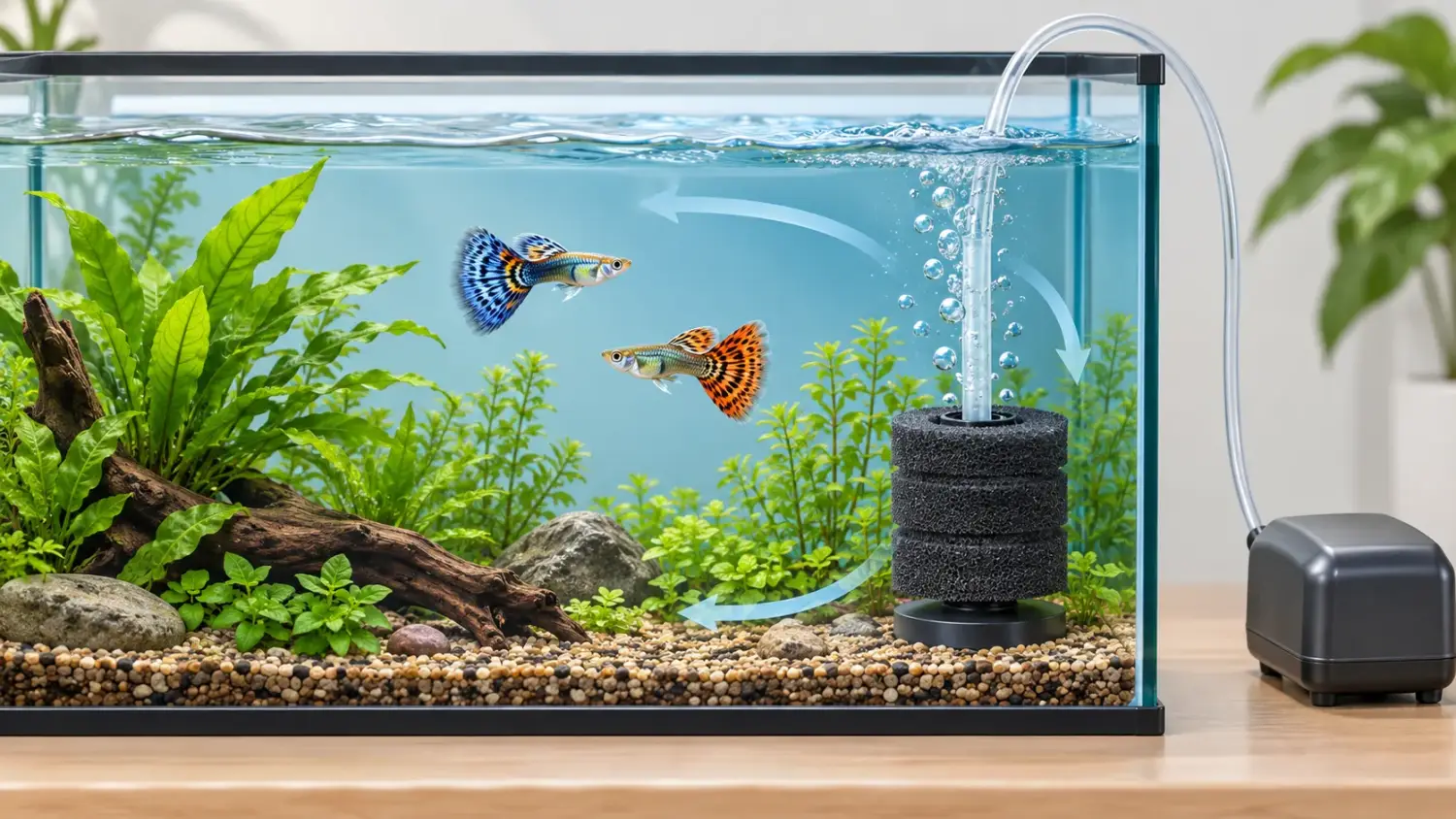
An air stone or sponge filter can move water upward through bubbles. A functioning hang-on-back or canister filter can also provide adequate surface movement when its output is correctly positioned. The existing Do Guppies Need an Air Pump? guide explains when extra aeration is useful.
Do not turn down the only effective filter so much that water no longer circulates properly. If fry are present, protect filter intakes and avoid equipment that could trap tiny fish.
What about surface skimmers and tiny guppy fry?
A surface skimmer may help remove a persistent oily film in an established aquarium, especially when the surface has quiet corners. But adding one is not an automatic first step, and equipment designed for larger fish can pose an intake risk to guppy fry or small invertebrates.
Before installing a skimmer, confirm it is appropriate for the smallest inhabitants, includes suitable intake protection and will not disturb filtration or the aquarium’s water level. Inspect and maintain it according to the manufacturer. For a small breeding tank, a protected sponge filter and moderate surface ripple may be a simpler, safer option than a powerful surface-skimming intake.
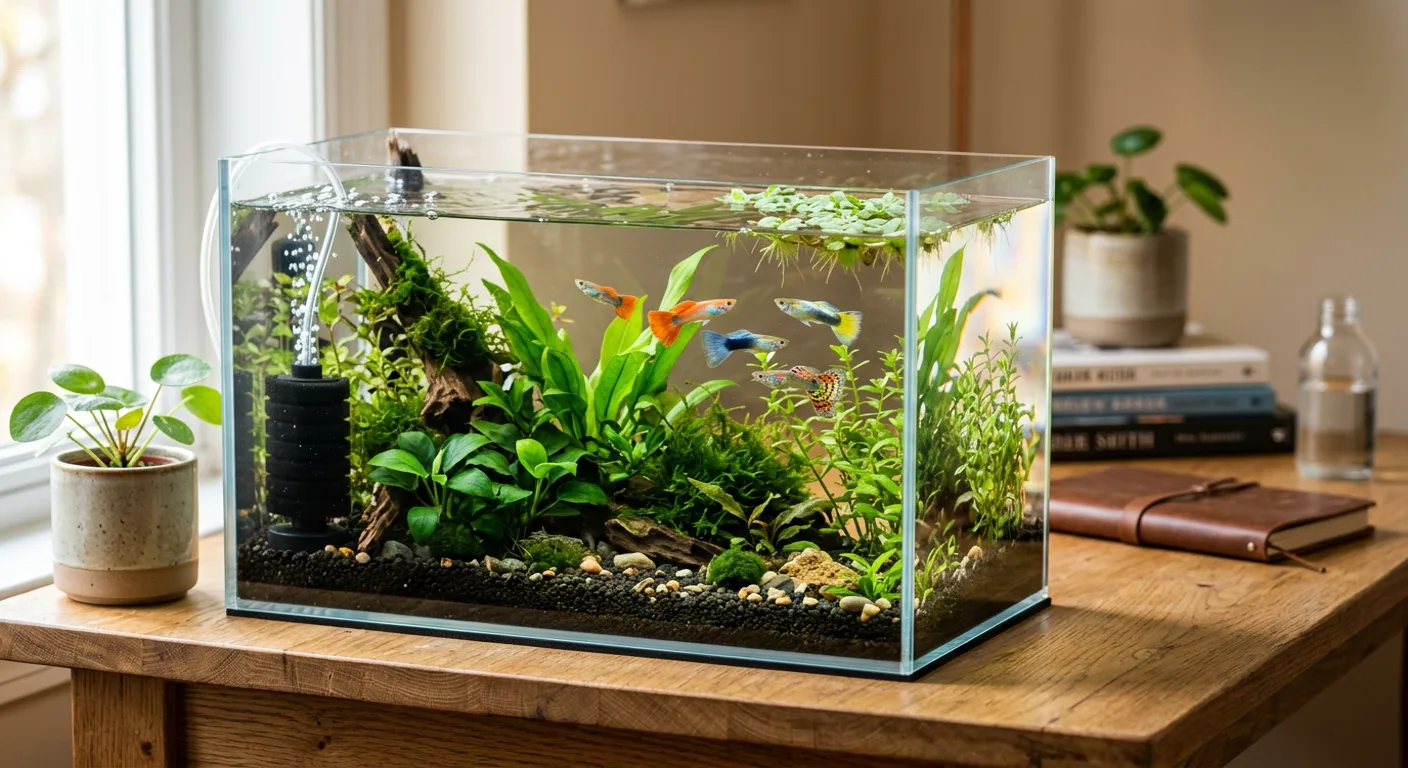
If the oily film disappears with improved movement and normal maintenance, another powered device may not be necessary.
An oily film after feeding: change the habit, not the fish
Many oily films reflect organic material accumulating faster than filtration and movement can disperse or remove it. Review portion size, how long pellets float and whether flakes are being left to break down in the aquarium. A one-off film after feeding does not mean the fish need medication.
Avoid immediately replacing all food or starving fry for long periods. Feed appropriate amounts for the fish’s size and age, remove excess, and test water regularly. If the aquarium is crowded or maintenance is irregular, improving the overall routine may be more important than buying a skimmer.
See Sponge Filter for Guppy Tanks for filtration care and Aquarium Co-Op’s aquarium cleaning guide for general cleaning without soap.
Oily film versus foam, algae and cloudy water
Different visual problems need different checks. An oily film or slick on the surface is not the same as a floating patch of algae, bubbles from a filter, or a bacterial bloom suspended through the tank. Do not identify the cause from a rainbow reflection or foam alone.
| Visible issue | Where it appears | First check |
|---|---|---|
| Surface film or sheen | Thin layer on top, especially in still corners | Surface movement, recent food and outside residues |
| Foam or bubbles | Raised clusters that collect at edges or above a bubble source | Filter flow, food proteins, water quality and other bubble causes |
| Cloudy water | Haze across the water column | Cycling, suspended debris, overfeeding or algae |
| Green algae on surfaces | Glass, plant leaves or decorations | Light and nutrient management; clean appropriately |
| Slime on new wood or décor | Attached to a solid object, not floating over the whole surface | Review the new material and actual fish behavior |
If you see both a film and cloudy water, assess both rather than assuming one simple cause. A proper water test and observation of fish breathing are more informative than searching for the name of a chemical to add.
What if an oily film appeared after a cleaner or spray?
Treat a possible detergent, aerosol, lubricant, lotion or other unknown chemical entering the tank as a different, potentially urgent event. Stop the source and avoid further exposure. Check whether fish are struggling to breathe, losing balance or becoming lethargic.
Use appropriate safe water-quality testing, maintain aeration if available, and seek experienced aquarium or aquatic-veterinary advice for the specific suspected material. Depending on the situation, a suitable partial water change with conditioned, temperature-matched water and compatible filtration measures may be warranted. Do not assume a paper towel or surface skimmer can remove a dissolved toxin, and do not add random household neutralizers.
If electrical equipment is suspected of leaking or malfunctioning, prioritize personal electrical safety. Disconnect it safely according to manufacturer instructions and do not put hands into water while unsafe equipment is energized.
How to check oxygen-related warning signs
Guppies normally explore different water levels, so occasional surface activity is not automatically a lack of oxygen. More concerning signs include repeated gasping, unusually rapid gill movement, abnormal balance or several fish suddenly congregating at the surface after a maintenance or equipment event.
- Check ammonia and nitrite immediately, plus temperature and filter operation.
- Confirm that the water surface is moving and the air pump or filter has not stopped.
- Look for recent overfeeding, heavy stocking, chemical residues or a heater fault.
- If fish show severe or worsening distress, seek qualified fish-health support promptly.
The HiGuppy gasping guide explains why the same symptom can involve water chemistry, oxygen, heat or gill issues. A visible surface film is a clue, not an automatic diagnosis.
Keep a simple seven-day oily film log
The purpose of recording a week is to identify recurrence patterns, not to promise the film will disappear in seven days.
| When | Record | What it helps you decide |
|---|---|---|
| Day 0 | Photo of the sheen, fish behavior, ammonia, nitrite, temperature, feeding and filter flow | Is there an immediate animal-health or contamination concern? |
| Next day | Has the layer returned? Where? Did surface ripples reach that area? | Is circulation correcting the visible problem? |
| Days 2–3 | Food quantities, plant debris, filter state and test readings | Is excess organic input still present? |
| Days 4–7 | Repeat photo, water tests and fish activity notes | Is the problem resolving or is a persistent source/unsafe equipment involved? |
If the fish are unwell at any time, do not wait for the log to finish before taking appropriate action.
Preventing oily film: checklist for guppy tanks
- Keep the water surface gently moving rather than permanently still.
- Maintain a cycled biological filter; do not sterilize it to treat a surface sheen.
- Offer appropriate meals and remove uneaten food or decaying plant matter.
- Test ammonia and nitrite and watch fish behavior routinely.
- Clean equipment and glass with aquarium-safe methods, not soaps or solvents.
- Keep aerosol sprays, lotions, oils and cleaning products away from an open tank.
- Protect small guppy fry from filter and skimmer intakes.
- Check surface movement after maintenance, power interruptions or changes to floating plants.
A clear surface is useful, but the fish and the overall environment remain the priority. A tank with no visible oily film can still have dangerous ammonia or nitrite; a thin temporary film does not prove fish are diseased.
Frequently asked questions about oily film on guppy tanks
Why does my guppy tank have an oily film on top?
A thin shiny layer is often organic surface film made from food fats, proteins and microbial material accumulating on slow-moving water. Also consider external contamination if it appeared suddenly after chemicals or sprays.
Is an oily film dangerous for guppy fish?
A thin temporary film may be mostly a maintenance issue, but persistent heavy film on a still surface can interfere with gas exchange. Test water and check fish breathing, especially if multiple guppies are distressed.
Can I remove aquarium surface film with a paper towel?
A clean, unused, unscented paper towel can gently lift a small amount of film, but it is a temporary measure. Correct poor surface movement and excess organic inputs for a lasting improvement.
Should I buy a surface skimmer for my guppy tank?
Not necessarily. A gentle ripple and normal maintenance may be enough. If you choose a skimmer, protect tiny fry and invertebrates from the intake and follow equipment instructions.
Does an oily film mean my guppies need antibiotics?
No. A surface sheen does not diagnose bacterial disease. Avoid medicating fish based solely on its appearance. Check water quality and behavior, and seek fish-health advice for worsening symptoms.
Will more bubbles remove an oily film?
An air stone or sponge filter can increase surface movement and help disperse an oily film. The goal is moderate surface agitation without creating a current that exhausts long-finned guppies.
What if an oily film appeared after spraying cleaner near my aquarium?
Treat the event as possible chemical contamination, stop exposure and check fish promptly. A skimmer alone may not remove dissolved contaminants; appropriate testing, compatible water changes and qualified help may be necessary.
References and related guides
Aquarium Co-Op: 7 Reasons Why Your Aquarium Water Has Bubbles or Foaming and How to Clean Your Aquarium. Guppy habitat and care: OATA — Guppies and Mollies. Related HiGuppy topics: Air Pumps and Oxygen, Surface Gasping, Cloudy Water and Guppy Water Parameters. These sources explain care and troubleshooting, not laboratory identification of an unknown substance in an individual aquarium.
Behind the care guides
Care begins with steady systems
Our guppy guides focus on practical routines: keep water stable, observe fish closely and allow for natural variation.
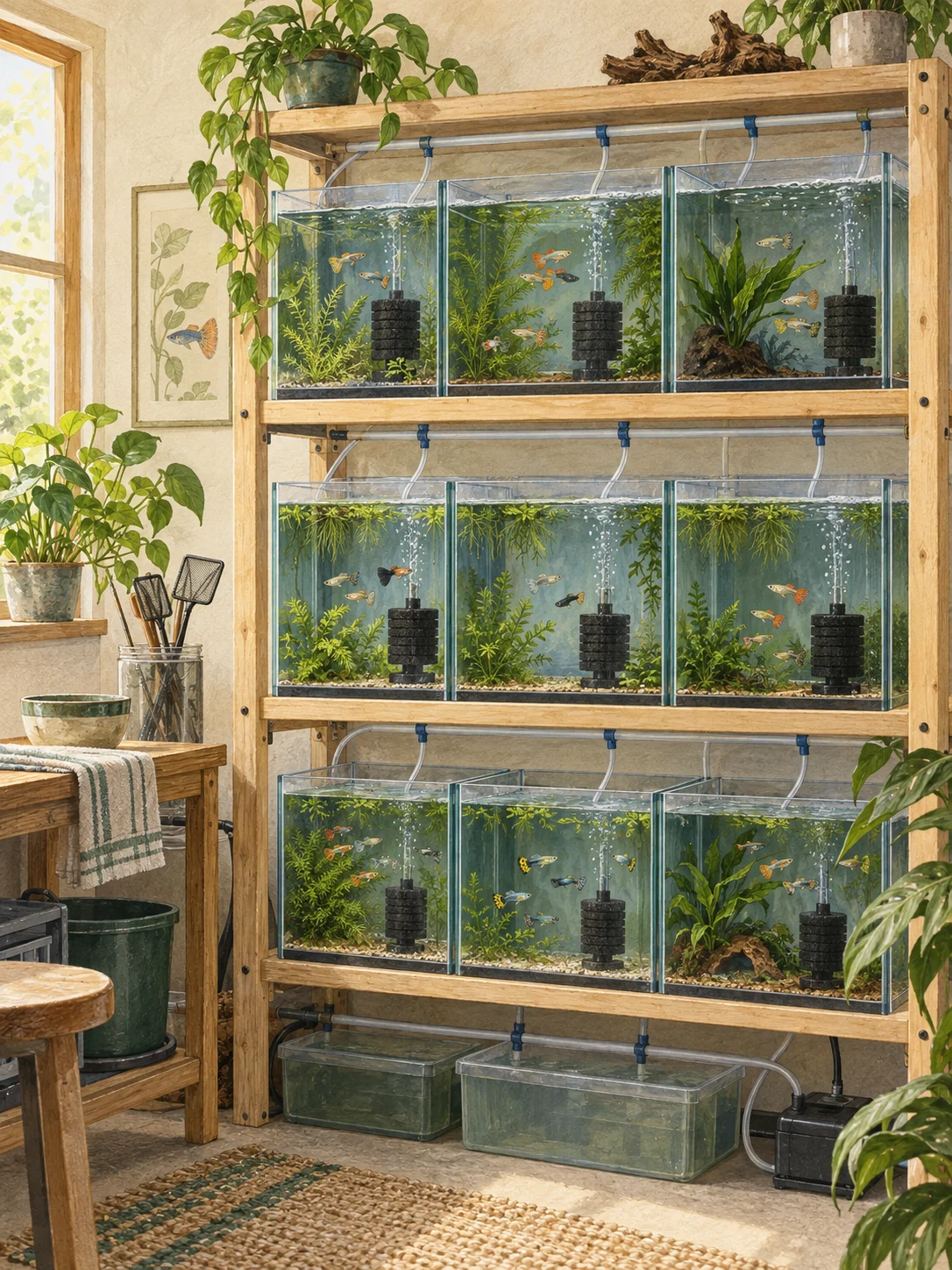
Care systems
Steady water, thoughtful care
Gentle filtration and regular observation support healthy aquarium routines.
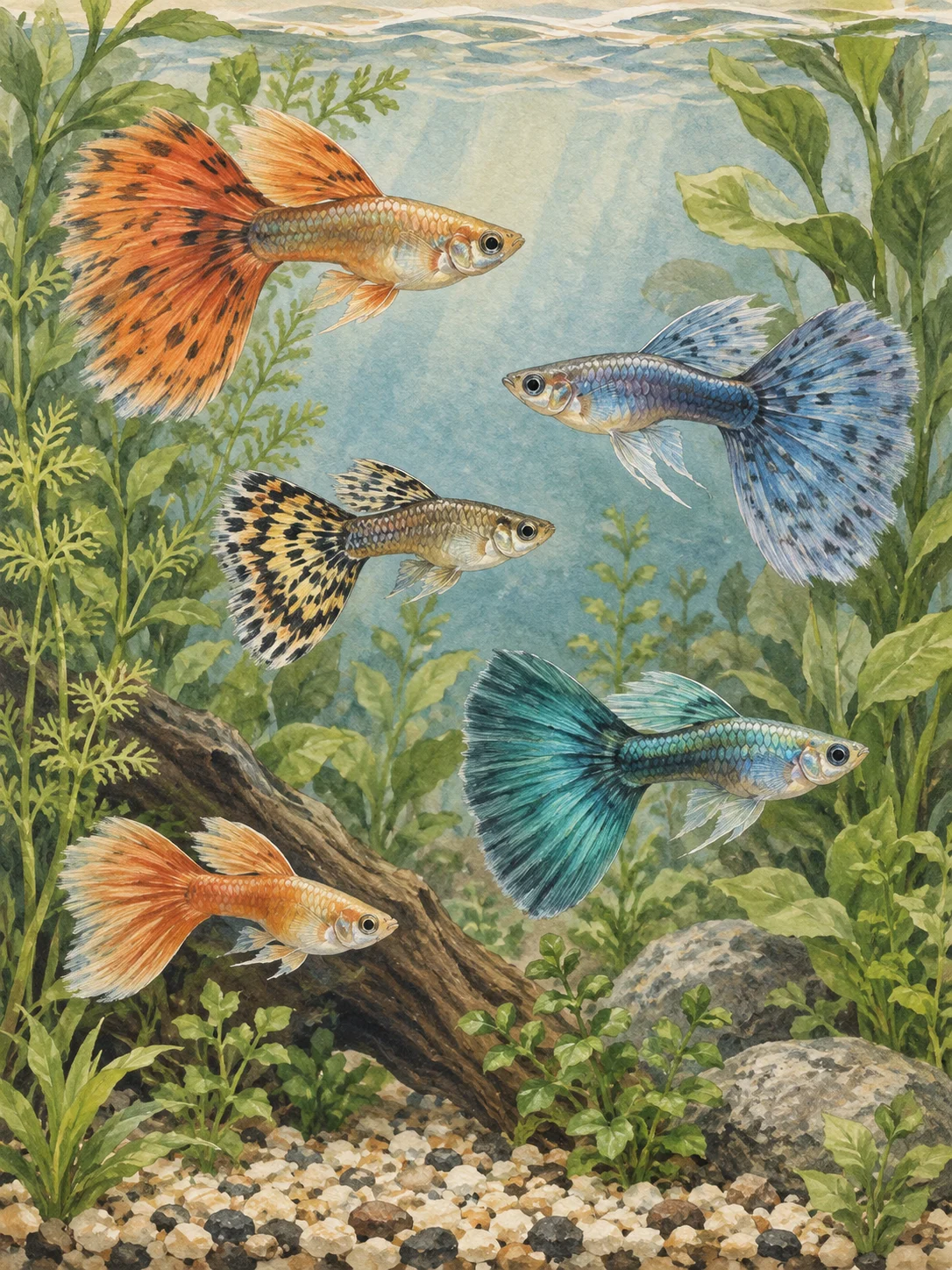
Natural variation
Every guppy is different
Color, size and fin shape vary with strain, age and each individual fish.
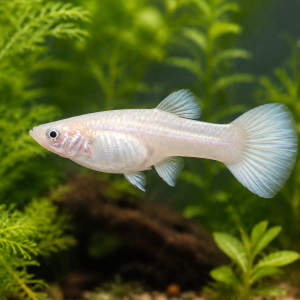
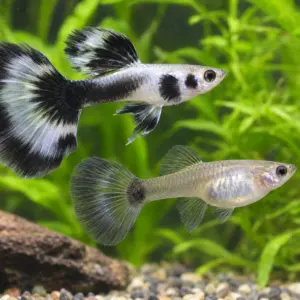
Editorial illustrations for context; they do not depict HiGuppy's exact facility or current fish stock.