The HiGuppy Journal
Guppy GH vs KH: Water Hardness, Testing & Stable pH
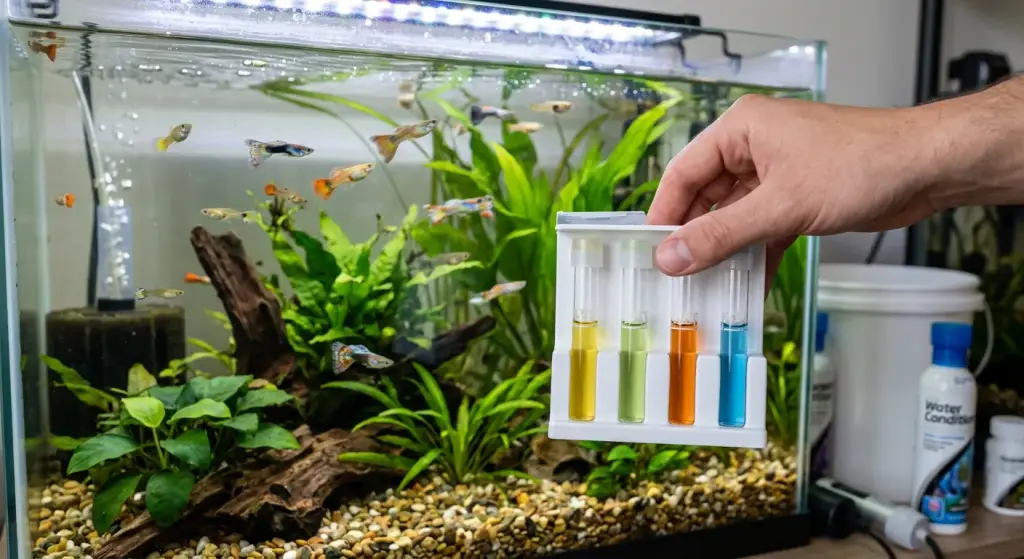
What GH and KH should guppies have? Guppy water hardness comes in two parts: GH measures calcium and magnesium hardness, while KH measures carbonate/bicarbonate buffering that helps resist pH swings. For guppies and mollies, OATA suggests GH 8–18°dGH, KH 5–15°dKH and pH 7.0–8.0 as general care references. Test both tap and aquarium water before changing minerals or buffering, and keep ammonia and nitrite at zero. Stable conditions matter more than chasing a single number.
The three readings behind guppy water hardness — GH, KH and pH — are often printed next to each other on aquarium test strips, which can make them look like three ways of measuring the same thing. They are not. This guide focuses on how guppy keepers can understand water hardness, compare their source and tank water, and decide when further testing is needed. For temperature, nitrogen waste and a broader routine, start with HiGuppy’s Guppy Water Parameters Guide.
GH vs KH vs pH: what each guppy water hardness reading means
General hardness is mainly the calcium and magnesium mineral content of water. Carbonate hardness (KH) is a hobbyist measure of the alkalinity supplied mainly by carbonate and bicarbonate, which helps resist sudden acid-driven shifts in pH. A pH measurement tells you whether the water is currently acidic or basic. A normal pH reading cannot reveal the water’s GH or its buffering reserve.
| Reading | What it measures | What it does not show |
|---|---|---|
| GH (general hardness) | Dissolved calcium and magnesium; usually °dGH | How much carbonate buffer remains |
| KH (carbonate hardness) | Carbonate/bicarbonate alkalinity; usually °dKH | The total calcium and magnesium concentration |
| pH | Current acidity/basicity | How quickly pH could change or whether the filter is cycled |
| Ammonia and nitrite | Toxic nitrogen waste risk | Mineral hardness or alkalinity |
Aqueon’s freshwater water-quality guide explains these differences. It also warns against unnecessary additives that force water chemistry to swing between targets.
Guppy water hardness: GH and KH reference ranges
The Ornamental Aquatic Trade Association (OATA) recommends general guppy water hardness ranges for guppies and mollies. These figures are useful for assessing a tank but are not strict emergency cutoffs or instructions to adjust an established aquarium immediately.
| Parameter | OATA reference | Practical interpretation |
|---|---|---|
| GH | 8–18 °dGH | Medium-hard mineral content is a useful starting reference for these livebearers |
| KH | 5–15 °dKH | There should be buffering capacity against rapid acid-driven pH changes |
| pH | 7.0–8.0 | Look for suitable stable conditions, not a single magic decimal |
| Temperature | 20–28°C (68–82°F) | Keep it suitable and consistent during normal care |
| Ammonia / nitrite | Both zero | A good hardness reading never makes toxic waste acceptable |
Guppies raised by different breeders may have experienced somewhat different guppy water hardness. Before changing a stocked tank, check the seller’s source-water information, test your aquarium and ask whether other tankmates have different needs.
What GH says about guppy water hardness minerals
Water with higher GH generally contains more dissolved calcium and magnesium. These minerals are part of ordinary biological processes in fish and aquatic plants. GH is not a cleanliness score: a crystal-clear aquarium can have low or high hardness, and an aquarium with suitable GH can still have dangerously high ammonia.
Many kits report hardness as degrees German hardness (°dGH) or as milligrams per liter as calcium-carbonate equivalent. One degree of GH is approximately 17.9 mg/L as CaCO₃ equivalent. The expression is a conversion convention; it does not mean all the minerals are physically calcium carbonate.
What the other half of guppy water hardness — KH — says about pH stability
KH indicates how much carbonate/bicarbonate buffering is available. As acids are produced in an aquarium, buffering can help resist a rapid downward pH shift. Low KH may mean less protection, but this does not justify indiscriminately adding chemicals to a stocked tank.
KH and pH also are not permanently locked together: two tanks may have similar pH yet different buffering. Compare repeated readings with your prepared replacement water. An unexpected pH trend may require checks of waste, filtration and water sources in addition to KH.
For background on the role of carbonates and bicarbonates, see Aqueon’s hard-water aquarium guide. It identifies guppies and other livebearers among fish commonly associated with moderately hard to hard water.
Three example guppy water hardness results and what they mean
These are hypothetical readings for interpretation, not diagnoses. Real fish behavior, source water and equipment still need to be checked.
| Example | What to notice | Next check |
|---|---|---|
| GH 12°dGH, KH 8°dKH, pH 7.5 | All three sit within the OATA ranges | Verify ammonia/nitrite zero and steady fish behavior |
| GH 12°dGH, KH 2°dKH, pH 7.2 | GH is within range, while buffering is below OATA’s KH reference | Confirm KH with another test; compare tank and tap water over time |
| GH 4°dGH, KH 7°dKH, pH 7.5 | Mineral hardness is low relative to the OATA reference, despite ordinary pH | Retest GH, review source water and consult a measured mineral plan if needed |
| GH 20°dGH, KH 16°dKH, pH 8.0 | Hardness is above the general reference; context matters | Compare with fish source and sensitive tankmates instead of an emergency dilution |
A guppy water hardness reading outside a reference range does not prove why an individual guppy is hiding or breathing rapidly. Assess all vital water parameters before deciding how to respond.
How to test guppy water hardness without mixing up units
Use a freshwater test kit that clearly includes GH and KH. Follow the kit’s own sample-volume and drop-count or strip instructions. Record whether the result is expressed in degrees or in mg/L/ppm of CaCO₃ equivalent.
- Test the prepared source water: measure the water you plan to use for a change, after appropriate chlorine/chloramine treatment.
- Test the aquarium separately: note GH, KH, pH, temperature, ammonia and nitrite.
- Check the units: °dGH and °dKH are not interchangeable merely because both use degrees.
- Repeat suspicious readings: confirm the sample, reagent condition and endpoint color rather than guessing.
- Record a trend: date the readings and any change in source, mineral material or maintenance.
- Compare when fish are added: note the source water reported by a seller if available.
A TDS or conductivity meter estimates overall dissolved substances; it does not specifically read calcium/magnesium GH or carbonate KH. For those questions use the relevant tests rather than interpreting a single TDS number as two different parameters.
Guppy water hardness conversions in degrees and ppm
Aquarium test kits may express both hardness scales as milligrams per liter CaCO₃ equivalent. Approximately 1°dGH or 1°dKH = 17.9 mg/L as CaCO₃ equivalent. The conversion applies separately to the named parameter and does not mean GH equals KH.
| Reading | Approximate equivalent | Reminder |
|---|---|---|
| 5°dKH | 90 mg/L as CaCO₃ | KH buffering, not GH |
| 8°dGH | 143 mg/L as CaCO₃ | Mineral hardness, not KH |
| 10°dGH | 179 mg/L as CaCO₃ | A sample GH value |
| 15°dKH | 269 mg/L as CaCO₃ | A sample KH value |
Some TDS displays also use ppm, but it is a different type of reading. Always say what the kit measured when comparing water with a breeder or another aquarium keeper.
Should you raise guppy water hardness (GH or KH)?
Do not add a buffer or mineral powder just because one guppy water hardness test looks different from an online screenshot. First confirm the kit result, compare tap and tank water, check fish behavior and other water parameters, and find out what the fish are used to.
Crushed coral and other calcium-carbonate materials can gradually influence mineral hardness, alkalinity and pH as they dissolve, but the effect depends on the starting water. Other products may change KH more than GH or vice versa. There is no responsible universal dose to add without knowing the aquarium’s current readings and volume.
Aqueon advises avoiding unnecessary repeated pH/hardness adjustments. If a change is genuinely needed, plan a gradual and testable method rather than making large shifts while fish are inside the aquarium.
Guppy water hardness: what about hard tap water or RO water?
Guppies are often adaptable to moderately hard or hard water. Before trying to soften ordinary tap water, compare it with the fish’s prior conditions and the needs of all tankmates. Softening household tap water, drinking-water filtration and aquarium reverse osmosis are not identical processes.
Reverse-osmosis/deionized (RO/DI) water typically contains very few dissolved minerals. It is not automatically complete aquarium water: a suitable measured remineralization/buffering plan may be necessary. Avoid sudden additions of pure RO/DI water that change hardness and pH rapidly.
Also remember that tap water must be appropriately dechlorinated regardless of GH/KH. See Can Guppies Live in Tap Water? for safe treatment, testing and water preparation.
Why water changes can alter guppy water hardness
A water change can introduce source water whose GH/KH differs from the established tank. Even if it is temperature-matched and dechlorinated, a large chemistry difference may matter to the fish. Compare prepared water with tank water before changing a large amount.
Topping off evaporation is also not the same as exchanging aquarium water: some minerals remain in the tank when water evaporates, so repeated top-offs with mineral-rich water can alter concentrations. Keep a regular partial-change routine informed by tests and stocking.
For problems after maintenance, see Why Do Guppies Die After a Water Change? and HiGuppy’s water change schedule.
Compare guppy water hardness when bringing home new fish
If guppies come from a breeder whose guppy water hardness differs from yours, ask for GH, KH and pH readings when available. This is particularly useful for breeding groups or a substantial move. A shipping bag’s water may also differ from the breeder’s original aquarium, especially after a long trip.
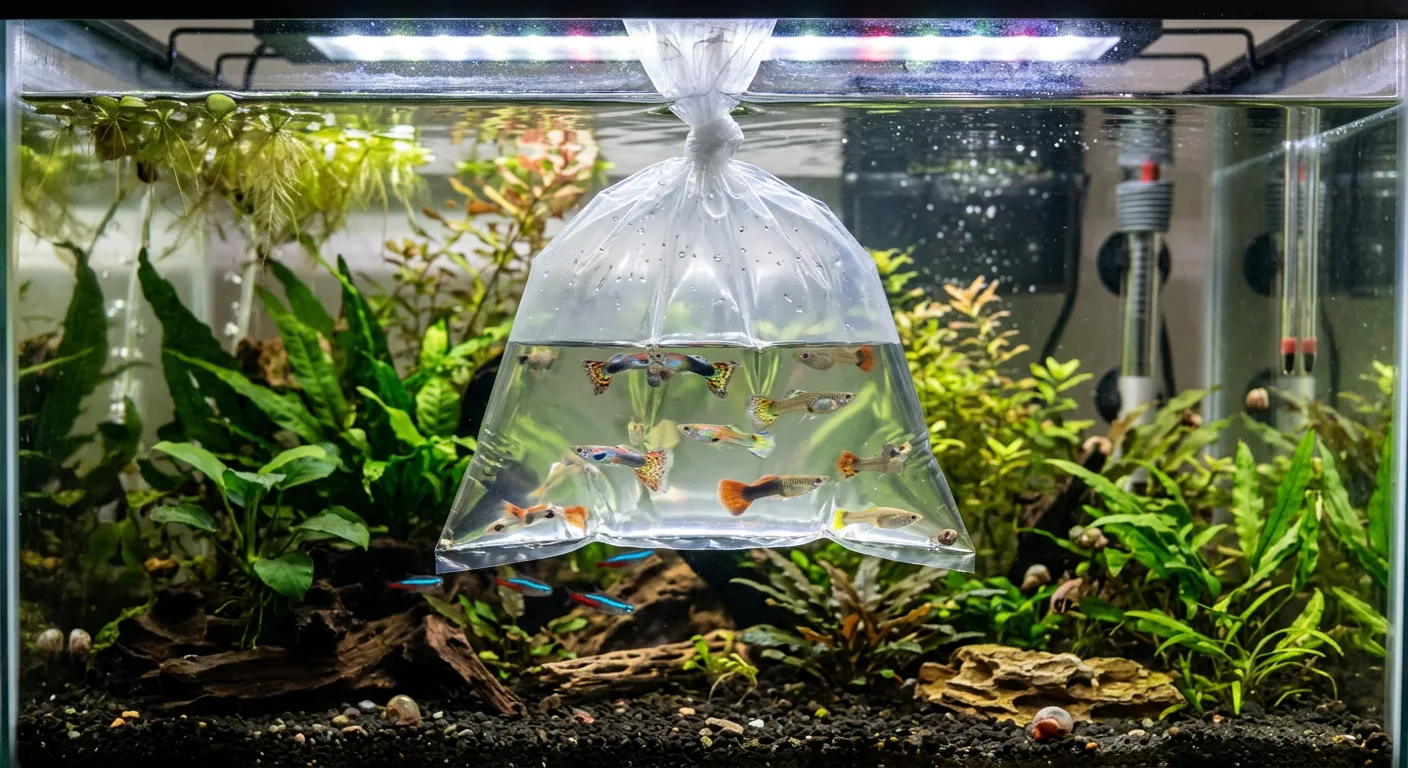
Plan an appropriate receiving method with the actual shipper or transshipper. A long-distance sealed bag can undergo chemical changes when opened, so prolonged drip acclimation is not automatically the best option for every shipment. Prepare a cycled observation tank and follow the responsible seller’s instructions. See Quarantine vs Acclimation for Guppies for further context.
When is a guppy water hardness reading worth investigating?
- GH or KH changes suddenly compared with the same source water or previous readings.
- pH appears to fall unexpectedly while KH is low or declining.
- Replacement water and tank water differ substantially in the test results.
- A water source or mineral material has recently changed.
- Fish show distress and ammonia/nitrite, temperature or oxygenation have not been checked.
- A pH or TDS meter is being used as a substitute for GH/KH testing.
- An aquarium contains fish species with different water-chemistry requirements.
A hardness reading alone is not a diagnosis of infection or mineral deficiency. Fish with severe abnormal breathing, loss of balance or rapid decline need prompt water/equipment checks and qualified fish-health advice.
A simple guppy water hardness testing log
Use a small written log rather than relying on memory. The first goal is to understand consistency, not to engineer a single target number.
| When | Write down | What to compare |
|---|---|---|
| Before new fish arrive | Source and tank GH/KH/pH, temperature, ammonia, nitrite | Differences between prepared water and the destination |
| Before a partial water change | Current tank and prepared replacement GH/KH/pH | Potential chemistry change from the water being added |
| After a change has mixed | Repeat relevant readings and observe fish | Whether the change matched expectations |
| Next regular weekly check | Results, test kit, maintenance notes and fish condition | Trend rather than one isolated value |
Common mistakes with guppy water hardness
- Treating GH and KH as the same test result.
- Using a normal pH number as proof that KH buffering is adequate.
- Calling TDS ppm a calcium/magnesium GH measurement.
- Adding several buffers without first measuring the source water.
- Making a major water replacement to chase a small difference from a reference range.
- Using untreated tap water because the GH looks suitable.
- Ignoring ammonia/nitrite because mineral hardness appears good.
- Copying another keeper’s mineral dose without matching tank volume or starting water.
Frequently asked questions about guppy water hardness
What guppy water hardness do guppies prefer — hard or soft?
Guppies are often kept in moderately hard to hard water. OATA suggests GH 8–18°dGH and KH 5–15°dKH for guppies and mollies, but stable, suitable water and the fish’s background matter more than suddenly forcing an exact number.
Is GH the same as KH in guppy water hardness?
No. GH measures calcium and magnesium hardness. KH measures carbonate/bicarbonate alkalinity that helps resist some pH changes. Their readings may differ.
Can my pH be okay even if KH is low?
Yes. pH is one point-in-time reading, whereas KH describes buffering. Confirm KH, retest pH over time and compare prepared replacement water.
Can a TDS meter tell me the GH part of my guppy water hardness?
No. TDS estimates the total dissolved load via conductivity and cannot identify calcium/magnesium or carbonate ions individually. Use separate freshwater GH and KH tests.
Should I use crushed coral or baking soda to raise guppy water hardness?
Not automatically. These materials affect water chemistry differently, and a suitable approach depends on starting measurements, other tank inhabitants and volume. A generic dose without those facts is not safe.
Can guppies live in reverse-osmosis water?
Pure RO/DI water has almost no guppy water hardness and may need appropriate remineralization and buffering. Prepare and test the water before introducing fish, and avoid abrupt shifts.
What guppy water hardness should I ask a breeder for — GH, KH and pH?
Ask for the breeder’s actual GH, KH and pH readings in the holding tank, with the date and units. Compare these with your prepared destination water and follow the shipper’s receiving guidance.
Sources and related HiGuppy guides
Species requirements: OATA Guppy & Molly Care Sheet. Chemistry: Aqueon — Freshwater Water Quality and Aqueon — Hard-Water Fish. Further HiGuppy guides: Guppy Water Parameters, Tap Water for Guppies, and Quarantine vs Acclimation. This material is general aquarium husbandry education, not individualized water treatment instructions.
Behind the care guides
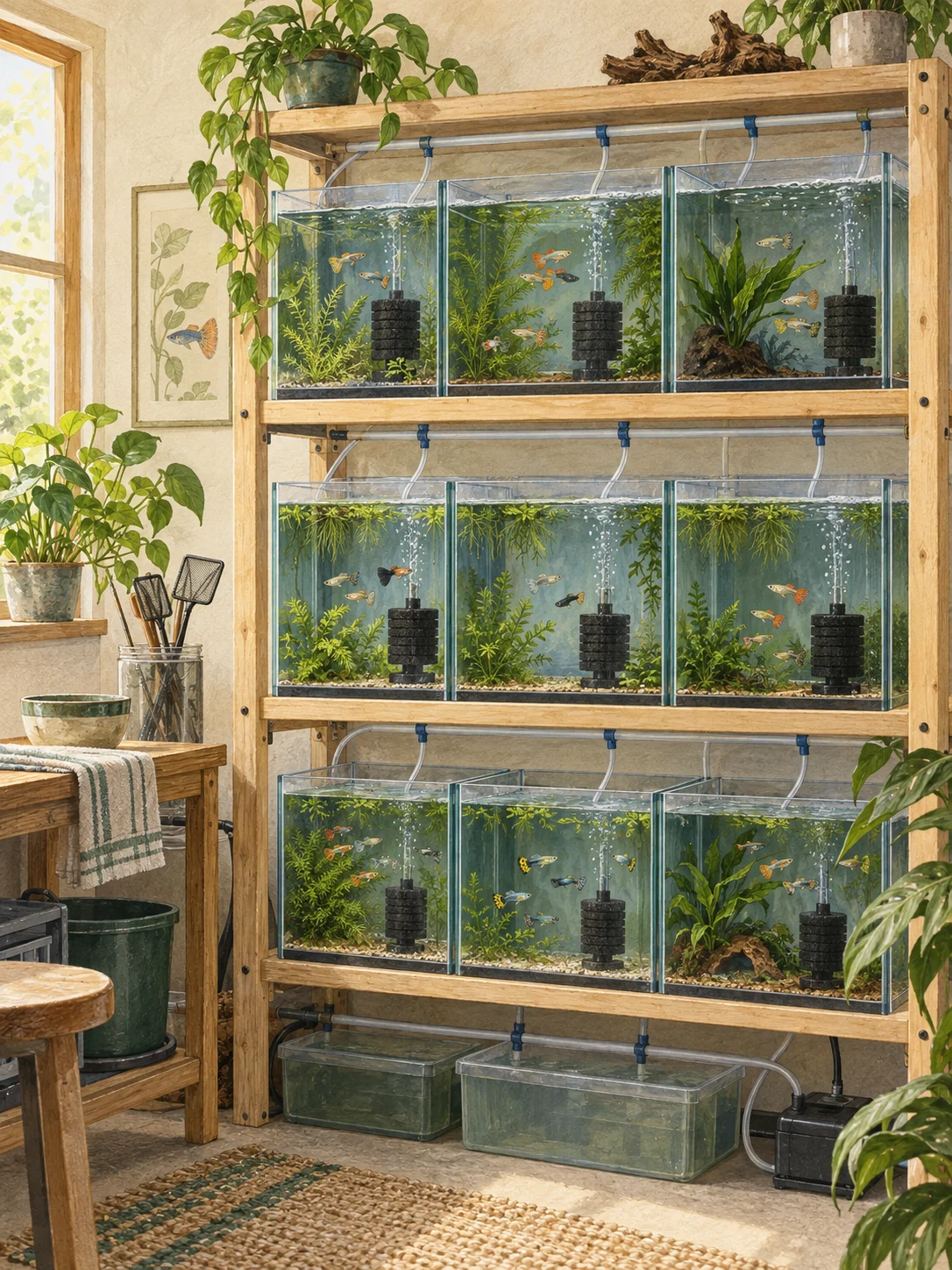
Care begins with steady systems
Our guppy guides focus on practical routines: keep water stable, observe fish closely and allow for natural variation.
Care systems
Steady water, thoughtful care
Gentle filtration and regular observation support healthy aquarium routines.
Natural variation
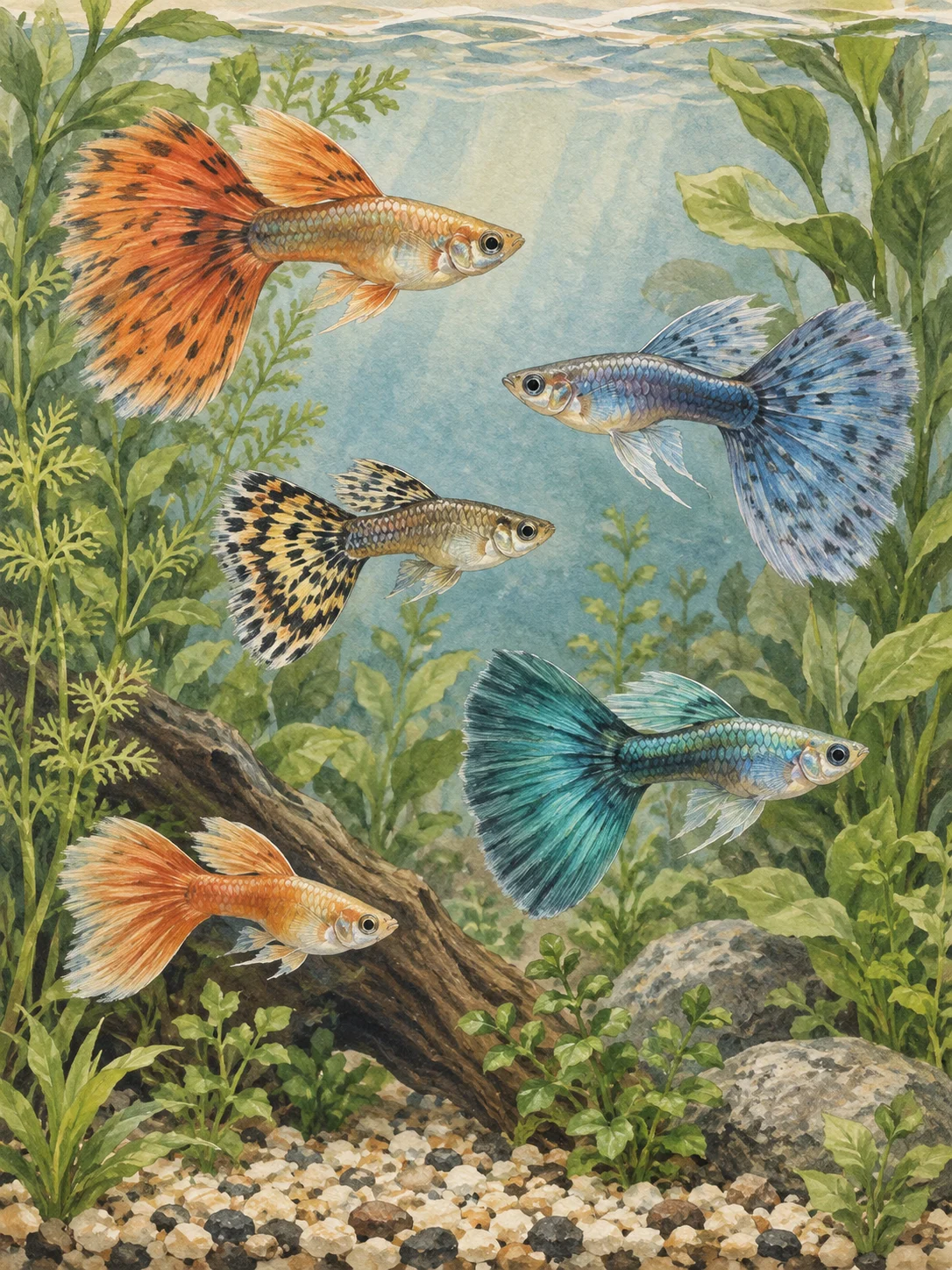
Every guppy is different
Color, size and fin shape vary with strain, age and each individual fish.
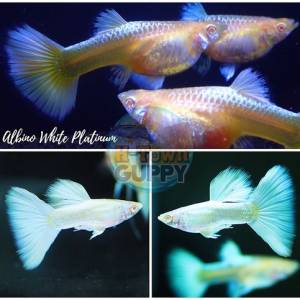
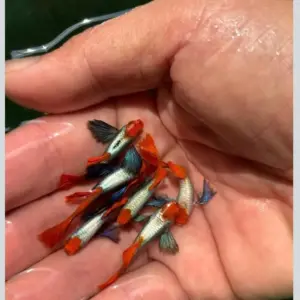
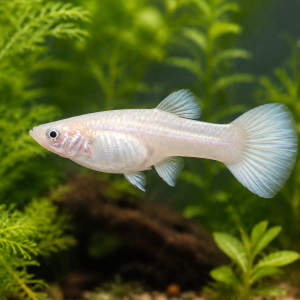
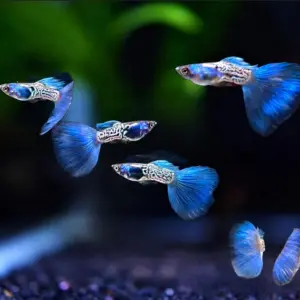
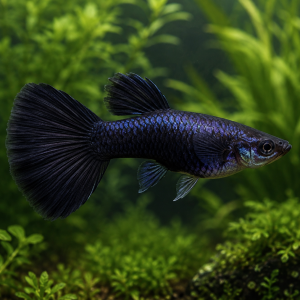
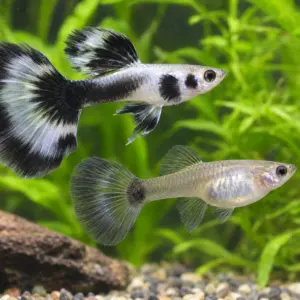
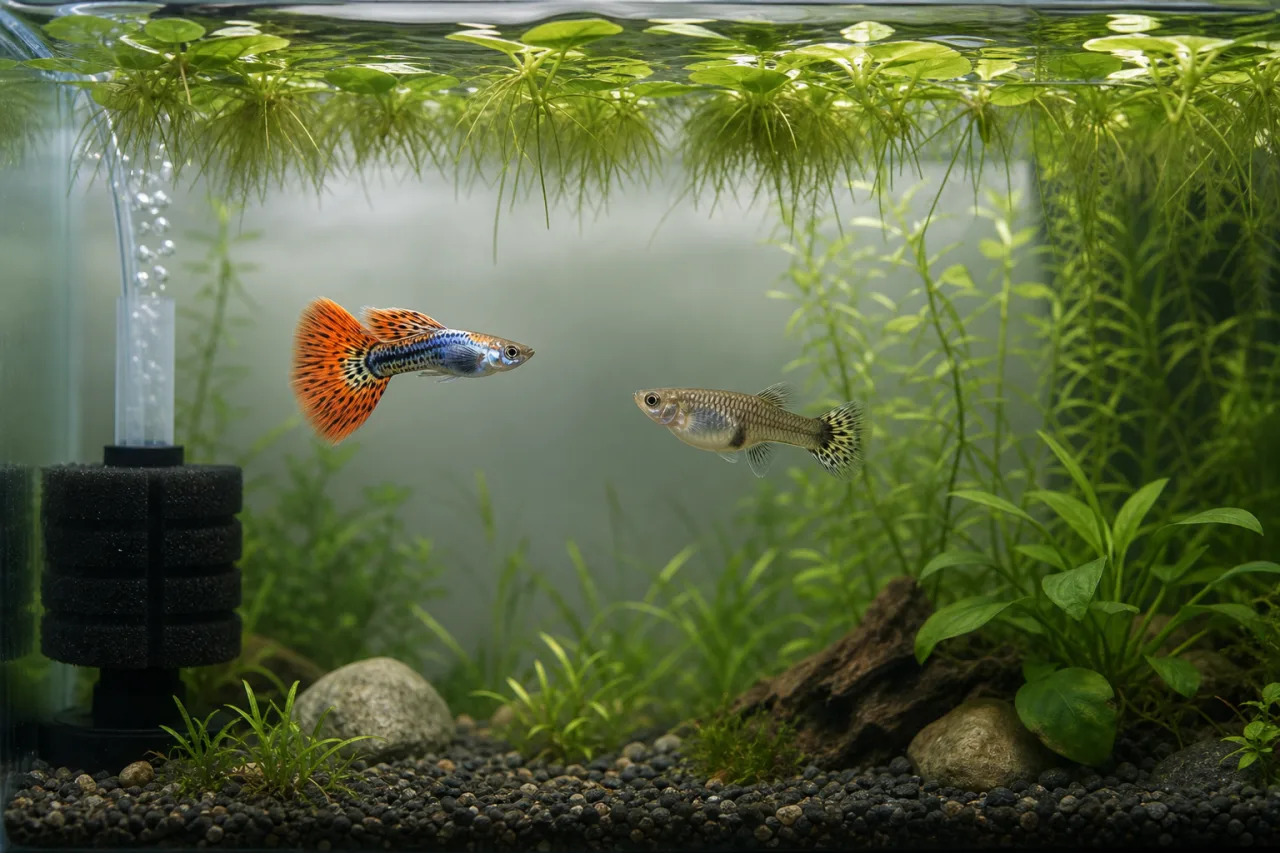
Editorial illustrations for context; they do not depict HiGuppy's exact facility or current fish stock.