The HiGuppy Journal
Can Guppies Live With Rasboras? Best Species, Tank Size and Tips
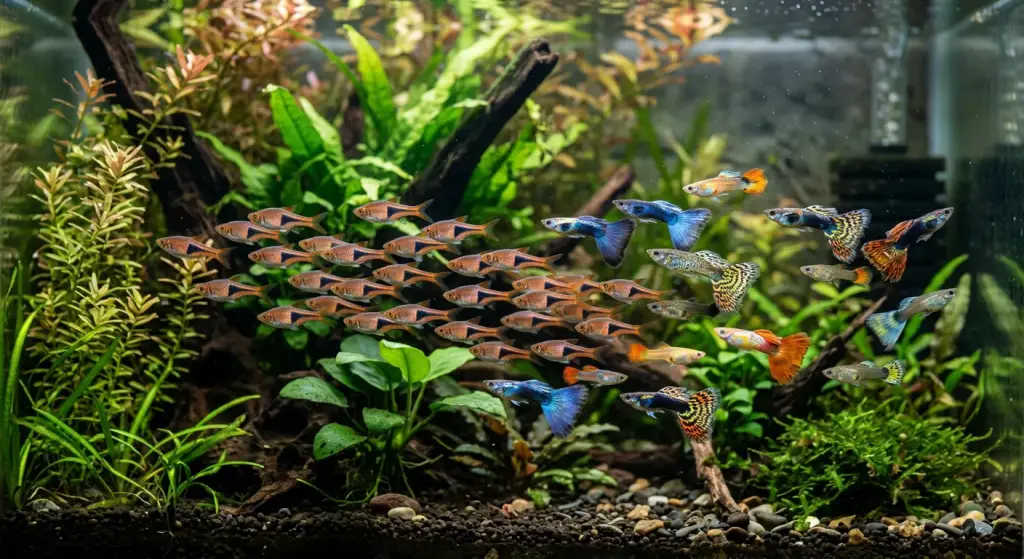
Can guppies live with rasboras? Yes, with the right species and water conditions. Captive-bred harlequin or lambchop rasboras can share a mature, planted freshwater aquarium with guppies when the water suits both. For beginners, start with a 20-gallon-long (about 76 L) tank, at least eight rasboras of one species, and a small guppy group. Aim for stable 24–26°C (75–79°F), pH 7.0–7.5 and 8–10 dGH rather than treating every rasbora as interchangeable. See our guppy care guide for the basics.
Rasboras are often recommended as tank mates for guppies, but the advice you read online is usually thin. Which rasbora? How many? What happens when your guppy males chase them? And what about water that is a little too hard for rasboras or a little too soft for guppies? Below you will find a practical answer to each question, with ranges rather than promises, because home tanks differ and fish are individuals.
Can guppies live with rasboras? The short answer and the catch
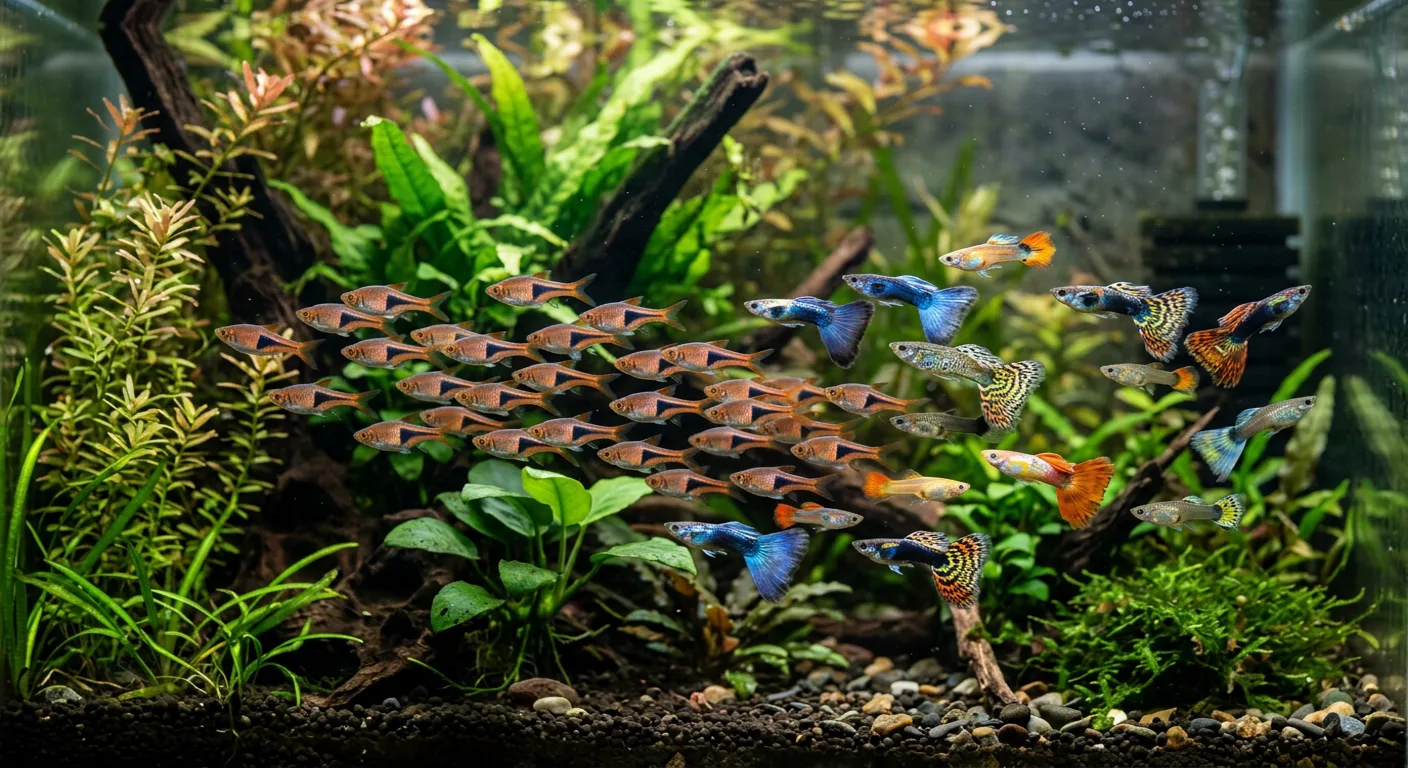
The answer is a qualified yes: peaceful harlequin (Trigonostigma heteromorpha) and lambchop (T. espei) rasboras can be compatible with guppies (Poecilia reticulata) in a sufficiently long, established tank. Temperament is rarely the main problem; water hardness, swimming room, schooling numbers and competition for food matter more. Do not assume that a pairing will work for every individual fish or every rasbora species.
Why the pairing works
- Temperament: both species are peaceful community fish. Guppy males show off and chase females, but they rarely bother other species.
- Size: adult guppies and the usual aquarium rasboras are small enough to share space without crowding each other out of food.
- Temperature: a stable heated 24–26°C (75–79°F) suits these common species; match their water chemistry too.
- Diet: both accept small flakes, micro pellets and frozen foods, so feeding is simple.
- Different roles: rasboras add a tight, moving school of color while guppies add bright fins, so the tank looks full without being busy.
Where the catch is
The biggest catch is water chemistry. Guppies thrive in moderately hard to hard water, while many rasboras naturally come from softer, more acidic habitats. According to species profiles, guppies are listed at pH 7.0–8.5 and 8–30 dGH; harlequins at pH 5.0–7.5 and 1–12 dGH; and lambchops at pH 5.5–7.5 and 1–10 dGH. A carefully monitored shared window is pH 7.0–7.5 and general hardness 8–10 dGH for either of those two rasboras. Captive-bred fish may be more accustomed to typical aquarium water, but that is not a reason to ignore long-term species needs. See our guppy water parameters guide.
Best rasbora species to keep with guppies
“Rasbora” covers many fish, and not all of them suit a guppy tank. Some are tiny and shy, some grow much larger and move fast. The table compares the ones most keepers ask about. Sizes and ranges are typical figures and vary by source and by individual fish.
| Species | Adult size | Recommended group | Guppy pairing | Important limitation |
|---|---|---|---|---|
| Harlequin rasbora (Trigonostigma heteromorpha) | About 4–5 cm (1.6–2 in) | 8 or more | Reasonable, conditional choice | Check pH and GH; prefer an established, planted tank |
| Lambchop rasbora (Trigonostigma espei) | About 3–4 cm (1.2–1.6 in) | 8 or more | Reasonable, conditional choice | Soft-water preference; shared GH window is narrow (8–10 dGH) |
| Chili rasbora (Boraras brigittae) | About 2 cm (0.8 in) | 10 or more | Not recommended for a typical guppy setup | Blackwater species; very small, shy and easily outcompeted |
| Scissortail rasbora (Rasbora trilineata) | Up to 15 cm (6 in) | 6 or more | Not suitable for a typical guppy community tank | Requires a much larger, long aquarium (about 120 cm / 4 ft or more) |
| Brilliant rasbora (Rasbora einthovenii) | Up to 9 cm (3.5 in) | 6 or more | Not for a typical small guppy tank | Needs a long aquarium, about 120 cm (4 ft) for a group; check water chemistry |
Harlequin and lambchop rasboras: the safest picks
For a community tank, start by checking captive-bred harlequin or lambchop rasboras, rather than buying rasboras by the common name alone. Both are peaceful schooling fish, but the mix is only sensible when a measured pH, GH and temperature fall within each fish’s acceptable range. A school of eight or more has space to move through the middle of the tank, while guppies use several levels.
Chili rasboras: cute but delicate in this mix
Chili rasboras (Boraras brigittae) are beautiful, but they are not a recommended match for a normal hard-water guppy aquarium. They naturally come from very soft, acidic blackwater and are tiny enough to lose out at feeding time. If your main goal is a chili rasbora school, build a mature, softly lit, species-appropriate tank instead of compromising their water for guppies.
Scissortails and other large rasboras
Scissortail rasboras can reach about 15 cm (6 in) and swim actively. Species profiles recommend a tank roughly 120 cm (4 ft) long and approximately 240 L (64 US gal) for a group. That makes them unsuitable for the 10–30 gallon setups in which most people keep fancy guppies. Their large swimming requirement—not innate aggression—is the main reason to choose a smaller rasbora.
Tank size and stocking numbers
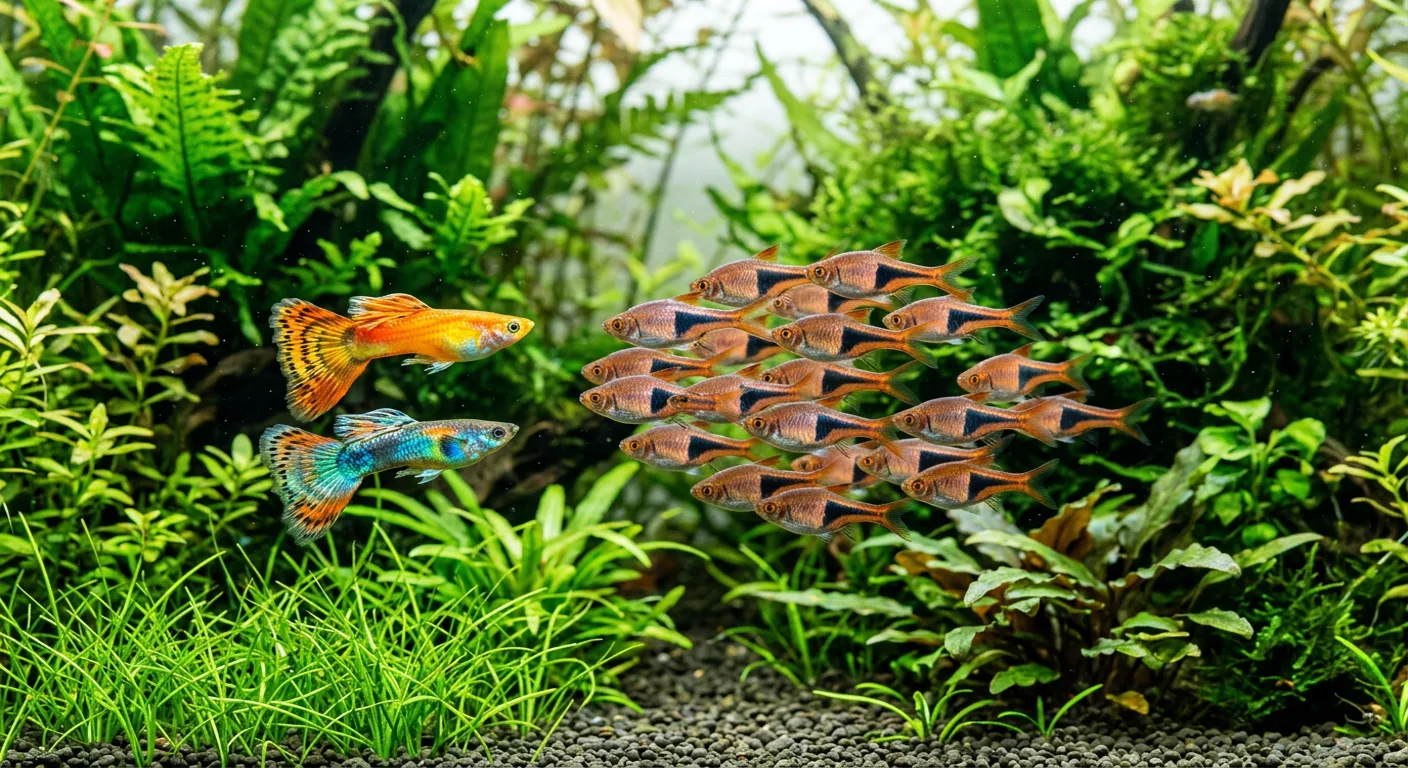
Because rasboras are schooling fish, the number you keep is just as important as the species. A single rasbora or a pair is a stressed rasbora: it hides, loses color and may stop eating. A proper school of eight or more behaves naturally and looks far better.
Minimum tank sizes
For a beginner mixing adult guppies with a proper harlequin or lambchop school, use a 20-gallon-long tank (about 76 L) or larger as a practical starting point. Its swimming length and water volume give a group of rasboras more usable space, particularly if guppies also occupy the upper levels. A 10-gallon (38 L) tank is not a good recommendation for both groups together. Gallon-based stocking rules are only rough references: body size, filtration, tank length, waste load, and future guppy fry matter. Our guide to guppy stocking provides additional context.
| Tank | Rasboras (same species) | Guppies | Recommendation |
|---|---|---|---|
| 10 US gal (38 L) | Do not combine groups here | Consider guppies on their own | Not recommended for a mixed harlequin/guppy school |
| 20 US gal long (76 L) | Start with 8 | Start with 3 adult males | Conservative starting example for a mature, filtered tank |
| 30 US gal (114 L) | 8–10 | 3–5 adult males | More room for plants and swimming; reassess after water tests |
| 40 US gal (151 L) | 10–12 | 4–6 adult males | Possible with adequate tank length and filtration; monitor waste load |
These are starting examples, not stocking guarantees. Adult size, tank footprint, filtration, feeding, water change routine and the number of other inhabitants all change the result. The suggested male-only guppy groups avoid unexpected fry, but any persistent chasing or fin damage needs intervention. If you choose male and female guppies instead, plan for repeated births and reduce the initial stocking accordingly. Add fish in stages after the nitrogen cycle is stable.
Mind the guppy sex ratio
Guppy males can pursue females persistently. If you keep a breeding group, a common starting ratio is at least two females per male, with enough cover and a plan for fry. That ratio does not eliminate chasing, and adding females purely to distract a male can increase stocking and reproduction. A small male-only display is another option, provided you watch for bullying. See our male-to-female guppy ratio guide.
Guppy babies will keep multiplying
Guppies are livebearers and can produce fry repeatedly. Harlequin and lambchop rasboras, by contrast, attach eggs beneath broad plant leaves rather than scattering them in the same way as many other rasboras. Adults of several community fish species may eat eggs or very small fry, so a mixed tank is not a dependable breeding setup. Use dense planting and a separate grow-out plan if you intend to raise guppy fry.
Water parameters that work for both
A peaceful fish does not automatically have the same water needs as its tankmates. The species ranges below come from published aquarium-care profiles; the final column is a conservative intersection for guppies, harlequins and lambchops together, not the optimum for each species in isolation. Measure both pH and GH with suitable tests before buying fish. A stable value outside the shared range is still outside the shared range.
| Parameter | Guppy | Harlequin / lambchop | Shared target for these species |
|---|---|---|---|
| Temperature | 17–28°C (63–82°F) | Harlequin 21–28°C; lambchop 23–28°C | 24–26°C (75–79°F) |
| pH | 7.0–8.5 | Harlequin 5.0–7.5; lambchop 5.5–7.5 | 7.0–7.5 |
| General hardness (GH) | 8–30 dGH | Harlequin 1–12 dGH; lambchop 1–10 dGH | 8–10 dGH |
| Ammonia / nitrite | 0 ppm | 0 ppm | 0 ppm in a fully cycled tank |
| Nitrate | Keep low | Keep low | Preferably under 20 ppm; respond to your tank’s actual readings |
What to do if your tap water is too hard
If your tap water is consistently above about pH 7.5 or 10–12 dGH, do not assume that all rasboras will thrive there long term. For beginners, the safer choice is to choose tankmates that naturally suit your water, rather than repeatedly changing it with pH chemicals. Experienced keepers sometimes blend appropriately prepared reverse-osmosis water with tap water, but this requires consistent GH, KH and pH testing at every water change.
What to do if your tap water is too soft
If the tank is below about 8 dGH or pH 7.0, it may suit soft-water rasboras better than guppies. Do not add fish and hope they will adapt. Consider a separate soft-water rasbora aquarium, or prepare and test remineralized water consistently before stocking guppies. Avoid sudden changes made by adding buffers or coral directly to a stocked tank without checking how much the chemistry will shift.
Always cycle first
Neither species tolerates ammonia or nitrite. Cycle the tank before adding either, using our guppy tank cycling checklist, and add fish in stages so the filter keeps up. If something goes wrong later, the emergency steps in our guide to ammonia poisoning in guppies apply to rasboras as well.
How to introduce rasboras to a guppy tank, step by step
Adding fish well is the difference between a calm tank and a stressed one. Follow these steps whether the guppies or the rasboras are already in the tank.
- Check your water. Test temperature, pH, ammonia, nitrite and nitrate. Ammonia and nitrite must read zero.
- Quarantine the new school. Keep the rasboras in a separate tank for about two weeks if you can. It is the cheapest insurance against bringing in disease. See how to quarantine new fish.
- Buy the whole school at once. Eight or more, so they feel secure from the first day.
- Float the bag. Float the sealed bag for 15 to 20 minutes to match temperature.
- Acclimate slowly. Add a little tank water to the bag every five minutes over 20 to 30 minutes. Our acclimation guide shows the method in detail.
- Net them out, do not tip the bag. Bag water can carry waste and pathogens into your tank.
- Dim the lights and feed lightly. Give them a quiet first evening with plants to hide in.
- Watch for a week. Look for hiding, clamped fins, gasping or chasing, and test water every day or two.
Adding the school in a rearranged tank also helps, because moving the decor resets territories and gives the newcomers hiding places.
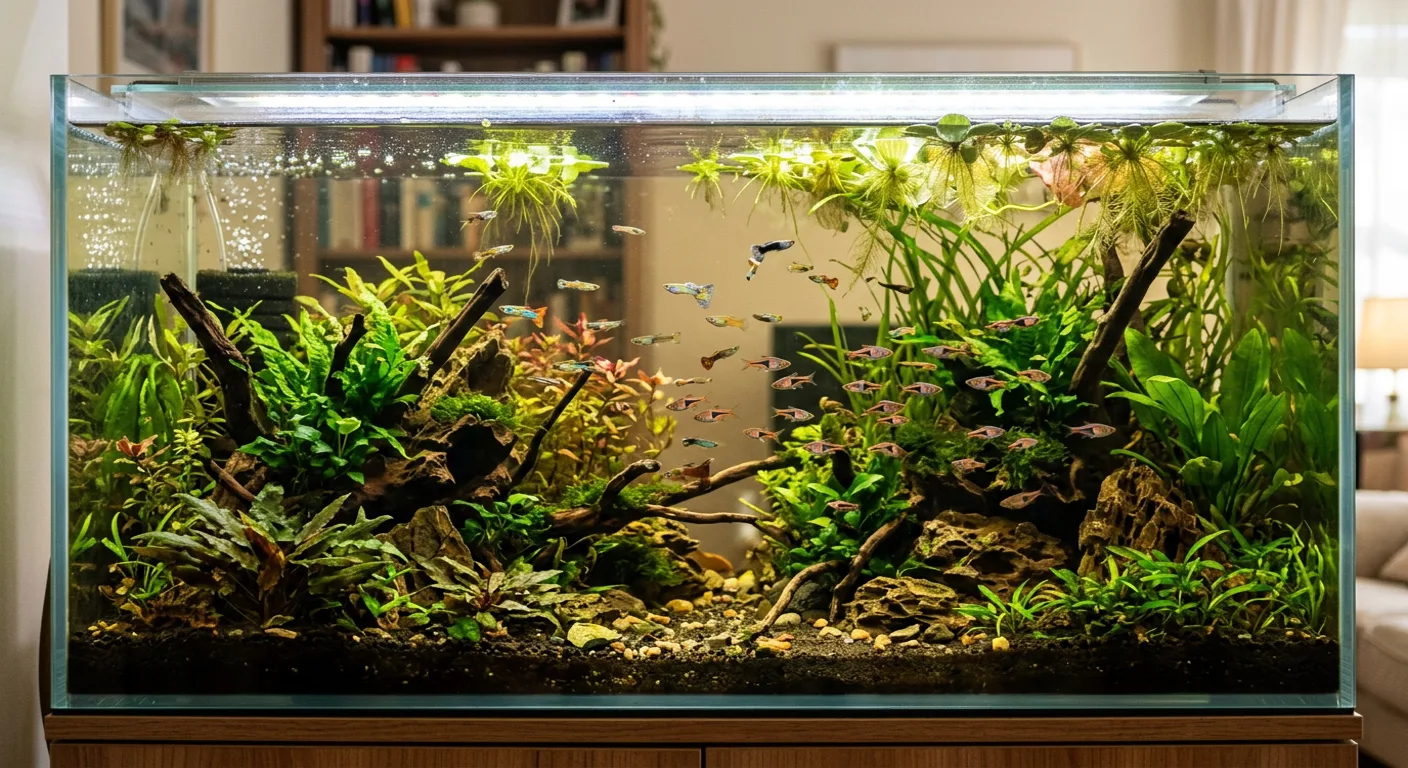
Aquascape and tank setup that keeps everyone calm
A good layout makes the combination work almost by itself. Rasboras like open swimming space and plenty of plants around the edges. Guppies like surface cover and the occasional hiding spot for females and fry.
Plants
Use a mix of tall background plants such as vallisneria or hornwort, mid-height plants such as java fern or anubias, and floating plants for cover. Our guides to live plants for guppies and floating plants give specific species. Floating plants also dim the light, which rasboras tend to appreciate.
Open space
Leave a clear stretch in the middle for the school to swim. A cramped, over-decorated tank forces both species into the same small area and raises the odds of chasing.
Filtration and flow
A gentle to moderate flow suits both fish. Guppies with large tails struggle in strong current, while rasboras enjoy a little movement. A sponge filter is a safe, fry-friendly choice, as we cover in our sponge filter guide.
Lighting
Moderate lighting for about eight hours a day is plenty. Very bright light can make rasboras shy and encourage algae. A consistent schedule helps both species keep a steady routine.
Feeding guppies and rasboras together
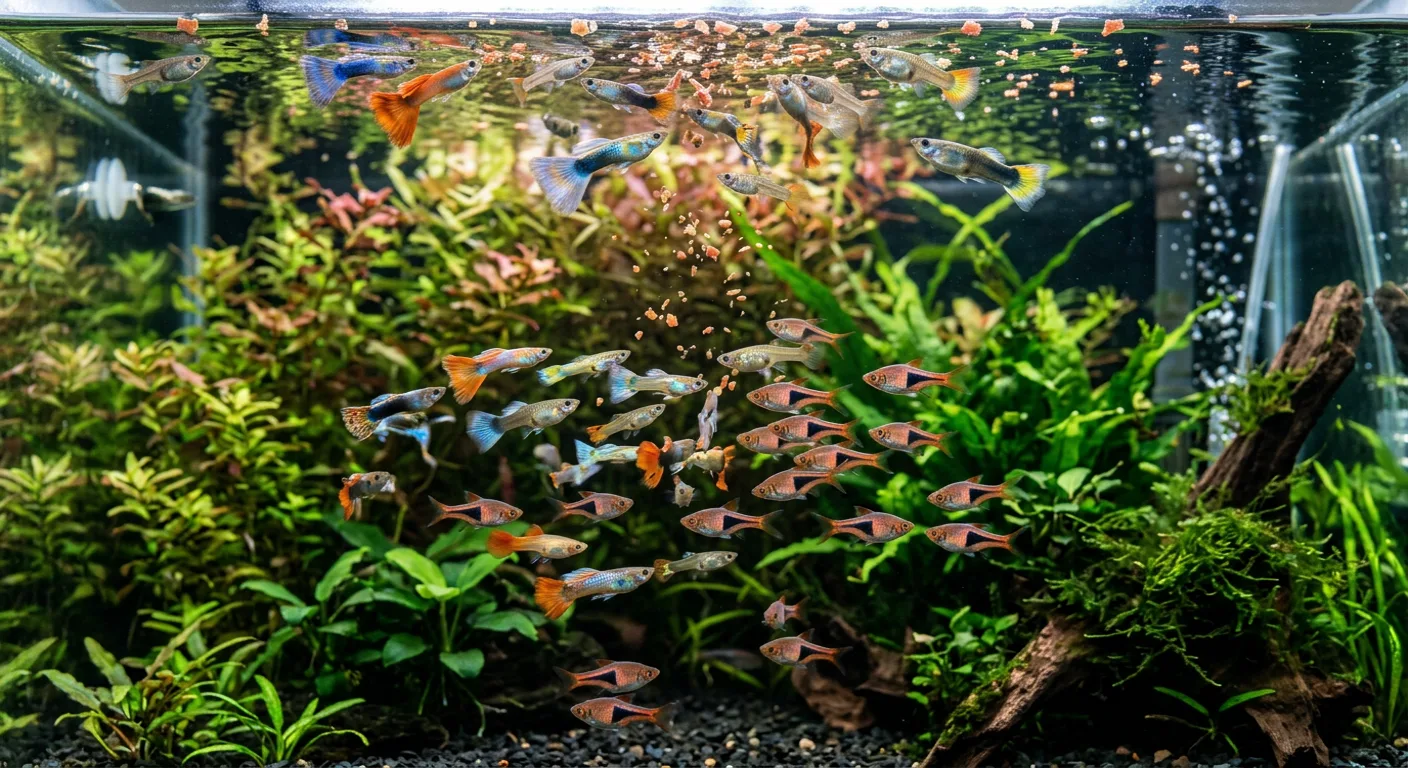
Feeding is easy, but there is a small trap: guppies are enthusiastic, and rasboras are polite. If you pour in a lot of food, the guppies grab most of it first.
What to feed
Offer a quality small flake or micro pellet as the staple, and rotate in frozen or live foods such as daphnia, brine shrimp or bloodworms once or twice a week. Rasboras are mostly mid-water feeders, so food that sinks slowly reaches them better than food that floats at the surface.
How much and how often
Feed small amounts once or twice a day, only what the fish finish in about one to two minutes. Overfeeding fouls the water and harms both species, as explained in our guide to overfeeding guppies. If you are not sure how often to feed, see how often to feed guppies.
Make sure the shy fish eat
Scatter food on both sides of the tank, or drop a pinch on one side to distract the guppies while you feed the other side. Watch the rasboras for a full, rounded belly after feeding. If they look thin after several weeks, increase the amount slightly or switch to a smaller food.
Common problems and how to fix them
Even a good combination can hit bumps. Use the table as a quick diagnostic, then read the notes below for the details.
| Problem you see | Likely cause | Fix |
|---|---|---|
| Rasboras hiding all day | School too small or too much chasing | Add more rasboras, add more females, add plants |
| Rasboras look pale | Stress, poor water or bright light | Test water, dim lights, add floating plants |
| Guppy males chasing rasboras | Individual pursuit, crowding or stress | Separate persistent aggressors, add cover and review group size; do not automatically add females |
| Rasboras thin after weeks | Guppies eating all the food | Split feeding, use sinking micro pellets |
| Clamped fins or white spots | Disease from new fish | Quarantine, treat in a hospital tank |
| Cloudy water | Overfeeding or immature filter | Reduce food, increase water changes |
Chasing and fin nipping
Harlequin and lambchop rasboras are generally peaceful and are not known as typical fin-nippers. Persistent chasing or torn guppy fins still calls for observation: watch individual fish, check the water and remove an aggressor when needed. If fins show ongoing deterioration or signs of illness, see our guppy fin health guide; torn fins alone do not prove a particular disease.
Disease
New arrivals may introduce pathogens, but white spots, clamped fins or lethargy can have several causes, including poor water quality and stress. Quarantine new fish separately when possible, check water parameters, and isolate an ill fish if needed. Do not medicate an entire community tank based only on a symptom without identifying the likely cause. See our hospital tank guide.
Overstocking creep
Guppy fry are the silent stocking problem. If you do not manage births, a comfortable 20 gallon tank can slowly become crowded. Rehome extra fish, keep a breeder box or separate grow-out tank, and keep up with water changes.
Maintenance routine for a mixed guppy and rasbora tank
A routine keeps water steady, and steady water is what both species care about most. Here is a simple schedule you can adjust to your tank.
Weekly
- Change roughly 20 to 30 percent of the water, using a dechlorinator and water at the same temperature.
- Vacuum the substrate lightly and wipe the glass if algae builds up.
- Test ammonia, nitrite, nitrate and pH, then write the numbers down.
Monthly
- Check filter flow and gently rinse only clogged reusable media in removed aquarium water as needed; avoid replacing all biological media at once.
- Trim plants and remove dead leaves.
- Count your fish, especially young guppies, and plan for rehoming.
For a more detailed plan, our guppy tank maintenance schedule lays out a full routine. Water changes also keep nitrate down, which is the number that creeps up in busy community tanks.
Quick checklist: ready to mix guppies and rasboras?
- Tank is fully cycled with 0 ppm ammonia and nitrite.
- Tank is fully cycled and preferably at least 20 gallons long (about 76 L) for these mixed groups.
- You are buying 8 or more harlequin or lambchop rasboras in one go.
- Guppy sex group is planned: a monitored male-only display, or a breeding ratio with sufficient females and a fry plan.
- Temperature is stable at 24–26°C (75–79°F), pH 7.0–7.5, and GH about 8–10 dGH for the proposed species.
- There are plants, floating cover and a clear swimming lane.
- You have a plan for guppy fry.
- New arrivals have been observed in a separate quarantine setup when possible (often 2–4 weeks, depending on risk and health).
Want to build a colorful display? Explore our male guppy collection or premium guppy pairs, and choose fish only after checking the water they will live in. For broader options, see best tank mates for guppies. Our guppy care guide covers routine care.
FAQ
Can guppies live with rasboras in a 10 gallon tank?
Not recommended for a school of adult harlequin or lambchop rasboras plus guppies. A 10-gallon tank has little room for both groups and their waste load. A mature 20-gallon-long (about 76 L) aquarium is a better beginner starting point; verify its dimensions and stocking first.
How many rasboras should I keep with guppies?
Aim for at least eight harlequin or lambchop rasboras of the same species, with swimming room and cover. Do not compensate for a very small tank by keeping only one or two schooling fish.
Will guppies eat rasbora fry or eggs?
Adults in a mixed community aquarium may eat eggs or tiny fry. Harlequin and lambchop rasboras attach their eggs under leaves, and guppies are livebearers. A dedicated breeding or grow-out aquarium is more reliable if raising young is the goal.
Do rasboras nip guppy tails?
Harlequin and lambchop rasboras are normally peaceful and not typical fin-nippers. Still, watch individual behavior, assess fin damage and water quality, and separate any persistent aggressor.
What is the best rasbora for a guppy tank?
Captive-bred harlequin and lambchop rasboras are the two most practical species to investigate, if the tank is large enough and water parameters suit both. Chili rasboras are not recommended for a typical guppy hard-water setup, and scissortails need far more space.
Can guppies and rasboras live in the same water parameters?
For guppies and either harlequin or lambchop rasboras, a conservative shared window is about 24–26°C (75–79°F), pH 7.0–7.5 and GH 8–10 dGH. Measure your tap water before stocking; the chemistry overlap is narrower than the temperature overlap.
Should I add rasboras or guppies first?
Either can be added first once the tank is biologically cycled. Add one group at a time, quarantine new arrivals when possible and recheck ammonia and nitrite after stocking.
Sources and further reading
Water ranges and adult sizes should be checked against the species being sold and your own test results. Reference profiles: guppy, harlequin rasbora, lambchop rasbora, chili rasbora, and scissortail rasbora, and brilliant rasbora. See also Aqueon’s rasbora care guide for schooling, planting and feeding advice.
Behind the care guides
Care begins with steady systems
Our guppy guides focus on practical routines: keep water stable, observe fish closely and allow for natural variation.
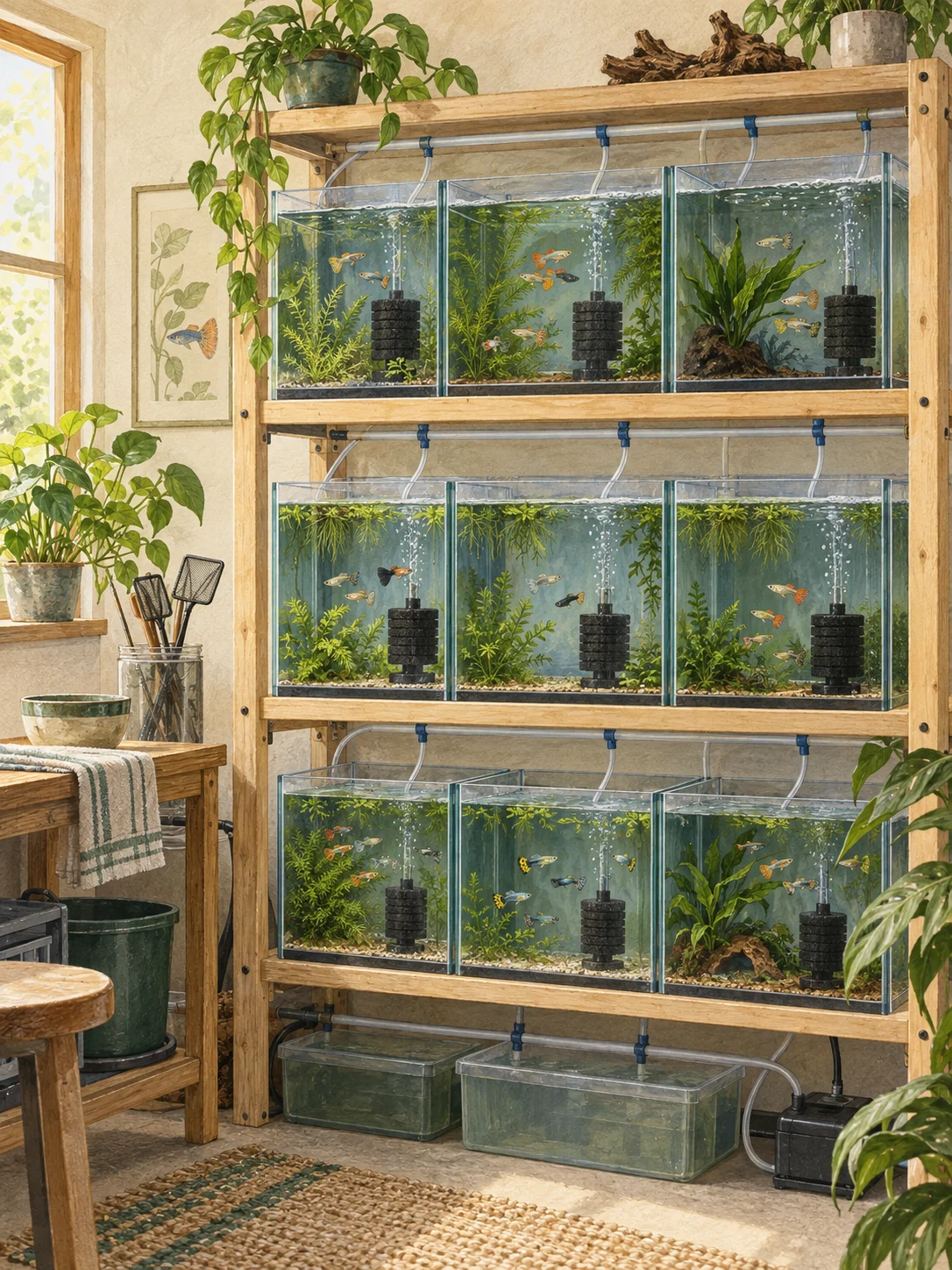
Care systems
Steady water, thoughtful care
Gentle filtration and regular observation support healthy aquarium routines.
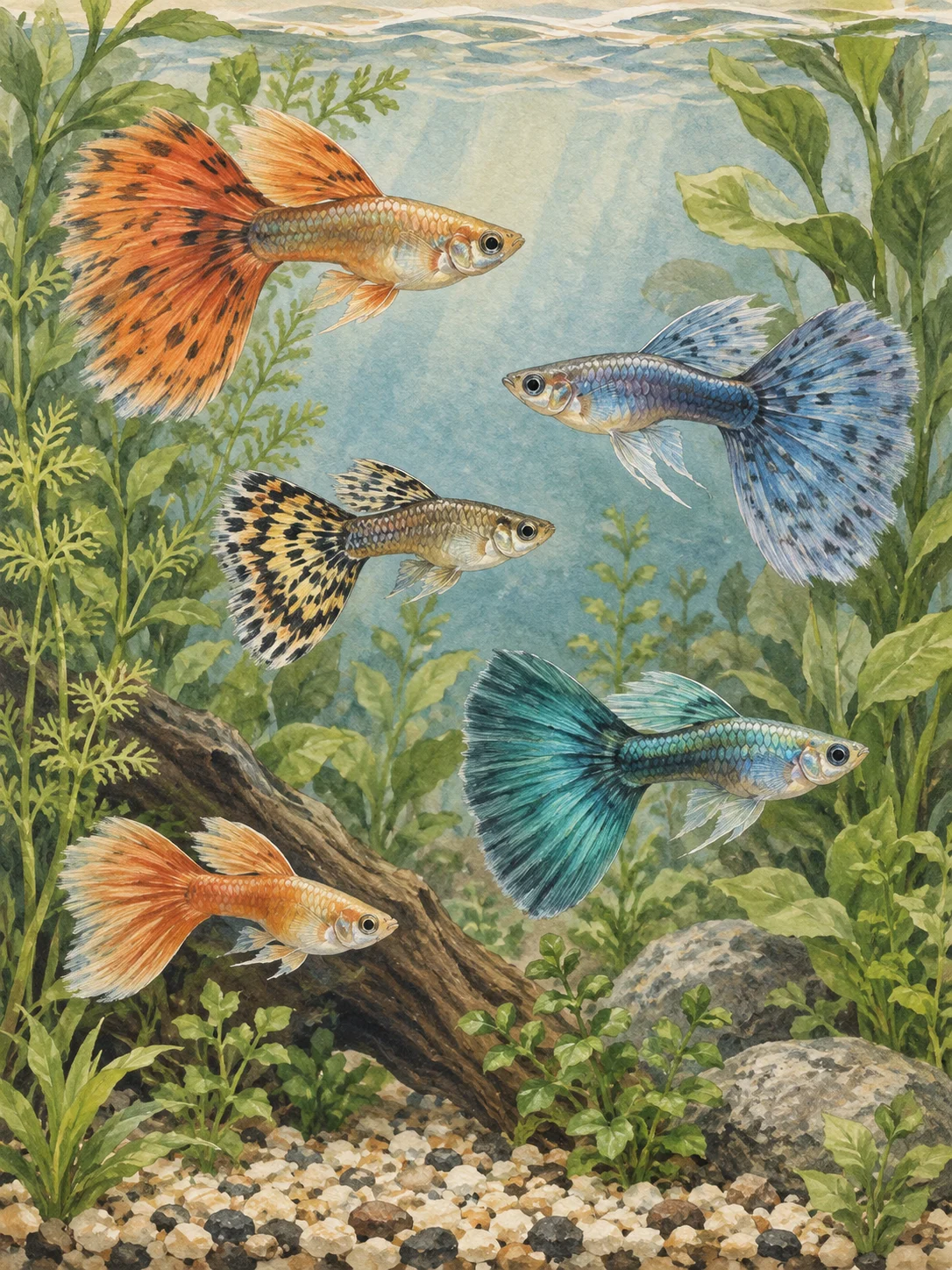
Natural variation
Every guppy is different
Color, size and fin shape vary with strain, age and each individual fish.
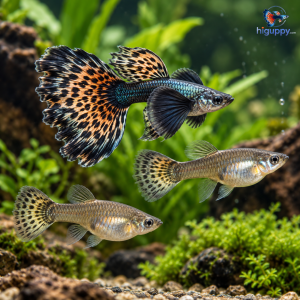
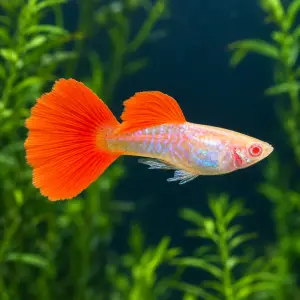
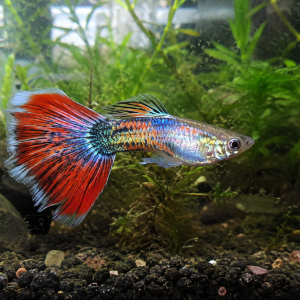
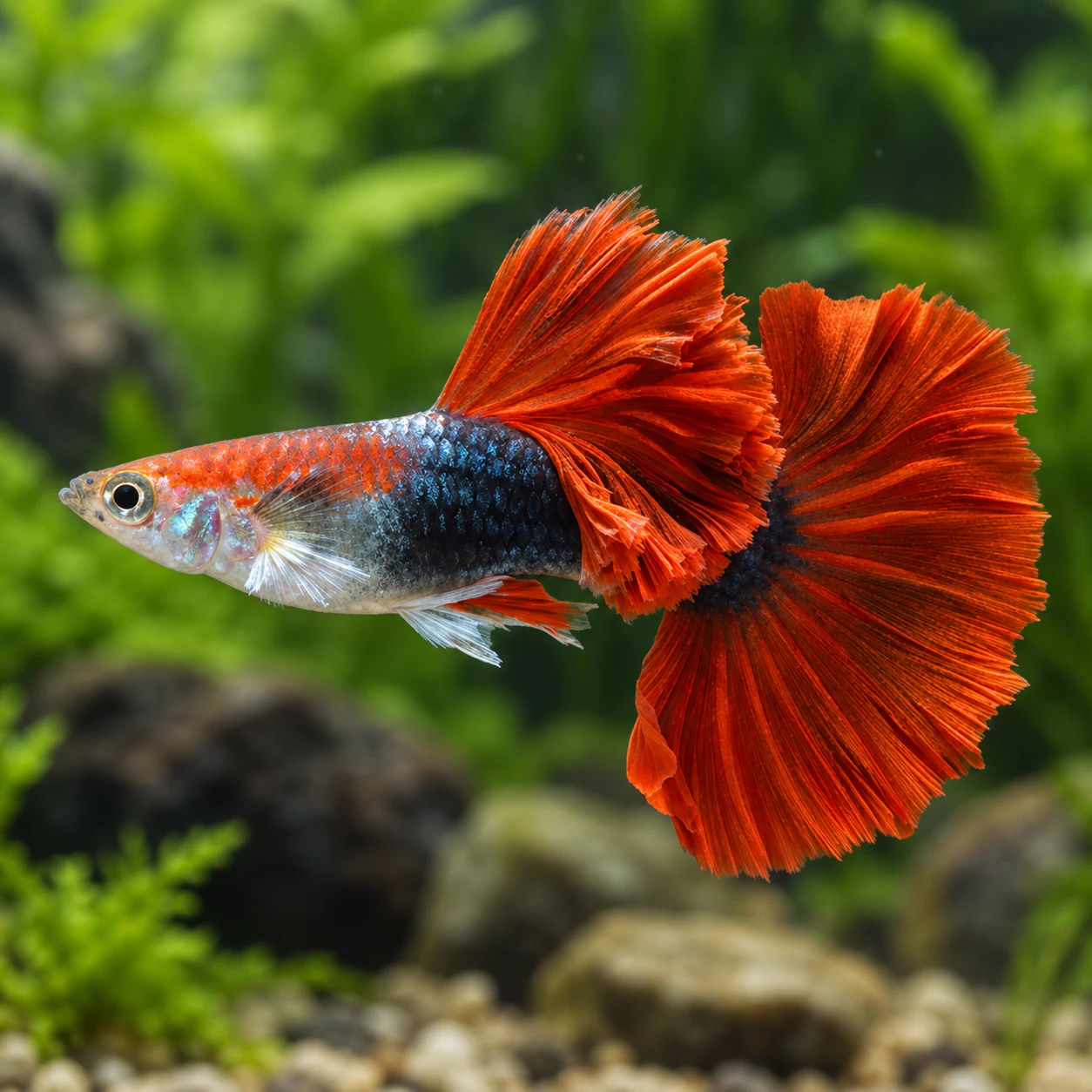
Editorial illustrations for context; they do not depict HiGuppy's exact facility or current fish stock.