The HiGuppy Journal
Guppy Flashing: Why Your Fish Rubs on Decorations
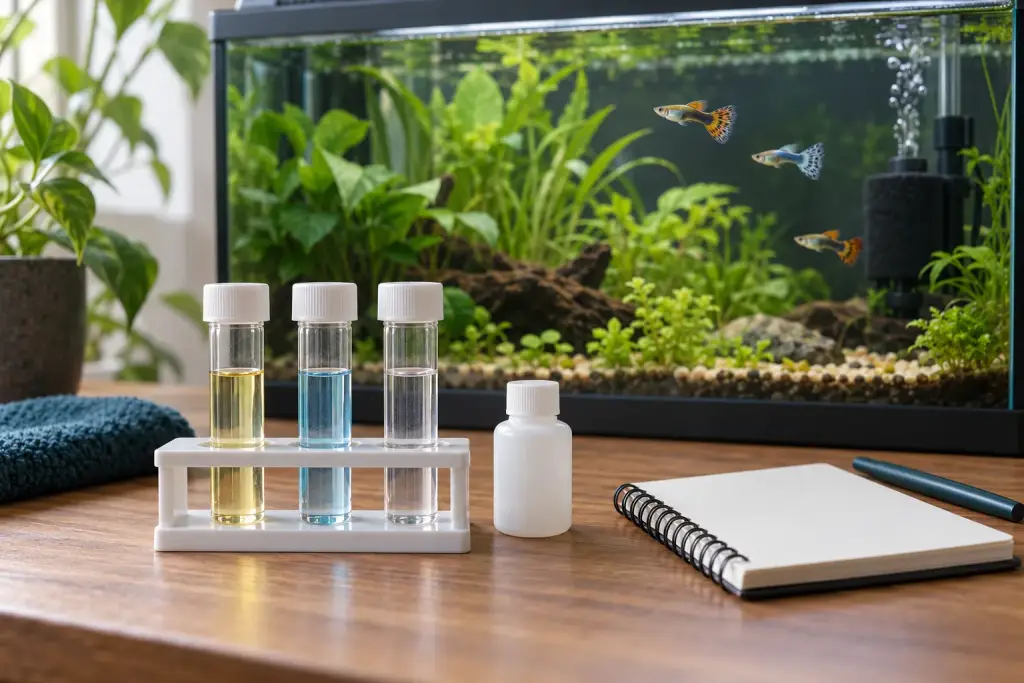
Guppy flashing means a fish quickly rubs or scrapes its side against decorations, plants, or the bottom. Repeated flashing can reflect water irritation, a recent chemical or temperature change, or an external health problem. Check water and equipment first, record other symptoms, and seek qualified fish-health help when rubbing persists or fish deteriorate.
Recognize flashing before trying to stop it
A flashing fish often twists sideways, brushes an object, then darts away. This differs from calmly pecking algae or searching a surface for food. Watch from a short distance without tapping the glass. Note whether the body actually contacts the object, how often it happens, and whether one fish or the whole group is involved.
One brief scrape does not establish a diagnosis. Repeated episodes, skin damage, or changes in breathing deserve prompt attention. Take a short video if possible; a clear recording is more helpful than describing the fish as simply acting strange. Do not catch and handle the fish just to inspect a behavior you can observe through the glass.
Check the aquarium and recent changes
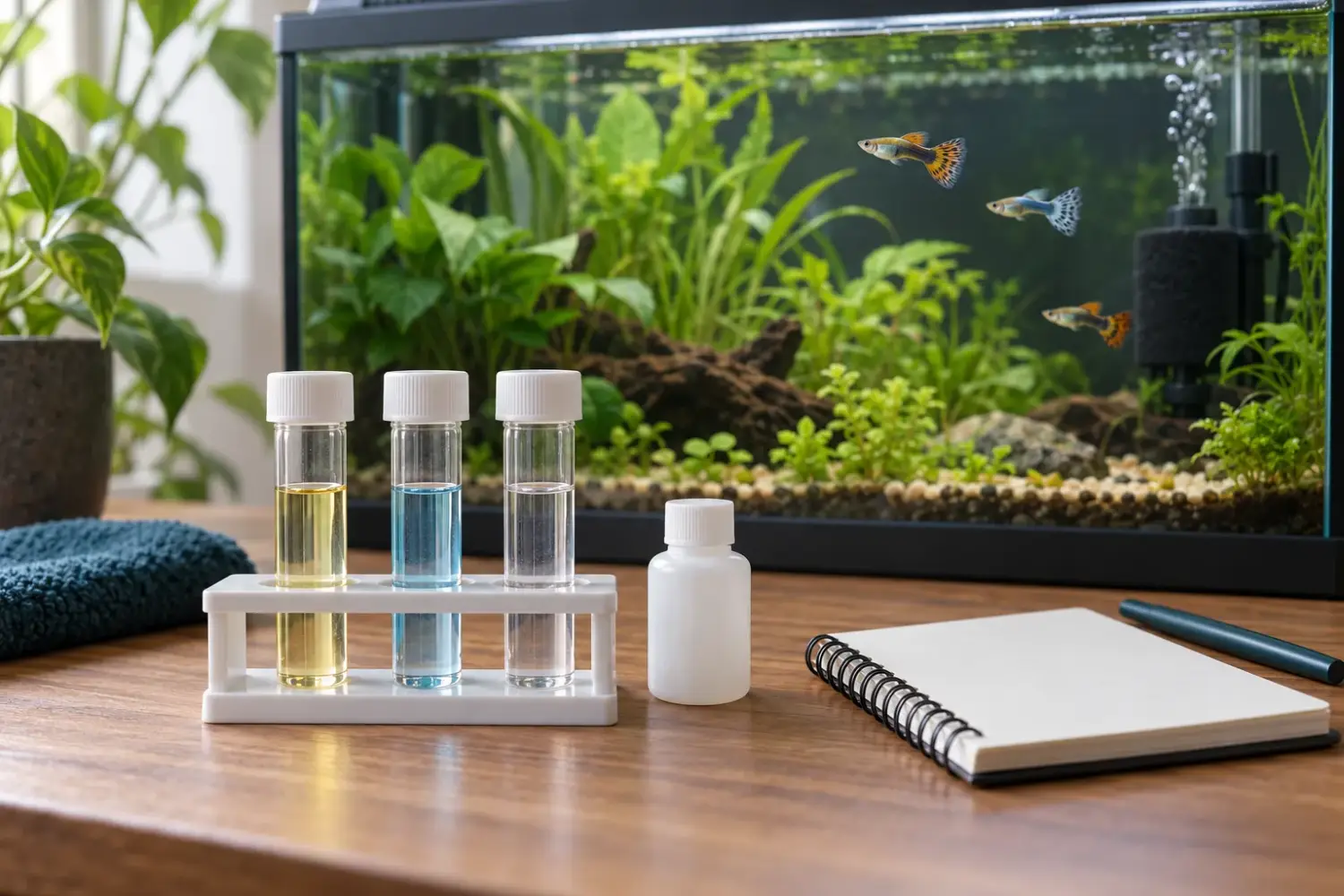
Measure ammonia, nitrite, nitrate, pH, and temperature with equipment you trust. Record the results and units. Clear water can still contain irritants, and a familiar-looking aquarium can develop a problem after filter disruption, extra feeding, or equipment failure. Compare readings with the guppy water parameters guide.
Review what happened before the rubbing began. Was water replaced? Did someone clean near the tank, add an aquarium product, adjust the heater, replace filter media, or introduce fish? Confirm replacement water was treated for the disinfectants in your supply. Chlorine and chloramine exposure require attention even if the water looks normal. Use water conditioner according to its label and get help if exposure or the appropriate response is uncertain.
If ammonia or nitrite is detected, address the confirmed water problem promptly with appropriately prepared replacement water and retest. Preserve functioning biological media. Avoid scrubbing the entire tank or changing pH abruptly. The water-change guide explains the routine to maintain once conditions are stable.
Look for breathing changes and other symptoms
Check that the filter is operating and the surface is moving. Rapid breathing, persistent surface gasping, loss of balance, or several fish declining together warrant urgent attention to water and oxygenation. Increase suitable surface movement while checking the cause. Follow the surface-gasping checklist and contact a veterinarian experienced with fish when distress continues.
Look through the glass for spots, excess mucus, damaged skin, clamped fins, or appetite changes. These observations help a professional decide what to investigate, but none identifies a parasite by itself. A lack of visible white spots also does not prove that the fish is free of an external health problem. Record what you see without assigning a disease name from one symptom.
When parasites become part of the investigation
External parasites can irritate skin or gills, so persistent flashing in suitable water deserves further assessment. Recent livestock additions and shared wet equipment are useful history. Water irritation and infection can also occur together; improvement after a water correction does not settle every remaining question.
Do not start with a mix of salt, heat, and medications. Treatments depend on the actual cause and the animals in the aquarium. Shrimp, snails, fry, and plants can change which products are appropriate. If a fish needs separate observation, use a prepared, filtered hospital setup with suitable water rather than an unheated cup. Moving one fish does not eliminate a possible exposure in the original tank.
Keep a short observation record
Write down the time, fish affected, water results, equipment checks, and recent changes. Photograph any visible skin damage and record appetite at the next normal meal. Remove uneaten food instead of adding extra to test whether the fish is hungry. Pause new livestock purchases while unexplained rubbing continues.
Seek qualified help promptly if rubbing causes wounds, breathing changes persist, fish stop eating, or losses occur. Bring the record and video. This gives an aquatic veterinarian or diagnostic service a clearer starting point and reduces the temptation to repeat unrelated treatments.
Frequently asked questions
Is guppy flashing always caused by parasites?
No. Water irritation, disinfectant exposure, and abrupt changes can also cause rubbing. Test the environment and record the full pattern before considering treatment.
Should I remove the decoration the guppy rubs against?
Remove a sharp hazard safely, but repeated rubbing may continue on another surface until its cause is addressed. Removing every decoration does not correct water irritation.
Can new guppies flash after shipping?
New arrivals have experienced transport and water changes, but persistent flashing should still be investigated. Use a prepared observation setup, check conditions, and seek help if other symptoms develop.
Behind the care guides
Care begins with steady systems
Our guppy guides focus on practical routines: keep water stable, observe fish closely and allow for natural variation.

Care systems
Steady water, thoughtful care
Gentle filtration and regular observation support healthy aquarium routines.

Natural variation
Every guppy is different
Color, size and fin shape vary with strain, age and each individual fish.
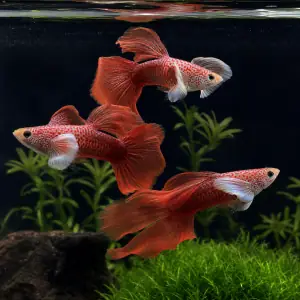
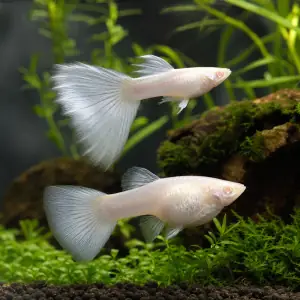
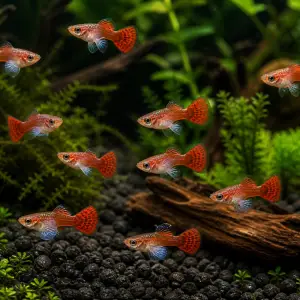
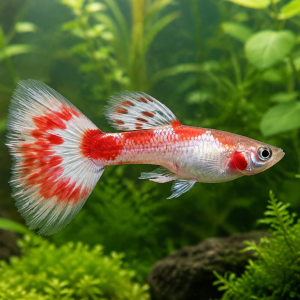
Editorial illustrations for context; they do not depict HiGuppy's exact facility or current fish stock.