The HiGuppy Journal
Bent Spine Guppy: Care, Causes and Breeding Decisions
A bent spine in a guppy can have developmental, inherited, injury-related, or disease-related causes, and appearance alone cannot tell you which applies. Assess whether the fish can swim, breathe, and eat comfortably. Maintain stable water, prevent harassment, and seek aquatic veterinary advice for a new bend, worsening function, or several affected fish.
Start with function and the fish’s history
Look at the fish from the side and above without netting it. Is the curve mild and unchanged, or is it new? Can the fish hold position, turn, and reach food? Does it rest normally or struggle continuously? A photograph taken from the same angle can help you track changes without repeated handling.
Record whether the fish has looked this way since you acquired it. A lifelong visible curve and a sudden change in an adult call for different investigations. Neither history proves a cause, but it helps a fish-health professional decide what to check. Do not assume that a fish is simply old or that every curved spine is inherited.
What can cause a curved body?
Developmental and inherited factors can affect body shape, while injury or broader health problems can change posture or function. Feeding history, growth conditions, and other observations may also matter. The same general appearance can arise in different circumstances, and a photo cannot reliably separate them.
A fish that is thin or has trouble staying level may also look bent at a glance. Observe its body shape during steady swimming rather than only while it turns. If the change appears alongside wounds, weight loss, appetite loss, abnormal breathing, or balance problems, seek assessment promptly. A curve alone is not grounds to name an infection, prescribe medication, or assume other fish will develop the same problem.
Make everyday care easier
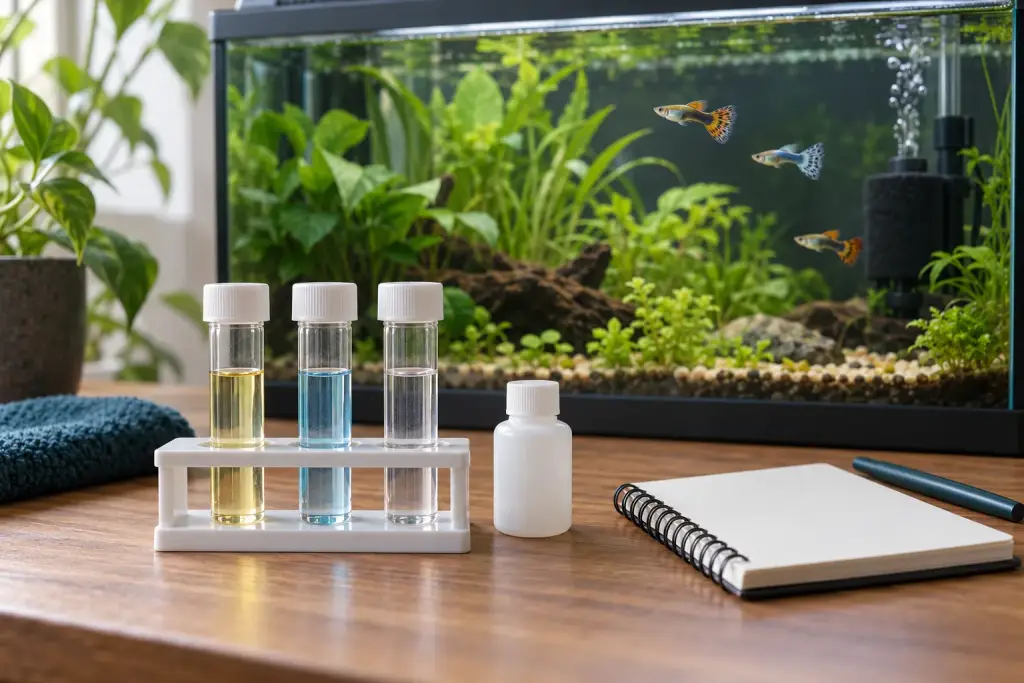
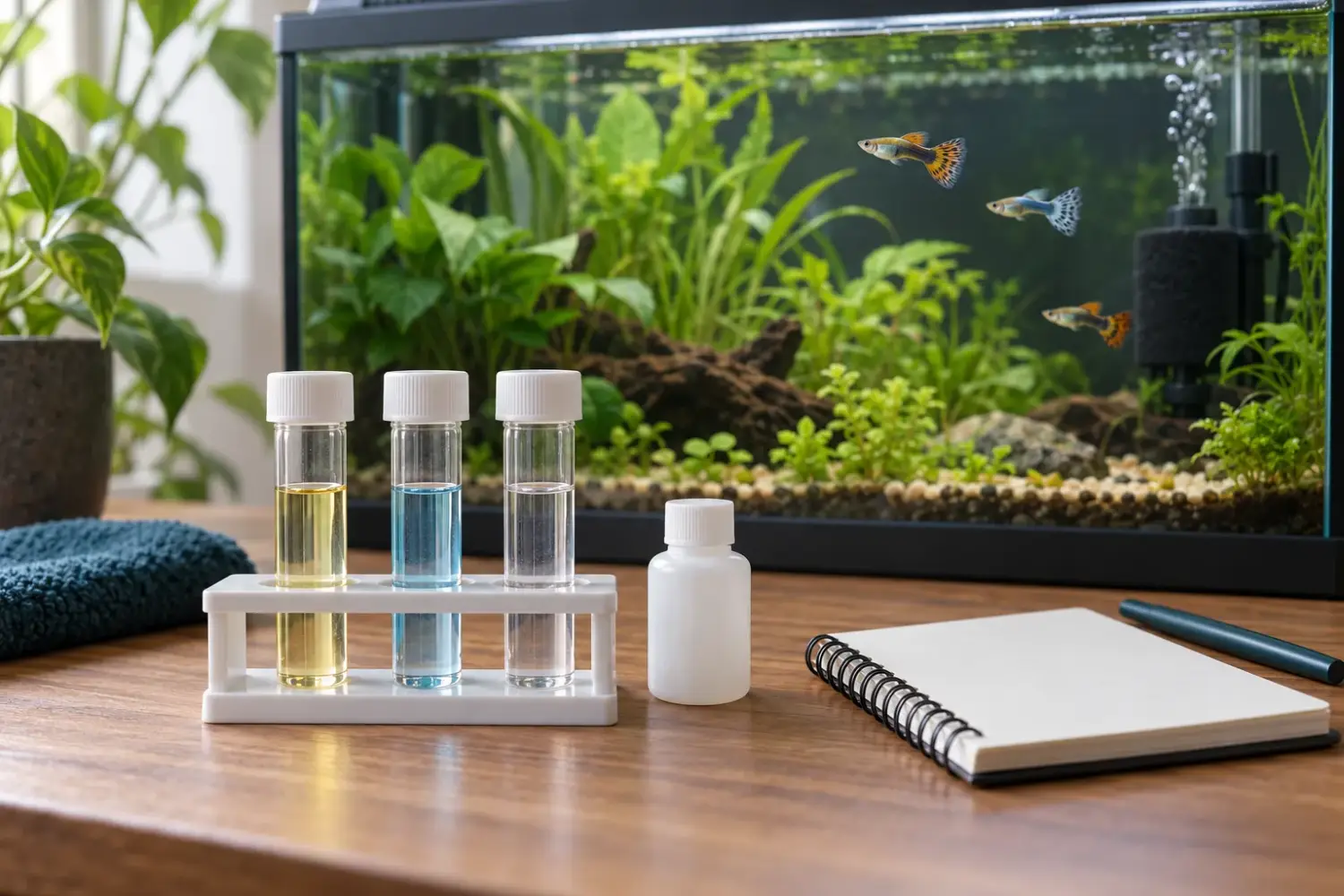
Keep the aquarium cycled and the water stable. Check ammonia, nitrite, nitrate, pH, and temperature rather than relying on clarity. Use the guppy water parameters guide to review the measurements. Correct confirmed problems carefully and preserve biological filtration during cleaning.
Watch a normal feeding to confirm that the affected fish actually eats. Use a suitable complete food in particles it can take, and offer it where the fish can reach it. Do not increase the total food until the tank is littered with leftovers. If other guppies take every bite, provide a calmer feeding location or a suitable separate space.
Provide open swimming lanes and accessible cover. Avoid current that forces the fish to struggle, while maintaining adequate filtration and surface movement. Remove rough hazards and watch for chasing. A fish that cannot escape repeated harassment may need a prepared separate aquarium; a small unfiltered container is not a long-term care solution.
Decide whether separation will help
Separation can be useful when a fish is being bullied, cannot compete for food, or needs close observation. Match the setup to its needs and monitor water quality after moving it. A separate tank requires ongoing care, and moving a fish does not establish whether its condition is infectious.
If several fish develop a new bend or show other health changes, pause breeding, sales, and new introductions while you investigate. Record which fish are affected, their ages and relationships, and whether they share equipment or water. Ask a veterinarian experienced with fish about examination or testing. Do not treat the whole aquarium based on body shape alone.
Breeding decisions and records
For a planned breeding project, favor fish with sound body shape, normal swimming, and consistent health. Avoid deliberately breeding a fish with an unexplained structural problem. This reduces the risk of selecting an undesirable trait and gives you time to investigate the cause. It does not mean that every visible bend will be passed to offspring.
When similar issues recur in fry, retain records of parent pairs, birth groups, feeding, and grow-out conditions. Review the whole rearing process and seek advice rather than concluding that one parent or one food must be responsible. The guppy growth guide and inbreeding guide provide background for organizing those observations.
When quality of life needs professional assessment
A fish that can eat, move, and rest comfortably may have different needs from one that repeatedly falls over, cannot feed, or is injured by continuous struggling. Assess the individual rather than judging only how dramatic the curve looks. Ask an aquatic veterinarian about prognosis and humane options when basic needs cannot be met. Never try to straighten the fish by hand.
Frequently asked questions
Can a guppy live with a bent spine?
Some fish remain functional with a stable curve, but the outlook depends on the cause and their ability to swim and feed. Watch the individual and get help if function worsens.
Will a different food straighten the spine?
There is no general food remedy for an unexplained bend. Provide appropriate balanced nutrition and seek assessment before adding supplements or assuming a deficiency.
Should I remove every curved fish from the community?
Base separation on welfare, competition, symptoms, and professional advice. A curve alone does not prove that the fish is contagious.
Behind the care guides
Care begins with steady systems
Our guppy guides focus on practical routines: keep water stable, observe fish closely and allow for natural variation.

Care systems
Steady water, thoughtful care
Gentle filtration and regular observation support healthy aquarium routines.

Natural variation
Every guppy is different
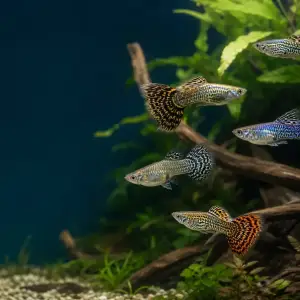
Color, size and fin shape vary with strain, age and each individual fish.
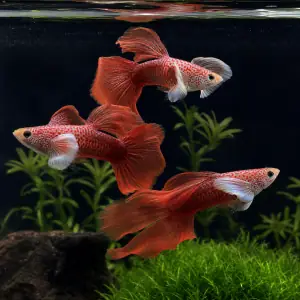
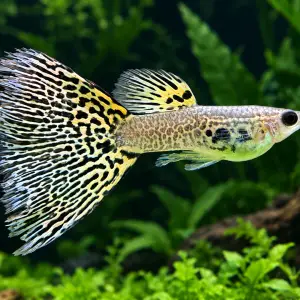
Editorial illustrations for context; they do not depict HiGuppy's exact facility or current fish stock.