The HiGuppy Journal
Are Guppies Good Beginner Fish? What New Keepers Should Know
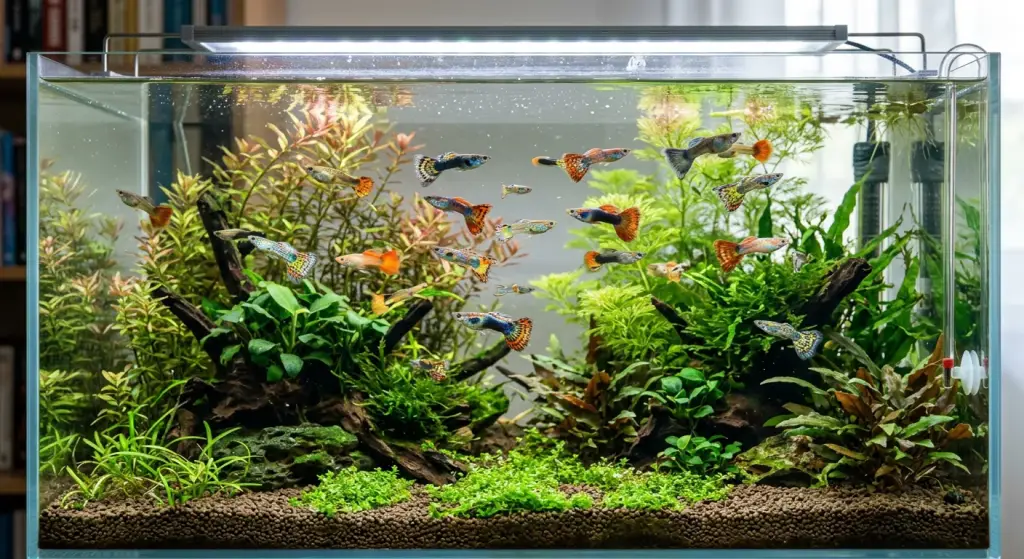
Are guppies good beginner fish? Yes, with one condition: they are hardy and forgiving, but only if you cycle the tank first and keep up with small weekly water changes. Guppies are colorful, active and affordable, which is why many new keepers start with them. Our guppy care guide covers the full routine.
Below you will see what makes guppies easy, where beginners go wrong, what to buy first and how much work to expect.
Are guppies good beginner fish? The honest answer
When people ask are guppies good beginner fish, the real question is how forgiving they are. Guppies tolerate a fairly wide range of conditions, eat common foods, stay small and show their color all day. That makes them a friendly first fish compared with many delicate species.
They are not indestructible, though. Fish sold with unstable water, sudden temperature swings or crowded tanks often struggle. Most early losses come from an uncycled tank, overfeeding or overcrowding rather than from the fish themselves. Learn the guppy tank cycling checklist before you buy.
What makes guppies easy for beginners
- Small size: a modest tank can hold a small group.
- Simple diet: quality flakes or micro pellets, with the occasional treat.
- Peaceful nature: they suit calm community tanks.
- Visible behavior: you can spot trouble early because they are active.
- Livebearers: fry appear without special breeding setups.
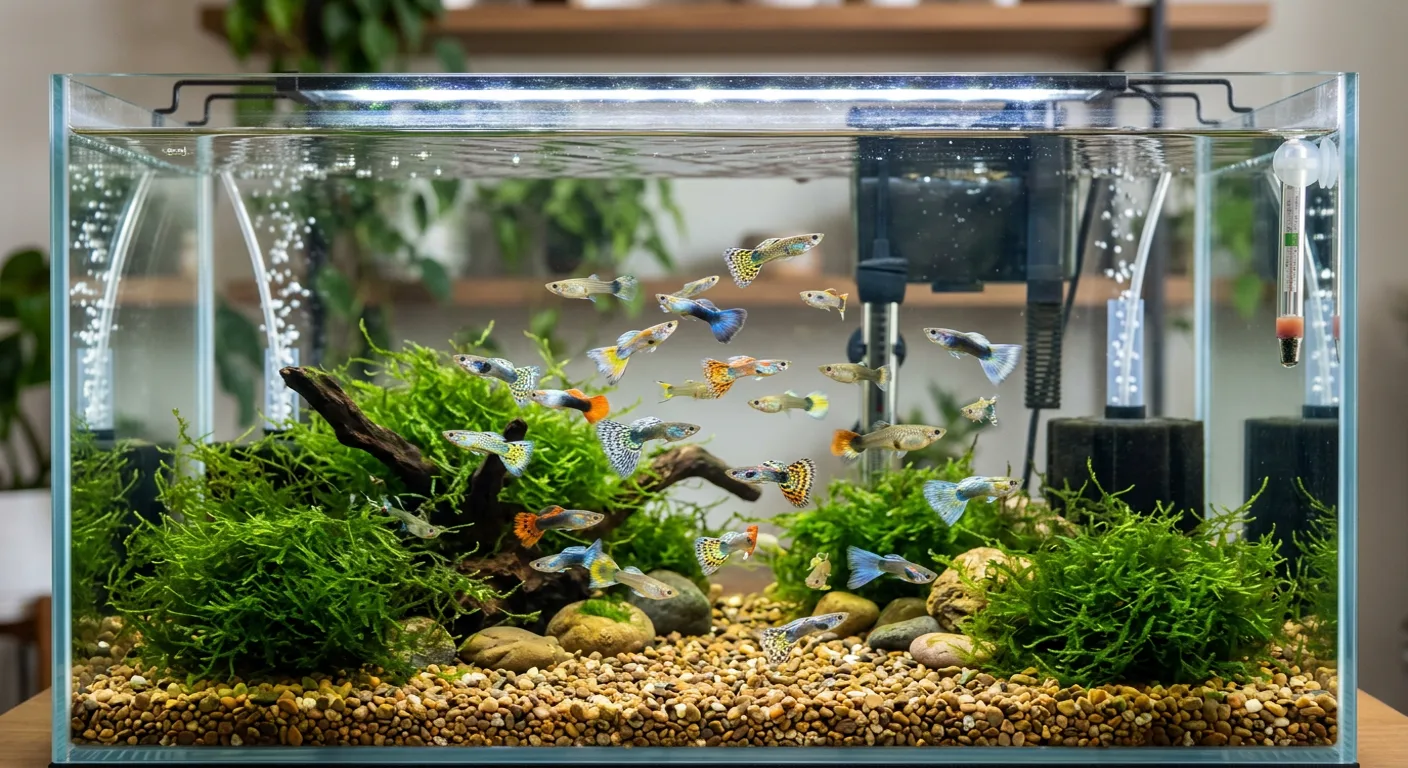
Where beginners go wrong
The same few mistakes appear again and again. Adding fish to a brand new, uncycled tank is the biggest one, because ammonia builds up quickly. Overfeeding is next: guppies will happily eat more than they need, which fouls the water. See overfeeding guppies for how to size meals.
Overcrowding and unbalanced sex ratios also cause stress. Too many males chase females constantly, so read the male to female guppy ratio guide. Finally, skipping quarantine can bring disease into an established tank, which is covered in quarantine new guppy fish.
Beginner guppy care at a glance
| Task | How often | Beginner tip |
|---|---|---|
| Feed | Small portions once or twice a day | Only what they finish in a minute or two |
| Water change | Weekly, partial | Use dechlorinated, temperature-matched water |
| Test water | Regularly, more often early on | Watch ammonia and nitrite |
| Filter check | Every few weeks | Rinse media in old tank water, not tap |
| Observe fish | Daily | Look for clamped fins or hiding |
What you need before buying
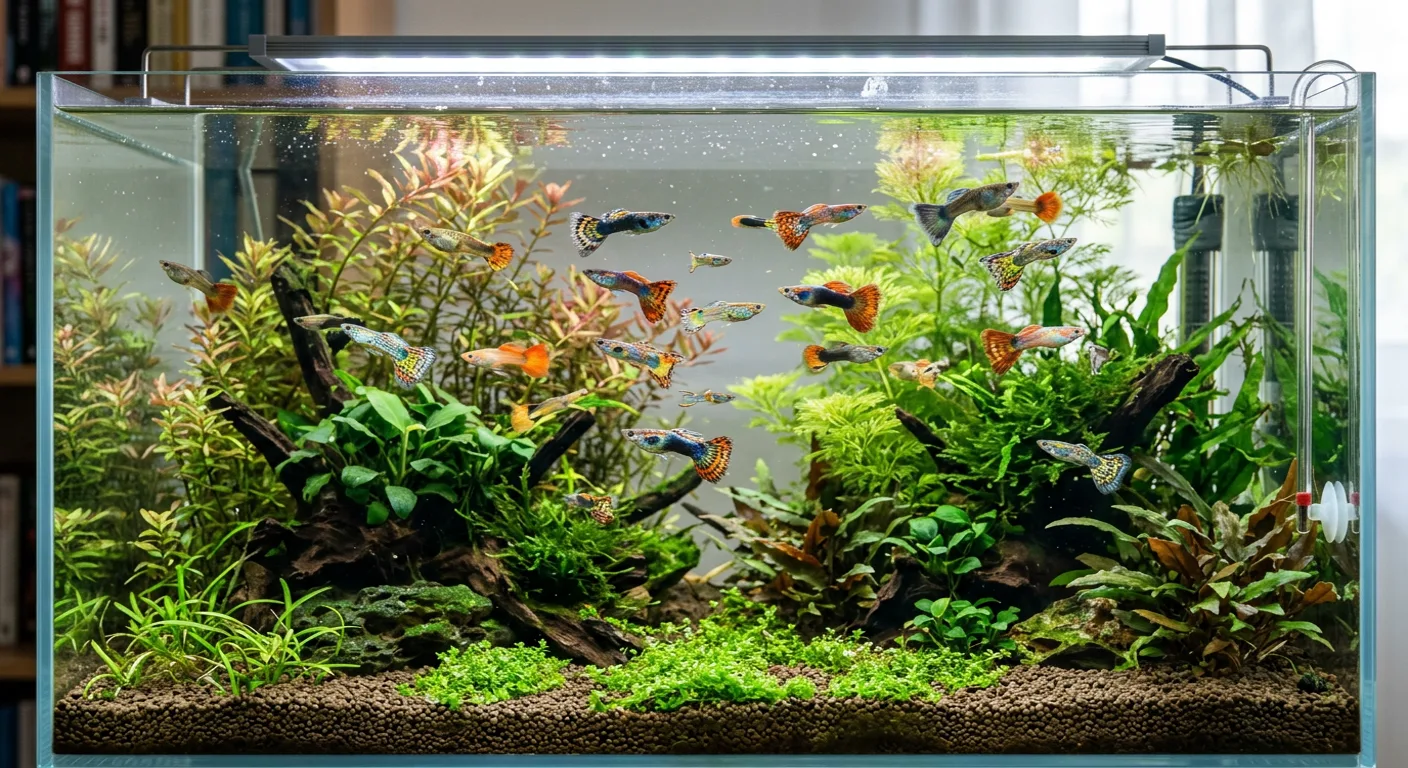
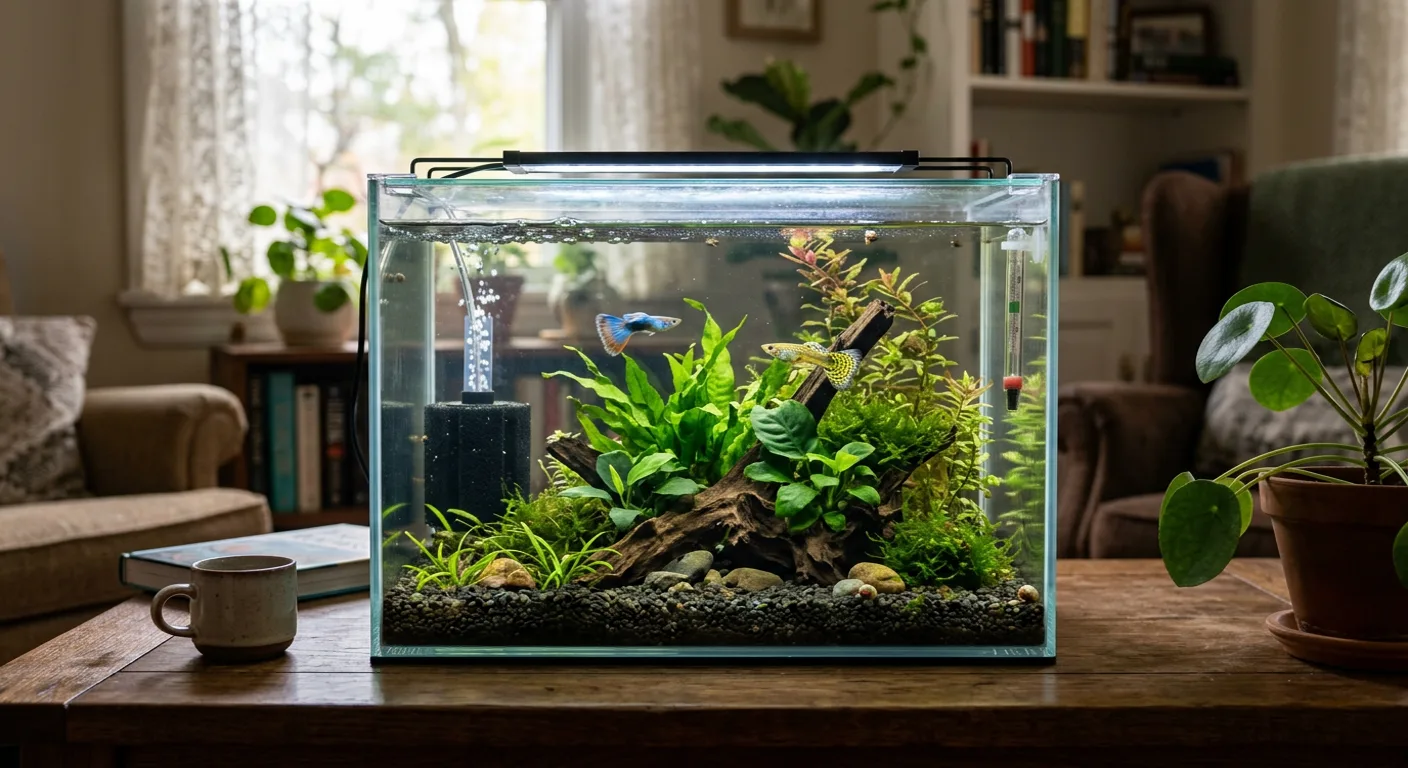
A basic setup is a tank of a sensible size, a gentle filter, a heater suited to your room, a light and a few plants. Our how to set up a guppy tank for beginners guide walks through each step. A sponge filter is a gentle, low-cost option; see sponge filter for guppy tank.
Test water before you add fish, and let the tank run until ammonia and nitrite read zero. Patience at this stage is what separates a smooth start from a stressful one.
Choosing your first guppies
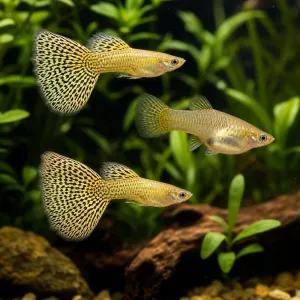
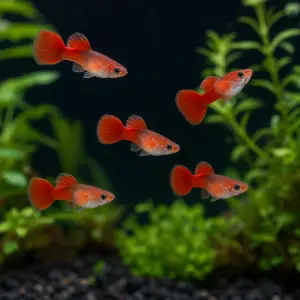
Pick active fish with full, open fins, clear eyes and a straight body. Avoid fish that sit at the surface, clamp their fins or look thin. Starting with a small group is easier to manage than a crowded tank. Beginners often like a ready-made group such as a set of male guppies, which avoids surprise fry while you learn. If you want a compact starter, read best first guppy pack for beginners.
When your fish arrive, follow how to acclimate guppies to protect them from shock.
Feeding guppies as a beginner
Feed a good quality flake or micro pellet in small amounts. Guppies have small stomachs, and leftover food breaks down into ammonia. Many keepers feed once or twice daily and skip a day now and then. Variety helps: frozen or live foods such as brine shrimp are fine as occasional extras. If your guppies stop eating, check the water first and read why is my guppy not eating.
A simple habit is to watch the fish during feeding. It shows you who is eating, who is hiding and whether anyone looks thin or bloated. That daily look is the best early warning system a beginner has.
Water quality basics
Stable water matters more than perfect numbers. Guppies handle a range of conditions, yet they dislike quick swings in temperature or chemistry. Always treat tap water with a dechlorinator and match temperature when you do a water change. Our guppy water parameters guide explains what to test, and how often to change guppy tank water gives a routine to follow.
Cloudy water, a sharp smell or fish gasping at the surface are signs to test right away. Small, frequent changes are gentler than rare large ones.
Tank mates and community tanks
Guppies are peaceful, so they pair best with calm, similarly sized fish. Avoid fin nippers and large predators that may eat them. The best tank mates for guppies guide lists safer options. For a first tank, many beginners keep guppies on their own or with a few peaceful companions so there is less to manage.
What to expect in the first month
In the first days, fish may hide while they settle. Keep lights on a regular schedule, feed lightly and avoid rearranging the tank. By the second or third week you should see confident swimming and good color. Check water often during this stretch, because a new filter is still building beneficial bacteria. Our first week with new guppies guide covers the early days step by step.
If something looks wrong, act early. Isolating a sick fish in a hospital tank and fixing water problems solves most issues faster than waiting.
Cost and time commitment
Guppies themselves are affordable, but the tank, filter, heater and test kit make up most of the starting cost. Ongoing costs are mainly food, dechlorinator and electricity. Time-wise, expect a few minutes daily for feeding and observation, plus a short weekly session for water changes and glass cleaning. Our how much do guppies cost guide gives a fuller picture. Compared with many hobbies, this is a light routine, and it grows easier once your tank is established and balanced.
Are guppies good beginner fish for kids and small spaces?
They suit small spaces well, and children enjoy watching them. An adult should still manage water changes and feeding. Guppies are a livebearing species described on Wikipedia, and they do best in groups. So are guppies good beginner fish for a first aquarium? Yes, when you plan for stable water and steady habits. For the rest of the routine, return to the complete guppy care basics.
FAQ
Are guppies good beginner fish for a small tank?
They can be, because they stay small. Avoid overstocking, and keep the group modest so water quality stays stable.
Are guppies hard to keep alive?
Not usually. Most problems come from an uncycled tank, overfeeding or sudden changes, all of which are avoidable with a simple routine.
How many guppies should a beginner start with?
A small group is easier than a crowded tank. Match the number to your tank size and keep an eye on the male to female balance.
Do beginner guppies need a heater?
They prefer warm, stable water. If your room temperature swings, a heater helps keep conditions steady.
Will my guppies have babies right away?
If you keep males and females together, fry are likely over time. Keeping only males avoids surprise broods.
Behind the care guides
Care begins with steady systems
Our guppy guides focus on practical routines: keep water stable, observe fish closely and allow for natural variation.

Care systems
Steady water, thoughtful care
Gentle filtration and regular observation support healthy aquarium routines.

Natural variation
Every guppy is different
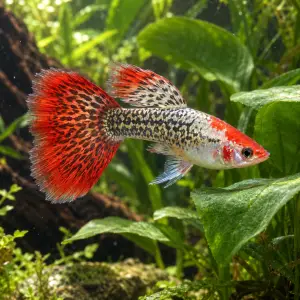
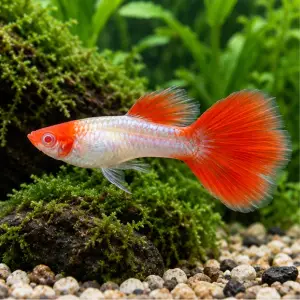
Color, size and fin shape vary with strain, age and each individual fish.
Editorial illustrations for context; they do not depict HiGuppy's exact facility or current fish stock.